Global Chocolate Market Size, Share, Growth, Trends, Industry Analysis & Forecast 2026–2034
Buy NowGlobal Chocolate Market Size
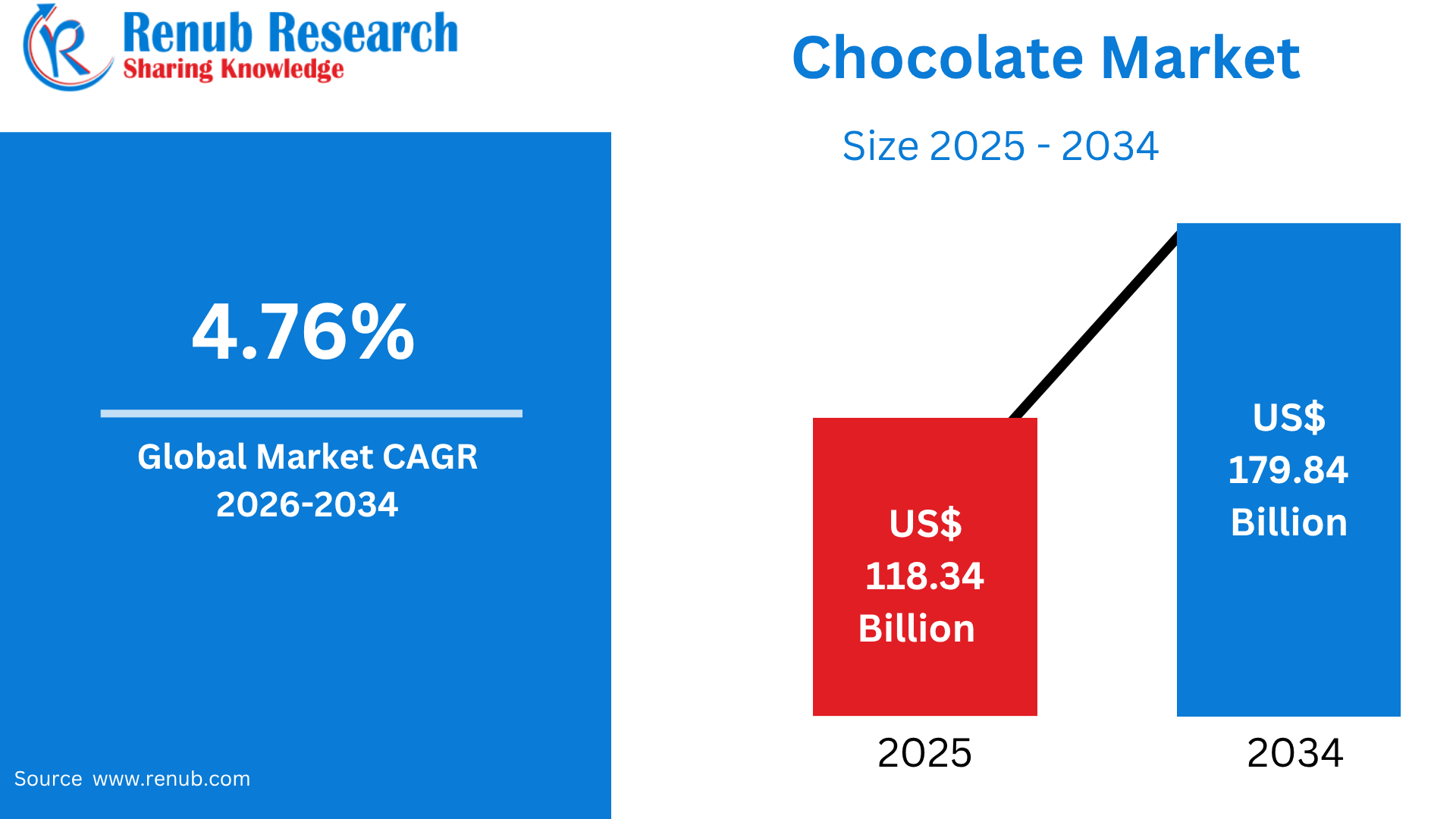
Global Chocolate Market is projected to grow from US$ 118.34 Billion in 2025 to US$ 179.84 Billion by 2034, registering a Compound Annual Growth Rate (CAGR) of 4.76% during 2026–2034. Market growth is driven by rising consumer demand for premium, organic, and dark chocolate products, increasing gifting traditions, expanding retail and e-commerce channels, and continuous product innovation. Growing disposable incomes, evolving snacking preferences, and rising consumption in emerging economies are further supporting demand across confectionery, bakery, foodservice, and specialty chocolate applications worldwide.
Chocolate Market Overview
Chocolate is a sweet food product made from a combination of cocoa beans derived from the cacao tree. These beans go through a process of fermentation, drying, roasting, and processing to produce the final product of making different kinds of chocolates. Chocolate is the favorite of all because of its taste and smoothness and the various uses it is put to in making different kinds of food products.
Chocolate has a wide range of uses in the global food industry. Chocolate is used in making different kinds of confectionery products like chocolate bars, chocolate truffles, chocolate pralines, chocolate candies, etc. Chocolate is used in making different kinds of bakery and dessert products like cakes, cookies, brownies, pastries, etc. Chocolate is used in making different kinds of chocolate-flavored drinks like hot chocolate, chocolate milk, etc. Chocolate is also used in the health and wellness industry, particularly dark chocolate, with health benefits like antioxidants that help in keeping heart diseases at bay.
Chocolate Versatile Uses and Growing Global Footprint
Chocolate is a popular food product made from cocoa beans harvested from the cacao tree (Theobroma cacao). The beans undergo fermentation, drying, roasting, grinding, and processing to produce cocoa mass, cocoa butter, and cocoa powder, which are combined with ingredients such as sugar, milk, and flavorings to create various chocolate products. Chocolate is available in several forms, including dark chocolate, milk chocolate, white chocolate, compound chocolate, and specialty premium varieties. It is widely used in confectionery products, bakery items, desserts, beverages, ice cream, breakfast cereals, protein bars, and snack foods. The foodservice industry extensively incorporates chocolate into cakes, pastries, cookies, candies, mousses, sauces, and gourmet beverages.
Beyond food applications, cocoa extracts and cocoa butter are also utilized in cosmetics, pharmaceuticals, and personal care products due to their moisturizing and antioxidant properties. Chocolate enjoys worldwide popularity because of its rich taste, versatility, and emotional association with celebrations, gifting, and indulgence. Rising disposable incomes, premiumization trends, growing demand for dark and organic chocolate, and expanding retail and e-commerce channels have significantly increased global consumption. Continuous product innovation, seasonal launches, and increasing consumer interest in functional, sugar-free, and sustainably sourced chocolate continue to strengthen its popularity across developed and emerging markets.
Top Cocoa-Producing Countries (2024)
1. Côte d’Ivoire – 2,230,000 tons
2. Ghana – 1,108,663 tons
3. Indonesia – 667,296 tons
4. Ecuador – 337,149 tons
5. Cameroon – 300,000 tons
6. Nigeria – 280,000 tons
7. Brazil – 273,873 tons
8. Peru – 171,177 tons
9. Dominican Republic – 75,900 tons
10. Colombia – 62,158 tons
Growth Driver
Rising Demand for Premium and Dark Chocolate Products
The growing consumer preference for premium, artisanal, and dark chocolate is one of the strongest growth drivers of the global chocolate market. Consumers are increasingly willing to pay higher prices for products featuring high cocoa content, single-origin cocoa beans, organic certification, and sustainable sourcing. Dark chocolate containing 70–85% cocoa solids has gained significant popularity due to its antioxidant-rich flavonoids and lower sugar content compared to conventional milk chocolate. Industry estimates indicate that premium chocolate contributes over 30% of global chocolate market value, despite representing a smaller share of total sales volume. Manufacturers continue introducing premium flavors, gourmet fillings, sugar-free options, and ethically sourced cocoa products to meet evolving consumer preferences. Rising disposable incomes, expanding gifting culture, and increasing demand for luxury confectionery further support market expansion. Premium chocolate is also benefiting from growth in travel retail, specialty food stores, and online premium grocery platforms. Continuous innovation in packaging, flavor combinations, and limited-edition seasonal products is expected to sustain long-term demand across both developed and emerging economies.
Expanding Chocolate Applications in Food, Bakery, and Beverage Industries
Chocolate has become an essential ingredient across numerous food and beverage categories, significantly supporting market growth worldwide. Beyond traditional confectionery, chocolate is extensively used in cakes, pastries, cookies, biscuits, breakfast cereals, dairy products, ice cream, protein bars, flavored beverages, dessert toppings, and ready-to-eat snacks. Industry assessments indicate that over 40% of industrial chocolate demand originates from bakery and food processing applications. Foodservice operators, cafés, restaurants, and quick-service chains increasingly utilize chocolate in premium desserts, beverages, and seasonal menu offerings. The rapid expansion of café culture and specialty coffee chains has increased demand for chocolate syrups, cocoa powders, and flavored beverages. Manufacturers continue introducing innovative formulations including vegan chocolate, sugar-free varieties, high-protein snacks, and functional chocolate enriched with vitamins or probiotics. The growth of convenience foods, packaged desserts, and frozen bakery products has further expanded industrial chocolate consumption. These diversified applications continue strengthening chocolate’s role as a versatile ingredient across the global food manufacturing industry.
Growth of E-commerce, Retail Expansion, and Seasonal Gifting Trends
The rapid expansion of organized retail and digital commerce has significantly accelerated global chocolate sales. Supermarkets, hypermarkets, convenience stores, specialty confectionery retailers, and online grocery platforms have increased product accessibility while offering wider brand selection. Industry estimates suggest that more than 70% of global chocolate sales continue to occur through organized retail channels, while online confectionery sales are experiencing double-digit annual growth in many countries. Seasonal demand during Christmas, Easter, Valentine’s Day, Halloween, Diwali, Lunar New Year, and other cultural festivals contributes substantially to annual chocolate revenues. Premium gift boxes, personalized assortments, and limited-edition collections have become important revenue generators for leading manufacturers. Subscription boxes, direct-to-consumer websites, and digital gifting services further support online sales growth. Improved packaging technologies also enable longer shelf life and safer product transportation. Rising disposable incomes, expanding middle-class populations, and increasing consumer preference for premium gifting products continue driving chocolate consumption across developed and emerging markets worldwide.
Chocolate Product Launches Worldwide
- M&M’s (Mars Wrigley) – Launched Peanut Butter Ice Cream Cookie Sandwich M&M’s in January 2025, introducing a new ice cream-inspired chocolate confection.
- The Hershey Company – Introduced Hershey’s Bark (Pretzel & Almonds) in February 2025, combining milk chocolate with crunchy pretzels and almonds.
- The Hershey Company – Launched Reese’s Pieces Bark in February 2025, featuring Reese’s Pieces Minis and roasted peanuts in chocolate bark.
- Hu Kitchen – Released Individually Wrapped Chocolate Bites in May 2025, expanding its premium clean-label chocolate snack portfolio.
- Baileys Chocolates – Introduced Baileys Caramelised Nut Mix in December 2024, combining caramel-coated nuts with Baileys-flavoured chocolate.
- Baileys Chocolates – Launched Baileys Chocolate Peanut & Cashews in December 2024, targeting the premium chocolate snacking segment.
- Mars – Expanded its beverage portfolio with Galaxy Fudge Brownie Hot Chocolate in November 2024, celebrating the brand’s anniversary with a new chocolate drink.
- H!P Chocolate – Launched the limited-edition “Figs In Blankets” Oat Milk Chocolate Bar in November 2024, combining figs with vegan bacon flavour.
- Mondelēz International & Lotus Bakeries – Announced the development of Cadbury and Milka co-branded Biscoff chocolate products beginning in June 2024, with launches planned across key European markets.
- Mars Wrigley International Travel Retail – Launched Galaxy Chocolate Dates in 2025, combining premium chocolate with dates for the travel retail and gifting market.
Challenge
Cocoa Price Volatility and Supply Chain Disruptions
One of the most significant challenges affecting the global chocolate market is the volatility in cocoa bean prices caused by weather conditions, disease outbreaks, geopolitical uncertainties, and supply-demand imbalances. Approximately 60–70% of global cocoa production originates from West Africa, making the industry highly dependent on climatic conditions in countries such as Côte d’Ivoire and Ghana. Droughts, excessive rainfall, plant diseases, and aging cocoa plantations can substantially reduce harvest volumes, creating supply shortages and increasing raw material costs. Rising fertilizer prices, labor shortages, and transportation expenses further contribute to production cost inflation. Chocolate manufacturers often experience declining profit margins when cocoa prices increase rapidly, particularly in price-sensitive markets where passing higher costs to consumers is difficult. Smaller manufacturers face even greater challenges due to limited purchasing power and lower inventory capacity. Supply chain disruptions and fluctuating exchange rates also affect cocoa sourcing, creating uncertainty for long-term production planning and pricing strategies across the global chocolate industry.
Increasing Health Concerns and Demand for Low-Sugar Alternatives
Growing consumer awareness regarding sugar consumption, obesity, diabetes, and cardiovascular health presents a major challenge for the chocolate market. Many conventional chocolate products contain 30–60% sugar, depending on the formulation, leading health-conscious consumers to moderate confectionery consumption. Governments across several countries have introduced sugar-reduction initiatives, nutritional labeling requirements, and public health campaigns encouraging healthier eating habits. Parents are also becoming more selective about children’s confectionery purchases, increasing demand for reduced-sugar and portion-controlled products. In response, manufacturers are investing in sugar-free, low-sugar, high-cocoa, and functional chocolate formulations using alternative sweeteners such as stevia and monk fruit extracts. However, reformulating products while maintaining taste, texture, and shelf stability remains technically challenging and often increases production costs. Premium healthier alternatives also carry higher retail prices, limiting affordability in developing economies. Balancing consumer expectations for indulgent flavor with increasing nutritional awareness continues to be one of the industry’s most significant long-term strategic challenges.
Dark Chocolate Premium Segment Driven by Health and Functional Nutrition
Dark chocolate has become one of the fastest-growing segments of the global chocolate market due to increasing consumer awareness of its health benefits and premium positioning. Typically containing 50–90% cocoa solids, dark chocolate is rich in flavonoids, polyphenols, magnesium, and antioxidants, making it a preferred choice among health-conscious consumers. Industry estimates indicate that dark chocolate contributes approximately 25–30% of the global chocolate market value, with demand growing steadily across North America and Europe. Consumers increasingly associate dark chocolate with cardiovascular health, reduced sugar intake, and premium indulgence. Manufacturers continue introducing organic, vegan, sugar-free, and single-origin dark chocolate products to meet evolving dietary preferences. The segment has also benefited from rising adoption of ketogenic, low-carbohydrate, and clean-label lifestyles. Premium gifting, gourmet confectionery, and specialty retail stores further support sales. Continuous innovation in cocoa percentages, flavor combinations, fruit inclusions, and sustainable cocoa sourcing strengthens consumer interest. As disposable incomes and wellness awareness increase globally, dark chocolate is expected to remain one of the highest-value categories within the worldwide chocolate industry.
Milk and White Chocolate Largest Consumer Segment with Broad Global Appeal
Milk and white chocolate continue to dominate global chocolate consumption due to their sweet taste, creamy texture, and widespread consumer acceptance across all age groups. Milk chocolate generally contains 20–40% cocoa solids, while white chocolate is produced using cocoa butter, milk solids, and sugar without cocoa solids. Together, these categories account for approximately 65–70% of global chocolate sales by volume, making them the largest product segment. They are widely used in chocolate bars, confectionery, biscuits, bakery products, desserts, beverages, ice cream, breakfast cereals, and seasonal gifting. Children’s confectionery remains a major demand driver, while premium milk chocolate products featuring nuts, caramel, fruits, and cookies continue expanding product portfolios. Manufacturers increasingly launch reduced-sugar, organic, high-protein, and fortified milk chocolate products to address changing consumer preferences. Growth in emerging economies, rising disposable incomes, expanding supermarket networks, and increasing gifting traditions continue supporting market expansion. Continuous flavor innovation and attractive packaging further strengthen long-term demand for milk and white chocolate products worldwide.
Chocolate Convenience Stores: Strong Impulse Purchasing Drives Sales
Convenience stores represent an important distribution channel for chocolate products due to their accessibility, extended operating hours, and high levels of impulse purchasing. Industry estimates suggest convenience stores account for approximately 15–20% of global chocolate retail sales, particularly in urban and suburban markets. Single-serve chocolate bars, bite-sized confectionery, chocolate wafers, and seasonal gift packs dominate convenience store shelves because they encourage spontaneous purchases. Consumers frequently purchase chocolate alongside beverages, snacks, and other everyday essentials during quick shopping trips. Rising urbanization, busy lifestyles, and increasing numbers of convenience retail outlets continue expanding this distribution channel worldwide. Manufacturers actively introduce checkout-counter displays, promotional pricing, and limited-edition products to maximize impulse buying behavior. Compact packaging, affordable price points, and frequent new product launches help maintain high sales volumes. The growing presence of premium chocolates, healthier snack options, and sugar-free varieties within convenience stores is also attracting a broader consumer base. Continuous expansion of convenience retail infrastructure supports sustained growth in chocolate sales globally.
Chocolate Online Retail Stores: Rapid Digital Commerce Expanding Global Reach
Online retail has become one of the fastest-growing distribution channels for chocolate products as consumers increasingly prefer convenient home delivery and wider product selection. Industry estimates indicate that online sales currently contribute approximately 8–12% of global chocolate retail revenue, with significantly higher growth rates than traditional retail channels. E-commerce platforms enable consumers to access premium, imported, organic, vegan, sugar-free, artisanal, and customized chocolate products that may not be available in physical stores. Subscription boxes, personalized gift hampers, festive collections, and direct-to-consumer brand websites have further strengthened online chocolate sales. Digital marketing, influencer campaigns, and seasonal promotional events encourage repeat purchases and customer engagement. Advanced packaging technologies and temperature-controlled logistics have improved product quality during transportation, reducing concerns regarding melting and product damage. Mobile commerce, digital payment adoption, and expanding internet penetration across emerging economies continue driving online chocolate purchases. As brands invest in omnichannel retail strategies and personalized shopping experiences, online retail stores are expected to become an increasingly important contributor to the global chocolate market.
Largest Premium Chocolate Market Driven by Innovation and High Per Capita Consumption in USA
The United States is one of the world’s largest chocolate markets, supported by high consumer spending, strong retail infrastructure, and continuous product innovation. Industry estimates indicate that the average American consumes approximately 4.5–5.5 kg of chocolate annually, while chocolate remains one of the highest-selling confectionery categories nationwide. Milk chocolate dominates overall sales, although dark chocolate has experienced rapid growth due to increasing health awareness and demand for premium products. Supermarkets, convenience stores, warehouse clubs, specialty retailers, and e-commerce platforms provide nationwide accessibility to domestic and imported brands. Seasonal demand during Halloween, Valentine’s Day, Easter, and Christmas contributes significantly to annual chocolate sales, with festive periods accounting for a substantial share of yearly revenues. The bakery, ice cream, beverage, and snack industries further strengthen industrial chocolate demand. Consumers increasingly seek organic, sugar-free, vegan, and sustainably sourced chocolate products, encouraging manufacturers to launch innovative premium offerings. Strong purchasing power, advanced food manufacturing capabilities, and expanding direct-to-consumer sales continue positioning the United States as a leading global chocolate market.
Mature Confectionery Industry with Strong Premium Demand in the United Kingdom Chocolate
United Kingdom has one of the highest chocolate consumption rates globally, supported by a long-established confectionery tradition and widespread consumer preference for chocolate products. Industry estimates suggest that average chocolate consumption exceeds 7–8 kg per person annually, placing the UK among Europe’s leading chocolate-consuming nations. Milk chocolate continues to dominate retail sales, while premium dark chocolate and organic products are gaining popularity among health-conscious consumers. Chocolate is widely purchased through supermarkets, convenience stores, discount retailers, specialty confectionery shops, and online grocery platforms. Seasonal gifting during Christmas, Easter, and Valentine’s Day significantly boosts market demand each year. Premium boxed chocolates, artisan collections, and ethically sourced cocoa products continue expanding their market share. Manufacturers increasingly introduce reduced-sugar formulations, plant-based alternatives, recyclable packaging, and sustainably certified cocoa products to address evolving consumer preferences. Strong retail competition, innovative product launches, and growing demand for premium indulgence continue supporting stable long-term growth in the United Kingdom chocolate market.
India Fast-Growing Consumer Base Supported by Rising Disposable Income
India has emerged as one of the fastest-growing chocolate markets globally due to rising disposable incomes, rapid urbanization, expanding middle-class populations, and changing consumer lifestyles. Although annual per capita chocolate consumption remains relatively low at approximately 0.3–0.5 kg, the country’s large population creates enormous long-term growth potential. Milk chocolate dominates the market, while dark chocolate is experiencing increasing acceptance among urban consumers seeking healthier alternatives. Modern supermarkets, neighborhood retail stores, convenience outlets, and rapidly expanding e-commerce platforms have significantly improved product availability across metropolitan and tier-two cities. Chocolate demand increases substantially during festivals such as Diwali, Raksha Bandhan, Christmas, and Valentine’s Day, where premium chocolate gift packs increasingly replace traditional sweets. Rising café culture, bakery expansion, and growth in premium confectionery also contribute to industrial chocolate demand. Manufacturers continue introducing affordable pack sizes, localized flavors, sugar-free variants, and premium imported brands to attract diverse consumer groups. Expanding retail infrastructure and increasing youth consumption continue driving sustained market growth across India.
Saudi Arabia Premium Confectionery Growth Supported by Urbanization and Gifting Culture
Saudi Arabia represents one of the fastest-growing chocolate markets in the Middle East, supported by high disposable incomes, strong urbanization, and increasing demand for premium confectionery products. More than 80% of the population resides in urban areas, supporting widespread availability of chocolate through supermarkets, hypermarkets, convenience stores, luxury boutiques, and online retailers. Chocolate consumption is closely associated with hospitality, celebrations, religious festivals, weddings, and corporate gifting, creating consistent year-round demand. Premium imported chocolates, pralines, filled chocolates, and luxury gift assortments have gained significant popularity among affluent consumers. The country’s expanding tourism and hospitality sectors also contribute to chocolate consumption through hotels, cafés, restaurants, and airport duty-free outlets. Consumers increasingly prefer dark chocolate, sugar-free products, organic ingredients, and premium cocoa content as health awareness continues to rise. Manufacturers are introducing innovative packaging, limited-edition festive collections, and personalized gift boxes to strengthen brand differentiation. Continued retail expansion, rising consumer spending, and evolving premium gifting trends are expected to sustain long-term growth in the Saudi Arabian chocolate market.
Market Segmentation
Type
- Dark Chocolate
- Milk/White Chocolate
Distribution Channel
- Hypermarkets/Supermarkets
- Convenience Stores
- Online Retail Stores
- Other Distribution Channel
Countries
North America
- United States
- Canada
Europe
- France
- Germany
- Italy
- Spain
- United Kingdom
- Belgium
- Netherland
- Turkey
Asia Pacific
- China
- Japan
- India
- South Korea
- Thailand
- Malaysia
- Indonesia
- Australia
- New Zealand
Latin America
- Brazil
- Mexico
- Argentina
Middle East & Africa
- Saudi Arabia
- UAE
- South Africa
All the Key players have been covered from 5 Viewpoints:
- Overviews
- Key Person
- Recent Developments
- SWOT Analysis
- Revenue Analysis
Company Analysis:
- Nestlé S.A.
- Mondelez International, Inc.
- AMUL Industries Pvt Ltd.
- The Hershey Company
- Meiji Holdings Co. Ltd.
- Saputo Inc.
- Chocoladefabriken Lindt, and Sprungli AG
- Hotel Chocolat Group plc
Report Details:
| Report Features | Details |
| Base Year |
2025 |
| Historical Period |
2022 - 2025 |
| Forecast Period |
2026 - 2034 |
| Market |
US$ Billion |
| Segment Covered |
Type, Distribution Channel, and Countries |
| Countries Covered |
|
| Companies Covered |
|
| Customization Scope |
20% Free Customization |
| Post-Sale Analyst Support |
1 Year (52 Weeks) |
| Delivery Format |
PDF and Excel through Email (We can also provide the editable version of the report in PPT/Word format on request) |
Customization Services available
- Analysis of Market Size and Its Segments
- More Company Profiles (Upto 10 without any additional cost):
- Additional Countries (Other than mentioned Countries):
- Region/Country Specific Reports:
- Market Entry Strategy:
- Region-Specific Market Dynamics:
- Regional Market Share Analysis:
- Trade Analysis:
- Production Insights:
- Others Customized Requests:
For more information contact our analysts.
Need More Assistance?
- Talk to our analysts to get more precious information on the current market trends.
- Include more countries and segments and customize the report based on the final requirement.
- Get a competitive advantage in your industry by knowing the report findings and making a positive impact on your revenues and operations.
- Our analysts are always ready to provide more help and pertinent information if you need any additional assistance.