Dark Chocolate Market Global Report by Type, Application, Distribution Channel, Countries and Company Analysis 2026-2034
Buy NowDark Chocolate Market Size and Forecast 2026-2034
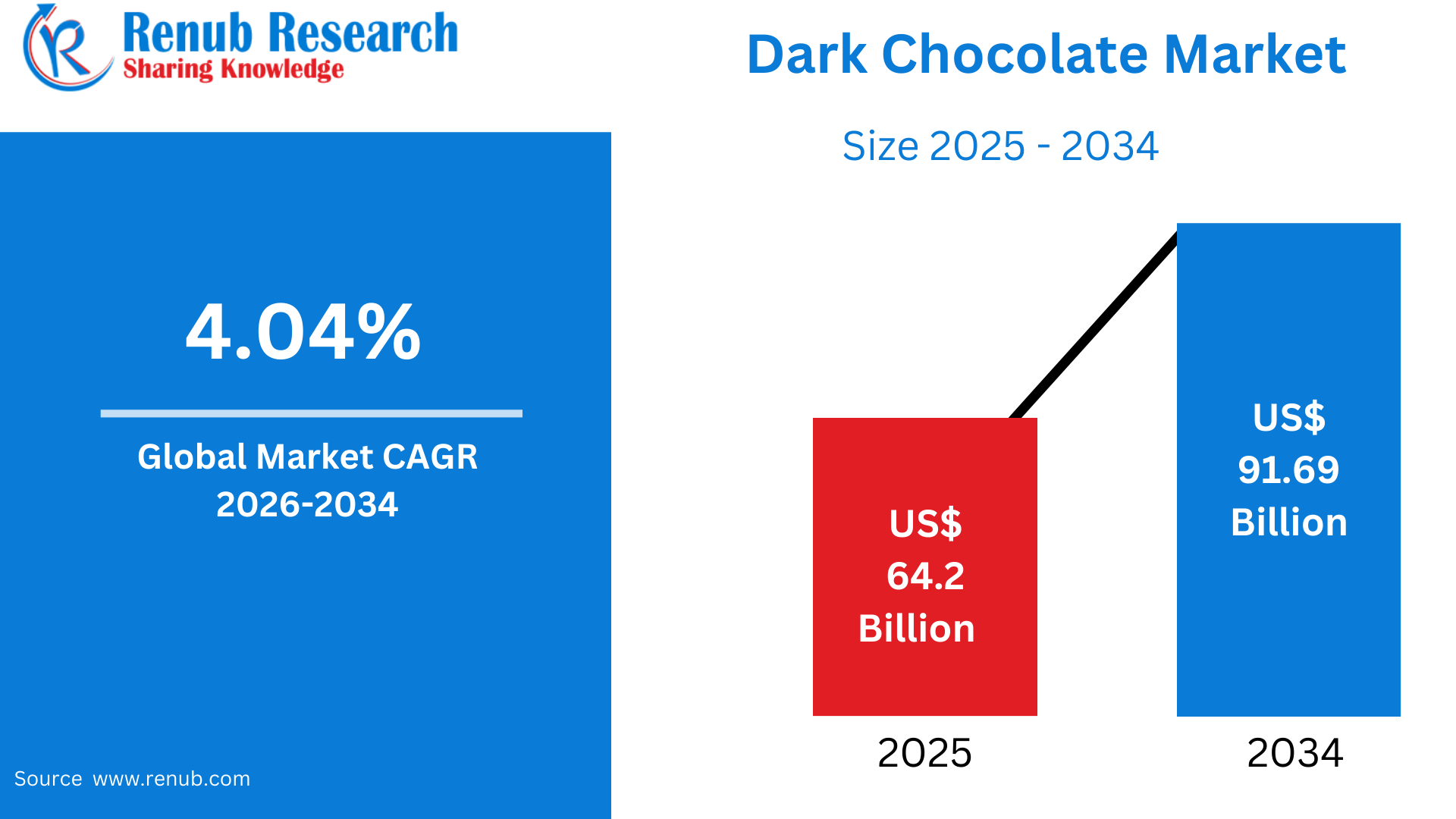
Dark Chocolate Market is expected to reach US$ 91.69 billion by 2034 from US$ 64.2 billion in 2025, with a CAGR of 4.04% from 2026 to 2034. Strong customer demand for high-end and organic goods, growing health consciousness, creative taste options, and vast retail and online distribution networks are the market's main drivers.
Dark Chocolate Industry Overview
The dark chocolate industry has experienced significant growth in recent years, driven by increasing consumer awareness of its health benefits and rising demand for premium confectionery products. Unlike milk chocolate, dark chocolate contains a higher percentage of cocoa solids, which is associated with antioxidants, flavonoids, and potential cardiovascular benefits. This functional aspect has shifted dark chocolate from being merely a treat to a health-oriented indulgence, appealing to health-conscious consumers, fitness enthusiasts, and older demographics seeking nutritional benefits. Additionally, evolving taste preferences, especially among millennials and Gen Z, favor richer, more intense chocolate flavors, further supporting the growth of dark chocolate products globally.
The industry is characterized by continuous innovation in flavors, textures, and cocoa sourcing. Manufacturers are introducing single-origin chocolates, organic and fair-trade certified products, and unique inclusions such as nuts, fruits, and spices to differentiate offerings. Sustainability and ethical sourcing have become critical factors, as consumers increasingly prioritize environmentally friendly production practices and fair compensation for cocoa farmers. Premiumization and artisanal craftsmanship have positioned dark chocolate as a luxury item, allowing brands to command higher price points and cater to niche markets in both developed and emerging economies.
Technological advancements in processing, packaging, and supply chain management are also shaping the industry. Improved roasting, conching, and tempering techniques enhance flavor consistency and texture, while modern packaging ensures freshness and extended shelf life. E-commerce platforms and social media marketing have expanded market reach, enabling direct-to-consumer sales and global distribution. However, the industry faces challenges such as price volatility of cocoa, climate change impacts on cocoa production, and intense competition among established and emerging brands. Overall, the dark chocolate industry is evolving from a simple confectionery segment into a health-conscious, premium, and ethically responsible market, with strong potential for continued growth driven by innovation, sustainability, and changing consumer lifestyles.
Growth Drivers for the Dark Chocolate Market
Rising Health Awareness and Functional Benefits
One of the strongest drivers of the dark chocolate industry is increasing consumer awareness of its health and functional benefits. Dark chocolate is rich in cocoa solids, which contain antioxidants and flavonoids that are associated with cardiovascular health, improved brain function, and anti-inflammatory properties. Health-conscious consumers are increasingly seeking indulgent yet nutritious snacks, positioning dark chocolate as a premium “better-for-you” treat. Additionally, the trend toward clean-label and minimally processed foods encourages consumers to opt for products with higher cocoa content and fewer additives. Functional claims, such as energy-boosting, mood-enhancing, or heart-friendly properties, are used by manufacturers to differentiate products and appeal to a growing segment of wellness-oriented buyers. This health-focused positioning has broadened the target market beyond traditional chocolate consumers to include fitness enthusiasts, adults seeking healthy indulgence, and even older demographics concerned with nutrition. As awareness of these benefits continues to rise globally, demand for dark chocolate is expected to maintain strong growth.
Premiumization and Flavor Innovation
Premiumization is another major growth driver for the dark chocolate market. Consumers increasingly associate high-cocoa-content chocolate with luxury, indulgence, and craftsmanship. Manufacturers are introducing single-origin chocolates, organic and fair-trade certified products, and artisanal offerings with unique flavors such as sea salt, chili, coffee, and exotic fruits. These innovations appeal to taste-savvy consumers who are willing to pay higher prices for quality, ethical sourcing, and differentiated experiences. Packaging design, gift boxes, and limited-edition products further enhance the perception of exclusivity, driving both gifting and personal indulgence purchases. Market expansion in urban centers, high-end retail stores, and online platforms has made premium dark chocolate accessible to a wider audience. By combining sophisticated flavors, ethical sourcing, and elegant branding, companies are tapping into the growing consumer preference for indulgent yet responsible luxury products, boosting market penetration and overall industry revenue.
E-Commerce Growth and Global Distribution
The growth of e-commerce and global distribution channels has significantly contributed to the expansion of the dark chocolate industry. Online shopping platforms allow consumers to explore a wide variety of premium, imported, and niche chocolate brands that may not be available in physical stores. Direct-to-consumer models enable manufacturers to engage buyers with personalized offerings, subscription services, and limited-edition products, increasing brand loyalty. Social media marketing also plays a critical role in educating consumers about product quality, cocoa content, and ethical sourcing, enhancing consumer awareness and driving sales. Furthermore, globalization and the expansion of international trade allow dark chocolate brands to enter emerging markets where, rising incomes and changing lifestyles are increasing demand for luxury and health-oriented snacks. Efficient supply chain management, cold-chain logistics, and improved packaging ensure product quality is maintained during transit, supporting international expansion. By leveraging technology and global networks, manufacturers can access new consumer bases, fueling consistent growth in the industry.
Challenges in the Dark Chocolate Market
Cocoa Price Volatility and Supply Chain Risks
Cocoa price fluctuations and supply chain vulnerabilities present a significant challenge for the dark chocolate industry. Cocoa is largely grown in regions prone to climate-related risks, such as West Africa, making prices sensitive to weather conditions, political instability, and global demand-supply imbalances. Sudden increases in raw material costs can directly affect production expenses, squeezing profit margins for manufacturers. Additionally, sourcing high-quality cocoa for premium products requires stable, long-term supply agreements, which may be disrupted by geopolitical tensions or transportation issues. The complex supply chain—from cocoa farming to processing, manufacturing, and distribution—adds operational risks, including quality control and delays. Manufacturers must invest in sustainable sourcing practices, diversify suppliers, and implement robust supply chain management strategies to mitigate these risks. Failure to do so can result in increased costs, product shortages, or reduced brand trust among consumers who expect consistent quality, particularly in the premium segment, potentially limiting growth in this competitive market.
Intense Competition and Consumer Price Sensitivity
Intense competition and consumer price sensitivity pose another major challenge to the dark chocolate market. The industry includes numerous established global brands, artisanal chocolatiers, and emerging regional players, all vying for consumer attention. Differentiating products through flavor, packaging, or ethical sourcing requires substantial investment in research, marketing, and branding. At the same time, the high cost of premium ingredients and ethical certifications often leads to higher retail prices, which may limit adoption among price-conscious consumers. Balancing affordability with quality and innovation is a constant challenge, particularly in emerging markets where consumers may prefer mass-market milk chocolate over higher-priced dark chocolate. Additionally, the proliferation of similar product offerings makes it difficult for brands to maintain loyalty, pushing companies to continuously innovate or risk losing market share. Sustaining profitability while competing on multiple fronts requires strategic pricing, effective marketing, and operational efficiency, making competition a persistent obstacle for industry players.
United States Dark Chocolate Market
The United States dark chocolate market is well-established and characterized by high consumer awareness of health, wellness, and premium confectionery trends. Consumers increasingly view dark chocolate as a functional indulgence, valued for its antioxidants, rich flavor, and potential cardiovascular benefits. This perception has fueled demand for high-cocoa-content products, single-origin chocolates, and ethically sourced options. Premiumization and artisanal craftsmanship have become major selling points, with brands offering unique flavors, organic certifications, and visually appealing packaging to attract affluent and health-conscious buyers.
Retail channels, including supermarkets, specialty stores, and e-commerce platforms, play a critical role in expanding product availability and enhancing consumer engagement. The rise of online shopping has allowed brands to reach niche markets and provide subscription services or limited-edition offerings. At the same time, sustainability, fair-trade sourcing, and transparent ingredient labeling influence purchasing decisions. Overall, the U.S. dark chocolate market continues to grow steadily, driven by health awareness, premiumization trends, and expanding distribution channels, positioning it as a key segment in the global confectionery industry.
Germany Dark Chocolate Market
Germany’s dark chocolate market is among the most mature in Europe, with consumers exhibiting strong preferences for high-quality, ethically sourced, and sustainable products. German consumers are highly informed about cocoa content, flavor intensity, and health benefits, which has increased the popularity of dark chocolate over milk chocolate in recent years. Premium and artisanal products, including single-origin, organic, and fair-trade chocolates, are particularly favored by urban and middle-to-high-income buyers.
Innovation in flavors and inclusions, such as nuts, fruits, spices, and liqueurs, has further stimulated market growth, while elegant packaging and gift options enhance consumer appeal. Retail expansion, e-commerce adoption, and specialty chocolate stores provide convenient access to both local and international brands. Ethical sourcing, sustainability, and environmental responsibility are key factors shaping consumer choices, influencing brand loyalty and market dynamics. Overall, the German dark chocolate market combines a strong health-conscious and premium-focused consumer base with high expectations for quality, ensuring steady growth and competitive innovation within the European confectionery landscape.
India Dark Chocolate Market
The Indian dark chocolate market is rapidly expanding, fueled by growing urbanization, rising disposable incomes, and increasing awareness of the health benefits of high-cocoa-content chocolate. Traditionally dominated by milk chocolate, the Indian confectionery market is witnessing a shift as health-conscious and premium-oriented consumers embrace dark chocolate for its antioxidants, richer flavor, and perceived functional benefits. Urban millennials and Gen Z consumers are particularly receptive to novel flavors, organic certifications, and ethical sourcing claims.
Retail penetration across supermarkets, hypermarkets, convenience stores, and e-commerce platforms has made dark chocolate increasingly accessible, while marketing campaigns highlight both indulgence and wellness. Flavor innovation, premium packaging, and gifting options have positioned dark chocolate as a luxury product suitable for special occasions and personal consumption. Despite price sensitivity in certain segments, rising awareness of nutritional and lifestyle benefits is expanding the market. Overall, India’s dark chocolate market reflects strong growth potential, driven by changing consumer preferences, premiumization trends, and increased exposure to global confectionery standards.
United Arab Emirates Dark Chocolate Market
The UAE dark chocolate market is characterized by high consumer purchasing power, a cosmopolitan population, and a strong appetite for premium and luxury confectionery products. Dark chocolate is perceived not only as a treat but also as a sophisticated indulgence, often linked to health benefits, gifting culture, and lifestyle status. Consumers show preference for high-cocoa-content chocolates, artisanal products, and ethically sourced options, with a growing interest in single-origin, organic, and innovative flavor variants.
Retail channels, including supermarkets, specialty stores, and e-commerce platforms, provide wide accessibility, while luxury positioning, attractive packaging, and premium branding enhance appeal. Expat populations and tourists further contribute to demand for international and imported dark chocolate brands. Sustainability, fair-trade sourcing, and quality assurance are increasingly important in influencing purchasing decisions. Overall, the UAE dark chocolate market is growing steadily, driven by health awareness, premiumization, multicultural consumer preferences, and the willingness to pay for high-quality, ethically produced products, establishing the region as a key market for global chocolate brands.
Recent Developments in Dark Chocolate Market
- May 2025: The chocolate company HU added wrapped Dark Chocolate Bites to their lineup. It comes in three different flavors: Creamy Coconut, Cashew Butter + Pure Vanilla Bean, and Hazelnut Butter.
- The Dark Chocolate Variety Pack was introduced in November 2024 by the Canadian firm Awake Chocolate. Salted Almond Dark Chocolate and Salted Caramel Dark Chocolate are the two new flavors of the recently introduced chocolate goods.
- March 2024: Under the NatureFresh Professional brand, Cargill Inc., a major manufacturer of food ingredients, introduced a line of block chocolates, chocolate chips, and cocoa powder products. These recently introduced goods come in milk, white, and dark flavors.
- January 2024: The major international food and beverage manufacturer Nestle SA introduced 70% dark chocolate under the KitKat brand in the
Market Segmentation
Type
- 70% Cocoa Dark Chocolate
- 75% Cocoa Dark Chocolate
- 80% Cocoa Dark Chocolate
- 90% Cocoa Dark Chocolate
Application
- Confectionery
- Functional Food & Beverage
- Pharmaceuticals
- Cosmetics
Distribution Channel
- Convenience Stores
- Supermarkets and Hypermarkets
- Non-Grocery retailers
- Others
Countries
North America
- United States
- Canada
Europe
- France
- Germany
- Italy
- Spain
- United Kingdom
- Belgium
- Netherlands
- Turkey
Asia Pacific
- China
- Japan
- India
- South Korea
- Thailand
- Malaysia
- Indonesia
- Australia
- New Zealand
Latin America
- Brazil
- Mexico
- Argentina
Middle East & Africa
- Saudi Arabia
- UAE
- South Africa
Rest of the World
All companies have been covered from 5 viewpoints:
- Overview
- Key Persons
- Recent Development
- SWOT Analysis
- Revenue Analysis
Company Analysis
- Nestlé S.A.
- The Hershey Company
- Mondelez International, Inc.
- AMUL Industries Pvt Ltd
- Meiji Holdings Co. ltd
- Saputo Inc
- Chocoladefabriken Lindt and Sprungli AG
- Hotel Chocolat Group plc
Report Details:
| Report Features | Details |
| Base Year |
2025 |
| Historical Period |
2022 - 2025 |
| Forecast Period |
2026 - 2034 |
| Market |
US$ Billion |
| Segment Covered |
Product Type, Lead Type, End User and Countries |
| Countries Covered |
|
| Companies Covered |
|
| Customization Scope |
20% Free Customization |
| Post-Sale Analyst Support |
1 Year (52 Weeks) |
| Delivery Format |
PDF and Excel through Email (We can also provide the editable version of the report in PPT/Word format on request) |
Customization Services available
- Analysis of Market Size and Its Segments
- More Company Profiles (Upto 10 without any additional cost):
- Additional Countries (Other than mentioned Countries):
- Region/Country Specific Reports:
- Market Entry Strategy:
- Region-Specific Market Dynamics:
- Regional Market Share Analysis:
- Trade Analysis:
- Production Insights:
- Others Customized Requests:
For more information contact our analysts.
Need More Assistance?
- Talk to our analysts to get more precious information on the current market trends.
- Include more countries and segments and customize the report based on the final requirement.
- Get a competitive advantage in your industry by knowing the report findings and making a positive impact on your revenues and operations.
- Our analysts are always ready to provide more help and pertinent information if you need any additional assistance.