Global Candy Market Report by Type, Distribution Channel, Countries and Companies Analysis 2026-2034
Buy NowCandy Market Size and Forecast
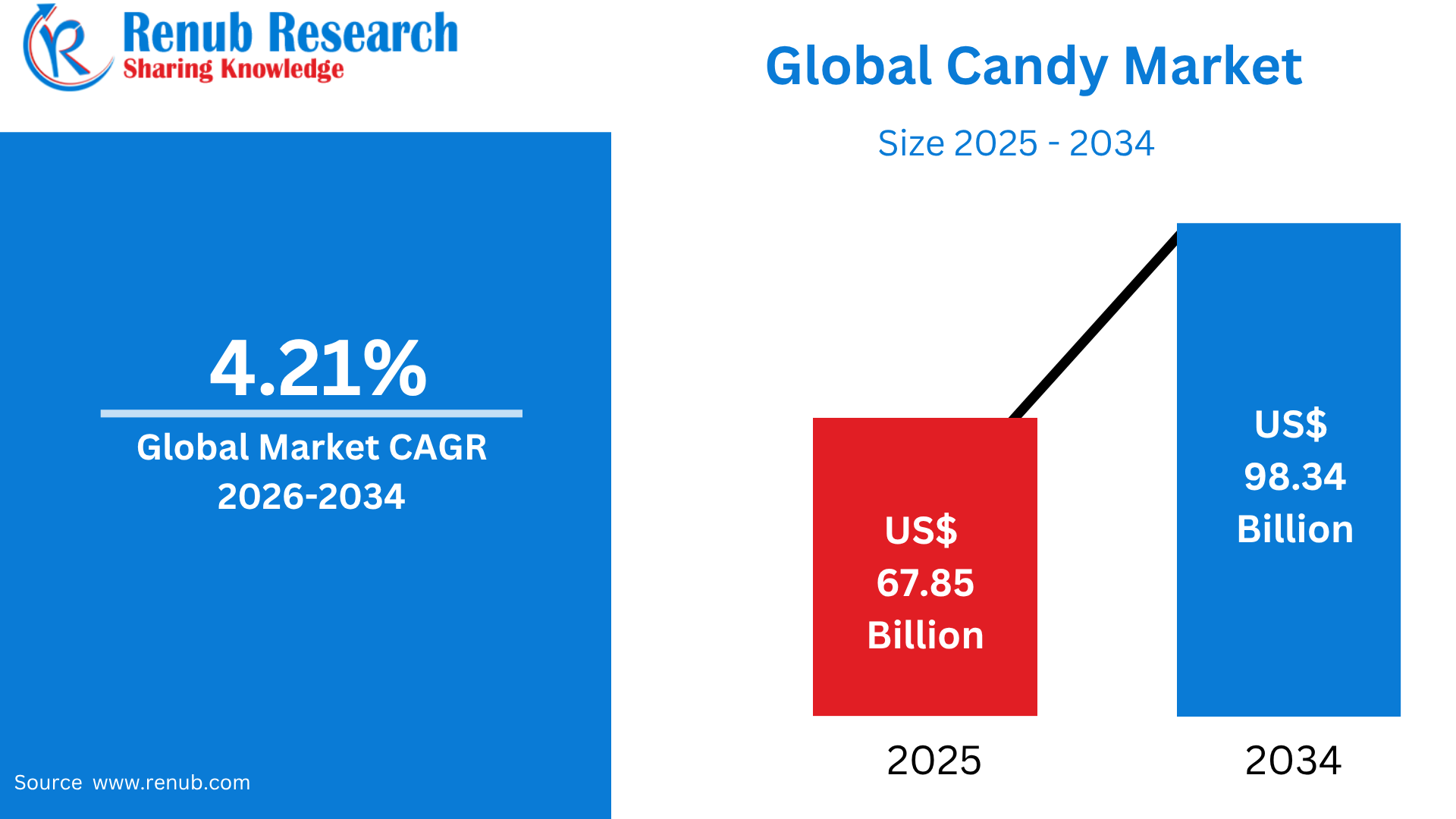
Candy Market is projected to grow from US$ 67.85 billion in 2025 to US$ 98.34 billion by 2034, registering a Compound Annual Growth Rate (CAGR) of 4.21% during the forecast period from 2026 to 2034. The market is expected to maintain steady growth, driven by changing consumer preferences, continuous product innovation, and increasing demand for premium and differentiated confectionery products. Expanding retail and distribution networks are further improving product availability across both developed and emerging markets.
What is Candy Market and Its Uses & Popularity Worldwide
The candy market comprises a broad range of sugar-based confectionery products, including hard candies, gummies, chewy sweets, lollipops, caramels, mints, toffees, jelly candies, and other sweet treats. Candy is primarily consumed as an indulgent snack, dessert, refreshment, or small reward and is widely purchased across supermarkets, convenience stores, specialty confectionery shops, e-commerce platforms, vending channels, and foodservice outlets.
Candy also plays an important role in festivals, holidays, birthdays, weddings, gifting, and other celebrations, making seasonal demand an important component of the industry. Its worldwide popularity is supported by convenient packaging, affordable price points, extensive flavor choices, and continuous product innovation. According to Innova Market Insights, 4 in 10 consumers globally purchased sugar confectionery during the past year, with Gen Z and Millennials showing increasing consumption. Taste, novelty, and lifestyle are among the leading reasons for purchasing these products. Manufacturers are increasingly introducing fruit-based flavors, premium ingredients, reduced-sugar formulations, functional candies, and innovative textures to attract changing consumer preferences.
Top Ten Countries by Per Capita Chocolate Consumption in 2023
- Switzerland: 8.8 kg/year
- Germany: 8.4 kg/year
- Ireland: 8.3 kg/year
- United Kingdom: 8.2 kg/year
- Norway: 8.0 kg/year
- Sweden: 7.9 kg/year
- Denmark: 7.5 kg/year
- Netherlands: 7.4 kg/year
- Finland: 7.2 kg/year
- Belgium: 6.8 kg/year
Growth Drivers
Product Innovation and Changing Consumer Preferences
Product innovation is a major growth driver for the global candy market as consumers increasingly seek new flavors, textures, formats, and sensory experiences. Candy manufacturers are expanding beyond traditional sweets by introducing gummies, filled candies, sour products, fruit-inspired varieties, plant-based formulations, and reduced-sugar alternatives. Innova Market Insights reports that 4 in 10 consumers globally purchased sugar confectionery in the past year, while Gen Z and Millennials are increasing their consumption. Taste, novelty, and lifestyle are identified as key purchase motivations. The growing popularity of novel textures is also encouraging manufacturers to combine chewy, crunchy, creamy, and popping elements within individual products. This innovation helps brands generate consumer excitement and differentiate products in a highly competitive market. Social-media-driven food trends further accelerate the adoption of visually appealing and unusual confectionery formats. As manufacturers continue to experiment with flavors, textures, packaging, and product concepts, innovation is expected to support repeat purchases and expand candy consumption among younger and digitally engaged consumers.
Premiumization and Seasonal Gifting Demand
Premiumization and the growing importance of candy as a gifting and celebration product are supporting market expansion worldwide. Consumers increasingly purchase higher-value confectionery products featuring premium ingredients, distinctive flavors, attractive packaging, and specialty formulations for holidays, festivals, birthdays, weddings, and other occasions. Confectionery also benefits from its relatively accessible price point, allowing consumers to indulge or purchase small gifts without the expenditure associated with many other discretionary products. Western Europe accounts for around one-third of global confectionery revenue, while North America represents approximately 22%, demonstrating the strong importance of established confectionery markets. Manufacturers are responding through premium assortments, limited-edition products, gift boxes, seasonal collections, and personalized packaging. Expanding premium retail channels and e-commerce are further improving access to specialty candies and supporting higher-value purchases.
Expanding Retail and Distribution Networks
The expansion of modern retail, convenience stores, supermarkets, specialty stores, and online shopping platforms is increasing the accessibility of candy products across global markets. Candy is particularly well suited to multiple distribution channels because products are generally portable, shelf-stable, and available in different package sizes and price categories. Digital commerce is also creating opportunities for manufacturers to reach consumers directly and promote specialty, imported, personalized, and limited-edition confectionery products. Emerging markets are also becoming attractive as urbanization, modern retail development, rising disposable incomes, and changing lifestyles increase access to packaged snacks and confectionery. Manufacturers are strengthening their presence through convenience formats, multipacks, impulse displays, and online promotions. As organized retail and e-commerce infrastructure continue to expand, wider product availability is expected to support candy market penetration and stimulate consumption across both developed and developing economies.
Challenges
Health Concerns and Growing Sugar-Reduction Pressure
Health and nutrition concerns represent a significant challenge for the candy market because conventional products frequently contain high levels of added or free sugars. Consumers and policymakers are increasingly focused on reducing excessive sugar consumption because of its association with unhealthy weight gain and dental caries. The World Health Organization recommends that adults and children reduce free-sugar consumption to less than 10% of total daily energy intake, while reducing intake below 5% can provide additional health benefits. WHO specifically identifies sugary snacks, including candies, among foods whose consumption should be limited. These recommendations can influence consumer purchasing decisions and encourage governments to introduce nutrition labeling, marketing restrictions, and other measures affecting high-sugar products. Consequently, candy manufacturers are under increasing pressure to reformulate products with reduced sugar, alternative sweeteners, smaller portions, and cleaner ingredient profiles without compromising taste or texture. Balancing health expectations with indulgence remains a major strategic challenge for the industry.
Volatile Raw-Material Costs and Supply-Chain Risks
Fluctuating raw-material prices represent another important challenge for candy manufacturers, particularly for companies using sugar, cocoa, dairy ingredients, nuts, oils, and other agricultural commodities. Weather disruptions, climate change, crop disease, geopolitical events, transportation constraints, and changing agricultural conditions can affect the availability and cost of key ingredients. Cocoa has been particularly volatile in recent years, creating pressure for chocolate and mixed confectionery producers. The International Cocoa Organization maintains daily and monthly cocoa-price statistics, highlighting the importance of global commodity-market movements to the confectionery supply chain. Recent industry reporting has also linked higher candy prices to supply constraints in cocoa-producing countries and weather-related disruptions affecting sugar supplies. Rising ingredient, packaging, energy, and logistics costs can compress manufacturers’ margins or force companies to increase retail prices. Higher prices may subsequently reduce purchase frequency among price-sensitive consumers. Manufacturers therefore need resilient sourcing strategies, efficient production, appropriate inventory management, and product reformulation to manage raw-material volatility while maintaining competitive pricing.
Candy Launches Worldwide
- Baby Bottle Pop Twisters – Bazooka Candy (USA, 2025): A multi-texture candy featuring a crunchy outer shell, chewy center, and sour powder core, launched in Strawberry, Blue Raspberry, Watermelon, and Berry Blast flavors.
- SweeTARTS Gummy Halos – Ferrara (USA, 2025): A new ring-shaped gummy combining sweet-and-tart flavors with a soft gummy base and chewy upper layer, available in Blue Punch and Strawberries & Cream.
- Refreshers Tropical Chew Bar – Swizzels (UK, 2025): A vegan-friendly tropical candy bar launched to celebrate the 70th anniversary of the Refreshers brand, featuring mango and pineapple flavors.
- Haribo Pippi Longstocking Sour Candy – BonBon Swedish Candy Co. (Sweden, 2025): A Pippi Longstocking-inspired sour candy developed as a character-themed confectionery offering.
- Haribo New SKU Range – Haribo (Germany/Global, 2025): Haribo introduced three new confectionery SKUs as part of its 2025 product-development program, reflecting continued innovation in gummy and chewy candy formats.
- Twix Hazelnut Minis – Mars (Global/Travel Retail, 2025): A new mini-format Twix variation combining the traditional caramel and biscuit profile with hazelnut flavor, introduced through travel-retail and domestic channels.
- Sugar-Free Tic Tacs – Ferrero (Global/Travel Retail, 2025): Ferrero introduced a new sugar-free Tic Tac range featuring three flavors, including one mint and two fruit varieties, targeting consumers seeking reduced-sugar confectionery.
- M&M’s Halloween 2025 Range – Mars (USA, 2025): Mars expanded its seasonal candy portfolio with new Halloween M&M’s varieties, including milk chocolate, peanut milk chocolate, and peanut butter milk chocolate blends.
- YumEarth Easter Organic Gummy Fruits & Jelly Beans – YumEarth (USA, 2025): YumEarth introduced an Easter collection including organic gummy fruits, jelly beans, sour candies, and variety packs positioned around allergen-friendly confectionery.
- Chupa Chups Sour Belts & Candy Laces – Chupa Chups (Global, 2024): Chupa Chups expanded beyond its traditional lollipop format with extruded jelly products, including Sour Mixed Belts, Sour Apple Belts, Sour Strawberry Belts, and Strawberry Laces.
United States Strong Consumer Demand and Established Confectionery Culture
United States candy market is one of the world’s largest and most mature confectionery markets, supported by strong demand across children, teenagers, and adults. Candy is widely consumed as an everyday snack, impulse purchase, seasonal treat, and gifting product. The market benefits from extensive retail penetration through supermarkets, convenience stores, drugstores, specialty confectionery retailers, vending channels, and e-commerce platforms. Seasonal occasions such as Halloween, Easter, Valentine’s Day, Christmas, and other celebrations generate significant incremental demand. Product innovation is also a major competitive factor, with manufacturers introducing new flavors, textures, formats, and limited-edition offerings to maintain consumer engagement. Innovation remains central to the development of the U.S. candy market as manufacturers respond to changing consumer preferences and demand for differentiated products. Companies increasingly experiment with sour flavors, tropical combinations, unusual textures, functional ingredients, reduced-sugar formulations, and premium ingredients. Younger consumers are particularly receptive to novelty products and limited-edition releases promoted through social media and digital marketing. Better-for-you candy is also gaining attention as consumers become more conscious of sugar intake, ingredients, and portion sizes. In addition, premiumization is encouraging brands to introduce higher-quality chocolate coatings, specialty fillings, natural flavors, and attractive packaging. In June 2024, Nestlé introduced a travel-retail-only sustainably sourced chocolate line, responding to growing consumer interest in ethically sourced ingredients. The Hershey Company’s KIT KAT brand also introduced the limited-edition KIT KAT Pink Lemonade Flavored Bar in May 2024, providing a distinctive flavor experience. Such launches demonstrate how flavor experimentation, sustainability, and premium positioning are shaping U.S. confectionery competition.
Germany Strong Confectionery Tradition and Retail Infrastructure
Germany represents one of Europe’s most important confectionery markets, supported by a long-established candy culture, strong consumer purchasing power, and highly developed retail infrastructure. Consumers have access to a broad range of products, including gummies, fruit candies, hard candies, mints, licorice, chewy sweets, and premium confectionery. Candy consumption is supported by everyday snacking as well as seasonal celebrations, gifting occasions, and family gatherings. Germany’s extensive supermarket, discount-store, convenience, specialty-retail, and e-commerce networks provide manufacturers with broad distribution opportunities. Premiumization is becoming increasingly important in Germany as consumers seek higher-quality confectionery products with distinctive flavors, sophisticated packaging, and recognizable ingredients. Premium gummies, specialty fruit candies, organic confectionery, and reduced-sugar products are gaining attention alongside traditional candy formats. Consumers are also increasingly interested in ingredient transparency and products containing natural colors and flavors. This trend is encouraging manufacturers to reformulate established products and develop new varieties aimed at health-conscious consumers without eliminating indulgence. Seasonal demand provides another important opportunity, particularly around Christmas, Easter, and other gifting periods. Germany’s strong retail infrastructure allows new products to reach consumers rapidly through supermarkets, discount chains, specialty retailers, and online platforms. The country’s established confectionery manufacturing base further supports continuous product innovation and brand competition. As consumers balance enjoyment with growing awareness of nutrition and ingredients, the German candy market is increasingly characterized by premiumization, product differentiation, sustainability, and healthier formulations.
India Young Population and Expanding Retail Reach
India’s candy market is supported by its large young population, increasing disposable incomes, urbanization, and extensive availability of affordable confectionery products. Candy is particularly popular as an impulse purchase among children and young consumers, while adults increasingly purchase confectionery for snacking, gifting, and celebrations. Traditional retail remains highly important, with products distributed through millions of neighborhood stores, kiosks, supermarkets, convenience outlets, and other small-format retailers. Modern retail and e-commerce are further expanding consumer access to branded and premium candy products. India’s population exceeded 1.4 billion people, providing manufacturers with a substantial consumer base and long-term growth opportunity. Rising urbanization is also changing purchasing behavior as consumers gain greater exposure to international confectionery trends and innovative product formats. Fruit-flavored candies, hard-boiled sweets, gummies, lollipops, and novelty products remain particularly attractive to younger consumers. Manufacturers are responding through new flavors, smaller affordable packs, colorful packaging, and regionally relevant products, helping sustain demand across both urban and rural markets. Product innovation and digital engagement are becoming increasingly important competitive factors in India’s candy industry. Manufacturers are using interactive campaigns, social media, influencer marketing, limited editions, and experiential promotions to connect with younger consumers. This strategy is particularly relevant to Gen-Z consumers, who increasingly discover brands through digital platforms. In November 2025, Pulse Candy, the tangy hard-candy brand from Dharampal Satyapal Group, launched “Candy Day The Pulse Way: Surfing Edition,” an interactive mobile game developed with MakeAR. The experience allowed users to control a surfing avatar by blowing into their device, linking the physical consumption experience with digital entertainment.
Saudi Arabia Young Consumer Base and Seasonal Demand
Saudi Arabia’s candy market benefits from a young population, rising consumer spending, urbanization, and strong cultural demand for confectionery during social gatherings, family occasions, celebrations, and religious festivities. Candy and other sweets are commonly associated with hospitality, gifting, and special occasions, creating strong seasonal purchasing opportunities. Demand extends across traditional sweets, international candy brands, gummies, chocolates, hard candies, and premium gift assortments. Seasonal occasions such as Ramadan, Eid, weddings, and family celebrations can generate additional demand for gift boxes and premium confectionery. These demographic and cultural characteristics provide a strong foundation for continued expansion of the Saudi Arabian candy market. The development of modern retail and e-commerce is improving access to candy products across Saudi Arabia and creating additional opportunities for domestic and international confectionery brands. Supermarkets, hypermarkets, convenience stores, specialty retailers, and online marketplaces provide manufacturers with multiple channels for reaching consumers. Premium candy and attractively packaged gift products are particularly relevant to Saudi consumers during festive occasions and family gatherings. Rising exposure to international food and confectionery trends is also encouraging demand for innovative flavors, imported brands, healthier formulations, and premium products.
Recent Developments in Candy Market
- June 2025: The Smurfs and the Ukrainian candy company Vitamin Candy by Alex-IS have teamed up to provide kids throughout the world with healthier snack options. The partnership, made possible by Art Nation Licensing, has produced sugar-free fruit pastilles with wholesome ingredients and whimsical packaging. Pomegranate and apple, white grape and apple, and cherry and apple are the three fruit combinations in the product range that each include well-known Smurf figures and offer natural sweetness free of artificial additives.
- May 2025: Ferrera's SweeTarts introduced SweeTarts Gummy Halos, their newest invention. These Gummy Halos have a delicious blend of sweet and tangy flavors, a light, fluffy gummy foundation, and a chewy pink and blue layer on top. The new product adds Blue Punch and Strawberries & Cream, two mouthwatering taste combinations, to the SweeTARTS roster.
- April 2025: Disneyland Paris and Mars Wrigley strengthen their partnership by offering guests a lively gastronomic experience at the Boardwalk Candy Palace. Since its inception in 2023, the partnership has effectively incorporated Mars Wrigley's well-known trademarks, like as M&M'S, Skittles, Twix, Snickers, and Maltesers, into most of the park's retail locations.
Market Segmentation
Type
- Chocolate Candy
- Non-chocolate Candy
- Hard Boiled Candies
- Pastilles, Gums, Jellies, and Chews
- Toffees, Caramels, and Nougat
- Mints
- Other Non-chocolate Candies
Distribution Channel
- Supermarkets/Hypermarkets
- Convenience Stores
- Specalist Retailers
- Online Retail
- Other Distribution Channels
Countries
North America
- United States
- Canada
Europe
- France
- Germany
- Italy
- Spain
- United Kingdom
- Belgium
- Netherlands
- Turkey
Asia Pacific
- China
- Japan
- India
- Australia
- South Korea
- Thailand
- Malaysia
- Indonesia
- New Zealand
Latin America
- Brazil
- Argentina
- Mexico
Middle East & Africa
- South Africa
- Saudi Arabia
- United Arab Emirates
All the Key players have been covered with 5 Viewpoints
- Overviews
- Key Person
- Recent Developments
- SWOT Analysis
- Revenue Analysis
Key Players Analysis
- Perfetti Van Melle Group BV
- The Topps Company Inc.
- Mondelez International Inc.
- Haribo GmbH & Co. KG
- Mars Incorporated
- Ferrero Group
- Nestle SA
- The Hershey Company
- Grupo Arcor
- Cloetta Ab
Report Details:
| Report Features | Details |
| Base Year |
2025 |
| Historical Period |
2022 - 2025 |
| Forecast Period |
2026 - 2034 |
| Market |
US$ Billion |
| Segment Covered |
Type, Distribution Channel and Countries |
| Countries Covered |
|
| Companies Covered |
|
| Customization Scope |
20% Free Customization |
| Post-Sale Analyst Support |
1 Year (52 Weeks) |
| Delivery Format |
PDF and Excel through Email (We can also provide the editable version of the report in PPT/Word format on request) |
Customization Services available
- Analysis of Market Size and Its Segments
- More Company Profiles (Upto 10 without any additional cost):
- Additional Countries (Other than mentioned Countries):
- Region/Country Specific Reports:
- Market Entry Strategy:
- Region-Specific Market Dynamics:
- Regional Market Share Analysis:
- Trade Analysis:
- Production Insights:
- Others Customized Requests:
For more information contact our analysts.
Need More Assistance?
- Talk to our analysts to get more precious information on the current market trends.
- Include more countries and segments and customize the report based on the final requirement.
- Get a competitive advantage in your industry by knowing the report findings and making a positive impact on your revenues and operations.
- Our analysts are always ready to provide more help and pertinent information if you need any additional assistance.