United States Diabetes Devices Market Size, Share, Growth, Trends, Industry Analysis & Forecast 2026–2034
Buy NowUnited States Diabetes Devices Market Size
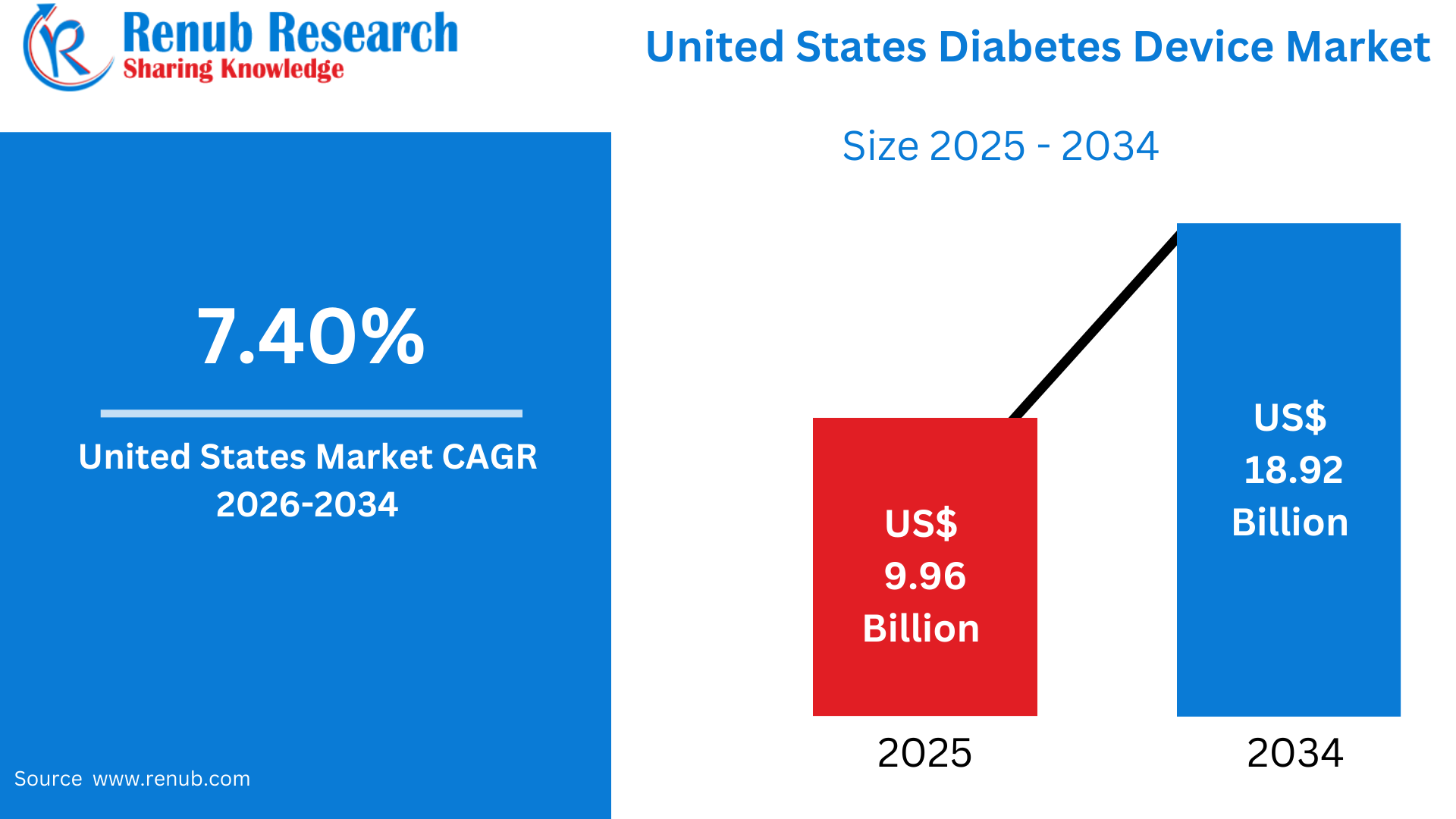
United States Diabetes Devices Market is projected to witness steady growth over the forecast period, expanding from US$ 9.96 billion in 2025 to US$ 18.92 billion by 2034, registering a compound annual growth rate (CAGR) of 7.40% during 2026–2034. Market growth is primarily driven by the increasing prevalence of diabetes, rising adoption of continuous glucose monitoring (CGM) systems, growing demand for advanced insulin delivery devices, and ongoing technological innovations that improve patient convenience, treatment outcomes, and disease management.
Diabetes Devices and its Popularity in United States
Diabetes devices are specialized medical technologies designed to monitor blood glucose levels and support effective diabetes management through insulin delivery and related therapeutic solutions. These devices include blood glucose meters, continuous glucose monitoring (CGM) systems, insulin pens, insulin pumps, smart insulin delivery systems, and digital health applications that enable patients and healthcare providers to monitor glucose levels in real time. Widely used for managing both Type 1 and Type 2 diabetes, these technologies help improve glycemic control, reduce the risk of complications, and enhance patients’ quality of life. Advances in digital health, connectivity, artificial intelligence, and mobile integration have further improved the accuracy, convenience, and functionality of modern diabetes management devices.
The United States represents one of the world’s largest markets for diabetes devices due to the country’s high diabetes prevalence, strong healthcare infrastructure, and growing awareness of effective disease management. Healthcare providers and patients are increasingly adopting advanced diabetes technologies that offer greater accuracy, ease of use, and continuous monitoring capabilities. Favorable reimbursement policies and expanding insurance coverage have significantly improved access to continuous glucose monitoring systems and insulin pumps across the country. In addition, the growing emphasis on preventive healthcare, remote patient monitoring, personalized treatment approaches, and connected healthcare solutions is accelerating the adoption of smart diabetes devices among patients of all age groups. Continuous product innovation and digital integration are expected to further support market expansion throughout the forecast period.
Fast Facts on Diabetes in the United States (2023)
- Total Diabetes: Approximately 40.1 million people in the United States were living with diagnosed or undiagnosed diabetes, representing 12.0% of the total U.S. population.
- Diagnosed Diabetes: Around 29.1 million people had been diagnosed with diabetes, including 28.8 million adults aged 18 years and older.
- Undiagnosed Diabetes: Nearly 27.6% of adults with diabetes remained undiagnosed, accounting for an estimated 11.0 million individuals.
- Prediabetes: Approximately 115.2 million U.S. adults aged 18 years and older were estimated to have prediabetes.
- Type 1 Diabetes: An estimated 2.1 million people were living with diagnosed Type 1 diabetes, including 1.8 million adults aged 20 years and older and 314,000 children and adolescents under the age of 20.
- Prediabetes Among Older Adults: Around 31.3 million adults aged 65 years and above had prediabetes, representing 52.1% of the U.S. population in this age group.
Growth Drivers
Rising Prevalence of Diabetes and Aging Population
The increasing prevalence of diabetes in the United States is one of the primary factors driving demand for diabetes management devices. The growing incidence of both Type 1 and Type 2 diabetes is largely attributed to sedentary lifestyles, rising obesity rates, unhealthy dietary habits, and other lifestyle-related risk factors. Additionally, the country’s expanding elderly population further contributes to market growth, as older adults are more susceptible to diabetes and associated chronic complications. Consequently, demand for continuous glucose monitoring (CGM) systems, insulin pumps, insulin pens, and self-monitoring devices continues to rise. These technologies enable effective glucose management, reduce hospital admissions, and help prevent long-term complications. According to projections, the number of Americans living with diabetes is expected to more than double by 2050, while nearly one-third of adults aged 65 years and older are already affected by the disease, ensuring sustained demand for advanced diabetes care devices.
Technological Advancements and Digital Health Integration
Rapid technological innovation is transforming diabetes management and accelerating the adoption of advanced diabetes devices across the United States. Modern solutions such as continuous glucose monitoring systems, smart insulin pens, automated insulin delivery systems, and hybrid closed-loop technologies provide more accurate and personalized diabetes management. Integration with smartphone applications, cloud-based platforms, wearable devices, and telehealth services enables patients to monitor glucose levels in real time while allowing healthcare professionals to remotely assess patient data and optimize treatment plans. The growing adoption of digital health technologies is further strengthening market expansion. In December 2024, Dexcom introduced a generative AI platform built on Google Cloud Vertex AI and Gemini models to analyze individual glucose patterns, physical activity, and sleep data, delivering personalized recommendations that support real-time lifestyle and treatment decisions.
Growing Awareness and Emphasis on Preventive Healthcare
Increasing awareness of diabetes prevention and disease management is significantly contributing to the adoption of diabetes devices in the United States. Patients are becoming more proactive about monitoring blood glucose levels regularly and using advanced technologies to manage their condition effectively. Preventive healthcare initiatives aimed at reducing diabetes-related complications and lowering long-term healthcare expenditures are encouraging greater use of continuous glucose monitoring systems and insulin delivery devices. Healthcare providers, employers, insurers, and public health organizations continue to promote device-assisted self-management to improve treatment outcomes and patient engagement. The expanding focus on preventive, patient-centered care is driving demand for connected diabetes technologies that support continuous monitoring and personalized disease management. The U.S. National Diabetes Prevention Program, which has reached nearly 500,000 participants over the past decade, demonstrates the positive impact of preventive care initiatives while highlighting the ongoing need to expand access and improve participation among the millions of Americans at risk of developing diabetes.
Diabetes Devices Launches in USA
- January 2024 – Abbott launched the FreeStyle Libre 3 Plus Sensor, offering a 15-day wear period, integration with automated insulin delivery (AID) systems, and improved continuous glucose monitoring (CGM) performance.
- March 2024 – Dexcom introduced the Dexcom ONE+ Continuous Glucose Monitoring (CGM) System, featuring a smaller sensor, simplified application process, and enhanced connectivity for diabetes management.
- April 2024 – Medtronic launched the MiniMed™ 780G System in broader U.S. markets, featuring automated insulin correction, meal detection algorithms, and SmartGuard™ technology for improved glucose control.
- May 2024 – Tandem Diabetes Care introduced the Tandem Mobi™ Insulin Pump, one of the world's smallest durable insulin pumps, designed for discreet insulin delivery and smartphone control.
- June 2024 – Insulet Corporation expanded the Omnipod® 5 Automated Insulin Delivery System compatibility to support additional continuous glucose monitoring platforms, improving automated diabetes management.
- August 2024 – Senseonics launched enhancements to the Eversense® E3 Continuous Glucose Monitoring System, extending sensor performance with improved mobile app functionality and remote monitoring features.
- September 2024 – Roche Diabetes Care introduced an upgraded Accu-Chek® Guide Me Blood Glucose Monitoring System, featuring enhanced accuracy, Bluetooth connectivity, and digital health integration.
- October 2024 – Abbott launched Lingo, an over-the-counter continuous glucose monitoring (CGM) biosensor designed for health-conscious consumers seeking metabolic wellness insights without requiring a diabetes diagnosis.
- March 2025 – Dexcom launched the Dexcom G7 15-Day CGM System, extending sensor wear time while improving glucose monitoring accuracy, patient convenience, and compatibility with insulin delivery systems.
- April 2025 – Abbott introduced the FreeStyle Libre Rio, an over-the-counter continuous glucose monitoring solution designed for adults with Type 2 diabetes who do not use insulin, providing accessible real-time glucose tracking without a prescription.
Challenge
Higher expenses
Higher expenses associated with the use of advanced diabetes technology are still one of the challenges in the U.S. market. Continuous glucose monitoring systems, insulin pumps, and intelligent systems are associated with substantial capital and recurring expenditures. Though there are reimbursements, the reimbursement structures are extremely varied depending upon the organization and the patients as well. Out-of-pocket expenditures might prevent the use of devices, especially in the absence of insurance plans. Higher cost consideration might hinder the adoption and prevent the discontinuation of the use of devices.
Device Complexity and User Adoption Barriers
Though a lot of advancements are being made in the field of technology, complexity may be a hindrance to the widespread adoption of devices. Many patients experience difficulties when working with advanced devices. Older patients and less technologically savvy patients may experience troubles with the calibrations of the devices and the interpretation of the results. If the devices malfunction or connectivity is a problem, the confidence of the patients may be affected. However, training and service costs increase the burden on healthcare costs.
Types Insights
United States SMBG Devices
The Self-Monitoring of Blood Glucose (SMBG) devices market remains a well-established segment of the United States diabetes devices industry. Blood glucose meters and test strips continue to play a vital role in diabetes management by enabling patients with both Type 1 and Type 2 diabetes to monitor their blood glucose levels conveniently at home. These devices are widely used by individuals receiving insulin therapy as well as those managing diabetes with oral medications. Factors such as affordability, ease of use, widespread availability, and strong reimbursement support continue to sustain demand for SMBG systems. Although market growth has moderated with the emergence of continuous glucose monitoring technologies, consistent replacement demand and preference among cost-conscious consumers continue to support the stability of the SMBG market
United States Continuous Glucose Monitoring (CGM) Devices
The Continuous Glucose Monitoring (CGM) devices market is one of the fastest-growing segments within the U.S. diabetes devices industry. CGM systems provide real-time glucose measurements, trend analysis, and customizable alerts, allowing patients to better manage blood glucose levels while significantly reducing the need for routine finger-stick testing. Initially adopted primarily by individuals with Type 1 diabetes, CGM technology is now experiencing rapid uptake among insulin-dependent Type 2 diabetes patients as well. Technological advancements, including smartphone connectivity, integration with insulin pumps, cloud-based data sharing, and digital health platforms, have further enhanced usability, convenience, and patient engagement, driving continued market expansion.
United States Insulin Pumps
The U.S. insulin pumps market is expanding steadily due to increasing demand for precise, automated insulin delivery solutions. Insulin pumps provide continuous subcutaneous insulin infusion, offering greater flexibility, improved glycemic control, and enhanced convenience compared with multiple daily insulin injections. These devices are widely used by individuals with Type 1 diabetes and patients requiring intensive insulin therapy. Continuous innovation has resulted in smart insulin pumps equipped with advanced automation, personalized dosing algorithms, and enhanced safety features. Furthermore, integration with continuous glucose monitoring systems has enabled the development of hybrid closed-loop and automated insulin delivery systems, significantly improving diabetes management outcomes and patient quality of life.
United States Insulin Pen Devices
Insulin pens have become a preferred insulin delivery option in the United States because of their convenience, portability, ease of use, and dosing accuracy. Compared with conventional syringes, insulin pens simplify insulin administration and improve treatment adherence among individuals with both Type 1 and Type 2 diabetes. The market includes both disposable and reusable pen devices, allowing patients to select solutions that best meet their treatment needs. Technological advancements have also led to the introduction of smart insulin pens capable of recording dosing history, tracking insulin administration, and connecting with smartphone applications to support personalized diabetes management. Growing patient preference for user-friendly insulin delivery systems continues to support steady market growth.
Distribution Channel Insights
United States Diabetes Devices Diagnostic Centers
Diagnostic centers represent an important end-user segment within the U.S. diabetes devices market by supporting the diagnosis, monitoring, and ongoing management of diabetes. These facilities utilize self-monitoring blood glucose systems, professional continuous glucose monitoring devices, and advanced diagnostic technologies to evaluate glucose patterns and optimize treatment strategies. Diagnostic centers play a critical role in early disease detection, patient assessment, and therapy management, enabling healthcare professionals to deliver more personalized diabetes care. The increasing emphasis on preventive healthcare, early diagnosis, and proactive disease management continues to strengthen demand for diabetes devices across diagnostic facilities.
United States Diabetes Devices Retail Pharmacies
Retail pharmacies serve as one of the primary distribution channels for diabetes devices across the United States. They provide patients with convenient access to a broad range of products, including blood glucose meters, test strips, continuous glucose monitoring sensors, insulin pens, and other diabetes management devices. Their extensive nationwide presence, combined with pharmacist counseling, prescription services, insurance support, and patient education, makes retail pharmacies a critical component of diabetes care delivery. As advanced diabetes technologies become increasingly available through pharmacy networks, patient accessibility and adoption continue to improve, supporting sustained market growth amid the rising prevalence of diabetes.
Top States insights
California Diabetes Devices
California represents one of the largest and most technologically advanced diabetes devices markets in the United States. The state’s large population, high diabetes prevalence, and strong emphasis on preventive healthcare continue to generate substantial demand for glucose monitoring and insulin delivery technologies. California has been an early adopter of innovative solutions, including continuous glucose monitoring systems, smart insulin pens, automated insulin pumps, and connected diabetes management platforms. Extensive access to specialized healthcare providers, endocrinology centers, and retail pharmacy networks further supports widespread device adoption. In addition, increasing emphasis on chronic disease management, wellness programs, and early diagnosis continues to strengthen demand, positioning California as a leading market for advanced diabetes technologies.
Texas Diabetes Devices
Texas is a significant market for diabetes devices due to its large and growing diabetic population, expanding healthcare infrastructure, and increasing awareness of chronic disease management. Rising cases of Type 2 diabetes, influenced by demographic and lifestyle factors, continue to drive demand for self-monitoring blood glucose devices, continuous glucose monitoring systems, insulin pens, and insulin pumps. Major metropolitan areas benefit from advanced healthcare facilities, while ongoing improvements in healthcare accessibility are expanding adoption across rural communities. Retail pharmacies, diagnostic centers, and healthcare providers play essential roles in improving patient access to diabetes technologies. As healthcare awareness and chronic disease management initiatives continue to expand, Texas is expected to remain a major contributor to market growth.
New York Diabetes Devices
The New York diabetes devices market benefits from a well-developed healthcare infrastructure, high patient awareness, and strong adoption of preventive healthcare practices. Demand for advanced glucose monitoring technologies, particularly connected continuous glucose monitoring systems integrated with digital health platforms, continues to increase across the state. Hospitals, specialty clinics, diagnostic laboratories, and outpatient care centers extensively utilize diabetes management devices to support patient monitoring and treatment optimization. New York’s diverse patient population generates sustained demand for a wide range of diabetes technologies, including blood glucose meters, insulin pumps, insulin pens, and CGM systems. Continuous technological innovation and increasing digital health adoption are expected to support long-term market expansion.
Washington Diabetes Devices
The Washington diabetes devices market is expanding steadily, supported by growing adoption of preventive healthcare practices and advanced digital health technologies. Demand for connected diabetes management solutions, including wearable continuous glucose monitoring systems and smart insulin pumps, continues to increase as patients seek more personalized and data-driven care. Technology-oriented consumers, particularly younger patient populations, have shown strong acceptance of connected diabetes devices that integrate with smartphones and digital health applications. The state’s healthcare system places considerable emphasis on early disease detection, remote patient monitoring, and chronic disease management, creating favorable conditions for continued market growth. Retail pharmacies, healthcare providers, and specialty clinics further contribute to improving patient access to advanced diabetes management technologies across Washington.
Market Segmentations
Types
Self-Monitoring Devices
- Test Strips
- Lancets
- Blood Glucose Meters
Continuous Glucose-Monitoring Devices
- Sensors
- Transmitter
- Receiver
Insulin Pumps
- Patch Pumps
- Tethered Pumps
- Consumables
Insulin Pens
- Disposable Insulin Pen
- Reusable Insulin Pen
End User
- Hospitals
- Diagnostics Centers
- Homecare
Distribution Channel
- Hospital Pharmacies
- Retail Pharmacies
- Diabetes Clinics/Centers
- Online Pharmacies
Top States
- California
- Texas
- New York
- Florida
- Illinois
- Pennsylvania
- Ohio
- Georgia
- New Jersey
- Washington
- North Carolina
- Massachusetts
- Virginia
- Michigan
- Maryland
- Colorado
- Tennessee
- Indiana
- Arizona
- Minnesota
- Wisconsin
- Missouri
- Connecticut
- South Carolina
- Oregon
- Louisiana
- Alabama
- Kentucky
- Rest of United States
All companies have been covered with 5 Viewpoints
- Overviews
- Key Person
- Recent Developments
- SWOT Analysis
- Revenue Analysis
Company Analysis:
- BD
- Roche
- Medtronic
- Insulet Corporation
- Abbott Laboratories
- Dexcom Inc.
- Tandem Diabetes Care
- Ypsomed AG
- Novo Nordisk A/S
- Eli Lilly
Report Details:
| Report Features | Details |
| Base Year |
2025 |
| Historical Period |
2022 - 2025 |
| Forecast Period |
2026 - 2034 |
| Market |
US$ Billion |
| Segment Covered |
Types, End User, Distribution Channel and State |
| Countries Covered |
|
| Companies Covered |
|
| Customization Scope |
20% Free Customization |
| Post-Sale Analyst Support |
1 Year (52 Weeks) |
| Delivery Format |
PDF and Excel through Email (We can also provide the editable version of the report in PPT/Word format on request) |
Customization Services available
- Analysis of Market Size and Its Segments
- More Company Profiles (Upto 10 without any additional cost):
- Additional Countries (Other than mentioned Countries):
- Region/Country Specific Reports:
- Market Entry Strategy:
- Region-Specific Market Dynamics:
- Regional Market Share Analysis:
- Trade Analysis:
- Production Insights:
- Others Customized Requests:
For more information contact our analysts.
Need More Assistance?
- Talk to our analysts to get more precious information on the current market trends.
- Include more countries and segments and customize the report based on the final requirement.
- Get a competitive advantage in your industry by knowing the report findings and making a positive impact on your revenues and operations.
- Our analysts are always ready to provide more help and pertinent information if you need any additional assistance.