Rapid Acting Insulin Market Report by Product, Indication, Distribution Channel, Countries and Companies Analysis 2026-2034
Buy NowRapid-Acting Insulin Market Size and Forecast
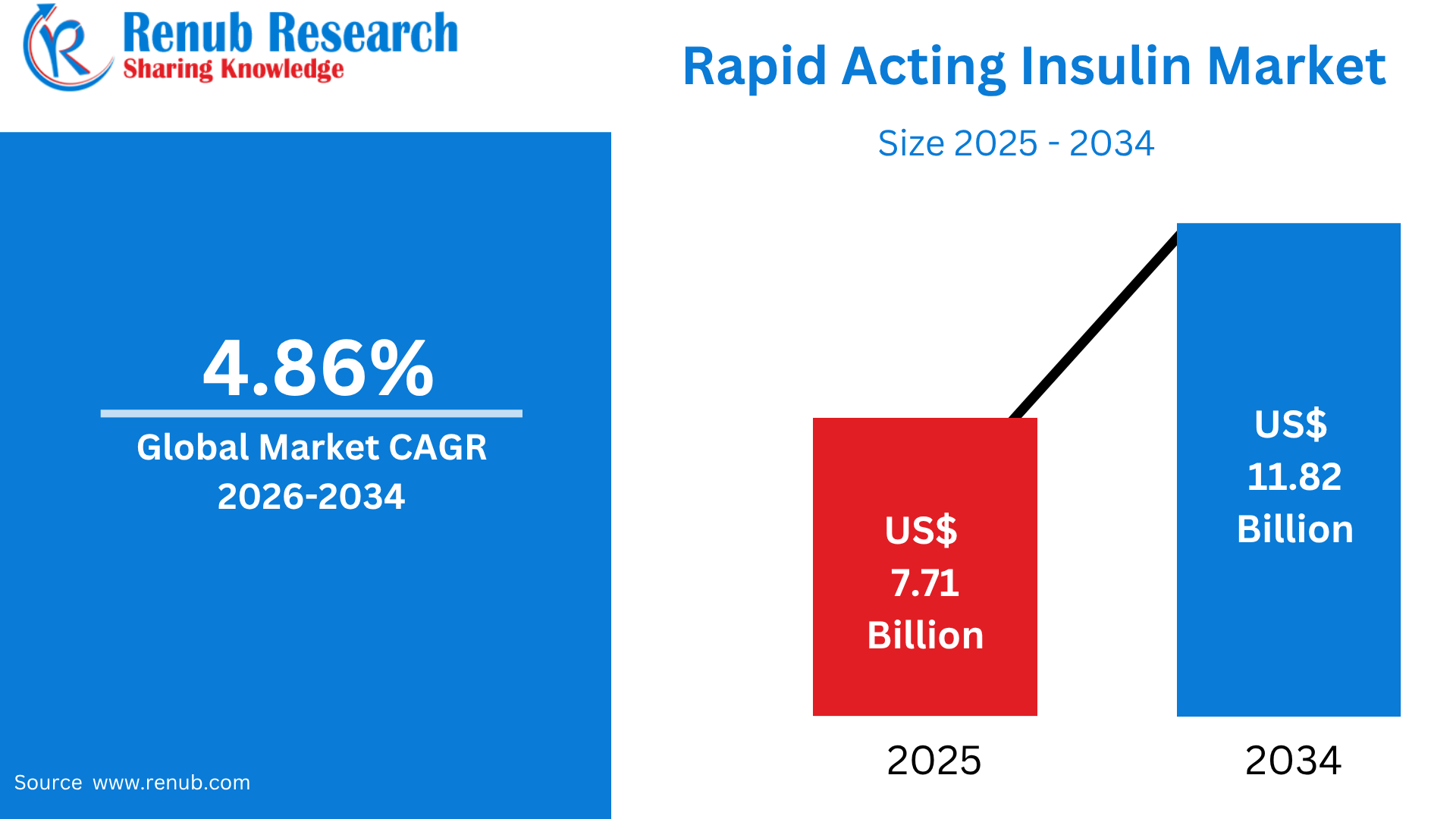
Rapid Acting Insulin Market is projected to grow from US$ 7.71 Billion in 2025 to US$ 11.82 Billion by 2034, registering a CAGR of 4.86% during 2026–2034. Market expansion is supported by the increasing global prevalence of diabetes, growing demand for rapid and flexible mealtime glucose management, and rising adoption of insulin pumps and continuous glucose monitoring (CGM) systems. In addition, advancements in insulin formulations, greater awareness of effective diabetes management, and improving access to modern insulin therapies in emerging economies are expected to strengthen market growth throughout the forecast period.
What is Rapid-Acting Insulin and Its Uses & Popularity Worldwide
Rapid-acting insulin is a type of insulin designed to work quickly after administration, helping lower blood glucose levels around mealtimes and manage sudden increases in blood sugar. It generally begins acting within minutes and has a shorter duration than intermediate- or long-acting insulin. Common formulations include insulin lispro, insulin aspart, and insulin glulisine. Rapid-acting insulin is widely used by people with type 1 and type 2 diabetes, particularly for controlling post-meal glucose levels. Its popularity is increasing worldwide as diabetes prevalence rises and patients seek more flexible insulin regimens. Integration with insulin pumps, continuous glucose monitoring (CGM) systems, smart insulin pens, and automated insulin-delivery technologies is further supporting adoption. The growing emphasis on personalized diabetes management, improved insulin formulations, and broader access to diabetes care in emerging economies is also contributing to demand. Rapid-acting insulin remains an important component of modern intensive insulin therapy because it can be adjusted according to meals, physical activity, and changing glucose levels.
Global Prevalence of Diabetes
* North America and Caribbean: 56 million
* Europe: 66 million
* Middle East and North Africa: 85 million
* South and Central America: 35 million
* Africa: 25 million
* South-East Asia: 107 million
* Western Pacific: 215 million
Growth Drivers of Rapid-Acting Insulin Market
Rising Global Prevalence of Diabetes
The increasing prevalence of diabetes is a major driver of the rapid-acting insulin market. According to the International Diabetes Federation, approximately 589 million adults aged 20–79 years were living with diabetes in 2024, and this number is projected to reach 853 million by 2050. As more patients require insulin therapy to achieve glycemic control, demand for rapid-acting formulations is expected to increase. These insulins are particularly important for managing postprandial glucose spikes and are widely incorporated into intensive insulin regimens for type 1 diabetes and insulin-dependent type 2 diabetes. Growing rates of obesity, sedentary lifestyles, aging populations, and urbanization are further expanding the diabetes patient pool. Increased diagnosis and treatment initiation, particularly across developing economies, are also creating new opportunities for insulin manufacturers. Consequently, the expanding global diabetes burden is expected to sustain demand for rapid-acting insulin during the forecast period.
Growing Adoption of Insulin Pumps and CGM Technologies
The integration of rapid-acting insulin with continuous glucose monitoring (CGM) systems, insulin pumps, and automated insulin-delivery technologies is accelerating market growth. Modern insulin pumps primarily use rapid-acting insulin because of its predictable and relatively fast pharmacological profile, allowing insulin delivery to be adjusted according to real-time glucose levels and meals. CGM adoption is also expanding as diabetes management becomes increasingly data-driven. The International Diabetes Federation estimates that more than 500 million people worldwide use insulin, highlighting the substantial population that can benefit from advanced delivery technologies. Smart insulin pens and hybrid closed-loop systems are further improving dosing convenience and personalization. As healthcare providers increasingly emphasize tighter glucose control and patients seek less burdensome diabetes management, the combination of rapid-acting insulin with digital technologies is becoming increasingly attractive. This convergence is expected to support demand for advanced rapid-acting insulin products worldwide.
Increasing Demand for Flexible and Personalized Diabetes Management
Growing emphasis on personalized diabetes care and flexible mealtime glucose management is another important market driver. Rapid-acting insulin can be administered shortly before or around meals, enabling patients to adjust doses according to carbohydrate intake, physical activity, and blood glucose readings. This flexibility is particularly valuable for patients following intensive insulin therapy and those using insulin pumps or automated delivery systems. Advances in insulin formulations are also improving the speed and predictability of glucose-lowering effects, supporting more individualized treatment strategies. At the same time, increasing diabetes awareness is encouraging patients to monitor glucose levels and seek treatment earlier. Healthcare systems are also placing greater emphasis on preventing diabetes-related complications through improved glycemic control. As personalized treatment becomes more common and access to modern diabetes therapies expands across emerging markets, demand for rapid-acting insulin is expected to increase steadily through 2034.
Challenges of Rapid-Acting Insulin Market
High Cost and Limited Affordability
The high cost of insulin and associated diabetes-management technologies remains a significant challenge for the rapid-acting insulin market, particularly in low- and middle-income countries. Patients may face expenses not only for insulin itself but also for delivery devices, glucose-monitoring systems, needles, and other supplies. Although insulin is an essential therapy for millions of people with diabetes, affordability and availability can vary substantially between countries and healthcare systems. Even in developed markets, insurance coverage, copayments, and differences between branded and biosimilar or follow-on products can influence treatment choices. Rapid-acting insulin analogs can also be more expensive than some human insulin formulations. These cost pressures may encourage patients or healthcare providers to select lower-cost alternatives, potentially limiting adoption of newer formulations. Expanding reimbursement coverage, improving supply chains, increasing competition, and strengthening access to affordable insulin will therefore remain important for sustained market growth.
Risk of Hypoglycemia and Treatment Complexity
The risk of hypoglycemia and the complexity associated with insulin dosing represent another challenge for rapid-acting insulin adoption. While rapid-acting formulations provide effective control of post-meal blood glucose, inappropriate dosing, missed meals, changes in physical activity, or inaccurate carbohydrate estimation can result in blood glucose levels falling too low. Patients using intensive insulin regimens may therefore require regular glucose monitoring and education to manage therapy safely. The increasing use of insulin pumps and automated insulin-delivery systems can improve dosing precision but also adds technological and training requirements. In addition, some patients may find frequent injections or device-based administration burdensome, which can contribute to treatment fatigue and reduced adherence. Healthcare professionals must balance effective glycemic control with minimizing adverse events. Continued development of faster and more predictable insulin formulations, smart dosing technologies, CGM integration, and patient education will be important in addressing these challenges.
Rapid-Acting Insulin Product Launches Worldwide
- Merilog (Insulin Aspart-szjj) – 2025, United States: FDA approved Merilog in February 2025 as the first rapid-acting insulin biosimilar approved in the U.S. It is biosimilar to NovoLog (insulin aspart) and is available in prefilled pens and multidose vials.
- Kirsty (Insulin Aspart-xjhz) – 2025, United States: FDA approved Kirsty in July 2025 as the first interchangeable rapid-acting insulin biosimilar to NovoLog, expanding lower-cost treatment options for adults and pediatric patients.
- Lyumjev (Insulin Lispro-aabc) – 2020, United States: Eli Lilly launched Lyumjev after FDA approval in June 2020. The formulation was developed to accelerate insulin absorption and provide rapid mealtime glucose control.
- Lyumjev – 2020, European Union: The European Commission granted marketing authorization for Lyumjev in March 2020 for diabetes treatment, expanding availability of ultra-rapid insulin lispro across European markets.
- Fiasp Pediatric Expansion – 2020, United States: Novo Nordisk received FDA approval in January 2020 to expand Fiasp, its faster-acting insulin aspart formulation, to children with diabetes, strengthening its use among pediatric patients.
- Fiasp Pump Use Expansion – 2019, United States: FDA expanded Fiasp’s use to insulin infusion pumps in adults with type 1 and type 2 diabetes, supporting its integration into advanced insulin-delivery systems.
- Lyumjev – 2023, India: Eli Lilly’s rapid-acting insulin lispro product was launched in India under the Lyumjev brand, expanding access to ultra-rapid mealtime insulin in the country’s growing diabetes market. Industry data identifies the Indian launch in October 2023.
- InsuQuick – 2023, India: USV launched InsuQuick, an insulin-aspart product, in India in November 2023, adding another rapid-acting insulin option to the country’s expanding insulin market.
- Trurapi (Insulin Aspart) – Global Markets: Sanofi’s Trurapi is an insulin-aspart rapid-acting product developed as a biosimilar/follow-on option to NovoRapid, broadening access to rapid-acting insulin in markets where it is approved.
- Kirsty (Insulin Aspart) – European/Global Expansion: Sandoz’s Kirsty has expanded the insulin-aspart biosimilar landscape, providing an additional rapid-acting insulin option. Its U.S. interchangeable biosimilar approval in 2025 marked a major milestone for competition in the segment.
Fast Mealtime Action and Integration with Diabetes Technologies
Lispro insulin is a major rapid-acting insulin analog and an important contributor to the overall market. Its rapid absorption and relatively short duration make it suitable for controlling blood glucose increases associated with meals. Lispro is used extensively among people with type 1 diabetes and insulin-requiring type 2 diabetes and can be administered through injections or compatible insulin pumps. Its established clinical profile and availability in multiple formulations have supported widespread adoption. The emergence of faster-acting lispro formulations has further increased interest in improving post-meal glucose control. In addition, the development of biosimilar and follow-on insulin products is expanding competition and potentially improving affordability in several markets. Increasing use of CGM systems and automated insulin-delivery technologies is also supporting demand for rapid-acting analogs such as lispro. As diabetes management increasingly shifts toward personalized dosing and real-time glucose monitoring, lispro is expected to remain a significant product segment within the global rapid-acting insulin market.
Lifelong Insulin Dependence Sustains Demand
Type 1 diabetes is a major application area for rapid-acting insulin because patients require lifelong insulin replacement to maintain glucose levels. Rapid-acting formulations are commonly used around meals and can also serve as the insulin component in pump-based and automated insulin-delivery systems. According to the International Diabetes Federation, approximately 9 million people worldwide were living with type 1 diabetes in 2024, including millions of children and adults. Advances in CGM technology, insulin pumps, and hybrid closed-loop systems are encouraging more intensive and personalized management among this population. Rapid-acting insulin is particularly compatible with these technologies because dosing can be adjusted frequently in response to real-time glucose measurements. Earlier diagnosis, improved survival, expanding access to diabetes technologies, and greater awareness of glycemic control are supporting long-term treatment demand. Although type 1 diabetes represents a smaller patient population than type 2 diabetes, its requirement for continuous insulin therapy creates a comparatively consistent and recurring demand base for rapid-acting insulin products.
Inpatient Diabetes Management and Institutional Procurement
Hospital pharmacies represent an important distribution channel for rapid-acting insulin, particularly for inpatient glucose management, perioperative care, emergency treatment, and newly diagnosed diabetes cases. Hospitals require reliable insulin supplies because glucose management is frequently necessary for patients undergoing surgery, experiencing acute illness, or receiving intensive medical treatment. Rapid-acting formulations such as lispro, aspart, and glulisine can be used for scheduled mealtime dosing and correction of elevated glucose levels, depending on clinical protocols. The growing number of hospitalized patients with diabetes and increasing emphasis on standardized glycemic-management protocols support institutional demand. Hospitals are also adopting electronic medication-management systems and technologies that can improve insulin administration and monitoring. In addition, centralized procurement and formulary management enable healthcare institutions to negotiate prices and maintain consistent supplies. As diabetes prevalence increases and hospitals strengthen inpatient glucose-control programs, hospital pharmacies are expected to remain a significant channel for rapid-acting insulin distribution and utilization worldwide.
Rising Diabetes Prevalence and Advanced Diabetes Management in United States
United States rapid-acting insulin market is supported by a large diabetes population and increasing demand for effective, flexible glucose management. According to the CDC, 38.4 million Americans had diabetes in 2023, equivalent to approximately 11.6% of the U.S. population. Rapid-acting insulin is widely used for mealtime glucose control, particularly among patients requiring intensive insulin therapy. The growing adoption of CGM devices, insulin pumps, smart pens, and automated insulin-delivery systems is further strengthening demand because these technologies frequently integrate with rapid-acting insulin. In addition, the availability of biosimilar and lower-cost insulin options is improving treatment accessibility and encouraging competition among manufacturers. Healthcare providers are increasingly emphasizing individualized glycemic management to reduce diabetes-related complications, supporting continued use of rapid-acting formulations. Strong healthcare infrastructure, high awareness of diabetes management, and increasing integration of digital technologies are expected to maintain the United States as one of the largest and most technologically advanced markets for rapid-acting insulin.
Germany: Universal Healthcare and Growing Adoption of Digital Diabetes Care
Germany’s rapid-acting insulin market benefits from comprehensive healthcare coverage, established diabetes-care infrastructure, and widespread use of insulin analogs. According to the Robert Koch Institute, more than 8% of adults in Germany have diagnosed diabetes, creating a substantial patient population requiring long-term glucose management. Rapid-acting insulin is particularly important for people with type 1 diabetes and insulin-dependent type 2 diabetes because it provides flexible mealtime glucose control. Germany is also experiencing greater adoption of CGM systems, insulin pumps, and hybrid closed-loop technologies, supporting demand for insulin products compatible with advanced delivery platforms. The country’s strong pharmaceutical sector and regulated reimbursement environment further support access to modern diabetes therapies. Increasing use of digital health solutions is helping physicians and patients monitor glucose levels and optimize insulin dosing. As Germany continues to prioritize improved diabetes outcomes and technology-enabled care, demand for rapid-acting insulin is expected to remain stable and expand alongside the adoption of personalized treatment approaches.
China Large Diabetes Population and Expanding Access to Modern Insulin
China represents a major growth opportunity for the rapid-acting insulin market because of its enormous diabetes population and expanding access to advanced treatment. The International Diabetes Federation estimates that around 11.9% of Chinese adults aged 20–79 had diabetes in 2024, representing one of the world’s largest affected populations. Urbanization, dietary changes, obesity, population aging, and sedentary lifestyles are contributing to the country’s growing diabetes burden. Rapid-acting insulin is increasingly used to manage post-meal glucose levels among patients requiring insulin therapy. Government initiatives aimed at strengthening chronic disease management and improving access to essential medicines are also supporting market development. Domestic manufacturing capabilities and growing competition between local and multinational pharmaceutical companies can improve product availability and affordability. Meanwhile, CGM systems, insulin pens, pumps, and other connected diabetes technologies are gaining adoption in major urban healthcare centers. These factors are expected to create sustained demand for rapid-acting insulin products across China.
Saudi Arabia High Diabetes Burden and Increasing Adoption of Advanced Therapies
Saudi Arabia is an important market for rapid-acting insulin because of its high diabetes prevalence and growing focus on advanced disease management. According to Saudi Ministry of Health data, approximately 5.3 million people in the Kingdom had diabetes in 2024, highlighting a substantial need for effective glucose-control therapies. Rapid-acting insulin is widely used to manage postprandial glucose levels among patients receiving intensive insulin treatment. High rates of obesity, physical inactivity, and other metabolic risk factors continue to contribute to diabetes prevalence. At the same time, Saudi Arabia is investing in healthcare transformation and digital health as part of its broader Vision 2030 agenda. Greater availability of CGM systems, smart insulin pens, insulin pumps, and remote diabetes monitoring is encouraging more technology-enabled treatment. Improvements in healthcare infrastructure and increasing awareness among patients and healthcare professionals are also supporting diagnosis and treatment. Consequently, the demand for rapid-acting insulin is expected to increase as Saudi Arabia expands access to personalized and technology-supported diabetes care.
Rapid Acting Insulin Market Segmentation
Product
- Lispro Insulin
- Aspart Insulin
- Glulisine Insulin
Indication
- Type 1 Diabetes
- Type 2 Diabetes
Distribution Channel
- Hospital Pharmacies
- Drug Stores and Retail Pharmacies
- Online Stores
Countries
North America
- United States
- Canada
Europe
- France
- Germany
- Italy
- Spain
- United Kingdom
- Belgium
- Netherlands
- Turkey
Asia Pacific
- China
- Japan
- India
- Australia
- South Korea
- Thailand
- Malaysia
- Indonesia
- New Zealand
Latin America
- Brazil
- Mexico
- Argentina
Middle East & Africa
- South Africa
- Saudi Arabia
- United Arab Emirates
All companies have been covered with 5 Viewpoints
- Overviews
- Key Person
- Recent Developments
- SWOT Analysis
- Revenue Analysis
Competitive Landscape
- Alcon Inc.
- Bausch Health Companies Inc.
- Carl Zeiss Meditec AG
- EssilorLuxottica SA
- HAAG-Streit Group
- Hoya Corporation
- Johnson and Johnson
- Nidek Co. Ltd
- Topcon Corporation
- Ziemer Ophthalmic Systems AG
Report Details:
| Report Features | Details |
| Base Year |
2025 |
| Historical Period |
2022 - 2025 |
| Forecast Period |
2026 - 2034 |
| Market |
US$ Billion |
| Segment Covered |
Product, Indication, Distribution Channel and Countries |
| Countries Covered |
|
| Companies Covered |
|
| Customization Scope |
20% Free Customization |
| Post-Sale Analyst Support |
1 Year (52 Weeks) |
| Delivery Format |
PDF and Excel through Email (We can also provide the editable version of the report in PPT/Word format on request) |
Customization Services available
- Analysis of Market Size and Its Segments
- More Company Profiles (Upto 10 without any additional cost):
- Additional Countries (Other than mentioned Countries):
- Region/Country Specific Reports:
- Market Entry Strategy:
- Region-Specific Market Dynamics:
- Regional Market Share Analysis:
- Trade Analysis:
- Production Insights:
- Others Customized Requests:
For more information contact our analysts.
Need More Assistance?
- Talk to our analysts to get more precious information on the current market trends.
- Include more countries and segments and customize the report based on the final requirement.
- Get a competitive advantage in your industry by knowing the report findings and making a positive impact on your revenues and operations.
- Our analysts are always ready to provide more help and pertinent information if you need any additional assistance.