Continuous Glucose Monitoring Market Report by Component, End User, Country and Company Analysis 2026-2034
Buy NowContinuous Glucose Monitoring (CGM) Market Size and Forecast
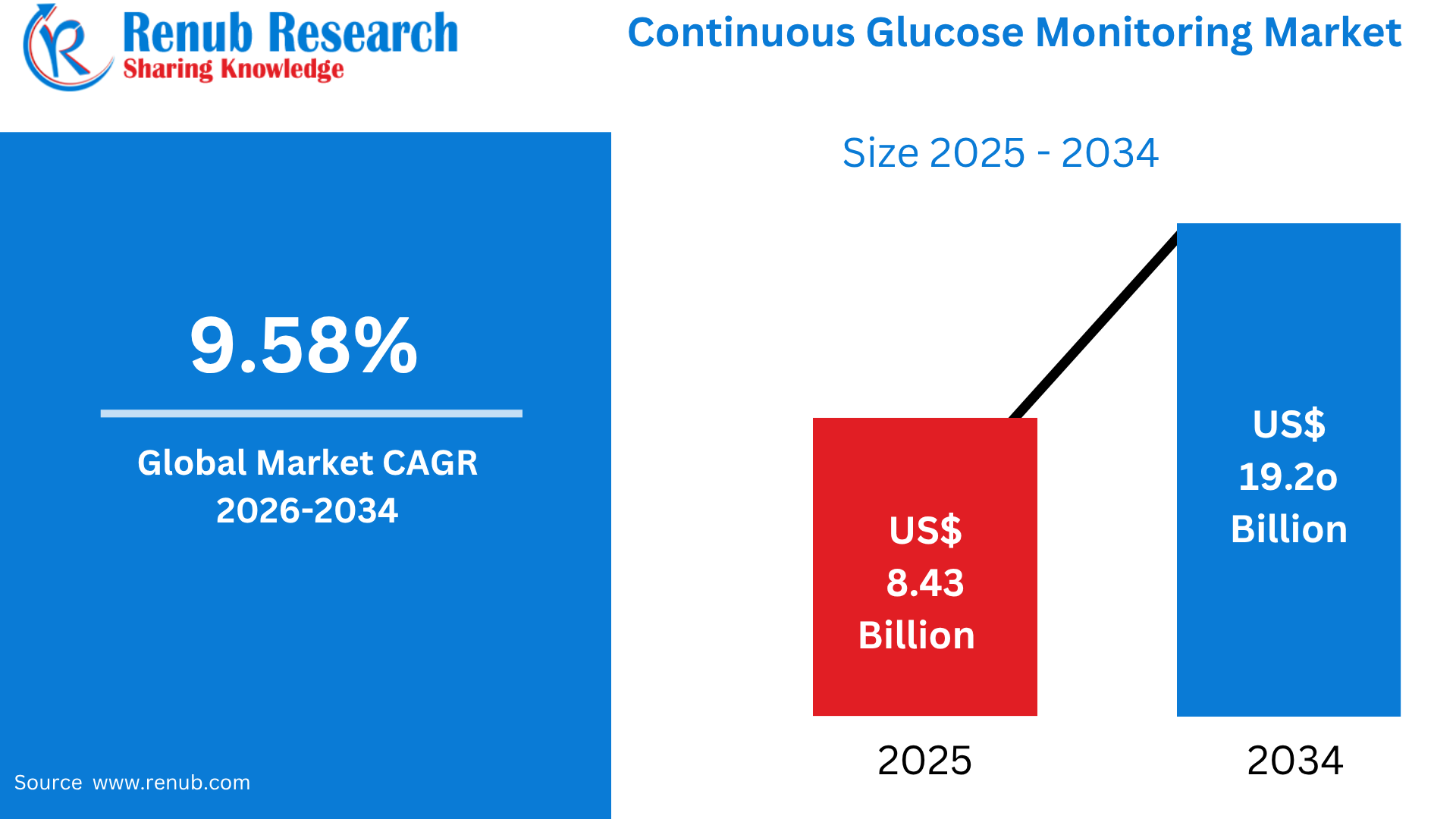
The global Continuous Glucose Monitoring (CGM) market is projected to expand from US$ 8.43 billion in 2025 to US$ 19.2 billion by 2034, representing a CAGR of 9.58% during 2026–2034. Market growth is being driven by the rising global prevalence of diabetes and increasing demand for convenient, real-time glucose monitoring solutions. The integration of CGM devices with connected insulin-delivery systems and digital diabetes-management platforms is further strengthening adoption. Advances in sensor technology, including the introduction of next-generation and regulatory-cleared devices, are improving accuracy, wearability, and monitoring convenience.
What is Continuous Glucose Monitoring (CGM) and Its Uses & Popularity Worldwide
Continuous Glucose Monitoring (CGM) is a digital healthcare technology that continuously measures glucose levels in the body using a small sensor placed under the skin. The sensor typically measures glucose in interstitial fluid and sends readings to a receiver, smartphone, smartwatch, or dedicated application. Unlike traditional blood glucose testing, which provides individual measurements, CGM systems deliver real-time or near-real-time glucose information, helping users understand how glucose levels change throughout the day and night.
CGM is primarily used for diabetes management, particularly among people with type 1 and type 2 diabetes who require closer glucose monitoring. It can identify high and low glucose levels, display trends, provide alerts, and help users make informed decisions regarding insulin, food, physical activity, and daily routines. CGM data can also be shared with healthcare professionals for treatment optimization.
The popularity of CGM is increasing worldwide due to the growing prevalence of diabetes, technological advancements, improved sensor accuracy, longer wear times, and increasing adoption of connected insulin-delivery systems. The availability of OTC CGM products is also expanding access among consumers interested in metabolic and wellness monitoring, supporting broader market adoption.
Diabetes Statistics
In the United States:
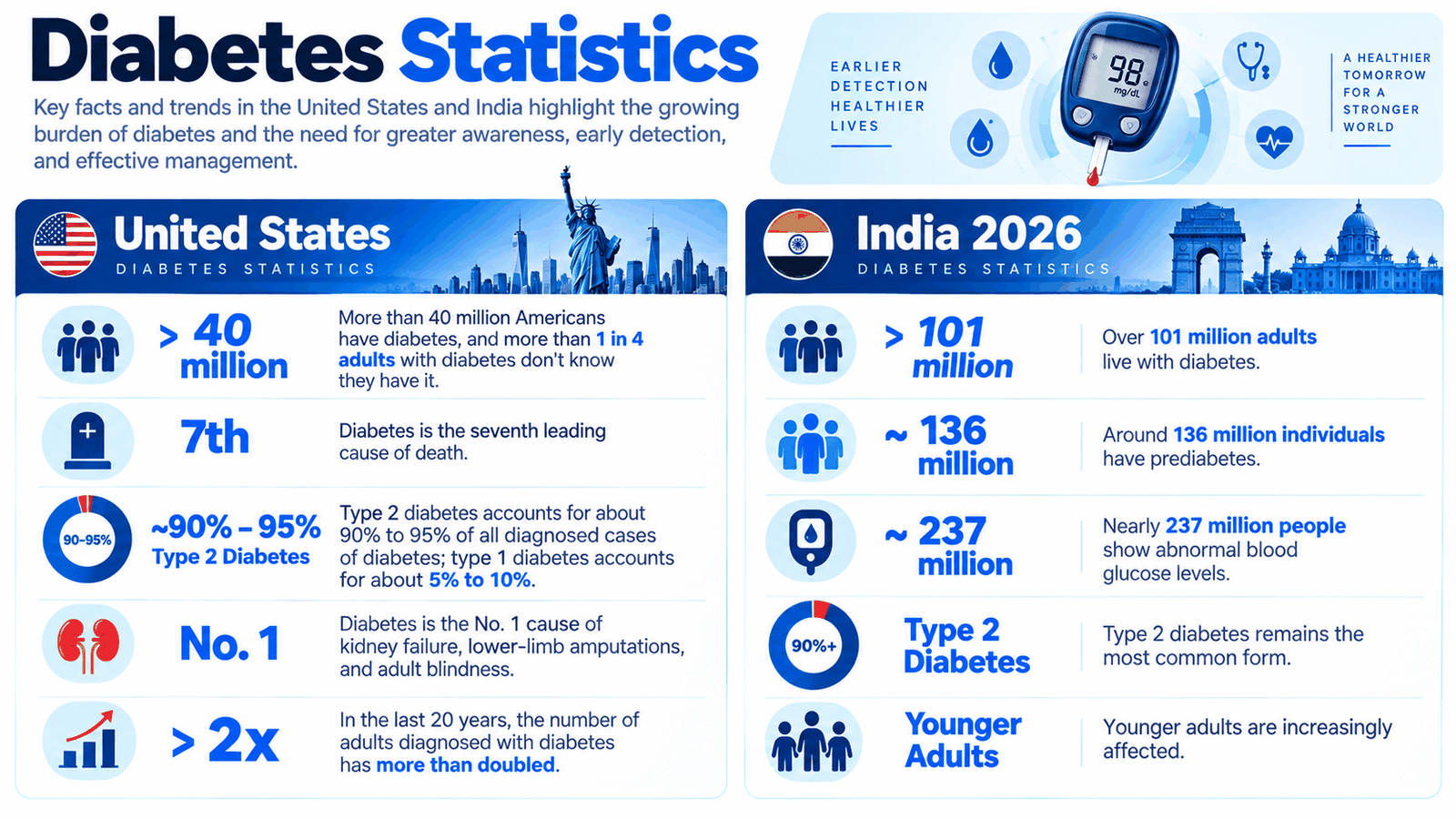
- More than 40 million Americans have diabetes, and more than 1 in 4 adults with diabetes don't know they have it.
- Diabetes is the seventh leading cause of death.
- Type 2 diabetes accounts for about 90% to 95% of all diagnosed cases of diabetes; type 1 diabetes accounts for about 5% to 10%.
- Diabetes is the No. 1 cause of kidney failure, lower-limb amputations, and adult blindness.
- In the last 20 years, the number of adults diagnosed with diabetes has more than doubled.
In the India 2026
- Over 101 million adults live with diabetes
- Around 136 million individuals have prediabetes
- Nearly 237 million people show abnormal blood glucose levels
- Type 2 diabetes remains the most common form
- Younger adults are increasingly affected
Growth Drivers of the Continuous Glucose Monitoring (CGM) Market
Rising Global Diabetes Prevalence
The increasing prevalence of diabetes is one of the strongest growth drivers for the global Continuous Glucose Monitoring (CGM) market. According to the International Diabetes Federation (IDF), approximately 589 million adults aged 20–79 years were living with diabetes in 2024, and this number is projected to reach 853 million by 2050. The growing patient population is increasing the need for convenient and continuous glucose-management technologies. CGM systems provide users with frequent glucose readings, trend information, and alerts for high or low glucose levels, reducing reliance on intermittent finger-prick testing. The technology is particularly valuable for people requiring insulin therapy because it can provide information that supports timely treatment decisions. Increasing awareness about diabetes complications is also encouraging patients and healthcare providers to prioritize better glucose management. Furthermore, the growing prevalence of type 2 diabetes among younger populations is creating a broader user base for digital glucose-monitoring technologies. As diabetes cases continue to rise globally, demand for accurate, convenient, and connected monitoring solutions is expected to increase, supporting sustained CGM market expansion.
Technological Advancements and Integration with Digital Health
Rapid innovation in sensor technology, connectivity, and automated insulin delivery is accelerating adoption of CGM systems. Modern CGM devices are becoming smaller, more accurate, easier to use, and capable of longer sensor wear, improving patient convenience and adherence. CGM technology is also increasingly integrated with smartphones, smartwatches, cloud platforms, digital health applications, and insulin pumps. According to the American Diabetes Association, automated insulin delivery systems combine continuous glucose monitors, insulin pumps, and algorithms to automate insulin delivery and help improve glucose management. This connected ecosystem is expanding the role of CGM beyond standalone glucose monitoring. Real-time alerts and trend data can help users identify changing glucose levels and take corrective action more quickly. Integration with digital platforms also enables healthcare professionals and caregivers to remotely review glucose patterns. Meanwhile, advances in sensor manufacturing and algorithm development are improving accuracy and usability. These developments are increasing acceptance among patients and healthcare providers while encouraging manufacturers to introduce next-generation products. Continued innovation in connected diabetes management is therefore expected to remain a major driver of the CGM market.
Increasing Availability of OTC CGM Devices
The expansion of over-the-counter (OTC) continuous glucose monitoring devices is creating a broader consumer base and opening new growth opportunities beyond traditional prescription-based diabetes management. Regulatory approvals for OTC systems have made CGM technology increasingly accessible to adults who may not require insulin therapy but want greater insight into their glucose patterns. For example, the U.S. FDA cleared Dexcom Stelo in 2024 as the first glucose biosensor that can be purchased over the counter in the United States without a prescription. OTC availability can reduce barriers associated with physician prescriptions and expand access to glucose-monitoring technology through pharmacies, online channels, and direct-to-consumer platforms. These devices are attracting interest from consumers focused on metabolic health, nutrition, exercise, and preventive wellness. The broader availability of CGM also increases public awareness of glucose monitoring and may encourage more people to discuss metabolic health with healthcare professionals. As manufacturers continue developing simpler, affordable, and user-friendly sensors, OTC products are expected to become an increasingly important component of the CGM market, particularly in wellness and home-monitoring applications.
Challenges of the Continuous Glucose Monitoring (CGM) Market
High Device Costs and Limited Accessibility
The relatively high cost of CGM systems remains a significant challenge, particularly in developing and price-sensitive markets. A complete CGM solution can involve expenses for sensors, transmitters, receivers, smartphone-compatible accessories, and replacement components, depending on the product. Unlike traditional blood glucose meters, CGM sensors generally require regular replacement, creating recurring costs for users. Although insurance coverage and reimbursement policies have expanded in several developed markets, access remains uneven across countries and patient groups. The IDF estimates that approximately 81% of adults with diabetes live in low- and middle-income countries, where healthcare resources and affordability can be more constrained. High out-of-pocket expenses can therefore limit CGM adoption among patients who could benefit from continuous monitoring. Reimbursement requirements may also vary according to diabetes type, insulin use, age, or clinical criteria. Manufacturers are responding through lower-cost devices, OTC products, and simplified sensor designs, but affordability remains an important consideration. Expanding insurance coverage, government reimbursement programs, local manufacturing, and cost-effective CGM solutions will be important for increasing adoption in underserved populations.
Sensor Accuracy, User Compliance, and Technical Limitations
Despite significant technological improvements, CGM systems still face challenges related to sensor accuracy, skin reactions, calibration requirements, connectivity, and user adherence. CGM sensors measure interstitial glucose rather than glucose directly from blood, which can create differences between sensor readings and blood glucose levels, particularly when glucose is changing rapidly. Users may also experience skin irritation or discomfort from adhesives and sensor placement. Device connectivity can present additional challenges when smartphones, receivers, or cloud platforms experience technical problems. Long-term adherence is another concern because users must regularly replace sensors and consistently wear the device. CGM systems also generate substantial volumes of glucose data, which may be difficult for some users to interpret without appropriate education or healthcare support. At the same time, cybersecurity and data privacy are becoming increasingly important as CGM devices connect with smartphones, cloud services, insulin pumps, and other digital-health platforms. Improving sensor accuracy, extending wear duration, reducing skin-related problems, simplifying data interpretation, and strengthening device interoperability will be essential to overcoming these barriers and supporting broader global CGM adoption.
Continuous Glucose Monitoring (CGM) Product Launches Worldwide
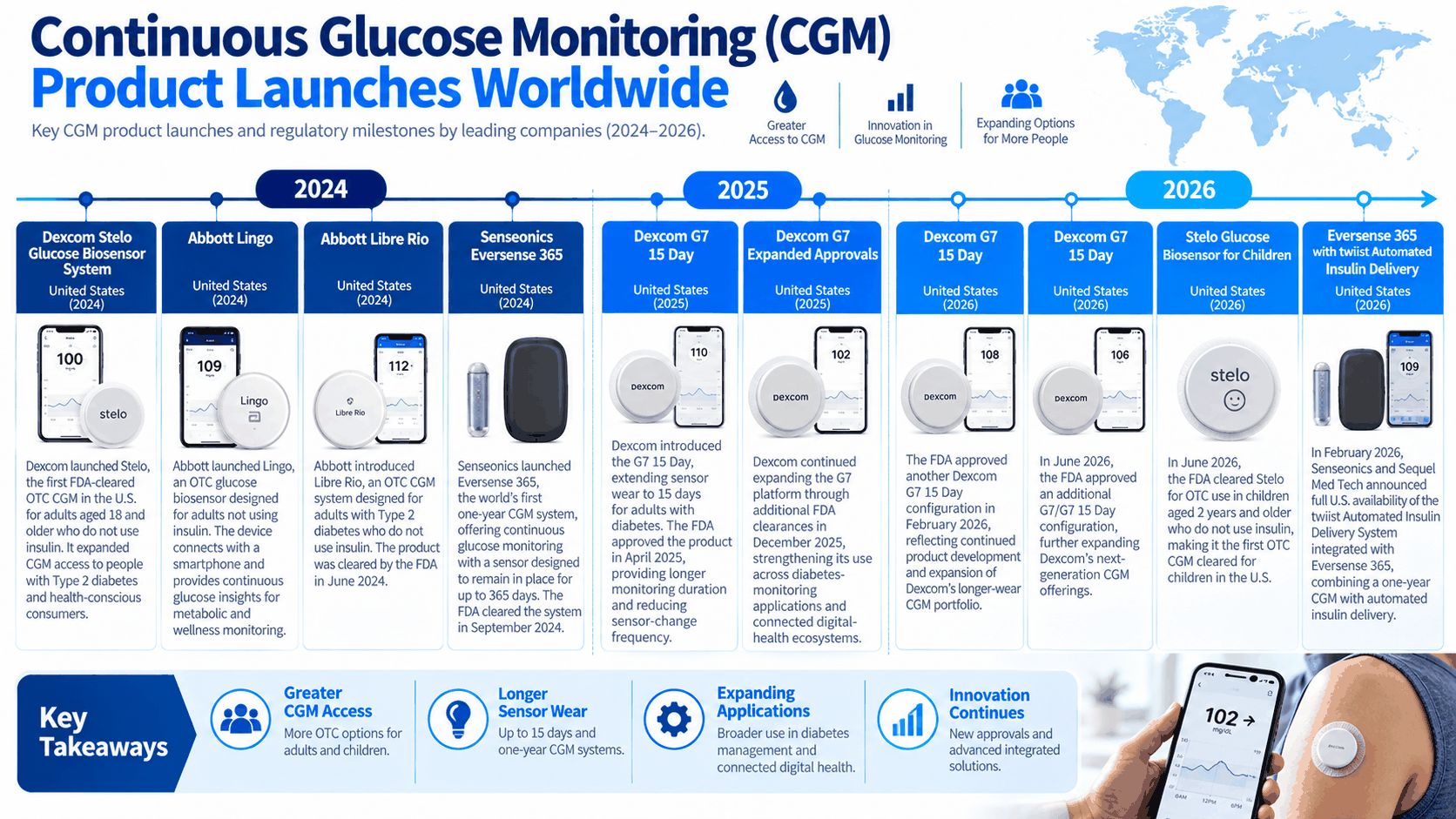
- Dexcom Stelo Glucose Biosensor System – United States (2024): Dexcom launched Stelo, the first FDA-cleared OTC CGM in the U.S. for adults aged 18 and older who do not use insulin. It expanded CGM access to people with Type 2 diabetes and health-conscious consumers.
- Abbott Lingo – United States (2024): Abbott launched Lingo, an OTC glucose biosensor designed for adults not using insulin. The device connects with a smartphone and provides continuous glucose insights for metabolic and wellness monitoring.
- Abbott Libre Rio – United States (2024): Abbott introduced Libre Rio, an OTC CGM system designed for adults with Type 2 diabetes who do not use insulin. The product was cleared by the FDA in June 2024.
- Senseonics Eversense 365 – United States (2024): Senseonics launched Eversense 365, the world's first one-year CGM system, offering continuous glucose monitoring with a sensor designed to remain in place for up to 365 days. The FDA cleared the system in September 2024.
- Dexcom G7 15 Day – United States (2025): Dexcom introduced the G7 15 Day, extending sensor wear to 15 days for adults with diabetes. The FDA approved the product in April 2025, providing longer monitoring duration and reducing sensor-change frequency.
- Dexcom G7 Expanded Approvals – United States (2025): Dexcom continued expanding the G7 platform through additional FDA clearances in December 2025, strengthening its use across diabetes-monitoring applications and connected digital-health ecosystems.
- Dexcom G7 15 Day – United States (2026): The FDA approved another Dexcom G7 15 Day configuration in February 2026, reflecting continued product development and expansion of Dexcom's longer-wear CGM portfolio.
- Dexcom G7 15 Day – United States (2026): In June 2026, the FDA approved an additional G7/G7 15 Day configuration, further expanding Dexcom's next-generation CGM offerings.
- Stelo Glucose Biosensor for Children – United States (2026): In June 2026, the FDA cleared Stelo for OTC use in children aged 2 years and older who do not use insulin, making it the first OTC CGM cleared for children in the U.S.
- Eversense 365 with twiist Automated Insulin Delivery – United States (2026): In February 2026, Senseonics and Sequel Med Tech announced full U.S. availability of the twiist Automated Insulin Delivery System integrated with Eversense 365, combining a one-year CGM with automated insulin delivery.
Recurring Sensor Replacement Drives CGM Sensors Segment Expansion
Continuous Glucose Monitoring (CGM) sensors market represents the core component of CGM systems because sensors continuously measure glucose levels in interstitial fluid and provide data for real-time monitoring. A major factor supporting this segment is the recurring replacement requirement of sensors, which generally need to be replaced every 10–15 days, depending on the device. Increasing adoption among people with type 1 and type 2 diabetes, improvements in sensor accuracy, longer wear periods, and integration with smartphones and automated insulin-delivery systems are further supporting demand. Advances in sensor miniaturization and easier application are also improving patient convenience. As the global CGM user base expands, recurring sensor purchases are expected to generate sustained revenue growth. Increasing adoption of CGM for home-based monitoring and growing consumer interest in real-time metabolic information are likely to further strengthen the segment.
Wireless Connectivity and Connected Diabetes Management Fuel CGM Transmitters Demand
CGM transmitters serve as the communication component that transfers glucose readings from sensors to smartphones, receivers, insulin pumps, and cloud-based healthcare platforms. The segment is benefiting from the increasing adoption of connected diabetes-management ecosystems and advancements in wireless communication. Bluetooth accounted for approximately 58% of the CGM devices connectivity market in 2025, reflecting the importance of wireless connectivity in modern glucose-monitoring systems. Transmitters are increasingly designed to support reliable data transmission, improved battery performance, smartphone connectivity, and integration with automated insulin-delivery systems. As CGM systems become more connected, transmitters are playing an increasingly important role in delivering real-time glucose information to patients and healthcare professionals. The growing use of remote monitoring and digital diabetes-management applications is also creating additional demand for reliable transmission technology. In some newer CGM systems, transmitter functionality is integrated directly into the sensor or eliminated through direct sensor-to-phone communication, which may influence the long-term product structure. Nevertheless, the expanding installed base of CGM users and connected-device ecosystem is expected to support transmitter demand.
Dedicated Monitoring Devices Support Users Seeking Reliable Glucose Displays
CGM receivers are dedicated electronic devices that display glucose readings, trends, alerts, and historical information transmitted by CGM sensors. Although smartphones have become increasingly important for CGM data visualization, dedicated receivers remain valuable for patients who prefer a standalone monitoring device or do not consistently use compatible smartphones. The India CGM market provides an indication of this trend, with the receiver segment forecast to grow through 2034. Receivers can be particularly useful for children, older adults, and users who require a dedicated medical device for monitoring. They can also provide an alternative when smartphone compatibility, battery life, connectivity, or privacy concerns limit mobile-app usage. Increasing CGM adoption is therefore supporting demand for receivers, even as many manufacturers emphasize smartphone-based monitoring. Modern receivers are becoming more compact and user-friendly while offering color displays, customizable alerts, trend graphs, and data-storage capabilities. As healthcare providers increasingly rely on continuous glucose data for treatment management, reliable display devices remain an important part of the CGM ecosystem.
Clinical Diabetes Management and Integrated Monitoring Increase Hospital Adoption
Hospitals represent an important end-user segment for Continuous Glucose Monitoring systems, particularly for patients requiring intensive glucose management, insulin therapy, or close monitoring during complex medical conditions. Hospitals can use CGM data to identify glucose fluctuations, monitor trends, and support more informed treatment decisions. The growing integration of CGM technology with digital health platforms and connected insulin-delivery systems is strengthening its clinical role. Hospitals are increasingly adopting connected monitoring technologies as healthcare moves toward data-driven and personalized diabetes management. CGM can also support remote data review and facilitate collaboration between patients, physicians, nurses, and diabetes specialists. Growing diabetes prevalence, advances in sensor accuracy, and increased awareness of continuous glucose monitoring are expected to strengthen hospital demand. In addition, expanding clinical evidence and integration with insulin pumps and automated insulin-delivery technologies should support broader institutional adoption.
Growing Preference for Remote and Convenient Diabetes Management
The homecare settings segment is becoming increasingly important as diabetes management shifts from hospitals and clinics toward convenient, patient-centered monitoring. CGM systems allow users to continuously track glucose levels at home without performing frequent finger-stick tests, while smartphone applications can provide real-time readings, alerts, and trend information. The growing adoption of digital health technologies is supporting this transition, with CGM devices increasingly connected to mobile applications and cloud-based platforms. Home-based CGM is particularly valuable for people requiring frequent glucose monitoring and for families seeking greater visibility into glucose patterns. Remote data sharing can also enable healthcare professionals to review patient information without requiring every monitoring interaction to occur in a hospital. Increasing availability through pharmacies, e-commerce platforms, and OTC channels is expected to further improve accessibility and strengthen CGM adoption in homecare environments.
Strong Reimbursement and Advanced Diabetes Technologies Support CGM Market Leadership
United States Continuous Glucose Monitoring (CGM) market remains one of the most developed worldwide, supported by a large diabetes population, established reimbursement systems, advanced healthcare infrastructure, and rapid adoption of connected diabetes-management technologies. According to the CDC, approximately 40.1 million people in the U.S. had diabetes in 2023, including diagnosed and undiagnosed cases, creating substantial demand for glucose-monitoring solutions. Increasing adoption of automated insulin-delivery systems, smartphone-connected CGM devices, and remote patient monitoring is further strengthening market growth. The availability of over-the-counter CGM products is also broadening access beyond traditional prescription users. Major manufacturers, including Dexcom, Abbott, and Medtronic, continue to enhance sensor accuracy, wearability, interoperability, and digital connectivity. Growing physician familiarity with CGM and expanding use among both Type 1 and Type 2 diabetes patients are supporting wider adoption. In addition, telehealth and digital-health platforms allow glucose data to be shared remotely with healthcare professionals, improving long-term disease management. Continued product innovation, regulatory developments, and growing awareness of personalized glucose management are expected to sustain the U.S. market’s strong position.
Comprehensive Healthcare Coverage and Digital Diabetes Management Drive Germany Adoption
Germany CGM market is supported by a well-established healthcare system, extensive insurance coverage, and increasing adoption of technology-based diabetes management. Germany has one of Europe’s largest diabetes populations, with more than 8 million people living with diagnosed diabetes, creating a substantial addressable population for glucose-monitoring technologies. CGM systems are increasingly used by patients who require continuous monitoring, particularly those with Type 1 diabetes and insulin-treated Type 2 diabetes. Germany’s statutory health insurance system can provide reimbursement for CGM under defined medical criteria, helping reduce the financial burden on eligible patients. Physicians are also increasingly using continuous glucose data, including trend information and time-in-range measurements, to personalize diabetes treatment. Digital-health adoption is creating additional opportunities for remote monitoring, data sharing, and virtual consultations. At the same time, stringent European regulatory requirements encourage manufacturers to maintain high standards for device safety, performance, and data protection. Rising diabetes prevalence, an aging population, and increasing awareness of glucose variability are expected to support steady demand. Continued development of connected CGM platforms and improved patient access should further strengthen market expansion.
Expanding Diabetes Burden and Digital Health Adoption Accelerate China Market Growth
China Continuous Glucose Monitoring market is experiencing rapid development as the country’s large diabetes population, increasing healthcare awareness, urbanization, and adoption of digital technologies create substantial demand for advanced glucose-monitoring solutions. The International Diabetes Federation estimates that more than 140 million adults in China were living with diabetes in 2024, making the country one of the world’s largest diabetes markets. The high prevalence of Type 2 diabetes is encouraging greater emphasis on early diagnosis, continuous monitoring, and long-term disease management. Although CGM affordability remains a challenge compared with conventional glucose meters, increasing competition among domestic and international manufacturers is helping expand product availability and improve price accessibility. Chinese companies are also developing smaller, wearable, smartphone-connected sensors designed to meet local consumer requirements. Hospitals and specialized diabetes centers are increasingly incorporating CGM into clinical management, while mobile-health platforms support remote monitoring and digital data analysis. Government efforts to strengthen chronic-disease prevention and management are providing additional support. As healthcare infrastructure expands beyond major metropolitan areas and consumer familiarity with wearable health technologies increases, China is expected to remain an important high-growth market for CGM systems.
High Diabetes Prevalence and Vision 2030 Healthcare Modernization Create Saudi Arabia Opportunities
Saudi Arabia Continuous Glucose Monitoring market is expanding as the country addresses a substantial diabetes burden through healthcare modernization and greater adoption of advanced monitoring technologies. According to the International Diabetes Federation, approximately 5.5 million adults in Saudi Arabia were living with diabetes in 2024, while the country’s diabetes prevalence remains among the highest globally. This significant patient population creates strong demand for convenient technologies that support continuous glucose management and early identification of glucose fluctuations. Healthcare transformation under Saudi Vision 2030 is encouraging investment in digital health, preventive care, connected medical technologies, and modern healthcare infrastructure. Physicians are increasingly recognizing CGM as a useful tool for improving glucose awareness and supporting individualized diabetes management, particularly among insulin-treated patients. Rising disposable incomes and increasing awareness of diabetes-related complications are also encouraging demand for advanced wearable devices. Private hospitals, specialist clinics, pharmacies, and digital-health providers are expanding access to diabetes-management technologies. However, device affordability and variations in reimbursement remain challenges for broader adoption. As insurance coverage improves and healthcare providers increasingly emphasize preventive and personalized care, demand for CGM technology is expected to continue increasing in Saudi Arabia.
Recent Developments in Continuous Glucose Monitoring (CGM) Market
- June 2025: Tandem Diabetes and Abbott initiated joint development of an integrated glucose-ketone sensor designed to help reduce the risk of diabetic ketoacidosis by enabling earlier detection and intervention.
- May 2025: Glucotrack secured approval from Australia’s HREC to begin clinical trials for its implantable continuous glucose monitoring system, marking a significant step toward expanding next-generation CGM solutions in the region.
- April 2025: DexCom received FDA clearance for its Dexcom G7 15-Day CGM system for U.S. adults aged 18 and older, extending sensor wear time and improving convenience for diabetes self-management.
- June 2025: U.S. Health Secretary Robert F. Kennedy Jr. announced a nationwide HHS initiative—“Making America Healthy Again”—to encourage widespread adoption of wearable health-monitoring technologies, including CGMs. The program aims to lower national diabetes-related expenses by promoting proactive, real-time monitoring.
- September 2024: Senseonics obtained FDA approval for the Eversense 365, the first implantable CGM with up to one year of wear. As an iCGM-qualified device, it supports seamless integration with compatible insulin pumps, offering users longer-term, low-maintenance glucose tracking.
Continuous Glucose Monitoring Market Segments
Component
- Sensors
- Transmitters
- Receivers
End User
- Hospitals
- Homecare Settings
- Others
Countries
North America
- United States
- Canada
Europe
- France
- Germany
- Italy
- Spain
- United Kingdom
- Belgium
- Netherlands
- Turkey
Asia Pacific
- China
- Japan
- India
- Australia
- South Korea
- Thailand
- Malaysia
- Indonesia
- New Zealand
Latin America
- Brazil
- Mexico
- Argentina
Middle East & Africa
- South Africa
- Saudi Arabia
- UAE
All the Key players have been covered from 5 Viewpoints:
- Overviews
- Key Person
- Recent Developments
- SWOT Analysis
- Revenue Analysis
Key Players Analysis
- Abbott Laboratories
- Roche
- Tandem Diabetes Care
- DexCom Inc.
- Senseonics Holdings Inc.
- Ypsomed Holding AG
- Medtronic Plc.
- i-Sens Inc.
Report Details:
| Report Features | Details |
| Base Year |
2025 |
| Historical Period |
2022 - 2025 |
| Forecast Period |
2026 - 2034 |
| Market |
US$ Billion |
| Segment Covered |
Component, End User and Cauntries |
| Countries Covered |
|
| Companies Covered |
|
| Customization Scope |
20% Free Customization |
| Post-Sale Analyst Support |
1 Year (52 Weeks) |
| Delivery Format |
PDF and Excel through Email (We can also provide the editable version of the report in PPT/Word format on request) |
Key Questions Answered in This Report:
-
What is the projected market size of the CGM industry by 2034?
-
What is the expected CAGR of the CGM market from 20265 to 2034?
-
Which factors are driving the growth of the CGM market globally?
-
What are the key challenges hindering the adoption of CGM devices?
-
Which region dominates the CGM market, and why?
-
How are technological advancements influencing CGM market growth?
-
What role does homecare play in the expansion of the CGM market?
-
Which companies are the major players in the CGM market?
-
How does diabetes prevalence impact the demand for CGM devices?
-
What are the key components of CGM systems, and how do they function?
Customization Services available
- Analysis of Market Size and Its Segments
- More Company Profiles (Upto 10 without any additional cost):
- Additional Countries (Other than mentioned Countries):
- Region/Country Specific Reports:
- Market Entry Strategy:
- Region-Specific Market Dynamics:
- Regional Market Share Analysis:
- Trade Analysis:
- Production Insights:
- Others Customized Requests:
For more information contact our analysts.
Need More Assistance?
- Talk to our analysts to get more precious information on the current market trends.
- Include more countries and segments and customize the report based on the final requirement.
- Get a competitive advantage in your industry by knowing the report findings and making a positive impact on your revenues and operations.
- Our analysts are always ready to provide more help and pertinent information if you need any additional assistance.