North America Baby Food Market Report by Food Type, Distribution Channel, Countries and Company Analysis 2026-2034
Buy NowNorth America Baby Food Market Size & Forecast
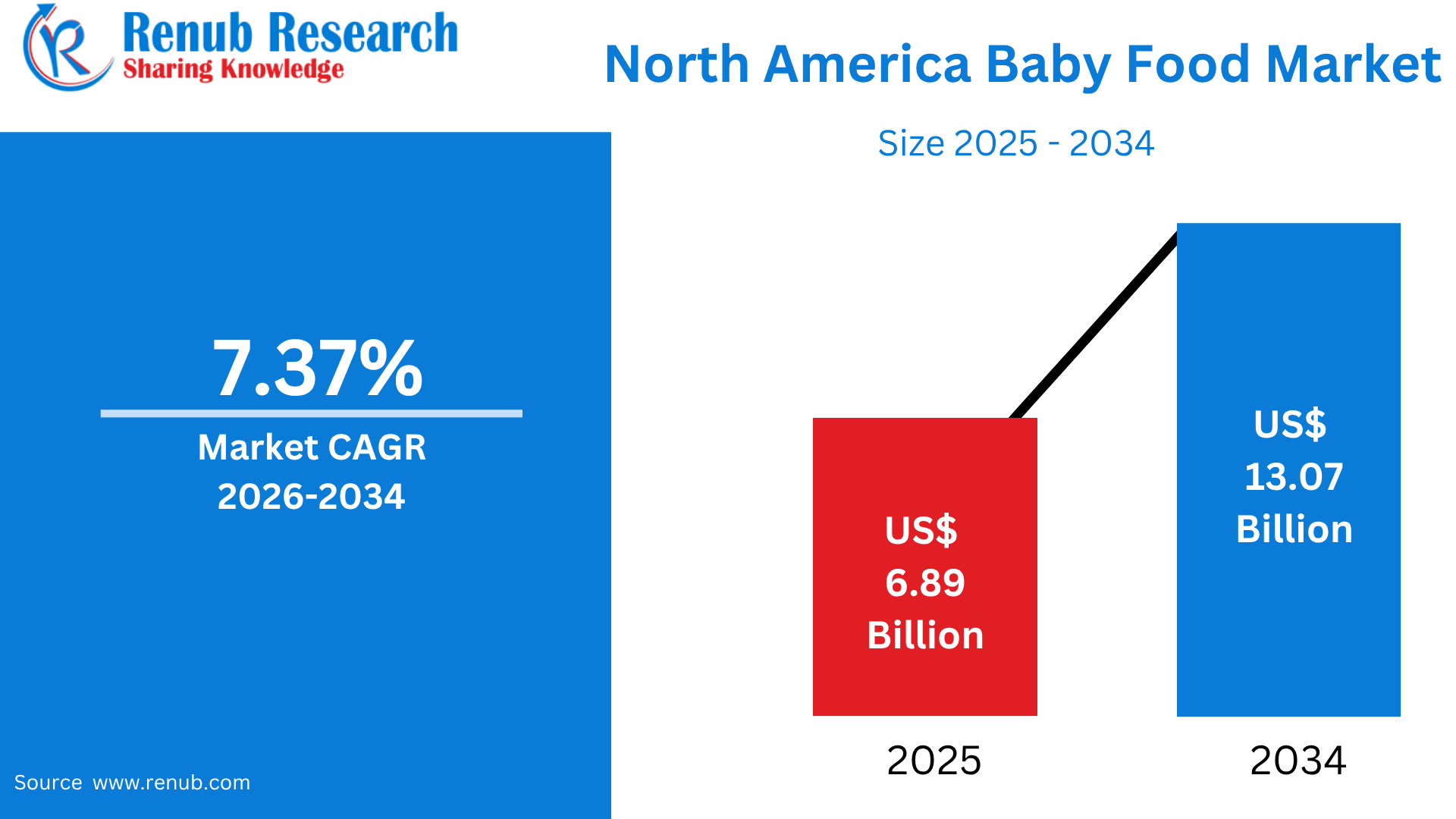
North America baby food market is projected to grow steadily, increasing from US$ 6.89 billion in 2025 to US$ 13.07 billion by 2034, representing a CAGR of 7.37% during 2026–2034. This growth is driven by rising parental awareness of infant nutrition, growing demand for organic and natural baby food products, and increasing parental participation in the workforce. These factors are strengthening the need for convenient, nutritious, and easy-to-prepare feeding solutions. Additionally, evolving consumer preferences toward clean-label, fortified, and premium baby food products are creating further opportunities for market expansion.
What is Baby Food and Its Uses & Popularity in North America
Baby food refers to specially formulated foods and beverages designed to meet the nutritional and developmental needs of infants and young children, generally introduced when complementary feeding begins around six months of age. Products include infant cereals, purees, fruit and vegetable blends, meat-based foods, snacks, ready-to-eat meals, and infant milk formula.
In North America, baby food provides essential nutrients such as proteins, carbohydrates, fats, vitamins, and minerals while helping infants gradually transition from milk or formula to solid foods. The category is popular because it offers parents convenient, portion-controlled, and age-appropriate feeding options. The United States recorded 3.63 million births in 2024, providing a substantial consumer base for infant nutrition products. Although breastfeeding remains widely practiced, only 27.9% of U.S. infants born in 2022 were exclusively breastfed through six months, supporting demand for complementary foods as infants grow. Growing interest in organic, natural, clean-label, fortified, and minimally processed products is also strengthening the category.
Working Parent Population in North America by Country in 2025
- United States
- Estimated working parent population: Approximately 70–75 million
- The United States has the largest working-parent population in North America.
- In 2025, 91.6% of U.S. families with children had at least one employed parent, highlighting the strong participation of parents in the workforce.
- High employment levels and the prevalence of dual-income households are supporting demand for convenient products, including ready-to-eat baby food.
- Canada
- Estimated working parent population: Approximately 8–9 million
- Canada has a high proportion of working parents, supported by strong labor-force participation and childcare initiatives.
- Dual-income households are common, increasing demand for convenient infant feeding and baby-care products.
- Working parents increasingly value time-saving products such as packaged baby food, infant formula, and ready-to-serve meals.
- Mexico
- Estimated working parent population: Approximately 25–30 million
- Mexico’s expanding urban workforce and increasing female employment are contributing to growth in working-parent households.
- Metropolitan areas are experiencing particularly strong demand for convenient baby-care and feeding solutions.
- Rising disposable incomes and changing lifestyles are encouraging greater adoption of packaged and prepared baby food products.
Sources: U.S. Bureau of Labor Statistics – Employment Characteristics of Families 2025, OECD Employment Outlook 2025, OECD Labour Market Statistics
Infant Population in North America by Country in 2025
- United States
- Estimated infant population (Age 0–1): Approximately 3.6–3.7 million infants
- The United States has the largest infant population in North America, supported by its large overall population and annual number of births.
- The country recorded approximately 3.63 million births in 2024, providing a strong base for the infant food and nutrition market.
- Canada
- Estimated infant population (Age 0–1): Approximately 350,000–380,000 infants
- Canada has a comparatively smaller but relatively stable infant population.
- Births, population growth, and immigration contribute to the country’s expanding family and childcare ecosystem.
- Demand for organic, clean-label, and nutritionally enriched baby food products is increasing among health-conscious parents.
- Mexico
- Estimated infant population (Age 0–1): Approximately 1.8–2.0 million infants
- Mexico has the second-largest infant population among the three major North American markets.
- A comparatively higher number of annual births supports a substantial consumer base for infant formula, cereals, purees, snacks, and other baby food products.
- Urbanization and rising awareness of infant nutrition are encouraging greater adoption of packaged and convenient baby food products.
Sources: U.S. Census Bureau Population Data, Statistics Canada Birth and Population Data, INEGI Mexico Population Statistics
Growth Drivers of the North America Baby Food Market
Rising Awareness of Infant Nutrition
Increasing parental awareness about the importance of balanced infant nutrition is a major growth driver for the North America baby food market. Parents are becoming more attentive to the nutritional composition, ingredients, and developmental suitability of foods provided to infants and toddlers. Baby food manufacturers are responding with products fortified with vitamins, minerals, proteins, healthy fats, fiber, and other nutrients. CDC guidance recommends introducing appropriate complementary foods at around six months while continuing breastfeeding, highlighting the importance of nutrition during this developmental stage. In the United States, 85.7% of infants born in 2022 were breastfed at some point, while 62.1% were still receiving breast milk at six months. However, exclusive breastfeeding through six months was 27.9%, indicating that many families introduce other foods or liquids during infancy. This creates opportunities for complementary baby food products. Manufacturers are increasingly emphasizing age-specific nutrition, natural ingredients, allergen-conscious formulations, and products supporting healthy growth. Greater access to nutritional information through pediatricians, social media, parenting platforms, and online retailers is further encouraging informed purchasing decisions.
Strong Demand for Organic and Clean-Label Baby Food
Growing consumer preference for organic, natural, and clean-label foods is significantly supporting the North American baby food market. Parents increasingly seek products with recognizable ingredients and fewer artificial additives, preservatives, colors, and unnecessary sugars. This trend is particularly important in baby food because parents are highly conscious of the quality and safety of foods consumed during early childhood. Companies are therefore expanding organic purees, cereals, snacks, formula, and ready-to-eat meals. Premium packaging, transparent ingredient labeling, plant-based formulations, and minimally processed recipes are also helping brands differentiate themselves and capture health-conscious consumers.
Demand for Convenient Feeding Solutions
The growing need for convenient feeding solutions is another important driver of baby food demand in North America. Parents increasingly balance childcare with employment and other household responsibilities, creating demand for products that reduce preparation time while providing appropriate nutrition. Ready-to-eat purees, pouches, cereals, snacks, frozen meals, and shelf-stable products allow parents to feed infants conveniently at home, during travel, or outside the home. The large U.S. birth base further supports the potential customer pool, with 3,628,934 births recorded in 2024, up 1% from 2023. Convenience is also being strengthened by online grocery platforms, subscription services, direct-to-consumer brands, and rapid home delivery. Baby food pouches and single-serving formats are particularly attractive because they are portable, easy to store, and require minimal preparation. Manufacturers are responding by introducing products for different developmental stages, including smooth purees for younger infants and textured meals and finger foods for older babies. As convenience becomes increasingly important in household purchasing decisions, innovative packaging and easy-to-use formats are expected to remain key market growth factors.
Challenges of the North America Baby Food Market
Strict Safety and Regulatory Requirements
Strict food safety and regulatory requirements represent a significant challenge for baby food manufacturers in North America. Infant and toddler foods require particularly high standards because babies have developing digestive and immune systems and can be more vulnerable to contaminants and nutritional imbalances. Manufacturers must carefully control ingredients, processing, packaging, labeling, quality testing, and supply-chain practices. In addition, parents and healthcare professionals have increased scrutiny of ingredients such as added sugars, sodium, allergens, contaminants, and artificial additives. Regulatory compliance can increase production costs, particularly for smaller companies entering the market. Product reformulation may also be necessary when consumer expectations or regulatory standards change. Companies must invest in laboratory testing, quality-control systems, traceability, supplier verification, and specialized manufacturing processes. The challenge becomes more complex when products contain multiple ingredients sourced from different suppliers or are distributed across multiple jurisdictions. Nevertheless, strong safety standards can also build consumer confidence. Brands that maintain transparent sourcing, clear labeling, rigorous testing, and consistent quality can use safety and trust as competitive advantages in the North American baby food market.
Declining Fertility and Demographic Pressure
Demographic trends represent another long-term challenge for the North American baby food market, particularly because the number of potential consumers is closely connected to births. Although the United States recorded 3,628,934 births in 2024, the general fertility rate declined from 54.5 births per 1,000 women aged 15–44 in 2023 to 53.8 in 2024. This indicates that manufacturers cannot rely solely on an expanding infant population to generate future volume growth. Lower fertility rates can limit the number of new households purchasing infant formula, cereals, purees, snacks, and other baby food products. As a result, companies increasingly need to focus on value-added products, premium formulations, organic offerings, innovative packaging, and broader age ranges to increase revenue per consumer. Brands can also target toddlers and young children with nutritious snacks, meals, beverages, and developmental-stage products, thereby extending the customer lifecycle beyond infancy. Product innovation, premiumization, and geographic expansion can help offset demographic constraints. Companies that successfully combine nutritional benefits, convenience, affordability, and differentiated formulations are likely to remain better positioned despite slower underlying birth growth.
Baby Food Launches in North America
- Cerebelly Carrot Date Organic Toddler Smart Bars – Organic toddler snack bars made with whole grains, vegetables, and fruit, featuring 4 g of fiber and 7 g of whole grains per bar. Launched in Canada through Metro in 2024.
- Little Bellies More to Explore Organic Apple & Berry Softcorn – Organic puffed corn snacks for children aged 10 months and above, formulated without added sugar or salt and designed to melt in the mouth.
- Baby Gourmet Finger Foods Organic Carrot Sticks, Lentil & Chickpea – Plant-based organic puffed snacks designed for self-feeding, with no added sugar, salt, dairy, gluten, or artificial flavors.
- PC Organics Apple & Strawberry Cereal Puffs – Organic cereal puffs made with sorghum and white rice, positioned as a convenient self-feeding snack and an iron source for babies aged 12 months and older.
- Parent’s Choice Organic Stage 4 Orchard Freeze-Dried Fruit & Veggie Bites – Freeze-dried fruit and vegetable snacks for children over 12 months, made with real fruits and vegetables and free from artificial flavors and colors.
- Baby Gourmet Banana, Pea & Blueberry Toddler Snack Mix – A fruit-and-vegetable-based toddler snack reflecting the growing North American preference for diverse flavor combinations and convenient snack formats.
- Little Bellies Organic Carrot Sticks – Organic, plant-based baby snacks combining carrot, lentil, and chickpea, reflecting increasing interest in vegetable-forward and protein-containing formulations.
- Baby Gourmet Organic Baby Snacks – Baby Gourmet expanded its Canadian snack portfolio with products emphasizing organic ingredients, clean-label positioning, soft textures, and self-feeding. Baby Gourmet was among the leading companies for Canadian baby-snack launches during 2020–2024.
- Nestlé Plant-Based Baby Snacks – Plant-based baby snack innovations from Nestlé reflect growing demand for vegetarian and vegan-friendly infant and toddler products in North America.
- Else Nutrition Plant-Based Baby & Toddler Products – Else Nutrition has expanded plant-based nutrition offerings aimed at health-conscious parents, contributing to the region’s shift toward alternative and functional infant nutrition products.
North America Baby Milk Formula Market
The North America baby milk formula market is witnessing strong growth as parents increasingly use infant formula as a supplement to or alternative for breast milk. Demand is particularly increasing for premium formulas containing vitamins, minerals, probiotics, iron, and omega-3 fatty acids, which are designed to support infant growth, digestion, and immune health. Manufacturers are expanding their portfolios with organic, soy-based, lactose-free, and hypoallergenic formulas to address diverse nutritional and dietary requirements. The U.S. recorded approximately 3.63 million births in 2024, representing a substantial consumer base for infant nutrition products. In addition, growing awareness of infant nutrition, urban lifestyles, demand for convenient feeding solutions, and stringent food-safety requirements are supporting consumer confidence. The FDA also regulates infant formula manufacturing and establishes nutritional and safety requirements, strengthening quality assurance across the market.
North America Dried Milk Food Formula Market
North America dried milk food formula market is expected to expand steadily, supported by growing consumer preference for convenient, shelf-stable, affordable, and portable infant nutrition products. Powdered formulas are particularly popular among parents because they are easy to store, transport, measure, and prepare, making them suitable for everyday feeding and travel. Manufacturers are introducing formulations enriched with protein, calcium, iron, probiotics, DHA, and other essential nutrients to support infant development. Specialty products, including organic, soy-based, goat-milk, lactose-free, and hypoallergenic formulas, are gaining attention among parents seeking customized nutritional solutions. The large U.S. infant population provides a significant underlying demand base, with 3,628,934 births recorded in 2024. Furthermore, the increasing participation of women in the workforce and increasingly busy household schedules are encouraging demand for convenient powdered feeding products. E-commerce and subscription-based purchasing are also making formula replenishment easier for parents.
North America Baby Food Drugstores and Pharmacies Market
Drugstores and pharmacies represent an important distribution channel for baby food and infant nutrition products in North America because consumers often associate these outlets with quality, safety, professional advice, and regulated healthcare products. Parents purchase infant formula, baby food, nutritional supplements, probiotics, and specialized products through pharmacies, particularly when recommendations from pediatricians or healthcare professionals influence purchasing decisions. Pharmacy retailers increasingly offer products designed for specific nutritional requirements, including organic formulas, fortified foods, hypoallergenic products, and specialty infant nutrition. The importance of safety is particularly high in this category because infant formula is subject to federal nutritional and safety requirements in the United States. Leading pharmacy chains are also integrating baby-care sections with broader health and wellness offerings. In addition, digital ordering, home delivery, loyalty programs, and recurring-purchase options are improving convenience. As parents become increasingly selective about infant nutrition and product quality, pharmacies can benefit from their established reputation and proximity to consumers.
North America Baby Food Online Stores Market
North America baby food online stores market is expanding rapidly as e-commerce provides parents with convenient access to a broad selection of infant formula, organic baby food, cereals, snacks, ready-to-eat meals, and specialized nutritional products. Online platforms allow consumers to compare prices, ingredients, nutritional information, product reviews, and brands before purchasing. Home delivery is particularly valuable for parents purchasing frequently used products such as formula and baby food. Subscription and auto-replenishment services can further simplify recurring purchases and reduce the need for store visits. The U.S. e-commerce market also provides manufacturers with opportunities to reach consumers beyond traditional retail locations, including customers in smaller towns and rural areas. Increasing smartphone usage, digital payments, social-media marketing, and personalized online promotions are supporting this transition. Organic and premium baby food products are also well suited to online channels because digital platforms allow brands to communicate detailed information about sourcing, ingredients, certifications, and nutritional benefits. As convenience-oriented purchasing continues to develop, online retail is expected to become an increasingly important channel for North American baby food sales.
United States Baby Food Market
United States represents the largest baby food market in North America, supported by strong consumer spending, a well-established retail infrastructure, and growing awareness of infant nutrition. Parents are increasingly seeking organic, preservative-free, non-GMO, and clean-label baby food products that align with preferences for natural and nutritious ingredients. In response, manufacturers are introducing innovative offerings such as plant-based meals, probiotic-enriched foods, allergy-friendly formulations, and nutrient-fortified products. The U.S. recorded approximately 3.63 million births in 2024, providing a substantial consumer base for infant nutrition products. In addition, increasing participation of women in the workforce and the prevalence of dual-income households are strengthening demand for ready-to-eat purees, pouches, cereals, snacks, and convenient baby meals. E-commerce is further improving product accessibility. Meanwhile, stringent food-safety requirements and labeling regulations help strengthen consumer confidence in packaged infant foods and encourage manufacturers to maintain high standards for ingredient quality, processing, and nutritional composition.
Canada Baby Food Market
Canada baby food market is expanding as parents demonstrate increasing awareness of infant nutrition, organic foods, clean-label formulations, and health-oriented feeding options. Consumers are increasingly interested in baby foods made without unnecessary preservatives and using natural, responsibly sourced ingredients. Environmental sustainability is also influencing purchasing decisions, encouraging demand for organic and sustainably produced baby food products. Manufacturers and retailers are expanding premium product portfolios across supermarkets, specialty stores, pharmacies, and online platforms, improving availability in both urban and suburban areas. Products such as baby cereals, fruit and vegetable purees, probiotic snacks, organic meals, and specialized nutritional foods are gaining attention among health-conscious parents. Government-supported breastfeeding and nutrition education initiatives also contribute to greater awareness of appropriate infant feeding practices. Canada’s emphasis on healthy eating during early childhood is encouraging parents to evaluate ingredients, nutritional value, and product quality more carefully. The continued development of online retail and home-delivery services is further supporting access to premium and specialty baby food products.
Mexico Baby Food Market
Mexico baby food market is witnessing increasing demand, supported by urbanization, rising disposable income, changing lifestyles, and greater awareness of infant nutrition and healthcare. As more parents in urban areas manage professional and household responsibilities, convenient packaged baby foods are becoming increasingly attractive. Consumers are showing growing interest in fortified cereals, fruit and vegetable purees, ready-to-eat meals, infant formulas, and other nutrient-rich products designed to support infant development. Manufacturers are responding by introducing affordable formulations aimed at middle-income households while also expanding premium and organic offerings for health-conscious consumers. Greater access to information through pediatricians, social media, parenting communities, and health-awareness campaigns is helping parents make more informed purchasing decisions. Retail supermarkets, pharmacies, convenience stores, and e-commerce platforms are expanding product availability across the country. Online shopping is particularly useful for accessing premium, imported, and specialty baby food products that may have limited availability in smaller physical stores. As convenience and nutritional quality become increasingly important purchasing factors, product innovation and broader retail distribution are expected to support continued market development in Mexico.
North America Baby Food Market Segments
Food Type
- Milk Formula
- Dried Food
- Prepared
- Others
Distribution Channel
- Supermarkets & Hypermarkets
- Drugstores/Pharmacies
- Convenience Stores
- Online Stores
- Others
Countries
- Unites States
- Canada
- Mexico
- Rest of North America
All companies have been covered with 5 Viewpoints
- Overviews
- Key Person
- Recent Developments
- SWOT Analysis
- Revenue Analysis
Company Analysis
- Kraft Heinz Company
- Abbott Laboratories
- Hero Group (Beech-Nut Nutrition Corporation)
- Hain Celestial Group, Inc.
- Nestlé S.A.
- Reckitt Benckiser Group plc (Mead Johnson & Company, LLC)
- Amara Organics Foods
- Danone S.A.
- Lactalis (Stonyfield Farm, Inc.)
- Sun-Maid Growers of California
Report Details:
| Report Features | Details |
| Base Year |
2025 |
| Historical Period |
2022 - 2025 |
| Forecast Period |
2026 - 2034 |
| Market |
US$ Billion |
| Segment Covered |
Food Type, Distribution Channel and Countries |
| Countries Covered |
|
| Companies Covered |
|
| Customization Scope |
20% Free Customization |
| Post-Sale Analyst Support |
1 Year (52 Weeks) |
| Delivery Format |
PDF and Excel through Email (We can also provide the editable version of the report in PPT/Word format on request) |
Key Questions Answered in This Report:
- What is the estimated market value of the North America baby food market in 2025?
- What is the expected CAGR of the North America baby food market from 2026 to 2034?
- What factors are driving the growth of organic and clean-label baby food in North America?
- How is the rise of e-commerce impacting baby food sales in North America?
- What are the major challenges facing the North America baby food market?
- Which distribution channels are most popular for baby food sales in North America?
- How is the demand for baby milk formula evolving in the North America market?
- What role do drugstores and pharmacies play in baby food distribution?
- Which countries in North America are covered in this market analysis?
- Who are the key players in the North America baby food market?
Customization Services available
- Analysis of Market Size and Its Segments
- More Company Profiles (Upto 10 without any additional cost):
- Additional Countries (Other than mentioned Countries):
- Region/Country Specific Reports:
- Market Entry Strategy:
- Region-Specific Market Dynamics:
- Regional Market Share Analysis:
- Trade Analysis:
- Production Insights:
- Others Customized Requests:
For more information contact our analysts.
Need More Assistance?
- Talk to our analysts to get more precious information on the current market trends.
- Include more countries and segments and customize the report based on the final requirement.
- Get a competitive advantage in your industry by knowing the report findings and making a positive impact on your revenues and operations.
- Our analysts are always ready to provide more help and pertinent information if you need any additional assistance.