China Baby Food Market Report by Products, Distribution, Cities and Company Analysis (2026-2034)
Buy NowChina Baby Food Market Size and Forecast 2026-2034
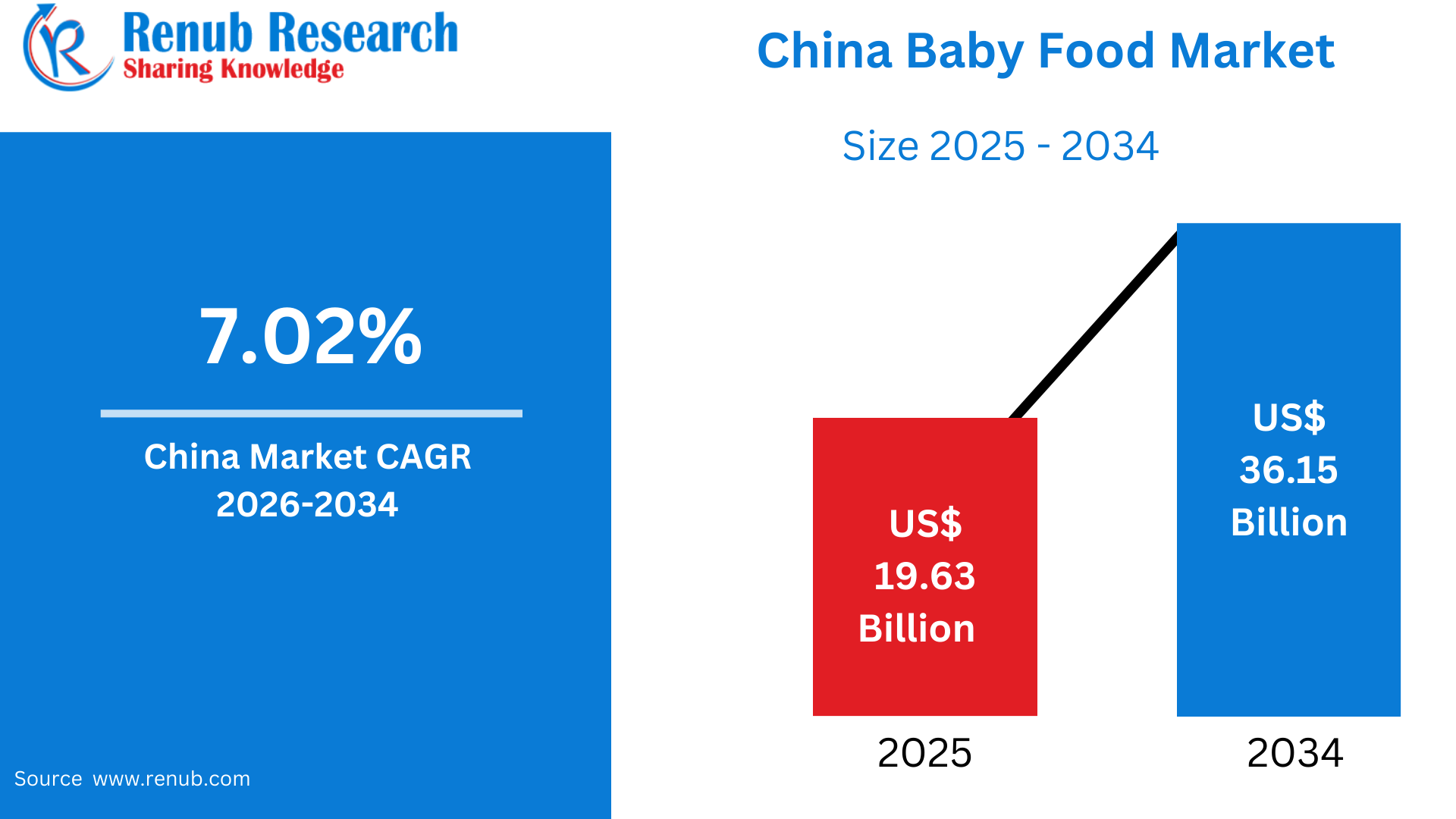
China Baby Food Market is expected to reach US$ 36.15 billion by 2034 from US$ 19.63 billion in 2025, with a CAGR of 7.02% from 2026 to 2034. Rising disposable incomes, increasing urbanization, and heightened awareness of infant nutrition are key drivers of China’s baby food market. Growing demand for safe, high-quality, and fortified products across milk formula, prepared foods, and dried options fuels market expansion.
China Baby Food Industry Overview
Baby food refers to specially formulated food products designed to meet the nutritional needs of infants and young children, typically from birth to three years of age. It includes milk formula, purees, cereals, dried foods, and fortified snacks. Baby foods provide essential nutrients such as proteins, vitamins, minerals, and healthy fats required for growth, development, and immune support. Increasing awareness of infant nutrition and the importance of balanced diets has driven demand for high-quality, safe, and fortified options. Baby food products are available in retail stores, specialty outlets, and e-commerce platforms, with convenience and safety being primary considerations for caregivers.
The China baby food market is expanding due to rising household incomes, urbanization, and growing parental awareness of infant nutrition. Parents increasingly seek safe, high-quality, and nutritionally balanced products to ensure optimal growth and development for their children. Government regulations on food safety and labeling further enhance consumer confidence, driving demand for branded and fortified products. Convenience and variety also influence market growth, as urban parents prefer ready-to-feed or easy-to-prepare options. Additionally, the growing e-commerce and specialty store channels increase product accessibility, allowing families across urban and semi-urban areas to access a wider range of baby food products, including formula, prepared, and dried options.
Growth Drivers for the China Baby Food Market
Rising Awareness of Infant Nutrition
Increased parental knowledge of the importance of balanced infant diets is a major growth driver in China’s baby food market. Caregivers are seeking products that provide essential nutrients for early growth, brain development, and immune support. This trend has prompted manufacturers to introduce fortified milk formulas, organic purees, and nutrient-rich cereals. Enhanced labeling, certifications, and adherence to strict food safety standards further boost consumer trust. Nutritional research emphasizing DHA, probiotics, vitamins, and minerals encourages parents to choose premium or specialized products. Urbanization, dual-income households, and higher disposable incomes allow families to prioritize quality over cost. Companies that educate caregivers about nutritional benefits while providing convenient, safe, and high-quality options strengthen brand loyalty. As awareness grows, the demand for fortified, safe, and diversified baby food offerings continues to expand, driving sustained market growth across multiple product categories.
Expansion of Product Innovation and Fortified Offerings
Product innovation is a key growth driver in the China baby food market, with companies focusing on fortified, organic, and easy-to-prepare options. Manufacturers are developing specialized milk formulas, dried foods, and prepared baby meals enriched with proteins, DHA, vitamins, and probiotics to address parental demand for complete nutrition. Ready-to-feed products, convenient packaging, and single-serve options support urban lifestyles. For example, the launch of high-protein and nutrient-enriched formulations in the prepared and milk formula categories has strengthened consumer interest. Brands are also introducing dried cereals and organic snacks to meet the needs of infants transitioning to solid foods. Innovations that combine nutritional benefits, safety, and convenience encourage repeat purchases and brand loyalty. As parents increasingly value scientific formulations backed by research, product diversification and innovation remain central to market expansion.
Growth of E-Commerce and Specialty Retail Channels
The expansion of e-commerce platforms and specialty baby food stores has become a powerful growth driver in China. Online retail provides convenience, extensive product variety, and easy access to both domestic and international brands. Specialty stores, in turn, offer curated selections, nutritional guidance, and assurance of product authenticity. Urban parents, busy professionals, and tech-savvy consumers increasingly prefer purchasing baby food through these channels, particularly for premium, fortified, or imported products. Companies are leveraging online platforms to showcase new product launches, educational content, and subscription services, further boosting adoption. Increased accessibility and visibility across digital and specialty channels enable brands to reach diverse demographics, including second-tier cities, enhancing market penetration. The combination of e-commerce convenience and specialty store credibility strengthens consumer trust and drives sustained growth in China’s baby food market.
Challenges in the China Baby Food Market
Stringent Regulations and Compliance
Strict food safety regulations in China present a significant challenge for baby food manufacturers. Compliance with labeling standards, nutritional content requirements, and quality certifications requires substantial investment in testing, documentation, and quality assurance. Companies must also adhere to regular inspections and recalls, which increase operational costs. Non-compliance can lead to reputational damage, financial penalties, or market withdrawal. Manufacturers of imported products face additional scrutiny at customs, affecting supply chain efficiency. Smaller brands or startups may struggle to meet these rigorous standards, limiting market entry. Ensuring product safety while maintaining competitive pricing is critical to building trust with parents, and regulatory complexities continue to pose a challenge in maintaining consistent product availability and growth.
Intense Competition and Price Sensitivity
China’s baby food market is highly competitive, with numerous domestic and international players vying for market share. Brand loyalty is strong, but price sensitivity among consumers, especially in tier-2 and tier-3 cities, challenges profit margins. Companies must differentiate through product innovation, quality assurance, and marketing. Premium fortified formulas and imported products face competition from affordable local alternatives. Frequent promotions, e-commerce discounts, and subscription models influence purchasing decisions. Balancing affordability with nutritional quality and brand trust is critical. Intense competition pressures manufacturers to innovate continuously, maintain consistent supply, and educate consumers on product benefits, while managing costs in a rapidly growing but highly fragmented market landscape.
China Prepared Baby Food Market
The prepared baby food segment in China is growing as urban parents increasingly seek convenient, ready-to-eat options that are nutritionally balanced. Prepared meals, including purees, cereals, and snacks, save preparation time while ensuring infants receive essential vitamins, minerals, and proteins. Manufacturers are introducing fortified, organic, and allergen-free options to meet parental demand for high-quality, safe products. Packaging innovations, such as single-serve portions and resealable pouches, further enhance convenience. E-commerce and specialty retail channels facilitate access to both domestic and international prepared foods, expanding reach beyond major cities. Increasing awareness of proper nutrition during complementary feeding stages drives demand for prepared baby foods, positioning this segment for strong growth as parents prioritize convenience, quality, and safety.
China Dried Baby Food Market
The dried baby food segment in China is expanding due to its long shelf life, convenience, and ease of storage. Products such as cereals, powders, and dehydrated snacks offer a quick and safe way to introduce complementary nutrition for infants. Manufacturers are fortifying dried foods with proteins, vitamins, minerals, and probiotics to support healthy growth and immune function. Imported dried products, often perceived as premium, continue to attract urban parents seeking trusted brands. E-commerce and specialty retail channels improve accessibility, particularly for fortified and organic options. Rising awareness of infant nutrition, busy urban lifestyles, and demand for reliable, nutritionally complete products contribute to sustained growth in China’s dried baby food segment.
China Milk Formula Market
China’s milk formula market remains a major growth driver for baby nutrition, driven by high parental concern over infant health, safety, and balanced nutrition. Both domestic and imported formulas are widely consumed, with parents seeking products fortified with DHA, probiotics, proteins, vitamins, and minerals. The market benefits from stringent safety regulations, which increase consumer confidence in branded formulas. Specialty formulas targeting premature infants, sensitive digestion, and specific health needs further expand opportunities. E-commerce and specialty stores enhance accessibility, while brand trust and certifications are key factors influencing purchase decisions. Rising disposable incomes, urbanization, and growing awareness of infant nutrition continue to drive demand, making milk formula the largest and most competitive segment of China’s baby food market.
China Specialized Baby Food Stores Market
Specialized baby food stores in China are emerging as key channels for high-quality, imported, and fortified products. These stores offer curated selections, nutritional advice, and guidance on product usage, enhancing parental confidence in purchasing decisions. The stores cater to health-conscious and urban consumers seeking organic, allergen-free, or specialized formulations, including milk formula, dried foods, and prepared baby meals. Many specialty outlets collaborate with international brands to provide premium products not readily available in mainstream supermarkets. The rise of subscription models and loyalty programs further supports repeat purchases. As parents increasingly prioritize safety, nutrition, and convenience, specialized baby food stores strengthen brand visibility, improve access to premium products, and play a crucial role in China’s growing baby food market.
Beijing Baby Food Market
Beijing’s baby food market is shaped by its policy-focused environment, high consumer awareness, and strong preference for quality and safety. Parents often look for trusted brands, clean formulations, and products aligned with nutritional guidance from healthcare institutions. Organic, minimally processed, and additive-free options receive strong interest, especially among urban families with busy lifestyles. Convenience plays a major role, driving demand for ready-to-eat purees, fortified snacks, and easy-to-prepare meals. Many caregivers also value products that support developmental stages, such as texture-based transitions and age-specific blends. The market features both premium domestic brands and international offerings, with purchasing decisions influenced by transparency, traceability, and brand reputation. Overall, Beijing consumers favor high-standard, health-oriented baby food solutions.
Shanghai Baby Food Market
Shanghai’s baby food market reflects its cosmopolitan character and strong openness to global products. Parents generally prioritize quality, ingredient purity, and innovative formulations that match international feeding trends. Demand is strong for organic baby foods, allergy-friendly recipes, and blends emphasizing natural flavors and functional nutrition. Convenience is essential, with busy urban families gravitating toward portable pouches, freeze-dried snacks, and quick-serve meals. Many buyers are well-informed and value clear labeling, clean ingredient lists, and brands that emphasize scientific development. The market also supports niche categories such as specialty grains, probiotic-enhanced foods, and stage-based nutrition. With a competitive retail landscape and a high appetite for premium options, Shanghai remains a key hub for quality-driven baby food products.
Jiangsu Baby Food Market
Jiangsu’s baby food market is influenced by the province’s strong urban-rural mix, rising household incomes, and growing attention to child nutrition. Parents typically seek reliable, wholesome products with simple ingredients and balanced flavors suited for infants and toddlers. While premium options continue to gain traction in major cities, many families also look for practical, good-value choices that offer trustworthy nutrition. Demand spans basic staples such as cereals, purees, and toddler snacks, as well as newer categories like functional blends and fortified foods. Caregivers often prefer brands that emphasize food safety, gentle preparation methods, and developmental suitability. Retail channels range from supermarkets to specialty mother-and-baby stores, creating a diverse environment where dependable, well-positioned baby food brands thrive.
Recent Developments in China Baby Food Market
- June 2025, Nestlé’s Gerber brand launched its first HMO‑fortified infant cereal containing 2’‑FL in China, designed to support immunity and complementary feeding. The product is available through mother‑and‑baby stores and online, following regulatory approval for HMOs in cereal‑based baby foods.
- November 2023, Wyeth Nutrition introduced its illuma HMO growing‑up formula in China, featuring two human milk oligosaccharides. This marks the first locally produced multinational HMO formula, distributed across retail and online channels, aimed at supporting immune function and overall nutrition in preschool-aged children.
Market Segmentation
Products
- Prepared Baby Food
- Dried Baby Food
- Milk Formula
- Others
Distribution
- Specialized Stores
- E-commerce
- Supermarkets
Cities
- Beijing
- Shanghai
- Jiangsu
- Fujian
- Zhejiang
- Tianjin
- Guangdong
- Inner Mongolia
- Hubei
- Chongqing
- Rest of China
All companies have been covered from 5 viewpoints:
- Overviews
- Key Person
- Recent Developments
- SWOT Analysis
- Revenue Analysis
Company Analysis:
- China feihe limited
- China Mengniu Dairy Company Limited
- Health and Happiness (H & H) International Holding Limited
- Yashili International holdings ltd
- China Modern Dairy Holdings Limited
- the a2 Milk Company
Report Details:
| Report Features | Details |
| Base Year |
2025 |
| Historical Period |
2022 - 2025 |
| Forecast Period |
2026 - 2034 |
| Market |
US$ Billion |
| Segment Covered |
Products, Distribution and Cities |
| Cities Covered |
|
| Companies Covered |
|
| Customization Scope |
20% Free Customization |
| Post-Sale Analyst Support |
1 Year (52 Weeks) |
| Delivery Format |
PDF and Excel through Email (We can also provide the editable version of the report in PPT/Word format on request) |
Customization Services available
- Analysis of Market Size and Its Segments
- More Company Profiles (Upto 10 without any additional cost):
- Additional Countries (Other than mentioned Countries):
- Region/Country Specific Reports:
- Market Entry Strategy:
- Region-Specific Market Dynamics:
- Regional Market Share Analysis:
- Trade Analysis:
- Production Insights:
- Others Customized Requests:
For more information contact our analysts.
Need More Assistance?
- Talk to our analysts to get more precious information on the current market trends.
- Include more countries and segments and customize the report based on the final requirement.
- Get a competitive advantage in your industry by knowing the report findings and making a positive impact on your revenues and operations.
- Our analysts are always ready to provide more help and pertinent information if you need any additional assistance.