Next Generation Sequencing Market Size, Share, Growth, Trends, Industry Analysis & Forecast 2026–2034
Buy NowNext Generation Sequencing Market Size
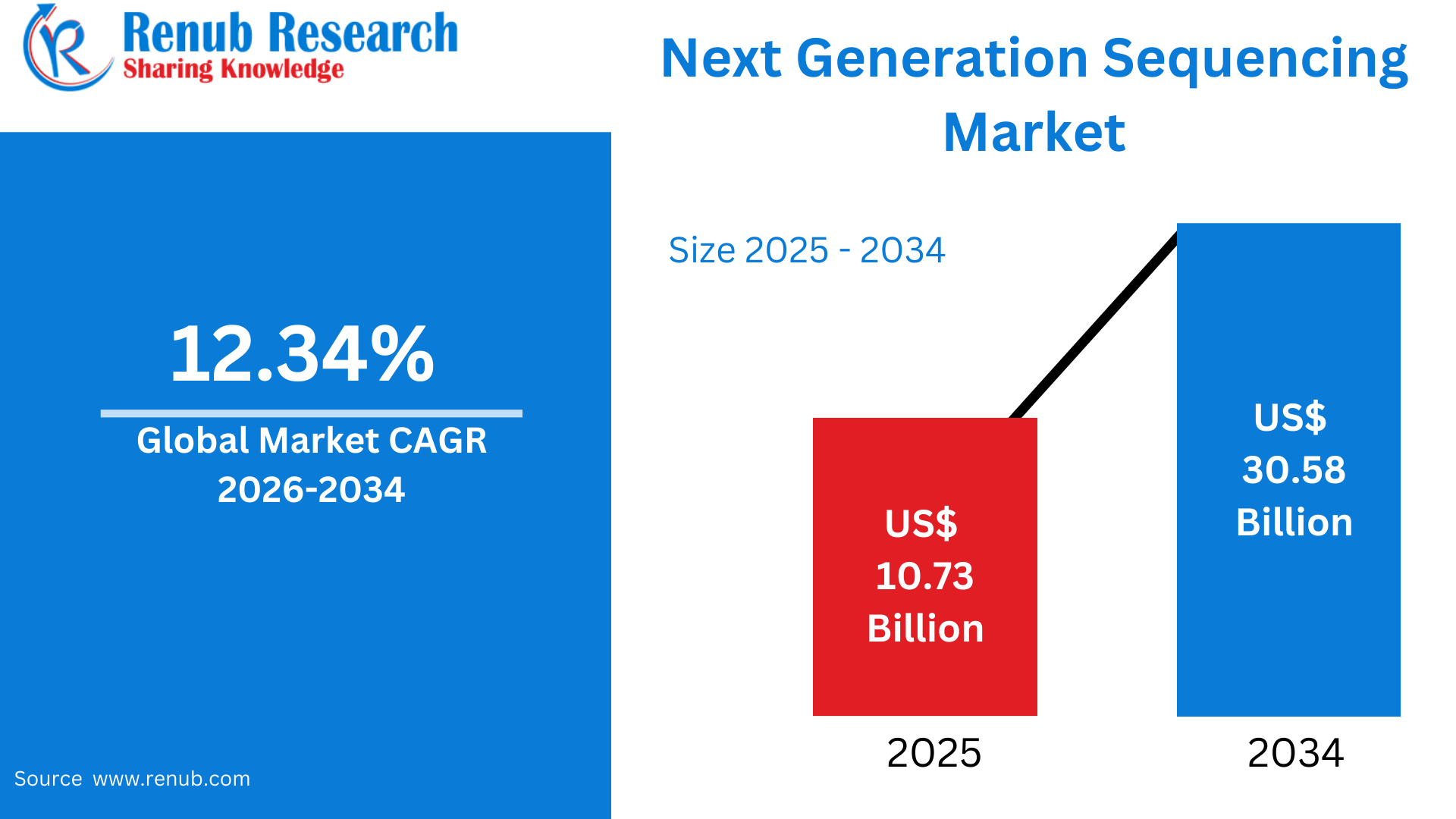
Next Generation Sequencing (NGS) Market is projected to grow from US$ 10.73 Billion in 2025 to US$ 30.58 Billion by 2034, registering a Compound Annual Growth Rate (CAGR) of 12.34% during 2026–2034. Market growth is driven by the increasing adoption of precision medicine, expanding applications in oncology and rare disease diagnostics, declining sequencing costs, and advancements in high-throughput sequencing technologies. Rising investments in genomics research, government funding initiatives, and growing demand for personalized healthcare are further accelerating market expansion across clinical, pharmaceutical, and academic research sectors worldwide.
Next Generation Sequencing Market Overview
Next Generation Sequencing (NGS) is a cutting-edge DNA sequencing technique that allows for fast and precise analysis of genetic data. Unlike conventional DNA sequencing, NGS allows for the analysis of millions of DNA fragments in a single reaction, making it possible to analyze entire genomes, exomes, or specific regions of genes in a targeted manner. NGS has numerous applications in the fields of diagnostics, cancer research, genetic disease identification, infectious disease monitoring, and personalized medicine. It facilitates the identification of genetic mutations, disease mechanisms, and the development of targeted therapies for individual patients. NGS is also employed in drug development, agriculture, and evolutionary biology to enhance the quality of crops and understand genetic diversity.
The popularity of NGS is increasing globally because of technological improvements, the reduction in sequencing costs, and the increasing need for precision medicine. Governments, research organizations, and biotech firms around the world are heavily investing in genomic research. Furthermore, the increasing awareness of early disease detection and preventive healthcare practices is fueling the adoption of NGS technology, making it an essential component of modern healthcare and life sciences around the world.
Next Generation Sequencing and its uses & popularity worldwide
Next Generation Sequencing (NGS) is an advanced DNA and RNA sequencing technology that enables the rapid analysis of millions of genetic fragments simultaneously, providing comprehensive insights into genomes with high accuracy and efficiency. Compared with traditional Sanger sequencing, NGS delivers faster results, greater throughput, and lower cost per sample, making it an essential tool in modern genomics. It is widely used in clinical diagnostics, cancer genomics, inherited disease testing, infectious disease surveillance, reproductive health screening, pharmacogenomics, and precision medicine.
In research, NGS supports biomarker discovery, microbial genomics, transcriptomics, epigenetics, and agricultural biotechnology. Its popularity has grown significantly worldwide due to declining sequencing costs, increasing demand for personalized healthcare, and expanding government investments in genomic research. Hospitals, diagnostic laboratories, pharmaceutical companies, biotechnology firms, and academic institutions increasingly rely on NGS for disease diagnosis, drug development, and clinical decision-making. The technology also played a crucial role in monitoring infectious disease outbreaks through rapid pathogen genome sequencing. Continuous advancements in sequencing platforms, bioinformatics, and artificial intelligence are further expanding the global adoption of Next Generation Sequencing across healthcare, life sciences, and precision agriculture.
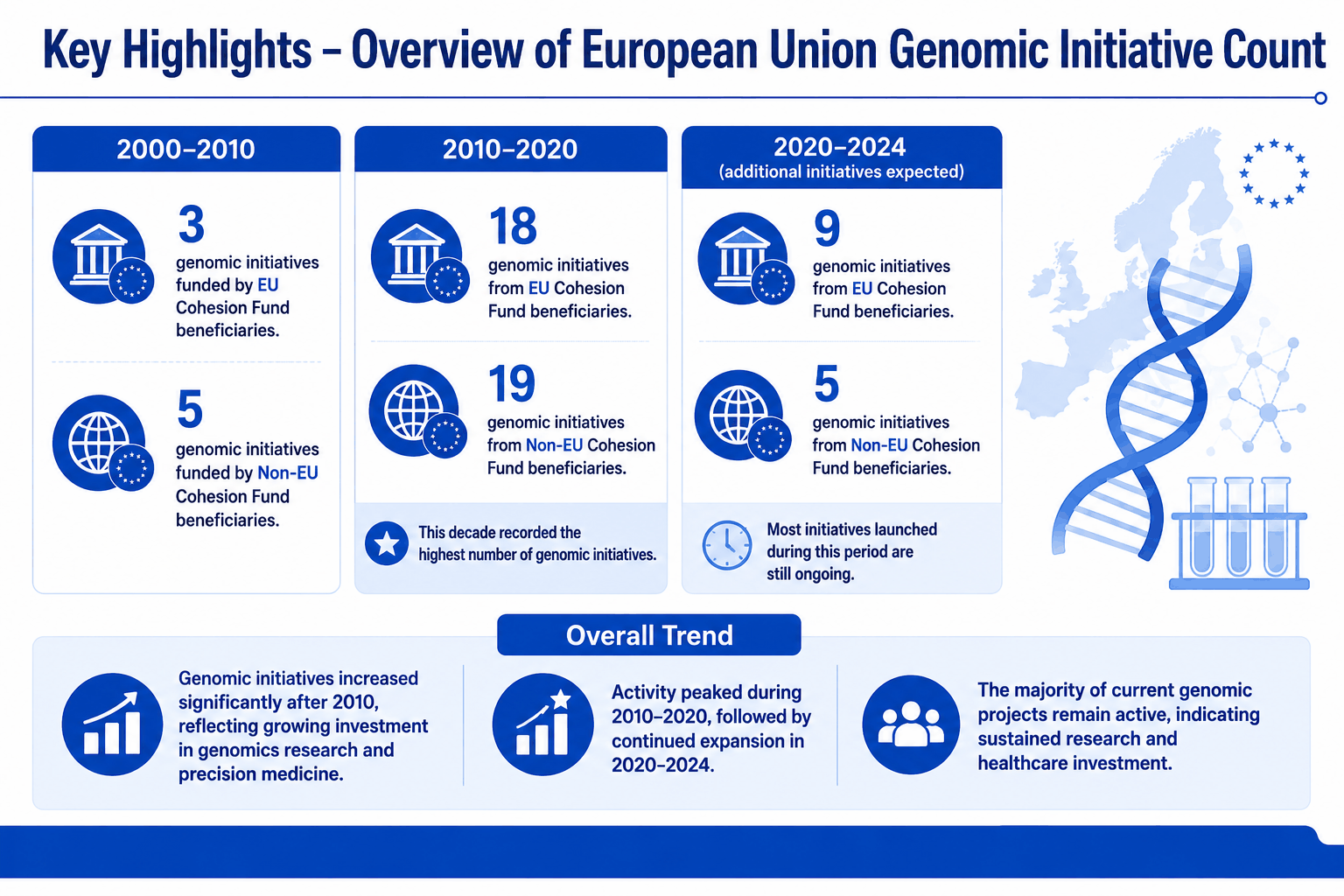
Key Highlights – Overview of European Union Genomic Initiative Count
- 2000–2010:
- 3 genomic initiatives funded by EU Cohesion Fund beneficiaries.
- 5 genomic initiatives funded by Non-EU Cohesion Fund beneficiaries.
- 2010–2020:
- 18 genomic initiatives from EU Cohesion Fund beneficiaries.
- 19 genomic initiatives from Non-EU Cohesion Fund beneficiaries.
- This decade recorded the highest number of genomic initiatives.
- 2020–2024 (additional initiatives expected):
- 9 genomic initiatives from EU Cohesion Fund beneficiaries.
- 5 genomic initiatives from Non-EU Cohesion Fund beneficiaries.
- Most initiatives launched during this period are still ongoing.
- Overall Trend:
- Genomic initiatives increased significantly after 2010, reflecting growing investment in genomics research and precision medicine.
- Activity peaked during 2010–2020, followed by continued expansion in 2020–2024.
- The majority of current genomic projects remain active, indicating sustained research and healthcare investment.
Growth Drivers of the Next Generation Sequencing (NGS) Market
Rising Adoption of Precision Medicine and Oncology Diagnostics
Precision medicine has become one of the strongest growth drivers for the Next Generation Sequencing (NGS) market, as healthcare providers increasingly rely on genomic data to deliver personalized treatment strategies. NGS enables the identification of genetic mutations, biomarkers, and disease-associated variants, allowing physicians to select targeted therapies for cancer patients. According to the World Health Organization (WHO), approximately 20 million new cancer cases and 9.7 million cancer-related deaths were reported globally in 2022, creating substantial demand for advanced molecular diagnostics. In addition, the International Agency for Research on Cancer (IARC) projects that global cancer cases will exceed 35 million annually by 2050, representing a 77% increase from 2022 levels. NGS is now routinely used for companion diagnostics, tumor profiling, liquid biopsy, and hereditary cancer screening. Pharmaceutical companies are also incorporating genomic sequencing into clinical trials to develop targeted therapies. Increasing reimbursement support for genomic testing, coupled with the expansion of precision oncology programs across North America, Europe, and Asia-Pacific, continues to accelerate the adoption of NGS technologies in clinical practice.
Declining Sequencing Costs and Technological Advancements
Continuous technological innovation has significantly reduced sequencing costs while improving speed, throughput, and analytical accuracy, making Next Generation Sequencing increasingly accessible across research and clinical settings. The cost of sequencing an entire human genome has fallen dramatically from nearly US$100 million in 2001 to less than US$1,000 today, according to the U.S. National Human Genome Research Institute (NHGRI). Modern sequencing platforms can process thousands of samples simultaneously, reducing turnaround times from several weeks to only a few days. Advancements in automation, cloud-based bioinformatics, artificial intelligence, and long-read sequencing technologies have further enhanced workflow efficiency and data interpretation. These innovations enable laboratories to perform comprehensive genomic analysis at lower operational costs while maintaining high accuracy. As sequencing instruments become more affordable and user-friendly, hospitals, diagnostic laboratories, academic research institutions, and biotechnology companies are expanding their investments in genomic infrastructure. Continuous improvements in sequencing chemistry and computational analysis are expected to sustain strong global demand for NGS technologies throughout the forecast period.
Expanding Genomics Research and Government Funding Initiatives
Growing investments in genomics research by governments, healthcare organizations, and pharmaceutical companies are significantly driving the global Next Generation Sequencing market. Numerous national genome programs aim to sequence large populations to improve disease prevention, precision medicine, and public health planning. For example, the UK’s Genomics England initiative has successfully sequenced hundreds of thousands of genomes, while the U.S. All of Us Research Program seeks to collect genomic and health data from one million or more participants. Governments across Asia-Pacific, Europe, and North America continue allocating billions of dollars toward genomic research, rare disease studies, infectious disease surveillance, and population health initiatives. During the COVID-19 pandemic, NGS played a critical role in identifying and tracking SARS-CoV-2 variants worldwide, demonstrating its importance in global health preparedness. Increased collaborations among universities, research institutes, biotechnology firms, and pharmaceutical companies continue expanding sequencing applications across drug discovery, vaccine development, agricultural biotechnology, and microbial genomics, supporting long-term market growth.
Challenges of the Next Generation Sequencing (NGS) Market
High Infrastructure Costs and Complex Data Analysis
Despite declining sequencing costs, implementing Next Generation Sequencing remains expensive for many healthcare institutions due to substantial investments required in laboratory infrastructure, sequencing instruments, computational resources, and skilled personnel. High-end sequencing platforms can cost hundreds of thousands of dollars, while laboratories must also invest in sample preparation systems, secure data storage, and high-performance computing infrastructure. A single whole-genome sequencing run generates hundreds of gigabytes of raw genomic data, requiring sophisticated bioinformatics pipelines for interpretation. Many hospitals and diagnostic laboratories, particularly in developing countries, lack experienced bioinformaticians and genomic data scientists capable of analyzing these datasets accurately. Furthermore, maintaining quality control, regulatory compliance, and cybersecurity standards increases operational costs. Small laboratories often outsource sequencing analysis, extending turnaround times and increasing overall testing expenses. These financial and technical barriers continue to limit widespread adoption of NGS, particularly across low- and middle-income countries where healthcare budgets remain constrained.
Regulatory, Ethical, and Data Privacy Concerns
The increasing use of genomic sequencing raises significant regulatory, ethical, and privacy challenges that may restrain the growth of the Next Generation Sequencing market. Human genomic data contains highly sensitive personal information, requiring strict compliance with regulations such as the General Data Protection Regulation (GDPR) in Europe and the Health Insurance Portability and Accountability Act (HIPAA) in the United States. Healthcare providers and research organizations must ensure secure storage, controlled data sharing, informed patient consent, and protection against unauthorized access. Regulatory approval pathways for NGS-based diagnostic tests also vary across countries, increasing commercialization timelines and compliance costs for manufacturers. Ethical concerns regarding incidental genetic findings, discrimination based on genetic information, and long-term data ownership continue to influence public acceptance of genomic testing. Furthermore, differences in regulatory frameworks between regions complicate international research collaborations and cross-border genomic data sharing, creating additional challenges for companies seeking to expand globally.
Growing Adoption of LAMP-Based Sample Preparation for Rapid Genomic Analysis
Next Generation Sequencing LAMP Market is gaining momentum as laboratories increasingly integrate rapid nucleic acid amplification methods with sequencing workflows. LAMP technology accelerates DNA and RNA amplification without requiring thermal cycling, reducing sample preparation time from several hours to less than 60 minutes in many applications. This makes it particularly valuable for infectious disease detection, food safety testing, environmental monitoring, and point-of-care diagnostics before sequencing. The increasing prevalence of infectious diseases and antimicrobial resistance has expanded demand for rapid molecular testing integrated with NGS platforms. Clinical laboratories processing thousands of samples daily are adopting automated LAMP-based workflows to improve throughput and reduce operational costs. Pharmaceutical companies also utilize LAMP-enabled sequencing for pathogen surveillance and vaccine development. Continuous innovation in isothermal amplification chemistries, portable sequencing platforms, and integrated molecular diagnostic systems is expected to strengthen market growth. Increasing investments in decentralized healthcare and molecular diagnostics further support the worldwide expansion of NGS LAMP applications.
Expanding Clinical Applications Fuel Global Diagnostic Demand
Next Generation Sequencing Diagnostics Market continues to expand as genomic testing becomes an integral component of precision medicine and routine clinical diagnostics. NGS enables simultaneous analysis of thousands of genes, allowing rapid detection of inherited disorders, cancer mutations, infectious pathogens, and rare genetic diseases. More than 7,000 rare diseases have been identified globally, with approximately 80% having a genetic origin, increasing demand for advanced sequencing-based diagnostics. Oncology remains the largest application, where comprehensive genomic profiling supports targeted therapies and personalized treatment decisions. Hospitals and diagnostic laboratories increasingly adopt NGS panels for hereditary cancer screening, prenatal testing, pharmacogenomics, and companion diagnostics. The growing availability of reimbursement programs, automated sequencing platforms, and cloud-based bioinformatics solutions has improved accessibility for healthcare providers. Pharmaceutical companies also rely on diagnostic sequencing to identify biomarkers for clinical trials. Continued advancements in sequencing accuracy, reduced turnaround times, and expanding regulatory approvals are expected to accelerate worldwide adoption of NGS-based diagnostic services.
Sequencing-by-Synthesis Technology Dominates High-Throughput Genomics
Next Generation Sequencing by Synthesis (SBS) Market represents the largest technology segment within the global sequencing industry due to its high accuracy, scalability, and cost efficiency. SBS technology sequences millions of DNA fragments simultaneously by incorporating fluorescently labeled nucleotides during DNA synthesis, making it suitable for whole-genome sequencing, exome sequencing, transcriptomics, and targeted gene panels. Modern SBS platforms routinely achieve sequencing accuracies exceeding 99%, supporting reliable clinical and research applications. Academic research institutions, pharmaceutical companies, biotechnology firms, and diagnostic laboratories increasingly depend on SBS technology for biomarker discovery, drug development, and precision medicine initiatives. Continuous improvements in sequencing chemistry, imaging systems, reagent optimization, and automation have significantly reduced sequencing costs while increasing throughput. The growing demand for population genomics, cancer genomics, agricultural biotechnology, and infectious disease surveillance continues to strengthen the adoption of SBS technology worldwide. Its established clinical validation and broad application portfolio maintain its leadership within the global NGS market.
Real-Time Long-Read Sequencing Expands Clinical and Research Applications
Next Generation Nanopore Sequencing Market is experiencing rapid growth due to its ability to generate ultra-long DNA and RNA reads in real time without extensive sample preparation. Unlike short-read sequencing technologies, nanopore sequencing directly analyzes nucleic acid molecules as they pass through biological nanopores, enabling immediate data generation and detection of structural variants, epigenetic modifications, and complex genomic rearrangements. Long-read sequencing can produce reads exceeding 100,000 base pairs, supporting comprehensive genome assembly and accurate variant detection. The technology is increasingly used for infectious disease surveillance, environmental genomics, agricultural research, and rare disease diagnosis. Portable nanopore sequencing devices have also expanded genomic analysis into field research, outbreak monitoring, and remote healthcare settings. Continuous improvements in sequencing accuracy, software algorithms, and flow cell performance are enhancing clinical reliability. Growing investments in precision medicine, pathogen surveillance, and genomic research continue to drive worldwide adoption of nanopore sequencing technologies across healthcare and life science industries.
Hospitals and Clinics Drive Clinical Adoption of Genomic Medicine
Next Generation Sequencing Hospitals and Clinics Market is expanding rapidly as healthcare providers increasingly incorporate genomic testing into routine patient care. Hospitals utilize NGS for oncology diagnostics, inherited disease screening, prenatal testing, pharmacogenomics, transplant compatibility assessment, and infectious disease identification. Large tertiary hospitals now operate integrated molecular pathology laboratories capable of processing thousands of genomic samples annually, improving diagnostic accuracy and treatment planning. The increasing burden of chronic diseases, genetic disorders, and cancer has accelerated investments in hospital-based genomic medicine programs. Clinical adoption is further supported by automated sequencing workflows, electronic medical record integration, and artificial intelligence-assisted genomic interpretation. Multidisciplinary precision medicine teams consisting of geneticists, oncologists, pathologists, and bioinformaticians are becoming more common across advanced healthcare systems. Rising government funding for genomic healthcare infrastructure, expanding reimbursement coverage, and increasing physician awareness continue to strengthen the adoption of NGS services in hospitals and specialty clinics, making healthcare institutions the largest end-user segment in the global NGS market.
Strong Precision Medicine Ecosystem Drives US Market Leadership
United States represents the largest market for Next Generation Sequencing (NGS), supported by advanced healthcare infrastructure, significant genomic research funding, and widespread adoption of precision medicine. More than 1 million human genomes have been sequenced through national research initiatives and large-scale clinical programs, accelerating genomic discoveries and personalized healthcare. Cancer remains a major application, with approximately 2 million new cancer cases diagnosed annually, driving demand for comprehensive genomic profiling and companion diagnostics. The country is home to numerous biotechnology companies, pharmaceutical manufacturers, academic research institutions, and molecular diagnostic laboratories utilizing NGS for oncology, rare diseases, reproductive health, and infectious disease surveillance. Continuous investment in artificial intelligence-enabled genomic analysis, cloud bioinformatics, and automated sequencing platforms further enhances market growth. Expanding clinical trials, increasing reimbursement for genomic testing, and growing adoption of liquid biopsy technologies continue to strengthen the United States’ leadership in the global Next Generation Sequencing market across research, diagnostics, and drug development.
National Genome Programs Accelerate Clinical Genomics Adoption in United Kingdom
United Kingdom has emerged as one of Europe’s leading Next Generation Sequencing markets through strong government support for genomic medicine and national sequencing initiatives. The country’s large-scale genome sequencing programs have successfully analyzed hundreds of thousands of whole genomes, significantly improving diagnosis of rare diseases and cancer. Approximately 3.5 million people in the UK are estimated to be living with a rare disease, with nearly 80% having an underlying genetic cause, creating substantial demand for genomic diagnostics. Hospitals increasingly integrate NGS into oncology, prenatal screening, inherited disease diagnosis, and pharmacogenomic testing. Academic institutions and research organizations continue expanding genomic databases supporting precision medicine research. Pharmaceutical companies also utilize sequencing technologies for biomarker discovery and targeted therapy development. Continuous investment in digital healthcare infrastructure, genomic data integration, and personalized medicine programs positions the United Kingdom as one of the most advanced European markets for clinical and research-based Next Generation Sequencing applications.
Expanding Healthcare Infrastructure and Genomic Research Fuel Growth in India
India is emerging as one of the fastest-growing Next Generation Sequencing markets due to expanding healthcare infrastructure, rising genetic disease awareness, and increasing investments in biotechnology research. With a population exceeding 1.4 billion, the country presents significant demand for affordable genomic testing across oncology, inherited disorders, prenatal diagnostics, and infectious diseases. India records more than 1.4 million new cancer cases annually, encouraging wider adoption of genomic profiling and precision oncology. Government-supported genome initiatives and expanding biotechnology parks are strengthening domestic sequencing capabilities and genomic data generation. Private diagnostic laboratories are increasingly introducing comprehensive NGS panels for hereditary cancer screening, carrier testing, and rare disease diagnosis. Pharmaceutical and biotechnology companies are also utilizing sequencing technologies for drug discovery, vaccine development, and clinical research. Declining sequencing costs, increasing physician awareness, improved laboratory automation, and growing collaborations between academic institutions and healthcare providers continue to accelerate the adoption of Next Generation Sequencing across India’s healthcare ecosystem.
Vision 2030 and Genomic Medicine Investments Support Saudi Arabia Market Expansion
Saudi Arabia’s Next Generation Sequencing market is expanding rapidly as genomic medicine becomes an important component of the country’s healthcare transformation under Vision 2030. The government continues investing heavily in biotechnology, precision medicine, digital healthcare, and genomic research to improve disease prevention and personalized treatment strategies. The Kingdom reports increasing prevalence of inherited genetic disorders due to relatively high rates of consanguineous marriages, creating strong demand for genetic screening and molecular diagnostics. Hospitals are increasingly adopting NGS technologies for oncology diagnostics, newborn screening, prenatal testing, rare disease diagnosis, and infectious disease surveillance. Large tertiary healthcare centers are expanding molecular pathology laboratories equipped with high-throughput sequencing platforms and advanced bioinformatics capabilities. Research collaborations between universities, government health institutions, and biotechnology organizations continue strengthening genomic research capacity. Rising healthcare expenditure, improved laboratory infrastructure, increasing awareness of precision medicine, and expanding national genomic initiatives are expected to support sustained growth of the Saudi Arabian Next Generation Sequencing market over the coming years.
Market Segmentation
Product
- Instruments
- Reagents & Consumables
- Services
Application
- Diagnostics
- Agriculture and Animal Research
- Drug Discovery
- Personalized Medicine and Genetic Screening
- Others
Technology
- Sequencing by Synthesis
- Ion Semiconductor Sequencing
- Single-Molecule Read Time Sequencing
- Nanopore Sequencing
- Others
End-Users
- Academic and Clinical Research Centers
- Pharmaceutical and Biotechnology Companies
- Hospitals and Clinics
- Others
Regional Analysis
North America
- United States
- Canada
Europe
- France
- Germany
- Italy
- Spain
- United Kingdom
- Belgium
- Netherlands
- Turkey
Asia Pacific
- China
- Japan
- India
- South Korea
- Thailand
- Malaysia
- Indonesia
- Australia
- New Zealand
Latin America
- Brazil
- Mexico
- Argentina
Middle East & Africa
- Saudi Arabia
- United Arab Emirates
- South Africa
All the Key players have been covered from 5 Viewpoints:
- Overviews
- Key Person
- Recent Developments
- SWOT Analysis
- Revenue Analysis
Top Companies Analysis:
- Illumina
- Thermo Fisher Scientific
- Pacific Biosciences
- QIAGEN N.V.
- Roche
- Bio-Rad Laboratories, Inc.
- Takara Bio Inc.
- Hamilton Company
- Geneious
- BioMérieux SA
Report Details:
| Report Features | Details |
| Base Year |
2025 |
| Historical Period |
2022 - 2025 |
| Forecast Period |
2026 - 2034 |
| Market |
US$ Billion |
| Segment Covered |
Products, Application, Technology, End-Users and Countries |
| Countries Covered |
|
| Companies Covered |
|
| Customization Scope |
20% Free Customization |
| Post-Sale Analyst Support |
1 Year (52 Weeks) |
| Delivery Format |
PDF and Excel through Email (We can also provide the editable version of the report in PPT/Word format on request) |
Customization Services available
- Analysis of Market Size and Its Segments
- More Company Profiles (Upto 10 without any additional cost):
- Additional Countries (Other than mentioned Countries):
- Region/Country Specific Reports:
- Market Entry Strategy:
- Region-Specific Market Dynamics:
- Regional Market Share Analysis:
- Trade Analysis:
- Production Insights:
- Others Customized Requests:
For more information contact our analysts.
Need More Assistance?
- Talk to our analysts to get more precious information on the current market trends.
- Include more countries and segments and customize the report based on the final requirement.
- Get a competitive advantage in your industry by knowing the report findings and making a positive impact on your revenues and operations.
- Our analysts are always ready to provide more help and pertinent information if you need any additional assistance.