Europe Next Generation Sequencing Market Size, Share, Trends, Growth and Forecast Report by Products, Application, Technology, End User, Countries and Company Analysis 2026–2034
Buy NowEurope Next-Generation Sequencing Market Trends
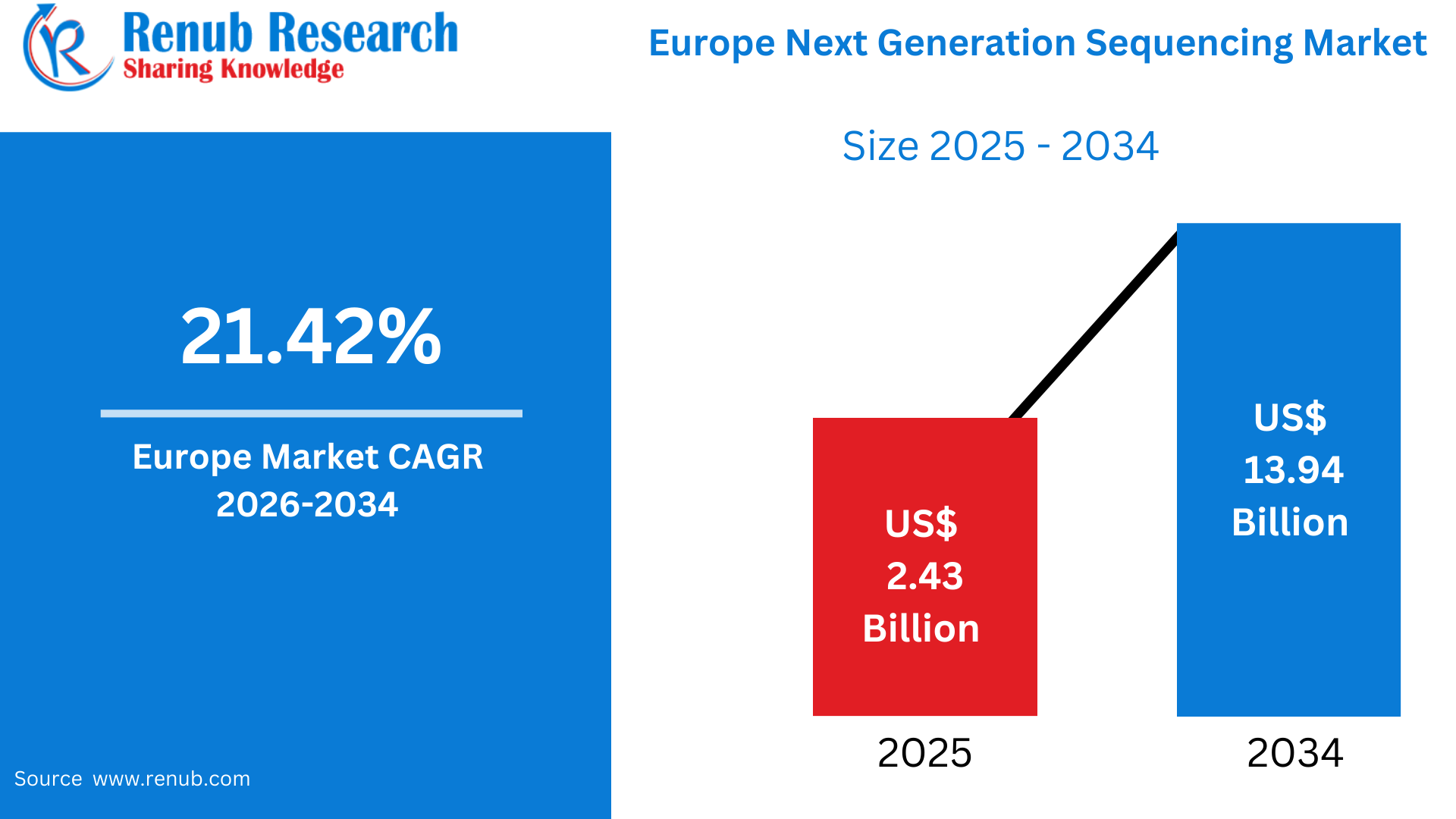
Europe Next-Generation Sequencing (NGS) Market is projected to experience robust growth, expanding from US$ 2.43 billion in 2025 to US$ 13.94 billion by 2034, registering a CAGR of 21.42% during 2026–2034. Market expansion is being driven by increasing government investment in genomics research, rapid technological advancements in sequencing platforms, declining sequencing costs, and the growing adoption of NGS across clinical diagnostics, precision medicine, and pharmaceutical research. The rising prevalence of cancer and genetic disorders, coupled with expanding genomic research programs throughout Europe, is further accelerating demand for advanced sequencing technologies.
What is NGS and its demands in European Country?
Next-Generation Sequencing (NGS) has transformed genomic analysis by enabling the rapid, accurate, and high-throughput sequencing of DNA and RNA. Unlike traditional sequencing methods that process one genetic fragment at a time, NGS simultaneously analyzes millions of DNA or RNA sequences, allowing researchers and clinicians to generate comprehensive whole-genome, whole-exome, transcriptome, or targeted gene sequencing data within a significantly shorter timeframe. This technological advancement has revolutionized molecular biology and precision healthcare by providing deeper genetic insights while reducing the cost and time required for genomic analysis.
Today, NGS serves as a foundational technology across numerous scientific and clinical applications, including cancer genomics, inherited disease diagnosis, infectious disease surveillance, reproductive health, pharmacogenomics, drug discovery, and agricultural biotechnology. Continuous improvements in sequencing chemistry, automation, artificial intelligence, and bioinformatics have enhanced data quality, increased sequencing throughput, and simplified genomic analysis, making NGS more accessible to research laboratories, hospitals, and diagnostic centers throughout Europe.
Europe has emerged as one of the world’s leading regions for genomic research and Next-Generation Sequencing adoption, supported by its strong scientific infrastructure, internationally recognized academic institutions, and sustained public investment in life sciences. Government-funded genomics initiatives, collaborative research programs, and precision medicine strategies have significantly expanded the use of sequencing technologies across healthcare and biomedical research. Countries such as Germany, the United Kingdom, France, and the Netherlands have established themselves as major hubs for genomic innovation, driven by extensive cancer research, rare disease diagnostics, and large-scale population genomics projects.
The clinical adoption of Next-Generation Sequencing continues to accelerate across Europe as healthcare providers increasingly integrate genomic testing into routine patient care. Favorable reimbursement frameworks in several European countries, rising public awareness of genetic testing, and ongoing improvements in sequencing platforms have further strengthened market growth. In addition, strategic collaborations among research institutes, hospitals, biotechnology companies, and pharmaceutical organizations are promoting innovation, expanding clinical applications, and supporting the widespread adoption of NGS technologies across the European healthcare ecosystem throughout the forecast period.
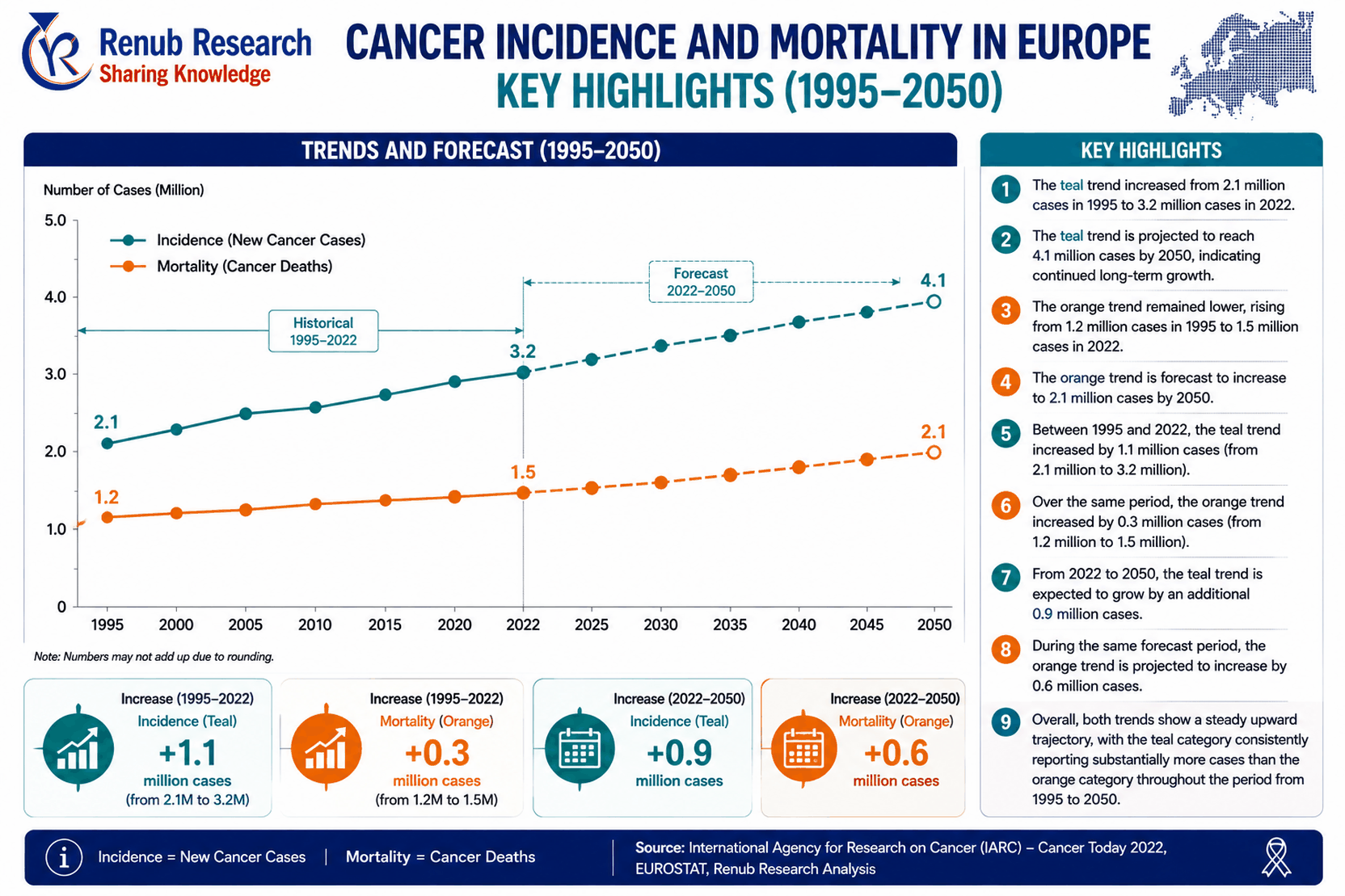
Cancer incidence and mortality in Europe Key Highlights (1995–2050)
- The teal trend increased from 2.1 million cases in 1995 to 3.2 million cases in 2022.
- The teal trend is projected to reach 4.1 million cases by 2050, indicating continued long-term growth.
- The orange trend remained lower, rising from 1.2 million cases in 1995 to 1.5 million cases in 2022.
- The orange trend is forecast to increase to 2.1 million cases by 2050.
- Between 1995 and 2022, the teal trend increased by 1.1 million cases (from 2.1 million to 3.2 million).
- Over the same period, the orange trend increased by 0.3 million cases (from 1.2 million to 1.5 million).
- From 2022 to 2050, the teal trend is expected to grow by an additional 0.9 million cases.
- During the same forecast period, the orange trend is projected to increase by 0.6 million cases.
- Overall, both trends show a steady upward trajectory, with the teal category consistently reporting substantially more cases than the orange category throughout the period from 1995 to 2050.
Market Growth Drivers
Expanding Adoption of Precision Medicine Across Europe
The growing implementation of precision medicine is one of the primary forces driving the Europe Next-Generation Sequencing (NGS) market. As healthcare systems increasingly transition toward personalized treatment strategies, NGS has become an essential tool for generating detailed genomic profiles that enable clinicians to tailor therapies according to an individual’s genetic characteristics. The technology is widely used in oncology, rare disease diagnosis, inherited disorders, and pharmacogenomics, allowing healthcare providers to improve treatment selection and patient outcomes. Across Europe, governments are investing in national genome sequencing initiatives and precision medicine programs that support the integration of genomic information into routine clinical practice. Pharmaceutical companies are also utilizing NGS to identify patient populations most likely to benefit from targeted therapies and companion diagnostics, improving the efficiency of clinical trials and drug development. Reflecting this momentum, the European Partnership for Personalised Medicine (EP PerMed) was officially launched in October 2023 in Valencia with 49 partner organizations, strengthening collaboration in precision medicine research, innovation, knowledge transfer, and the integration of genomic medicine into healthcare systems across Europe.
Rising Use of NGS in Oncology and Rare Disease Diagnostics
The increasing burden of cancer and genetic disorders is significantly accelerating the adoption of Next-Generation Sequencing throughout Europe. Cancer remains one of the leading causes of mortality across the region, creating strong demand for advanced genomic technologies that support early diagnosis, personalized treatment planning, and disease monitoring. NGS enables comprehensive mutation detection, tumor profiling, biomarker discovery, and molecular characterization, making it an indispensable tool in precision oncology. At the same time, the technology has become increasingly important for diagnosing rare and inherited genetic disorders that are often difficult to identify using conventional diagnostic methods. Growing awareness among healthcare professionals, expanding access to genomic testing, and the incorporation of NGS into national healthcare systems for hereditary cancers, pediatric genetic diseases, and other complex conditions are driving sustained market growth across Europe.
Robust Research Infrastructure and Government Investment
Europe possesses one of the world’s strongest genomics research ecosystems, supported by internationally recognized universities, biotechnology companies, research institutes, and government-funded scientific programs. Significant public and private investments in genomics, population sequencing, translational medicine, and precision healthcare continue to accelerate innovation and expand the use of Next-Generation Sequencing technologies. European Union-funded initiatives encourage cross-border scientific collaboration, data sharing, and the development of advanced genomic research capabilities, enabling researchers to apply NGS across genomics, transcriptomics, epigenetics, microbiome studies, and precision medicine. Programs such as Genomics England’s Newborn Genomes Programme are utilizing genome sequencing to identify inherited diseases at an early stage, while the European Health and Digital Executive Agency (HaDEA) has introduced new funding opportunities through the 2025 EU4Health Work Programme to strengthen healthcare resilience, genomic research, and preparedness for future public health challenges.
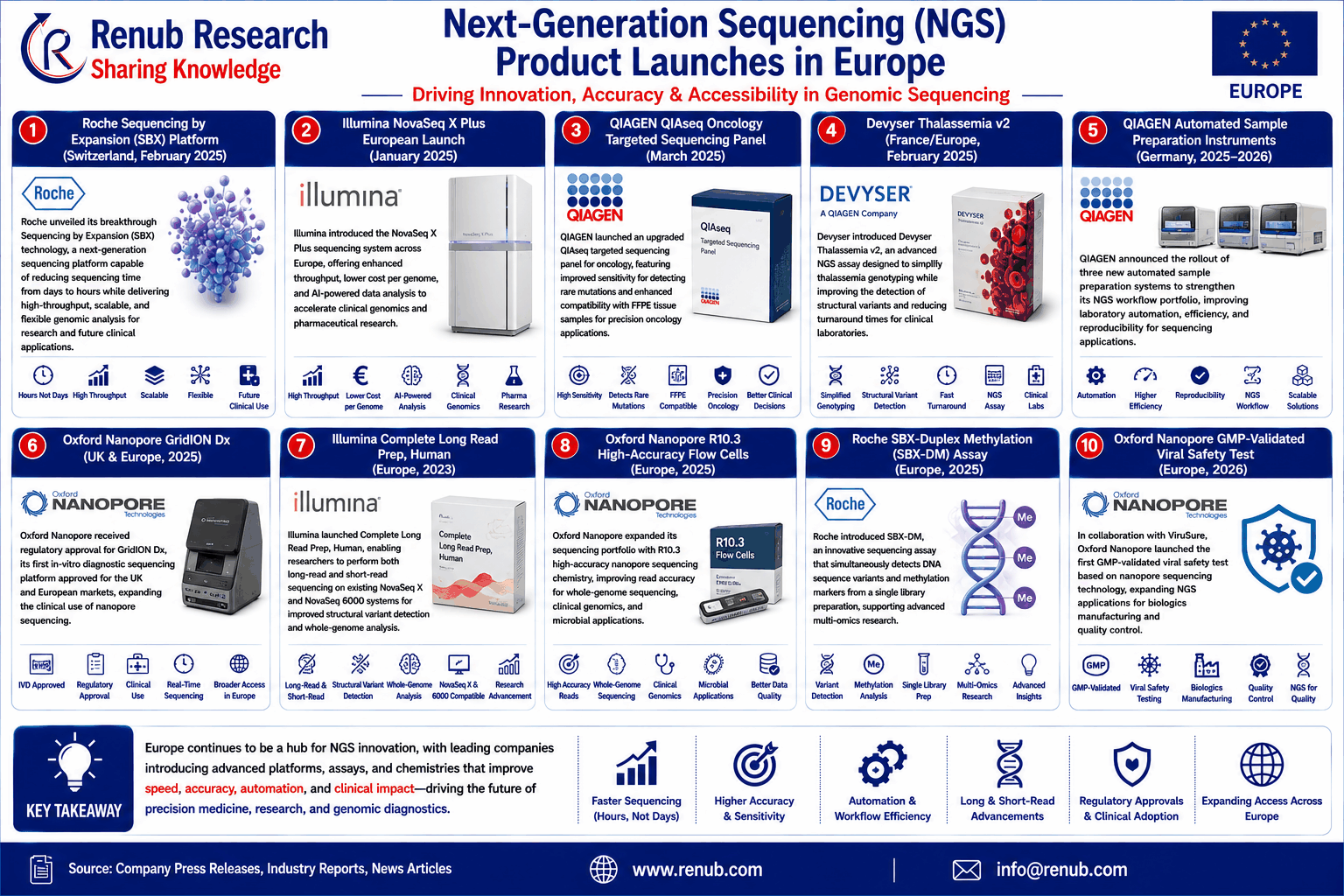
Next-Generation Sequencing (NGS) Product Launches in Europe
- Roche Sequencing by Expansion (SBX) Platform (Switzerland, February 2025) – Roche unveiled its breakthrough Sequencing by Expansion (SBX) technology, a next-generation sequencing platform capable of reducing sequencing time from days to hours while delivering high-throughput, scalable, and flexible genomic analysis for research and future clinical applications.
- Illumina NovaSeq X Plus European Launch (January 2025) – Illumina introduced the NovaSeq X Plus sequencing system across Europe, offering enhanced throughput, lower cost per genome, and AI-powered data analysis to accelerate clinical genomics and pharmaceutical research.
- QIAGEN QIAseq Oncology Targeted Sequencing Panel (March 2025) – QIAGEN launched an upgraded QIAseq targeted sequencing panel for oncology, featuring improved sensitivity for detecting rare mutations and enhanced compatibility with FFPE tissue samples for precision oncology applications.
- Devyser Thalassemia v2 (France/Europe, February 2025) – Devyser introduced Devyser Thalassemia v2, an advanced NGS assay designed to simplify thalassemia genotyping while improving the detection of structural variants and reducing turnaround times for clinical laboratories.
- QIAGEN Automated Sample Preparation Instruments (Germany, 2025–2026) – QIAGEN announced the rollout of three new automated sample preparation systems to strengthen its NGS workflow portfolio, improving laboratory automation, efficiency, and reproducibility for sequencing applications.
- Oxford Nanopore GridION Dx (UK & Europe, 2025) – Oxford Nanopore received regulatory approval for GridION Dx, its first in-vitro diagnostic sequencing platform approved for the UK and European markets, expanding the clinical use of nanopore sequencing.
- Illumina Complete Long Read Prep, Human (Europe, 2023) – Illumina launched Complete Long Read Prep, Human, enabling researchers to perform both long-read and short-read sequencing on existing NovaSeq X and NovaSeq 6000 systems for improved structural variant detection and whole-genome analysis.
- Oxford Nanopore R10.3 High-Accuracy Flow Cells (Europe, 2025) – Oxford Nanopore expanded its sequencing portfolio with R10.3 high-accuracy nanopore sequencing chemistry, improving read accuracy for whole-genome sequencing, clinical genomics, and microbial applications.
- Roche SBX-Duplex Methylation (SBX-DM) Assay (Europe, 2025) – Roche introduced SBX-DM, an innovative sequencing assay that simultaneously detects DNA sequence variants and methylation markers from a single library preparation, supporting advanced multi-omics research.
- Oxford Nanopore GMP-Validated Viral Safety Test (Europe, 2026) – In collaboration with ViruSure, Oxford Nanopore launched the first GMP-validated viral safety test based on nanopore sequencing technology, expanding NGS applications for biologics manufacturing and quality control.
Europe Market Challenges
High Capital Investment and Bioinformatics Costs
Although sequencing costs have declined considerably over the past decade, implementing Next-Generation Sequencing remains financially demanding for many healthcare organizations and research institutions. Significant investments are required for sequencing instruments, laboratory infrastructure, consumables, maintenance, and sophisticated bioinformatics platforms capable of processing and interpreting large genomic datasets. Smaller hospitals, diagnostic laboratories, and research centers often face budgetary constraints that limit access to advanced sequencing technologies. In addition, genomic data management requires highly skilled bioinformaticians, geneticists, and computational resources, increasing operational expenses. Variations in healthcare funding and research investment among European countries also contribute to unequal adoption of NGS technologies, particularly in regions with more limited healthcare budgets.
Complex Regulatory Environment and Data Privacy Requirements
Europe’s stringent regulatory framework presents additional challenges for companies developing and commercializing Next-Generation Sequencing technologies. Regulations such as the General Data Protection Regulation (GDPR) impose strict requirements for the collection, storage, sharing, and processing of sensitive genomic information, requiring healthcare providers and sequencing companies to implement robust data protection and patient consent procedures. Compliance with these regulations often increases administrative responsibilities, operational complexity, and overall costs. Furthermore, lengthy regulatory approval processes for genomic diagnostics and clinical sequencing tests can delay product launches and market expansion. These regulatory and privacy considerations create additional barriers for organizations seeking to scale NGS-based diagnostic services across multiple European countries while maintaining compliance with diverse national healthcare regulations.
Products Insights
Next-Generation Sequencing Instruments
The Europe Next-Generation Sequencing (NGS) instruments market is witnessing significant growth, driven by increasing demand from research institutes, clinical laboratories, academic organizations, and pharmaceutical companies. Laboratories across Europe are investing in both benchtop and high-throughput sequencing platforms to support a broad range of applications, including cancer genomics, rare disease research, infectious disease surveillance, population genomics, and whole-genome sequencing. Continuous technological advancements have improved sequencing speed, accuracy, automation, and scalability, enabling laboratories to process larger sample volumes more efficiently. Although the high acquisition cost of advanced sequencing systems remains a challenge, growing public and private investment in life sciences research and the expanding clinical adoption of genomic testing continue to support market growth.
Next-Generation Sequencing Services
The demand for Next-Generation Sequencing services is expanding rapidly across Europe as research institutions, hospitals, biotechnology companies, and pharmaceutical organizations increasingly outsource genomic sequencing activities. Third-party service providers offer comprehensive solutions, including sample preparation, sequencing, bioinformatics analysis, data interpretation, and customized reporting, allowing customers to access advanced genomic capabilities without substantial capital investment. Outsourcing also enables organizations to benefit from specialized technical expertise, faster turnaround times, and access to the latest sequencing technologies. The growing complexity of genomic datasets and increasing demand for sophisticated bioinformatics support are further accelerating the growth of the European NGS services market.
Application Insights
Next-Generation Sequencing Diagnostics
Next-Generation Sequencing is transforming clinical diagnostics across Europe by enabling more accurate, comprehensive, and personalized genetic analysis. NGS-based diagnostic tests are widely used for cancer profiling, inherited disease diagnosis, prenatal and newborn screening, infectious disease detection, and pharmacogenomic testing. Healthcare providers are increasingly incorporating genomic sequencing into routine clinical practice to improve diagnostic accuracy, guide targeted therapies, and support precision medicine initiatives. Rising awareness among clinicians and patients, expanding genomic testing programs, and favorable reimbursement policies in several European countries are encouraging broader adoption of NGS-based diagnostics across hospitals and specialized diagnostic laboratories.
Drug Discovery Next-Generation Sequencing
The Europe Drug Discovery Next-Generation Sequencing market is experiencing strong growth as pharmaceutical and biotechnology companies increasingly integrate genomic technologies into the drug development process. NGS supports every stage of drug discovery by enabling target identification, biomarker discovery, genomic profiling, pharmacogenomics research, and companion diagnostic development. The technology provides researchers with deeper insights into disease biology and genetic variation, helping accelerate therapeutic development while improving the efficiency of preclinical and clinical research. Rising investment in biopharmaceutical research, precision medicine, gene therapies, and biologics is further strengthening demand for advanced sequencing technologies throughout Europe’s pharmaceutical sector.
Technology Insights
Sequencing by Synthesis (SBS)
Sequencing by Synthesis (SBS) continues to dominate the European Next-Generation Sequencing market due to its exceptional sequencing accuracy, scalability, and versatility across research and clinical applications. The technology is extensively used for whole-genome sequencing, whole-exome sequencing, RNA sequencing, targeted gene analysis, and transcriptomics research. Its ability to generate highly accurate, reproducible, and high-throughput genomic data has established SBS as the preferred sequencing platform among research institutions, diagnostic laboratories, and healthcare organizations. Continuous improvements in sequencing chemistry, instrument automation, and bioinformatics software have enhanced workflow efficiency while reducing operational costs, further reinforcing the widespread adoption of SBS technology across Europe.
Ion Semiconductor Sequencing
Ion semiconductor sequencing is gaining momentum across Europe, particularly for applications requiring rapid, targeted, and cost-effective genomic analysis. By detecting hydrogen ions released during DNA synthesis rather than relying on optical imaging, this technology delivers faster sequencing results with simplified workflows and lower instrument complexity. These advantages make ion semiconductor sequencing well suited for medium-sized laboratories, hospital diagnostic centers, oncology testing, infectious disease surveillance, and targeted gene panel analysis. Although Sequencing by Synthesis remains the dominant technology, ongoing innovation and expanding clinical applications continue to drive steady growth in the European ion semiconductor sequencing market.
End User Insights
Hospitals and Clinics
Hospitals and clinics represent one of the fastest-growing end-user segments in the European Next-Generation Sequencing market as genomic medicine becomes increasingly integrated into routine healthcare. Healthcare providers are adopting NGS technologies for cancer diagnosis, tumor profiling, inherited disease detection, prenatal screening, newborn testing, infectious disease management, and personalized treatment planning. Oncology departments remain among the largest users of genomic sequencing, utilizing NGS to identify actionable genetic mutations and guide targeted therapies. Government-supported genomics initiatives, expanding precision medicine programs, improved reimbursement policies, and ongoing investments in hospital laboratory infrastructure are further accelerating the adoption of NGS across clinical settings throughout Europe.
Country Analysis
Germany
Germany represents the largest and most advanced Next-Generation Sequencing (NGS) market in Europe, supported by its world-class healthcare system, strong biotechnology sector, and internationally recognized research institutions. The country has witnessed widespread adoption of NGS across oncology, rare disease diagnostics, infectious disease research, and pharmaceutical development. Significant investments from both public and private sectors continue to strengthen Germany’s genomics ecosystem, accelerating innovation in precision medicine and molecular diagnostics. The presence of leading life sciences companies and extensive collaborations between universities, hospitals, and biotechnology firms further reinforce the country’s leadership in genomic research. Reflecting ongoing technological progress, QIAGEN announced plans to introduce three new automated sample preparation instruments during 2025 and 2026, expanding its laboratory automation portfolio and improving efficiency in genomic workflows.
France
France has established a strong position in the European Next-Generation Sequencing market through sustained investment in genomics research, precision medicine, and advanced healthcare infrastructure. National initiatives promoting genomic medicine have accelerated the integration of NGS into routine clinical practice, particularly for cancer diagnostics, rare disease identification, and population genomics research. Increasing collaboration between research organizations, healthcare providers, and biotechnology companies is supporting the development of innovative genomic applications across the country. Demonstrating continued innovation, Devyser launched Devyser Thalassemia v2 in February 2025, an advanced NGS solution designed to simplify genetic analysis, improve the detection of structural variants associated with thalassemia, and deliver faster, more accurate diagnostic results for clinical and research applications.
United Kingdom
The United Kingdom remains one of Europe’s leading markets for Next-Generation Sequencing, driven by its globally recognized genomics programs, strong research infrastructure, and the widespread adoption of genomic medicine within the National Health Service (NHS). Large-scale genome sequencing initiatives have positioned the UK at the forefront of precision healthcare, supporting advancements in cancer genomics, rare disease diagnosis, infectious disease surveillance, and pharmacogenomics. Continuous government funding, favorable research policies, and collaborations between academic institutions and industry continue to stimulate market growth. In August 2023, Almac Diagnostic Services, part of the Almac Group, strengthened its sequencing capabilities by installing the first Illumina NovaSeq™ X Plus system in Northern Ireland and across the island of Ireland, expanding high-throughput sequencing capacity for biopharmaceutical research and clinical applications.
Russia
The Russian Next-Generation Sequencing market is steadily developing as investments in biotechnology, genomics, and healthcare modernization continue to increase. NGS adoption is primarily driven by academic research, infectious disease surveillance, agricultural genomics, and emerging precision medicine initiatives. Although the market remains smaller than those of Western European countries, ongoing efforts to strengthen scientific research infrastructure and expand genomic capabilities are creating new growth opportunities. In August 2025, the Russian government announced plans to expand the country’s national genetic database by 2030, increasing its capacity by approximately 35-fold to 35 petabytes. The initiative forms part of the country’s broader digital transformation strategy for science and education and is expected to support genomic research, healthcare innovation, and the long-term development of precision medicine.
Market Segmentations
Products
- Instruments
- Reagents & Consumables
- Services
Application
- Diagnostics
- Agriculture and Animal Research
- Drug Discovery
- Personalized Medicine and Genetic Screening
- Others
Technology
- Sequencing by Synthesis
- Ion Semiconductor Sequencing
- Single Molecule Read Time Sequencing
- Nanopore Sequencing
- Others
End User
- Academic and Clinical Research Centers
- Pharmaceutical and Biotechnology Companies
- Hospitals and Clinics
- Others
Countries
- France
- Germany
- Italy
- Spain
- United Kingdom
- Belgium
- Netherlands
- Russia
- Poland
- Greece
- Norway
- Romania
- Portugal
- Rest of Europe
All companies have been covered with 5 Viewpoints
- Overviews
- Key Person
- Recent Developments
- SWOT Analysis
- Revenue Analysis
Company Analysis:
- Illumina
- Thermo Fisher Scientific
- Pacific Biosciences of California
- QIAGEN N.V
- Roche
- Bio-Rad Laboratories, Inc.
- Takara Bio Inc.
- Hamilton Company
- Geneious
- BioMérieux SA
Report Details:
| Report Features | Details |
| Base Year |
2025 |
| Historical Period |
2022 - 2025 |
| Forecast Period |
2026 - 2034 |
| Market |
US$ Billion |
| Segment Covered |
Products, Application, Technology, End User and Countries |
| Countries Covered |
|
| Companies Covered |
|
| Customization Scope |
20% Free Customization |
| Post-Sale Analyst Support |
1 Year (52 Weeks) |
| Delivery Format |
PDF and Excel through Email (We can also provide the editable version of the report in PPT/Word format on request) |
Customization Services available
- Analysis of Market Size and Its Segments
- More Company Profiles (Upto 10 without any additional cost):
- Additional Countries (Other than mentioned Countries):
- Region/Country Specific Reports:
- Market Entry Strategy:
- Region-Specific Market Dynamics:
- Regional Market Share Analysis:
- Trade Analysis:
- Production Insights:
- Others Customized Requests:
For more information contact our analysts.
Need More Assistance?
- Talk to our analysts to get more precious information on the current market trends.
- Include more countries and segments and customize the report based on the final requirement.
- Get a competitive advantage in your industry by knowing the report findings and making a positive impact on your revenues and operations.
- Our analysts are always ready to provide more help and pertinent information if you need any additional assistance.