Mexico Non-Invasive Prenatal Testing Market Report by Component, Application, End User, Cities and Companies Analysis 2026-2034
Buy NowMexico Non-Invasive Prenatal Testing Market Size and Forecast 2025-2033
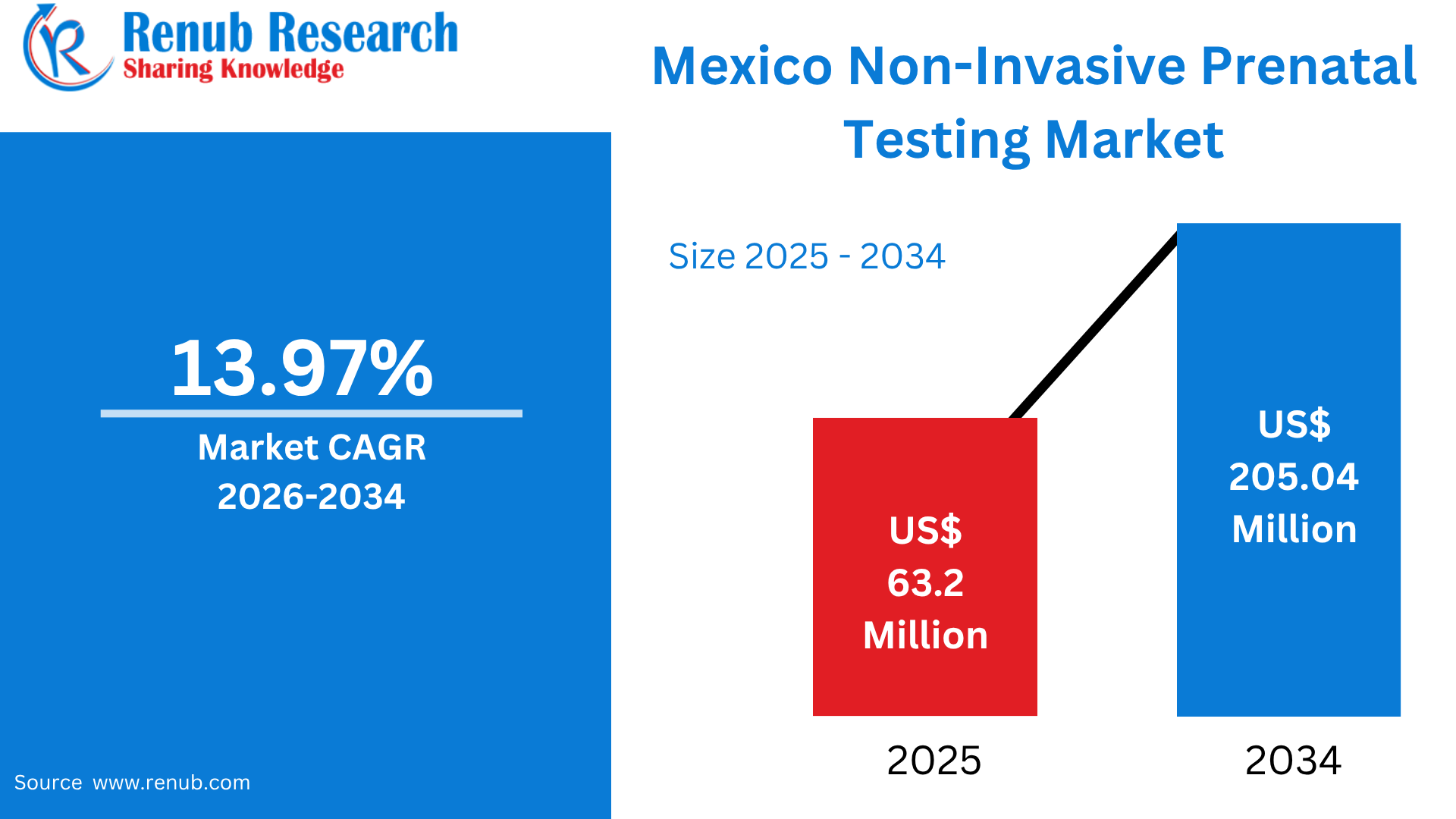
Mexico Non-Invasive Prenatal Testing (NIPT) Market is projected to witness substantial growth over the forecast period, expanding from US$ 63.20 Billion in 2025 to US$ 205.04 Billion by 2034. The market is expected to register a Compound Annual Growth Rate (CAGR) of 13.97% from 2026 to 2034. Rising awareness of prenatal genetic screening, increasing maternal age, advancements in sequencing technologies, and growing adoption of non-invasive diagnostic procedures are key factors driving market expansion across Mexico.
Mexico Non-Invasive Prenatal Testing Industry Overview
Non-Invasive Prenatal Testing (NIPT) is an advanced prenatal screening method that analyzes small fragments of fetal DNA circulating in a pregnant woman's blood to assess the risk of certain genetic abnormalities. Typically performed from the 10th week of pregnancy onward, NIPT is used to detect chromosomal conditions such as Down syndrome (Trisomy 21), Edwards syndrome (Trisomy 18), Patau syndrome (Trisomy 13), and sex chromosome abnormalities. Unlike invasive procedures such as amniocentesis or chorionic villus sampling, NIPT poses no risk of miscarriage, making it a safer and more convenient option for expectant mothers.
In Mexico, the popularity of NIPT has increased significantly in recent years due to growing awareness of prenatal health, rising maternal age, and improved access to advanced genetic testing services. Healthcare providers are increasingly recommending NIPT for high-risk pregnancies and as part of comprehensive prenatal care. Technological advancements, expanding private healthcare infrastructure, and greater patient demand for early and accurate fetal health information are further driving adoption. As prenatal screening becomes more accessible, NIPT is expected to play an increasingly important role in maternal and fetal healthcare across Mexico.
NIPT product launches that were specifically launched in Mexico
Growth Drivers for the Mexico Non-Invasive Prenatal Testing Market
Shift Toward Preventive Healthcare
The growing adoption of non-invasive prenatal testing (NIPT) in Mexico is closely linked to the country's increasing emphasis on preventive healthcare and early disease detection. Expectant mothers are becoming more proactive about monitoring fetal health and identifying potential genetic conditions at the earliest stages of pregnancy. NIPT provides a highly accurate and safe screening option by analyzing fetal DNA through a simple maternal blood sample, eliminating the risks associated with invasive procedures such as amniocentesis and chorionic villus sampling. Rising awareness of prenatal genetic disorders, coupled with improved patient education and physician recommendations, is encouraging greater acceptance of NIPT. The trend also reflects the broader shift toward personalized medicine, where healthcare decisions are tailored to individual patient needs and risk profiles. As healthcare consumers become more informed and prioritize preventive care, demand for advanced prenatal screening technologies continues to increase. This evolving healthcare mindset is expected to strengthen the position of NIPT as a standard component of prenatal care across Mexico. The Ministry of Health introduces the National Protocol of Medical Care for the First 1,000 Days of Life (PRONAM), as part of efforts to strengthen patient safety and improve child health outcomes in Mexico. The initiative focused on the theme “Safe care for all newborns and children.”
Private Healthcare Expansion
The expansion of Mexico's private healthcare sector is playing a significant role in driving the growth of the non-invasive prenatal testing (NIPT) market. Private hospitals, fertility centers, and specialized diagnostic laboratories are increasingly offering advanced prenatal screening services to meet rising consumer demand. Major urban centers such as Mexico City, Monterrey, and Guadalajara have witnessed substantial investments in healthcare infrastructure, enabling wider access to sophisticated genetic testing technologies. The growing number of private healthcare providers has increased competition, improved service quality, and enhanced patient access to innovative diagnostic solutions. Furthermore, broader health insurance coverage within the private sector is making NIPT more affordable for a larger segment of the population. Many insurers now recognize the value of early prenatal screening and are gradually expanding reimbursement options for eligible patients. As disposable incomes rise and more families seek premium healthcare services, the private healthcare industry is expected to remain a key catalyst for NIPT adoption and overall market growth in Mexico. Government of Mexico has embarked on a structural reform aligned with the National Development Plan (PND) 2025–2030 and the Health Sectoral Program (PROSESA) 2025–2030. Both instruments place health at the center of the country’s development agenda and establish clear objectives: to guarantee the right to health protection, to ensure financial protection against illness, and to consolidate a modern, integrated, and equitable health system capable of serving all people, regardless of employment or social security status.
Advancements in Healthcare Infrastructure
Continuous improvements in Mexico's healthcare infrastructure are significantly contributing to the expansion of the non-invasive prenatal testing (NIPT) market. Government and private-sector investments in hospitals, diagnostic laboratories, and maternal healthcare facilities have enhanced the availability of advanced prenatal screening services throughout the country. Modern healthcare institutions are increasingly adopting cutting-edge genomic technologies, enabling faster and more accurate genetic analysis. In addition, healthcare professionals are receiving specialized training in prenatal diagnostics and genetic counseling, improving the quality of patient care and clinical decision-making. The integration of digital healthcare systems and laboratory automation has further streamlined testing processes and reduced turnaround times for results. While access disparities still exist between urban and rural regions, ongoing infrastructure development is gradually narrowing this gap. Improved transportation networks, telemedicine initiatives, and healthcare outreach programs are also helping extend prenatal services to underserved populations. These advancements are expected to support greater NIPT utilization and improve maternal and fetal health outcomes across Mexico. Mexico’s President has announced a sweeping health reform aimed at achieving Universal Health Coverage (UHC) by 2027, describing the initiative as a “historic step” toward guaranteeing free and equitable access to health services for the entire population.
Challenges in the Mexico Non-Invasive Prenatal Testing Market
Affordability and Accessibility
Despite its clinical benefits, affordability remains one of the most significant barriers to widespread adoption of non-invasive prenatal testing (NIPT) in Mexico. The test is often considerably more expensive than conventional prenatal screening methods, making it inaccessible for many families, particularly those with limited financial resources. While individuals covered by private health insurance may have access to partial or full reimbursement, many patients relying on public healthcare systems must bear the full cost of testing. This financial burden can discourage expectant mothers from choosing NIPT, even when it is medically recommended. Geographic disparities further complicate accessibility, as advanced testing services are primarily concentrated in major urban areas. Women living in rural or remote regions may face challenges related to travel, availability of qualified healthcare providers, and limited diagnostic infrastructure. Addressing these barriers through expanded insurance coverage, government support programs, and lower-cost testing solutions will be essential to improving equitable access and increasing market penetration across Mexico.
Regulatory and Quality Control Issues
Regulatory and quality control challenges continue to affect the development of the non-invasive prenatal testing (NIPT) market in Mexico. As the number of laboratories and healthcare providers offering NIPT services increases, maintaining consistent testing standards becomes increasingly important. Variations in testing methodologies, laboratory procedures, and interpretation practices can result in differences in accuracy and reliability, potentially undermining patient confidence in prenatal screening outcomes. The absence of comprehensive and standardized regulatory guidelines may also create uncertainty regarding quality assurance and clinical validation requirements. Ensuring that laboratories adhere to internationally recognized standards is critical for maintaining the credibility and effectiveness of NIPT services. Stronger regulatory oversight can help minimize errors, improve transparency, and promote best practices across the industry. In addition, implementing regular audits, accreditation programs, and quality monitoring systems can enhance service consistency. Addressing these regulatory concerns will be vital for fostering trust among healthcare providers, patients, and stakeholders while supporting sustainable market growth.
Mexico Non-Invasive Prenatal Testing Instruments Market
The Mexico Non-Invasive Prenatal Testing (NIPT) Instruments Market is experiencing steady growth due to increasing demand for advanced genetic screening technologies. NIPT instruments, including next-generation sequencing (NGS) platforms, polymerase chain reaction (PCR) systems, and automated sample preparation equipment, are becoming essential components of modern prenatal diagnostics. Healthcare providers and diagnostic laboratories are investing in advanced instruments to improve testing accuracy, reduce turnaround times, and enhance laboratory efficiency. The expansion of private healthcare facilities and specialized genetic testing centers is further driving instrument adoption across major Mexican cities. Technological advancements have enabled laboratories to process larger sample volumes while maintaining high-quality standards. Additionally, growing awareness of prenatal genetic screening among healthcare professionals and expectant parents is supporting demand for sophisticated testing equipment. As Mexico continues to modernize its healthcare infrastructure and expand access to precision medicine, the market for NIPT instruments is expected to witness sustained growth over the coming years.
Mexico Non-Invasive Prenatal Testing Services Market
The Mexico Non-Invasive Prenatal Testing Services Market is expanding rapidly as more expectant mothers seek reliable, safe, and early prenatal screening options. NIPT services involve the analysis of cell-free fetal DNA from maternal blood samples to assess the risk of chromosomal abnormalities. Healthcare providers are increasingly recommending these services because they offer high accuracy while eliminating the risks associated with invasive diagnostic procedures. The growth of private diagnostic laboratories, specialized genetic counseling centers, and maternal healthcare clinics has improved service availability across urban regions. Rising maternal age, growing awareness of prenatal health, and increased patient preference for preventive healthcare are key factors driving service demand. Many providers are also offering comprehensive testing packages that include genetic counseling and result interpretation, enhancing patient confidence and satisfaction. As healthcare accessibility improves and awareness of prenatal screening continues to rise, NIPT services are expected to become a routine component of prenatal care throughout Mexico.
Mexico Down Syndrome Non-Invasive Prenatal Testing Market
The Mexico Down Syndrome Non-Invasive Prenatal Testing Market represents one of the largest segments within the broader NIPT industry. Down syndrome, also known as Trisomy 21, is the most commonly screened chromosomal condition through NIPT due to its relatively high prevalence and significant impact on child development. Expectant parents increasingly prefer non-invasive testing methods because they provide highly accurate risk assessments without exposing the mother or fetus to procedural risks. Growing awareness of genetic disorders, improvements in prenatal care, and physician recommendations are contributing to greater adoption of Down syndrome screening. The increasing average maternal age in Mexico is another important factor, as the likelihood of chromosomal abnormalities rises with maternal age. Healthcare providers are emphasizing early diagnosis to enable informed decision-making and appropriate pregnancy management. Continued advancements in genomic technologies and broader access to prenatal screening services are expected to strengthen the growth of the Down syndrome NIPT market across Mexico.
Mexico Non-Invasive Prenatal Testing Hospitals Market
Hospitals play a critical role in the Mexico Non-Invasive Prenatal Testing Market by serving as primary centers for prenatal care, maternal health management, and genetic screening services. Both public and private hospitals are increasingly integrating NIPT into their prenatal care programs to provide expectant mothers with advanced screening options. Hospitals benefit from established healthcare infrastructure, access to specialized medical professionals, and the ability to offer comprehensive prenatal services under one setting. Many leading hospitals are investing in advanced laboratory technologies and collaborating with diagnostic companies to improve testing capabilities and service quality. The growing emphasis on preventive healthcare and early disease detection is encouraging hospitals to expand their prenatal screening portfolios. In addition, hospital-based genetic counseling services help patients understand test results and make informed healthcare decisions. As maternal healthcare standards continue to improve and demand for high-quality prenatal diagnostics increases, hospitals are expected to remain a dominant end-user segment within Mexico’s NIPT market.
Market Segmentation
Component
- Instruments
- Kits and Reagents
- Services
Application
- Down Syndrome (Trisomy 21)
- Edwards Syndrome (Trisomy 18)
- Patau Syndrome (Trisomy 13)
- Turner Syndrome
- Other Applications
End User
- Hospitals
- Diagnostic Labs
Cities
- Tijuana
- Ecatepec
- León
- Puebla
- Ciudad Juárez
- Guadalajara
- Monterrey
- Nezahualcóyotl
- Zapopan
All the Key players have been covered with 5 Viewpoints
- Overviews
- Key Person
- Recent Developments
- SWOT Analysis
- Revenue Analysis
Key Players Analysis
- Eurofins Scientific
- F. Hoffmann-La Roche Ltd
- Invitae Corporation
- Illumina Inc.
- Natera Inc.
- Centogene NV
- Qiagen
Report Details:
| Report Features | Details |
| Base Year |
2025 |
| Historical Period |
2022 - 2025 |
| Forecast Period |
2026 - 2034 |
| Market |
US$ Million |
| Segment Covered |
Component, Application End User, and Cities |
| Cities Covered |
|
| Companies Covered |
|
| Customization Scope |
20% Free Customization |
| Post-Sale Analyst Support |
1 Year (52 Weeks) |
| Delivery Format |
PDF and Excel through Email (We can also provide the editable version of the report in PPT/Word format on request) |
Customization Services available
- Analysis of Market Size and Its Segments
- More Company Profiles (Upto 10 without any additional cost):
- Additional Countries (Other than mentioned Countries):
- Region/Country Specific Reports:
- Market Entry Strategy:
- Region-Specific Market Dynamics:
- Regional Market Share Analysis:
- Trade Analysis:
- Production Insights:
- Others Customized Requests:
For more information contact our analysts.
Need More Assistance?
- Talk to our analysts to get more precious information on the current market trends.
- Include more countries and segments and customize the report based on the final requirement.
- Get a competitive advantage in your industry by knowing the report findings and making a positive impact on your revenues and operations.
- Our analysts are always ready to provide more help and pertinent information if you need any additional assistance.