India HVAC Systems Market Size, Share, Trends, Growth Analysis and Forecast Report 2026–2034
Buy NowIndia HVAC Systems Market Trends & Forecast
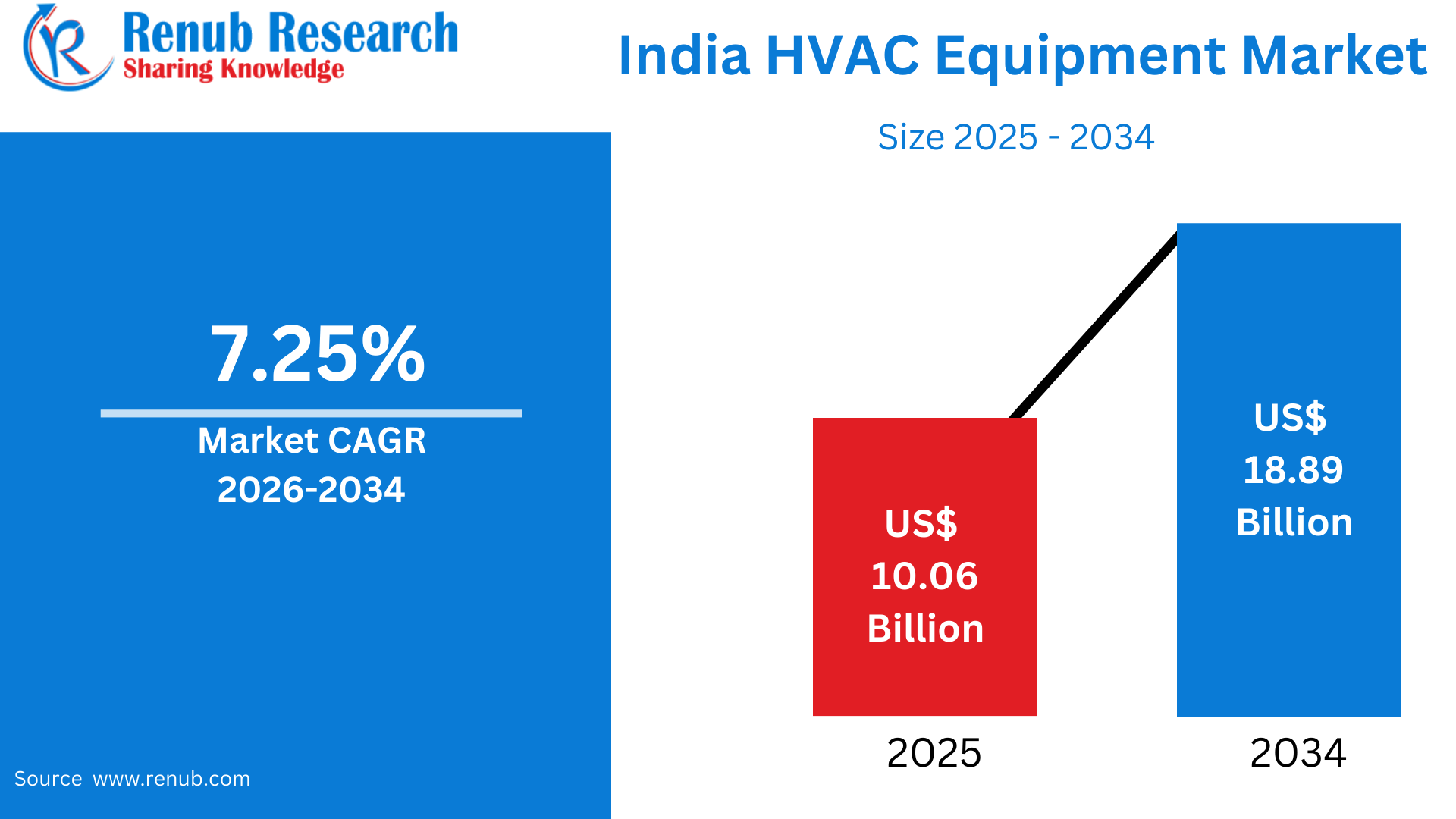
India HVAC Systems Market is projected to grow from US$ 10.06 billion in 2025 to US$ 18.89 billion by 2034, registering a CAGR of 7.25% during 2026–2034. Market growth is being driven by rapid urbanization, expanding residential and commercial construction activities, rising demand for energy-efficient cooling solutions, and ongoing infrastructure development across India’s urban centers. Additionally, increasing investments in smart buildings and sustainable infrastructure are expected to further support market expansion over the forecast period.
What is HVAC Systems and its Adoption in India?
Heating, Ventilation, and Air Conditioning (HVAC) systems are designed to regulate indoor temperature, humidity, and air quality, creating comfortable and healthy indoor environments. These systems are widely deployed across residential buildings, commercial offices, shopping malls, hospitals, manufacturing facilities, educational institutions, and transportation infrastructure. HVAC solutions include a broad range of equipment such as air conditioners, furnaces, heat pumps, chillers, ventilation systems, and air filtration units.
The demand for HVAC systems in India has grown significantly in recent years, fueled by rising urbanization, increasing disposable incomes, and evolving consumer lifestyles. India’s predominantly hot and humid climate has accelerated the adoption of air conditioning and other cooling technologies in both residential and commercial sectors. Furthermore, the rapid expansion of commercial real estate, data centers, healthcare facilities, hospitality establishments, and retail spaces has created substantial demand for advanced HVAC solutions.
Government initiatives promoting energy efficiency, green buildings, and sustainable infrastructure are encouraging the adoption of high-performance HVAC systems across the country. In addition, growing awareness of indoor air quality and occupant health—particularly following the COVID-19 pandemic—has increased the demand for advanced ventilation and air purification technologies. Continuous technological innovations, including smart HVAC systems integrated with IoT, automation, and energy management capabilities, are also contributing to the long-term growth of the India HVAC systems market.
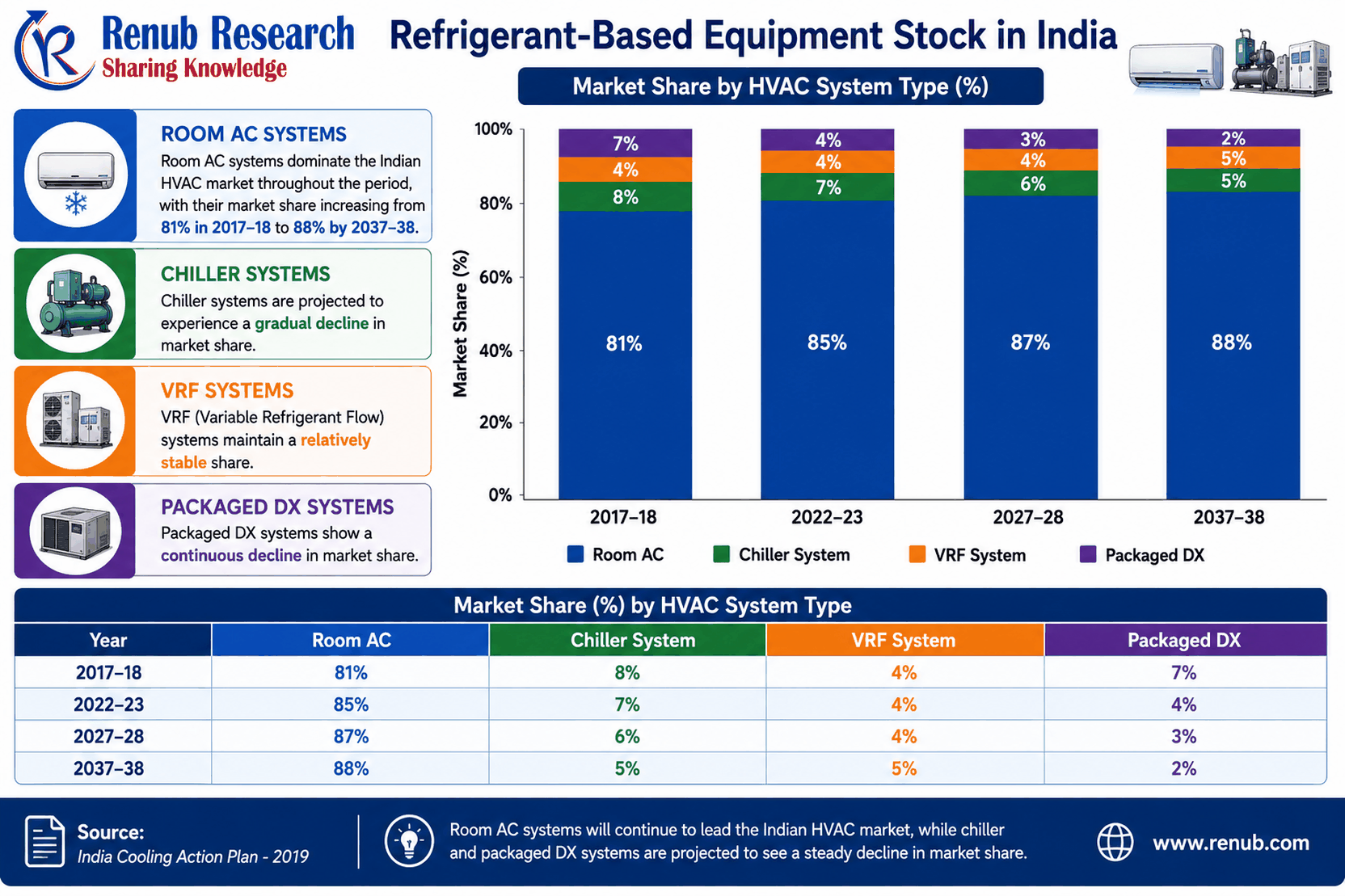
Refrigerant- Based Equipment Stock in India
- Room AC systems dominate the Indian HVAC market throughout the period, with their market share increasing from 81% in 2017–18 to 88% by 2037–38.
- Chiller systems are projected to experience a gradual decline in market share:
- 8% (2017–18)
- 7% (2022–23)
- 6% (2027–28)
- 5% (2037–38)
- VRF (Variable Refrigerant Flow) systems maintain a relatively stable share:
- 4% (2017–18)
- 4% (2022–23)
- 4% (2027–28)
- 5% (2037–38)
- Packaged DX systems show a continuous decline in market share:
- 7% (2017–18)
- 4% (2022–23)
- 3% (2027–28)
- 2% (2037–38)
- Market share by HVAC system type:
|
Year |
Room AC |
Chiller System |
VRF System |
Packaged DX |
|
2017–18 |
81% |
8% |
4% |
7% |
|
2022–23 |
85% |
7% |
4% |
4% |
|
2027–28 |
87% |
6% |
4% |
3% |
|
2037–38 |
88% |
5% |
5% |
2% |
Key Growth Pillars
Rapid Urbanization and Infrastructure Expansion
India’s urban population is projected to surge from 500 million to 820 million by 2047, making urbanization a primary catalyst for the HVAC market. This massive demographic shift is fueling unprecedented construction across residential, commercial, and public sectors—including metro rail networks, shopping malls, and modern office spaces. Climate-controlled interiors are no longer viewed as an premium amenity but as an essential integration in new urban and semi-urban structures. Government-led Smart City initiatives are rapidly scaling up transport infrastructure. Under the Union Budget, the government has proposed connecting 120 new airports over the next decade, aiming to accommodate an additional 40 million passengers and driving massive institutional demand for heavy-duty HVAC systems.
Surge in Energy-Efficient and Green Building Adoption
Rising electricity costs coupled with a national push for sustainability are pivoting the market toward eco-friendly HVAC solutions. Real estate developers are increasingly adopting advanced technologies—such as inverter-based air conditioners, Variable Refrigerant Flow (VRF) systems, and smart HVAC controls—to drastically reduce power consumption. India ranked 3rd globally in the U.S. Green Building Council’s (USGBC) 2023 list for LEED-certified projects, boasting 248 certified projects spanning over 7.23 million gross square meters. Adopting energy-efficient HVAC technology has become a baseline requirement for organizations working to meet strict environmental, social, and governance (ESG) targets amidst rising global energy demands.
Heightened Awareness of Indoor Air Quality (IAQ) and Health
Severe air pollution in major Indian metros, combined with post-pandemic health awareness, has shifted consumer focus toward indoor air quality. There is a surging demand for advanced ventilation and air purification systems across residential, corporate, educational, and healthcare sectors. In April 2025, the Technology Development Board (TDB) sanctioned financial aid to Urban Air Labs Private Limited to commercialize a “Made-in-India” wall-mounted air purification system. This plant-based tech solution targets the elimination of both particulate and gaseous contaminants, signaling a strong market trend toward affordable, homegrown bio-filtration HVAC integrations.
Challenges
Prohibitive Capital and Maintenance Costs
Despite the long-term benefits of advanced HVAC technologies, high upfront costs remain a significant barrier.
- The Initial Hurdle: The price of cutting-edge equipment, specialized installation, and the required electrical infrastructure upgrades often deters small-to-medium enterprises (SMEs) and budget-conscious consumers.
- Total Cost of Ownership: Ongoing maintenance, specialized servicing, and operational costs further inflate the lifetime cost of ownership, slowing down tech adoption in cost-sensitive segments.
Skilled Labor Shortages and Grid Instability
The sophisticated nature of modern HVAC systems contrasts sharply with the current limitations of India’s technical workforce and infrastructure.
- The Training Gap: There is a critical shortage of certified professionals capable of correctly designing, installing, and servicing advanced HVAC units. Poorly executed installations frequently lead to energy waste, reduced efficiency, and frequent equipment breakdowns.
- Power Quality Issues: Frequent voltage fluctuations and unstable power grids in various regions continue to compromise HVAC performance and longevity. Overcoming these infrastructural bottlenecks and scaling up vocational training are vital for the market’s sustained growth.
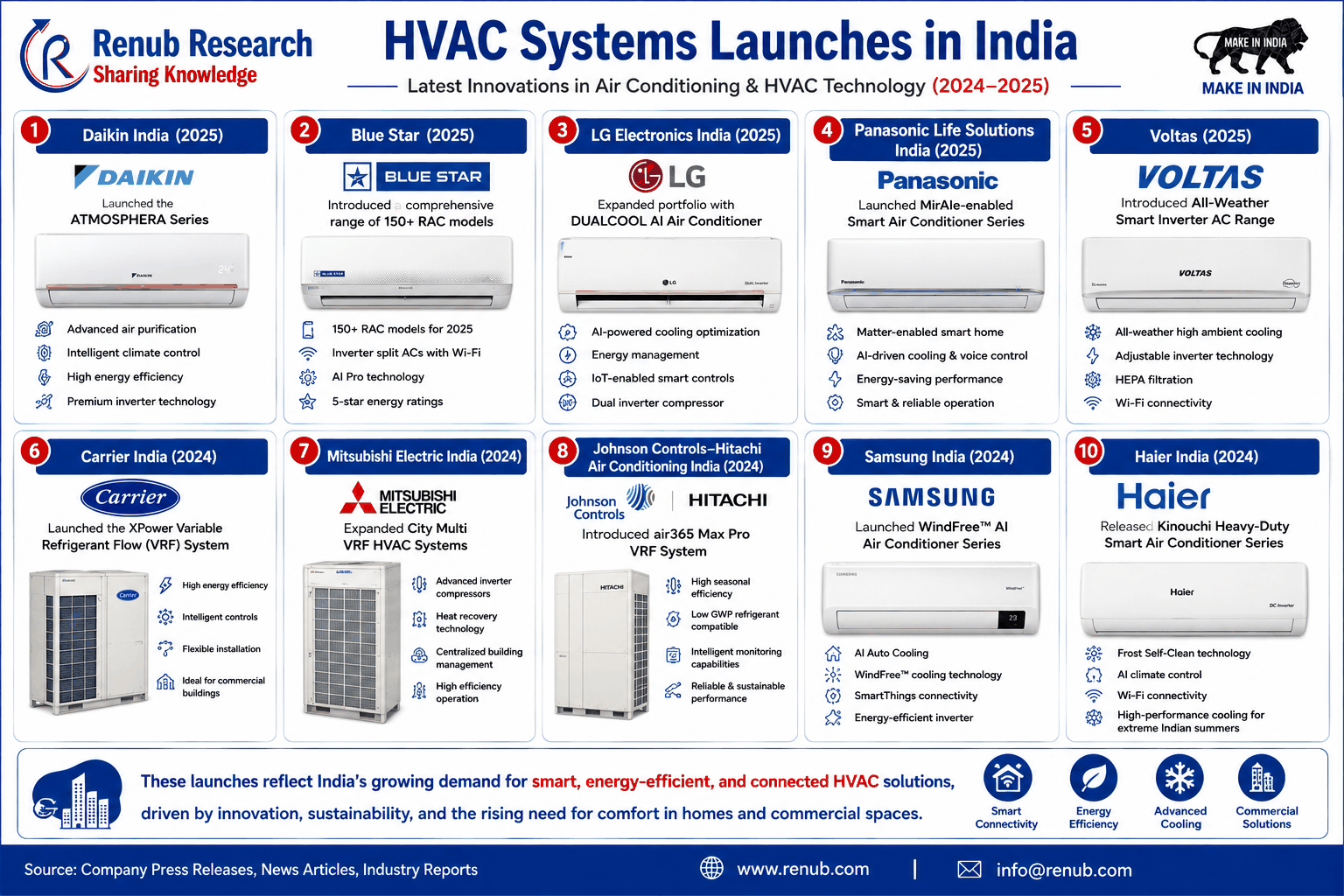
HVAC Systems launches in India
- Daikin India (2025): Launched the ATMOSPHERA Series, a premium inverter air conditioner featuring advanced air purification, intelligent climate control, and high energy efficiency for residential applications.
- Blue Star (2025): Introduced a comprehensive range of 150+ Room Air Conditioner (RAC) models for the 2025 summer season, including inverter split ACs with smart Wi-Fi connectivity, AI Pro technology, and 5-star energy ratings.
- LG Electronics India (2025): Expanded its HVAC portfolio with the DUALCOOL AI Air Conditioner, featuring AI-powered cooling optimization, energy management, and IoT-enabled smart controls.
- Panasonic Life Solutions India (2025): Launched the MirAIe-enabled Smart Air Conditioner series, offering Matter-enabled smart home compatibility, AI-driven cooling, voice control, and energy-saving features.
- Voltas (2025): Introduced the All-Weather Smart Inverter AC range, equipped with adjustable inverter technology, HEPA filtration, Wi-Fi connectivity, and high ambient cooling performance.
- Carrier India (2024): Launched the XPower Variable Refrigerant Flow (VRF) System, designed for commercial buildings with enhanced energy efficiency, intelligent controls, and flexible installation.
- Mitsubishi Electric India (2024): Expanded its City Multi VRF HVAC systems, incorporating advanced inverter compressors, heat recovery technology, and centralized building management integration.
- Johnson Controls–Hitachi Air Conditioning India (2024): Introduced the air365 Max Pro VRF System, featuring high seasonal efficiency, low Global Warming Potential (GWP) refrigerant compatibility, and intelligent monitoring capabilities.
- Samsung India (2024): Launched the WindFree™ AI Air Conditioner series, combining AI Auto Cooling, WindFree cooling technology, SmartThings connectivity, and energy-efficient inverter operation.
- Haier India (2024): Released the Kinouchi Heavy-Duty Smart Air Conditioner series, featuring Frost Self-Clean technology, AI climate control, Wi-Fi connectivity, and high-performance cooling for extreme Indian summers.
Heat Pump Systems in Indian Market
The India heat pump systems market is coming up steadily as there is growing demand for efficient and eco-friendly solutions in heating and cooling systems. Heat pumps are much more efficient compared to typical heating systems as they do not generate heat in the environment but rather harness it in an efficient manner. Presently in India, heat pumps are finding increasing applications as water heaters as well as space heaters in cooler areas and as heating as well as cooling solutions in commercial buildings. Increased electricity rates as well as increasing interest in efficient and eco-friendly energy solutions are boosting demand in the India heat pump systems market. Increased government efforts in making energy efficiency and curtailing carbon emissions an important aspect of government policies will benefit the India heat pump systems market in many ways.
India Air Purifier Industry
The India air purifier market is expected to grow rapidly because of the rising awareness of air and indoor pollutants. The high levels of pollutants in large cities have made many people realize the risks of poor air quality and the benefits of using air purifiers. The latest air purifiers have high-end technologies that make them more efficient. After the pandemic, the awareness of health care and concern for indoor pollutants have further fueled the rapid growth of the air purifier market in India. Commercial establishments also use air purification technologies because of concern for the well-being of their clients as well as employees. As the general public is becoming more informed about respiratory care and the benefits of preventing respiratory diseases, the air purifier is not considered an upscale product; therefore, the India air purifier market is expected to grow.
Residential HVAC Systems in India
The residential HVAC system industry in India is increasing owing to rapid urbanization, growing disposable incomes, as well as changing lifestyle demands. In the residential sector, air conditioning systems have become the major drivers due to their increasing demand in apartments, villas, as well as high-rise residential establishments. There is a growing demand from homeowners to provide energy efficiency, sound, as well as improved air quality indoors. Inverter AC systems as well as split AC systems have gained significant prominence owing to their efficiency in terms of consumption as well as precise temperature adjustments. There is a rising awareness about the concepts of comfort as well as health, along with severe environmental conditions, which is resulting in the increasing demand.
Commercial HVAC Systems in India
The Indian market for commercial HVACs has grown with the increasing number of offices, shopping malls, hotels, healthcare institutions, airports, and data centers, which need effective and large-scale HVAC systems to provide comfort, air quality, and efficiency. Central HVAC systems, chiller units, and VRF systems are used extensively in the commercial sector to support high density and continuous operations. Efficiency, – sustainability, and government regulations are major factors that influence the selection of HVAC systems by the commercial sector. The development of IT parks, the healthcare sector, and retail sectors has also aided the growth of the market. As productivity and efficiency become major concerns, the mandatory need for commercial HVAC systems continues to grow along with the Indian infrastructure sector.
States Insights in Indian HVAC System Industry
Maharashtra
Maharashtra HVAC market is among the biggest within India, and it has been driven mainly due to extensive urbanization and commercial and industrialization activities. Big cities like Mumbai, Pune, and Nagpur are home to immense numbers of office spaces, IT parks, shopping complexes, hospitals, and skyscrapers, all of which use advanced HVAC installations. The hot and humid climatic conditions of Maharashtra increase the demand for effective cooling measures all year round. The growing commercial sector is increasingly adopting centralized, VRF, and energy-saving chillers due to space occupancy and operational costs. Further impetus will come from rising data centers, hospitals, and Metro rail projects. In Maharashtra, apart from all the above factors, it has been observed that sustainable programs and LEED certifications are pushing for Energy Efficient HVAC solutions.
Uttar Pradesh
The market for HVAC in the Uttar Pradesh region is growing at a steady pace, driven by major infrastructure developments and an increase in the construction of residences. Fast-paced urbanization in Noida, Greater Noida, Lucknow, and Kanpur is resulting in growing demands for HVAC systems in apartments, offices, malls, and educational institutes. Development in infrastructure, including initiatives from the government involving smart cities, airports, and metro railways, is resulting in growing demand and adoption of commercial HVAC systems. Hot summer climates are leading to significant demands in the adoption of air conditioning systems in urban and semi-urban areas. Adoption of HVAC systems in the residential sector is growing due to an enhancement in the standard of living and economic affordable housing projects. Development in industrial corridors and commercial areas will make the Uttar Pradesh region a highly promising market for HVAC system vendors.
Andhra Pradesh
The Andhra Pradesh HVAC market is picking up pace due to growing industry and development activities in cities. Visakhapatnam, Vijayawada, and Amaravati are the cities that have been experiencing development in commercial buildings, ports, industries, and housing projects. The favorable climate in Andhra Pradesh contributes to constant growth in demand for cooling and ventilation solutions. In industries, HVAC provides controlled environments in manufacturing, food processing, and pharmaceutical industries. Apart from development activities, projects related to smart cities have also been contributing to the adoption of energy-efficient central HVAC solutions. Due to Andhra Pradesh continuing with development activities in industrial corridors and cities, demand for good and efficient HVAC solutions continues.
Gujarat
The Gujarat market for HVAC systems is fueled by the strong manufacturing sector, development activities, and increasing population in the state. The industrial areas like Ahmedabad, Surat, Vadodara, and Rajkot have a significant adoption rate of HVAC systems. The increasing temperatures in the state generate a constant demand for cooling systems. Organizations, including industrial and commercial ones, prefer energy-saving HVAC systems to minimize their expenditure. The development activities, including growth in ports, logistics parks, malls, and offices, boost the market growth. The emphasis by the state on industrial development and smart city development prompts the adoption of smart HVAC systems. The state remains an important geographic market that drives the growth of the Indian HVAC systems market.
Market Segmentations
Equipment
- Heat Pump
- Air Conditioning
- Boilers
- Air Purifier
- Chillers
- Air Handling Units
- Unitary Heaters
- Ventilation Fans
- Dehumidifier
- Others
End Use
- Residential
- Commercial
- Industrial
Top States
- Maharashtra
- Tamil Nadu
- Karnataka
- Gujarat
- Uttar Pradesh
- West Bengal
- Rajasthan
- Telangana
- Andhra Pradesh
- Madhya Pradesh
All companies have been covered with 5 Viewpoints
- Overviews
- Key Person
- Recent Developments
- SWOT Analysis
- Revenue Analysis
Company Analysis
- Carrier Corporation
- Daikin Industries, Ltd.
- Fujitsu
- Haier Group
- Havells India Ltd.
- Hitachi Ltd.
- Johnson Controls
- LG Electronics
Report Details:
| Report Features | Details |
| Base Year |
2025 |
| Historical Period |
2022 - 2025 |
| Forecast Period |
2026 - 2034 |
| Market |
US$ Billion |
| Segment Covered |
Equipment, End Use and State |
| State Covered |
|
| Companies Covered |
|
| Customization Scope |
20% Free Customization |
| Post-Sale Analyst Support |
1 Year (52 Weeks) |
| Delivery Format |
PDF and Excel through Email (We can also provide the editable version of the report in PPT/Word format on request) |
Customization Services available
- Analysis of Market Size and Its Segments
- More Company Profiles (Upto 10 without any additional cost):
- Additional Countries (Other than mentioned Countries):
- Region/Country Specific Reports:
- Market Entry Strategy:
- Region-Specific Market Dynamics:
- Regional Market Share Analysis:
- Trade Analysis:
- Production Insights:
- Others Customized Requests:
For more information contact our analysts.
Need More Assistance?
- Talk to our analysts to get more precious information on the current market trends.
- Include more countries and segments and customize the report based on the final requirement.
- Get a competitive advantage in your industry by knowing the report findings and making a positive impact on your revenues and operations.
- Our analysts are always ready to provide more help and pertinent information if you need any additional assistance.