In Vitro Fertilization (IVF) Market Size, Share, Growth, Trends, Industry Analysis & Forecast 2026–2034
Buy NowIVF Market Size, Share & Growth Trends
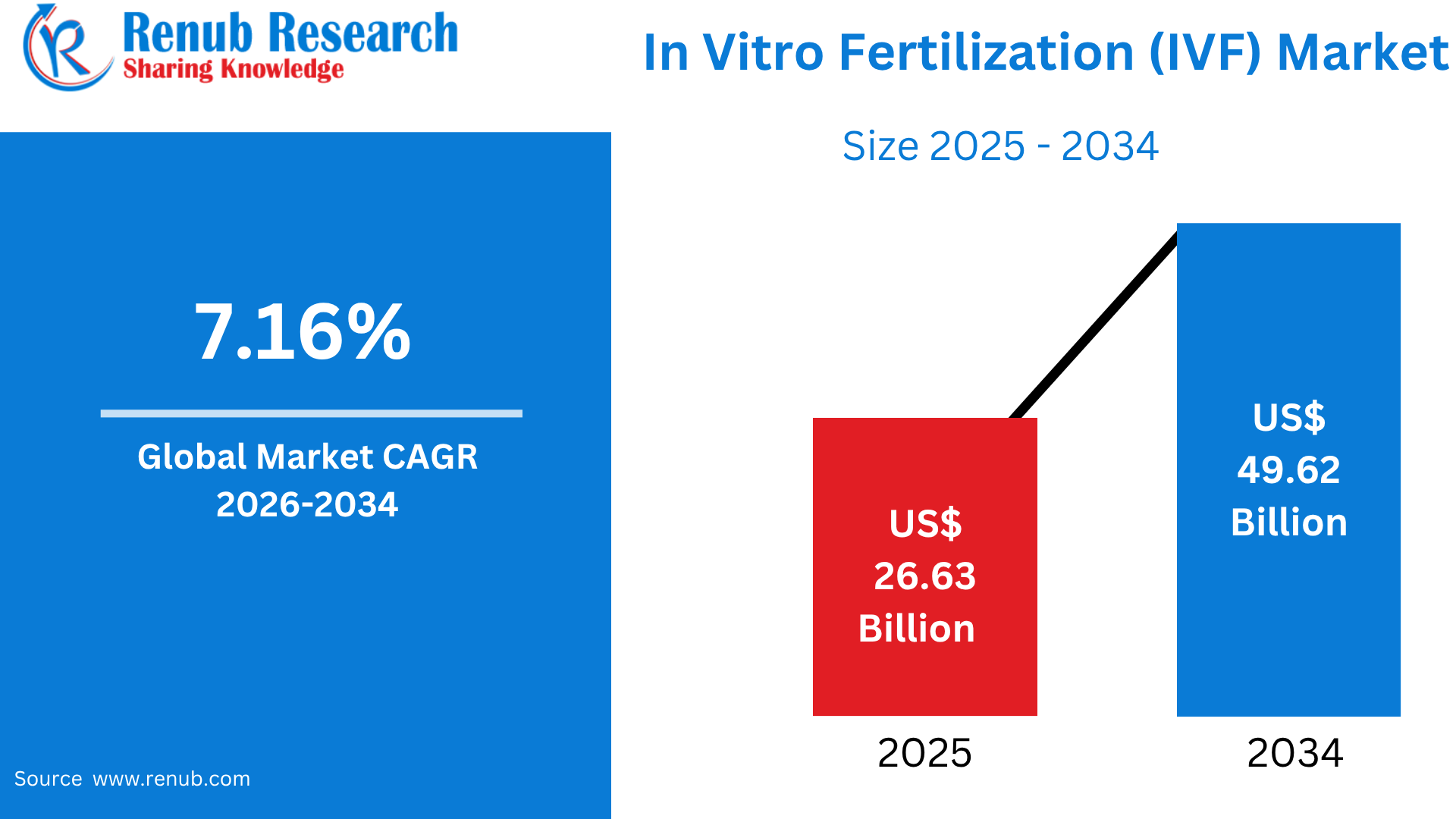
Global In Vitro Fertilization (IVF) Market is projected to increase from US$ 26.63 billion in 2024 to US$ 49.62 billion by 2034, registering a compound annual growth rate (CAGR) of 7.16% during the forecast period from 2026 to 2034. Market growth is driven by rising infertility rates, delayed parenthood, increasing acceptance of assisted reproductive technologies (ART), technological advancements in embryo selection and cryopreservation, expanding fertility clinics, supportive government initiatives, and growing awareness of reproductive healthcare worldwide.
IVF Market Outlooks
In Vitro Fertilization (IVF) is a high-tech form of assisted reproductive technology that assists individuals or couples in conceiving a child when it becomes challenging or impossible to conceive naturally. In this medical treatment, eggs are retrieved from a woman’s ovaries and then fertilized with sperm in a laboratory under a controlled environment. Once fertilization has taken place and development has occurred, a healthy embryo is inserted into the uterus in order to conceive a child successfully. IVF is often recommended for individuals facing infertility challenges resulting from fallopian tube blockage, low sperm count, hormonal disorders, and unexplained infertility challenges.
Currently, there is a high demand for IVF services all over the world due to various factors, such as increased levels of infertility, especially among couples. Modern lifestyles have led many people to delay their plans to have children, especially due to career ambitions, delayed marriages, or health issues, which may affect their ability to conceive naturally. IVF is one of the best solutions to these challenges. Furthermore, there is a high demand for IVF services all over the world due to improvements in reproductive medicine, high success rates, and awareness about IVF services. Also, there is an increase in fertility clinics, which have made IVF services accessible, thus increasing demand.
Global IVF Boom: Growth and Expansion of Reproductive Care
In Vitro Fertilization (IVF) is an advanced assisted reproductive technology (ART) in which mature eggs are retrieved from a woman’s ovaries and fertilized with sperm in a controlled laboratory environment. Once fertilization occurs, the resulting embryo is cultured for several days before being transferred into the uterus to establish pregnancy. IVF is widely used to treat infertility caused by blocked fallopian tubes, ovulation disorders, endometriosis, male-factor infertility, unexplained infertility, diminished ovarian reserve, and certain genetic disorders. It is also used for fertility preservation, donor egg or sperm programs, surrogacy, and preimplantation genetic testing (PGT) to reduce the risk of inherited diseases.
Worldwide, IVF has become one of the most successful and widely accepted fertility treatments due to rising infertility rates, delayed parenthood, increasing maternal age, and growing awareness of reproductive healthcare. Continuous advancements in embryo culture, cryopreservation, time-lapse imaging, artificial intelligence-assisted embryo selection, and genetic screening have significantly improved pregnancy success rates. Expanding fertility clinics, supportive government policies in several countries, improved healthcare infrastructure, and increasing insurance coverage have made IVF more accessible. As social acceptance of assisted reproduction continues to grow, IVF remains a vital solution for millions of individuals and couples seeking to overcome infertility and achieve successful pregnancies.
IVF Pregnancy and Birth Rates by Age – Key Highlights
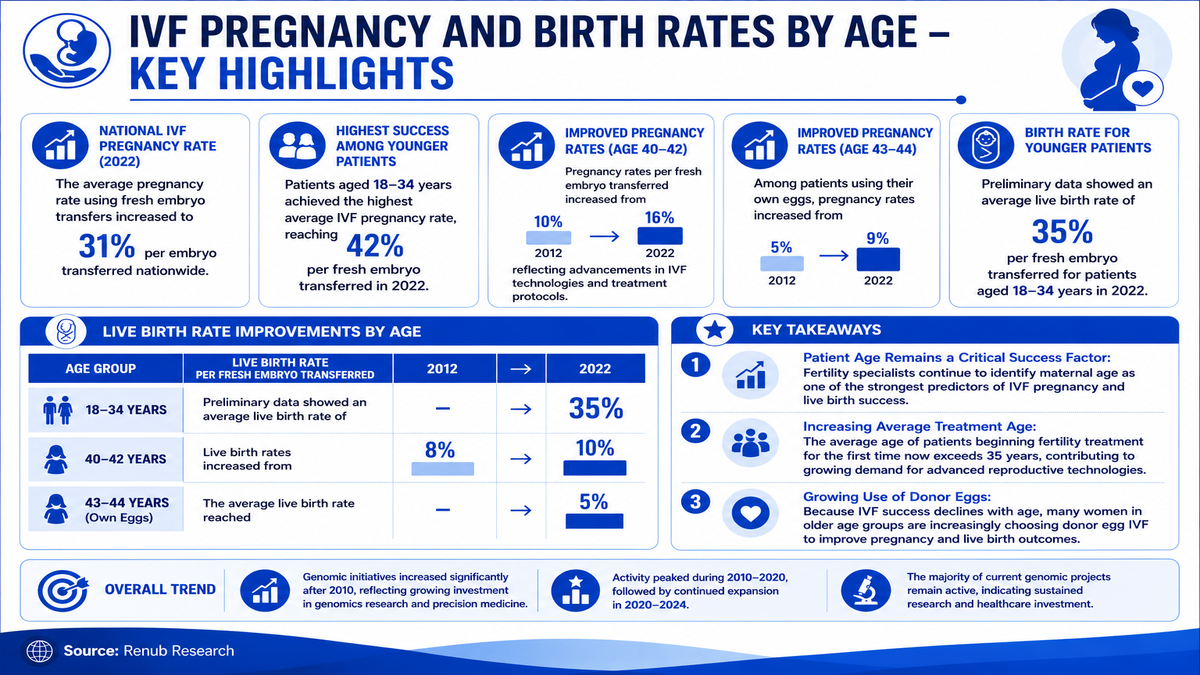
- National IVF Pregnancy Rate (2022): The average pregnancy rate using fresh embryo transfers increased to 31% per embryo transferred nationwide.
- Highest Success Among Younger Patients: Patients aged 18–34 years achieved the highest average IVF pregnancy rate, reaching 42% per fresh embryo transferred in 2022.
- Improved Pregnancy Rates (Age 40–42): Pregnancy rates per fresh embryo transferred increased from 10% in 2012 to 16% in 2022, reflecting advancements in IVF technologies and treatment protocols.
- Improved Pregnancy Rates (Age 43–44): Among patients using their own eggs, pregnancy rates increased from 5% in 2012 to 9% in 2022.
- Birth Rate for Younger Patients: Preliminary data showed an average live birth rate of 35% per fresh embryo transferred for patients aged 18–34 years in 2022.
- Birth Rate Improvements (Age 40–42): Live birth rates increased from 8% in 2012 to 10% in 2022, demonstrating gradual improvements in treatment outcomes.
- Birth Rate Improvements (Age 43–44): The average live birth rate reached 5% per embryo transferred in 2022, compared with lower levels a decade earlier.
- Patient Age Remains a Critical Success Factor: Fertility specialists continue to identify maternal age as one of the strongest predictors of IVF pregnancy and live birth success.
- Increasing Average Treatment Age: The average age of patients beginning fertility treatment for the first time now exceeds 35 years, contributing to growing demand for advanced reproductive technologies.
- Growing Use of Donor Eggs: Because IVF success declines with age, many women in older age groups are increasingly choosing donor egg IVF to improve pregnancy and live birth outcomes.
Growth Driver
Rising Global Infertility Rates and Delayed Parenthood
One of the strongest drivers of the global in vitro fertilization (IVF) market is the increasing prevalence of infertility combined with the trend of delayed parenthood. According to international reproductive health estimates, around 1 in 6 adults globally (approximately 17.5%) experience infertility at some point during their reproductive years, creating sustained demand for assisted reproductive technologies (ART). Female fertility naturally declines after the age of 35, while male fertility is also affected by advancing age, obesity, smoking, environmental pollution, stress, and chronic diseases. Urbanization and changing lifestyles have encouraged many couples to postpone marriage and childbirth for education and career advancement, increasing reliance on IVF. Every year, millions of IVF cycles are performed worldwide, with treatment volumes continuing to rise across both developed and emerging economies. Expanding awareness of fertility preservation, egg freezing, and early fertility assessment has further increased patient acceptance. As infertility becomes a growing public health concern, IVF continues to emerge as one of the most effective and widely adopted fertility treatment solutions globally.
Technological Advancements Improving IVF Success Rates
Continuous technological innovation has significantly improved IVF outcomes, making fertility treatment safer, more efficient, and increasingly successful. Modern IVF laboratories now utilize time-lapse embryo imaging, blastocyst culture, vitrification (rapid embryo freezing), intracytoplasmic sperm injection (ICSI), and preimplantation genetic testing (PGT) to improve embryo selection and implantation rates. Clinical pregnancy rates for women under 35 years of age often exceed 45–55% per embryo transfer, depending on individual patient characteristics and clinic expertise. Artificial intelligence-assisted embryo selection and automated laboratory monitoring systems are helping embryologists identify embryos with higher implantation potential while reducing human variability. Cryopreservation technology has also achieved embryo survival rates exceeding 90–95% after thawing, supporting greater use of frozen embryo transfer cycles. Improvements in reproductive genetics and personalized ovarian stimulation protocols continue to increase treatment efficiency. Growing investment in laboratory automation, digital reproductive medicine, and advanced embryology equipment is enabling fertility clinics worldwide to improve patient outcomes while expanding access to high-quality assisted reproductive care.
Expanding Fertility Clinics and Supportive Government Initiatives
The rapid expansion of fertility clinics and increasing government support for reproductive healthcare are accelerating growth in the global IVF market. Many countries facing declining birth rates have introduced policies encouraging fertility treatment, including insurance reimbursement, financial subsidies, tax incentives, and expanded reproductive healthcare services. Today, thousands of licensed fertility clinics operate worldwide, providing IVF, ICSI, fertility preservation, donor programs, and genetic testing services. Several European and Asian countries now partially reimburse IVF procedures through public healthcare systems, improving treatment accessibility for eligible couples. In addition, investments in specialized reproductive medicine centers and advanced embryology laboratories have increased treatment capacity. Private healthcare providers continue expanding clinic networks in emerging economies where infertility awareness is rising rapidly. Digital consultation platforms, telemedicine, and electronic patient management systems have further improved access to fertility specialists. Together, supportive public policies, growing healthcare investment, and expanding clinical infrastructure are making IVF services increasingly accessible to a broader global population.
In Vitro Fertilization (IVF) Product & Technology Launches Worldwide
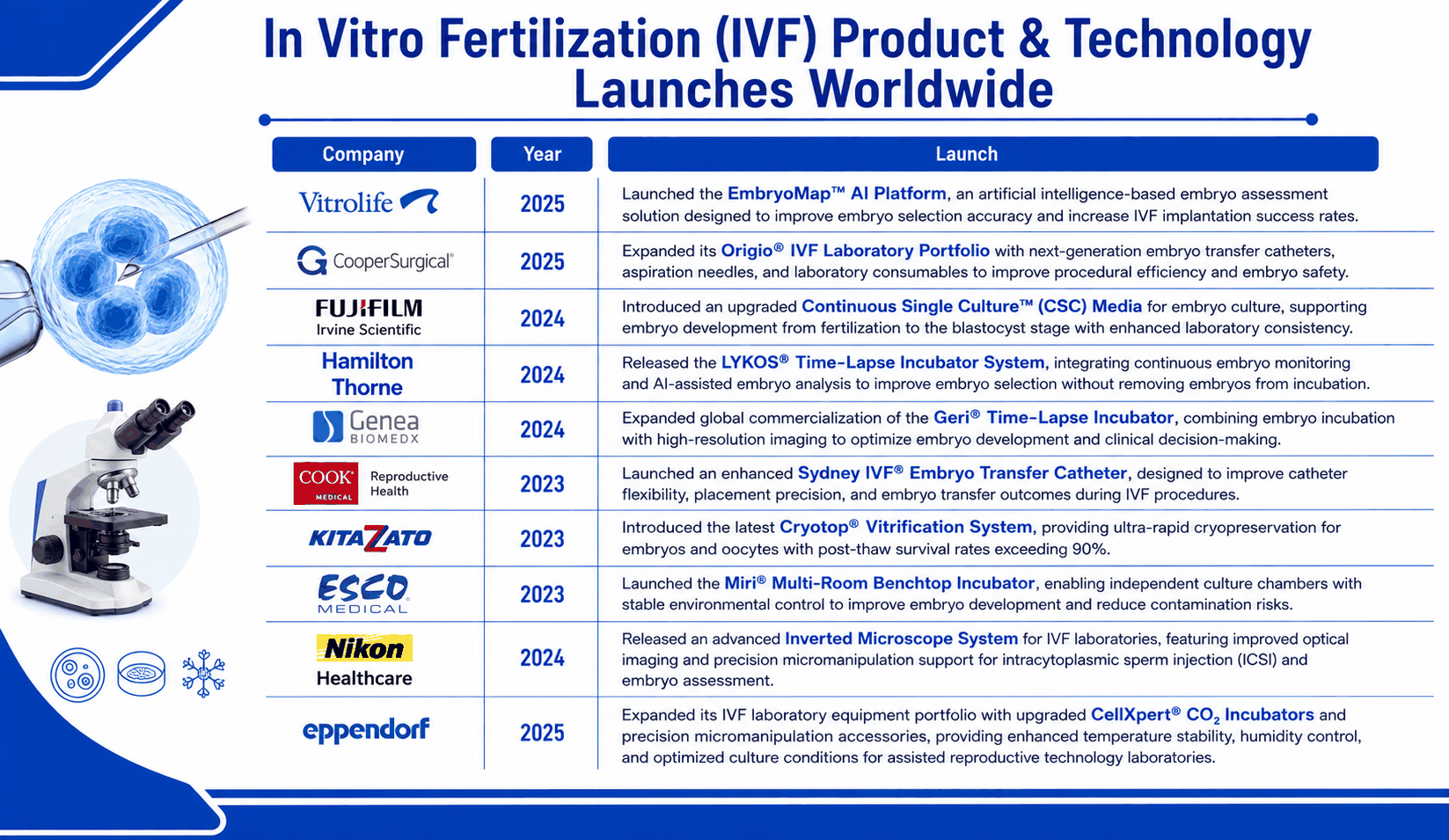
- Vitrolife (2025) – Launched the EmbryoMap™ AI Platform, an artificial intelligence-based embryo assessment solution designed to improve embryo selection accuracy and increase IVF implantation success rates.
- CooperSurgical (2025) – Expanded its Origio® IVF Laboratory Portfolio with next-generation embryo transfer catheters, aspiration needles, and laboratory consumables to improve procedural efficiency and embryo safety.
- FUJIFILM Irvine Scientific (2024) – Introduced an upgraded Continuous Single Culture™ (CSC) Media for embryo culture, supporting embryo development from fertilization to the blastocyst stage with enhanced laboratory consistency.
- Hamilton Thorne (2024) – Released the LYKOS® Time-Lapse Incubator System, integrating continuous embryo monitoring and AI-assisted embryo analysis to improve embryo selection without removing embryos from incubation.
- Genea Biomedx (2024) – Expanded global commercialization of the Geri® Time-Lapse Incubator, combining embryo incubation with high-resolution imaging to optimize embryo development and clinical decision-making.
- Cook Medical Reproductive Health (2023) – Launched an enhanced Sydney IVF® Embryo Transfer Catheter, designed to improve catheter flexibility, placement precision, and embryo transfer outcomes during IVF procedures.
- Kitazato Corporation (2023) – Introduced the latest Cryotop® Vitrification System, providing ultra-rapid cryopreservation for embryos and oocytes with post-thaw survival rates exceeding 90%.
- Esco Medical (2023) – Launched the Miri® Multi-Room Benchtop Incubator, enabling independent culture chambers with stable environmental control to improve embryo development and reduce contamination risks.
- Nikon Healthcare (2024) – Released an advanced Inverted Microscope System for IVF laboratories, featuring improved optical imaging and precision micromanipulation support for intracytoplasmic sperm injection (ICSI) and embryo assessment.
- Eppendorf (2025) – Expanded its IVF laboratory equipment portfolio with upgraded CellXpert® CO₂ Incubators and precision micromanipulation accessories, providing enhanced temperature stability, humidity control, and optimized culture conditions for assisted reproductive technology laboratories.
Challenges
High Treatment Costs and Limited Insurance Coverage
Despite increasing adoption, the high cost of IVF remains one of the most significant barriers to market growth worldwide. A single IVF treatment cycle typically costs between US$3,000 and US$20,000, depending on the country, medications, laboratory procedures, and additional services such as genetic testing or embryo freezing. Many patients require two to three treatment cycles before achieving pregnancy, substantially increasing total treatment expenses. In numerous countries, IVF is not fully covered by public or private health insurance, requiring patients to pay a significant portion of costs out of pocket. Expenses related to fertility medications, hormone monitoring, cryopreservation, donor gametes, and laboratory procedures further increase the financial burden. Cost disparities between developed and developing countries also contribute to unequal treatment access. As a result, many couples delay or discontinue fertility treatment because of financial limitations. Expanding reimbursement programs and improving affordability remain essential to increasing global access to IVF services.
Ethical, Regulatory, and Social Barriers Limiting Market Expansion
Ethical concerns, regulatory restrictions, and varying cultural attitudes continue to present important challenges for the global IVF market. Regulations governing embryo storage, donor egg and sperm programs, surrogacy, and preimplantation genetic testing differ considerably across countries, creating inconsistencies in clinical practice and market expansion. Some nations impose strict limits on the number of embryos transferred or prohibit certain reproductive procedures altogether. Religious and cultural beliefs also influence public acceptance of assisted reproductive technologies, particularly in regions where IVF or third-party reproduction remains socially sensitive. In addition, concerns regarding embryo disposal, genetic selection, and donor anonymity continue to generate ethical debates among healthcare professionals and policymakers. Regulatory approval processes for new reproductive technologies can also be lengthy, delaying innovation and commercial adoption. Addressing these legal, ethical, and social challenges through transparent regulations, public education, and evidence-based policy development will be essential for ensuring sustainable long-term growth of the global IVF market.
Fresh Non-Donor IVF Preferred First-Line Treatment for Couples Using Their Own Gametes
Fresh Non-Donor IVF market represents one of the largest segments of assisted reproductive technology (ART), where a woman’s own eggs and her partner’s or donor sperm are fertilized, and the resulting fresh embryo is transferred during the same treatment cycle. Fresh non-donor IVF is generally recommended for younger women with good ovarian reserve and favorable embryo quality. Globally, millions of IVF cycles are performed annually, with fresh non-donor cycles continuing to account for a significant share of first-time treatments despite the increasing adoption of frozen embryo transfer. Clinical pregnancy rates for women under 35 years of age frequently range between 45% and 55% per embryo transfer, depending on patient characteristics and laboratory expertise. Continuous improvements in ovarian stimulation protocols, embryo culture systems, and hormonal monitoring have enhanced treatment success while minimizing complications. Increasing infertility rates, delayed parenthood, expanding fertility awareness, and improved access to reproductive healthcare continue to support sustained demand for fresh non-donor IVF procedures across global fertility clinics.
Frozen Donor IVF Growing Demand for Advanced Reproductive Solutions
Frozen Donor IVF market is expanding rapidly as more individuals and couples seek fertility treatment using donor eggs or donor embryos preserved through advanced cryopreservation technologies. Frozen donor IVF is particularly valuable for women with diminished ovarian reserve, premature ovarian insufficiency, inherited genetic disorders, or repeated IVF failure. Modern vitrification techniques achieve post-thaw embryo and oocyte survival rates exceeding 90–95%, making frozen donor cycles highly reliable. Pregnancy success rates using donor eggs often exceed 50–60% per embryo transfer, particularly when eggs are obtained from young, healthy donors. Improvements in donor screening, genetic testing, embryo freezing, and laboratory quality have significantly increased patient confidence in donor-assisted reproduction. The growing trend toward delayed childbearing, rising maternal age, and increasing acceptance of third-party reproduction continue to stimulate market growth. Expanding international donor programs, improved fertility preservation services, and greater availability of cryobanks further strengthen the frozen donor IVF market across both developed and emerging healthcare systems.
IVF Disposable Devices Essential Consumables Supporting Every Treatment Cycle
The IVF disposable devices market plays a vital role in ensuring safe, sterile, and efficient assisted reproductive procedures. Disposable products including embryo transfer catheters, aspiration needles, culture dishes, pipettes, Petri dishes, sperm collection containers, cryogenic storage straws, test tubes, and laboratory consumables are used throughout every IVF cycle. Since each IVF treatment requires multiple sterile single-use products, demand continues to increase alongside the global rise in fertility procedures. Worldwide, fertility centers perform millions of ART procedures annually, generating consistent demand for high-quality disposable laboratory products. Strict infection control protocols and international laboratory accreditation standards have accelerated the adoption of premium sterile consumables to minimize contamination risks. Manufacturers continue introducing disposable products with improved biocompatibility, precision engineering, and enhanced embryo safety. Increasing automation in IVF laboratories and expanding fertility clinic networks are further supporting market growth. Continuous technological innovation, regulatory quality standards, and rising global treatment volumes ensure steady expansion of the IVF disposable devices market.
IVF Equipment Advanced Laboratory Technologies Driving Higher Success Rates
The IVF equipment market has experienced significant growth due to continuous advancements in reproductive laboratory technology and precision embryology. IVF laboratories rely on specialized equipment including CO₂ incubators, laminar airflow workstations, micromanipulators, inverted microscopes, embryo imaging systems, cryopreservation units, sperm analyzers, laser-assisted hatching systems, and automated laboratory monitoring platforms. Modern time-lapse embryo incubators enable continuous embryo observation without disturbing culture conditions, while artificial intelligence-assisted imaging improves embryo selection accuracy. Current vitrification systems allow embryo survival rates exceeding 90–95% after thawing, contributing to improved frozen embryo transfer outcomes. Advanced micromanipulation equipment has also increased fertilization success during intracytoplasmic sperm injection (ICSI), where fertilization rates frequently exceed 70–80%. Growing investments in laboratory automation, digital monitoring, and quality assurance systems are helping fertility clinics improve operational efficiency and clinical consistency. Rising numbers of IVF treatment cycles worldwide continue to drive demand for technologically advanced reproductive laboratory equipment.
IVF Fertility Clinics Expanding Global Infrastructure Supporting Assisted Reproduction
The IVF fertility clinics market continues to expand rapidly as infertility rates rise and assisted reproductive technologies become increasingly accessible worldwide. Thousands of specialized fertility clinics now operate across North America, Europe, Asia-Pacific, Latin America, and the Middle East, offering services including IVF, intracytoplasmic sperm injection (ICSI), intrauterine insemination (IUI), fertility preservation, donor programs, and preimplantation genetic testing (PGT). Global reproductive health estimates indicate that approximately 1 in 6 adults experience infertility during their lifetime, creating sustained demand for specialized fertility services. Many clinics now perform thousands of IVF cycles annually, supported by advanced embryology laboratories, highly trained reproductive endocrinologists, and modern digital patient management systems. Private healthcare investment, expanding insurance coverage in selected countries, and supportive government fertility policies have accelerated clinic expansion. Telemedicine consultations, artificial intelligence-assisted embryo assessment, and personalized fertility treatment protocols continue improving patient outcomes. Increasing awareness of reproductive healthcare and continuous investment in specialized fertility infrastructure are expected to support long-term growth of the global IVF fertility clinics market.
United States IVF Advanced Reproductive Healthcare and High Treatment Volumes
United States represents one of the largest and most technologically advanced IVF markets globally, supported by sophisticated healthcare infrastructure, strong investment in reproductive medicine, and growing awareness of infertility treatment. It is estimated that approximately 1 in 5 women in the U.S. experience difficulty becoming pregnant at some point, contributing to increasing demand for assisted reproductive technologies (ART). The country performs more than 400,000 ART cycles annually, making it one of the highest-volume IVF markets worldwide. Fertility clinics widely offer services including IVF, intracytoplasmic sperm injection (ICSI), preimplantation genetic testing (PGT), fertility preservation, donor egg programs, and embryo cryopreservation. Technological advancements such as artificial intelligence-assisted embryo selection, time-lapse embryo imaging, and next-generation genetic screening continue to improve clinical outcomes. Although insurance coverage varies by state, expanding employer-sponsored fertility benefits and increasing investment by private fertility networks are improving treatment accessibility. Delayed parenthood, increasing infertility prevalence, and continuous innovation are expected to sustain long-term growth in the U.S. IVF market.
United Kingdom IVF Strong Public Healthcare Support and Growing Fertility Demand
United Kingdom has a well-established IVF market supported by advanced reproductive medicine, comprehensive clinical regulation, and increasing public awareness of infertility treatment. With a population of approximately 69 million, the UK experiences growing demand for assisted reproductive technologies due to delayed childbearing and rising maternal age. Female fertility declines significantly after 35 years, encouraging more couples to seek IVF treatment. The country performs tens of thousands of IVF treatment cycles annually, delivered through both National Health Service (NHS) hospitals and private fertility clinics. The UK maintains strict quality standards for embryo handling, donor screening, and laboratory procedures, ensuring high levels of patient safety. Expanding use of embryo freezing, preimplantation genetic testing, fertility preservation, and donor-assisted reproduction continues to strengthen the market. Private fertility providers are investing in digital fertility monitoring, artificial intelligence-assisted embryo assessment, and personalized treatment protocols. Increasing public acceptance of assisted reproduction and ongoing technological improvements continue to support steady expansion of the UK’s IVF market.
India IVF Rapidly Expanding Fertility Services and Rising Healthcare Investment
India has become one of the fastest-growing IVF markets due to increasing infertility rates, expanding healthcare infrastructure, and greater affordability compared with many developed countries. The country has a population exceeding 1.4 billion, with infertility affecting an estimated 10–15% of married couples, creating substantial demand for reproductive healthcare. More than 2,500 fertility clinics operate across India, providing IVF, ICSI, intrauterine insemination (IUI), donor programs, fertility preservation, and genetic testing services. Rising urbanization, delayed marriage, lifestyle-related infertility, obesity, and stress have contributed to increasing treatment volumes. India has also emerged as an international destination for fertility treatment because of highly qualified specialists, advanced laboratory facilities, and comparatively competitive treatment costs. Private healthcare providers continue investing in modern embryology laboratories, time-lapse embryo monitoring, and cryopreservation technologies to improve clinical outcomes. Growing awareness of fertility treatment, expanding middle-class incomes, and increasing access to specialized reproductive medicine continue to drive strong growth in India’s IVF market.
Saudi Arabia IVF Rising Fertility Awareness and Expanding Specialized Clinics
Saudi Arabia’s IVF market is experiencing steady expansion, supported by improving healthcare infrastructure, increasing infertility awareness, and substantial government investment in specialized medical services. The Kingdom’s population exceeds 38 million, with delayed parenthood, obesity, diabetes, polycystic ovary syndrome (PCOS), and male infertility contributing to rising demand for assisted reproductive technologies. Large tertiary hospitals and specialized fertility centers now provide advanced reproductive services including IVF, ICSI, fertility preservation, embryo cryopreservation, and genetic testing. Saudi Arabia continues to strengthen healthcare investment under Vision 2030, encouraging modernization of fertility clinics and adoption of advanced laboratory technologies. Increasing numbers of couples are seeking reproductive treatment within the country, reducing the need for overseas medical travel. Modern embryology laboratories equipped with time-lapse incubators, advanced micromanipulation systems, and high-quality cryopreservation technologies have improved treatment success rates. Rising healthcare expenditure, expanding private fertility centers, growing public awareness of infertility management, and continuous investment in reproductive medicine are expected to support sustained growth of Saudi Arabia’s IVF market over the coming years.
Market Segmentation
Procedure Type
- Fresh non-donor
- Frozen non-donor
- Fresh Donor
- Frozen Donor
Instrument
- Disposable Devices
- Culture Media
- Equipment
Technique
- Intra-Cytoplasmic Sperm Injection
- Traditional IVF
- Preimplantation Genetic Testing
- Cryopreservation
- Embryo Culture
End Users
- Fertility Clinics
- Hospitals & Other Setting
Countries
North America
- United States
- Canada
Europe
- France
- Germany
- Italy
- Spain
- United Kingdom
- Belgium
- Netherlands
- Turkey
Asia Pacific
- China
- Japan
- India
- Australia
- South Korea
- Thailand
- Malaysia
- Indonesia
- New Zealand
Latin America
- Brazil
- Mexico
- Argentina
Middle East & Africa
- South Africa
- Saudi Arabia
- UAE
All the Key players have been covered from 5 Viewpoints:
- Overviews
- Key Person
- Recent Developments
- SWOT Analysis
- Revenue Analysis
Competitive Landscape
- FUJIFILM Holdings Corporation
- Hamilton Thorne Ltd.
- Vitrolife AB
- Thermo Fisher Scientific, Inc.
- Bayer AG
- Merck & Co., Inc.
- The Cooper Companies, Inc.
- Fortis Healthcare
Report Details:
| Report Features | Details |
| Base Year |
2025 |
| Historical Period |
2022 - 2025 |
| Forecast Period |
2026 - 2034 |
| Market |
US$ Billion |
| Segment Covered |
Procedure Type, Instrument, Technique, End User and Countries |
| Countries Covered |
|
| Companies Covered |
|
| Customization Scope |
20% Free Customization |
| Post-Sale Analyst Support |
1 Year (52 Weeks) |
| Delivery Format |
PDF and Excel through Email (We can also provide the editable version of the report in PPT/Word format on request) |
Customization Services available
- Analysis of Market Size and Its Segments
- More Company Profiles (Upto 10 without any additional cost):
- Additional Countries (Other than mentioned Countries):
- Region/Country Specific Reports:
- Market Entry Strategy:
- Region-Specific Market Dynamics:
- Regional Market Share Analysis:
- Trade Analysis:
- Production Insights:
- Others Customized Requests:
For more information contact our analysts.
Need More Assistance?
- Talk to our analysts to get more precious information on the current market trends.
- Include more countries and segments and customize the report based on the final requirement.
- Get a competitive advantage in your industry by knowing the report findings and making a positive impact on your revenues and operations.
- Our analysts are always ready to provide more help and pertinent information if you need any additional assistance.