Europe STD Diagnostics Market Size, Share, Trends, Growth Analysis and Forecast Report 2026–2034
Buy NowEurope STD Diagnostics Market Trends
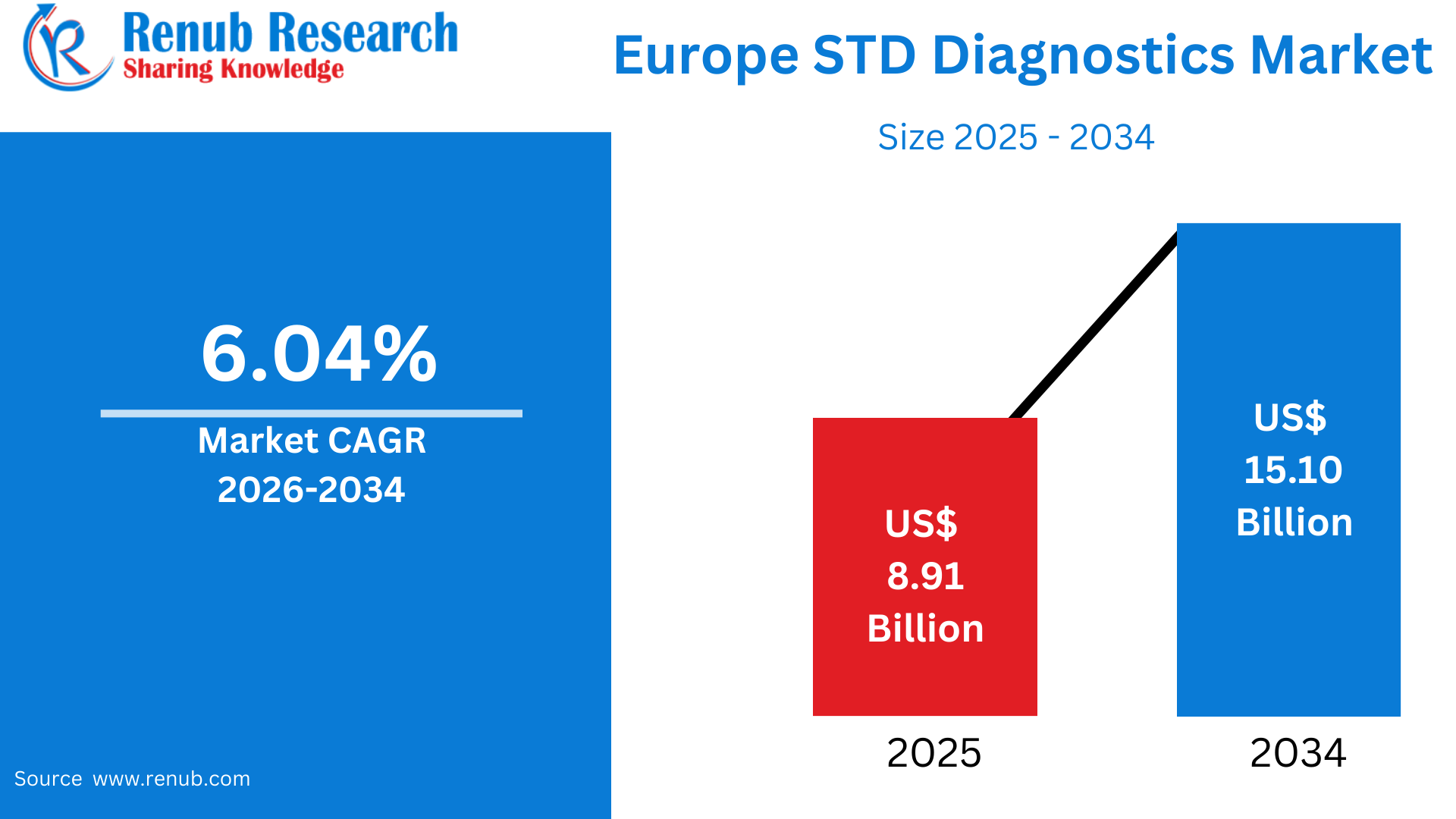
Europe STD diagnostics market is projected to grow from USD 8.91 billion in 2025 to USD 15.10 billion by 2034, registering a compound annual growth rate (CAGR) of 6.04% during the forecast period of 2026 to 2034. Market growth is being driven by the increasing incidence of sexually transmitted diseases (STDs), expanding public health initiatives promoting early diagnosis and screening, and continuous advancements in diagnostic technologies. In addition, Europe’s well-developed healthcare infrastructure and strong focus on preventive healthcare are supporting the rising demand for STD diagnostic solutions across the region.
What is STD Diagnostics and its Burden in Europe?
STD diagnostics encompass a broad range of laboratory-based and point-of-care tests designed to detect sexually transmitted infections (STIs), including chlamydia, gonorrhea, syphilis, and HIV. Diagnostic methods include serological assays, molecular techniques such as polymerase chain reaction (PCR), rapid antigen and antibody tests, as well as emerging self-testing solutions. These diagnostic tools play a vital role in ensuring accurate and timely detection of infections, enabling effective treatment, reducing transmission, and improving patient outcomes.
Across Europe, the growing burden of sexually transmitted infections and the increasing emphasis on disease surveillance have significantly boosted the adoption of STD diagnostic testing. Healthcare authorities and public health organizations are actively promoting routine screening, particularly among pregnant women and high-risk populations, to facilitate early detection and prevent the further spread of infections.
The region’s advanced healthcare ecosystem has accelerated the adoption of innovative diagnostic technologies, including molecular diagnostics and multiplex testing platforms that deliver faster and more accurate results. Furthermore, increased public awareness, educational campaigns, and the availability of rapid, confidential, and accessible testing services have helped reduce the stigma surrounding STD testing, leading to higher acceptance and utilization of diagnostic services throughout Europe.
European Countries with High Reported STD Prevalence
- United Kingdom – Among the highest reported rates of gonorrhea and syphilis in Europe.
- Ireland – One of Europe's highest gonorrhea notification rates.
- Spain – Reports among the highest numbers of gonorrhea and syphilis cases.
- Denmark – Consistently records one of the highest chlamydia notification rates.
- Norway – High incidence of chlamydia, particularly among young adults.
- Iceland – Frequently ranks among the highest for chlamydia cases per capita.
- Sweden – Reports high chlamydia and increasing gonorrhea cases.
- Finland – High chlamydia notification rates with rising STI diagnoses.
- Netherlands – High STI burden among key populations despite strong screening programs.
- Belgium – Increasing rates of gonorrhea and syphilis in recent years.
Key Growth Pillars
Rising Burden of Sexually Transmitted Diseases
The increasing incidence of sexually transmitted diseases (STDs) across Europe is a key factor driving the growth of the STD diagnostics market. A surge in reported cases of infections such as chlamydia, gonorrhea, syphilis, and HIV has intensified the demand for early detection and routine screening. Factors including urbanization, changing sexual behaviors, and growing public awareness about sexual health have contributed to higher testing rates. Governments and healthcare organizations are expanding screening initiatives, particularly among high-risk groups such as young adults, men who have sex with men (MSM), and pregnant women, to curb disease transmission. According to the European Centre for Disease Prevention and Control (ECDC), nearly 100,000 new gonorrhea cases were reported across Europe, marking a record high. This represents a significant increase from approximately 74,000 cases in 2022 and is nearly four times the number reported a decade earlier, underscoring the growing need for advanced diagnostic solutions.
Technological Advancements in Diagnostic Solutions
Rapid technological innovations in diagnostic testing are significantly enhancing the growth of the European STD diagnostics market. Advances in molecular diagnostics, automation, and digital laboratory technologies have improved the accuracy, speed, and efficiency of STD testing, enabling earlier diagnosis and timely treatment. The adoption of multiplex diagnostic platforms, which can detect multiple pathogens from a single patient sample, is further streamlining laboratory workflows while reducing testing time and costs. Improvements in test sensitivity and specificity have also strengthened healthcare providers’ confidence in diagnostic outcomes. In December 2025, Roche received CE Mark approval for its cobas BV/CV assay, which accurately detects the bacteria and yeast responsible for bacterial vaginosis (BV) and candidiasis (CV) from vaginal samples collected from symptomatic patients using the company’s proprietary cobas PCR Media collection system. Such innovations continue to expand the availability of reliable and efficient STD diagnostic tools across Europe.
Expansion of Screening and Preventive Healthcare Programs
Government-supported screening initiatives and preventive healthcare programs are playing a vital role in expanding the European STD diagnostics market. Public health authorities across the region are increasingly promoting routine and repeat screening to enable early diagnosis, reduce disease transmission, and improve treatment outcomes. One notable initiative is the SHIELD Joint Action, funded with nearly EUR 20 million under the EU4Health Programme. Running until October 2028 and involving 25 EU Member States, SHIELD aims to prevent infections associated with cancer—including HPV, hepatitis B and C, HIV, and tuberculosis—by improving access to vaccination, testing, and treatment services. Such collaborative public health efforts are expected to strengthen diagnostic infrastructure and increase testing volumes across Europe.
STD Diagnostics Product Launches in Europe
- Roche cobas® BV/CV Assay (2025) – Received CE Mark approval for the molecular detection of bacteria and yeast causing bacterial vaginosis (BV) and Candida vaginitis (CV) from a single vaginal swab.
- Roche cobas® 6800/8800 Systems 2.0 (2024) – CE-certified upgraded molecular diagnostic platform supporting high-throughput infectious disease testing, including HIV, HPV, chlamydia, gonorrhea, and other STI assays.
- Hologic Aptima® Mycoplasma genitalium Assay – Introduced across CE-mark markets to provide highly sensitive molecular testing for Mycoplasma genitalium, an increasingly recognized sexually transmitted pathogen.
- Hologic Aptima® HIV-1, HCV and HBV Assays – Expanded CE-marked virology portfolio on the Panther platform, supporting comprehensive sexually transmitted and blood-borne infection screening across Europe.
- Hologic Aptima® HPV Assay – Expanded availability in Europe through CE-marked deployment and continued adoption for cervical cancer and HPV screening.
- Hologic Aptima® HPV 16 18/45 Genotype Assay – CE-marked assay enabling genotype-specific detection of high-risk HPV strains associated with cervical cancer.
- Cepheid Xpert® CT/NG Assay – Continued rollout across European healthcare facilities, providing rapid PCR-based detection of Chlamydia trachomatis and Neisseria gonorrhoeae on the GeneXpert platform.
- Cepheid Xpert® HIV-1 Viral Load Test – Expanded use in European laboratories for rapid molecular HIV viral load monitoring, supporting decentralized HIV care.
- Abbott Alinity m STI Diagnostic Portfolio – Expanded European menu with molecular assays for HIV, HPV, Chlamydia trachomatis, Neisseria gonorrhoeae, and other sexually transmitted infections on the Alinity m platform.
- bioMérieux BIOFIRE® STI Panel – Introduced multiplex PCR syndromic testing capable of detecting multiple sexually transmitted pathogens from a single specimen, supporting faster diagnosis and targeted treatment in European clinical laboratories.
Market Restraints
Fragmented Healthcare Systems Across Europe
The fragmented nature of Europe’s healthcare systems remains one of the primary challenges for the STD diagnostics market. Differences in healthcare regulations, reimbursement policies, funding mechanisms, and approval processes across individual countries create complexities for diagnostic manufacturers seeking market access. A diagnostic product approved and widely adopted in one country, such as France, may face lengthy regulatory reviews or reimbursement hurdles in other markets, including the United Kingdom or other European nations. These inconsistencies can delay product launches, increase compliance costs, and slow the adoption of innovative diagnostic technologies.
Limited Resources for Smaller Diagnostic Companies and Persistent Social Stigma
Smaller diagnostic companies often face significant barriers when operating across Europe’s diverse healthcare landscape. Limited financial resources and the need to navigate multiple regulatory frameworks make market expansion particularly challenging for emerging players. In addition, despite increasing awareness campaigns, social stigma surrounding sexually transmitted diseases continues to discourage many individuals from seeking testing, particularly in conservative communities. Insufficient sexual health education and concerns about privacy further reduce patient engagement and participation in screening programs. Although the growing availability of self-testing kits and point-of-care diagnostic solutions has improved access to confidential testing, overcoming social stigma and encouraging routine screening remain ongoing challenges that could restrain market growth.
Type Insights
Syphilis Testing Industry in Europe
The market for syphilis testing in the European market is witnessing renewed interest owing to the rising incidence of syphilis infections and the potential for serious complications if the condition is not treated. Screening is encouraged as a focus area of antenatal care services, as well as blood screening programs, as well as surveillance of high-risk populations. Laboratory-based serological testing is the mainstay of syphilis testing, complemented by algorithms to ensure accuracy through confirmatory testing. There is renewed interest due to the importance of congenital syphilis prevention programs to ensure regular antenatal screening programs remain enhanced as a result of increased awareness. Rapid tests have also gained popularity as a supplement to outreach programs to ensure immediate referral to care programs.
HIV Testing Industry in Europe
The European HIV testing market is distinguished by early diagnosis, accessibility, and prevention. Expanded testing, including screening in regular practice and among high-risk populations, has led to an increase in test numbers. Laboratory immunoassays are still in practice, but there is a trend towards rapid testing, as well as self-testing, due to their convenience. The need to reduce the number of untreated infections, as well as the need to refer patients promptly to treatment, is fueling interest in new testing platforms. Technologic advances, further reducing diagnostic times, will make testing even more effective. The market is stable, fully mature, but still growing along the lines of prevention and decentralized testing.
Technology Insights
STD Molecular Diagnostics Market in Europe
The molecular diagnostics market is one of the most rapidly growing segments of the Europe market for STD testing. Molecular technology enables higher levels of sensitivity and specificity, and thus it is the technology of choice for diagnostic testing of diseases like chlamydia and gonorrhea. Its use is prevalent among centralized laboratories and hospital settings, where the test volumes are substantial. The multiplex molecular technology lowers the costs of testing and is efficient, and thus it is ideal for use among the large healthcare providers. With the advent of automation of the laboratories and connectivity, molecular testing will soon become ubiquitous within the EU. This segment is priced higher and accounts for the majority of the market, although the initial capital outlays are substantial.
Location of Testing Insights
Europe Std Rapid Point-of-Care Platform Market
Rapid point-of-care STD diagnostic platforms are gaining popularity because of their capacity to provide fast results, allowing same-visit treatments. Such diagnostic platforms are particularly useful in STD clinics, emergency care, and mobile programs where closely followed-up patients may be difficult to find. Improvements in the accuracy of these platforms have helped boost their acceptance in medical circles. Though some cost issues are being experienced, the medical advantages, particularly in the reduction of STD spread and enhanced compliance, are contributing to the ongoing acceptance. There is an evolving trend towards more advanced rapid techniques that provide both fast results and accuracy, making them more useful in the medical field in Europe.
End User Insights
Europe STD Diagnostics Hospitals & Clinics Market
Hospital and clinic user communities account for the largest market by end-user segment for the Europe STD diagnostics market. The hospitals deal with complex diagnostic issues, while the clinics handle the regular diagnoses of patients apart from the complex ones in hospitals. The hospitals demand high-capability analyzers for diagnosis, while the clinics demand rapid analyzers for faster patient turnover time for diagnosis of STD. The ability of the analyzers to interface with the EMR systems of these institutions trends to be an important purchasing consideration among these users.
Countries Insights
France
The STD diagnostics market in France enjoys a well-structured healthcare system with a high level of government support for healthcare in France. The national screening programs, especially for HIV and syphilis, create a steady demand for diagnostics in France. The advanced tests are largely done at the centralized labs, while the community health centers assist in overall screening programs in France. The preventative policies for health in France encourage overall screenings over symptomatic tests for various conditions, like STDs. The overall market for diagnostics in France is mature with a steady advancement towards molecular diagnostics technology in France. Free Self-Collection Program The program was launched in July 2025 under the country’s health insurance system (Assurance Maladie), marking the first-ever free, home-order self-testing kit program for women aged between 18-25 for Chlamydia/Gonorrhoea in the entire continent of Europe.
Germany
In Europe, the most technically proficient markets for the diagnosis of STDs are in Germany. The country boasts a strong lab infrastructure and a high healthcare spending environment conducive to the adoption of molecular diagnostics and automated platforms. Private and hospital labs in particular act as the major growth driver in the German market, inclined towards high-performance and high-throughput systems. SANGE (sangerange.org) emphasizes the importance of screening and the “value of prevention in healthcare.” “STD testing can be a stressful and uncomfortable experience. Undignified and humiliating conditions and the trauma associated with conventional STD tests can often deter many people from being tested for the fear of embarrassment and the pain associated with the STD tests.” Dec 2025, Jerusalem-based Salignostics, a company that boasts a world’s first saliva-based pregnancy test, began its first commercial sales in the German pharmacy chain Rossmann, which is the second-largest drugstore chain in the world and the largest in the German-speaking countries. Distribution in the chain is handled by Mertz Pharma Handel GmbH, Salignostics’s commercial partner.
United Kingdom
The UK STD diagnostics market is well connected with the healthcare goals and care pathways. The screening and sexual health centers create a high demand for both laboratory and rapid tests. The healthcare system is focused on early diagnosis and prevention, and thus holds the testing volumes high. The adoption rate is high, and innovation is being adopted in molecular and point-of-CARE tests, which help streamline the healthcare service delivery. The budget holds limitations in procurement, but the clinical and public health outcomes play important roles. The UK market is still focusing on cost control and innovation, thus allowing steady growth. December 2024, Abingdon Health plc, a global company that is a world-leading developer, manufacturer, and distributor of high-quality, rapid diagnostic tests, is pleased to announce that it has signed a contract with US company Find Out from Home LLC regarding the evaluation, regulatory, and clinical testing of four sexually transmitted disease ("STD") tests.
Russia
The Russian market for diagnosing sexually transmitted diseases reflects variability and diverse development levels. Large cities possess well-developed laboratories, whereas less developed areas use simplified diagnostic techniques. Public health campaigns to manage the spread of sexually transmitted diseases are raising awareness and thus driving the demand for testing. Due to the sensitivity to costs and complexity, the markets are favorable to affordable and flexible diagnostic systems. The raised need for better surveillance and early diagnosis of sexually transmitted diseases holds latent growth opportunities.
Market Segmentation
Test Type
- Chlamydia Testing
- Gonorrhea Testing
- Syphilis Testing
- HPV Testing
- HSV Testing
- HIV Testing
- Trichomonas Testing
- Mycoplasma genitalium Testing
- Chancroid Testing
Technology
- Immunoassay‐based Methods
- Molecular Diagnostics
- Next-Generation Sequencing
- Biosensor / Microfluidics & Other Emerging Platforms
Location of Testing
- Central & Hospital Laboratories
- Rapid Point-of-Care Platforms
- Over-the-Counter / Home Self-Testing
End User
- Hospitals & Clinics
- Diagnostic Laboratories
- Home Care / OTC
Countries
- France
- Germany
- Italy
- Spain
- United Kingdom
- Belgium
- Netherlands
- Russia
- Poland
- Greece
- Norway
- Romania
- Portugal
- Rest of Europe
All companies have been covered with 5 Viewpoints
- Overviews
- Key Person
- Recent Developments
- SWOT Analysis
- Revenue Analysis
Company Analysis
- Abbott Laboratories
- F. Hoffmann-La Roche AG
- Hologic Inc.
- Becton Dickinson and Company
- Danaher Corporation (Cepheid)
- Siemens Healthineers AG
- bioMérieux SA
- Thermo Fisher Scientific Inc.
- Qiagen N.V.
- Bio-Rad Laboratories Inc.
Report Details:
| Report Features | Details |
| Base Year |
2025 |
| Historical Period |
2022 - 2025 |
| Forecast Period |
2026 - 2034 |
| Market |
US$ Billion |
| Segment Covered |
Test Type, Technology, Location of Testing, End User and Countries |
| Countries Covered |
|
| Companies Covered |
|
| Customization Scope |
20% Free Customization |
| Post-Sale Analyst Support |
1 Year (52 Weeks) |
| Delivery Format |
PDF and Excel through Email (We can also provide the editable version of the report in PPT/Word format on request) |
Customization Services available
- Analysis of Market Size and Its Segments
- More Company Profiles (Upto 10 without any additional cost):
- Additional Countries (Other than mentioned Countries):
- Region/Country Specific Reports:
- Market Entry Strategy:
- Region-Specific Market Dynamics:
- Regional Market Share Analysis:
- Trade Analysis:
- Production Insights:
- Others Customized Requests:
For more information contact our analysts.
Need More Assistance?
- Talk to our analysts to get more precious information on the current market trends.
- Include more countries and segments and customize the report based on the final requirement.
- Get a competitive advantage in your industry by knowing the report findings and making a positive impact on your revenues and operations.
- Our analysts are always ready to provide more help and pertinent information if you need any additional assistance.