Huntington’s disease Treatment Market Report by Drug Type, End User, Country and Company Analysis 2026-2034
Buy NowHuntington’s Disease Treatment Market Size and Forecast 2026–2034
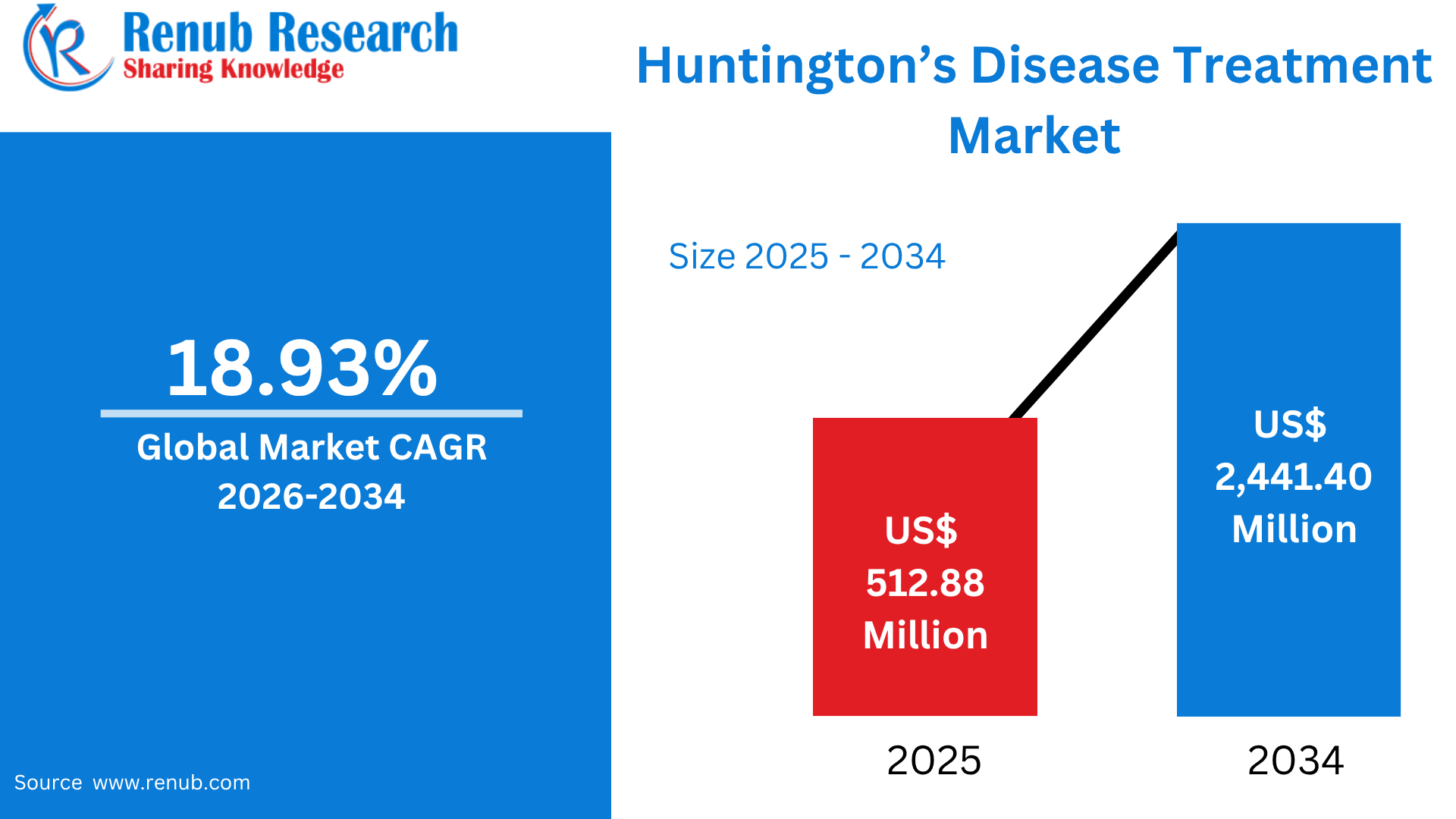
Huntington’s disease treatment market is projected to increase from US$ 512.88 million in 2025 to US$ 2,441.40 million by 2034, registering a CAGR of 18.93% during 2026–2034. Market growth is expected to be driven by the rising prevalence and diagnosis of Huntington’s disease, increasing awareness of neurodegenerative disorders, and advances in targeted treatment approaches. Ongoing developments in gene therapy, RNA-based treatments, and disease-modifying therapies are creating new opportunities beyond conventional symptom management.
What is Huntington’s Disease and Its Uses & Popularity Worldwide
Huntington’s disease (HD) is a rare, inherited, progressive neurodegenerative disorder caused by an expanded CAG repeat in the HTT gene. It affects brain cells and gradually produces a combination of involuntary movements, cognitive decline, and psychiatric or behavioral symptoms. The disease is inherited in an autosomal-dominant manner, meaning an affected parent has a 50% chance of passing the altered gene to each child. There is currently no treatment proven to stop or reverse the underlying progression of HD. Instead, treatment focuses on controlling symptoms, maintaining independence, and improving quality of life. Tetrabenazine, deutetrabenazine, and valbenazine are FDA-approved VMAT2 inhibitors used to manage Huntington-associated chorea.
Worldwide prevalence is estimated at approximately 4.88 cases per 100,000 people, although prevalence varies considerably by ancestry and geographic region. HD is particularly prevalent in populations of European ancestry, while reported rates are considerably lower in many East Asian and African populations. Growing genetic awareness, improved diagnosis, specialist neurological care, and expanding clinical research are increasing attention toward the disease and its treatment market.
Huntington’s Disease Pipeline Therapies
- AMT-130 – uniQure
- Approach: AAV5-based gene therapy delivering a microRNA designed to lower huntingtin (HTT) expression.
- Stage/status: Phase I/II development with long-term follow-up.
- Key development: In 2025, uniQure reported 36-month topline results, with the high-dose group showing a reported 75% slowing of disease progression versus an external control on the cUHDRS measure.
- SKY-0515 – Skyhawk Therapeutics
- Approach: Oral mRNA-splicing modulator designed to reduce HTT/mutant HTT and PMS1, a protein involved in somatic CAG-repeat expansion.
- Stage: Phase II/III FALCON-HD.
- Development: The trial is designed to enroll approximately 120 adults with early Huntington’s disease and evaluate biomarkers, brain-volume changes, and clinical outcomes.
- SPK-10001 (RG6662) – Spark Therapeutics/Roche
- Approach: A one-time AAV-mediated gene therapy intended to deliver an artificial microRNA targeting HTT mRNA.
- Stage: Phase I/II.
- Administration: Bilateral intraparenchymal infusion into the caudate and putamen. The trial is evaluating safety and clinical outcomes in early-stage HD.
- ALN-HTT02 – Alnylam Pharmaceuticals
- Approach: An RNA-interference (RNAi) therapy designed to selectively target exon 1 of HTT mRNA.
- Stage: Phase I.
- Development: ClinicalTrials.gov lists the study as recruiting, with an estimated 66 participants and treatment involving intrathecal administration of single or repeat doses.
- PTC518 (votoplam) – PTC Therapeutics/Novartis
- Approach: An oral small-molecule splicing modulator intended to reduce huntingtin protein production.
- Stage: Phase II development and long-term follow-up.
- Development: The PIVOT-HD program has evaluated multiple doses, with endpoints including blood and CSF huntingtin levels, brain-volume measures, and clinical scales.
- WVE-003 – Wave Life Sciences
- Approach: A stereopure, allele-selective antisense oligonucleotide (ASO) designed to preferentially suppress mutant HTT while preserving the wild-type HTT allele.
- Stage: Phase I/II development.
- Target: The therapy targets a specific SNP associated with the mutant HTT allele; the targeted SNP is estimated to occur in roughly 40–45% of HD patients.
- VO659 – Vico Therapeutics
- Approach: An intrathecally administered ASO targeting mutant HTT and ataxin RNA, with the aim of reducing production of toxic proteins.
- Stage: Early clinical development.
- Development: The VO659-CT01 study includes patients with Huntington’s disease as well as spinocerebellar ataxias, evaluating safety, tolerability, and pharmacokinetics.
- Tominersen – Roche/Ionis Pharmaceuticals
- Approach: An intrathecal antisense oligonucleotide designed to lower HTT expression.
- Stage: Phase II GENERATION HD2.
- Development: The trial has evaluated 60 mg and 100 mg doses versus placebo, with the program continuing to investigate whether appropriate dosing can produce clinical benefit.
- NESTAcell – Azidus Brasil
- Approach: A dental-pulp stem-cell-based therapy being investigated as a potential regenerative treatment for Huntington’s disease.
- Stage: Clinical research.
- Development: A randomized study has been registered to evaluate the therapy in early and moderate HD, with an estimated 120 participants and a one-year efficacy assessment.
- Nicotinamide Riboside – Oslo University Hospital
- Approach: A vitamin B3 derivative and NAD+ precursor being investigated for its potential effects on cellular metabolism and disease progression.
- Stage: Clinical development.
- Development: The NAD-HD study is designed as a randomized, placebo-controlled trial involving approximately 120 patients with early or moderate HD, with a 24-month composite UHDRS outcome.
Growth Drivers of the Huntington’s Disease Treatment Market
Expanding Clinical Development Pipeline and Gene-Therapy Research
The rapid expansion of Huntington’s disease research is one of the strongest drivers of the treatment market. Historically, available medicines have primarily focused on managing symptoms such as chorea rather than altering disease progression. This is changing as pharmaceutical and biotechnology companies investigate huntingtin-lowering therapies, antisense oligonucleotides, RNA interference, gene therapy, and other disease-modifying approaches. A 2026 systematic review of the HD development pipeline identified 165 registered clinical studies conducted between 2014 and November 2025, involving approximately 7,501 participants. Recent programs include uniQure’s AMT-130, Roche’s tominersen, PTC Therapeutics’ votoplam (PTC518), and Alnylam’s ALN-HTT02, demonstrating the breadth of therapeutic approaches under investigation. These developments are expanding potential treatment options beyond conventional symptom management. Positive clinical results, successful regulatory submissions, and improved understanding of mutant huntingtin biology could accelerate investment and commercialization. The growing pipeline also encourages partnerships between biotechnology companies, pharmaceutical manufacturers, academic institutions, and patient organizations. Consequently, increasing R&D activity and the pursuit of disease-modifying therapies are expected to significantly strengthen the Huntington’s disease treatment market during the forecast period.
Rising Awareness, Genetic Testing, and Earlier Diagnosis
Greater awareness of Huntington’s disease and improvements in genetic testing are supporting market development by enabling more accurate identification of affected individuals and at-risk families. Because HD is caused by a well-defined genetic mutation, molecular genetic testing can confirm a diagnosis in individuals with compatible clinical symptoms and can also be used in carefully managed predictive testing. Increased availability of genetic counseling and specialist neurological services is helping families understand inheritance patterns and make informed healthcare decisions. Research indicates that reported HD prevalence has increased over time, with improved molecular testing and earlier diagnosis identified as possible contributors. A systematic review estimated pooled HD prevalence at 4.88 cases per 100,000 people, although rates differ substantially between populations. Newer prevalence research also highlights considerable variation between geographic and demographic groups, demonstrating the importance of better case ascertainment. Greater recognition of movement, cognitive, and psychiatric symptoms can encourage earlier referral to neurologists and specialist centers. Earlier diagnosis can increase access to symptomatic therapies, genetic counseling, multidisciplinary care, and clinical trials. As awareness campaigns and diagnostic capabilities expand, the number of identified patients and families entering formal care pathways is expected to increase, supporting demand for Huntington’s disease treatment and management solutions.
Growing Investment in Targeted and Disease-Modifying Therapies
Increasing investment in targeted therapies capable of addressing the underlying biology of Huntington’s disease is creating significant opportunities for market expansion. Conventional treatment largely focuses on controlling symptoms, particularly chorea, psychiatric manifestations, sleep problems, and other complications. The development pipeline is increasingly targeting mutant huntingtin (mHTT), RNA processing, neuronal function, and other disease mechanisms. Recent clinical programs include approaches designed to reduce production of harmful huntingtin protein through antisense oligonucleotides, RNA interference, or gene therapy. The 2025 clinical-trial update reported ongoing development of multiple huntingtin-lowering programs, including tominersen, PTC518, AMT-130, and ALN-HTT02. In addition, a 2026 review identified numerous pharmacological and non-pharmacological studies across different stages of development, demonstrating sustained research interest. Successful disease-modifying therapies could substantially change treatment patterns because they may address disease progression rather than simply reduce symptoms. Pharmaceutical companies therefore have strong incentives to invest in precision medicine, biomarkers, genetic technologies, and targeted drug-delivery systems. Increasing research funding, collaborations, and clinical-trial activity are expected to accelerate innovation and potentially create high-value treatment opportunities within the Huntington’s disease market.
Challenges of the Huntington’s disease Treatment Market
Rare Disease Population and Difficult Clinical-Trial Recruitment
The relatively low prevalence of Huntington’s disease creates a major challenge for pharmaceutical companies developing new therapies. A pooled analysis estimated global prevalence at approximately 4.88 cases per 100,000 people, while prevalence varies considerably by ancestry and geographic region. GeneReviews reports an average prevalence of approximately 9.71 per 100,000 among populations of European ancestry, compared with substantially lower reported rates in many East Asian and African populations. This geographic variation can make it difficult to identify sufficiently large and representative patient populations for clinical trials. Huntington’s disease is also a progressive disorder with substantial clinical heterogeneity, meaning patients can differ in symptom profile, disease stage, progression rate, and functional status. Clinical trials therefore often require carefully selected participants and long follow-up periods to demonstrate meaningful changes. The need for specialized neurological centers and genetic confirmation can further complicate recruitment. Although biomarker development and advanced imaging may help improve trial design, developing reliable endpoints for disease modification remains challenging. These factors can increase clinical-development costs, extend timelines, and raise the risk of unsuccessful trials. Consequently, companies must invest heavily in international trial networks, patient registries, biomarkers, and innovative trial designs to overcome the limitations associated with this rare and heterogeneous disease.
Limited Disease-Modifying Treatments and High Development Risk
A significant challenge for the Huntington’s disease treatment market is the absence of an established therapy proven to halt or reverse disease progression. Current treatment strategies primarily manage symptoms rather than eliminate the underlying genetic cause. FDA documentation notes that no medication has demonstrated an ability to change the natural history of Huntington’s disease, while tetrabenazine and deutetrabenazine have historically been approved specifically for chorea associated with HD. More recently, valbenazine has also become an FDA-approved option for HD-associated chorea. Although these therapies provide important symptomatic benefits, they do not prevent the progressive neurological decline associated with the disease. At the same time, disease-modifying programs face substantial scientific and regulatory risks. Recent clinical development has included both promising advances and setbacks, demonstrating the difficulty of translating biological mechanisms into durable clinical benefits. Treatments targeting mutant huntingtin must also demonstrate long-term safety because patients may require therapy for many years. Gene therapies and other advanced treatments can involve complex administration procedures, specialized treatment centers, and significant development costs. These factors may lead to high treatment prices and reimbursement challenges if successful therapies reach the market. Therefore, demonstrating durable efficacy, safety, cost-effectiveness, and meaningful improvements in patient function remains essential for overcoming the market’s major barriers.
Huntington’s disease Treatment Launches Worldwide
- INGREZZA (Valbenazine) – United States, 2023: Neurocrine Biosciences launched INGREZZA for chorea associated with Huntington’s disease in August 2023, following FDA approval. It became an additional VMAT2 inhibitor option for controlling HD-related chorea.
- AUSTEDO XR (Deutetrabenazine) – United States, 2023: Teva introduced the once-daily AUSTEDO XR formulation in February 2023, providing a simplified dosing option for adults with Huntington’s disease chorea.
- AUSTEDO XR 30/36/42/48 mg – United States, 2024: In May 2024, FDA approved additional one-pill, once-daily AUSTEDO XR strengths of 30, 36, 42, and 48 mg, expanding dosing flexibility for HD chorea management.
- INGREZZA SPRINKLE (Valbenazine) – United States, 2024: Neurocrine launched INGREZZA SPRINKLE, an oral granule formulation available in 40, 60, and 80 mg strengths. It provides an alternative for patients with difficulty swallowing capsules and is approved for chorea associated with Huntington’s disease.
- Deutetrabenazine Generic – China, 2025: Sino Biopharmaceutical reported approval and launch of the first generic deutetrabenazine tablets in China in 2025. The product provides another treatment option for chorea associated with Huntington’s disease and adult tardive dyskinesia. ([HKEX News][8])
Huntington’s Disease Approved Drugs Market
Huntington’s disease approved drugs market comprises therapies officially authorized for managing symptoms associated with Huntington’s disease, particularly chorea, which is characterized by involuntary and irregular movements. Approved treatments include tetrabenazine, deutetrabenazine, and valbenazine, providing important options for controlling chorea and improving patients’ daily functioning. These medicines are used across hospitals, neurology practices, specialty clinics, and multidisciplinary care centers. Market development is supported by increasing disease awareness, improvements in genetic diagnosis, and greater access to specialized neurological services. The growing recognition of Huntington’s disease as a complex condition requiring long-term multidisciplinary management is also encouraging demand for effective symptomatic treatments. Pharmaceutical companies are focusing on improving dosing convenience, treatment tolerability, and patient adherence while investigating therapies that could address the underlying disease mechanisms. Although currently approved medicines primarily provide symptomatic relief rather than stopping disease progression, their established clinical use provides a stable foundation for the market. Continued research into improved formulations, targeted therapies, and disease-modifying approaches is expected to create additional opportunities in the Huntington’s disease treatment landscape.
Huntington’s Disease Off-label Drugs Market
Huntington’s disease off-label drugs market includes medicines originally approved for other conditions but prescribed by physicians to manage various behavioral, psychiatric, and neurological symptoms associated with Huntington’s disease. Patients can experience depression, anxiety, irritability, aggression, psychosis, sleep disturbances, and other behavioral changes, requiring treatment beyond chorea management. Depending on individual symptoms, physicians may use antidepressants, antipsychotics, mood-stabilizing medicines, or other therapies as part of a personalized treatment strategy. Off-label prescribing can be particularly important because Huntington’s disease affects multiple neurological and psychiatric functions simultaneously, while approved treatments address only specific manifestations. Clinical management therefore often requires a combination of pharmacological and non-pharmacological interventions. Increasing recognition of psychiatric and behavioral complications is supporting demand for individualized symptom-management approaches. However, treatment selection requires careful consideration of potential adverse effects, drug interactions, disease stage, and the patient’s overall health. As multidisciplinary Huntington’s disease care expands, neurologists, psychiatrists, and other specialists are increasingly collaborating to optimize treatment plans. Consequently, off-label medicines are expected to remain an important component of comprehensive symptom management, particularly for patients whose psychiatric or behavioral symptoms are not adequately controlled by disease-specific approved therapies.
Huntington’s Disease Treatment Hospital Market
Huntington’s disease treatment hospital market encompasses hospitals, neurological centers, specialty clinics, and multidisciplinary facilities providing diagnosis, treatment, rehabilitation, and long-term care for patients with Huntington’s disease. Hospitals play an important role because HD can produce a combination of movement disorders, cognitive impairment, and psychiatric symptoms, requiring coordinated care from neurologists, psychiatrists, physiotherapists, speech-language therapists, occupational therapists, nutrition specialists, and other healthcare professionals. Genetic testing and neurological assessment are also important components of diagnosis and family counseling. Advanced hospitals increasingly provide specialized movement-disorder services and multidisciplinary programs designed to manage the progressive nature of the disease. In severe cases, hospitalization may be required to address complications, behavioral problems, nutritional difficulties, infections, or significant functional decline. Hospitals and academic medical centers also serve as important locations for clinical trials of emerging disease-modifying therapies, gene therapies, and huntingtin-lowering treatments. Rising investment in rare-disease infrastructure, improvements in neurological services, and increasing research activity are expected to strengthen this segment. Developing countries are gradually expanding specialist neurological services, while developed markets continue to establish dedicated movement-disorder and Huntington’s disease programs, supporting long-term market development.
Huntington’s Disease Online Treatment Market
Huntington’s disease online treatment market is expanding as telemedicine, remote monitoring, and digital healthcare become increasingly integrated into neurological care. Online services can include teleconsultations, remote psychiatric assessments, virtual counseling, digital medication management, online rehabilitation, and caregiver-support programs. These services are particularly valuable for Huntington’s disease patients who experience mobility limitations or live far from specialized neurological centers. Because HD is progressive and requires continuous management, digital healthcare can help patients maintain contact with neurologists and other specialists between in-person appointments. Telehealth can also reduce travel requirements for caregivers and families while facilitating follow-up consultations and medication reviews. The COVID-19 pandemic accelerated adoption of telemedicine across healthcare, demonstrating the potential of remote services for managing chronic and complex conditions. Advances in smartphones, wearable devices, remote monitoring platforms, and digital rehabilitation tools are creating additional opportunities for Huntington’s disease care. However, online treatment generally complements rather than replaces in-person neurological assessments, particularly when physical examination, genetic counseling, or complex movement evaluation is required. As healthcare providers increasingly adopt hybrid care models, digital platforms are expected to become an increasingly important component of long-term Huntington’s disease management.
United States Huntington’s Disease Treatment Market
United States Huntington’s disease treatment market is expanding due to increasing awareness of rare neurodegenerative disorders, improved diagnostic capabilities, and significant investment in clinical research. Current therapies primarily focus on symptom management, particularly chorea and associated psychiatric manifestations, while the major unmet need remains the development of disease-modifying treatments capable of slowing or preventing neurological deterioration. The U.S. remains a major center for Huntington’s disease research, supported by advanced neurological facilities, biotechnology companies, academic institutions, and patient advocacy organizations. Research programs involving gene therapy, antisense oligonucleotides (ASOs), RNA-based therapies, and huntingtin-lowering approaches are creating new opportunities for market expansion. However, the small patient population, complex genetic characteristics, high development costs, and stringent regulatory requirements can limit commercialization. In March 2024, uniQure reported additional clinical-development progress for AMT-130, an investigational gene therapy being evaluated for Huntington’s disease. Continued investment in precision medicine, clinical trials, genetic testing, and innovative treatment platforms is expected to strengthen the U.S. market and maintain the country’s position as a leading hub for Huntington’s disease therapeutic development.
Germany Huntington’s Disease Treatment Market
Germany Huntington’s disease treatment market is supported by advanced healthcare infrastructure, specialist neurological centers, and strong medical research capabilities. Increasing awareness of hereditary neurodegenerative disorders and improvements in genetic diagnosis are helping identify and manage patients more effectively. Existing treatment strategies primarily focus on controlling symptoms, while research increasingly targets disease-modifying therapies, RNA-based medicines, and huntingtin-lowering approaches. Germany’s strong academic research network and participation in multinational clinical trials provide opportunities for evaluating innovative therapies. Public and private investment in rare-disease research further supports the development of specialized treatments and diagnostic technologies. Nevertheless, the rarity of Huntington’s disease creates challenges for clinical-trial recruitment and commercial market expansion, while advanced therapies may face high development and treatment costs. Germany’s established healthcare and reimbursement systems can nevertheless facilitate access to approved medicines and specialist care. Ongoing collaboration among pharmaceutical companies, biotechnology firms, hospitals, and research institutions is expected to strengthen the country’s role in European Huntington’s disease research and treatment development.
China Huntington’s Disease Treatment Market
China Huntington’s disease treatment market is gradually developing as awareness of rare genetic disorders, diagnostic capabilities, and healthcare investment increase. Although Huntington’s disease has a relatively low reported prevalence in many Asian populations compared with populations of European ancestry, improved recognition of hereditary neurological disorders is supporting greater diagnosis and specialist referral. Current treatment largely emphasizes symptom control, while interest is increasing in gene-based therapies, RNA medicines, and other disease-modifying approaches. China’s expanding biotechnology sector and growing clinical-research capabilities provide opportunities for the development and testing of innovative therapies. Government initiatives supporting rare-disease diagnosis and treatment are also improving the overall ecosystem for specialized care. However, market expansion remains constrained by the limited number of patients, uneven access to specialist neurological services, high costs associated with advanced therapies, and regulatory complexity surrounding novel genetic medicines. Increasing collaboration between domestic biotechnology companies, international pharmaceutical organizations, research institutes, and hospitals is expected to improve clinical research capabilities. As genetic testing becomes more accessible and awareness of Huntington’s disease increases, China could gradually become a more important market for specialized Huntington’s disease diagnostics and therapies.
Saudi Arabia Huntington’s Disease Treatment Market
Saudi Arabia Huntington’s disease treatment market remains relatively emerging but offers long-term opportunities as awareness of rare neurological disorders and access to specialized healthcare improve. Huntington’s disease is an inherited neurodegenerative condition, and its management requires long-term neurological, psychiatric, rehabilitative, and supportive care. Improvements in genetic testing and specialist services can contribute to better diagnosis and identification of affected families. Current treatment primarily focuses on symptom management, while global developments in gene therapy, RNA-based medicines, and huntingtin-lowering therapies are creating potential future opportunities. Saudi Arabia’s healthcare transformation under Vision 2030 is supporting investments in advanced medical infrastructure, digital health, specialized care, and research capabilities. Collaboration with international pharmaceutical and biotechnology companies could further improve access to innovative treatments and clinical research. However, the market faces challenges associated with the rarity of the disease, limited awareness, availability of specialized neurological expertise, and potentially high costs of advanced therapies. Continued healthcare modernization, development of rare-disease programs, improved genetic counseling, and greater participation in international clinical research could support the expansion of Huntington’s disease diagnosis and treatment services in Saudi Arabia.
Huntington’s Disease Treatment Market Segments
Drug Type
- Approved Drugs
- Offlabel Drugs
End User
- Hospital Pharmacy
- Drug Store & Retail Pharmacy
- Online Pharmacy
Country
North America
- United States
- Canada
Europe
- France
- Germany
- Italy
- Spain
- United Kingdom
- Belgium
- Netherlands
- Turkey
Asia Pacific
- China
- Japan
- India
- South Korea
- Thailand
- Malaysia
- Indonesia
- Australia
- New Zealand
Latin America
- Brazil
- Mexico
- Argentina
Middle East & Africa
- Saudi Arabia
- UAE
- South Africa
All companies have been covered with 5 Viewpoints
- Overviews
- Key Person
- Recent Developments
- SWOT Analysis
- Revenue Analysis
Company Analysis:
- H Lundbeck
- Pfizer Inc.
- Bausch Health Cos
- Teva Pharmaceutical Industries
- Dr Reddy's Laboratories
- Sun Pharmaceutical Industries Limited
- Hikma Pharmaceuticals Plc
- Alnylam Pharmaceuticals
- Novartis AG
- UniQure
Report Details:
| Report Features | Details |
| Base Year |
2025 |
| Historical Period |
2022 - 2025 |
| Forecast Period |
2026 - 2034 |
| Market |
US$ Million |
| Segment Covered |
Drug Type, End User and Country |
| Countries Covered |
|
| Companies Covered |
|
| Customization Scope |
20% Free Customization |
| Post-Sale Analyst Support |
1 Year (52 Weeks) |
| Delivery Format |
PDF and Excel through Email (We can also provide the editable version of the report in PPT/Word format on request) |
Customization Services available
- Analysis of Market Size and Its Segments
- More Company Profiles (Upto 10 without any additional cost):
- Additional Countries (Other than mentioned Countries):
- Region/Country Specific Reports:
- Market Entry Strategy:
- Region-Specific Market Dynamics:
- Regional Market Share Analysis:
- Trade Analysis:
- Production Insights:
- Others Customized Requests:
For more information contact our analysts.
Need More Assistance?
- Talk to our analysts to get more precious information on the current market trends.
- Include more countries and segments and customize the report based on the final requirement.
- Get a competitive advantage in your industry by knowing the report findings and making a positive impact on your revenues and operations.
- Our analysts are always ready to provide more help and pertinent information if you need any additional assistance.