Anxiety Disorders and Depression Treatment Market Report by Product, Indication, Countries and Companies Analysis 2026-2034
Buy NowAnxiety Disorders and Depression Treatment Market Size and Forecast
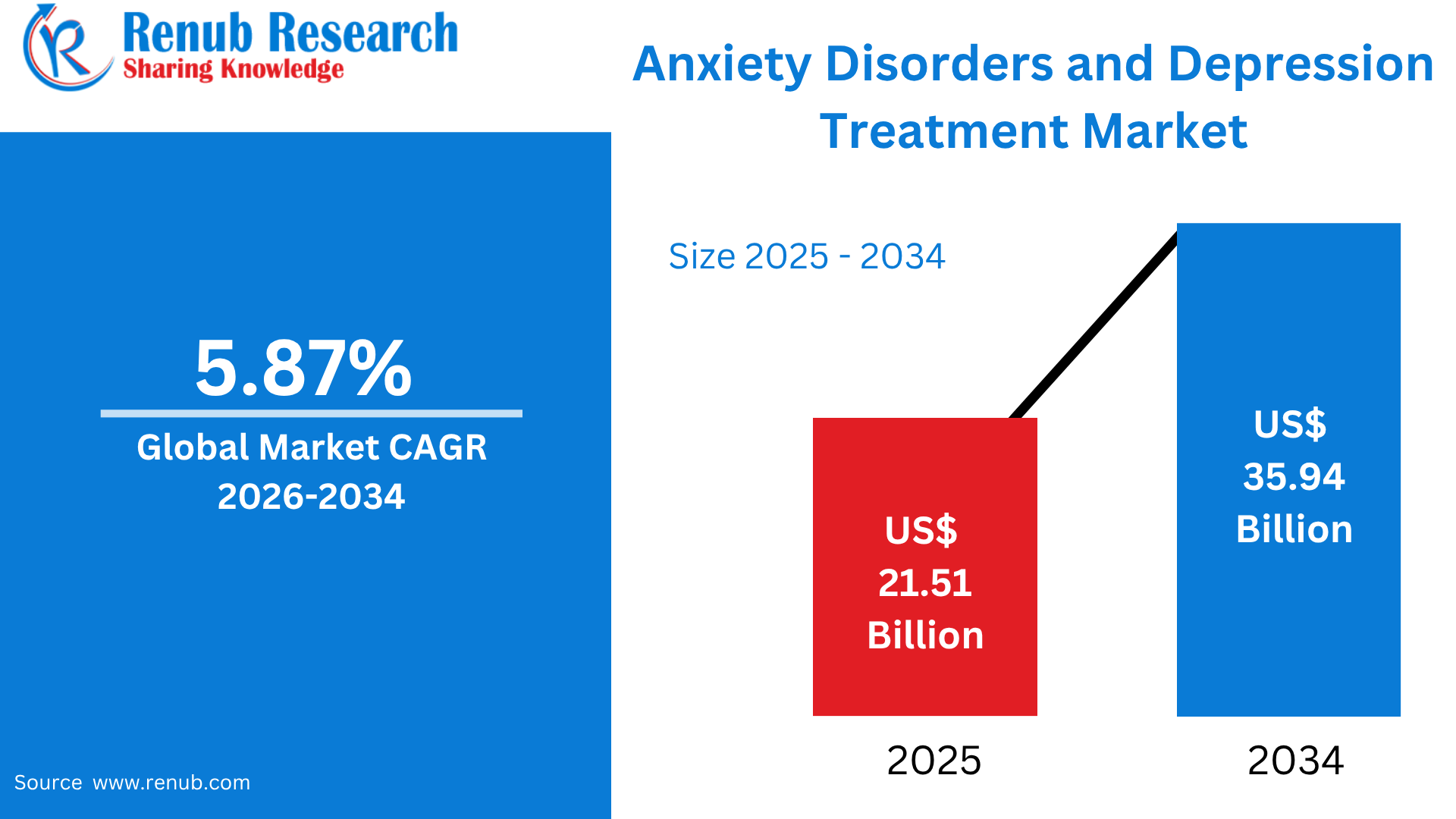
Anxiety Disorders and Depression Treatment Market is projected to expand from US$ 21.51 Billion in 2025 to US$ 35.94 Billion by 2034, registering a CAGR of 5.87% during 2026–2034. Market growth is driven by increasing awareness of mental health conditions, rising diagnosis rates, the introduction of innovative neuropsychiatric therapies, and the growing adoption of digital and technology-enabled treatment platforms. Growing acceptance of pharmacological and digital interventions, combined with the increasing focus on timely management of anxiety and depressive disorders, is expected to sustain the market’s growth throughout the forecast period.
What Are Anxiety Disorders and Depression Treatment and Its Uses & Popularity Worldwide
Anxiety disorders and depression treatment encompasses a broad range of pharmaceutical, psychological, digital, and supportive interventions used to manage symptoms, improve daily functioning, prevent recurrence, and enhance quality of life. Treatment options include antidepressants such as selective serotonin reuptake inhibitors (SSRIs), other neuropsychiatric medicines, cognitive behavioral therapy (CBT), counseling, psychotherapy, digital therapeutics, telepsychiatry, and integrated mental-health services. These treatments are used across hospitals, psychiatric clinics, primary-care facilities, specialized mental-health centers, and increasingly through online platforms and mobile applications.
The global need is substantial because anxiety and depressive disorders are among the most common mental-health conditions. WHO reports that 359 million people were living with an anxiety disorder in 2021, while approximately 280 million people experienced depression based on available global estimates. Growing mental-health awareness, improved screening, reduced stigma, increasing healthcare expenditure, and wider access to digital care are supporting treatment adoption worldwide. The market is therefore becoming increasingly important as governments and healthcare systems prioritize early diagnosis, accessible therapies, and long-term mental-health management.
Key India Mental Health Statistics at a Glance (2026)
- India accounts for 15% of the global mental health burden (Lancet, 2017)
- 200+ million Indians live with a mental health condition (WHO, 2023)
- 56 million have depression; 38 million have anxiety disorders (WHO)
- India's mental health treatment gap: 83–86% — one of the highest in the world
- India has only 0.3 psychiatrists per 100,000 people; WHO minimum is 1 per 100,000
- Mental health conditions cost India an estimated ₹2.5 lakh crore annually in lost productivity
- Suicide is the leading cause of death for Indians aged 15–29
- India accounts for 36.6% of global female suicide deaths in the 15–39 age group (Lancet, 2020)
- Only 2% of India's health budget is allocated to mental health
- India has approximately 9,000 psychiatrists for 1.4 billion people
Growth Drivers of the Anxiety Disorders and Depression Treatment Market
Rising Global Prevalence and Increasing Mental-Health Awareness
The growing prevalence of anxiety and depressive disorders is creating a substantial and sustained need for treatment products and services worldwide. According to WHO, 359 million people were living with an anxiety disorder in 2021, while global estimates indicate more than 330 million people were affected by depressive disorders in the same year. A recent Global Burden of Disease analysis found that anxiety disorders accounted for about 359.2 million cases and depressive disorders for approximately 332.4 million cases in 2021. Increasing awareness is also encouraging more individuals to recognize symptoms and seek professional support rather than considering anxiety or depression temporary emotional conditions. Public-health campaigns, workplace mental-health programs, social-media awareness, and educational initiatives are helping reduce stigma and improve recognition. WHO estimates that mental disorders account for approximately one in six years lived with disability globally, demonstrating their substantial health burden. As awareness and diagnosis improve, demand is increasing for antidepressants, anti-anxiety therapies, psychotherapy, counseling, and digital mental-health solutions.
Expansion of Digital Mental-Health and Teletherapy Platforms
The rapid adoption of digital healthcare is transforming how anxiety and depression are diagnosed, monitored, and treated. Psychological interventions can increasingly be delivered through telepsychiatry, online therapy, mobile applications, digital therapeutic platforms, and guided self-help programs. WHO recognizes that evidence-based psychological interventions for anxiety can be delivered both in person and online, expanding treatment accessibility for patients who face geographic, financial, or mobility barriers. Digital platforms can also provide appointment scheduling, symptom monitoring, cognitive behavioral therapy modules, medication reminders, and remote consultations. The expansion of smartphones and internet connectivity is particularly important in emerging markets where specialist mental-health professionals may be limited. This trend is supported by the large treatment gap: WHO estimates that only about 27.6% of people in need of treatment for anxiety disorders receive care. Consequently, digital solutions are increasingly being used to complement conventional psychiatric services, improve continuity of care, and reach underserved populations. Greater acceptance of remote healthcare following the pandemic is expected to further support market expansion.
Increasing Pharmaceutical R&D and Innovation in Neuropsychiatric Treatments
Continued pharmaceutical research and development is another important growth driver for the anxiety disorders and depression treatment market. Conventional antidepressants and anti-anxiety medicines remain widely used, while pharmaceutical companies are investigating therapies with faster onset, improved tolerability, novel mechanisms of action, and better treatment outcomes for patients who do not respond adequately to existing medicines. Depression and anxiety also create a significant economic burden, with WHO estimating that these conditions contribute to approximately US$1 trillion in productivity losses globally each year. This economic impact encourages governments, healthcare organizations, and pharmaceutical companies to invest in improved diagnosis and treatment. Innovation is extending beyond traditional medications toward personalized treatment approaches, digital therapeutics, combination therapies, and technology-supported patient monitoring. Increasing clinical research, regulatory activity, and investment in psychiatric drug pipelines are therefore creating opportunities for new products. As physicians gain access to a broader range of treatment options, the market is expected to benefit from improved therapeutic choice and greater treatment adoption.
Challenges of the Anxiety Disorders and Depression Treatment Market
Treatment Gap, Limited Healthcare Access, and Stigma
A major challenge is the persistent gap between the number of people requiring treatment and those actually receiving appropriate care. WHO reports that only approximately 27.6% of people with anxiety disorders receive treatment, meaning nearly three-quarters remain without care. The treatment gap is particularly significant in low- and middle-income countries, where shortages of psychiatrists, psychologists, counselors, mental-health facilities, and affordable medicines restrict access. WHO estimates that more than 75% of people experiencing mental disorders in low- and middle-income countries receive no treatment. Social stigma and misconceptions surrounding mental illness can further discourage patients from seeking professional assistance. In some communities, anxiety and depression continue to be associated with personal weakness rather than recognized as treatable health conditions. High out-of-pocket expenses and inadequate insurance coverage can also limit treatment continuity. Addressing these barriers requires greater investment in community-based care, mental-health education, early screening, workforce development, and affordable treatment options.
Treatment Side Effects, Adherence Issues, and Complex Patient Response
Variability in treatment response and concerns about adverse effects present another challenge for market growth. Anxiety and depressive disorders differ considerably between patients, and individuals may respond differently to the same medication or psychological intervention. Antidepressants can require several weeks before noticeable therapeutic benefits emerge, while some patients discontinue treatment because of side effects, perceived lack of effectiveness, or difficulty maintaining long-term medication schedules. For anxiety disorders, WHO notes that benzodiazepines have limited long-term effectiveness and carry a high potential for dependence, which restricts their long-term use. Treatment adherence can also be affected by stigma, cost, insufficient follow-up, and limited access to mental-health professionals. In addition, comorbid conditions can complicate diagnosis and treatment selection, requiring individualized care plans. These factors can increase treatment switching and reduce persistence. Pharmaceutical companies and healthcare providers are therefore focusing on therapies with improved tolerability, faster therapeutic effects, simpler dosing, and personalized treatment strategies to improve patient outcomes and adherence.
Anxiety Disorders and Depression Treatment Product Launches Worldwide
- Rejoyn® – 2024, United States: Otsuka Pharmaceutical and Click Therapeutics launched Rejoyn, a prescription digital therapeutic for adults with major depressive disorder (MDD). The six-week smartphone-based program combines cognitive-emotional training exercises with therapeutic lessons and is designed for use alongside antidepressant medication. It received FDA clearance in 2024 and was launched commercially in the U.S. in August 2024.
- DaylightRx® – 2024, United States: DaylightRx was introduced as a prescription digital therapeutic for generalized anxiety disorder (GAD) in adults aged 22 years and older. The 90-day digital program delivers cognitive behavioral therapy through interactive lessons covering cognitive restructuring, applied relaxation, and stimulus control, expanding technology-enabled treatment options for anxiety disorders.
- ZURZUVAE® (zuranolone) – 2023, United States: Biogen and Sage Therapeutics launched ZURZUVAE as the first oral medication specifically indicated for postpartum depression in adults. The 14-day oral treatment became commercially available in December 2023 following FDA approval in August 2023.
- AUVELITY® (dextromethorphan/bupropion) – 2022, United States: Axsome Therapeutics commercially launched AUVELITY for the treatment of major depressive disorder in adults in October 2022. The oral therapy combines dextromethorphan and bupropion and was positioned as a rapid-acting treatment option with a novel NMDA-receptor-based mechanism.
- SPRAVATO® (esketamine) Monotherapy – 2025, United States: Johnson & Johnson expanded the treatment application of SPRAVATO in January 2025 after FDA approval for use as monotherapy in adults with treatment-resistant depression who had inadequate responses to at least two oral antidepressants. The expanded indication strengthened the role of intranasal esketamine in treatment-resistant depression.
- Rejoyn® – 2025, United Kingdom: Otsuka and Click Therapeutics expanded Rejoyn into Great Britain in June 2025. The prescription smartphone application became available through selected NHS Trusts, representing the product’s European introduction following its U.S. launch. It is designed to complement existing care plans for people experiencing depressive disorders.
- ZURZUVAE® (zuranolone) – 2025, Japan: Shionogi received Japanese manufacturing and marketing approval for ZURZUVAE 30 mg capsules in December 2025 for depression and depressive states. The approval followed Japanese Phase 3 data showing symptom improvement from the early stages of treatment with a 14-day oral regimen.
- CAPLYTA® (lumateperone) – 2025, United States: In November 2025, CAPLYTA gained an FDA-approved indication for adults with major depressive disorder as an adjunct to an antidepressant. This expanded the product beyond its existing psychiatric indications and positioned lumateperone as another pharmacological option within the depression treatment market.
- ZURZUVAE® Regional Expansion – 2025, Asia: Shionogi’s development and commercialization activities for zuranolone in Japan, Taiwan, and South Korea represent an important expansion of oral neuroactive-steroid treatment across Asian depression markets. The Japanese application was supported by a Phase 3 program involving 412 adults with moderate-to-severe MDD.
- Digital CBT-Based Mental-Health Products – 2024–2025, Worldwide: Prescription digital therapeutics have become an increasingly important product category for anxiety and depression management. FDA-authorized products such as DaylightRx for GAD and Rejoyn for MDD demonstrate the shift toward smartphone-delivered CBT, cognitive training, remote monitoring, and digitally supported behavioral interventions. This emerging product category is helping expand treatment beyond conventional clinic-based and pharmaceutical approaches.
Antidepressant Drugs' Role in Depression and Anxiety Management
The antidepressant drugs market represents a major component of the broader anxiety disorders and depression treatment landscape. Antidepressants are widely used for major depressive disorder and are also prescribed for several anxiety-related conditions. SSRIs, SNRIs, atypical antidepressants, and other newer agents form important components of contemporary treatment strategies. Increasing diagnosis, greater mental-health awareness, and improved recognition of depression and anxiety are supporting prescription demand across developed and emerging healthcare markets. Pharmaceutical companies are increasingly investing in therapies designed to improve treatment response, tolerability, adherence, and speed of action. Research into novel mechanisms and rapid-acting antidepressant approaches is expanding the therapeutic pipeline. At the same time, broader access to psychiatric services and telepsychiatry is making medication management more accessible. The large global disease burden reinforces the opportunity: WHO estimates that about 280 million people worldwide live with depression, while anxiety disorders affect hundreds of millions. This substantial patient population supports continued pharmaceutical R&D and long-term demand for antidepressant therapies.
Increasing Recognition of OCD and Specialized Treatment Demand
The obsessive-compulsive disorder (OCD) treatment market is an important segment within the broader anxiety and mental-health treatment ecosystem. OCD can significantly affect daily functioning and quality of life, creating sustained demand for specialized psychiatric care. SSRIs remain an important pharmacological treatment option, while treatment plans may also incorporate specialized behavioral interventions. Growing awareness and improved recognition of OCD are encouraging more patients to seek professional diagnosis and long-term management. Cognitive Behavioral Therapy (CBT), particularly Exposure and Response Prevention (ERP), is a key non-pharmacological approach for OCD and can complement medication-based treatment. Increasing availability of teletherapy and digital behavioral-health platforms is creating additional avenues for delivering psychological interventions. Research into treatment-resistant OCD is also supporting interest in neuromodulation techniques and novel pharmacological approaches. As mental-health systems increasingly emphasize personalized and integrated care, the OCD treatment segment is expected to benefit from expanding specialist services, improved diagnosis, and greater access to both pharmacological and behavioral therapies.
High Mental-Health Burden Supporting Treatment Demand in Germany
Germany anxiety disorders and depression treatment market is supported by a substantial mental-health burden, comprehensive healthcare infrastructure, and growing emphasis on early intervention. According to the Robert Koch Institute’s Health in Germany 2024 panel, which included 27,102 participants, an estimated 21.9% of adults exhibited depressive symptoms and 14.3% reported anxiety symptoms in 2024. Moreover, 8.4% experienced moderately severe or severe depressive or anxiety symptoms. The burden was particularly pronounced among young women, with 47% reporting depressive or anxiety symptoms. This significant prevalence is generating demand for psychotherapy, cognitive behavioral therapy, antidepressants, anxiolytic treatments, psychiatric consultations, and integrated mental-health services. Germany’s established healthcare system and expanding focus on mental-health surveillance are supporting earlier identification and management of these conditions. The RKI’s continuous mental-health surveillance also provides data for monitoring population trends and informing public-health planning.
High Prevalence of Anxiety and Depression Supports USA Market Demand
United States remains one of the largest markets for anxiety disorders and depression treatment, supported by a substantial disease burden, advanced healthcare infrastructure, and increasing utilization of behavioral-health services. According to the latest CDC data, 12% of U.S. adults regularly reported feelings of worry, nervousness, or anxiety in 2024, while 19% had ever been told by a healthcare professional that they had an anxiety disorder. Similarly, 19% of adults had ever been diagnosed with a depression disorder. Treatment utilization is also expanding. CDC data show that 14% of U.S. adults received counseling or therapy from a mental-health professional during 2024, while broader mental-health treatment—including medication or therapy—increased from 19.2% in 2019 to 23.9% in 2023. The growing use of psychotherapy, antidepressant medications, telepsychiatry, digital therapeutics, and integrated behavioral-health programs is improving access to care. In addition, CDC data indicate that 11.4% of U.S. adults took prescription medication for depression in 2023, demonstrating the significant role of pharmacological treatment. These trends, combined with expanding insurance coverage and increasing acceptance of professional mental-health support, are expected to sustain market growth.
China Large Patient Population Creates Significant Treatment Opportunity
China represents a major growth market for anxiety disorders and depression treatment because of its large affected population and increasing focus on mental-health services. The World Health Organization estimates that approximately 54 million people in China suffer from depression, while about 41 million experience anxiety disorders. These figures indicate a substantial potential patient pool for pharmaceutical therapies, psychotherapy, counseling, digital mental-health platforms, and psychiatric services. Government initiatives are increasingly focused on improving mental-health accessibility, strengthening clinical services, and expanding awareness. China’s Healthy China 2019–2030 targets include enabling at least 80% of people with depression to access treatment by 2030. Expansion of outpatient psychiatric services, telepsychiatry, mental-health hotlines, school-based programs, and community-level care is expected to improve diagnosis and treatment access. Rising awareness among younger populations and greater acceptance of professional psychological support are also encouraging demand for both conventional and technology-enabled treatment solutions.
Rising Mental-Health Awareness and Healthcare Modernization in Saudi Arabia
Saudi Arabia anxiety disorders and depression treatment market is gaining momentum as mental health becomes an increasingly important component of healthcare modernization. The country’s healthcare transformation agenda is encouraging greater integration of mental-health services, workforce development, preventive care, and community-based treatment. Increasing recognition of anxiety and depressive disorders is supporting demand for psychiatric consultations, psychotherapy, antidepressant medications, and digital mental-health solutions. Saudi Arabia’s healthcare transformation is also encouraging the integration of mental-health services into broader healthcare delivery. Greater availability of community programs, digital consultations, screening initiatives, and specialized psychiatric services can improve access for underserved populations. Increasing awareness among younger and working-age populations is creating additional demand for accessible treatment options. The market is therefore positioned for continued development as healthcare providers expand capacity and technology-enabled services help reduce geographical and social barriers to mental-health care.
Anxiety Disorders and Depression treatment Market Segments
Product
- Antidepressant Drugs
- Therapy and Devices
- Others
Indication
- Obsessive-Compulsive Disorder
- Major Depressive Disorder
- Phobia
- Others
Countries
North America
- United States
- Canada
Europe
- France
- Germany
- Italy
- Spain
- United Kingdom
- Belgium
- Netherlands
- Turkey
Asia Pacific
- China
- Japan
- India
- Australia
- South Korea
- Thailand
- Malaysia
- Indonesia
- New Zealand
Latin America
- Brazil
- Mexico
- Argentina
Middle East & Africa
- South Africa
- Saudi Arabia
- United Arab Emirates
All companies have been covered with 5 Viewpoints
- Overviews
- Key Person
- Recent Developments
- SWOT Analysis
- Revenue Analysis
Competitive Landscape
- Abbvie
- Bristol-Myers Squibb Company
- Eli Lily & Co
- GlaxoSmithKline
- H. Lundbeck A/S
- Johnson & Johnson
- Merck & Co. Inc
- Pfizer Inc
- Sanofi-Aventis
- Axsome Therapeutics
Report Details:
| Report Features | Details |
| Base Year |
2025 |
| Historical Period |
2022 - 2025 |
| Forecast Period |
2026 - 2034 |
| Market |
US$ Billion |
| Segment Covered |
Product, Indication and Countries |
| Countries Covered |
|
| Companies Covered |
|
| Customization Scope |
20% Free Customization |
| Post-Sale Analyst Support |
1 Year (52 Weeks) |
| Delivery Format |
PDF and Excel through Email (We can also provide the editable version of the report in PPT/Word format on request) |
Customization Services available
- Analysis of Market Size and Its Segments
- More Company Profiles (Upto 10 without any additional cost):
- Additional Countries (Other than mentioned Countries):
- Region/Country Specific Reports:
- Market Entry Strategy:
- Region-Specific Market Dynamics:
- Regional Market Share Analysis:
- Trade Analysis:
- Production Insights:
- Others Customized Requests:
For more information contact our analysts.
Need More Assistance?
- Talk to our analysts to get more precious information on the current market trends.
- Include more countries and segments and customize the report based on the final requirement.
- Get a competitive advantage in your industry by knowing the report findings and making a positive impact on your revenues and operations.
- Our analysts are always ready to provide more help and pertinent information if you need any additional assistance.