Global Saliva Collection & Diagnostics Market Size, Share, Trends, Growth Analysis and Forecast Report 2026–2034
Buy NowSaliva Collection & Diagnostics Market
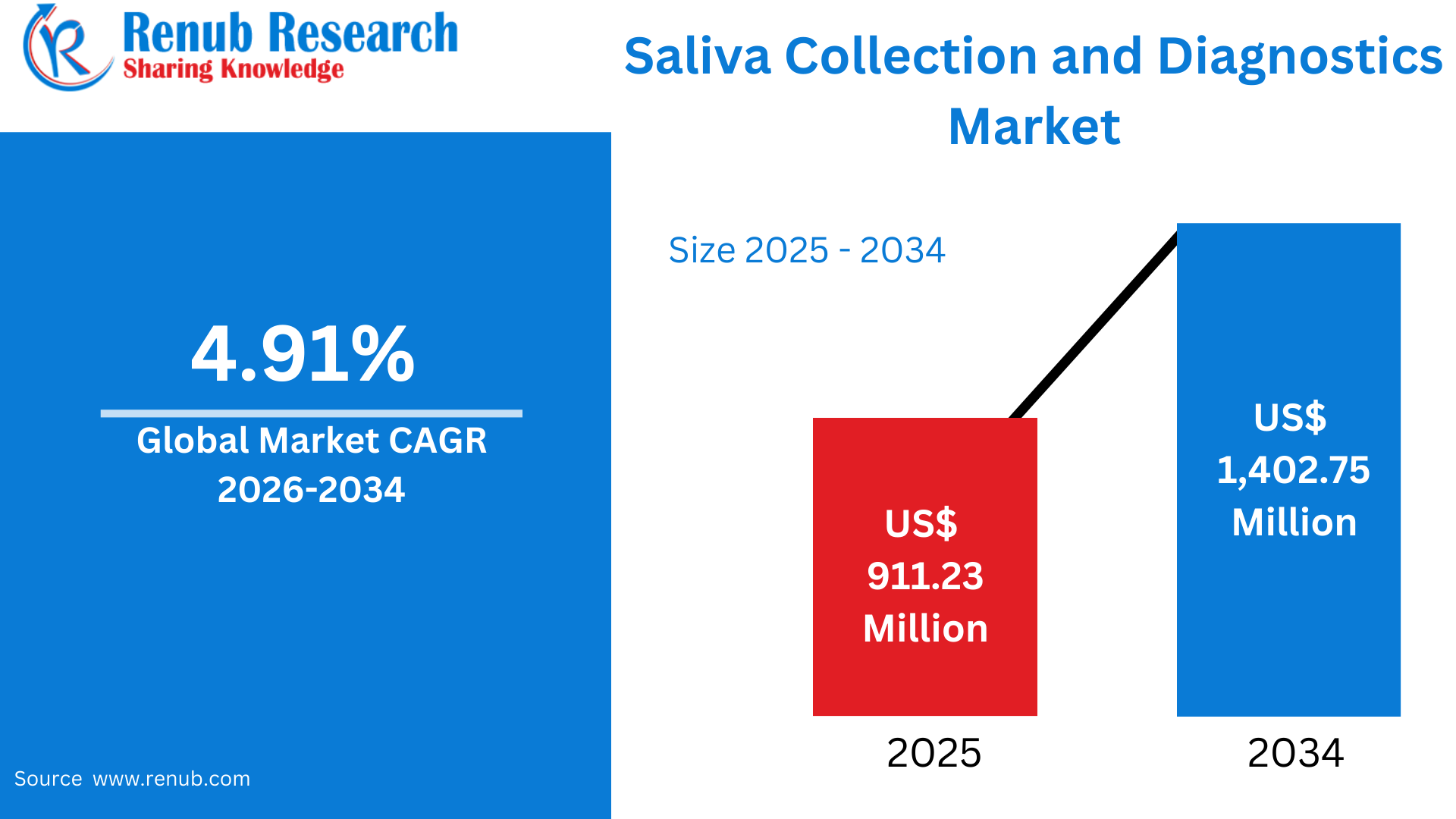
The global saliva collection and diagnostics market is expected to witness steady growth during the forecast period. The market is projected to increase from US$ 911.23 million in 2025 to approximately US$ 1,402.75 million by 2034, registering a compound annual growth rate (CAGR) of 4.91% between 2026 and 2034. Market expansion is being driven by the growing preference for non-invasive diagnostic methods, increasing adoption of saliva-based testing for disease detection, and continuous advancements in molecular diagnostic technologies.
Saliva Collection And Diagnostics Market Outlook
Saliva collection and diagnostics is the process by which saliva samples are collected and analyzed to diagnose, track, or investigate diseases and health conditions. Saliva is considered an attractive fluid for diagnostics because it is easy to collect, non-invasive, painless, and does not require trained medical professionals or equipment. Saliva is also rich in various biological components such as DNA, RNA, proteins, hormones, antibodies, and microorganisms, making it useful for the diagnosis of infectious diseases, genetic disorders, hormonal imbalances, and certain cancers.
The use of saliva diagnostics has gained popularity globally due to its convenience and cost-effectiveness compared to blood or tissue biopsies. It is especially useful for large-scale screening, home testing, pediatric and geriatric patients, and when repeated testing is necessary. The global COVID-19 pandemic has contributed to the increased awareness and acceptance of saliva testing, proving its reliability and feasibility in large-scale testing programs. Furthermore, advancements in molecular diagnostics, genomics, and point-of-care testing have enhanced the sensitivity and specificity of saliva testing. With the current emphasis on patient comfort, early diagnosis, and preventive medicine by the global healthcare systems, saliva collection and diagnostics are gaining widespread acceptance globally.
Key Market Trends
The growing adoption of saliva-based liquid biopsy technologies is transforming preventive oncology by enabling the early, non-invasive detection of systemic cancers that traditionally required invasive diagnostic procedures. Advances in salivary RNA profiling and oral microbiome analysis are allowing researchers to identify cancer-related biomarkers and precancerous changes with greater accuracy, expanding the clinical applications of saliva beyond oral disease diagnosis. As a result, saliva is increasingly being recognized as a valuable biofluid for assessing overall health and supporting early cancer screening. Supporting this trend, News-Medical.Net reported that in July 2025, Viome Life Sciences entered into a strategic collaboration with Scripps Research to conduct a clinical study involving 1,000 participants aimed at developing a saliva-based RNA test for the early detection and prevention of colorectal cancer. This initiative highlights the potential of saliva diagnostics to evaluate gastrointestinal health while reducing dependence on invasive procedures such as colonoscopy for initial risk assessment.
Another significant trend shaping the market is the expanding use of saliva-based pharmacogenomic testing to advance personalized medicine. The simplicity and non-invasive nature of saliva collection are encouraging healthcare providers and diagnostic laboratories to adopt genomic testing for evaluating individual drug metabolism and treatment response. Saliva-based genetic panels are increasingly being used to support medication selection, optimize therapeutic outcomes, and minimize adverse drug reactions, particularly in complex fields such as psychiatry, neurology, and pain management. Reflecting this industry trend, Quest Diagnostics launched an advanced pharmacogenomic laboratory testing service in September 2025 capable of analyzing 17 genes and four HLA alleles to assist physicians in making informed prescribing decisions. The introduction of such services demonstrates the growing commercial acceptance of saliva as a reliable specimen for integrating genetic insights into routine clinical practice and delivering more personalized treatment strategies.
Saliva Collection & Diagnostics Market Outlook
Saliva collection and diagnostics involve obtaining saliva samples and analyzing them to detect, monitor, or study a wide range of diseases and health conditions. Saliva has emerged as a valuable diagnostic specimen because it can be collected easily, painlessly, and non-invasively without requiring specialized medical personnel or complex equipment. In addition, saliva contains numerous biological markers—including DNA, RNA, proteins, hormones, antibodies, and microorganisms—that support the diagnosis of infectious diseases, genetic abnormalities, hormonal disorders, and certain types of cancer.
The adoption of saliva-based diagnostics has increased significantly worldwide due to its convenience, affordability, and patient-friendly nature compared with traditional blood sampling or tissue biopsies. It is particularly well suited for large-scale population screening, at-home testing, pediatric and elderly patients, and situations requiring frequent or repeat testing. The COVID-19 pandemic further accelerated the acceptance of saliva testing by demonstrating its effectiveness and practicality in mass testing initiatives. Moreover, ongoing innovations in molecular diagnostics, genomics, and point-of-care technologies have substantially improved the accuracy, sensitivity, and reliability of saliva-based diagnostic solutions. As healthcare systems increasingly prioritize early disease detection, preventive care, and enhanced patient experience, the demand for saliva collection and diagnostic technologies is expected to continue rising across global markets.
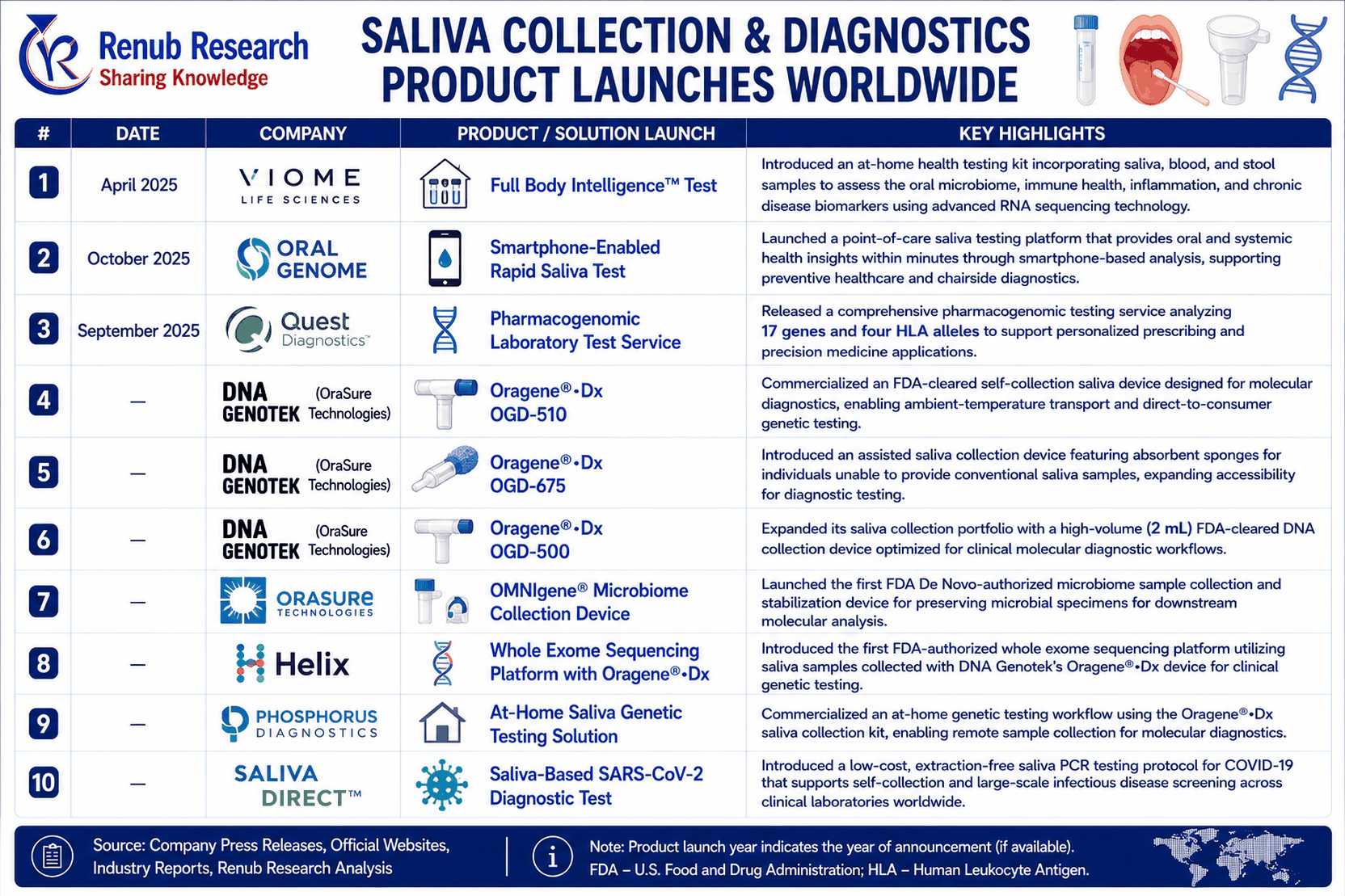
Saliva Collection & Diagnostics Product Launches Worldwide
- Viome Life Sciences – Full Body Intelligence™ Test (April 2025)
Introduced an at-home health testing kit incorporating saliva, blood, and stool samples to assess the oral microbiome, immune health, inflammation, and chronic disease biomarkers using advanced RNA sequencing technology. - Oral Genome – Smartphone-Enabled Rapid Saliva Test (October 2025)
Launched a point-of-care saliva testing platform that provides oral and systemic health insights within minutes through smartphone-based analysis, supporting preventive healthcare and chairside diagnostics. - Quest Diagnostics – Pharmacogenomic Laboratory Test Service (September 2025)
Released a comprehensive pharmacogenomic testing service analyzing 17 genes and four HLA alleles to support personalized prescribing and precision medicine applications. - DNA Genotek (OraSure Technologies) – Oragene®•Dx OGD-510
Commercialized an FDA-cleared self-collection saliva device designed for molecular diagnostics, enabling ambient-temperature transport and direct-to-consumer genetic testing. - DNA Genotek (OraSure Technologies) – Oragene®•Dx OGD-675
Introduced an assisted saliva collection device featuring absorbent sponges for individuals unable to provide conventional saliva samples, expanding accessibility for diagnostic testing. - DNA Genotek (OraSure Technologies) – Oragene®•Dx OGD-500
Expanded its saliva collection portfolio with a high-volume (2 mL) FDA-cleared DNA collection device optimized for clinical molecular diagnostic workflows. - OraSure Technologies – OMNIgene® Microbiome Collection Device
Launched the first FDA De Novo-authorized microbiome sample collection and stabilization device for preserving microbial specimens for downstream molecular analysis. - Helix – Whole Exome Sequencing Platform with Oragene®•Dx
Introduced the first FDA-authorized whole exome sequencing platform utilizing saliva samples collected with DNA Genotek’s Oragene®•Dx device for clinical genetic testing. - Phosphorus Diagnostics – At-Home Saliva Genetic Testing Solution
Commercialized an at-home genetic testing workflow using the Oragene®•Dx saliva collection kit, enabling remote sample collection for molecular diagnostics. - SalivaDirect™ – Saliva-Based SARS-CoV-2 Diagnostic Test
Introduced a low-cost, extraction-free saliva PCR testing protocol for COVID-19 that supports self-collection and large-scale infectious disease screening across clinical laboratories worldwide.
Growth Drivers
Rising Demand for Non-Invasive and Patient-Centric Diagnostic Solutions
The increasing preference for non-invasive and patient-friendly diagnostic methods is a major factor driving the growth of the saliva collection and diagnostics market. Unlike conventional blood-based testing, saliva collection is painless, simple, and does not require needles, specialized healthcare professionals, or clinical infrastructure. This convenience makes saliva-based testing particularly suitable for pediatric and geriatric patients, individuals with needle anxiety, and patients requiring routine or repeated monitoring. Additionally, saliva testing minimizes the risks associated with invasive procedures, including infection and cross-contamination, while improving patient compliance.
In October 2025, Oral Genome announced successful validation of its rapid saliva-based diagnostic device designed for oral disease detection. The smartphone-enabled platform demonstrated diagnostic accuracy exceeding 90% for identifying conditions such as periodontal disease and dental caries without requiring laboratory processing. The system generates comprehensive oral health reports within approximately 15 minutes using a single saliva sample, highlighting the growing role of saliva diagnostics in expanding access to preventive healthcare and scalable screening programs.
Technological Advancements in Molecular Diagnostics
Continuous innovations in molecular diagnostic technologies are significantly strengthening the capabilities of saliva-based testing and accelerating market growth. Advances in polymerase chain reaction (PCR), next-generation sequencing (NGS), biosensor technologies, and other molecular analysis platforms have considerably improved the sensitivity, specificity, and reliability of saliva diagnostics. These technologies enable accurate detection of biomarkers, pathogens, genetic variations, and hormonal indicators, bringing saliva-based testing closer to the performance standards of conventional blood diagnostics.
Furthermore, improvements in saliva collection devices and sample preservation technologies have enhanced specimen stability and reduced the risk of degradation, leading to more consistent diagnostic outcomes. The rapid expansion of point-of-care testing and portable diagnostic platforms has also increased the accessibility of saliva diagnostics across hospitals, clinics, home healthcare, and emergency care settings. Ongoing research continues to broaden the range of diseases detectable through saliva, including infectious diseases, cancers, metabolic disorders, and chronic conditions, thereby increasing confidence among healthcare providers.
In September 2025, Quest Diagnostics introduced an advanced pharmacogenomic laboratory testing service capable of analyzing 17 genes and four HLA alleles to support personalized medication selection. The launch reflects the broader trend toward precision medicine and highlights the growing importance of advanced molecular diagnostics in improving patient outcomes.
Increasing Emphasis on Preventive Healthcare and Population Screening
The growing global focus on preventive healthcare, early disease detection, and population-level screening is another major driver supporting the expansion of the saliva collection and diagnostics market. Healthcare organizations and government agencies are increasingly investing in screening programs aimed at reducing long-term healthcare costs through earlier diagnosis and timely intervention.
Saliva-based diagnostics are particularly well suited for large-scale screening initiatives due to their ease of collection, affordability, and ability to support repeated testing without causing patient discomfort. These advantages make saliva testing highly applicable in workplace wellness programs, school health initiatives, community health campaigns, and infectious disease surveillance. The successful implementation of saliva testing during recent infectious disease outbreaks further demonstrated its effectiveness for rapid, high-volume screening.
In April 2025, Viome Life Sciences launched its Full Body Intelligence Test, an at-home health assessment kit incorporating saliva collection to evaluate the oral microbiome. Using advanced RNA sequencing technology, the platform analyzes saliva alongside blood and stool samples to provide comprehensive insights into immune function, inflammation, and overall biological health. According to the company, the test evaluates millions of biological markers to identify early signs of chronic disease and support personalized nutrition and supplement recommendations. This product launch underscores the expanding role of saliva diagnostics in preventive healthcare and personalized medicine.
Challenges
Variability in Saliva Samples and Quality Management
One of the primary challenges facing the saliva collection and diagnostics market is the natural variability of saliva composition, which can influence diagnostic accuracy and test reproducibility. Biomarker concentrations may fluctuate due to multiple factors, including hydration levels, dietary habits, medication use, oral hygiene, circadian rhythms, and underlying medical conditions. Such variations can affect the detection of enzymes, pathogens, proteins, or genetic markers, potentially leading to inconsistent or inconclusive diagnostic results.
Sample integrity also remains a concern, as improper collection, handling, storage, or transportation may result in contamination or degradation of biological material. Compared with blood specimens, saliva samples are generally more susceptible to environmental influences, creating additional challenges for standardization. Consequently, the adoption of standardized collection protocols, advanced preservation technologies, and user-friendly collection devices is essential for ensuring reliable diagnostic performance, particularly in home-based testing environments.
Limited Clinical Adoption and Regulatory Challenges
Despite its numerous advantages, saliva diagnostics continue to face barriers related to clinical acceptance and regulatory approval. Many healthcare professionals still consider blood and tissue-based diagnostics as the established clinical standard due to their extensive validation and widespread use in medical practice. Expanding the clinical adoption of saliva diagnostics requires robust scientific evidence demonstrating comparable levels of accuracy, sensitivity, and clinical utility across diverse disease applications.
In addition, obtaining regulatory approval for novel saliva-based diagnostic devices and assays is often a lengthy, complex, and resource-intensive process. Differences in regulatory requirements across countries further complicate international commercialization and market expansion. These challenges can be particularly burdensome for emerging companies and startups, which may have limited financial and regulatory resources. As a result, regulatory complexity and slower clinical adoption remain important constraints on innovation and broader market growth.
Site of Collection Insights
Parotid Gland Collection
The parotid gland collection market revolves around the collection of saliva from the parotid glands, which secrete clear fluids rich in enzymes. The gland-specific collection of saliva is quite common in research studies related to oral health and the identification of biomarkers since it provides samples that are less likely to be contaminated with saliva from other glands in the oral cavity. The major driving factors for the demand in this market include the rising number of research studies related to autoimmune diseases, salivary gland disorders, and metabolic disorders, where the precise analysis of saliva composition is essential. The parotid saliva is quite helpful in the precise analysis of enzymes and proteins, which is quite essential for advanced research studies. From the technological point of view, the development of advanced collection devices is improving the accuracy and ease of collection. Although this segment is still in the niche area compared to the whole saliva collection market, the rising focus on precision medicine and high-quality biological samples is likely to fuel the growth of the parotid gland collection market.
Submandibular Collection
The submandibular saliva collection market is centered on the gathering of saliva secreted by the submandibular glands, which produce a complex mixture of serous and mucous saliva. The particular type of saliva produced is high in proteins, hormones, enzymes, and mucins, making it extremely valuable for use in medical diagnostics and biomedical research. The major driving forces behind the growth of the submandibular saliva collection market include the growing demand for the monitoring of chronic diseases, endocrine and hormonal studies, and sophisticated oral disease diagnostics. The submandibular saliva is highly informative regarding systemic health conditions, thus justifying its use in both medical and research applications. The growth of the submandibular saliva collection market is aided by continuous improvements in gland-specific collection methods and devices that improve the quality, accuracy, and reliability of the collected samples. Although the collection of submandibular saliva is more complex compared to whole saliva collection, the growing medical awareness, increasing research activities, and increasing investment in precision diagnostics are anticipated to fuel steady and continuous growth in this niche area of the saliva collection market.
Application Insights
Forensic Industry
In the forensic community, saliva sample collection and diagnosis is an important area of application in forensic investigations, litigation, and identification. Saliva samples are often obtained from items such as bite marks, cigarette butts, food residues, drinking containers, and envelopes, making it an important source of biological material. The main drivers for this market include the ease of saliva sample recovery and the high sensitivity of saliva samples for DNA analysis and genetic identification. Technological improvements in molecular and forensic sciences have greatly improved the sensitivity of DNA recovery from very small or degraded saliva samples. The market outlook is positive due to the increasing number of forensic cases, the expansion of DNA databases around the world, and increasing judicial acceptance of saliva-based evidence. As forensic science evolves, saliva collection and diagnosis are expected to remain an important and growing area of application in the global saliva diagnostics market.
Laboratories Industry
Diagnostic labs are one of the prominent end-use segments for saliva collection and diagnostics, using saliva samples for the diagnosis of infectious diseases, genetic analysis, hormone testing, and drug screening. The prime drivers for the growth of this market are the non-invasive nature of saliva collection, improved patient compliance, and its suitability for large-scale screening and home testing programs. Additionally, saliva collection reduces operational costs by minimizing the requirement for trained phlebotomists, specialized collection facilities, and complex handling procedures. Market trends show an increasing trend towards integrating saliva-based assays with automated platforms, molecular diagnostics, and high-throughput laboratory platforms, increasing efficiency and reducing turnaround times. Improvements in the sensitivity of assays and sample processing technologies have further improved confidence in saliva-based testing among laboratories. As the focus of diagnostic labs shifts towards scalable, cost-effective, and patient-friendly solutions, the use of saliva collection and diagnostics is expected to increase steadily, making this segment a key contributor to the overall growth of the global saliva diagnostics market.
Countries Insights
United States
The United States represents one of the leading markets for saliva collection and diagnostics, supported by its advanced healthcare infrastructure, strong biotechnology ecosystem, and extensive research capabilities. Saliva-based testing is increasingly utilized across applications such as infectious disease detection, genetic screening, therapeutic drug monitoring, and hormone analysis. Market growth is primarily driven by the rising preference for non-invasive diagnostic methods, expanding adoption of home-based testing solutions, and significant investments in molecular diagnostics and precision medicine. Academic institutions, research organizations, and biotechnology companies continue to accelerate the development and clinical validation of innovative saliva-based diagnostic technologies. In addition, a supportive regulatory environment is facilitating broader commercialization and adoption. Reflecting this trend, the U.S. Food and Drug Administration (FDA) approved a premarket approval supplement for the OraQuick HIV Self-Test in December 2024, lowering the approved age range from adults to individuals aged 14–17 years. This approval highlights the growing emphasis on expanding access to over-the-counter, non-invasive diagnostic solutions that encourage earlier health monitoring among younger populations.
United Kingdom
The United Kingdom saliva collection and diagnostics market is supported by a well-developed public healthcare system and a strong national focus on preventive healthcare and early disease detection. Saliva-based diagnostics are gaining wider acceptance across public health initiatives, clinical research, and national screening programs due to their convenience, safety, and non-invasive nature. Growing demand for infectious disease testing, oral health assessment, and population health studies continues to support market expansion. Increasing confidence among healthcare professionals, combined with ongoing research collaborations between universities, healthcare institutions, and diagnostic manufacturers, is further accelerating product innovation and adoption. In February 2023, Abingdon Health plc entered into a distribution agreement with Salignostics to introduce Salistick™, the first saliva-based pregnancy test available in the United Kingdom and Ireland, marking an important milestone in expanding consumer access to saliva-based diagnostic products.
India
The India saliva collection and diagnostics market is experiencing robust growth, driven by increasing healthcare awareness, a large patient population, and rising demand for affordable diagnostic technologies. Saliva-based testing provides a cost-effective, non-invasive alternative to conventional diagnostic methods and is particularly valuable in rural and underserved regions where access to advanced laboratory infrastructure remains limited. Market expansion is supported by the rapid growth of diagnostic laboratories, government initiatives promoting preventive healthcare, and increasing awareness of early disease detection. Saliva diagnostics are being increasingly adopted for infectious disease screening, biomedical research, and epidemiological surveillance. Continued investments in healthcare infrastructure, domestic manufacturing, and innovative diagnostic technologies are expected to strengthen market growth over the coming years. In August 2025, Delhi-based startup Guttify, developed by Lifechart, introduced India’s first saliva-based gut health testing solution, the Gut Scan Kit. Designed specifically for Indian dietary patterns and genetic characteristics, the home-based test provides gut health insights within 24 hours without requiring stool collection or laboratory visits.
Saudi Arabia
The Saudi Arabia saliva collection and diagnostics market is witnessing steady growth, supported by ongoing healthcare modernization initiatives and increasing emphasis on preventive medicine under the country’s healthcare transformation agenda. Saliva-based diagnostics are gaining wider acceptance for disease screening, health monitoring, and clinical research owing to their non-invasive nature and ease of use. Market growth is being driven by rising awareness of alternative diagnostic approaches, increasing investments in advanced diagnostic technologies, and continuous improvements in healthcare infrastructure. National efforts to promote early disease detection, improve patient outcomes, and enhance healthcare accessibility are creating favorable conditions for the adoption of saliva-based testing. As technological advancements continue to improve diagnostic accuracy and clinical confidence, saliva collection and diagnostics are expected to play an increasingly important role in Saudi Arabia’s evolving healthcare system.
Market Segmentation
Site of Collection
- Parotid Gland Collection
- Submandibular Collection
- Minor Salivary Glands Collection
Application
- Diagnostic Laboratories
- Forensic
- Others
Countries - Industry is divided into 25 viewpoints:
North America
- United States
- Canada
Europe
- France
- Germany
- Italy
- Spain
- United Kingdom
- Belgium
- Netherlands
- Turkey
Asia Pacific
- China
- Japan
- India
- Australia
- South Korea
- Thailand
- Malaysia
- Indonesia
- New Zealand
Latin America
- Brazil
- Mexico
- Argentina
Middle East & Africa
- South Africa
- Saudi Arabia
- United Arab Emirates
All companies have been covered with 5 Viewpoints
- Overview
- Key Persons
- Recent Development & Strategies
- Product Portfolio
- Financial Insights
Company Analysis
- AbbVie Inc.
- Allergan plc.
- AstraZeneca
- FUJIFILM Holdings Corporation
- General Electric Company
- GlaxoSmithKline plc.
- Merck & Co
- Pfizer Inc.
- Siemens Healthcare GmbH
Report Details:
| Report Features | Details |
| Base Year |
2025 |
| Historical Period |
2022 - 2025 |
| Forecast Period |
2026 - 2034 |
| Market |
US$ Million |
| Segment Covered |
Site of Collection, Application and Countries |
| Countries Covered |
|
| Companies Covered |
|
| Customization Scope |
20% Free Customization |
| Post-Sale Analyst Support |
1 Year (52 Weeks) |
| Delivery Format |
PDF and Excel through Email (We can also provide the editable version of the report in PPT/Word format on request) |
Customization Services available
- Analysis of Market Size and Its Segments
- More Company Profiles (Upto 10 without any additional cost):
- Additional Countries (Other than mentioned Countries):
- Region/Country Specific Reports:
- Market Entry Strategy:
- Region-Specific Market Dynamics:
- Regional Market Share Analysis:
- Trade Analysis:
- Production Insights:
- Others Customized Requests:
For more information contact our analysts.
Need More Assistance?
- Talk to our analysts to get more precious information on the current market trends.
- Include more countries and segments and customize the report based on the final requirement.
- Get a competitive advantage in your industry by knowing the report findings and making a positive impact on your revenues and operations.
- Our analysts are always ready to provide more help and pertinent information if you need any additional assistance.