United States Organic Food Market Report by Product Type, Distribution Channel, State and Company Analysis 2026-2034
Buy NowUnited States Organic Food Market Size and Forecast
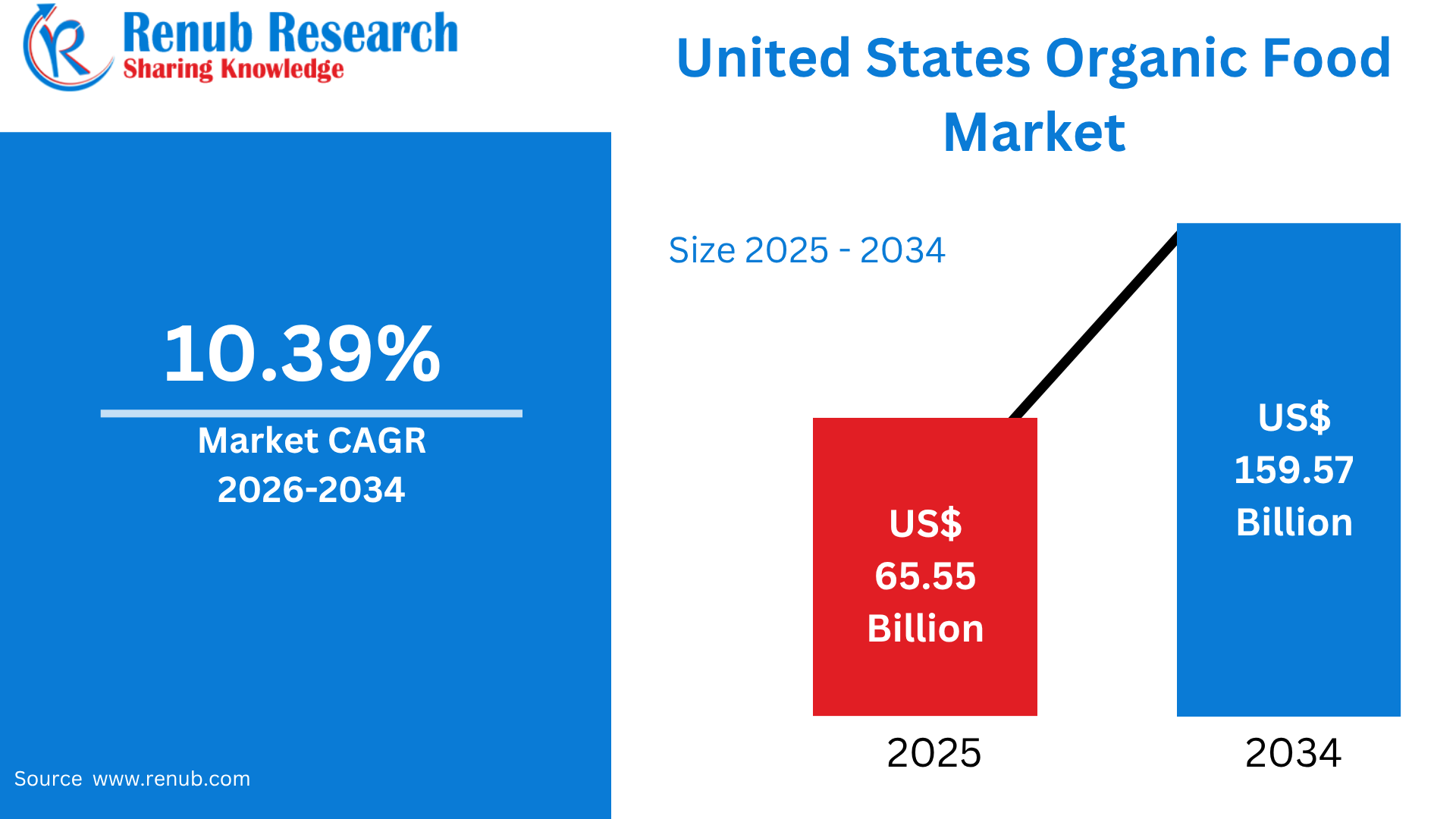
United States Organic Food Market is projected to grow from US$ 65.55 billion in 2025 to US$ 159.57 billion by 2034, registering a CAGR of 10.39% during the forecast period (2026–2034). The market is experiencing strong growth due to increasing consumer awareness of health and wellness, rising preference for organic and chemical-free food products, and growing demand for clean-label, minimally processed foods. Concerns regarding the use of synthetic pesticides, fertilizers, genetically modified organisms (GMOs), and artificial additives are encouraging consumers to shift toward certified organic products. Furthermore, expanding retail distribution through supermarkets, specialty stores, online grocery platforms, and direct-to-consumer channels has significantly improved product accessibility.
What is Organic Food and Its Uses & Popularity in the USA?
Organic food refers to agricultural products that are grown, processed, and certified according to organic farming standards, which prohibit the use of synthetic pesticides, chemical fertilizers, genetically modified organisms (GMOs), artificial preservatives, antibiotics, and growth hormones. Organic foods include fruits, vegetables, dairy products, meat, poultry, eggs, grains, beverages, snacks, and packaged foods produced using environmentally sustainable farming practices that promote soil health, biodiversity, and animal welfare. These products are widely consumed for their perceived nutritional benefits, cleaner ingredient profiles, reduced chemical exposure, and lower environmental impact. Organic ingredients are also extensively used in baby foods, ready-to-eat meals, beverages, bakery products, dairy alternatives, and functional foods.
In the United States, organic food has become increasingly popular due to rising health consciousness, growing environmental awareness, and strong consumer demand for clean-label products. The U.S. is one of the world’s largest organic food markets, supported by expanding organic farmland, widespread retail availability, and increasing consumer willingness to pay premium prices for certified organic products. Millennials, Generation Z consumers, and families with young children are major drivers of demand, particularly for organic fruits, vegetables, dairy products, eggs, beverages, and packaged foods. The rapid growth of supermarkets, natural food retailers, farmers’ markets, and e-commerce platforms has significantly improved product accessibility. Additionally, increasing interest in sustainable agriculture, ethical food production, and transparency in food sourcing continues to strengthen the popularity of organic food across the United States.
U.S. Organic Food Sales by Product Category in 2025
- Produce – 29.6%
- Largest organic food category in the U.S.
- Includes organic fruits, vegetables, herbs, and fresh produce.
- Grocery – 20.5%
- Second-largest category.
- Includes packaged foods, cereals, pantry staples, pasta, sauces, and canned products.
- Beverages – 13.3%
- Covers organic juices, coffee, tea, dairy alternatives, and functional beverages.
- Dairy & Eggs – 12.5%
- Includes organic milk, yogurt, cheese, butter, and eggs.
- Snacks & Candy – 7.0%
- Includes organic snack bars, chips, crackers, cookies, and confectionery products.
- Frozen Foods – 4.5%
- Covers frozen vegetables, fruits, ready meals, and desserts.
- Meat, Poultry & Seafood – 4.1%
- Includes certified organic meat, chicken, turkey, and seafood products.
- Textiles, Supplements, Health & Beauty Care (HBC), and Pet Products – 8.5%
- Encompasses organic textiles, dietary supplements, personal care products, cosmetics, and organic pet food.
Source: Organic Trade Association (OTA), 2026 Organic Market Survey (Consumer Sales)
U.S. Organic Food Retail Sales by Category (2012–2024)
- Produce
- Largest organic food category throughout the period.
- Sales increased from approximately US$13 billion (2012) to over US$21 billion (2024).
- Driven by strong demand for organic fruits and vegetables.
- Grocery
- Second-largest category.
- Sales grew from around US$8 billion to nearly US$15 billion between 2012 and 2024.
- Growth supported by packaged foods, cereals, snacks, and pantry staples.
- Beverages
- Expanded steadily over the period.
- Increased from approximately US$5 billion to around US$10 billion by 2024.
- Includes organic juices, coffee, tea, and plant-based beverages.
- Dairy & Eggs
- Maintained consistent growth across the study period.
- Reached approximately US$8–9 billion in retail sales by 2024.
- Snacks & Candy
- Continued gradual expansion as demand for healthier snack options increased.
- Sales reached approximately US$5–6 billion in 2024.
- Frozen Foods
- Recorded moderate but steady growth.
- Benefited from increasing demand for convenient organic meals and frozen produce.
- Meat, Poultry & Seafood
- Smallest category by value but showed consistent annual growth.
- Demand increased for organic meat products raised without antibiotics and synthetic hormones.
Source: Organic Trade Association (OTA), U.S. Organic Food Retail Sales by Category, 2012–2024 (Consumer Sales, 2024 U.S. Dollars).
Growth Driver
Rising Consumer Preference for Healthy and Clean-Label Foods
Health consciousness has become one of the strongest growth drivers of the United States organic food market. Consumers are increasingly seeking foods produced without synthetic pesticides, chemical fertilizers, genetically modified organisms (GMOs), artificial preservatives, or growth hormones. According to the U.S. Department of Agriculture (USDA), the United States has more than 17,000 certified organic farming operations, reflecting the rapid expansion of organic agriculture. Growing awareness of lifestyle-related conditions such as obesity, diabetes, and cardiovascular disease has encouraged consumers to choose organic fruits, vegetables, dairy products, cereals, snacks, beverages, and packaged foods. Millennials, Generation Z, and families with young children are particularly driving demand for organic products due to greater emphasis on nutrition and ingredient transparency. Food manufacturers are responding by expanding clean-label product portfolios with natural and minimally processed ingredients. The increasing availability of certified organic products across supermarkets, warehouse clubs, convenience stores, specialty retailers, and online grocery platforms continues to improve accessibility, supporting sustained long-term market growth throughout the United States.
Expansion of Organic Farming and Government Support
The continued expansion of certified organic farming and favorable government initiatives are significantly contributing to market growth in the United States. The USDA’s National Organic Program (NOP) establishes uniform production, handling, and labeling standards that strengthen consumer confidence in certified organic products. The country has millions of acres of certified organic farmland, supporting production across fruits, vegetables, grains, dairy, livestock, and specialty crops. Financial assistance programs, conservation initiatives, and technical support encourage farmers to transition from conventional to organic farming practices. Rising investments in regenerative agriculture, sustainable farming methods, and soil conservation are further improving organic crop productivity and environmental sustainability. Retailers and food manufacturers are also increasing long-term procurement partnerships with domestic organic producers to strengthen supply chain resilience. Growing consumer demand for locally produced organic foods has created additional opportunities for regional farms and direct-to-consumer sales through farmers’ markets and community-supported agriculture (CSA) programs. These developments continue to expand domestic production capacity while supporting steady market growth.
Rapid Growth of E-Commerce and Premium Organic Product Innovation
Digital retail transformation has become a major catalyst for the U.S. organic food market. Online grocery shopping, direct-to-consumer subscriptions, and digital marketplaces have significantly improved consumer access to organic products nationwide. According to the U.S. Census Bureau, e-commerce sales continue to account for a growing share of total retail sales, encouraging food companies to strengthen their online presence. Retailers now offer extensive selections of certified organic fruits, vegetables, dairy products, frozen foods, beverages, snacks, meal kits, and baby foods through home delivery and click-and-collect services. Product innovation is also accelerating across premium categories, including plant-based organic foods, functional beverages, protein-rich snacks, and minimally processed ready-to-eat meals. Consumers are increasingly willing to pay premium prices for products offering organic certification, clean ingredients, and sustainable packaging. Companies are investing heavily in recyclable packaging, transparent sourcing, and environmentally responsible production practices to meet evolving consumer expectations. These factors continue to expand market penetration across diverse demographic groups throughout the United States.
Challenge
Higher Production Costs and Premium Product Pricing
One of the primary challenges facing the United States organic food market is the significantly higher production cost associated with organic farming. Organic producers must comply with strict certification requirements while avoiding synthetic fertilizers, pesticides, and genetically modified seeds. Organic farming often requires more labor-intensive weed control, crop rotation, soil management, and pest prevention techniques, increasing operational expenses. Organic livestock production also involves higher feed costs, animal welfare requirements, and longer production cycles. These additional costs are ultimately reflected in retail prices, with many organic products selling at substantial premiums compared to conventional alternatives. During periods of economic uncertainty or inflation, price-sensitive consumers may reduce purchases of premium organic products or switch to conventional foods. Smaller farms also face financial challenges related to certification expenses and maintaining compliance with regulatory standards. Although consumer demand remains strong, balancing affordability with sustainable production continues to be a significant challenge for manufacturers, retailers, and organic farmers across the United States.
Supply Chain Constraints and Limited Raw Material Availability
Maintaining a stable supply of certified organic ingredients remains a major challenge for the U.S. organic food industry. Organic agricultural production represents a relatively small share of total U.S. farmland compared to conventional farming, creating supply limitations for many high-demand products. Seasonal weather events, droughts, floods, pest outbreaks, and climate variability can significantly affect organic crop yields because producers have fewer synthetic crop protection options. In addition, certification requirements limit the number of eligible suppliers, making procurement more complex for food manufacturers. Rising transportation costs, labor shortages, and distribution disruptions further increase supply chain risks and operational expenses. Manufacturers often depend on imported organic ingredients to supplement domestic production, exposing the market to global trade uncertainties and currency fluctuations. As demand for organic products continues to grow faster than supply in certain categories, maintaining consistent product availability while preserving certification standards and competitive pricing remains an ongoing challenge for the United States organic food market.
Major Organic Food Product Launches in the United States
- March 2025 – Nature’s Path Foods launched Organic High Protein Oatmeal, featuring USDA Organic whole grains and plant-based protein to meet growing demand for healthy breakfast options.
- February 2025 – Amy’s Kitchen expanded its portfolio with Organic Mexican-Inspired Frozen Meals, made with USDA Organic vegetables, beans, and whole grains for convenient clean-label dining.
- January 2025 – Once Upon a Farm introduced Organic Protein Smoothie Pouches, combining organic fruits, vegetables, and plant protein for children and family nutrition.
- October 2024 – Whole Foods Market (365 by Whole Foods Market) launched a new range of Organic Ready-to-Eat Soups and Grain Bowls, prepared with certified organic vegetables and clean-label ingredients.
- September 2024 – Applegate Farms expanded its organic portfolio with USDA Organic Chicken Breakfast Sausages, produced without antibiotics or synthetic preservatives.
- July 2024 – Horizon Organic introduced Organic High-Protein Milk, delivering increased protein content while maintaining USDA Organic certification for health-conscious consumers.
- May 2024 – Cascadian Farm launched Organic Protein Granola, combining organic oats, seeds, and plant-based protein to support healthy snacking and breakfast consumption.
- March 2024 – Stonyfield Organic introduced Organic Whole Milk Greek Yogurt, made with organic milk and live active cultures to meet increasing demand for high-protein dairy products.
- January 2024 – Annie’s Homegrown expanded its organic snack portfolio with Organic Cheddar Snack Mix, featuring USDA Organic crackers, pretzels, and baked snacks made without artificial ingredients.
- October 2023 – Nature’s Bakery launched USDA Organic Fig Bars, prepared with organic whole wheat flour and real fruit, targeting consumers seeking convenient, clean-label snack options.
Rising Health Awareness and Fresh Produce Consumption Driving United States Growth
United States Organic Fruits and Vegetables Market represents the largest segment of the country’s organic food industry, driven by increasing consumer preference for fresh, chemical-free produce and healthier eating habits. Organic fruits and vegetables are cultivated without synthetic pesticides, fertilizers, or genetically modified organisms (GMOs), making them highly attractive to health-conscious consumers. The United States has over 2 million acres of certified organic farmland, with a significant share dedicated to fruit and vegetable cultivation. Apples, berries, bananas, spinach, lettuce, carrots, tomatoes, avocados, and broccoli remain among the most purchased organic produce items. Rising concerns regarding food safety, pesticide residues, and environmental sustainability continue to encourage organic produce consumption. Expanding availability through supermarkets, farmers’ markets, specialty retailers, and online grocery platforms has improved accessibility nationwide. Foodservice establishments, schools, and hospitals are also increasing procurement of organic produce. Continuous investment in sustainable farming, precision agriculture, and improved cold-chain logistics further supports production efficiency and market expansion, positioning organic fruits and vegetables as a leading category within the U.S. organic food market.
Premium Animal Welfare and Clean Nutrition Supporting United States Expansion
United States Organic Meat, Poultry and Dairy Market is witnessing robust growth due to rising consumer demand for premium-quality animal products produced without antibiotics, synthetic hormones, or genetically modified feed. Organic livestock farming follows strict animal welfare standards, including access to outdoor grazing, organic feed, and environmentally sustainable production methods. Increasing awareness regarding food quality, animal welfare, and antibiotic resistance has encouraged consumers to choose certified organic meat, milk, cheese, yogurt, butter, eggs, and poultry products. Organic dairy products account for one of the fastest-growing premium food categories in the country, supported by rising household consumption and expanding product availability. Growing disposable incomes and willingness to pay premium prices for healthier food continue to strengthen market demand. Food manufacturers are introducing value-added organic dairy products, high-protein yogurts, organic cheese varieties, and specialty meat products to meet evolving consumer preferences. Continued investment in organic livestock farming and sustainable dairy production is expected to support long-term growth across the United States.
Sustainable Agriculture and Whole Grain Nutrition Driving United States Demand
United States Organic Cereal and Food Grains Market continues to expand as consumers increasingly adopt healthier dietary habits centered on whole grains, natural ingredients, and sustainable food production. Organic cereals and grains—including oats, wheat, corn, rice, barley, quinoa, millet, rye, and ancient grains—are widely used in breakfast cereals, bakery products, infant foods, snacks, and packaged meals. Growing demand for fiber-rich diets, plant-based nutrition, and minimally processed foods has significantly increased consumption of organic grain-based products. Rising interest in gluten-free and specialty grain products has further expanded market opportunities for manufacturers. Organic grains also play an essential role in supplying ingredients for organic livestock feed, supporting growth in the organic meat and dairy industries. Food companies continue to invest in clean-label cereals, protein-enriched breakfast products, and fortified grain formulations to address changing consumer preferences. Improvements in organic farming practices, crop rotation techniques, and sustainable agriculture initiatives continue to strengthen domestic grain production while supporting long-term expansion of the organic cereals market.
Retail Expansion and Product Availability Fueling Sales in United States
United States Organic Food Supermarkets/Hypermarkets Market remains the dominant retail distribution channel for organic food products, accounting for the largest share of consumer purchases. Major supermarket chains offer extensive assortments of certified organic fruits, vegetables, dairy products, packaged foods, beverages, snacks, frozen foods, bakery items, and baby food under both national and private-label brands. More than 60,000 supermarket and grocery store locations operate across the United States, providing widespread access to organic products in urban and suburban markets. Consumers increasingly prefer one-stop shopping experiences where organic products are displayed alongside conventional alternatives, making product comparison easier. Retailers continue expanding dedicated organic sections while introducing exclusive private-label organic brands to improve affordability and increase customer loyalty. Investments in refrigerated storage, digital inventory systems, and omnichannel retail strategies have enhanced product availability and shopping convenience. Continuous promotional campaigns, loyalty programs, and premium product innovation are expected to strengthen supermarket and hypermarket leadership within the U.S. organic food retail landscape.
On-the-Go Consumption Expanding United States Market Opportunities
United States Organic Food Convenience Stores Market is growing steadily as consumers increasingly seek healthier food options that fit busy lifestyles and on-the-go consumption patterns. Traditionally focused on snacks and beverages, convenience stores are rapidly expanding their offerings of organic packaged foods, fresh fruits, protein bars, dairy products, salads, sandwiches, juices, and ready-to-eat meals. The United States has more than 150,000 convenience stores, providing extensive nationwide distribution and improving accessibility to organic products beyond traditional supermarkets. Rising urbanization, increasing commuter traffic, and changing consumer preferences for convenient yet nutritious food choices continue to drive sales. Retailers are investing in refrigerated displays, healthier snack assortments, and premium grab-and-go meal options to attract health-conscious shoppers. Partnerships with organic food manufacturers and local suppliers have expanded product variety while supporting regional sourcing initiatives. Continued innovation in portable packaging, single-serve organic products, and healthier convenience foods is expected to drive sustained growth in this important retail channel across the United States.
California Organic Farming Hub Driving Market Leadership
California dominates the United States organic food market, supported by its extensive agricultural resources, favorable Mediterranean climate, and leadership in sustainable farming practices. The state accounts for more than one-third of all U.S. organic farms and produces a substantial share of the nation’s organic fruits, vegetables, nuts, dairy products, and wine grapes. High-value crops such as strawberries, lettuce, almonds, citrus fruits, tomatoes, and leafy greens contribute significantly to organic agricultural output. Major metropolitan areas including Los Angeles, San Francisco, San Diego, and Sacramento exhibit strong consumer demand for organic foods due to rising health awareness, higher disposable incomes, and growing interest in clean-label products. California also benefits from a well-established network of farmers’ markets, organic retailers, supermarkets, and direct-to-consumer distribution channels. State initiatives supporting water conservation, regenerative agriculture, soil health, and organic certification continue to strengthen market development. However, prolonged drought conditions, rising labor costs, water scarcity, and increasingly stringent environmental regulations remain key challenges affecting long-term production and profitability.
Texas Population Growth and Expanding Retail Networks Fuel Demand
Texas Organic Food Market is experiencing strong growth, driven by rapid population expansion, increasing health consciousness, and rising consumer spending on premium food products. With a population exceeding 31 million, Texas represents one of the fastest-growing consumer markets in the United States. Metropolitan regions such as Austin, Dallas, Houston, and San Antonio are witnessing increasing demand for organic fruits, vegetables, dairy products, meat, beverages, and packaged foods. Expansion of supermarket chains, warehouse retailers, specialty organic stores, farmers’ markets, and online grocery platforms has significantly improved product accessibility throughout the state. Texas has also expanded its certified organic farmland through sustainable agriculture programs and conservation initiatives that encourage environmentally responsible farming practices. Younger consumers, working professionals, and families are increasingly choosing organic foods due to growing awareness of nutrition and food safety. Despite strong market momentum, climate variability, prolonged droughts, supply chain fluctuations, and price sensitivity among rural consumers continue to present challenges for broader market penetration across the state.
New York Premium Consumer Demand and Sustainable Agriculture Supporting Growth
New York Organic Food Market continues to expand due to strong consumer demand for premium-quality organic products and increasing investment in sustainable agriculture. Home to a population of nearly 20 million, New York represents one of the country’s largest markets for organic fruits, vegetables, dairy products, beverages, bakery products, and packaged foods. New York City serves as the primary consumption hub, where health-conscious consumers increasingly seek certified organic and clean-label products. Upstate New York contains a large number of certified organic farms that supply regional retailers, restaurants, institutional buyers, and farmers’ markets. State-supported agricultural initiatives promoting soil conservation, biodiversity, regenerative farming, and organic certification continue to strengthen domestic production capacity. High household incomes and growing environmental awareness support premium product demand across urban markets. However, elevated transportation costs, expensive commercial real estate, labor shortages, and limited retail shelf space in densely populated metropolitan areas continue to increase operational costs and influence product pricing throughout the state.
Year-Round Agriculture and Health-Conscious Consumers Driving Florida Expansion
Florida Organic Food Market is witnessing rapid growth, supported by favorable climatic conditions, year-round agricultural production, and increasing consumer demand for healthier food choices. With a population exceeding 23 million and a thriving tourism industry, Florida provides significant opportunities for organic food manufacturers and retailers. Major cities including Miami, Orlando, Tampa, Jacksonville, and Fort Lauderdale have experienced growing consumption of organic fruits, vegetables, dairy products, beverages, snacks, and packaged foods. Florida’s subtropical climate enables continuous cultivation of citrus fruits, berries, tomatoes, leafy vegetables, and tropical produce, strengthening the state’s organic farming sector. Rising numbers of retirees, health-conscious households, and wellness-focused consumers have further accelerated market demand. Organic products are widely available through supermarkets, specialty retailers, farmers’ markets, and hospitality establishments serving both residents and tourists. Nevertheless, hurricanes, excessive humidity, pest pressure, soil management challenges, and relatively high production costs remain significant factors affecting organic farming productivity and long-term market expansion in Florida.
Recent Developments in United States Organic Food Market
- In January 2024, Straus Family Creamery expanded its line of premium organic dairy offerings by introducing a new range of low-fat kefirs. This addition strengthens the company’s commitment to producing high-quality, organic, and sustainably sourced dairy products.
- In June 2023, McConnell's Fine Ice Creams launched a collection of organic fine ice cream varieties. The lineup features four distinctive flavors: Cookies and Fudge, Brownies, Chocolate Peanut Butter Brownies, Strawberry and Shortbread Cookies, and Golden State Vanilla. These new flavors highlight the brand’s focus on organic ingredients and artisanal quality.
United States Organic Food Market Segmentation
Product Type
- Organic Fruits and Vegetables
- Organic Meat, Poultry and Dairy
- Organic Processed Food
- Organic Bread and Bakery
- Organic Beverages
- Organic Cereal and Food Grains
- Others
Distribution Channel
- Supermarkets/ Hypermarkets
- Specialty Stores
- Convenient Stores
- Online Retail Stores
- Others
States
- California
- Texas
- New York
- Florida
- Illinois
- Pennsylvania
- Ohio
- Georgia
- New Jersey
- Washington
- North Carolina
- Massachusetts
- Virginia
- Michigan
- Maryland
- Colorado
- Tennessee
- Indiana
- Arizona
- Minnesota
- Wisconsin
- Missouri
- Connecticut
- South Carolina
- Oregon
- Louisiana
- Alabama
- Kentucky
- Rest of United States
All the Key Trends have been covered from 5 Viewpoints:
- Overviews
- Key Person
- Recent Developments
- SWOT Analysis
- Revenue Analysis
Top Players in the US Organic Food Industry
- Danone S.A.
- General Mills Inc.
- Sprouts Farmers Market Inc.
- The Hain Celestial Group Inc.
- The Kroger Company
- United Natural Foods Inc.
- Dole Food Company Inc.
- Newman's Own
Report Details:
| Report Features | Details |
| Base Year |
2025 |
| Historical Period |
2022 - 2025 |
| Forecast Period |
2026 - 2034 |
| Market |
US$ Billion |
| Segment Covered |
Product Type, Distribution Channel, and States |
| States Covered |
|
| Companies Covered |
|
| Customization Scope |
20% Free Customization |
| Post-Sale Analyst Support |
1 Year (52 Weeks) |
| Delivery Format |
PDF and Excel through Email (We can also provide the editable version of the report in PPT/Word format on request) |
Customization Services available
- Analysis of Market Size and Its Segments
- More Company Profiles (Upto 10 without any additional cost):
- Additional Countries (Other than mentioned Countries):
- Region/Country Specific Reports:
- Market Entry Strategy:
- Region-Specific Market Dynamics:
- Regional Market Share Analysis:
- Trade Analysis:
- Production Insights:
- Others Customized Requests:
For more information contact our analysts.
Need More Assistance?
- Talk to our analysts to get more precious information on the current market trends.
- Include more countries and segments and customize the report based on the final requirement.
- Get a competitive advantage in your industry by knowing the report findings and making a positive impact on your revenues and operations.
- Our analysts are always ready to provide more help and pertinent information if you need any additional assistance.