South Korea Seafood Market Size, Share, Report by Form, Type, Application, Cities and Companies Analysis 2026-2034
Buy NowSouth Korea Seafood Market Size & Forecast 2026-2034
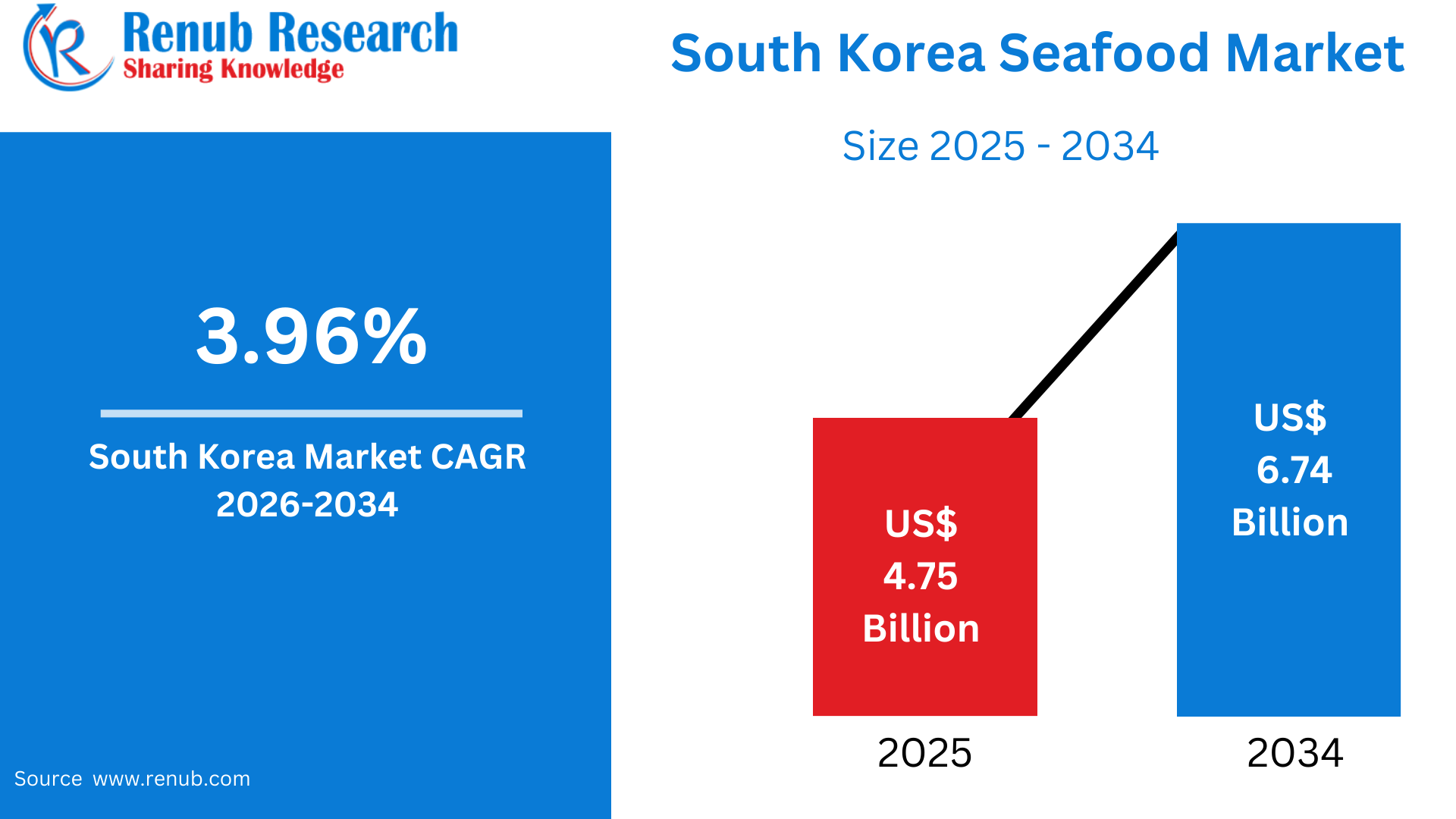
South Korea Seafood Market is expected to register a steady growth rate, escalating from US$ 4.75 Billion in 2025 to US$ 6.74 Billion in 2034, with a CAGR of 3.96% between the periods of 2026-2034. The demand is driven by a long-established habit of seafood consumption, a demand for protein-based diets, and a rising demand for healthy eating options. Rise in the development of aquaculture industry and advancements in logistics are some factors creating a thrust in market growth.
South Korea Seafood Market Outlook
Seafood is defined as aquatic animals and plants that can be eaten and are derived from the sea, rivers, lakes, and aquatic farming. Seafood can include fish like salmon, tuna, and cod, shellfish like shrimp, crab, and lobster, mollusks like oysters, clams, and mussels, and other seafood such as seaweed. Seafood is appreciated for its high nutritional aspect, which offers premium proteins, essential fatty acids like omega-3, and a host of mineral and vitamin nutrients that promote cardiovascular function, brain function, and general well-being. Seafood products can be raw, frozen, dried, canned, and processed and are prepared by processes such as grilling, boiling, frying, and curing.
Globally, seafood is a favorite of many people because of the significance associated with it in many cultures, as well as the nutritional and versatility aspects that allow seafood to be easily integrated into mainstream global cuisine. In many coastal areas, seafood was a staple diet for people living there. However, increased health awareness about the importance of a seafood diet rich in proteins and omega-3 fatty acids has improved the intake of seafood among people from diverse age groups. Increased growth in the number of restaurants and easy-to-cook foods has increased the acceptance of seafood among people worldwide, making seafood a widely consumed category of foods in the global arena.
Factors that Drive the Growth of South Korea’s Seafood Market
Strong Cultural Preferences for Seafood-Based Diets
The average annual marine product consumption of South Koreans is around 63.3 kg of marine products per capita in the year 2022, which is higher than the country's rice and meat intake. Seafood is an important component of the South Korean food culture and habits that contribute largely to the growth of the seafood industry due to the element of cultural preference. Fish, shellfish, and seaweed are the main seafood items that form important components of the country's traditional meals such as grilled fish, soups, fermented seafood, and raw seafood. Koreans believe that seafood is the epitome of freshness, nutrients, and well-balanced meals that help sustain the seafood demand throughout the country irrespective of the economic classes. Outings and home consumption together sustain the seafood demand. Seafood is used extensively throughout the country because of cultural festivals, ancestral rituals, and regional food habits that help sustain the seafood demand. Another important characteristic of seafood demand is the daily intake of seafood that is different from other protein food items like meat that are required by the body periodically. This is the most cultural-demand-based food item that sustains the demand stability and keeps the demand unaltered without drastic changes that are most pronounced characteristics of many other segments within the South Korean food industry. The South Korean Ministry of Oceans and Fisheries formally presented the Development Plan for the Oyster Aquaculture Industry within the framework of the State Affairs Cabinet Meeting. There are three approaches that are included within the Development Plan of the Oyster Aquaculture Industry that would address two things: increase the country's oyster output by 100,000 tons by the year 2030 and double the country's oyster export that should increase from USD 80 million within the year 2023 to USD 160 million within the year 2030 that would produce the country's vision of being the leading oyster exporter of the entire world.
Increasing Health Consciousness and Nutritional Value
The rising awareness about healthcare in South Korean consumers is a major factor that propels the growth of the seafood market. Seafood is viewed as one of the healthier protein diet alternatives due to its higher concentration of Omega-3 fatty acids, low fat content, and higher mineral composition. The increasing incidence of obesity, heart conditions, and senior-related illnesses drives consumers to consume more seafood in place of red meat. Apart from these factors, nutritional guidelines from the South Korean Government, food media campaigns, also influence consumers to eat seafood in order to gain good health. The senior demographic findshealth-promoting qualities in seafood due to its digestibility, while the new young demographic is influenced by its fitness/recreational-related advantages.
Enhancement of Aquaculture and Infrastructures of Cold Chain
Technological advancements in aquaculture and cold-chain distribution networks are fueling the demand side in the South Korean seafood market. Localized aquaculture reduces the dependency on imported products, thus ensuring the stability of major species like fish, mollusks, and shellfish. On the other hand, technological advancements in farm practices increase the yields. Moreover, cold chain distribution networks support the freshness of products right from the point of origin. This enables the distribution of products in the cities. Moreover, technological advancements have ensured the reduction of waste in fish products, thus instilling consumer confidence, thus fueling the growth of the market. February 2025: The South Korean firm Raon Bada received the first-ever Aquaculture Stewardship Council certification in olive flounder, which is locally recognized as 'Gwangeo.' This marks the beginning of a revolutionary change in the South Korean seafood industry by the firm Raon Bada.
Issues that Face the South Korea Seafood Market
Sustainability Issues/Environmental Factors
Ensuring the The South Korea seafood market faces a great deal of sustainability challenges. Factors like overfishing, global warming, and pollution of marine resources are threatening fish resources and marine biodiversity. Rising ocean temperatures and degradation of resources are also affecting fish migrations and seafood farm production capacity. There is a growing level of awareness regarding seafood sustainability, which puts a burden on suppliers to practice fishing and farming in a sustainable manner. Adherence to seafood sustainability requirements increases the cost of operation for seafood companies.
Price Volatility & Supply Uncertainty
Seafood pricing in South Korea is particularly vulnerable to factors such as seasonal changes and weather conditions. Disasters and geopolitical issues contribute to pricing variability for seafood as imports and local harvests are affected. These factors directly influence pricing variability for consumers and food operators. High fuel and labor costs are further contributing factors for food operators. Ensuring constant pricing and quality with stability in pricing variability is a challenge for food operators like supermarkets and restaurants.
South Korean Fresh Seafood Market
The market for fresh seafood leads the total seafood market in South Korea. This is because of the preference for quality. Fresh seafood products include fish, shellfish, and mollusks. These products are mostly sold by wet markets, supermarkets, and seafood stores. It is essential to note that it is common for many customers to purchase the entire fish or portions of the fish cut from a market. This is attributed to the fact that live seafood tanks in the stores encourage the customers to purchase the products. Fresh seafood is mostly used when the customers feel the need to enjoy it raw.
South Korea Frozen Seafood Market
The frozen seafood industry in South Korea has been increasing due to convenience-based lifestyles and urbanization. Frozen fish, prawns, squid, and seafood products have the advantage of goods lasting longer and being easily stored. Busy professionals and singles find frozen seafood appealing since it requires little time to prepare meals. Advances in freezing technology have minimized differences in seafood quality compared to fresh fish. Foodservice establishments also find frozen seafood indispensable since they provide the needed volumes. Improved cold storage network facilities make frozen seafood popular among consumers.
South Korea Fish Market
Fish accounts for the dominant segment within the seafood industry in South Korea. Most varieties of consumed fish are either grilled, boiled, fried, fermented, or consumed raw. Fish forms an essential part of everyday meals in both homes and restaurants. Local fishing within South Korea annually satisfies the considerable demand for fish, augmented in part by imported stocks. Fish has remained in huge demand within South Korean culture, which has kept demand levels consistent over time.
South Korea Molluscs Market
Mollusks like oysters, clams, and squids are common in South Korea. They are used in soups, stews, grill meals, and fermented foods. Coastal areas are important in mollusk farming and catching. They are liked due to their low price, high mineral composition, and special taste. Festivals and winter habits increase their demand. Progress in mollusk farming improves supply. This category is supported by local production and exportability.
South Korea Seafood Retail Market
The retail distribution sector is dominated by the various retailing methods of seafood sold in South Korea. Wet markets are commonly used for the purchasing of seafood. Modern supermarkets are gaining popularity due to their packaged and well-processed seafood. Specialty seafood retail stores are used as alternatives to meet the demand of high-quality seafood. Consumers are nowadays looking for convenience and certification of the seafood they purchase. E-commerce is slowly penetrating the seafood retail sector.
South Korea Seafood Food Service Market
The foodservice industry is one of the key driving factors for the consumption of seafood in South Korea. Seafood restaurants, street food, and foodservice establishments display fish, seafood, and shellfish on their menus. The culture of eating out in South Korea increases the demand for seafood. Some of the most preferred seafood dishes in South Korea are grilled fish, seafood stew, raw fish bow, and fried seafood. The foodservice establishments require a steady supply of seafood, quality, and price. Tourism is an added factor to this foodservice component in South Korea.
Seafood Recent Development in South Korea
April 2025: The first land-based salmon farming facility was opened in South Korea, marking an important milestone for the country to produce its own salmon. This facility was built using RAS technology provided by AKVA group, and it was established by GS Engineering & Construction, which also operates it through a subsidiary company named Eco Aqua Farm.
April 2025: Lerøy Seafood Group, a company led by the seafood industry executive, announced the launch of Lerøy Korea, which is the new Korean branch established by the Norwegian group. Although the firm has recently marketed its trout products via online grocery marketplaces such as Market Kurly and Coupang, which are among the two biggest online marketplaces selling fresh foods in the Korean market, the launch seeks to reinforce the firm's presence within the growing market in South Korea.
October 2024, Umami Bioworks, a company that specializes in seafood tech, based out of Singapore, has collaborated with a biological firm called K-Cell Biosciences, based out of South Korea, as well as a firm called WSG, which provides bioprocess solutions, to set up a sustainable production pipeline for cell-based seafood in South Korea. This association was formed as a result of a Memorandum of Understanding (MOU) signed between these firms in September.
June 2023, South Korean cell-based seafood firm Cellmeat, focusing on shrimp and caviar products, has raised a total investment of 174.17 billion won or $13 million. The funding was contributed by both local and global investors including NH Venture Investment, Genting Ventures, and Daewoo Healthcare, joining the Series A funding rounds. This includes current investors BNK Venture Investment, Yoo Kyung PSG Asset Management, and Strong Ventures.
Market Segmentations
Form
- Fresh
- Frozen
- Ambient
- Canned & Processed Seafood
Type
- Fish
- Crustaceans
- Mollusca
- Others
Application
- Retail
- Institutions
- Food Service
Cities
- Seoul
- Incheon
- Busan
- Ulsan
- Daegu
- Daejeon
- Gwangju
- Sejong
All companies have been covered with 5 Viewpoints
- Overviews
- Key Person
- Recent Developments
- SWOT Analysis
- Revenue Analysis
Company Analysis:
- Atlantic Capes Fisheries, Inc
- Dongwon Industries
- Hansung Enterprise
- Lotte Foods
- Korea Fisheries Trade Association
- Mokpo Fisheries
Report Details:
| Report Features | Details |
| Base Year |
2025 |
| Historical Period |
2022 - 2025 |
| Forecast Period |
2026 - 2034 |
| Market |
US$ Billion |
| Segment Covered |
Form, Type, Application and Cities |
| Cities Covered |
|
| Companies Covered |
|
| Customization Scope |
20% Free Customization |
| Post-Sale Analyst Support |
1 Year (52 Weeks) |
| Delivery Format |
PDF and Excel through Email (We can also provide the editable version of the report in PPT/Word format on request) |
Customization Services available
- Analysis of Market Size and Its Segments
- More Company Profiles (Upto 10 without any additional cost):
- Additional Countries (Other than mentioned Countries):
- Region/Country Specific Reports:
- Market Entry Strategy:
- Region-Specific Market Dynamics:
- Regional Market Share Analysis:
- Trade Analysis:
- Production Insights:
- Others Customized Requests:
For more information contact our analysts.
Need More Assistance?
- Talk to our analysts to get more precious information on the current market trends.
- Include more countries and segments and customize the report based on the final requirement.
- Get a competitive advantage in your industry by knowing the report findings and making a positive impact on your revenues and operations.
- Our analysts are always ready to provide more help and pertinent information if you need any additional assistance.