Global Insulin Pen Market Report by Product, Disease Type, Distribution Channel, Countries and Company Analysis 2026-2034
Buy NowInsulin Pen Market Size & Forecast
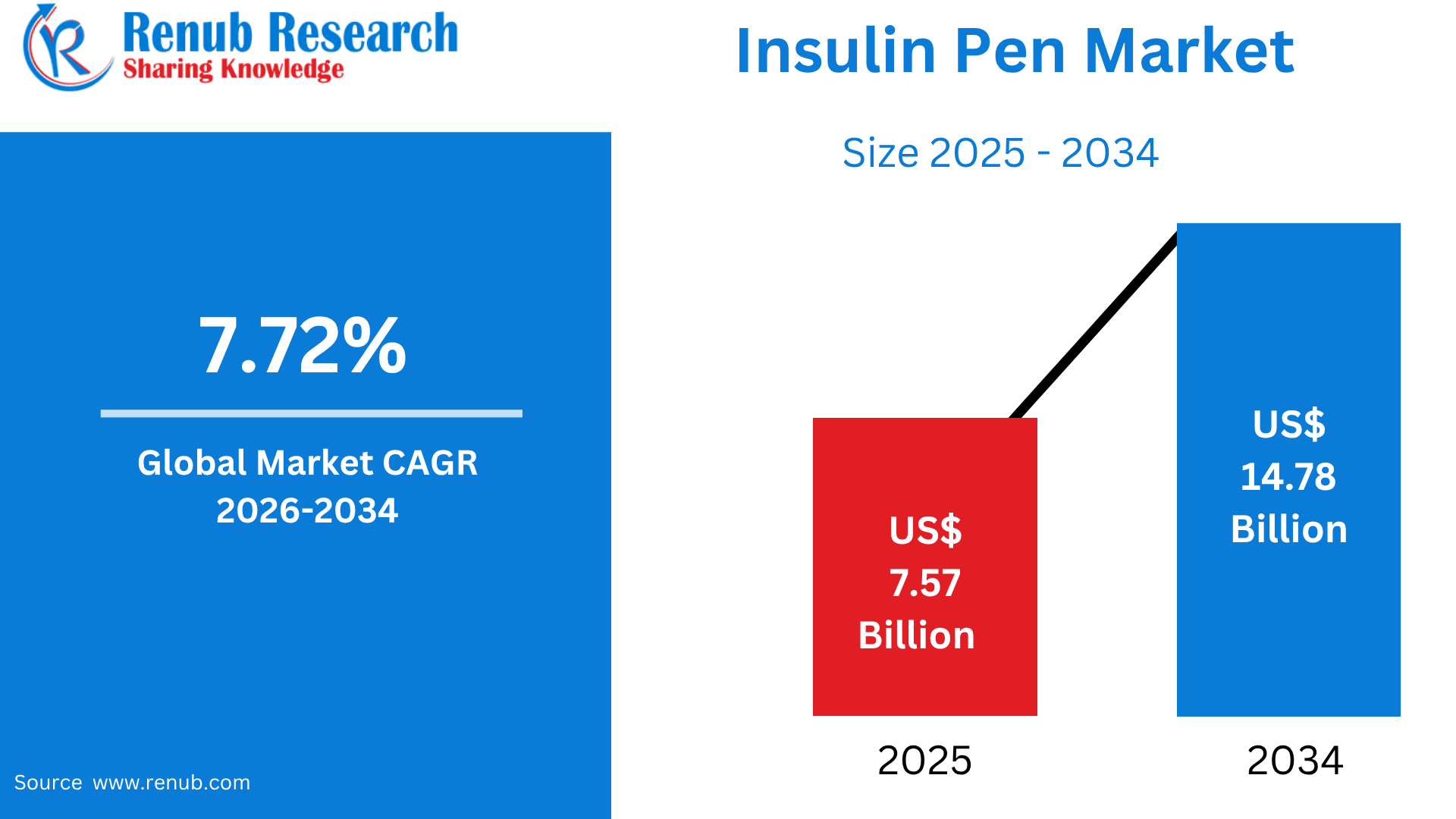
Insulin pen market is projected to increase from US$ 7.57 billion in 2025 to US$ 14.78 billion by 2034, registering a CAGR of 7.72% during 2026–2034. Market expansion is primarily supported by the rising global prevalence of diabetes, advancements in insulin delivery technologies, and growing demand for convenient and efficient drug-delivery solutions. Increasing adoption of self-administration devices, improvements in healthcare infrastructure, and greater patient preference for easy-to-use insulin delivery systems are further contributing to market growth. In addition, government initiatives aimed at improving diabetes management and expanding access to treatment are creating favorable opportunities for insulin pen manufacturers.
What is an Insulin Pen and Its Uses & Popularity Worldwide?
An insulin pen is a compact, pen-shaped medical device used to administer insulin to people with diabetes. It contains an insulin cartridge or prefilled insulin reservoir and uses a fine needle to deliver a measured dose through a simple injection mechanism. Insulin pens are available as disposable prefilled pens and reusable pens with replaceable cartridges, offering flexibility for different patient needs. They are primarily used by people with Type 1 and insulin-dependent Type 2 diabetes to administer prescribed insulin doses for blood-glucose management. Compared with traditional syringes and vials, insulin pens can provide greater convenience, portability, dosing accuracy, and ease of self-administration. Their discreet design also makes insulin administration easier outside the home.
Insulin pens have become increasingly popular worldwide as diabetes prevalence rises and patients seek simpler drug-delivery options. Technological developments, including dose-memory functions, smart connectivity, and improved pen designs, are further supporting adoption. Growing healthcare access, increasing awareness of diabetes management, and rising preference for self-injection devices are expected to strengthen the global demand for insulin pens.
Global Prevalence of Diabetes
* North America and Caribbean: 56 million
* Europe: 66 million
* Middle East and North Africa: 85 million
* South and Central America: 35 million
* Africa: 25 million
* South-East Asia: 107 million
* Western Pacific: 215 million
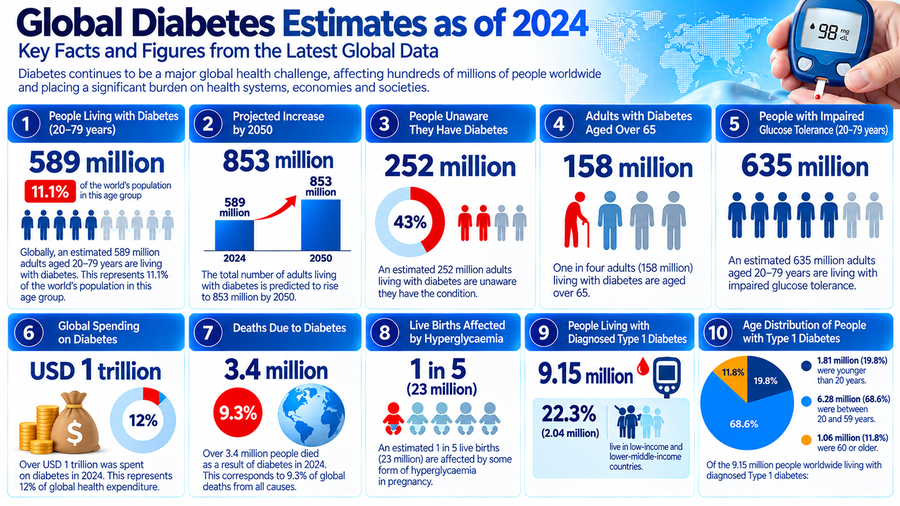
Global diabetes estimates as of 2024
- Globally, an estimated 589 million adults aged 20–79 years are living with diabetes. This represents 11.1% of the world’s population in this age group.
- The total number of adults living with diabetes is predicted to rise to 853 million by 2050.
- An estimated 252 million adults living with diabetes are unaware they have the condition.
- One in four adults (158 million) living with diabetes are aged over 65.
- An estimated 635 million adults aged 20–79 years are living with impaired glucose tolerance.
- Over USD 1 trillion was spent on diabetes in 2024. This represents 12% of global health expenditure.
- Over 3.4 million people died as a result of diabetes in 2024. This corresponds to 9.3% of global deaths from all causes.
- An estimated 1 in 5 live births (23 million) are affected by some form of hyperglycaemia in pregnancy.
- About 9.15 million individuals worldwide are living with diagnosed clinical Type 1 diabetes, with 22.3% (2.04 million) of these living in low-income and lower-middle-income countries. Of this total population of 9.15 million, 1.81 million (19.8%) were younger than 20 years, 6.28 million (68.6%) were between 20 and 59, and 1.06 million (11.8%) were 60 or older.
Growth Drivers of the Insulin Pen Market
Rising Global Diabetes Prevalence
The increasing number of people living with diabetes is a major driver of the insulin pen market. According to the International Diabetes Federation, approximately 589 million adults aged 20–79 years were living with diabetes in 2024, and this figure is projected to reach around 853 million by 2050 if current trends continue. The growing patient population is increasing the need for reliable insulin-delivery devices, particularly among individuals requiring multiple daily injections. Insulin pens offer advantages such as portability, convenient dosing, and ease of self-administration compared with conventional vial-and-syringe methods. The growing prevalence of Type 2 diabetes, along with the continued need for insulin therapy among Type 1 diabetes patients, is expanding the potential user base. In addition, increasing diagnosis rates and improved access to diabetes treatment in emerging economies are encouraging more patients to adopt modern insulin-delivery systems. These trends are expected to sustain demand for insulin pens worldwide.
Growing Preference for Convenient Self-Administration
Increasing patient preference for convenient and user-friendly diabetes-management solutions is accelerating insulin pen adoption. Insulin pens allow patients to administer predetermined doses with relatively simple handling, making them particularly attractive for individuals who require regular insulin injections. Their compact design also enables discreet use at workplaces, schools, during travel, and in other public environments. Technological improvements are further strengthening their appeal. Reusable pens with replaceable cartridges, prefilled disposable pens, dose-memory functions, and connected smart pens are providing patients with greater flexibility and improved treatment management. The growing emphasis on self-care and home-based healthcare is also encouraging patients to manage routine insulin administration independently. In addition, healthcare professionals increasingly consider ease of use and dosing accuracy when selecting insulin-delivery devices. As diabetes management increasingly shifts toward patient-centered care, demand for convenient delivery technologies is expected to increase. This trend creates opportunities for manufacturers to introduce more ergonomic, connected, and personalized insulin pen solutions.
Technological Advancements and Smart Insulin Pens
Technological innovation is creating new growth opportunities for the insulin pen market by improving dosing accuracy, treatment monitoring, and patient adherence. Smart insulin pens can record injection information, including dose amounts and administration times, and some connected systems can transfer this information to smartphone applications or digital diabetes-management platforms. These capabilities can help patients and healthcare professionals monitor insulin use and identify missed or incorrect doses. The broader digital-health market is also supporting integration between insulin-delivery devices, glucose-monitoring systems, and mobile applications. According to the International Diabetes Federation, more than 1.2 million children and adolescents under 19 years were living with Type 1 diabetes in 2024, highlighting the need for effective long-term insulin-management solutions. Manufacturers are therefore investing in connected devices, improved dose mechanisms, finer needles, and ergonomic designs. Such developments can improve the overall user experience while supporting personalized diabetes management, helping technologically advanced insulin pens gain greater acceptance across developed and emerging healthcare markets.
Challenges of the Insulin Pen Market
High Cost and Limited Affordability
The relatively high cost of insulin pens and related supplies can restrict their adoption, particularly in low- and middle-income countries. Patients may need to purchase insulin cartridges or prefilled pens, pen needles, and other supplies regularly, creating recurring treatment expenses. The affordability challenge becomes more significant for individuals who lack comprehensive health insurance or government reimbursement. The World Health Organization estimates that more than 75% of people with diabetes live in low- and middle-income countries, where healthcare resources and household purchasing power can be limited. Although insulin pens can offer convenience and dosing benefits, conventional syringes and vials may remain less expensive in many markets. Differences in reimbursement policies also create unequal access between countries and patient groups. Manufacturers therefore face pressure to develop affordable pen systems while maintaining safety, reliability, and usability. Expanding insurance coverage, government procurement programs, local manufacturing, and lower-cost reusable pen models could help reduce this barrier and improve accessibility.
Patient Training, Adherence, and Device-Related Limitations
Despite their convenience, insulin pens require appropriate patient education to ensure correct dosing, injection technique, storage, needle handling, and device maintenance. Incorrect use can result in under-dosing or over-dosing, potentially affecting blood-glucose control. This challenge is particularly relevant among elderly patients, children, and individuals with limited dexterity, vision difficulties, or low health literacy. According to the International Diabetes Federation, approximately 589 million adults were living with diabetes globally in 2024, meaning healthcare systems must support a very large and diverse population with different levels of treatment knowledge. Smart and connected pens can introduce additional barriers, including higher costs, battery or connectivity requirements, and the need for familiarity with digital applications. Product compatibility can also be an issue because pens may be designed for specific insulin cartridges or formulations. Manufacturers and healthcare providers therefore need to emphasize patient training, intuitive device design, clear instructions, and reliable technical support to improve adherence and ensure safe long-term use.
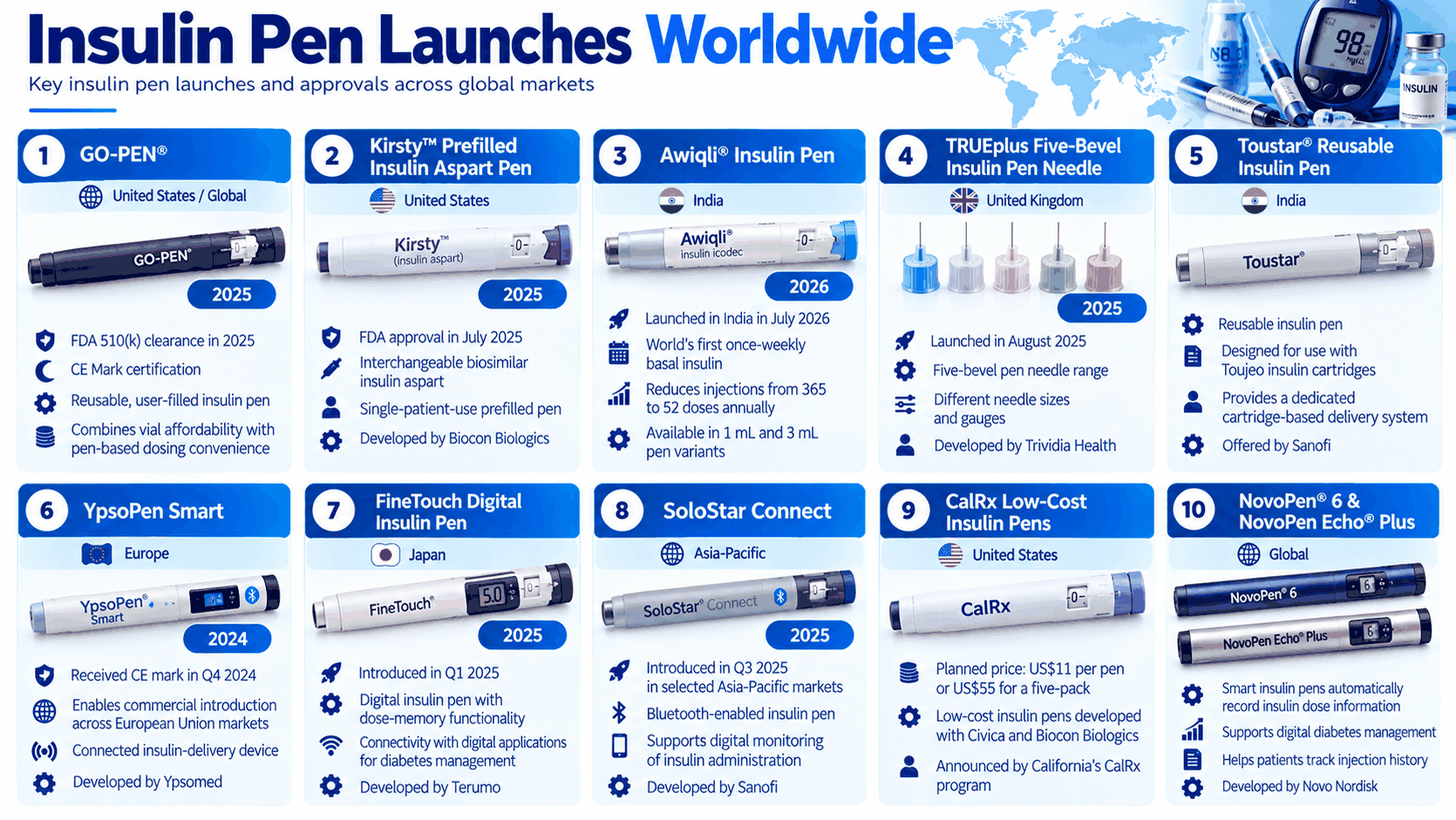
Insulin Pen Launches Worldwide
- GO-PEN® – United States/Global: GO-PEN® received FDA 510(k) clearance in 2025 and later obtained CE Mark certification as a reusable, user-filled insulin pen designed to combine vial affordability with pen-based dosing convenience.
- Kirsty™ Prefilled Insulin Aspart Pen – United States: Biocon Biologics received FDA approval in July 2025 for Kirsty™, an interchangeable biosimilar insulin aspart available as a single-patient-use prefilled pen.
- Awiqli® Insulin Pen – India: Novo Nordisk launched Awiqli (insulin icodec) in India in July 2026 as the world’s first once-weekly basal insulin, reducing injection frequency from 365 to 52 doses annually. It is available in 1 mL and 3 mL pen variants.
- TRUEplus Five-Bevel Insulin Pen Needle – United Kingdom: Trividia Health launched its TRUEplus five-bevel pen needle range in August 2025, offering different needle sizes and gauges for insulin pen users.
- Toustar® Reusable Insulin Pen – India: Sanofi offers Toustar, a reusable insulin pen designed specifically for use with Toujeo insulin cartridges, providing patients with a dedicated cartridge-based delivery system.
- YpsoPen Smart – Europe: Ypsomed received the CE mark for YpsoPen Smart in Q4 2024, enabling its commercial introduction across European Union markets as a connected insulin-delivery device.
- FineTouch Digital Insulin Pen – Japan: Terumo introduced the FineTouch digital insulin pen in Q1 2025, featuring dose-memory functionality and connectivity with digital applications for diabetes management.
- SoloStar Connect – Asia-Pacific: Sanofi introduced SoloStar Connect, a Bluetooth-enabled insulin pen, in selected Asia-Pacific markets in Q3 2025, supporting digital monitoring of insulin administration.
- CalRx Low-Cost Insulin Pens – United States: California’s CalRx program announced low-cost insulin pens developed with Civica and Biocon Biologics, with a planned recommended price of US$11 per pen or US$55 for a five-pack.
- NovoPen® 6 & NovoPen Echo® Plus – Global: Novo Nordisk’s smart insulin pens automatically record insulin dose information, supporting digital diabetes management and helping patients track injection history.
Cost Efficiency and Sustainability in Reusable Insulin Pen
The reusable insulin pen market is gaining momentum due to its cost-saving potential, durability, and reduced environmental impact. These devices are designed for long-term use, with patients replacing only the insulin cartridge while retaining the pen mechanism. This feature can reduce recurring device-related expenses for individuals requiring regular insulin injections. Reusable pens are particularly attractive in healthcare systems that emphasize treatment affordability and cost optimization. Their longer lifespan can also help reduce the volume of medical waste generated compared with single-use devices. The International Diabetes Federation highlights the importance of affordable insulin-delivery solutions. The growing focus on sustainable healthcare products is further supporting interest in reusable systems. In emerging markets, where healthcare affordability remains an important consideration, reusable insulin pens can provide a practical alternative. Improvements in pen durability, dosing accuracy, and user-friendly designs are expected to strengthen adoption.
Convenience and Ease of Use
Disposable insulin pens are witnessing increasing adoption because they offer simplicity, portability, and convenience. These prefilled devices are discarded after the insulin supply is exhausted, eliminating the need for cartridge replacement and reducing routine device maintenance. This makes them particularly suitable for elderly patients, first-time insulin users, and individuals seeking a straightforward injection experience. Disposable pens can also support accurate dose administration and hygienic handling when used according to instructions. Their compact design allows patients to carry them easily, supporting insulin administration during work, travel, and daily activities. The strong healthcare infrastructure and reimbursement systems in developed economies further facilitate access to disposable insulin pens. However, higher recurring costs and increased medical waste remain important limitations. As diabetes prevalence continues to increase globally, manufacturers are focusing on improved ergonomics, finer needles, dose-selection mechanisms, and easier handling. These innovations, combined with patient preference for convenience, are expected to support continued growth in the disposable insulin pen segment.
Expanding Type 2 Diabetes Patient Base
Type 2 diabetes insulin pen market represents a significant segment because of the large and growing population affected by Type 2 diabetes. The International Diabetes Federation estimates that more than 90% of people with diabetes have Type 2 diabetes, creating a substantial potential patient base for insulin-delivery devices. As the disease progresses, some patients who initially manage their condition through lifestyle changes or oral medications may eventually require insulin therapy. Insulin pens provide these patients with a convenient method of administering prescribed insulin doses and can be easier to handle than conventional vial-and-syringe systems. Growing awareness of effective glucose management and the importance of treatment adherence is encouraging healthcare professionals to consider user-friendly delivery devices. The increasing prevalence of obesity and aging populations is also contributing to the global Type 2 diabetes burden. Manufacturers are therefore developing pens with simplified dose selection, improved ergonomics, and digital features. Greater diabetes screening, treatment access, and patient education are expected to continue supporting demand for insulin pens among Type 2 diabetes patients.
Convenient Access to Diabetes-Management Products
Retail pharmacies remain an important distribution channel for insulin pens because they provide convenient access to diabetes-management products and professional support. Pharmacies are widely distributed across urban and semi-urban locations, enabling patients to obtain insulin pens, cartridges, needles, and related supplies closer to home. Pharmacists can also provide guidance on product handling, storage, needle replacement, and general device use, subject to local regulations and professional scope. The growing number of people requiring long-term diabetes treatment is increasing demand for easily accessible distribution channels. According to the International Diabetes Federation, approximately 252 million adults with diabetes were estimated to be undiagnosed in 2024, demonstrating the continuing need for improved diabetes-care access and awareness. Pharmaceutical manufacturers are also strengthening relationships with pharmacy networks to improve product availability and patient reach. In countries where pharmacies function as important points of primary healthcare, they can play an additional role in educating patients about modern insulin-delivery technologies. Continued expansion of retail pharmacy networks is therefore expected to support insulin pen distribution worldwide.
Digital Accessibility and Convenience for Insulin Pen
The e-commerce insulin pen market is expanding alongside the broader digitalization of healthcare and changing consumer purchasing habits. Online platforms provide patients with convenient access to diabetes-management products and enable home delivery, which can be particularly useful for individuals with mobility limitations or those living far from major healthcare centers. Growth in digital payments, improved logistics infrastructure, and increasing consumer familiarity with online healthcare services are supporting this distribution channel. The COVID-19 pandemic also accelerated consumer adoption of online purchasing for various healthcare products, contributing to broader acceptance of digital healthcare services. However, insulin and related prescription products remain subject to country-specific regulations, prescription requirements, storage conditions, and cold-chain considerations, which can influence online availability. E-commerce platforms are increasingly focusing on secure delivery, product authenticity, and reliable inventory management. As digital health ecosystems continue to develop, online pharmacies and authorized healthcare platforms are expected to become increasingly important channels for insulin pen distribution, particularly in markets with strong internet penetration and established home-delivery infrastructure.
Advanced Healthcare Infrastructure and Smart Pen Adoption in the United States
United States insulin pen market is well established, supported by advanced healthcare infrastructure, a large diabetes population, high treatment awareness, and broad access to modern drug-delivery technologies. According to the International Diabetes Federation, around 38.4 million adults in the U.S. were living with diabetes in 2024, creating substantial demand for insulin-delivery devices. Insulin pens are increasingly preferred because they offer convenient administration, portability, and accurate dose selection compared with conventional vial-and-syringe systems. Insurance coverage and reimbursement programs also play an important role in improving access. In addition, the U.S. is a major market for smart insulin pens that can record doses and connect with digital diabetes-management platforms. Technological innovation and strong pharmaceutical and medical-device R&D further support market development. In May 2025, GO-Pen ApS announced FDA 510(k) clearance for its GO-PEN® user-filled insulin pen, supporting its planned entry into the U.S. market and potentially expanding access to lower-cost insulin-delivery technology.
NHS Support and Growing Demand for User-Friendly Devices in the United Kingdom
United Kingdom insulin pen market benefits from the country’s established healthcare infrastructure and the significant role of the National Health Service (NHS) in diabetes management. The rising prevalence of diabetes and increasing emphasis on effective glucose control are supporting demand for insulin-delivery devices. According to the International Diabetes Federation, approximately 3.8 million adults aged 20–79 in the UK were living with diabetes in 2024. Insulin pens are widely valued for their ease of use, portability, and dosing convenience, making them suitable for patients requiring regular insulin administration. Healthcare professionals also provide guidance on appropriate device selection and injection techniques, supporting patient confidence and adherence. Product innovation is creating additional opportunities, particularly through improved pen needles and more ergonomic designs. In August 2025, Trividia Health launched its TRUEplus five-bevel insulin pen needle product line in the UK, offering healthcare providers multiple needle sizes and gauges designed to support more affordable diabetes care. Despite healthcare budget pressures, established medical infrastructure continues to support market stability.
Rising Diabetes Burden and Increasing Demand for Affordable Delivery in India
India represents a high-potential market for insulin pens because of its large diabetes population, growing healthcare awareness, and increasing demand for convenient self-injection devices. The International Diabetes Federation estimates that approximately 89.8 million adults in India were living with diabetes in 2024, making the country one of the world’s largest diabetes populations. Urban consumers increasingly favor insulin pens because of their portability, ease of administration, and dose-selection convenience. Improvements in private healthcare infrastructure, expanding diabetes clinics, and greater patient education are also supporting adoption. However, affordability remains a significant consideration, particularly for lower-income and rural populations where access to advanced medical devices can be limited. Local manufacturing and competitively priced insulin-delivery products could help address this challenge. In July 2025, Biocon Biologics announced U.S. FDA approval of Kirsty™ (insulin aspart-xjhz), 100 units/mL, an interchangeable biosimilar to NovoLog® for improving glycemic control in adults and pediatric patients with diabetes. Wider availability of insulin therapies can support demand for associated delivery devices, including insulin pens.
Saudi Arabia High Diabetes Prevalence and Healthcare Modernization
Saudi Arabia’s insulin pen market is supported by a high diabetes burden, expanding healthcare infrastructure, and increasing adoption of modern diabetes-management technologies. The International Diabetes Federation estimates that approximately 2.4 million adults aged 20–79 in Saudi Arabia were living with diabetes in 2024, creating significant demand for insulin and delivery devices. Patients increasingly value insulin pens because of their compact design, ease of use, portability, and ability to support accurate dose administration. Government investment in healthcare modernization and broader insurance coverage is improving access to advanced diabetes treatments. Growing awareness of blood-glucose management and preventive healthcare is also encouraging patients to adopt more convenient treatment options. Domestic pharmaceutical manufacturing is developing alongside healthcare infrastructure. In February 2025, construction of an insulin manufacturing plant by Sudair Pharmaceutical Co. (Sudair Pharma) in Sudair Industrial City was inaugurated, reflecting Saudi Arabia’s efforts to strengthen local pharmaceutical production. Continued investment in healthcare capacity, diabetes management, and domestic pharmaceutical manufacturing is expected to create favorable conditions for the country’s insulin pen market.
Insulin Pen Market Segments
Product
- Disposable Insulin Pen
- Reusable Insulin Pen
Disease Types
- Type 1 Diabetes
- Type 2 Diabetes
Distribution Channels
- Hospitals
- Homecare Settings
- Others
Countries
North America
- United States
- Canada
Europe
- France
- Germany
- Italy
- Spain
- United Kingdom
- Belgium
- Netherlands
- Turkey
Asia Pacific
- China
- Japan
- India
- Australia
- South Korea
- Thailand
- Malaysia
- Indonesia
- New Zealand
Latin America
- Brazil
- Mexico
- Argentina
Middle East & Africa
- South Africa
- Saudi Arabia
- United Arab Emirates
All companies have been covered with 5 Viewpoints
- Overviews
- Key Person
- Recent Developments
- SWOT Analysis
- Revenue Analysis
Key Players Analysis
- B. Braun Melsungen AG
- Eli Lilly and Company
- Becton, Dickinson(BD)
- Novo Nordisk A/S
- Ypsomed AG
- Terumo Corporation
- Sanofi
- Julphar
Report Details:
| Report Features | Details |
| Base Year |
2025 |
| Historical Period |
2022 - 2025 |
| Forecast Period |
2026 - 2034 |
| Market |
US$ Billion |
| Segment Covered |
By Products, By Disease Types, By Distribution Channels and By Country |
| Countries Covered |
|
| Companies Covered |
|
| Customization Scope |
20% Free Customization |
| Post-Sale Analyst Support |
1 Year (52 Weeks) |
| Delivery Format |
PDF and Excel through Email (We can also provide the editable version of the report in PPT/Word format on request) |
Customization Services available
- Analysis of Market Size and Its Segments
- More Company Profiles (Upto 10 without any additional cost):
- Additional Countries (Other than mentioned Countries):
- Region/Country Specific Reports:
- Market Entry Strategy:
- Region-Specific Market Dynamics:
- Regional Market Share Analysis:
- Trade Analysis:
- Production Insights:
- Others Customized Requests:
For more information contact our analysts.
Need More Assistance?
- Talk to our analysts to get more precious information on the current market trends.
- Include more countries and segments and customize the report based on the final requirement.
- Get a competitive advantage in your industry by knowing the report findings and making a positive impact on your revenues and operations.
- Our analysts are always ready to provide more help and pertinent information if you need any additional assistance.