Potato Chips Market Size, Share, Report by Product Type, Distribution Channel, Countries and Companies Analysis 2026-2034
Buy NowPotato Chips Market Size & Trends
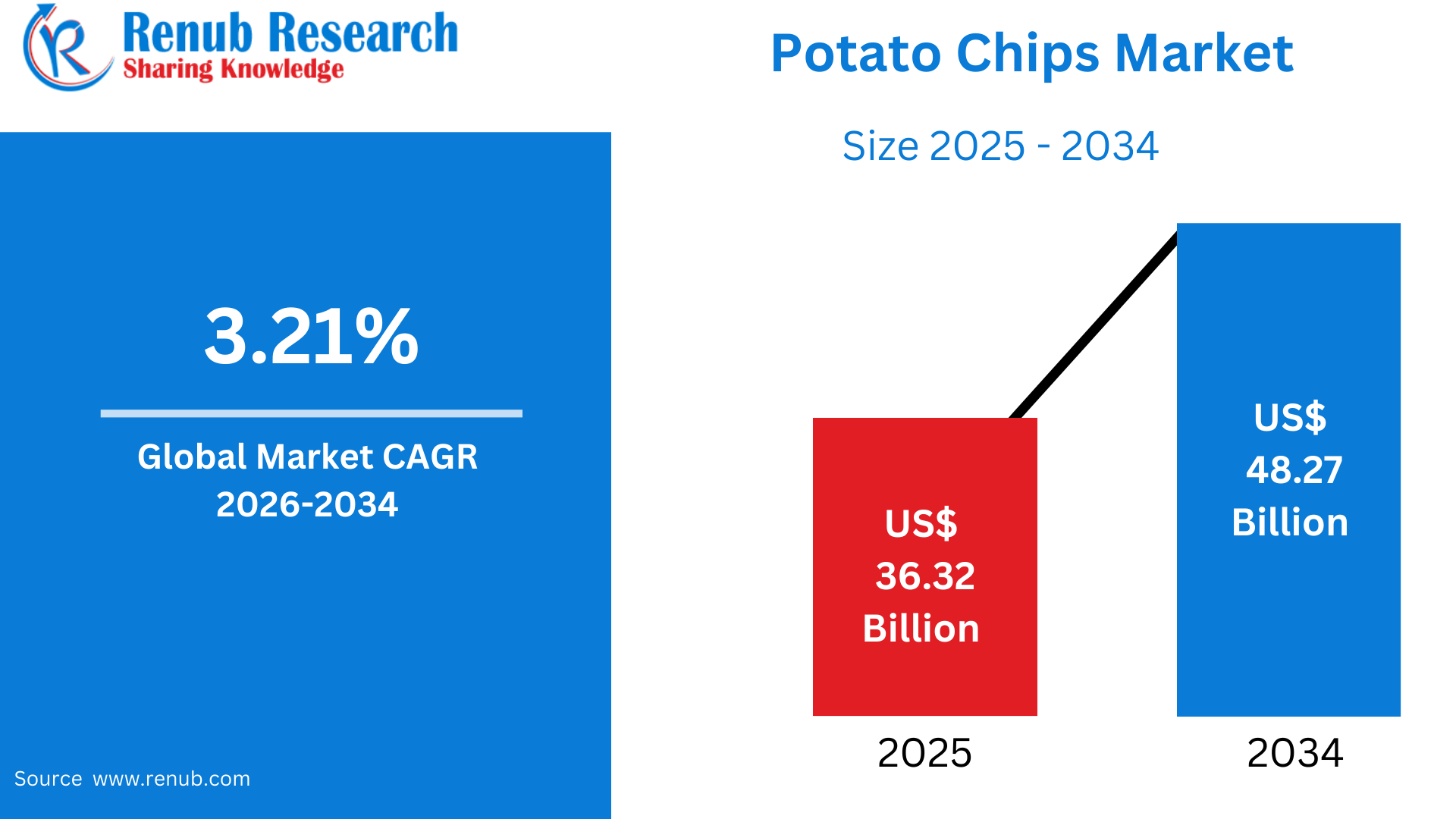
The global potato chips market is anticipated to experience consistent growth, increasing from US$ 36.32 Billion in 2025 to US$ 48.27 Billion by 2034, registering a CAGR of 3.21% during the forecast period from 2026 to 2034. Market expansion is primarily supported by the rising demand for convenient snack options, rapid urbanization, and increasing consumption of ready-to-eat food products. Furthermore, continuous product innovation, including the introduction of new flavors, healthier formulations, and premium offerings, along with the expansion of retail and e-commerce distribution channels, is expected to sustain the market’s long-term growth.
Potato Chips and Their Global Demand
Potato chips are thinly sliced potatoes that are fried or baked until crispy and seasoned with salt or a wide range of flavorings. They remain one of the most widely consumed savory snacks worldwide due to their crunchy texture, convenience, and extensive flavor options. The market offers a diverse selection of products, including classic salted chips, ridged varieties, kettle-cooked chips, baked alternatives, and flavored options such as cheese, barbecue, sour cream, spicy seasonings, and region-specific tastes. Technological advancements in manufacturing and packaging have improved product quality, extended shelf life, and enhanced flavor retention, making potato chips readily accessible across retail stores and foodservice establishments.
The worldwide demand for potato chips continues to grow owing to their affordability, widespread availability, and adaptability to regional taste preferences. They are enjoyed by consumers across all age groups and are commonly consumed during leisure activities, social gatherings, and as convenient on-the-go snacks. Increasing urbanization, higher disposable incomes, and the expansion of organized retail networks have further strengthened global consumption. In addition, manufacturers are continuously introducing innovative flavors, healthier alternatives such as baked and reduced-fat chips, and premium product ranges to meet evolving consumer preferences. These developments continue to reinforce the position of potato chips as one of the leading snack categories in the global food industry.
Top Potato Producing Country in 2024
- China – 94.8 million metric tons
- India – 58.1 million metric tons
- Ukraine – 21.3 million metric tons
- United States – 19.3 million metric tons
- Russia – 19.0 million metric tons
- Germany – 10.6 million metric tons
- Bangladesh – 10.0 million metric tons
- France – 8.9 million metric tons
- Poland – 8.3 million metric tons
- Netherlands – 7.9 million metric tons
Market Catalysts
Increasing Demand for Convenience and Ready-to-Eat Snacks
In November 2025, Red Rock Deli®, PepsiCo Australia’s premium gourmet snack brand, entered the Indian market with a range of globally inspired potato chips tailored to local taste preferences. Manufactured in India, the product portfolio includes kettle-cooked, baked, and popped chips prepared using sunflower oil and advanced processing technologies. The launch highlights the growing consumer demand for premium, innovative, and convenient snacking options. The growing preference for convenient and ready-to-eat snack foods is a key driver of the global potato chips market. Rapid urbanization, increasingly busy lifestyles, and longer working hours have encouraged consumers to incorporate packaged snacks into their daily routines. Potato chips offer convenience as they require no preparation, are easy to store, and are widely available across multiple retail channels, making them an ideal choice for on-the-go consumption. Their long shelf life and portability further increase their appeal among students, working professionals, and travelers. In addition, potato chips are frequently consumed during social gatherings, entertainment occasions, and casual dining, contributing to higher repeat purchases. As snacking increasingly replaces traditional meals in several regions, potato chips continue to benefit from their affordability, familiarity, and convenience.
Flavor Innovation and Product Diversification
In December 2025, Lay’s announced the launch of two new additions to its Baked product range—Loaded Baked Potato and Roasted Garlic & Herbs. Prepared with olive oil, these products reinforce the company’s focus on offering healthier snack alternatives while maintaining appealing taste and flavor variety. Continuous flavor innovation and product diversification are significantly contributing to the growth of the potato chips market by attracting new consumers and encouraging repeat purchases. Manufacturers are consistently introducing flavors inspired by regional cuisines, international food trends, and unique spice blends to differentiate their products and maintain consumer interest. A wide variety of taste profiles, ranging from spicy and savory to tangy and sweet, enables brands to cater to diverse consumer preferences. Seasonal and limited-edition flavors further generate excitement and stimulate short-term sales. Beyond flavor innovation, manufacturers are expanding their product portfolios with baked, kettle-cooked, ridged, and thick-cut chips to appeal to different consumer segments. The introduction of healthier alternatives, including reduced-fat, low-sodium, organic, and clean-label products, is also attracting health-conscious consumers and broadening market opportunities.
Expansion of Retail and E-commerce Distribution Channels
In October 2025, WellBe Foods, a leading direct-to-consumer brand under the Nimida Group, introduced a new range of vacuum-cooked snacks along with 14 additional products targeting health-conscious consumers. Utilizing vacuum-cooking technology to preserve flavor and nutrients, the launch reflects the industry’s increasing emphasis on healthier snack innovations and premium product offerings. The continued expansion of organized retail and e-commerce platforms is playing a significant role in supporting the growth of the potato chips market. Supermarkets, hypermarkets, convenience stores, and specialty snack retailers provide extensive product visibility and ensure widespread availability across both developed and emerging markets. Attractive packaging, strategic shelf placement, and point-of-sale promotions further encourage impulse purchases in physical retail outlets. At the same time, online grocery platforms and e-commerce websites provide consumers with easy access to a wide selection of brands, flavors, and packaging formats while offering the convenience of home delivery. The rapid growth of online shopping, particularly in urban areas, has strengthened the accessibility of snack products through subscription services and direct-to-consumer sales. Moreover, digital marketing campaigns, influencer collaborations, and targeted social media promotions have enhanced brand awareness and consumer engagement, supporting overall market growth.
Market Restraints
Health Concerns and Nutritional Scrutiny
Growing health awareness remains one of the primary challenges facing the global potato chips market. Traditional potato chips are often perceived as being high in sodium, fat, and calories, leading many health-conscious consumers to reduce their consumption of fried snack products. Rising concerns regarding obesity, cardiovascular diseases, hypertension, and other lifestyle-related health conditions have further influenced purchasing behavior in favor of healthier alternatives.
Additionally, governments and public health organizations across several countries are promoting balanced dietary habits through nutritional awareness campaigns, front-of-pack labeling regulations, and restrictions on the marketing of unhealthy food products. Although manufacturers are responding by introducing baked, reduced-fat, and lower-sodium variants, changing long-established consumer perceptions remains a significant challenge. Maintaining the desired taste, texture, and product quality while improving nutritional value without substantially increasing production costs continues to be a critical concern for industry participants.
Raw Material Price Volatility and Supply Chain Risks
Fluctuations in the prices of key raw materials represent another major challenge for the potato chips market. Production costs are heavily influenced by the prices of potatoes, edible oils, packaging materials, and transportation services. Factors such as adverse weather conditions, crop diseases, seasonal variations, and changing agricultural yields can significantly impact potato availability and pricing.
Similarly, volatility in edible oil prices and rising packaging and logistics expenses place additional pressure on manufacturers’ operating margins. These cost increases often force producers to either absorb higher expenses or pass them on to consumers through price increases, potentially affecting demand, particularly in price-sensitive markets. Small and medium-sized manufacturers are especially vulnerable to supply disruptions and cost fluctuations. Consequently, effective procurement strategies, supply chain optimization, inventory management, and long-term sourcing agreements have become increasingly important for maintaining profitability and ensuring consistent product quality and availability.
Potato Chips Launches Worldwide
- May 2024 – Tapatío × Chipoys Mexican Potato Chips (United States)
Chipoys partnered with Tapatío Foods to launch Mexican-style potato chips flavored with Tapatío’s signature Salsa Picante hot sauce, targeting consumers seeking bold and spicy snack experiences. - February 2025 – Hot Chip Spicy Chilli Snacks (United Kingdom)
Czech snack brand Hot Chip entered the UK market by showcasing its premium spicy potato chip range at the International Food & Drink Event (IFE) in London. - April 21, 2025 – Lay’s “Do Us A Flavor” Finalist Chips (United States)
Lay’s launched three limited-edition fan-inspired potato chip flavors: Bacon Grilled Cheese, Valentina & Lime, and Wavy Korean-Style Fried Chicken as part of the revived “Do Us A Flavor” campaign. - June 2025 – Chipoys × Tapatío Salsa Picante Potato Chips (United States)
Chipoys officially introduced its new potato chip range featuring Tapatío Salsa Picante seasoning following its licensing partnership with Tapatío Foods. - September 2025 – Pringles Ghost Pepper Ranch (United States)
Pringles launched the limited-edition Ghost Pepper Ranch potato crisps, combining creamy ranch seasoning with ghost pepper for consumers seeking spicy flavor innovations. (Allrecipes) - October 9, 2025 – Lay’s Global Brand Refresh (Global)
PepsiCo unveiled the largest global refresh in Lay’s history, introducing redesigned packaging and reformulated products made without artificial flavors and colors in the U.S., reinforcing its premium potato chip positioning. - November 26, 2025 – Red Rock Deli Gourmet Chips (India)
PepsiCo India launched Red Rock Deli® gourmet potato chips featuring kettle-cooked, baked, and popped varieties with globally inspired flavors manufactured locally for Indian consumers. - December 2025 (announced) / January 5, 2026 (retail launch) – Lay’s Baked Loaded Baked Potato & Roasted Garlic & Herbs (United States)
Lay’s expanded its Baked portfolio with Loaded Baked Potato and Roasted Garlic & Herbs, made with olive oil and containing 50% less fat than traditional potato chips.
Product Type Insights
Plain Potato Chips
Plain potato chips represent one of the most established segments of the global potato chips market. Made using simple ingredients and lightly seasoned with salt, these chips continue to enjoy widespread consumer acceptance due to their authentic potato flavor and balanced taste profile. Their versatility allows them to be consumed on their own or paired with dips and other food items, making them popular across all age groups. Plain potato chips are often the preferred choice for first-time consumers and remain a staple snack in both household and foodservice settings. Their straightforward production process and broad consumer appeal enable manufacturers to produce them efficiently at scale. Despite the increasing popularity of flavored varieties, plain potato chips continue to account for a significant share of market revenue owing to their consistent demand and timeless appeal.
Flavored Potato Chips
Flavored potato chips are among the fastest-growing segments of the market, driven by evolving consumer preferences for innovative and diverse taste experiences. Manufacturers continue to expand their product portfolios by introducing flavors inspired by global cuisines, regional spices, and emerging food trends. Popular options include barbecue, cheese, sour cream, chili, herbs, and a variety of localized seasonings that cater to different regional preferences. Premium flavored products generally command higher price points and offer stronger profit margins for manufacturers. The segment is particularly popular among younger consumers seeking unique and adventurous snacking experiences, making flavor innovation a key strategy for market growth and brand differentiation.
Distribution Channel Insights
Online Stores Market for Potato Chips
Online retail has become an increasingly important distribution channel for potato chips, supported by the rapid growth of e-commerce and changing consumer shopping habits. Digital platforms offer consumers access to a wide variety of brands, flavors, pack sizes, and promotional offers that may not be available through traditional retail outlets. The convenience of home delivery, competitive pricing, subscription services, and the ability to compare products easily have encouraged greater online purchases. In addition, e-commerce enables manufacturers to strengthen direct-to-consumer relationships through personalized marketing, targeted promotions, and customer engagement, further supporting the growth of online sales.
Convenience Stores Market for Potato Chips
Convenience stores remain a vital distribution channel for potato chips due to their ability to generate impulse purchases and provide quick access to snack products. Strategically positioned displays near checkout counters encourage spontaneous buying, particularly among consumers seeking ready-to-eat snacks during daily commutes or travel. Single-serve packs and smaller packaging formats perform particularly well within this retail channel. Extended operating hours, widespread accessibility, and locations near residential neighborhoods, workplaces, transportation hubs, and fuel stations further strengthen the importance of convenience stores, especially in urban markets where consumers prioritize speed and convenience.
Specialty Stores Market for Potato Chips
Specialty stores serve a niche segment of the potato chips market by offering premium, gourmet, and artisanal products targeted at consumers seeking distinctive snacking experiences. These retailers emphasize superior product quality, innovative flavors, premium ingredients, and attractive packaging to differentiate their offerings from mass-market brands. Specialty stores also provide a wide selection of organic, health-focused, clean-label, and handcrafted potato chips that appeal to wellness-conscious and premium consumers. Although sales volumes are generally lower than those of supermarkets or convenience stores, higher product margins contribute to strong profitability. As demand for premium and specialty snack products continues to grow, specialty stores play an increasingly important role in enhancing the value perception of potato chips within the global market.
Country Insights
United States
The United States represents one of the largest and most mature potato chips markets globally, supported by high per capita snack consumption and the widespread popularity of potato chips across all age groups. Potato chips have become an integral part of American eating habits and are commonly consumed as everyday snacks, alongside meals, and during social gatherings. The market offers an extensive product portfolio, including classic salted chips, flavored varieties, kettle-cooked chips, baked products, and reduced-fat alternatives. Continuous product innovation remains a defining characteristic of the industry, with manufacturers regularly introducing limited-edition flavors, regional taste profiles, and premium offerings to maintain consumer interest. At the same time, rising health awareness has encouraged demand for products made with non-GMO ingredients, healthier cooking oils, and clean-label formulations. In June 2025, Tapatío Foods partnered with Chipoys to introduce a new range of Mexican-style potato chips featuring Tapatío’s signature Salsa Picante hot sauce, highlighting the growing popularity of bold ethnic flavors within the U.S. snack market.
United Kingdom
Known locally as the crisps market, the United Kingdom potato chips industry is characterized by strong consumer demand for innovative flavors and premium-quality products. British consumers continue to show increasing interest in spicy, regionally inspired, and internationally influenced flavor profiles, encouraging manufacturers to expand their product offerings through continuous innovation. Premium crisps produced using high-quality potato varieties and artisanal processing methods have gained significant popularity, while healthier alternatives such as baked, reduced-fat, and low-salt products continue to experience rising demand as consumers become more health conscious. In February 2025, the globally recognized Czech snack brand Hot Chip entered the UK market by participating in the International Food & Drink Event (IFE) in London. Known for its spicy chilli snack products and viral Hot Chilli Challenges, the company’s expansion reflects the increasing consumer appetite for bold and differentiated flavor experiences in the United Kingdom.
India
India’s potato chips market is witnessing robust growth, driven by rapid urbanization, rising disposable incomes, expanding organized retail, and a young population with evolving snacking preferences. Potato chips have become one of the country’s most popular packaged snack categories due to their affordability, convenience, and wide availability across urban and semi-urban markets. Consumer demand is particularly strong for products featuring localized flavors such as masala, chilli, mint, and mixed spice seasonings, reflecting regional taste preferences. Manufacturers continue to focus on small, affordable pack sizes to attract price-sensitive consumers while expanding premium offerings targeted at urban households. The rapid growth of supermarkets, convenience stores, and e-commerce platforms has further strengthened product accessibility across the country. In November 2025, PepsiCo India launched its premium Red Rock Deli potato chips brand in the Indian market. The product portfolio includes kettle-cooked, baked, and popped chips featuring globally inspired flavors adapted to Indian taste preferences, reflecting the growing demand for premium and innovative snack products among young consumers.
Brazil
Brazil’s potato chips market continues to expand as a result of increasing urbanization, the growth of the middle-income population, and rising consumption of packaged snack foods. Potato chips are widely consumed as everyday snacks as well as during social occasions and celebrations. The market comprises both international brands and well-established domestic manufacturers offering products tailored to local consumer preferences. Traditional salted chips remain highly popular, while flavored varieties such as cheese and barbecue continue to gain traction. The ongoing expansion of supermarkets, convenience stores, and modern retail infrastructure has improved product availability throughout the country. Given the relatively high price sensitivity of Brazilian consumers, manufacturers continue to introduce multiple pack sizes and value-oriented pricing strategies to support market penetration. In September 2025, Hero Group, through its subsidiary Hero Brazil, announced the acquisition of Brazilian snack manufacturer Super Saude Nutricional, reinforcing its presence in the country’s expanding packaged snack market.
Saudi Arabia
Saudi Arabia’s potato chips market is supported by a young and growing population, increasing demand for convenient snack foods, and rising disposable incomes. Spicy and bold-flavored potato chips remain particularly popular among consumers, reflecting broader taste preferences across the Middle East. While health awareness continues to increase, demand for indulgent snack products remains strong, encouraging manufacturers to balance traditional flavors with healthier product innovations. The country also benefits from a well-developed domestic potato farming industry supported by advanced agricultural technologies, enabling greater self-sufficiency in raw material production and reducing reliance on imports. Continued investments in local food manufacturing are further strengthening the industry’s production capabilities. In May 2024, Al-Jouf Agricultural Development Company commenced trial production at a new potato processing facility aimed at expanding domestic potato chip manufacturing capacity and reducing dependence on imported products.
Market Segmentations
Product Type
- Plain Chips
- Flavored Chips
Distribution Channel
- Supermarkets and Hypermarkets
- Convenience Stores
- Specialty Stores
- Online Stores
- Others
Countries
North America
- United States
- Canada
Europe
- France
- Germany
- Italy
- Spain
- United Kingdom
- Belgium
- Netherlands
- Turkey
Asia Pacific
- China
- Japan
- India
- South Korea
- Thailand
- Malaysia
- Indonesia
- Australia
- New Zealand
Latin America
- Brazil
- Mexico
- Argentina
Middle East & Africa
- Saudi Arabia
- UAE
- South Africa
All companies have been covered with 5 Viewpoints
- Overviews
- Key Person
- Recent Developments
- SWOT Analysis
- Revenue Analysis
Company Analysis:
- General Mills
- Kellogg’s Company
- The Kraft Heinz Company
- PepsiCo Inc.
- Mondelez International
- Herr Foods Inc.
- Calbee Inc.
- Utz Brands, Inc.
Report Details:
| Report Features | Details |
| Base Year |
2025 |
| Historical Period |
2022 - 2025 |
| Forecast Period |
2026 - 2034 |
| Market |
US$ Billion |
| Segment Covered |
Product Type, Distribution Channel and Countries |
| Countries Covered |
|
| Companies Covered |
|
| Customization Scope |
20% Free Customization |
| Post-Sale Analyst Support |
1 Year (52 Weeks) |
| Delivery Format |
PDF and Excel through Email (We can also provide the editable version of the report in PPT/Word format on request) |
Customization Services available
- Analysis of Market Size and Its Segments
- More Company Profiles (Upto 10 without any additional cost):
- Additional Countries (Other than mentioned Countries):
- Region/Country Specific Reports:
- Market Entry Strategy:
- Region-Specific Market Dynamics:
- Regional Market Share Analysis:
- Trade Analysis:
- Production Insights:
- Others Customized Requests:
For more information contact our analysts.
Need More Assistance?
- Talk to our analysts to get more precious information on the current market trends.
- Include more countries and segments and customize the report based on the final requirement.
- Get a competitive advantage in your industry by knowing the report findings and making a positive impact on your revenues and operations.
- Our analysts are always ready to provide more help and pertinent information if you need any additional assistance.