North America Autoimmune Disease Diagnostics Market Report by Product, Type, Indication, End User, Countries and Companies Analysis 2026-2034
Buy NowNorth America Autoimmune Disease Diagnostics Market Size and Forecast
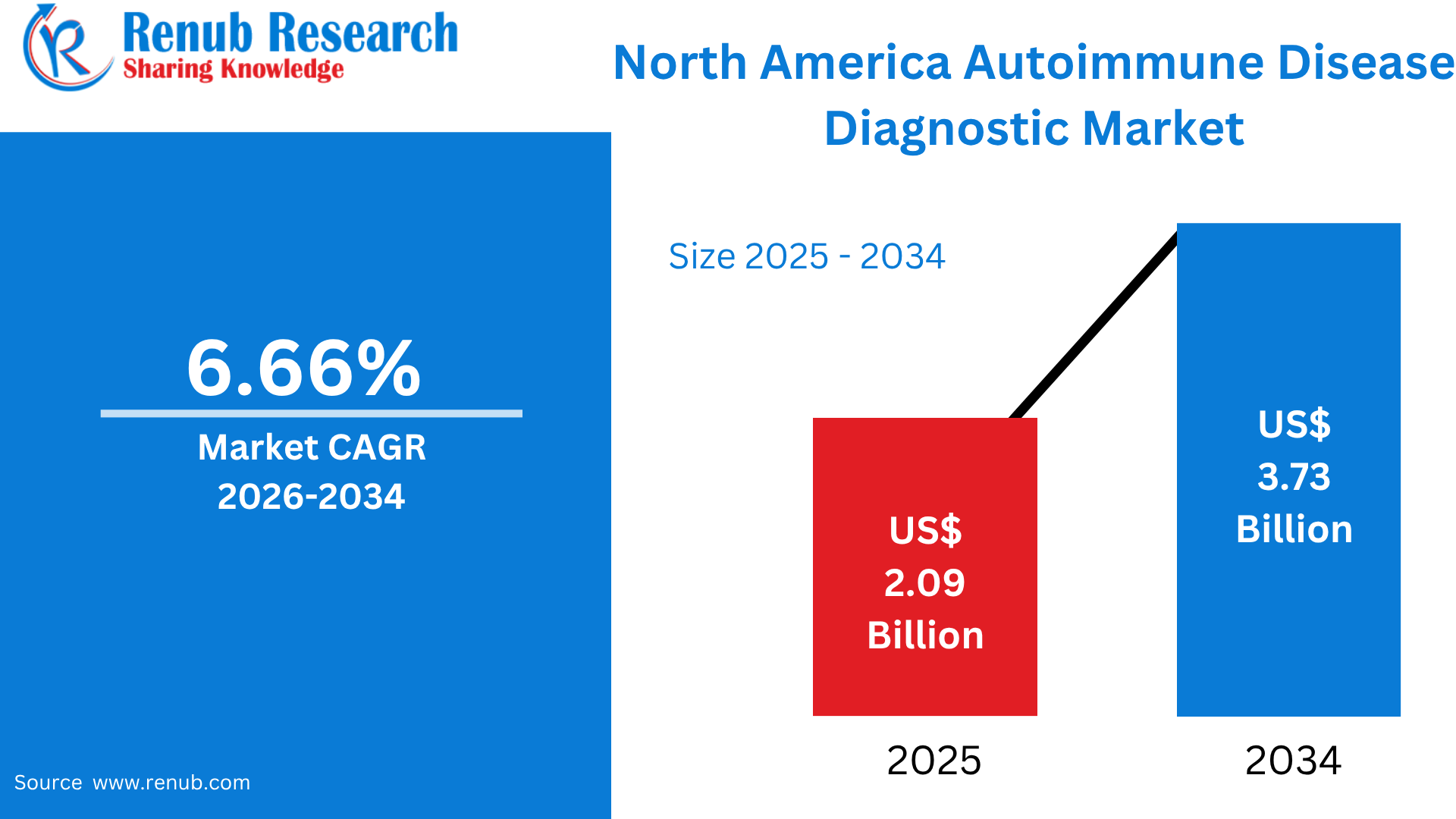
The North America Autoimmune Disease Diagnostics Market is projected to grow from US$ 2.09 billion in 2025 to US$ 3.73 billion by 2034, registering a CAGR of 6.66% during 2026–2034. Market expansion is expected to be driven by the rising prevalence and diagnosis of autoimmune disorders, increasing demand for early and accurate disease detection, and continuous advancements in immunoassays, biomarker-based testing, and molecular diagnostic technologies. The growing adoption of automated and multiplex testing platforms, together with increasing healthcare expenditure and awareness of autoimmune conditions, is further supporting regional market growth.
What Is the Autoimmune Disease Diagnostics Market and Its Uses & Popularity in North America?
The North America Autoimmune Disease Diagnostics Market comprises laboratory tests, immunoassays, molecular diagnostics, biomarker tests, and other technologies used to identify and monitor autoimmune disorders. These diagnostics help detect abnormal immune activity and support the diagnosis of conditions such as rheumatoid arthritis, systemic lupus erythematosus, multiple sclerosis, celiac disease, autoimmune thyroid disorders, and inflammatory bowel disease. Common approaches include antinuclear antibody (ANA) testing, autoantibody panels, inflammatory biomarkers, enzyme-linked immunosorbent assays, immunofluorescence, and molecular testing. Their use is important because autoimmune disorders can produce overlapping symptoms and may require multiple diagnostic investigations before a definitive diagnosis is established. North America represents a major market because of its advanced laboratory infrastructure, high healthcare expenditure, specialist availability, and strong adoption of automated and biomarker-based testing. The NIH estimates that 23.5–50 million Americans live with autoimmune diseases, while a large electronic health record study identified more than 15 million diagnosed cases, equivalent to 4.6% of the U.S. population, across 105 autoimmune diseases.
Growth Driver
Growing Patient Population Increases Demand for Diagnostic Testing
The increasing burden of autoimmune disorders is one of the major factors supporting demand for diagnostic technologies across North America. The U.S. National Institutes of Health estimates that 23.5–50 million Americans are living with autoimmune diseases, which include more than 140 recognized conditions. A 2025 electronic health record analysis covering 105 autoimmune diseases estimated that more than 15.4 million Americans, or 4.6% of the population, had at least one diagnosed autoimmune disease, while 34% of diagnosed patients had more than one autoimmune condition. This substantial disease burden creates recurring demand for screening, confirmatory testing, disease classification, and monitoring. Increasing public and physician awareness is also encouraging patients with persistent or unexplained symptoms to seek specialist evaluation. Since autoimmune disorders can involve multiple organs and frequently overlap clinically, physicians often require combinations of antibody, inflammatory, hematological, and molecular tests. Consequently, the expanding diagnosed population and greater recognition of autoimmune conditions are supporting the utilization of diagnostic laboratories and advanced testing platforms.
Technological Innovation Improves Diagnostic Accuracy and Disease Characterization
Technological advances in immunological and molecular testing are strengthening the North American autoimmune disease diagnostics market. Modern laboratories increasingly use automated immunoassays, multiplex platforms, high-throughput analyzers, molecular techniques, and biomarker panels to identify disease-associated antibodies and other indicators of immune dysfunction. The NIH notes that autoimmune diseases commonly have a prodromal period of asymptomatic autoimmunity, during which autoantibodies and other markers of immune activation may develop before clinically apparent disease. This creates opportunities for diagnostics capable of detecting disease-related biological signals earlier and with greater specificity. Research is also moving toward multi-omic and personalized approaches. In 2026, NIH-funded initiatives included research involving microbiome, immune-system, multi-omic, personalized, and data-driven approaches to autoimmune disease. Such developments are encouraging diagnostic companies to expand biomarker portfolios and improve automation, throughput, and interpretation. The integration of laboratory information systems and advanced analytical technologies is further helping clinicians manage complex autoimmune conditions and monitor disease progression.
Greater Focus on Early Detection and Individualized Patient Management
The expansion of specialized healthcare services and personalized medicine is creating additional opportunities for autoimmune disease diagnostics in North America. Autoimmune disorders are highly heterogeneous, and patients may experience different symptoms, disease trajectories, and responses to treatment. Consequently, physicians increasingly require diagnostic information to differentiate diseases, identify relevant biomarkers, assess disease activity, and guide individualized treatment strategies. The need is particularly important because 63% of patients with diagnosed autoimmune disease were female in a large U.S. electronic-health-record study, and 34% of affected patients had more than one autoimmune disease, demonstrating the complexity of patient management. Advanced rheumatology, immunology, gastroenterology, neurology, and endocrinology services are therefore important users of diagnostic testing. Growing adoption of specialty clinics and integrated laboratory networks can increase access to sophisticated testing and shorten diagnostic pathways. Furthermore, the NIH’s first-wide strategic plan for autoimmune disease research for 2026–2030 emphasizes improving understanding, diagnosis, and treatment of autoimmune diseases. These developments are expected to encourage continued investment in advanced diagnostic technologies.
Key Points on the Rise of Autoimmune Diseases
- More Than 100 Autoimmune Diseases
More than 100 types of autoimmune diseases have been identified, including Sjögren’s disease, systemic lupus erythematosus (lupus), rheumatoid arthritis, and type 1 diabetes. - Large U.S. Patient Population
More than 50 million Americans, equivalent to approximately 8% of the U.S. population, are affected by autoimmune diseases, with available evidence indicating that prevalence is increasing. - Increasing Global Incidence
Epidemiological research cited by the Sjögren’s Foundation reports that the global incidence of autoimmune diseases has increased by approximately 19.1% annually, while rheumatological diseases such as Sjögren’s and lupus have increased by approximately 7.1% annually. - High Risk of Multiple Autoimmune Conditions
Approximately 25% of people who develop one autoimmune disease may develop another, reflecting the overlapping biological pathways involved in autoimmune disorders. - Women Account for Most Cases
Women represent approximately 80% of current autoimmune disease cases. The article highlights the potential role of genes located on the X chromosome in regulating immune responses and influencing autoimmune disease susceptibility. - Genetic Factors Influence Disease Risk
Heredity is an important factor in autoimmune disease development. Among people who were the first in their family to be diagnosed with Sjögren’s, approximately 30–35% reportedly have family members with other autoimmune diseases. - Potential Role of Viral Triggers
Viral infections are being investigated as potential contributors to autoimmune disease. One study involving approximately 3 million people with COVID-19 reported a 13% increased risk of developing Sjögren’s following infection. The Foundation notes that the relationship remains an area of ongoing research. - Sex Hormones May Influence Autoimmunity
The article discusses the potential relationship between sex-hormone regulation and autoimmune disease. Studies cited indicate that lower lifetime estrogen exposure may be associated with increased Sjögren’s risk, although a direct relationship between estrogen and disease activity has not been established. - Growing NIH Research Investment
NIH investment in autoimmune disease research increased from approximately US$800 million to more than US$1 billion in 2022. The number of research grants also increased, with nearly 1,500 new grants awarded between fiscal years 2021 and 2022. - Increasing Support for Sjögren’s Research
The Sjögren’s Foundation reports providing more than US$1.8 million in research grants over the previous five years, supporting projects focused on understanding, diagnosing, and treating Sjögren’s disease and related autoimmune conditions.
Challenge
Overlapping Symptoms Can Delay Definitive Diagnosis
Diagnostic complexity remains a significant challenge for the North American autoimmune disease diagnostics market. More than 140 autoimmune diseases have been identified, and many produce overlapping symptoms such as fatigue, inflammation, joint pain, neurological symptoms, gastrointestinal problems, and skin manifestations. No single laboratory test can reliably diagnose every autoimmune condition, meaning physicians may need to combine clinical assessment with multiple antibody, inflammatory, imaging, and molecular investigations. The NIH has also highlighted the limited availability of strong epidemiological data for autoimmune diseases as a group, reflecting the heterogeneity of these conditions and differences in diagnostic criteria. Some patients may therefore undergo repeated testing or consultations before receiving a definitive diagnosis. False-positive or nonspecific antibody results can further complicate interpretation, particularly when testing is performed without appropriate clinical context. These factors can increase diagnostic costs and healthcare utilization while creating demand for more disease-specific biomarkers. Diagnostic companies consequently face the challenge of developing tests that provide higher specificity, reproducibility, and clinical utility across diverse autoimmune disorders.
Advanced Diagnostic Technologies Can Increase Healthcare Expenditure
The cost and reimbursement environment represents another challenge for autoimmune disease diagnostics in North America. Advanced testing platforms, multiplex biomarker panels, molecular assays, and specialized laboratory investigations can require sophisticated instruments, trained personnel, quality-control systems, and specialized laboratory infrastructure. These requirements can increase testing costs compared with conventional assays. Reimbursement can also differ according to the test, indication, healthcare provider, insurer, and jurisdiction, creating uncertainty for laboratories and diagnostic companies. The complexity of autoimmune disease further contributes to healthcare expenditure because patients may require repeated testing to establish a diagnosis or monitor disease activity. A large U.S. study found that 24% of people with autoimmune disease had two diagnosed autoimmune conditions and 8% had three, illustrating the potential for complex and continuing diagnostic needs. At the same time, broad estimates suggest autoimmune diseases affect 23.5–50 million Americans, creating substantial potential demand but also placing pressure on healthcare systems to deliver cost-effective testing. Balancing advanced diagnostics with affordability and appropriate reimbursement therefore remains an important market consideration.
Autoimmune Disease Diagnostics Product Launches in North America
- February 2025 – AliveDx – MosaiQ AiPlex® CD: AliveDx submitted a 510(k) premarket notification to the U.S. FDA for its MosaiQ AiPlex CD multiplex microarray for celiac disease. The assay combines multiple IgA and IgG markers to support faster and more comprehensive celiac disease evaluation while simplifying laboratory workflows.
- February 2025 – AliveDx – MosaiQ AiPlex® CTDplus: AliveDx received IVDR-CE marking for its MosaiQ AiPlex CTDplus multiplex assay, designed to support diagnosis of systemic autoimmune rheumatic diseases, including rheumatoid arthritis, systemic lupus erythematosus, systemic sclerosis, and Sjögren’s syndrome.
- August 2025 – AliveDx – MosaiQ AiPlex® VAS: AliveDx achieved IVDR-CE marking for its MosaiQ AiPlex Vasculitis assay. The multiplex test supports evaluation of ANCA-associated vasculitis and anti-GBM (Goodpasture’s) disease and is available for clinical use in the European Union and other CE-mark-accepting markets.
- 2025 – AliveDx – MosaiQ Platform: AliveDx continued expanding its MosaiQ automated, high-throughput platform for multiplex autoimmune diagnostics. The platform combines microarray technology with automated workflows to support testing across autoimmune and allergy applications.
- 2025 – AliveDx – MosaiQ Autoimmune Diagnostics Portfolio: The company expanded its autoimmune testing ecosystem with AiPlex CD, CTDplus, and VAS assays, while additional panels remained under development and subject to regulatory clearance.
- January 2025 – Werfen – Aptiva® APS Reagents: Werfen received U.S. FDA 510(k) clearance for Aptiva APS IgG and IgM reagents. The assays use particle-based multi-analyte technology to measure anticardiolipin and anti-beta-2 glycoprotein 1 antibodies for the evaluation of primary and secondary antiphospholipid syndrome.
- 2025 – Werfen – Aptiva Autoimmunity Portfolio: Werfen continued expanding its Aptiva autoimmune diagnostics portfolio. The APS clearance increased the portfolio to 18 FDA-cleared analytes, with more than 60 analytes in various stages of development, supporting broader autoimmune laboratory testing.
- 2025–2026 – AliveDx – MosaiQ AiPlex® VAS: The AiPlex VAS assay progressed as part of AliveDx’s autoimmune diagnostics pipeline, with European availability following its 2025 IVDR-CE marking. The assay measures key markers including MPO, PR3, and anti-GBM antibodies to support vasculitis-related diagnostic evaluation.
- 2025–2026 – AliveDx – U.S. Regulatory Expansion: AliveDx continued pursuing U.S. regulatory pathways for its MosaiQ autoimmune assays. The MosaiQ instrument is available in the U.S. as a Class II 510(k)-exempt device, while individual AiPlex assays remain subject to applicable FDA clearances before U.S. diagnostic use.
Growing Need for Long-Term Personalized Disease Management
North American autoimmune disease therapeutic and monitoring market is expanding as the large and diverse patient population requires lifelong disease management, treatment adjustment, and safety monitoring. More than 140 autoimmune diseases are recognized, while NIH estimates indicate that approximately 23.5–50 million Americans may be living with autoimmune diseases. Therapeutic approaches increasingly include biologics, targeted immunomodulators, corticosteroids, and combination regimens, creating sustained demand for monitoring of treatment response, disease activity, and adverse effects. In a large U.S. electronic-health-record study covering six medical systems, more than 15 million people, or 4.6% of the population, were diagnosed with at least one autoimmune disease, and 34% of affected individuals had more than one autoimmune condition. These patterns reinforce demand for coordinated therapeutic and monitoring solutions. Digital health, wearable sensors, remote monitoring, and data-driven clinical tools are also gaining importance as healthcare providers seek more continuous and personalized disease management.
Expansion of Multi-Parameter Testing for Complex Autoimmune Disorders
The North America systemic autoimmune disease diagnostics market is developing rapidly as disorders such as systemic lupus erythematosus, systemic sclerosis, Sjögren’s disease, and other systemic rheumatic conditions can involve multiple organs and require comprehensive evaluation. Autoimmune diseases are estimated to affect 23.5–50 million Americans, according to NIH, highlighting the potential diagnostic population. Diagnostic workflows commonly combine autoantibody testing, immunoassays, inflammatory biomarkers, imaging, and molecular or genetic investigations. The increasing focus on detecting autoimmunity before severe organ damage is also encouraging biomarker research and predictive diagnostics. NIH’s 2026–2030 autoimmune research strategy specifically identifies diagnostic testing, biomarkers, predictive models, imaging, sensors, and wearables as important areas for technology development. Research infrastructure is also strengthening the segment; NIH’s FY2025 budget request for NIAMS was approximately US$689.7 million, including US$94.7 million for systemic rheumatic and autoimmune disease research.
Increasing Adoption of Organ-Specific and Targeted Diagnostic Testing
North America localized autoimmune disease diagnostics market is supported by growing demand for targeted testing of disorders affecting specific organs or tissues, including Hashimoto’s thyroiditis, psoriasis, vitiligo, and other organ-specific autoimmune conditions. Unlike systemic disorders, these diseases often require specialized diagnostic pathways involving hormone measurements, autoantibody testing, dermatological examination, biopsies, or tissue-specific biomarkers. The broad autoimmune disease burden provides a substantial underlying diagnostic opportunity: NIH identifies more than 140 autoimmune diseases, many of which can be organ-specific or localized. In the United States, a large EHR-based study identified more than 15 million diagnosed patients with at least one autoimmune disease, while 24% of affected patients had two autoimmune diseases and 8% had three. Such overlap increases the need for differentiated and complementary testing. Advances in precision medicine, laboratory automation, biomarker discovery, and digital clinical decision-support systems are further encouraging healthcare providers to integrate targeted diagnostics into personalized disease-management pathways.
Early Screening and Autoantibody Testing Strengthen Demand
North America autoimmune diabetes diagnostics market is supported by the substantial burden of type 1 diabetes and increasing recognition that the disease can be identified before clinical symptoms appear. The latest CDC National Diabetes Statistics Report estimates 2.1 million people in the United States were living with diagnosed type 1 diabetes, including approximately 314,000 children and adolescents younger than 20 years, based on available 2023 data. Autoimmune diabetes diagnostics commonly involve pancreatic autoantibody testing alongside glucose and metabolic assessments to identify individuals at elevated risk or in early disease stages. CDC notes that type 1 diabetes develops in stages and that high-risk individuals can benefit from screening before symptoms occur. Early identification is particularly important because 30%–40% of U.S. children are reported to have diabetic ketoacidosis when initially diagnosed with type 1 diabetes. Consequently, demand is increasing for sensitive screening, monitoring, and predictive diagnostic technologies.
Rheumatoid Arthritis Burden Drives Advanced Diagnostic Testing
North America autoimmune rheumatic disease diagnostics market is being supported by the continuing need to identify rheumatoid arthritis, lupus, scleroderma, ankylosing spondylitis, and related inflammatory disorders at an early stage. Diagnostic workflows commonly incorporate rheumatoid factor, anti-CCP antibodies, inflammatory markers, imaging, and clinical assessment. Canada provides an indication of the regional disease burden: approximately 374,000 Canadians aged 16 years and older, or 1.2%, were living with diagnosed rheumatoid arthritis, while about 23,000 new cases were recorded in 2016–2017. In the United States, the broader autoimmune population is also substantial, with an EHR study estimating more than 15 million people diagnosed with at least one autoimmune disease. Increasing adoption of biomarker-based testing and high-resolution imaging is improving diagnostic evaluation. Research funding is also supporting innovation; NIH’s FY2025 systemic rheumatic and autoimmune disease program had a proposed budget of US$94.7 million, supporting research into disease mechanisms, management, treatment, and prevention.
Integrated Hospital Infrastructure Supports Comprehensive Autoimmune Testing
Hospitals remain important diagnostic centers for autoimmune diseases across North America because they combine laboratory testing, imaging, specialist consultations, inpatient services, and long-term disease management within integrated healthcare environments. Autoimmune conditions frequently require multiple diagnostic investigations because symptoms can overlap across diseases and patients may develop more than one autoimmune disorder. A large U.S. EHR analysis conducted across six medical systems identified 581,343 individuals diagnosed with at least one of 105 autoimmune diseases in the study population; researchers estimated more than 15.4 million people nationally had an autoimmune disease in 2022 under the study methodology. Hospitals therefore provide an important setting for confirmatory testing, multidisciplinary evaluation, and monitoring of complex patients. Academic hospitals additionally support clinical research and access to emerging diagnostic technologies. NIH’s current autoimmune research agenda emphasizes biomarkers, predictive models, imaging, sensors, wearables, and other diagnostic technologies. These developments are expected to strengthen hospital-based autoimmune testing and integrated diagnostic services across North America.
United States: Large Patient Population and Research Investment Sustain Market Development
United States represents a major market for autoimmune disease diagnostics because of its large patient population, extensive laboratory infrastructure, and strong biomedical research ecosystem. NIH estimates that approximately 23.5–50 million Americans may be living with autoimmune diseases, while a separate EHR-based study identified more than 15 million diagnosed individuals, equivalent to 4.6% of the U.S. population under its methodology. The same study found that 63% of diagnosed autoimmune patients were female and 34% had more than one autoimmune disease, highlighting the need for broad and repeat diagnostic testing. Major commercial laboratories and hospital networks provide access to autoantibody, immunoassay, molecular, and specialized testing. Research investment is also strengthening innovation. NIH launched its first agency-wide autoimmune disease strategic plan for fiscal years 2026–2030 in July 2025, with priorities covering diagnosis, biomarkers, prediction, treatment, and prevention. This research ecosystem continues to support the development of more precise and data-driven diagnostics.
Canada Universal Healthcare and Rheumatic Disease Burden Support Diagnostic Demand
Canada autoimmune disease diagnostics market is supported by universal healthcare coverage, established laboratory networks, and increasing demand for earlier identification of chronic immune-mediated diseases. Rheumatoid arthritis represents an important diagnostic segment. According to the Public Health Agency of Canada, approximately 374,000 Canadians aged 16 years and older, equivalent to 1.2%, were living with diagnosed rheumatoid arthritis, with approximately 23,000 newly diagnosed cases recorded in 2016–2017. The diagnosed prevalence was higher among females at 1.7%, compared with 0.8% among males. These disease patterns create continuing demand for autoantibody testing, inflammatory biomarkers, imaging, and specialist evaluation. Canadian hospitals and diagnostic laboratories are increasingly positioned to incorporate automated immunoassays and molecular testing into clinical workflows. The country’s collaborative research environment also supports development and evaluation of new biomarkers. As precision medicine expands, diagnostic providers are expected to focus increasingly on earlier disease identification, differential diagnosis, treatment selection, and longitudinal monitoring for patients with autoimmune and rheumatic disorders.
Mexico Rising Awareness and Regional Disease Variation Create Diagnostic Opportunities
Mexico autoimmune disease diagnostics market is gradually expanding as awareness of chronic immune-mediated disorders increases and healthcare providers seek earlier and more accurate diagnosis. Rheumatoid arthritis is an important diagnostic category, with research estimating an overall prevalence of approximately 1.6% among Mexican adults. A nationwide multilevel analysis involving 19,213 adults found that RA prevalence varied considerably across five geographic regions, ranging from 0.77% to 2.8%. Such geographic variation highlights the importance of accessible laboratory testing and specialist services across different parts of the country. Systemic lupus erythematosus also creates demand for comprehensive autoimmune testing because it can affect multiple organs. In a Mexican tertiary-care LUPUS-IMMex cohort of 160 patients, 81.87% were female, while joint, renal, and hematological involvement occurred in 68.12%, 49.37%, and 43.75% of patients, respectively. These clinical complexities support the demand for autoantibody panels, inflammatory biomarkers, imaging, and specialized rheumatology diagnostics, while regional healthcare disparities remain an important market consideration.
Market Segments
Product
- Therapeutic & Monitoring Equipment
- Diagnostics Equipment
- Drugs
Type
- Systemic
- Localized
Indication
- Rheumatic Disease
- Diabetes
- Multiple Sclerosis
- Inflammatory Bowel Disease
- Others
End Users
- Hospitals
- Diagnostics Centers
- Others
Countries
- United States
- Canada
- Mexico
- Rest of North America
Companies have been covered from 5 viewpoints
- Overviews
- Key Person
- Recent Developments
- SWOT Analysis
- Revenue Analysis
Key Players Analysis
- Bio-Rad Laboratories
- Abbott Laboratories
- Roche Diagnostics
- Quest Diagnostics Incorporated
- Thermo Fisher Scientific Inc.
- BioMerieux SA
- Myriad Genetics, Inc.
- Siemens Healthineers
Report Details:
| Report Features | Details |
| Base Year |
2025 |
| Historical Period |
2022 - 2025 |
| Forecast Period |
2026 - 2034 |
| Market |
US$ Billion |
| Segment Covered |
Product, Type, Indication, End Users and Countries |
| Countries Covered |
|
| Companies Covered |
|
| Customization Scope |
20% Free Customization |
| Post-Sale Analyst Support |
1 Year (52 Weeks) |
| Delivery Format |
PDF and Excel through Email (We can also provide the editable version of the report in PPT/Word format on request) |
Customization Services available
- Analysis of Market Size and Its Segments
- More Company Profiles (Upto 10 without any additional cost):
- Additional Countries (Other than mentioned Countries):
- Region/Country Specific Reports:
- Market Entry Strategy:
- Region-Specific Market Dynamics:
- Regional Market Share Analysis:
- Trade Analysis:
- Production Insights:
- Others Customized Requests:
For more information contact our analysts.
Need More Assistance?
- Talk to our analysts to get more precious information on the current market trends.
- Include more countries and segments and customize the report based on the final requirement.
- Get a competitive advantage in your industry by knowing the report findings and making a positive impact on your revenues and operations.
- Our analysts are always ready to provide more help and pertinent information if you need any additional assistance.