IBD Treatment Market Size, Share, Growth, Trends, Industry Analysis & Forecast 2026–2034
Buy NowGlobal Inflammatory Bowel Disease Treatment Market Size, Share & Growth Forecast
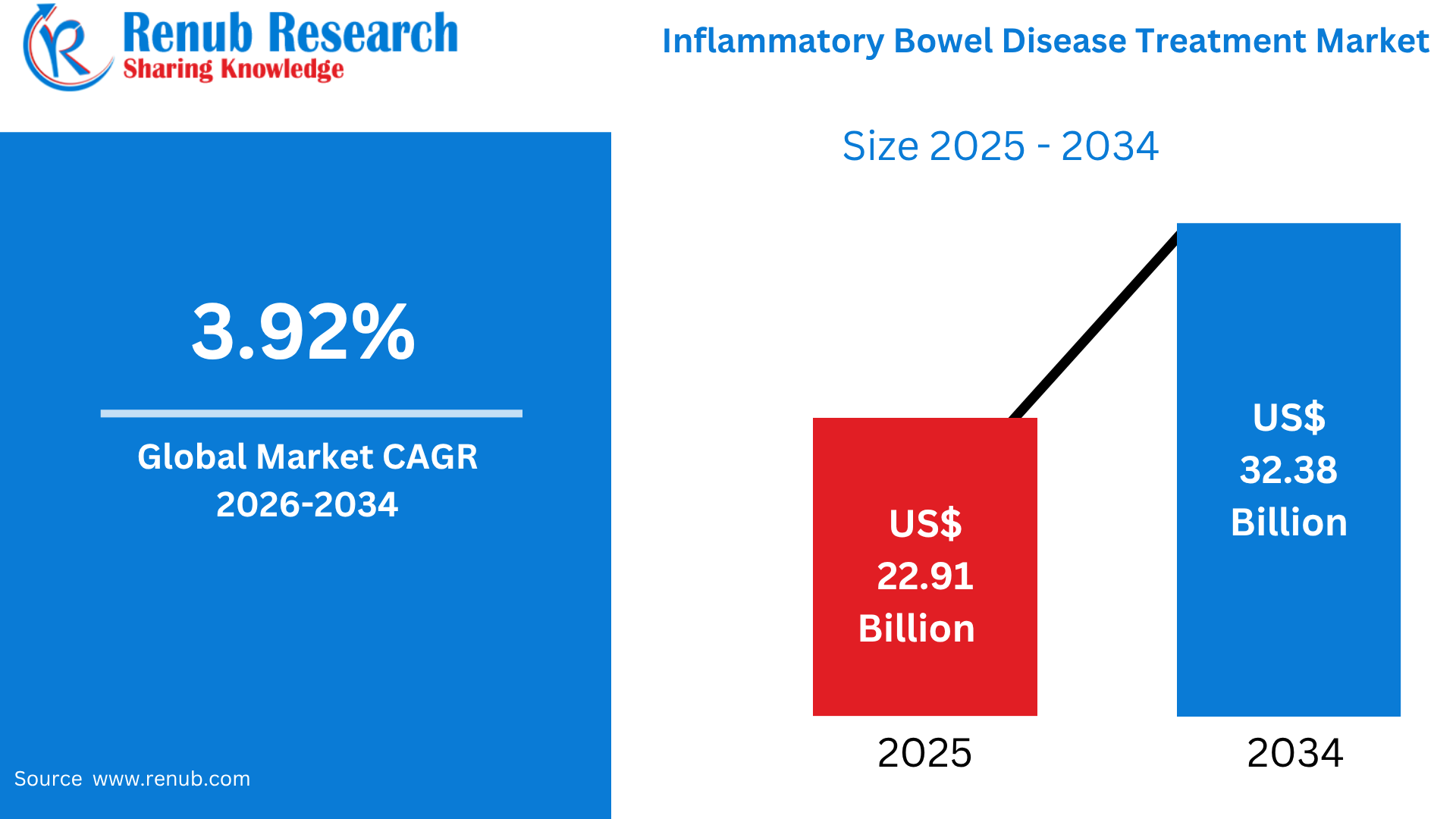
Inflammatory Bowel Disease Treatment Market is projected to grow steadily, driven by the rising global prevalence of Crohn's disease and ulcerative colitis, along with increasing demand for advanced therapeutic options. The market is expected to expand from US$ 22.91 billion in 2025 to US$ 32.38 billion by 2034, registering a compound annual growth rate (CAGR) of 3.92% during the forecast period from 2026 to 2034. Growth is supported by greater awareness of inflammatory bowel diseases, earlier diagnosis through improved screening and diagnostic technologies, and expanding access to effective treatment options. The increasing adoption of biologics, targeted therapies, and personalized treatment approaches, coupled with ongoing pharmaceutical innovation and improved healthcare infrastructure, is further contributing to the sustained expansion of the global IBD treatment market.
IBD Treatment Market Outlooks
IBD treatment is the medical management and therapy given for the treatment of Inflammatory Bowel Diseases (IBD), a group of chronic medical conditions that cause inflammation in the gastrointestinal system. There are two major types of IBD: Crohn’s Disease and Ulcerative Colitis. IBD causes symptoms such as abdominal pain, diarrhea, fatigue, and weight loss. Although IBD cannot be cured completely, several IBD treatment options are available for the control of the symptoms and prevention of complications. IBD treatment options include the use of anti-inflammatory drugs, immune system suppressants, corticosteroids, and biologic drugs. In severe cases of IBD, surgery may also be required for the removal of the inflamed part of the gastrointestinal system. Doctors also recommend lifestyle changes for the effective management of IBD symptoms.
The popularity and need for the treatment of IBD have increased globally due to the increasing prevalence of gastrointestinal disorders and disease awareness. Research and medical advancements in the field have helped in the effective treatment of the disease. Expanding medical facilities and improvements in diagnostic tools worldwide have helped in providing effective treatment for the disease, thus increasing the popularity of this medical field.
Global IBD Market Expansion
Inflammatory Bowel Disease (IBD) treatment refers to the medical management of chronic inflammatory conditions affecting the gastrointestinal tract, primarily Crohn’s disease and ulcerative colitis. The primary goals of IBD treatment are to reduce intestinal inflammation, relieve symptoms, induce and maintain remission, prevent disease flare-ups, and improve patients’ quality of life. Treatment options include aminosalicylates (5-ASA), corticosteroids, immunomodulators, biologic therapies, Janus kinase (JAK) inhibitors, and supportive nutritional therapy. In severe cases where medications are ineffective or complications develop, surgical intervention may be required to remove damaged portions of the intestine. Treatment strategies are increasingly personalized based on disease severity, location, patient age, and treatment response.
Worldwide, IBD treatment has gained significant importance due to the rising prevalence of Crohn’s disease and ulcerative colitis across both developed and emerging economies. Increasing awareness of gastrointestinal disorders, earlier diagnosis through advanced endoscopy and imaging technologies, and improved access to specialized healthcare have contributed to greater treatment adoption. The introduction of biologics, biosimilars, targeted small-molecule therapies, and precision medicine has substantially improved long-term disease management and clinical outcomes. Ongoing pharmaceutical research, expanding healthcare expenditure, and the growing availability of innovative therapies continue to drive the global popularity of IBD treatment, enabling millions of patients to achieve better symptom control and enhanced quality of life.
Inflammatory Bowel Disease (IBD) Prevalence – Key Highlights
- Lifetime Risk: More than 0.7% of Americans are expected to be diagnosed with Inflammatory Bowel Disease (IBD) during their lifetime.
- Total IBD Cases in the U.S. (2023): A retrospective study involving more than 14 million individuals estimated that approximately 2.39 million Americans are living with IBD.
- Ulcerative Colitis Prevalence: Of the total IBD population, around 1.25 million people were diagnosed with ulcerative colitis (UC).
- Crohn’s Disease Prevalence: Approximately 1.01 million Americans were estimated to have Crohn’s disease.
- Unclassified IBD Cases: The combined UC and Crohn’s disease estimates do not equal the total IBD population because some patients were diagnosed with IBD but could not be specifically classified as either UC or Crohn’s disease.
- Highest Global Burden: North America records the highest prevalence of IBD worldwide, making it the leading regional market for IBD diagnosis and treatment.
- Overall U.S. Prevalence: The prevalence of IBD in the United States is estimated at 721 cases per 100,000 population.
- Disease Comparison: Ulcerative colitis is more prevalent than Crohn’s disease in the U.S., with 378 cases per 100,000 people, compared with 305 cases per 100,000 people for Crohn’s disease.
- Pediatric Disease Pattern: Among children younger than 10 years, Crohn’s disease is more common, with 2.4 cases per 100,000, compared with 1.5 cases per 100,000 for ulcerative colitis.
- Age Distribution: IBD prevalence generally peaks during early adulthood, remains relatively stable through middle age, and declines after 80 years of age, partly because of higher mortality among older patients, especially those with Crohn’s disease.
Growth Driver
Rising Global Prevalence of Crohn's Disease and Ulcerative Colitis
The increasing incidence and prevalence of inflammatory bowel diseases (IBD), including Crohn's disease and ulcerative colitis, remain the strongest drivers of the global IBD treatment market. It is estimated that more than 10 million people worldwide are living with IBD, with prevalence continuing to rise in North America, Europe, and rapidly industrializing countries across Asia-Pacific and Latin America. In several developed nations, prevalence has exceeded 0.5% of the population, reflecting the growing disease burden. Urbanization, westernized dietary habits, antibiotic exposure, environmental pollution, smoking, and alterations in the gut microbiome are believed to contribute to increasing disease incidence. Since IBD is a chronic condition requiring lifelong disease management, patients often require continuous medication, regular clinical monitoring, and periodic treatment adjustments. Earlier diagnosis through improved endoscopy and imaging technologies has also increased the number of patients receiving treatment. As healthcare systems identify more cases and patient survival improves, demand for effective long-term therapeutic options continues to strengthen the global IBD treatment market.
Growing Adoption of Biologics and Targeted Therapies
The widespread adoption of biologic drugs and targeted therapies has transformed the treatment landscape for inflammatory bowel disease, significantly driving market growth. Biologic medicines targeting tumor necrosis factor (TNF), integrins, and interleukin (IL)-12/23 pathways have demonstrated superior clinical outcomes compared with conventional therapies for moderate-to-severe disease. Clinical studies show that biologic therapies can achieve clinical remission rates of approximately 30–50%, while maintaining long-term symptom control in many patients. More recently, targeted small-molecule drugs, including Janus kinase (JAK) inhibitors and sphingosine-1-phosphate (S1P) receptor modulators, have expanded treatment options for patients with inadequate responses to biologics. The introduction of biosimilars has further improved affordability and patient access while reducing healthcare costs. Pharmaceutical companies continue investing heavily in next-generation immunology research, precision medicine, and combination therapies to improve efficacy and safety. Continuous innovation in targeted treatments is expected to increase physician adoption, improve patient outcomes, and sustain long-term expansion of the global IBD treatment market.
Improved Diagnosis, Healthcare Infrastructure, and Patient Awareness
Growing awareness of inflammatory bowel disease, combined with improvements in diagnostic technologies and healthcare infrastructure, is accelerating market expansion worldwide. Advanced diagnostic techniques including colonoscopy, capsule endoscopy, magnetic resonance enterography (MRE), computed tomography (CT), fecal calprotectin testing, and biomarker analysis have significantly improved early disease detection and treatment planning. Earlier diagnosis allows physicians to initiate therapy before irreversible intestinal damage occurs, improving long-term clinical outcomes. Healthcare providers are increasingly adopting multidisciplinary treatment approaches involving gastroenterologists, nutritionists, surgeons, and specialized nursing teams to optimize patient care. Public awareness campaigns, patient advocacy organizations, and digital health platforms have improved understanding of disease symptoms, encouraging earlier medical consultation. Expanding healthcare expenditure and increasing availability of specialized gastroenterology centers in emerging economies have also improved treatment accessibility. The combination of better diagnostic capabilities, greater patient education, and stronger healthcare infrastructure continues to increase treatment rates and support sustained growth of the global IBD treatment market.
Challenges
High Cost of Biologic Therapies and Long-Term Disease Management
One of the most significant challenges facing the inflammatory bowel disease treatment market is the high cost of advanced therapies, particularly biologic medications. Annual treatment costs for biologic therapies frequently range from US$20,000 to over US$50,000 per patient, depending on the medication, dosage, healthcare system, and treatment duration. Because IBD is a lifelong chronic disease, many patients require continuous therapy, regular laboratory monitoring, endoscopic evaluations, and physician follow-up for many years. These cumulative healthcare costs place substantial financial pressure on patients, insurers, and public healthcare systems. Although biosimilars have helped reduce treatment expenses in some regions, affordability remains a major concern, particularly in low- and middle-income countries where reimbursement is often limited. High treatment costs may delay therapy initiation, reduce patient adherence, or restrict access to advanced medications. Improving affordability through expanded insurance coverage, biosimilar adoption, and value-based healthcare models remains essential for ensuring equitable access to effective IBD treatment.
Treatment Resistance, Disease Relapse, and Safety Concerns
Despite major therapeutic advances, many patients with inflammatory bowel disease experience inadequate response, treatment resistance, or disease relapse, limiting long-term treatment success. Clinical studies indicate that approximately 30–40% of patients may not respond adequately to first-line biologic therapy, while a substantial proportion gradually lose treatment response over time because of immunogenicity or disease progression. Patients often require switching between multiple biologics, targeted therapies, or combination treatment strategies, increasing both healthcare costs and clinical complexity. In addition, immunosuppressive therapies may increase the risk of serious infections, opportunistic diseases, and certain malignancies, requiring careful long-term monitoring. Adverse effects, treatment discontinuation, and variable patient responses continue to complicate disease management. The absence of reliable predictive biomarkers for individualized treatment selection further limits optimal therapeutic decision-making. Continued research into precision medicine, novel biologic targets, and personalized treatment approaches will be critical for overcoming these challenges and improving long-term outcomes in the global IBD treatment market.
Inflammatory Bowel Disease (IBD) Treatment Product Launches Worldwide
- AbbVie (2024) – Expanded global availability of SKYRIZI® (risankizumab) for the treatment of moderately to severely active ulcerative colitis, following earlier approvals for Crohn's disease.
- Eli Lilly and Company (2024) – Launched OMVOH® (mirikizumab) in additional international markets for adults with moderately to severely active ulcerative colitis, expanding its IBD immunology portfolio.
- Johnson & Johnson (2024) – Expanded the global rollout of TREMFYA® (guselkumab) through additional regulatory submissions and launches for inflammatory bowel disease indications, including Crohn's disease.
- Pfizer (2023) – Expanded commercialization of VELSIPITY® (etrasimod), an oral selective S1P receptor modulator for adults with moderately to severely active ulcerative colitis.
- Bristol Myers Squibb (2023) – Launched ZEPOSIA® (ozanimod) in additional countries for the treatment of moderately to severely active ulcerative colitis, increasing access to oral targeted therapy.
- Takeda Pharmaceutical Company (2023) – Expanded international availability of ENTYVIO® (vedolizumab) Subcutaneous Injection, providing patients with a self-administered maintenance treatment option for ulcerative colitis and Crohn's disease.
- Celltrion (2024) – Introduced subcutaneous infliximab (Zymfentra®/Remsima SC®) into additional global markets for maintenance treatment of inflammatory bowel disease, improving patient convenience.
- Samsung Bioepis (2024) – Expanded the launch of PYZCHIVA® (ustekinumab biosimilar) across multiple international markets, increasing affordable biologic treatment options for Crohn's disease and ulcerative colitis.
- Biocon Biologics (2024) – Expanded the global commercialization of YESINTEK™ (ustekinumab biosimilar) for inflammatory bowel disease and other immune-mediated inflammatory disorders, supporting broader patient access.
- Sandoz (2025) – Launched PYZCHIVA® (ustekinumab biosimilar) in additional regions worldwide, strengthening the availability of cost-effective biologic therapies for patients with Crohn's disease and ulcerative colitis.
IBD Anti-Integrin Treatment Expanding Use of Gut-Selective Biologic Therapies
The IBD Anti-Integrin Treatment market is growing steadily as clinicians increasingly adopt gut-selective biologic therapies for the treatment of moderate-to-severe Crohn’s disease and ulcerative colitis. Anti-integrin therapies work by blocking the migration of inflammatory immune cells into the intestinal lining, thereby reducing chronic inflammation while limiting systemic immunosuppression. These therapies are particularly valuable for patients who fail to respond to conventional immunosuppressants or anti-TNF biologics. Clinical studies have shown that anti-integrin therapies achieve clinical remission rates of approximately 30–45% in moderate-to-severe ulcerative colitis and Crohn’s disease, depending on disease severity and treatment duration. Increasing physician preference for therapies with favorable long-term safety profiles has accelerated their adoption. Growing prevalence of inflammatory bowel disease, expanding biologic reimbursement programs, improved patient awareness, and increasing availability of biosimilars continue to support market growth. Ongoing clinical research evaluating combination therapies and earlier biologic intervention is expected to further strengthen the global anti-integrin treatment market for IBD.
IBD JAK Inhibitors Treatment Targeted Oral Therapies Driving Treatment Innovation
The IBD Janus Kinase (JAK) Inhibitors Treatment market is expanding rapidly as oral targeted therapies become increasingly important for patients with moderate-to-severe ulcerative colitis and selected Crohn’s disease cases. JAK inhibitors work by blocking intracellular signaling pathways responsible for inflammatory cytokine production, thereby reducing intestinal inflammation. Unlike injectable biologics, these therapies offer the convenience of oral administration, improving patient adherence and treatment flexibility. Clinical trials have demonstrated clinical remission rates of approximately 25–40%, depending on disease severity, treatment duration, and patient history. JAK inhibitors often produce rapid symptom improvement, with some patients experiencing clinical response within several weeks of treatment initiation. Rising demand for personalized medicine, increasing treatment options following biologic failure, and expanding regulatory approvals continue to accelerate market growth. Pharmaceutical companies are investing heavily in next-generation selective JAK inhibitors with improved safety profiles. Continuous innovation in targeted immunology therapies is expected to strengthen the long-term outlook of the global IBD JAK inhibitors treatment market.
IBD Ulcerative Colitis Treatment Increasing Disease Burden Supporting Market Expansion
IBD Ulcerative Colitis Treatment market is experiencing sustained growth due to the rising prevalence of ulcerative colitis and continuous advances in therapeutic options. Ulcerative colitis is a chronic inflammatory disease affecting the colon and rectum, requiring lifelong medical management to control inflammation and prevent disease progression. Worldwide, millions of patients are living with ulcerative colitis, with prevalence exceeding 0.2–0.5% of the population in several developed countries. Treatment typically includes aminosalicylates (5-ASA), corticosteroids, immunomodulators, biologics, JAK inhibitors, and supportive nutritional therapy. Increasing adoption of biologics and precision medicine has significantly improved long-term remission rates while reducing hospitalization and surgery. Earlier diagnosis through colonoscopy, fecal biomarkers, and advanced imaging has increased treatment initiation at earlier disease stages. Growing healthcare expenditure, expanding gastroenterology services, ongoing pharmaceutical innovation, and increasing patient awareness continue to support steady expansion of the global ulcerative colitis treatment market.
IBD Treatment Hospital Pharmacy Primary Distribution Channel for Advanced Biologic Therapies
IBD Treatment Hospital Pharmacy market remains a critical component of inflammatory bowel disease management because many advanced therapies are initiated and monitored within hospital settings. Hospital pharmacies supply biologics, intravenous infusions, corticosteroids, immunomodulators, targeted therapies, and supportive medications for patients with moderate-to-severe Crohn’s disease and ulcerative colitis. Complex biologic treatments frequently require specialist supervision, controlled storage conditions, and infusion facilities, making hospitals the preferred distribution channel. Globally, biologic therapies account for a growing proportion of pharmaceutical spending in IBD management due to their superior efficacy in moderate-to-severe disease. Hospital pharmacists also provide medication counseling, adverse event monitoring, therapeutic drug monitoring, and multidisciplinary support to improve treatment adherence and patient outcomes. Expansion of tertiary care hospitals, specialized gastroenterology departments, and infusion centers has strengthened hospital pharmacy demand. Increasing healthcare investment, rising hospitalization for severe disease flare-ups, and broader access to advanced biologic therapies continue to drive sustained growth in the hospital pharmacy segment.
IBD Treatment Retail Pharmacy Improving Access to Long-Term Maintenance Therapies
The IBD Treatment Retail Pharmacy market continues to expand as increasing numbers of patients receive long-term maintenance therapy outside hospital settings. Retail pharmacies dispense oral medications including aminosalicylates (5-ASA), corticosteroids, immunomodulators, antibiotics, nutritional supplements, and selected targeted therapies used in chronic inflammatory bowel disease management. Since IBD requires lifelong treatment, patients frequently refill prescriptions through community pharmacies, creating stable and recurring demand. The expansion of specialty retail pharmacies has also improved access to high-cost biologics, biosimilars, and patient support programs. Growing prevalence of inflammatory bowel disease, increasing diagnosis rates, and greater awareness of medication adherence have strengthened retail pharmacy sales. Digital prescription management, home delivery services, pharmacist-led counseling, and telepharmacy services have further enhanced patient convenience and treatment continuity. Rising healthcare expenditure, expansion of pharmacy networks, improved reimbursement systems, and increasing adoption of specialty pharmacy services continue to support the long-term growth of the global IBD treatment retail pharmacy market.
United States IBD Treatment Advanced Therapeutics Driving Market Leadership
United States represents one of the largest inflammatory bowel disease (IBD) treatment markets globally, supported by advanced healthcare infrastructure, early diagnosis, and rapid adoption of innovative biologic therapies. It is estimated that more than 3 million Americans are living with inflammatory bowel diseases, including Crohn’s disease and ulcerative colitis, creating sustained demand for long-term treatment. Biologic therapies, Janus kinase (JAK) inhibitors, anti-integrin therapies, immunomodulators, and biosimilars are widely prescribed across hospitals and specialty gastroenterology clinics. The country has thousands of board-certified gastroenterologists and numerous specialized inflammatory bowel disease centers providing multidisciplinary patient care. Increasing use of therapeutic drug monitoring, personalized medicine, artificial intelligence-assisted diagnostics, and precision treatment approaches continues to improve clinical outcomes. Growing pharmaceutical research, expanding availability of biosimilars, and increasing patient awareness further strengthen market expansion. Although biologic therapies remain costly, broader insurance coverage and patient assistance programs continue improving access. Rising disease prevalence and continuous innovation are expected to sustain long-term growth of the U.S. IBD treatment market.
United Kingdom IBD Treatment: Strong Public Healthcare Supporting Long-Term Disease Management
United Kingdom IBD treatment market continues to expand due to increasing disease prevalence, comprehensive public healthcare coverage, and widespread access to specialist gastroenterology services. An estimated more than 500,000 people in the UK are living with Crohn’s disease or ulcerative colitis, making IBD one of the country’s major chronic gastrointestinal disorders. The National Health Service (NHS) provides access to evidence-based therapies including aminosalicylates (5-ASA), corticosteroids, immunomodulators, biologics, biosimilars, and targeted oral therapies for eligible patients. Increasing adoption of anti-TNF agents, anti-integrin biologics, and JAK inhibitors has improved long-term remission rates while reducing hospitalization and surgery. Earlier diagnosis through colonoscopy, fecal calprotectin testing, and advanced imaging supports timely treatment initiation. Multidisciplinary care involving gastroenterologists, colorectal surgeons, dietitians, pharmacists, and specialist nurses has become standard practice. Continued investment in digestive disease services, clinical research, and innovative biologic therapies is expected to support steady growth of the United Kingdom IBD treatment market.
India IBD Treatment Expanding Healthcare Infrastructure and Rising Disease Awareness
India’s IBD treatment market is witnessing rapid growth as increasing urbanization, westernized dietary habits, improved diagnosis, and greater awareness contribute to rising numbers of Crohn’s disease and ulcerative colitis patients. Although prevalence remains lower than in Western countries, India now reports hundreds of thousands of individuals living with inflammatory bowel disease, with incidence increasing steadily in metropolitan regions. Expansion of tertiary hospitals, gastroenterology centers, and advanced diagnostic facilities has improved early disease detection. Treatment options now include aminosalicylates, corticosteroids, immunomodulators, biologics, biosimilars, and selected targeted therapies. The growing availability of lower-cost biosimilars has improved affordability for many patients requiring long-term biologic treatment. Increasing healthcare expenditure, expansion of private hospital networks, and improved physician education have strengthened access to specialized care. Digital health platforms, telemedicine, and patient support programs are also enhancing treatment adherence. Rising pharmaceutical investment and improving healthcare infrastructure are expected to drive sustained long-term growth of India’s inflammatory bowel disease treatment market.
Saudi Arabia IBD Treatment Healthcare Modernization Supporting Advanced Gastroenterology Care
Saudi Arabia’s inflammatory bowel disease treatment market is expanding steadily due to rising diagnosis rates, healthcare modernization, and increasing investment in specialized digestive disease services. The Kingdom has experienced growing numbers of Crohn’s disease and ulcerative colitis cases, particularly among younger adults, reflecting changing lifestyles, urbanization, dietary transitions, and improved disease recognition. Major tertiary hospitals and specialized gastroenterology centers now provide comprehensive IBD management using aminosalicylates, corticosteroids, biologic therapies, anti-integrin agents, JAK inhibitors, and immunomodulators. Government investment under Vision 2030 continues to strengthen healthcare infrastructure, improve access to specialist physicians, and expand advanced diagnostic capabilities including endoscopy and magnetic resonance enterography. Increasing use of biologics and biosimilars has improved long-term disease control while reducing hospitalization for severe flare-ups. Growing public awareness, expansion of private healthcare providers, and continued pharmaceutical innovation are supporting market growth. As demand for personalized treatment and specialized gastroenterology services continues to increase, Saudi Arabia’s IBD treatment market is expected to experience sustained expansion over the coming years.
Market Segments
Drug Class
- TNF Inhibitors
- Anti-Integrin
- IL inhibitors
- JAK inhibitors
- Corticosteroids
- Aminosalicylates
- Others
Disease Indication
- Ulcerative Colitis
- Crohn's Disease
Distribution Channel
- Hospital Pharmacy
- Retail Pharmacy
- Online Pharmacy
Countries
North America
- United States
- Canada
Europe
- France
- Germany
- Italy
- Spain
- United Kingdom
- Belgium
- Netherlands
- Turkey
Asia Pacific
- China
- Japan
- India
- Australia
- South Korea
- Thailand
- Malaysia
- Indonesia
- New Zealand
Latin America
- Brazil
- Mexico
- Argentina
Middle East & Africa
- South Africa
- Saudi Arabia
- UAE
All the Key players have been covered from 5 Viewpoints:
- Overviews
- Key Person
- Recent Developments
- SWOT Analysis
- Revenue Analysis
Competitive Landscape
- Abbott Laboratories
- AbbVie Inc.
- Allergan Therapeutics LLC
- Bausch Health Companies Inc. (Salix Pharmaceuticals)
- Bristol-Myers Squibb Company
- Johnson & Johnson
- Novartis AG
- Pfizer Inc.
Report Details:
| Report Features | Details |
| Base Year |
2025 |
| Historical Period |
2022 - 2025 |
| Forecast Period |
2026 - 2034 |
| Market |
US$ Billion |
| Segment Covered |
Drug Class, Disease Indication, Distribution Channel and Countries |
| Countries Covered |
|
| Companies Covered |
|
| Customization Scope |
20% Free Customization |
| Post-Sale Analyst Support |
1 Year (52 Weeks) |
| Delivery Format |
PDF and Excel through Email (We can also provide the editable version of the report in PPT/Word format on request) |
Customization Services available
- Analysis of Market Size and Its Segments
- More Company Profiles (Upto 10 without any additional cost):
- Additional Countries (Other than mentioned Countries):
- Region/Country Specific Reports:
- Market Entry Strategy:
- Region-Specific Market Dynamics:
- Regional Market Share Analysis:
- Trade Analysis:
- Production Insights:
- Others Customized Requests:
For more information contact our analysts.
Need More Assistance?
- Talk to our analysts to get more precious information on the current market trends.
- Include more countries and segments and customize the report based on the final requirement.
- Get a competitive advantage in your industry by knowing the report findings and making a positive impact on your revenues and operations.
- Our analysts are always ready to provide more help and pertinent information if you need any additional assistance.