Antacids Market Report by Drug Class, Formulation Type, Distribution Channel, Country and Company Analysis 2026-2034
Buy NowAntacids Market Size and Forecast
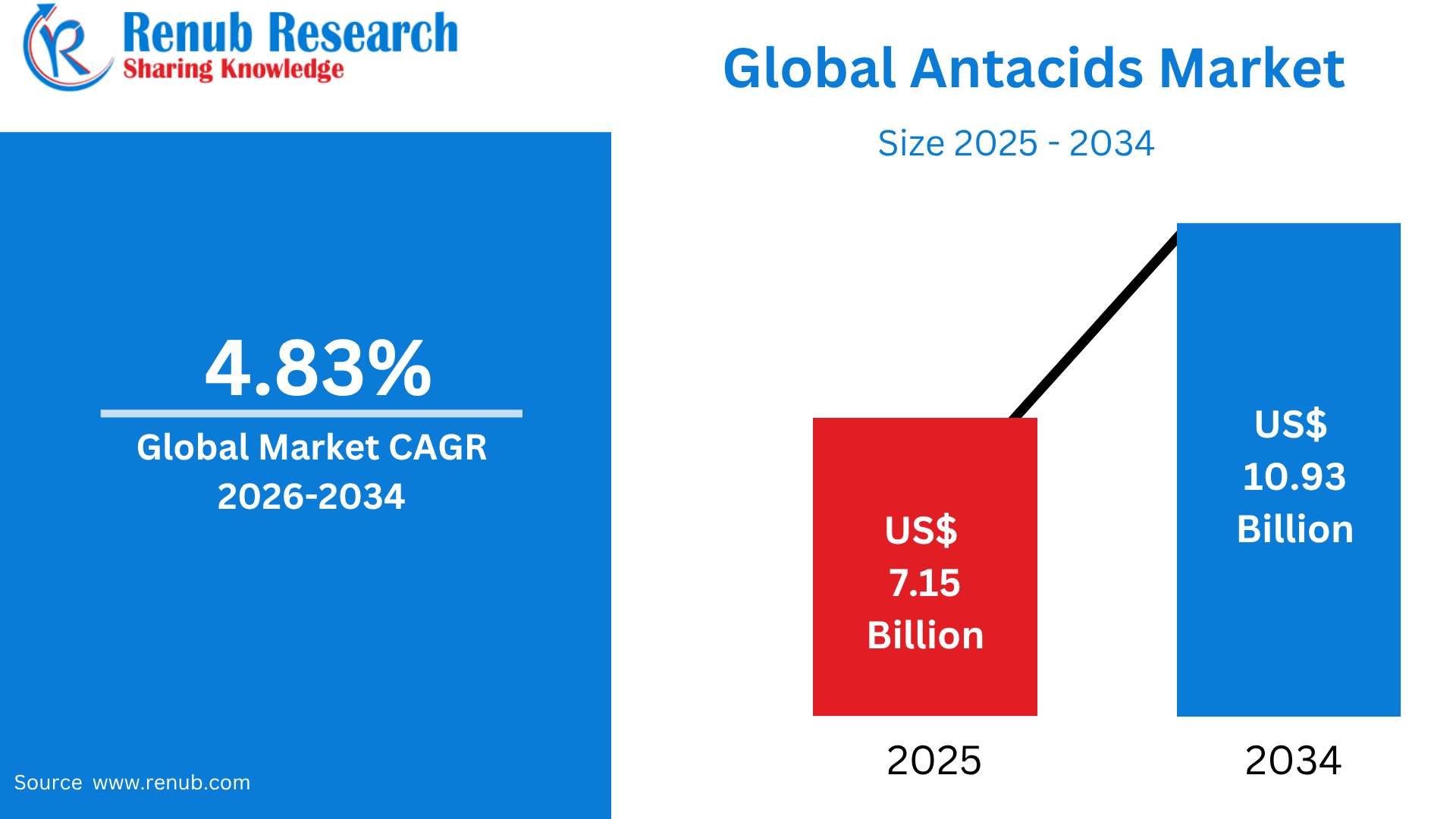
Global Antacids Market is projected to expand from US$ 7.15 billion in 2025 to US$ 10.93 billion by 2034, registering a Compound Annual Growth Rate (CAGR) of 4.83% during 2026–2034. Market growth is supported by the increasing prevalence of acidity, heartburn, gastroesophageal reflux disease (GERD), and other digestive disorders associated with changing lifestyles and dietary habits. Rising consumer preference for over-the-counter (OTC) digestive-health products is further strengthening demand.
What are Antacids and Their Uses & Popularity Worldwide
Antacids are medicines formulated to neutralize excess stomach acid and provide rapid relief from heartburn, acid indigestion, sour stomach, and occasional acid reflux. Common active ingredients include calcium carbonate, magnesium hydroxide, aluminum hydroxide, and sodium bicarbonate. They are available in several convenient forms, including chewable tablets, liquids, suspensions, powders, and effervescent preparations.
Antacids are widely used as over-the-counter (OTC) products because they can provide relatively quick, short-term symptom relief without requiring a prescription. Their popularity is supported by the widespread occurrence of acid-related digestive problems and growing consumer awareness of gastrointestinal health. Global GERD prevalence reached approximately 825.6 million cases in 2021, compared with 450.8 million in 1990, representing an increase of more than 83%. Antacids are particularly popular through retail pharmacies and increasingly through online pharmacies, where consumers can easily purchase products for self-care. The global market is also benefiting from formulation innovations, including flavored liquids, fast-dissolving tablets, and combination products.
Global Gastritis and Duodenitis Statistics
- Global Prevalence: In 2021, approximately 27.20 million people worldwide were living with gastritis and duodenitis, with a 95% uncertainty interval (UI) of 21.85–33.65 million.
- Age-Standardized Incidence Rate: The global ASIR reached 323.24 cases per 100,000 population in 2021 (95% UI: 261.35–398.64).
- Higher Prevalence Among Females: In 2021, the number of prevalent gastritis and duodenitis cases was higher among females than males globally.
- Age-Related Increase: Disease prevalence generally increased with age, reaching its highest level during the fifth decade of life.
- Projected Growth: Global prevalent cases of gastritis and duodenitis are estimated to increase substantially, reaching approximately 51.24 million cases by 2050.
- Global Disease Burden: Gastritis and duodenitis accounted for approximately 2.81 million DALYs worldwide in 2021 (95% UI: 2.17–3.61 million).
- Age-Standardized DALY Rate: The global ASDR was estimated at 35.64 DALYs per 100,000 population in 2021 (95% UI: 27.56–45.77).
- Mortality Rate: The age-standardized mortality rate (ASMR) associated with gastritis and duodenitis was approximately 0.54 deaths per 100,000 population in 2021 (95% UI: 0.47–0.62).
- Disparities by Development Level: Although global age-standardized prevalence and incidence rates declined overall, low and low-middle SDI regions experienced increasing trends between 1990 and 2021.
- Highest Disease Burden: Low-SDI regions recorded the highest ASDR in 2021, at approximately 63.44 DALYs per 100,000 population (95% UI: 44.08–87.16).
- Regional Variation: Among the 21 GBD regions, East Asia recorded the highest age-standardized prevalence and incidence rates in 2021.
- 2050 Forecast: By 2050, the age-standardized prevalence rate is projected to reach approximately 402.14 cases per 100,000 population, while the ASDR is forecast at around 22.09 DALYs per 100,000 population.
Growth Drivers of the Antacids Market
Rising Prevalence of GERD and Acid-Related Disorders
The increasing global burden of gastroesophageal reflux disease (GERD), heartburn, acid reflux, and indigestion is a major driver of antacid demand. According to Global Burden of Disease-based research, global GERD prevalence increased from approximately 450.76 million cases in 1990 to 825.60 million cases in 2021, an increase of about 83%. GERD also generated approximately 6.34 million disability-adjusted life years (DALYs) in 2021, highlighting its substantial health burden. Changing dietary patterns, increased consumption of processed and fast foods, obesity, stress, sedentary lifestyles, and higher intake of caffeine and carbonated beverages can contribute to acid-related digestive symptoms. As consumers seek rapid and convenient relief from occasional heartburn and acidity, demand for OTC antacid products continues to increase. Market research also identifies the rising incidence of GERD and other gastrointestinal disorders as an important factor supporting antacid-market expansion. Continued growth in the affected population gives manufacturers opportunities to develop targeted formulations and convenient delivery formats.
Growing OTC Self-Medication and Pharmacy Accessibility
Increasing consumer preference for self-care and easily accessible OTC medicines is another important growth driver for the antacids market. Antacids are commonly purchased directly from retail pharmacies, supermarkets, convenience stores, and online platforms, allowing consumers to manage occasional heartburn and indigestion without visiting a physician. At the same time, e-commerce is expanding access by enabling consumers to compare products, read reviews, and order digestive-health medicines from home. The availability of multiple dosage forms—including tablets, chewables, liquids, and powders—also supports self-medication among different consumer groups. Growing healthcare awareness is encouraging consumers to recognize digestive symptoms earlier and seek readily available treatments. Manufacturers are consequently expanding OTC portfolios, improving packaging, introducing combination formulations, and strengthening digital and pharmacy distribution channels, which collectively support market penetration in developed and emerging economies.
Product Innovation and Expansion of Convenient Formulations
Innovation in formulation, flavor, dosage form, and combination therapy is strengthening the attractiveness of antacid products worldwide. Traditional tablets remain important, but manufacturers increasingly offer liquid, chewable, flavored, effervescent, and fast-acting formulations to meet consumers’ demand for convenience and rapid symptom relief. Liquid antacids can appeal to consumers seeking easier swallowing and rapid administration, while chewable tablets offer portability and convenience for on-the-go use. Combination products that integrate antacid ingredients with other acid-relief components can further broaden applications. Manufacturers are also investing in improved taste profiles, packaging, dosing convenience, and e-commerce-friendly formats. These innovations help companies compete in a mature OTC category while encouraging repeat purchases and expanding antacid adoption among consumers seeking fast, convenient digestive-health solutions.
Challenges of the Antacids Market
Side Effects and Risks Associated with Excessive Use
Potential side effects and concerns surrounding prolonged or inappropriate antacid use can restrict market growth. Although antacids are generally intended for short-term relief, excessive consumption or inappropriate long-term use may cause problems depending on the active ingredient. Calcium-based antacids can contribute to constipation and excessive calcium intake, while magnesium-containing products may cause diarrhea. Aluminum-containing products can also cause constipation, and excessive use may create electrolyte-related concerns in susceptible individuals. These risks make responsible labeling, dosage guidance, and consumer education important for manufacturers and regulators. Furthermore, persistent heartburn may indicate GERD or another underlying gastrointestinal condition requiring medical evaluation rather than repeated self-medication. The increasing awareness of medication safety may encourage some consumers to seek professional advice before using antacids regularly. Consequently, companies must balance convenient OTC availability with clear usage instructions, warnings, and appropriate positioning. Safety concerns can particularly affect frequent users and consumers with underlying medical conditions, limiting unrestricted long-term consumption of conventional antacid products.
Competition from Alternative Acid-Reducing Therapies
The antacids market faces strong competition from alternative treatments, particularly proton pump inhibitors (PPIs) and H2-receptor antagonists, which can provide longer-lasting acid suppression for appropriate patients. Unlike conventional antacids, which primarily neutralize existing stomach acid and generally provide short-term relief, these therapies can reduce acid production and are widely used in the management of recurrent acid-related conditions. The expanding availability of prescription and OTC acid-reducing medicines therefore creates competitive pressure on traditional antacid products. Product differentiation is consequently becoming increasingly important as manufacturers compete on speed of relief, duration of action, formulation, flavor, price, and convenience. In addition, consumers experiencing persistent or severe symptoms may move from basic antacid products toward physician-guided treatments. The challenge is particularly relevant as GERD represents a substantial and growing global health burden, with more than 825 million prevalent cases estimated worldwide in 2021. Antacid manufacturers must therefore emphasize appropriate short-term use, innovation, and consumer convenience to maintain market share.
Recent Developments in the Global Antacids Market
- August 2025 – Mankind Pharma: Mankind Pharma expanded the visibility of Gas-O-Fast through a nationwide Independence Day promotional campaign, positioning the antacid as a locally developed product and strengthening its consumer-focused marketing across India.
- July 2025 – Abbott: Abbott introduced Digene Insta On The Go, a convenient water-free stick-pack antacid designed to provide rapid relief in approximately two seconds. The launch targets consumers seeking convenient digestive-health solutions suited to increasingly busy lifestyles.
- January 2025 – Haleon: UK-based consumer healthcare company Haleon announced plans to invest up to US$54 million in upgrading its research and development center in Northside Richmond, Virginia. The renovated facility was expected to become operational during 2025, supporting Haleon’s innovation capabilities across its consumer-health portfolio.
- August 2024 – ENO by Haleon: ENO introduced a new 3-in-1 range in India featuring variants incorporating traditional ingredients such as cumin, carom seeds, and black salt. The products were developed to address common digestive complaints, including acidity and indigestion, while offering differentiated flavor and ingredient combinations.
- July 2024 – Dr. Reddy’s Laboratories and Takeda: Dr. Reddy’s Laboratories entered into a non-exclusive patent licensing agreement with Japan-based Takeda Pharmaceutical Company for vonoprazan, a novel acid-suppressing formulation, for commercialization in India. The agreement strengthened Dr. Reddy’s portfolio in the gastrointestinal and acid-related treatment segment.
- July 2024 – Chula Medicine: Chula Medicine, working with Thailand’s Department of Thai Traditional and Alternative Medicine and gastroenterology specialists, conducted a clinical study evaluating Thai curcumin. The study reported evidence supporting its potential role in the treatment and prevention of dyspepsia, highlighting growing interest in plant-based approaches to digestive health.
- February 2022 – GSK and Haleon: GlaxoSmithKline (GSK) announced the planned demerger and listing of its consumer-health business, subsequently established as Haleon. The new consumer-health company assumed responsibility for major brands across categories, including antacid brands such as TUMS and ENO, creating a major global consumer-health platform.
- June 2022 – Wonderbelly: Austin-based startup Wonderbelly launched its OTC chewable antacid tablets, offering products in flavors such as strawberry milkshake, watermelon mint, and fruity cereal. The brand differentiated itself through formulations positioned as non-GMO, vegan, and free from ingredients including artificial flavors, dyes, preservatives, dairy, gluten, parabens, and common allergens.
Growing Role in Acid-Suppression Therapy
H2 antagonist market represents an important segment of acid-suppressing therapies, particularly for patients experiencing recurrent heartburn, gastroesophageal reflux disease (GERD), and other acid-related digestive conditions. H2 antagonists work by blocking histamine H2 receptors on gastric parietal cells, thereby reducing stomach-acid secretion and helping relieve symptoms. Common H2 receptor antagonists include famotidine and other medicines used in prescription and over-the-counter (OTC) settings. Demand is supported by the continuing global burden of GERD. Global GERD cases increased from approximately 450.8 million in 1990 to 825.6 million in 2021, representing an increase of more than 80%. H2 antagonists are particularly attractive for consumers seeking effective acid reduction without routinely using stronger long-duration therapies. Their availability through pharmacies and OTC channels also improves accessibility. Increasing awareness of digestive health, self-care, and acid-related disorders is expected to sustain demand for H2 antagonists across developed and emerging markets.
Fast-Acting and Convenient Acid Neutralization
The antacids powder segment remains relevant because of its rapid dissolution, flexible dosing, and ability to provide relatively quick relief from occasional heartburn, acidity, and indigestion. Powder formulations are generally mixed with water before consumption, allowing the active ingredients to disperse quickly and neutralize excess gastric acid. This format can be particularly useful for consumers who have difficulty swallowing conventional tablets. Powder antacids are also commonly marketed in single-dose sachets and portable packets, supporting convenience for consumers who need treatment while traveling or working. The segment benefits from the widespread availability of inexpensive acid-neutralizing ingredients and relatively straightforward manufacturing processes. Growing digestive discomfort associated with irregular eating patterns, spicy foods, and consumption of processed meals further supports demand for fast-acting remedies. In emerging markets, affordability and familiarity with traditional powder-based digestive products can strengthen adoption. Manufacturers are increasingly emphasizing portability, improved taste, and convenient packaging to maintain the segment’s competitiveness.
Rapid Relief and Ease of Administration
Liquid antacids represent a significant formulation category because they are easy to swallow and can rapidly distribute across the stomach, helping neutralize excess acid and relieve symptoms such as heartburn and indigestion. Liquid formulations are particularly suitable for consumers who experience difficulty swallowing tablets, including some elderly and pediatric users. They are available in multiple formulations containing ingredients such as aluminum hydroxide, magnesium hydroxide, calcium carbonate, and other acid-neutralizing compounds. Some products additionally combine antacid and anti-gas ingredients to address bloating and discomfort. The global burden of GERD, which reached approximately 825.6 million prevalent cases in 2021, provides a substantial underlying population requiring symptom-management products. Liquid antacids are frequently used for short-term relief following meals or during nighttime episodes of acid discomfort. Manufacturers are increasingly introducing flavored formulations, measured-dose bottles, and combination products to improve consumer convenience. The segment is therefore expected to maintain steady demand as consumers continue to favor easily administered and fast-acting digestive-health products.
Accessibility and Pharmacist Guidance Drive Sales
Retail pharmacies remain a major distribution channel for antacids because they combine product accessibility with professional guidance from pharmacists. Antacids are widely available without a prescription, allowing consumers to purchase products quickly when experiencing occasional heartburn, indigestion, or acidity. Retail pharmacies also provide consumers with access to different formulations, including tablets, liquids, powders, and chewable products, allowing pharmacists to recommend options based on symptoms and preferences. According to industry estimates, retail pharmacies account for a substantial share of antacid distribution, with one market assessment estimating approximately 72.2% of global antacid sales through retail pharmacies in 2025. The channel is particularly important in urban and densely populated areas where pharmacies are readily accessible. In addition, shelf visibility and pharmacist recommendations can influence purchasing decisions, especially among first-time users. Expansion of pharmacy networks in developing economies, increasing healthcare awareness, and continued consumer reliance on OTC medicines are expected to support retail pharmacy sales throughout the forecast period.
Digital Healthcare Adoption Expands Consumer Access
The online pharmacy segment is becoming increasingly important within the antacids market as consumers embrace digital healthcare purchasing and home-delivery services. Online platforms provide convenient access to multiple antacid brands and formulations, including tablets, liquids, chewables, and powders, while allowing consumers to compare prices and product specifications. The expansion of smartphones, digital payments, e-commerce infrastructure, and last-mile delivery networks has significantly improved the accessibility of OTC digestive-health products. Online pharmacies are particularly attractive to busy consumers seeking doorstep delivery and to individuals who prefer discreet purchasing of products associated with digestive discomfort. Competitive pricing, promotional discounts, subscription options, and broader product selection can further encourage online purchases. The continued growth of digital healthcare platforms is expected to strengthen this distribution channel as consumers increasingly integrate e-commerce into routine healthcare shopping. Manufacturers and retailers are also investing in digital marketing, search-based product discovery, and consumer education to increase the visibility of antacid products across online pharmacy platforms.
High Prevalence of Acid-Related Disorders Supports USA Demand
United States antacids market is supported by the widespread occurrence of heartburn, acid reflux, and gastroesophageal reflux disease (GERD). Global GERD prevalence reached approximately 825.6 million cases in 2021, highlighting the substantial population requiring acid-related symptom management. In the U.S., changing dietary patterns, sedentary lifestyles, obesity, and frequent consumption of processed and fast foods contribute to digestive discomfort and reinforce demand for OTC remedies. Antacids are widely preferred for occasional symptoms because they are readily available and can provide rapid relief. Products are distributed through retail pharmacies, supermarkets, convenience stores, and online pharmacies, creating broad consumer access. Major product formats include chewable tablets, liquids, powders, and effervescent formulations. Increasing consumer awareness of digestive health and the aging population further supports recurring demand. Product innovation, including flavored formulations, combination products, and convenient portable packaging, is also strengthening consumer appeal and helping manufacturers maintain market growth.
OTC Accessibility and Changing Lifestyles Drive UK Growth
United Kingdom antacids market is benefiting from changing dietary habits, work-related stress, and the continuing burden of heartburn and acid-reflux symptoms. Global GERD cases increased from approximately 450.8 million in 1990 to 825.6 million in 2021, reflecting the expanding global need for acid-related symptom management. In the UK, consumers commonly seek convenient OTC treatments for occasional digestive discomfort, supported by the country’s established community-pharmacy network and widespread availability of non-prescription medicines. Retail pharmacies remain important because pharmacists can advise consumers on appropriate products, particularly when symptoms are recurrent. Liquid and chewable formulations are attractive because of their ease of administration and rapid symptom relief. Increasing healthcare awareness is encouraging consumers to pay greater attention to digestive symptoms and seek early management. At the same time, the expansion of online pharmacy and e-commerce services is improving product accessibility. Manufacturers are therefore focusing on convenient formats, recognizable brands, and differentiated formulations to strengthen demand.
Large Consumer Base and Self-Medication Support India Expansion
India represents an important growth market for antacids because of its large population, extensive pharmacy network, and substantial demand for affordable digestive-health products. Global GERD prevalence reached approximately 825.6 million cases in 2021, while digestive complaints associated with irregular eating patterns and changing lifestyles continue to create opportunities for acid-relief products. In India, consumption of spicy and oily foods, irregular meal schedules, eating outside the home, and increasing urban work-related stress can contribute to episodes of acidity and heartburn. OTC availability enables consumers to obtain antacids conveniently without visiting a physician for every occasional symptom. Liquid, chewable, tablet, and powder formulations are widely available, allowing manufacturers to serve different consumer preferences. Local and regional brands also compete through affordable pricing and extensive distribution across urban, semi-urban, and rural markets. Rising healthcare awareness, expanding organized retail, and increasing penetration of e-commerce pharmacies are further improving accessibility. Product launches featuring improved flavors, portability, and combination digestive-health benefits are expected to support continued market development.
Lifestyle Changes and Digestive-Health Awareness Create Saudi Arabia Opportunities
Saudi Arabia antacids market is supported by changing lifestyles, dietary patterns, and demand for convenient treatment of heartburn, acidity, and other acid-related digestive symptoms. Consumption of fast foods, carbonated beverages, large meals, and late-night meals can contribute to gastrointestinal discomfort, while obesity and sedentary lifestyles add to the broader digestive-health burden. The global prevalence of GERD reached approximately 825.6 million cases in 2021, demonstrating the significant worldwide population affected by acid-related conditions. In Saudi Arabia, the availability of OTC digestive-health products through pharmacies and modern retail channels enables consumers to obtain rapid symptom relief. The country’s developed healthcare infrastructure and growing emphasis on preventive healthcare further support awareness of digestive disorders. Retail pharmacies remain a particularly important distribution channel, while online healthcare platforms are gradually expanding consumer access. Manufacturers are also introducing convenient tablets, liquids, chewables, and combination formulations to address different consumer needs. Increasing health awareness and continued modernization of retail healthcare are expected to sustain demand for antacids.
Antacids Market Segments
Drug Class
- Proton Pump Inhibitors
- H2 Antagonist
- Acid Neutralizers
- Pro-Motility Agents
Formulation Type
- Tablets
- Liquid
- Powder
- Others
Distribution Channel
- Retail Pharmacy
- Hospital Pharmacy
- Online Pharmacy
Countries
North America
- United States
- Canada
Europe
- France
- Germany
- Italy
- Spain
- United Kingdom
- Belgium
- Netherlands
- Turkey
Asia Pacific
- China
- Japan
- India
- Australia
- South Korea
- Thailand
- Malaysia
- Indonesia
- New Zealand
Latin America
- Brazil
- Mexico
- Argentina
Middle East & Africa
- South Africa
- Saudi Arabia
- United Arab Emirates
All companies have been covered with 5 Viewpoints
- Overviews
- Key Person
- Recent Developments
- SWOT Analysis
- Revenue Analysis
Company Analysis:
- Abbott Laboratories
- AstraZeneca plc
- Bayer AG
- Boehringer Ingelheim International GmbH
- Dr. Reddy’s Laboratories Ltd.
- GlaxoSmithKline plc
- Johnson & Johnson
- Pfizer Inc.
- Procter & Gamble Company
- Sanofi S.A.
- Sun Pharmaceutical Industries Ltd.
- Takeda Pharmaceutical Company Limited
Report Details:
| Report Features | Details |
| Base Year |
2025 |
| Historical Period |
2022 - 2025 |
| Forecast Period |
2026 - 2034 |
| Market |
US$ Billion |
| Segment Covered |
Drug Class, Formulation Type, Distribution Channel, and Countries |
| Countries Covered |
|
| Companies Covered |
|
| Customization Scope |
20% Free Customization |
| Post-Sale Analyst Support |
1 Year (52 Weeks) |
| Delivery Format |
PDF and Excel through Email (We can also provide the editable version of the report in PPT/Word format on request) |
Customization Services available
- Analysis of Market Size and Its Segments
- More Company Profiles (Upto 10 without any additional cost):
- Additional Countries (Other than mentioned Countries):
- Region/Country Specific Reports:
- Market Entry Strategy:
- Region-Specific Market Dynamics:
- Regional Market Share Analysis:
- Trade Analysis:
- Production Insights:
- Others Customized Requests:
For more information contact our analysts.
Need More Assistance?
- Talk to our analysts to get more precious information on the current market trends.
- Include more countries and segments and customize the report based on the final requirement.
- Get a competitive advantage in your industry by knowing the report findings and making a positive impact on your revenues and operations.
- Our analysts are always ready to provide more help and pertinent information if you need any additional assistance.