Global Pork Meat Market Report by Product, Application, Distribution Channel, Countries and Company Analysis 2026-2034
Buy NowPork Meat Market Size and Forecast 2026-2034
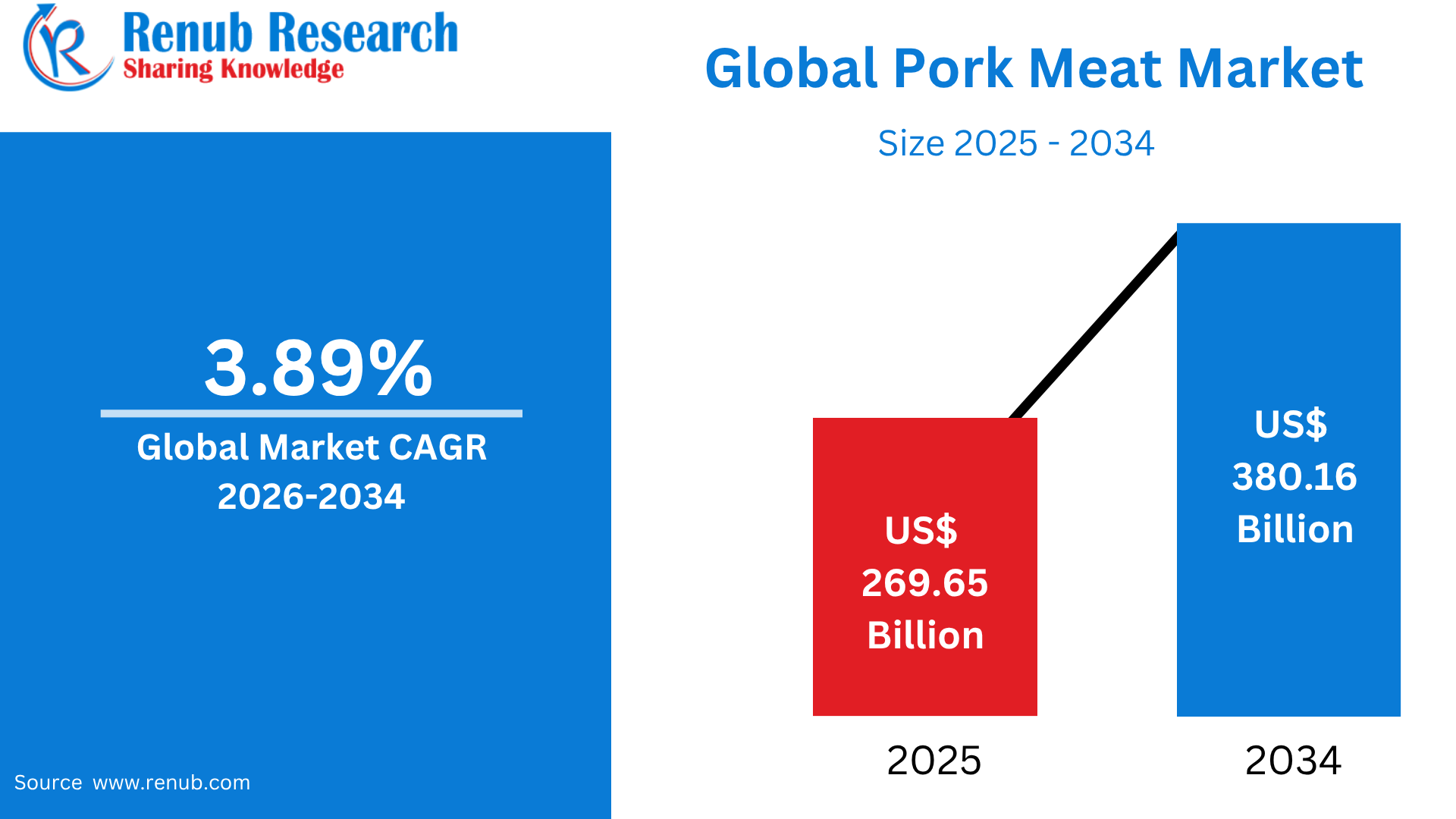
Pork Meat Market is expected to reach US$ 380.16 billion by 2034 from US$ 269.65 billion in 2025, with a CAGR of 3.89% from 2026 to 2034. The pork meat market is expected to grow steadily, driven by rising protein consumption, expanding foodservice demand, and increasing production efficiency across key global markets over the forecast period.
Pork Meat Industry Overview
The global pork meat industry is a significant segment of the overall meat market, serving as one of the most widely consumed protein sources worldwide. Pork is valued for its affordability, versatility, and wide acceptance across various cuisines, particularly in Asia and parts of Europe. The industry encompasses pig farming, processing, distribution, and retail, forming an integrated value chain that supports both large-scale producers and smallholder farmers. Demand for pork is influenced by population growth, urbanization, and rising disposable incomes, especially in emerging economies. Additionally, the increasing popularity of processed pork products such as sausages, bacon, and ham is contributing to market expansion. The development of organized retail and foodservice sectors is further enhancing product availability and accessibility.
Technological advancements and improvements in livestock management are playing a crucial role in shaping the pork meat industry. Modern breeding techniques, enhanced feed efficiency, and better disease management practices are helping increase productivity and improve meat quality. The adoption of automation in processing facilities and advancements in cold chain logistics are ensuring better product handling, storage, and distribution. Furthermore, digitalization in supply chains is improving traceability and transparency, addressing growing consumer concerns about food safety and quality. As consumers become more conscious about sourcing and sustainability, producers are focusing on implementing responsible farming practices and improving animal welfare standards. These trends are driving innovation and efficiency within the industry.
Despite strong growth potential, the pork meat industry faces several challenges that could impact its development. Disease outbreaks, such as swine-related illnesses, can significantly disrupt production and supply chains. Fluctuations in feed prices and regulatory requirements also affect profitability and operational efficiency. Additionally, changing consumer preferences, including the growing demand for alternative proteins and healthier diets, may influence long-term consumption patterns. Trade policies and import-export restrictions further shape market dynamics, particularly in regions heavily reliant on pork imports. However, continuous advancements in production techniques, expanding global demand, and improvements in supply chain infrastructure are expected to support the sustained growth of the pork meat market.
Recent Developments in the Pork Meat Industry
- Olymel introduced a new range of pig products in Quebec supermarkets in April 2025. Offering customers a variety of Canadian pork cuts, the products prioritize quality and convenience.
- In response to client demand, Prairie Fresh launched ground pork chubs in March 2025. Prairie Fresh Ground Pork and Prairie Fresh Pork Sausage are part of the company's expanded product portfolio.
- In March 2025, Creta Farm began selling pork raised solely on olive oil and olive oil extract. Meat produced with this feeding technique has a reduced Omega-6 fatty acid level and a higher Omega-3 fatty acid concentration.
- In February 2025, OSI Group expanded its international activities by acquiring Karnova Food Group. OSI's capacity to source, process, and distribute pig products across Europe is strengthened by this acquisition.
Growth Drivers for the Pork Meat Market
Increased Cold Chain Infrastructure Promotes Freshness and Wider Distribution
By facilitating the effective transportation and storage of pig goods over longer distances while preserving product quality, the development of cold chain infrastructure is substantially propelling the global hog meat industry. To guarantee constant temperature control during storage and shipping, modern cold chain facilities use technology like Internet of Things sensors and automated temperature monitoring systems. The UN Environment Programme estimates that incomplete cold chains cause over 40% of food loss in developing nations during production to retail, underscoring the significance of strong cold chain networks.
According to the Australian Meat Processor Corporation, recent advancements in temperature control, such as boosting frozen meat storage temperatures from -18°C to -12°C, show promise for lowering energy expenses and carbon emissions without sacrificing product quality. By extending shelf life, temperature-controlled warehouses, refrigerated trucks, and sophisticated packaging solutions help maintain the safety and freshness of pork meat throughout the supply chain, reduce food waste, and allow retailers and distributors to keep larger inventories in order to effectively respond to changes in market demand.
Growing Customer Preference for Diets High in Protein Drives Market Expansion
The global market for hog meat is expanding due to rising consumer awareness of diets high in protein. Due to its abundance of high-quality protein, B-complex vitamins, and vital minerals like iron and zinc, pork meat is in line with consumers' increasing emphasis on nutritional value. Consumers who are concerned about their health actively look for high-protein food options because they understand how important proteins are for building muscle, controlling weight, and maintaining general health. The demand for meat products high in protein has also increased due to the growing fitness culture and the adoption of dietary patterns like the keto and paleo diets. Compared to fresh alternatives, portion-controlled frozen pork products have a longer shelf life and assist consumers in controlling their protein intake.
The Food and Agriculture Organization (FAO) reports that the rate of undernourishment worldwide was 9.1% in 2023, suggesting that hog meat could be a cost-effective source of protein to enhance dietary nutrition. All of these elements work together to support the demand for hog meat products on the international market.
Advancements in Livestock Production and Supply Chain Efficiency
Technological advancements in livestock production and supply chain management are playing a crucial role in driving the pork meat market. Improved breeding techniques and better feed management practices are enhancing productivity and ensuring consistent meat quality. Additionally, advancements in disease control and veterinary care are reducing mortality rates and improving herd health. The development of efficient cold chain infrastructure is enabling better storage and transportation, ensuring product freshness and reducing wastage. Automation in processing facilities is also improving operational efficiency and reducing costs. These advancements are helping producers meet growing demand while maintaining quality and safety standards. As technology continues to evolve, it is expected to further enhance production efficiency and support market growth.
Challenges in the Pork Meat Market
Disease Outbreaks and Supply Chain Disruptions
Disease outbreaks pose a significant challenge to the pork meat market. Illnesses affecting pig populations can lead to large-scale losses in livestock, disrupting supply chains and affecting production levels. Such outbreaks can also result in trade restrictions and increased regulatory scrutiny, impacting market dynamics. Farmers and producers are required to invest in biosecurity measures and disease prevention strategies, which can increase operational costs. Additionally, supply disruptions can lead to price volatility, affecting both producers and consumers. Managing disease risks remains a critical concern for the industry, requiring continuous monitoring and investment in preventive measures. Addressing this challenge is essential to ensure stability and sustained growth in the pork meat market.
Changing Consumer Preferences and Health Concerns
Changing consumer preferences and growing health concerns present challenges for the pork meat market. Increasing awareness about health and nutrition is influencing dietary choices, with some consumers reducing their intake of red and processed meats. Additionally, the rise of plant-based and alternative protein products is offering consumers more options, potentially impacting pork consumption. Concerns related to fat content and processed meat consumption are also influencing purchasing behavior. As a result, producers may need to adapt by offering healthier and higher-quality products. Addressing consumer concerns through transparency, improved product quality, and innovation will be crucial for maintaining demand and competitiveness in the evolving market landscape.
United States Pork Meat Market
The United States pork meat market is characterized by strong production capabilities and stable domestic demand. The country has a well-developed pork industry supported by advanced farming practices and efficient processing infrastructure. Pork is widely consumed across households and the foodservice sector, with products such as bacon and processed meats being particularly popular. The export market also plays a significant role, with the United States supplying pork to various international markets. Technological advancements and focus on quality standards are supporting market growth. However, challenges such as fluctuating feed costs and changing consumer preferences may impact demand. Despite these factors, the market is expected to maintain steady growth driven by strong supply chains and consistent consumption patterns.
According to third-party dietary intake assessments based on NHANES survey data, pork consumption had been relatively common in the United States, with more than 64% of the population aged 2 years and older reporting consumption of at least one pork food item on one of the two survey days. Fresh pork consumption had been less frequent than processed pork consumption, recorded at 16% versus 58% of the total population aged 2 years and older, while lean pork consumption had also remained limited at around 28% of consumers. The mean per capita intake of total pork had been estimated at 29.2 grams per day, with processed pork contributing the majority share at approximately 21.7 grams per day, or 74% of total consumption. Additionally, about 37% of all pork consumed had been classified as “lean” based on USDA criteria.
The analysis further indicated that pork consumption had played an important role in supporting micronutrient intake among consumers. Pork had been a significant dietary source of essential nutrients, contributing more than 10% of the recommended dietary allowances (RDAs) for Vitamin B3, phosphorus, Vitamin B6, Vitamin B12, and zinc. It had also contributed over 20% of the RDAs for selenium, sodium, and Vitamin B1, highlighting its nutritional relevance within the diets of pork consumers.
United Kingdom Pork Meat Market
The United Kingdom pork meat market is driven by stable consumption and a strong focus on quality and sustainability. Pork is a commonly consumed meat in the country, supported by both retail and foodservice sectors. Consumers are increasingly prioritizing locally sourced and ethically produced products, influencing market trends. The presence of well-established retail channels is improving product accessibility. Additionally, advancements in farming practices and supply chain management are supporting production efficiency. However, the market faces challenges such as changing dietary preferences and increasing competition from alternative protein sources. Regulatory requirements related to food safety and environmental standards also impact market dynamics. Despite these challenges, the emphasis on quality and sustainability is expected to support steady growth in the UK pork meat market.
China Pork Meat Market
The China pork meat market is one of the largest globally, driven by high consumption levels and cultural preferences. Pork is a staple in the Chinese diet, contributing significantly to overall meat consumption. The market is supported by strong domestic production, although imports also play a role in meeting demand. Urbanization and rising incomes are driving increased consumption of pork products. Additionally, the expansion of retail and foodservice sectors is supporting market growth. Technological advancements in livestock management are improving productivity and quality. However, challenges such as disease outbreaks and supply fluctuations can impact market stability. Despite these factors, strong consumer demand is expected to support continued growth in the China pork meat market.
According to third-party market outlooks released by international agencies such as the Organisation for Economic Co-operation and Development (OECD) and the Food and Agriculture Organization (FAO) of the United Nations, China’s demand for meat had remained strong over the forecast period, with particularly sustained consumption in the pork segment.
By 2026, average per capita meat consumption in China had been projected to reach approximately 55 kilograms annually, reflecting an increase of around 10% compared to 2017 levels. Within the overall meat consumption basket, pork had continued to dominate consumer preference, accounting for nearly 60% of total meat intake. Poultry had ranked second, followed by beef and veal, and then lamb and mutton.
The outlook further indicated that meat price growth had been expected to remain moderate, influenced by recent trade agreements as well as rising purchasing power among consumers. At the same time, evolving dietary preferences had been shaping market dynamics. Consumers had increasingly shown a preference for free-range, antibiotic-free, and higher-quality meat products. However, the extent to which consumers had been willing to pay a premium for such products had remained uncertain, and this factor had been considered important in shaping overall demand trends in the meat market.
United Arab Emirates Pork Meat Market
The UAE pork meat market is relatively niche due to cultural and regulatory factors, but it maintains steady demand within specific consumer segments. Pork consumption is primarily limited to expatriate populations and is available through designated retail outlets and licensed establishments. The hospitality sector, including hotels and restaurants, plays a key role in driving demand. The market relies heavily on imports to meet consumption needs, creating opportunities for international suppliers. Strict regulations govern the sale and distribution of pork products, ensuring compliance with local laws. Despite its limited scope, the market benefits from a strong tourism industry and diverse population. As the hospitality sector continues to expand, the demand for pork meat in the UAE is expected to remain stable.
Pork Meat Market Segments
Product
- Chilled
- Frozen
Application
- Household
- Commercial
Distribution Channel
- Supermarkets & Hypermarkets
- Specialty Stores
- Online
- Others
Countries
North America
- United States
- Canada
Europe
- France
- Germany
- Italy
- Spain
- United Kingdom
- Belgium
- Netherlands
- Turkey
Asia Pacific
- China
- Japan
- India
- Australia
- South Korea
- Thailand
- Malaysia
- Indonesia
- New Zealand
Latin America
- Brazil
- Mexico
- Argentina
Middle East & Africa
- South Africa
- Saudi Arabia
- United Arab Emirates
All companies have been covered with 5 Viewpoints
- Overviews
- Key Person
- Recent Developments
- SWOT Analysis
- Revenue Analysis
Company Analysis
- JBS S.A
- Tyson Foods
- Pilgrim's pride corporation
- Danish crown group
- Vion Food Group
- WH Group
- Hormel Foods Corporation
- Muyuan Foods
Report Details:
| Report Features | Details |
| Base Year |
2025 |
| Historical Period |
2022 - 2025 |
| Forecast Period |
2026 - 2034 |
| Market |
US$ Billion |
| Segment Covered |
Product, Application, Distribution Channel and Countries |
| Countries Covered |
|
| Companies Covered |
|
| Customization Scope |
20% Free Customization |
| Post-Sale Analyst Support |
1 Year (52 Weeks) |
| Delivery Format |
PDF and Excel through Email (We can also provide the editable version of the report in PPT/Word format on request) |
Customization Services available
- Analysis of Market Size and Its Segments
- More Company Profiles (Upto 10 without any additional cost):
- Additional Countries (Other than mentioned Countries):
- Region/Country Specific Reports:
- Market Entry Strategy:
- Region-Specific Market Dynamics:
- Regional Market Share Analysis:
- Trade Analysis:
- Production Insights:
- Others Customized Requests:
For more information contact our analysts.
Need More Assistance?
- Talk to our analysts to get more precious information on the current market trends.
- Include more countries and segments and customize the report based on the final requirement.
- Get a competitive advantage in your industry by knowing the report findings and making a positive impact on your revenues and operations.
- Our analysts are always ready to provide more help and pertinent information if you need any additional assistance.