Australia Chicken Poultry Market Report by Product, Distribution Channel, States and Companies Analysis 2026-2034
Buy NowAustralia Chicken Poultry Market Size and Forecast 2026-2034
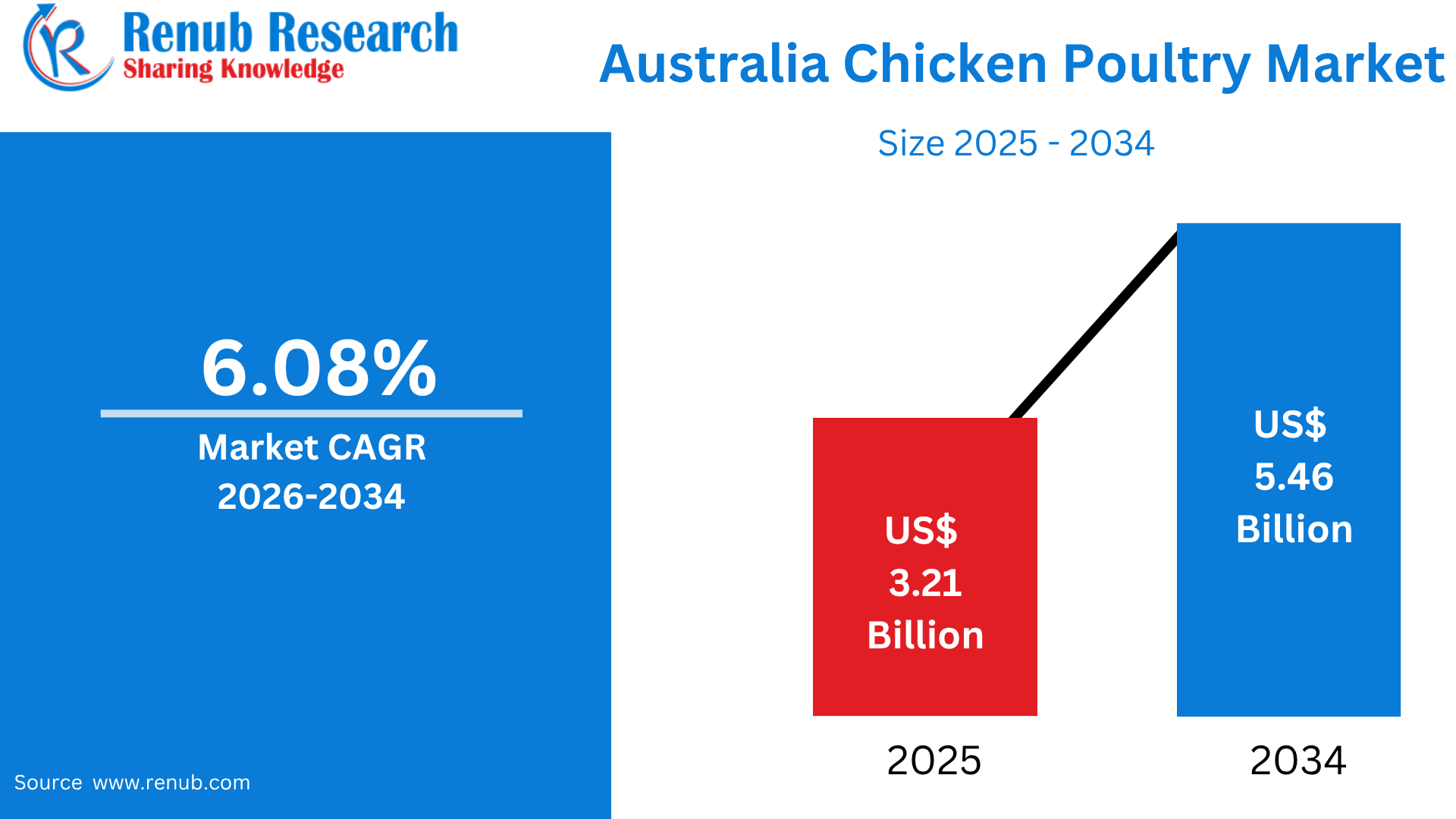
Australia Chicken Poultry Market is expected to reach US$ 5.46 billion by 2034 from US$ 3.21 billion in 2025, with a CAGR of 6.08% from 2026 to 2034. The market is expected to witness stable growth during the forecast period, supported by rising protein consumption, expanding foodservice demand, technological advancements, and increasing preference for affordable meat products.
Australia Chicken Poultry Industry Overview
The Australia chicken poultry industry is one of the country’s largest and fastest-growing livestock sectors, playing a vital role in domestic food consumption and agricultural production. Chicken remains the most widely consumed meat product in Australia due to its affordability, nutritional value, convenience, and versatility across various cuisines. The industry includes broiler production, poultry processing, hatcheries, feed manufacturing, packaging, and distribution activities that support retail, foodservice, and export channels. Rising population growth, changing dietary habits, and increasing demand for protein-rich food products continue to strengthen market expansion across the country. Consumers are increasingly shifting toward lean meat options, further supporting demand for poultry products over red meat alternatives. Supermarkets, quick-service restaurants, and online grocery platforms are also expanding poultry product availability and convenience for consumers.
Technological advancements and modernization across poultry farming operations are significantly transforming the industry landscape. Producers are increasingly adopting automated feeding systems, climate-controlled poultry housing, advanced breeding technologies, and data-driven farm management practices to improve productivity and animal health. The growing demand for processed and value-added chicken products such as marinated cuts, ready-to-cook meals, and frozen poultry items is also influencing product innovation within the market. In addition, food safety, traceability, and sustainability are becoming increasingly important across the poultry supply chain. Producers and processors are focusing on improving biosecurity standards, reducing environmental impact, and adopting efficient waste management systems. Expansion of cold chain logistics and food processing infrastructure is further supporting industry growth across urban and regional markets in Australia.
According to the Australian Chicken Meat Federation Facts and Figures, chicken remains Australia’s most consumed meat protein. Australians consume more than 50 kg of chicken meat per person annually, significantly higher than beef or lamb consumption. The industry produces over 1.3 million tonnes of chicken meat each year and processes approximately 700 million chickens annually to meet domestic demand. More than 85% of chicken meat sales occur through major supermarkets and retail outlets, while foodservice demand continues to expand through restaurants and quick-service chains. The poultry industry contributes billions of dollars to the Australian economy and supports thousands of jobs across farming, processing, logistics, and retail sectors. Modern poultry farms in Australia utilize advanced automation, climate-controlled housing, and strict biosecurity systems to improve productivity and food safety. The industry also maintains high standards for animal welfare, sustainability, and traceability throughout the supply chain.
Growth Drivers for the Australia Chicken Poultry Market
Rising Consumer Preference for Affordable Protein Sources
Increasing consumer preference for affordable and high-protein food products is one of the major factors driving the Australia chicken poultry market. Chicken is widely considered a cost-effective alternative to other meat products, making it highly popular among households across different income groups. Growing health awareness is also encouraging consumers to shift toward lean protein options with lower fat content, further strengthening poultry consumption. In addition, changing lifestyles and busy schedules are increasing demand for convenient and easy-to-prepare food products, including processed and ready-to-cook chicken items. Restaurants, cafes, and quick-service food chains are also expanding poultry-based menu offerings due to strong customer demand. Rising urbanization and increasing disposable incomes are supporting greater consumption of packaged and premium poultry products across Australia. This continued consumer preference for accessible and nutritious protein sources is expected to remain a strong driver for market growth.
Expansion of Foodservice and Retail Distribution Channels
The expansion of foodservice and retail distribution networks is significantly contributing to the growth of the Australia chicken poultry market. Supermarkets, hypermarkets, convenience stores, and online grocery platforms are increasing the availability of fresh, frozen, and processed poultry products across urban and regional areas. The rapid growth of quick-service restaurants and fast-food chains offering chicken-based products is also boosting market demand. Foodservice operators are increasingly introducing diverse poultry menu options such as grilled chicken, fried chicken, wraps, salads, and ready meals to attract consumers seeking affordable and convenient dining choices. In addition, advancements in cold chain logistics and packaging technologies are improving product shelf life and distribution efficiency. E-commerce growth and home delivery services are further strengthening access to poultry products across Australia. These expanding retail and foodservice channels continue to create significant growth opportunities for poultry producers and processors.
Technological Advancements in Poultry Farming and Processing
Technological innovation across poultry farming and processing operations is another key factor driving the Australia chicken poultry market. Producers are increasingly adopting automated feeding systems, environmental control technologies, and digital monitoring tools to improve operational efficiency and bird health management. Modern breeding techniques and nutritional advancements are also helping increase poultry productivity and product quality. In addition, processing facilities are investing in automation, food safety systems, and advanced packaging technologies to meet growing consumer demand for hygienic and value-added poultry products. The use of data analytics and precision farming practices is improving production planning, disease monitoring, and supply chain management across the industry. Sustainability initiatives such as energy-efficient operations, waste reduction, and water conservation are also becoming increasingly important within poultry production systems. These technological developments are supporting productivity improvements and strengthening long-term competitiveness within the Australian poultry industry.
Challenges in the Australia Chicken Poultry Market
Rising Feed Costs and Production Expenses
One of the major challenges affecting the Australia chicken poultry market is the increasing cost of feed and production inputs. Poultry feed ingredients such as corn, wheat, and soybean meal are subject to fluctuations in global agricultural commodity prices, weather conditions, and supply chain disruptions. Rising feed expenses can significantly impact overall production costs and reduce profitability for poultry farmers and processors. In addition, increasing energy prices, transportation costs, labor shortages, and packaging expenses are creating further operational pressure across the industry. Producers must also continuously invest in farm maintenance, animal health, and biosecurity systems to ensure stable production and regulatory compliance. These rising operational costs can affect pricing strategies and market competitiveness, particularly for smaller poultry producers. Managing cost efficiency while maintaining product quality and supply stability remains a major challenge for the Australian chicken poultry industry.
Biosecurity Risks and Regulatory Compliance
Biosecurity risks and strict regulatory requirements present another significant challenge for the Australia chicken poultry market. Poultry producers must maintain high standards of disease prevention and food safety to protect livestock health and ensure uninterrupted supply chains. Risks associated with avian influenza and other poultry diseases require continuous investment in monitoring systems, farm sanitation, and biosecurity infrastructure. In addition, regulatory authorities are increasingly implementing stricter animal welfare, environmental sustainability, and food safety standards for poultry production and processing operations. Compliance with these requirements may increase operational complexity and production costs for industry participants. Consumers are also becoming more concerned about ethical farming practices, traceability, and sustainability within the food supply chain. Producers and processors must adapt to changing consumer expectations and evolving regulations while maintaining profitability and operational efficiency. These biosecurity and compliance pressures continue to influence the overall market environment.
New South Wales Chicken Poultry Market
The New South Wales chicken poultry market is one of the largest poultry-producing regions in Australia, supported by strong population growth, urban food demand, and extensive retail distribution networks. The state has a well-developed poultry farming and processing infrastructure supplying fresh and processed chicken products to supermarkets, restaurants, and foodservice operators. Sydney’s large consumer base and expanding quick-service restaurant sector are driving strong demand for poultry products across the region. In addition, increasing preference for ready-to-cook and packaged chicken items is encouraging product innovation among producers and retailers. Investments in cold storage, logistics, and processing technologies are improving supply chain efficiency across the state. Poultry producers in New South Wales are also focusing on biosecurity, sustainability, and animal welfare practices to meet evolving consumer expectations and regulatory standards. The market is expected to continue growing due to rising poultry consumption and expanding urban demand.
Victoria Chicken Poultry Market
The Victoria chicken poultry market is experiencing steady growth driven by strong retail demand, food processing activities, and rising consumer preference for affordable protein products. Melbourne’s expanding population and active hospitality sector are increasing demand for fresh and processed poultry products across the state. Victoria also has a well-established agricultural and food manufacturing ecosystem supporting poultry farming, feed production, processing, and distribution activities. The growing popularity of convenience foods and ready-to-eat chicken meals is encouraging innovation within the poultry processing industry. In addition, investments in automated farming technologies and modern processing facilities are improving operational efficiency and production quality. Sustainability initiatives and animal welfare standards are becoming increasingly important among consumers and producers in the state. Victoria is expected to remain a major poultry production and consumption market due to continued urban growth and expansion of retail and foodservice sectors.
Queensland Chicken Poultry Market
The Queensland chicken poultry market is expanding steadily due to increasing population growth, tourism activity, and rising foodservice demand across the state. Urban centers such as Brisbane and the Gold Coast are generating strong demand for fresh poultry products, processed chicken meals, and quick-service restaurant offerings. Queensland’s agricultural environment and growing food processing sector support poultry production and regional supply chains. In addition, increasing consumer demand for healthy and protein-rich food products is strengthening poultry consumption across households and commercial food operators. Expansion of supermarket chains, online grocery platforms, and food delivery services is also improving product accessibility throughout the state. Poultry producers are increasingly investing in efficient farming technologies, biosecurity systems, and cold chain infrastructure to improve productivity and product quality. Queensland is expected to continue witnessing market growth due to rising domestic consumption and expansion of foodservice industries.
Western Australia Chicken Poultry Market
The Western Australia chicken poultry market is growing due to rising urbanization, increasing household consumption, and expansion of retail food distribution networks. Perth remains the primary consumption center, driving demand for fresh, frozen, and processed poultry products across supermarkets, restaurants, and institutional foodservice providers. The state’s poultry sector benefits from investments in modern farming operations, automated production systems, and advanced food processing facilities. Increasing awareness regarding healthy eating habits and lean protein consumption is further supporting poultry demand among consumers. In addition, growth in mining-related workforce populations and regional infrastructure development is contributing to rising food consumption across Western Australia. Producers are focusing on improving supply chain efficiency, sustainability practices, and product quality to strengthen competitiveness in the market. The Western Australia chicken poultry market is expected to witness stable long-term growth supported by strong domestic demand and ongoing modernization within the poultry industry.
Recent Developments in Australia Chicken Poultry Market
- In In November 2024: Mt Barker Chicken, a meat processor, received AUD 1 million from the Western Australian government to grow its business and take advantage of new market opportunities. According to reports, this funding will allow Mt. Barker Chicken to buy processing equipment, boost capacity by thirty percent, and improve emissions, energy, and water efficiency.
- In July 2024, Smart Commercial Solar opened Agright, Australia's biggest off-grid chicken farm, in Griffith, New South Wales. With a 3.98 MW solar array and a 4.4 MWh battery system, the facility is supposedly Australia's biggest off-grid poultry farm. This creative arrangement demonstrates sustainable poultry farming through the incorporation of renewable energy and provides energy to 40 broiler chicken barns and six staff apartments.
Australia Chicken Poultry Market Segments
Product
- Table Eggs
- Chicken Meat
- Fresh / Chilled
- Frozen / Canned
- Processed
- Distribution Channel
Distribution Channel
- On-Trade
- Off-Trade
- Supermarkets/Hypermarkets
- Specialty Stores
- Online Retail
- Others
States
- New South Wales
- Victoria
- Queensland
- Western Australia
- South Australia
- Australian Capital Territory
- Tasmania
- Northern Territory
All companies have been covered with 5 Viewpoints
- Overviews
- Key Person
- Recent Developments
- SWOT Analysis
- Revenue
Company Analysis:
- Suguna Foods
- Cargill Inc.
- VH Group
- Tyson Foods, Inc.
- NH Foods Ltd.
- New Hope Liuhe
- Charoen Pokphand Group
- Doyoo Group
- Wen's Food Group
- Sunner Development Co
Report Details:
| Report Features | Details |
| Base Year |
2025 |
| Historical Period |
2022 - 2025 |
| Forecast Period |
2026 - 2034 |
| Market |
US$ Billion |
| Segment Covered |
Product, Distribution Channel and States |
| States Covered |
|
| Companies Covered |
|
| Customization Scope |
20% Free Customization |
| Post-Sale Analyst Support |
1 Year (52 Weeks) |
| Delivery Format |
PDF and Excel through Email (We can also provide the editable version of the report in PPT/Word format on request) |
Customization Services available
- Analysis of Market Size and Its Segments
- More Company Profiles (Upto 10 without any additional cost):
- Additional Countries (Other than mentioned Countries):
- Region/Country Specific Reports:
- Market Entry Strategy:
- Region-Specific Market Dynamics:
- Regional Market Share Analysis:
- Trade Analysis:
- Production Insights:
- Others Customized Requests:
For more information contact our analysts.
Need More Assistance?
- Talk to our analysts to get more precious information on the current market trends.
- Include more countries and segments and customize the report based on the final requirement.
- Get a competitive advantage in your industry by knowing the report findings and making a positive impact on your revenues and operations.
- Our analysts are always ready to provide more help and pertinent information if you need any additional assistance.