Global Orange Market Report by Product, Application, Countries and Company Analysis 2025-2033
Buy NowOrange Market Size and Forecast 2025-2033
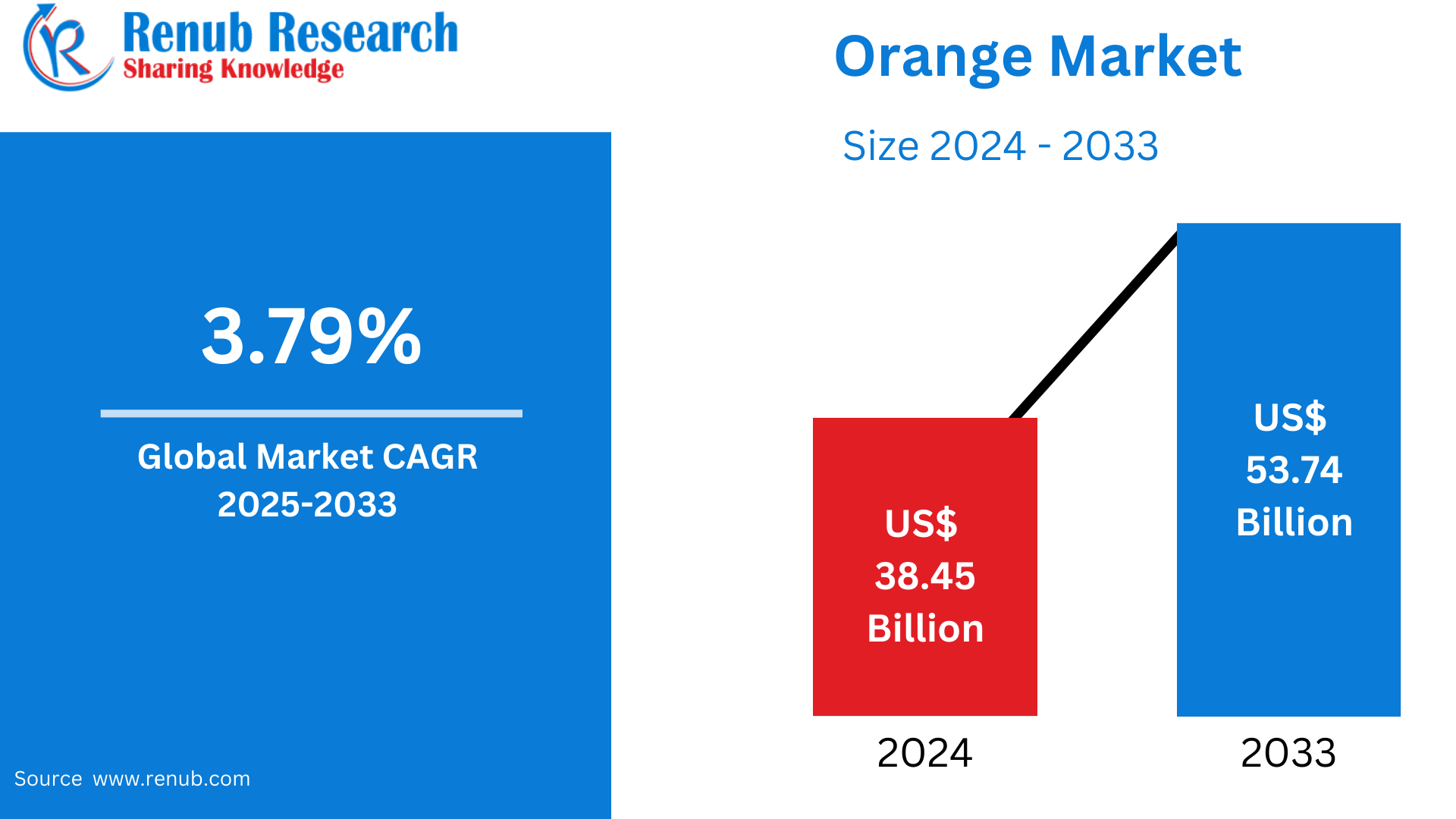
Orange Market is expected to reach US$ 53.74 billion by 2033 from US$ 38.45 billion in 2024, with a CAGR of 3.79% from 2025 to 2033. Growing consumer demand for foods high in vitamin C, the growth of the juice and beverage industries, health-conscious lifestyles, and the increasing usage of oranges in cosmetics, medications, and functional foods are all factors driving the orange industry. Export prospects and a favorable climate both contribute to the market's expansion.
Orange Industry Overview
Citrus fruits like oranges are prized for their high vitamin C content, vivid color, and sweet-tart flavor. Oranges are commonly grown in tropical and subtropical climates and can be eaten raw or processed into juice, concentrates, jams, and flavorings. They are full of vital nutrients, dietary fiber, and antioxidants that promote heart health, skin health, and immunity. Additionally, the fruit is essential to the world's food and beverage industries and boosts the economies of major producing nations like China, Brazil, and the United States. The global orange market is still driven by rising consumer desire for natural, nourishing, and refreshing products.
Due to consumers' growing interest in immunity-boosting foods and nutrition, the orange market is growing globally. Oranges are quite popular in the fresh fruit and juice markets because they are high in antioxidants and vitamin C. The demand for orange-based products is further stimulated by the expansion of the food processing and beverage industries. Consumption in emerging economies is fueled by urbanization, changing lifestyles, and growing awareness of health advantages. Government programs that support fruit production and cutting-edge farming techniques also improve quality and yield. Sustained market expansion is facilitated by the growing export potential of leading producers such as Brazil, the United States, and Spain.
Growth Drivers for the Orange Market
Rising Health Awareness and Nutritional Benefits
Growing global awareness of health and wellness is a major driver for the orange market. Oranges are naturally rich in vitamin C, antioxidants, flavonoids, and essential nutrients that strengthen the immune system, improve skin health, and reduce the risk of chronic diseases. Consumers, particularly after the COVID-19 pandemic, increasingly seek natural and immune-boosting foods, leading to higher demand for fresh oranges and orange-based beverages. The fruit’s nutritional profile aligns with the global shift toward preventive healthcare and natural supplements. Moreover, the rising prevalence of cardiovascular diseases and lifestyle disorders has prompted a dietary shift toward fresh fruits. Marketing campaigns emphasizing “fresh,” “organic,” and “immunity-enhancing” qualities further drive consumption. The orange’s versatility across beverages, desserts, and health products supports its popularity. As health-conscious lifestyles become mainstream, the orange market continues to expand across both developed and emerging regions.
Expansion of the Beverage and Food Processing Industry
The beverage and food processing industries significantly contribute to the growth of the orange market. Oranges are widely used in producing juices, concentrates, jams, marmalades, confectionery, and flavored products. The global rise in demand for natural beverages and reduced-sugar options has spurred innovation in orange-based drinks. Leading brands are introducing cold-pressed juices, fortified orange beverages, and organic juice blends to meet consumer preferences. Technological advancements in processing and packaging help retain flavor and nutrients, extending shelf life and export potential. Moreover, restaurants, cafés, and bakeries increasingly incorporate orange-based ingredients to create appealing, health-oriented offerings. With growing investments in fruit processing infrastructure—especially in Brazil, India, and China—the production capacity of orange-derived goods continues to rise. The expanding beverage sector, paired with consumer trends favoring freshness and authenticity, solidifies oranges as a cornerstone ingredient in the global food and drink market.
Growth in Global Trade and Export Opportunities
Expanding global trade and export opportunities are crucial growth factors in the orange market. Major producers like Brazil, Spain, the United States, and Egypt dominate international supply, meeting rising demand in Europe, Asia, and the Middle East. Favorable trade agreements, efficient logistics, and cold-chain infrastructure advancements have enhanced export capabilities. Countries with tropical climates benefit from year-round production, supporting consistent supply. Additionally, consumer demand for imported fruits has grown in regions with limited local cultivation, such as Northern Europe and the Gulf states. Governments and cooperatives are investing in sustainable farming, quality certification, and pest-resistant orange varieties to strengthen export competitiveness. Increasing consumption of orange juice in global markets, particularly in North America and Asia-Pacific, drives cross-border trade. The globalization of diets and growing preference for fresh, nutrient-rich fruits further amplify international orange commerce, making exports a key pillar of market growth.
Challenges in the Orange Market
Climate Variability and Disease Outbreaks
The orange market faces significant challenges due to climate change and plant diseases such as citrus greening (Huanglongbing). Irregular rainfall, temperature fluctuations, and prolonged droughts affect orange yields and quality, disrupting supply chains and increasing production costs. The spread of citrus greening disease, which has severely impacted orchards in Florida and Brazil, continues to threaten global supply stability. Farmers face higher costs for pest control, irrigation, and disease management, reducing profitability. Climate-related risks also limit export consistency and pricing stability in global markets. Governments and research institutions are investing in resilient crop varieties and sustainable farming practices, but unpredictable weather patterns remain a persistent threat to orange cultivation and supply.
Price Volatility and Supply Chain Constraints
Price volatility in the orange market is driven by fluctuating production levels, export regulations, and transportation costs. Adverse weather conditions, labor shortages, and global inflation affect fruit availability and cost efficiency. Supply chain disruptions, especially during the COVID-19 pandemic, highlighted the market’s vulnerability to logistical challenges. Rising input costs such as fertilizers, energy, and packaging materials further squeeze producer margins. Additionally, fluctuating currency exchange rates influence international trade dynamics, making it harder for exporters to maintain competitive pricing. While government subsidies and cooperative farming initiatives offer temporary relief, sustained volatility undermines market stability. Efficient logistics management, regional diversification, and investment in storage infrastructure are essential to counter these challenges.
United States Orange Market
The United States remains one of the world’s leading orange producers, primarily centered in Florida and California. The market is driven by high domestic demand for fresh oranges and orange juice, supported by advanced farming technology and processing infrastructure. Health-conscious consumers increasingly favor natural and vitamin-rich beverages, boosting demand for orange-based products. However, the sector faces challenges from citrus greening disease and weather disruptions affecting yield. Efforts toward sustainable farming and disease-resistant orange varieties are underway. The U.S. also plays a vital role in global exports, particularly to Canada and Asia. The growing trend toward organic produce and locally sourced fruits continues to shape consumer preferences and strengthen the U.S. orange market.
Germany Orange Market
Germany’s orange market is driven primarily by strong import demand, as the country’s climate limits local production. Consumers show a growing preference for fresh, organic, and sustainably sourced oranges and juices. The market benefits from imports mainly from Spain, Egypt, and South Africa, ensuring year-round availability. Rising health awareness and interest in natural, vitamin-rich beverages have significantly increased orange juice consumption. Germany’s robust retail infrastructure and expanding organic product segment further contribute to market growth. However, import dependency exposes the market to price fluctuations and supply disruptions. Sustainability certifications and eco-friendly packaging are becoming key differentiators in the German orange market, reflecting the country’s strong commitment to environmental responsibility.
China Orange Market
China’s orange market is expanding rapidly, driven by rising disposable incomes, urbanization, and growing health consciousness. The country ranks among the top global producers, with large-scale cultivation in provinces like Jiangxi, Hunan, and Sichuan. Domestic consumption is rising across both fresh fruit and juice segments, fueled by government initiatives promoting fruit-based diets and agricultural modernization. The orange processing industry is also growing, supplying juice, snacks, and flavor concentrates to domestic and export markets. However, competition from imported premium varieties and challenges related to crop disease management affect the industry. Continued investment in modern irrigation systems and cold-chain logistics enhances quality and market efficiency, supporting China’s evolving role as both a producer and consumer hub.
Saudi Arabia Orange Market
Saudi Arabia’s orange market is characterized by strong import dependence and increasing consumer demand for nutritious, natural products. With limited local cultivation due to arid conditions, the country imports oranges mainly from Egypt, South Africa, and Spain. Rising health awareness and the growing hospitality sector have significantly boosted consumption of fresh oranges and juices. Retail chains and restaurants are emphasizing freshly squeezed and premium-quality beverages, aligning with wellness and lifestyle trends. Government initiatives under Vision 2030 to diversify agriculture and enhance food security are encouraging greenhouse and hydroponic fruit cultivation. However, high import costs and seasonal price variations pose challenges. The expanding foodservice industry and consumer shift toward healthy living support steady market growth.
Recent Developments in Orange Market
- January 2025: The Egyptian government announced the establishment of six new orange-processing factories scheduled for completion by 2026, marking a strategic shift toward strengthening its position in juice-grade orange production. This initiative aims to enhance Egypt’s export capacity, value addition, and competitiveness in global citrus processing markets.
- August 2024: Sun Pacific and Sunkist, two leading U.S.-based citrus companies, showcased their high-Brix Navel oranges at the Asia Fruit Logistica China Business Meet-Up in Shanghai. Marketed under Sun Pacific’s PureSpect label, these premium oranges are distinguished by consistent sugar-to-acid ratios and guaranteed sweetness, highlighting advanced quality control and innovation in U.S. citrus exports.
- March 2024: Wendy’s launched the Orange Dreamsicle Frosty, a new frozen dessert that blends orange flavor with its classic vanilla Frosty. The product offers a refreshing twist to the brand’s menu, appealing to consumers seeking nostalgic, citrus-infused treats and expanding orange flavor applications in the quick-service dessert market.
Orange Market Segments:
Product
- Fresh Orange
- Processed Orange
Application
- Food & Beverage
- Pharmaceuticals
- Personal Care & Cosmetics
- Others
Countries–Market breakup in 25 viewpoints:
North America
- United States
- Canada
Europe
- France
- Germany
- Italy
- Spain
- United Kingdom
- Belgium
- Netherlands
- Turkey
Asia Pacific
- China
- Japan
- India
- Australia
- South Korea
- Thailand
- Malaysia
- Indonesia
- New Zealand
Latin America
- Brazil
- Mexico
- Argentina
Middle East & Africa
- South Africa
- United Arab Emirates
- Saudi Arabia
All companies have been covered from 5 viewpoints:
- Company Overview
- Key Persons
- Recent Development & Strategies
- SWOT Analysis
- Sales Analysis
Key Players Analysis
- Citrus World Inc.
- Hyatt Fruit Co.
- Berje Inc
- Citrosuco
- Perricone Farms
- Schacht Groves
- The Fruit Co.
- Trinity Fruit Co.
- Paradise Juice Pvt. Ltd
- Nielsen Citrus Products Co. Inc.
Report Details:
| Report Features | Details |
| Base Year |
2024 |
| Historical Period |
2021 - 2024 |
| Forecast Period |
2025 - 2033 |
| Market |
US$ Billion |
| Segment Covered |
Product, Application and Countries |
| Countries Covered |
|
| Companies Covered |
|
| Customization Scope |
20% Free Customization |
| Post-Sale Analyst Support |
1 Year (52 Weeks) |
| Delivery Format |
PDF and Excel through Email (We can also provide the editable version of the report in PPT/Word format on request) |
Customization Services available
- Analysis of Market Size and Its Segments
- More Company Profiles (Upto 10 without any additional cost):
- Additional Countries (Other than mentioned Countries):
- Region/Country Specific Reports:
- Market Entry Strategy:
- Region-Specific Market Dynamics:
- Regional Market Share Analysis:
- Trade Analysis:
- Production Insights:
- Others Customized Requests:
For more information contact our analysts.
Need More Assistance?
- Talk to our analysts to get more precious information on the current market trends.
- Include more countries and segments and customize the report based on the final requirement.
- Get a competitive advantage in your industry by knowing the report findings and making a positive impact on your revenues and operations.
- Our analysts are always ready to provide more help and pertinent information if you need any additional assistance.