GCC Foodservice Market Report by Foodservice Type, Outlet, Location, Countries and Company Analysis 2026-2034
Buy NowGCC Foodservice Market Size and Forecast 2026-2034
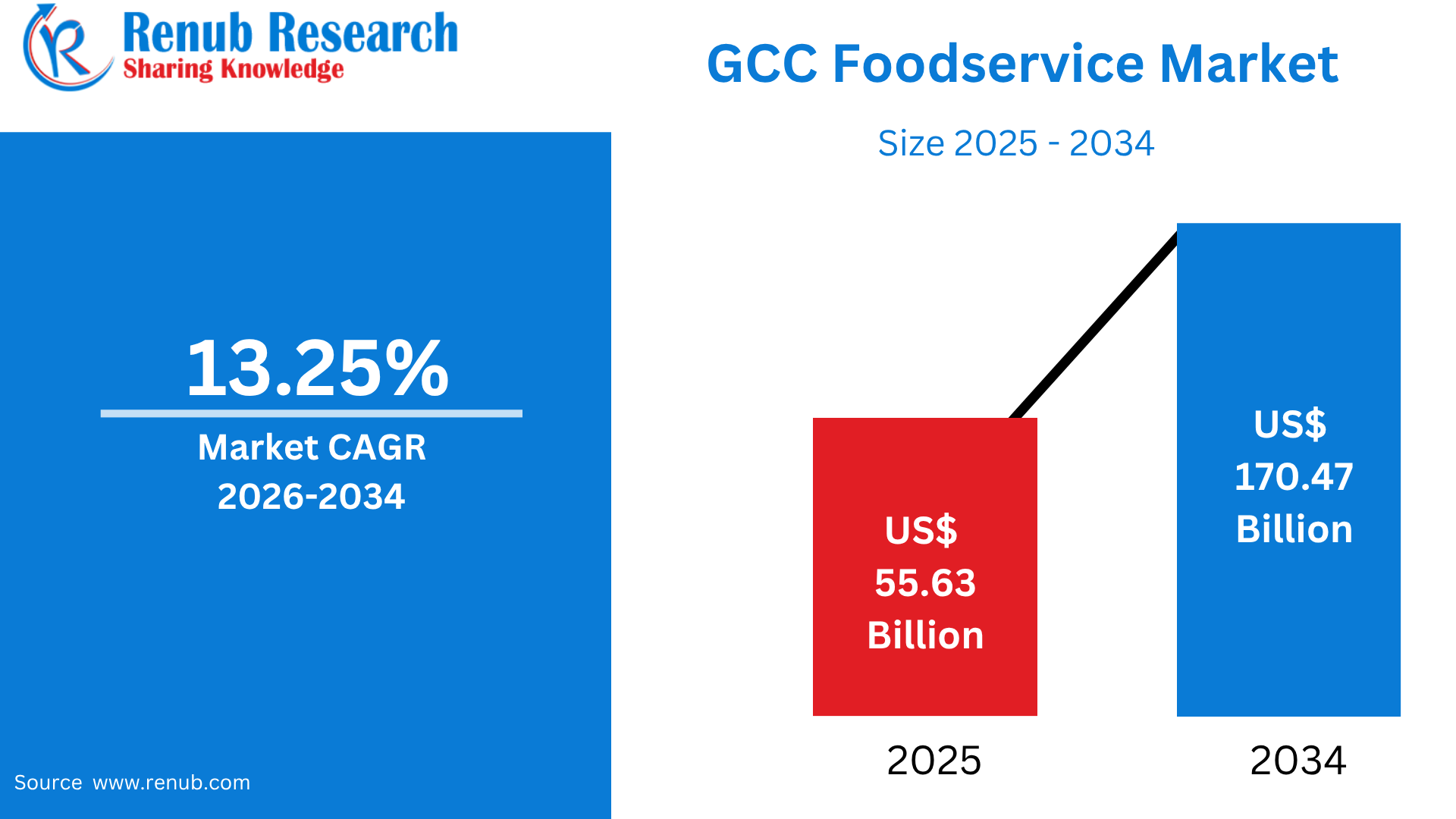
GCC Foodservice Market is expected to reach US$ 170.47 billion by 2034 from US$ 55.63 billion in 2025, with a CAGR of 13.25% from 2026 to 2034. The GCC foodservice market is experiencing steady expansion, driven by urbanization, tourism growth, and evolving consumer preferences, with continued development anticipated across diverse dining formats throughout the forecast period.
GCC Foodservice Industry Overview
The GCC foodservice sector has transformed into a multifaceted industry, reflecting the region’s economic growth, cultural diversity, and modernization. It includes a wide spectrum of services such as fine dining establishments, casual eateries, quick service restaurants, cafes, and large-scale catering operations. Increasing urban populations and rising standards of living have reshaped consumption patterns, encouraging people to explore dining options beyond traditional home-cooked meals. The presence of a multicultural population across GCC countries has also driven demand for a variety of global cuisines, making the market highly diverse and adaptive to international trends.
In parallel, the integration of technology has significantly influenced how foodservice businesses operate and interact with customers. Digital ordering platforms, mobile-based applications, and contactless payment systems have become integral components of the industry. Consumers are increasingly seeking convenience, speed, and flexibility, prompting operators to enhance their digital capabilities. The emergence of delivery-centric models, including cloud kitchens, has enabled businesses to reduce operational costs while expanding their customer reach. Data-driven insights are also being used to understand consumer behavior, allowing businesses to refine their offerings and improve service efficiency. This digital transformation continues to redefine the competitive landscape across the GCC foodservice sector.
Additionally, the region’s focus on economic diversification and tourism development has created a favorable environment for foodservice growth. Investments in infrastructure, retail spaces, and entertainment hubs have increased the number of locations where foodservice outlets can thrive. Social changes, including evolving family structures and increased workforce participation, have contributed to higher demand for convenient dining options. Consumers are also placing greater emphasis on quality, hygiene, and unique dining experiences, encouraging businesses to innovate continuously. While the market remains competitive, the combination of demographic shifts, technological advancement, and economic initiatives positions the GCC foodservice industry for sustained long-term development.
Growth Drivers for the GCC Foodservice Market
Growing Dining-Out Culture
The increasing preference for dining out across GCC countries is a major driver of the foodservice market. Social and cultural norms in the region emphasize gatherings and shared meals, leading to frequent visits to restaurants and cafes. As disposable incomes rise, consumers are more willing to spend on diverse dining experiences, ranging from casual meals to premium offerings. Younger generations, in particular, are more inclined toward exploring new cuisines and dining concepts, further boosting demand. Urban lifestyles and busy schedules also reduce the time available for home cooking, making foodservice options more appealing. The expansion of malls, entertainment centers, and leisure destinations provides convenient access to a variety of food outlets. This growing dining-out culture continues to drive consistent demand for foodservice services across the GCC region.
Expansion of Retail and Entertainment Infrastructure
The rapid development of retail and entertainment infrastructure across the GCC has significantly contributed to the growth of the foodservice market. Shopping malls, mixed-use developments, and entertainment complexes serve as key locations for foodservice outlets, attracting high footfall. These venues provide opportunities for restaurants and cafes to reach a large and diverse customer base. Additionally, the integration of foodservice within entertainment experiences enhances consumer engagement and increases spending. Large-scale projects and urban development continue to create new spaces for foodservice expansion. The presence of cinemas, theme parks, and cultural attractions further supports demand for dining options. As infrastructure development progresses, it strengthens the overall ecosystem for foodservice businesses, enabling them to expand their presence and cater to evolving consumer needs.
Rising Adoption of Innovative Dining Concepts
Innovation in dining concepts is playing a crucial role in driving the GCC foodservice market. Consumers are increasingly seeking unique and experiential dining options that go beyond traditional formats. This has led to the emergence of themed restaurants, fusion cuisines, and interactive dining experiences. Foodservice providers are experimenting with menu customization, open kitchens, and immersive environments to attract customers. Additionally, the growth of specialty cafes and niche dining segments reflects changing consumer preferences. Operators are also focusing on sustainability and ethical sourcing, aligning with global trends. These innovative approaches help businesses differentiate themselves in a competitive market while enhancing customer satisfaction. As consumer expectations continue to evolve, the adoption of creative and diverse dining concepts will remain a key growth driver.
Challenges in the GCC Foodservice Market
Workforce and Talent Management Issues
Managing a skilled and reliable workforce remains a key challenge in the GCC foodservice market. The industry relies heavily on a diverse labor pool, often requiring continuous recruitment, training, and retention efforts. High employee turnover rates can disrupt operations and affect service quality. Additionally, maintaining consistent standards across multiple outlets requires ongoing investment in staff development. Cultural diversity within the workforce may also present communication and management challenges. Labor regulations and policies can further impact hiring practices and operational flexibility. Foodservice operators must focus on creating positive work environments and offering competitive benefits to retain talent. Addressing workforce challenges is essential for ensuring smooth operations and delivering consistent customer experiences in the competitive GCC foodservice industry.
Supply Chain and Sourcing Constraints
Supply chain management poses a significant challenge for foodservice providers in the GCC region. Many countries in the region rely on imports for food ingredients, making them vulnerable to global supply disruptions and price fluctuations. Ensuring a consistent supply of high-quality ingredients can be complex and costly. Delays in logistics or changes in import regulations may impact operations and menu availability. Additionally, maintaining freshness and quality during transportation requires efficient storage and distribution systems. Foodservice operators must carefully manage supplier relationships and inventory to mitigate risks. The growing demand for sustainable and locally sourced ingredients adds another layer of complexity. Overcoming these supply chain challenges is critical for maintaining quality, controlling costs, and ensuring customer satisfaction.
United Arab Emirates Foodservice Market
The United Arab Emirates foodservice market stands out as a highly developed and diverse segment within the GCC region. It offers a wide variety of dining formats, from luxury restaurants to casual eateries and takeaway outlets. The country’s multicultural population drives demand for international cuisines and innovative dining experiences. Urban centers serve as major hubs for foodservice activity, supported by strong infrastructure and consumer spending. The increasing use of digital platforms for ordering and delivery has enhanced convenience and accessibility. Additionally, the presence of numerous global and regional brands creates a competitive and dynamic environment. Continuous investment in tourism, retail, and entertainment sectors further supports the growth of the foodservice market, positioning the UAE as a key contributor to the regional industry.
Bahrain Foodservice Market
The Bahrain foodservice market reflects steady development, supported by a growing hospitality sector and an evolving consumer base. The country offers a balanced mix of traditional dining options and modern restaurant concepts, catering to diverse tastes. Foodservice establishments are commonly located in urban centers, shopping destinations, and tourist areas, ensuring accessibility. Consumers in Bahrain are increasingly exploring new cuisines, contributing to the expansion of varied dining formats. The adoption of online food ordering and delivery services has further strengthened market reach. Additionally, the government’s focus on tourism and cultural activities supports consistent demand for foodservice offerings. Operators continue to emphasize quality, innovation, and customer experience to remain competitive, making Bahrain an important part of the GCC foodservice landscape.
Saudi Arabia Foodservice Market
The Saudi Arabia foodservice market is a major component of the GCC region, driven by a large and youthful population along with rapid urbanization. The market encompasses a wide range of dining options, including traditional eateries, cafes, and modern restaurant formats. Increasing consumer spending and changing lifestyles have led to higher demand for convenient and diverse food choices. Major cities act as central hubs for foodservice activity, offering opportunities for expansion and innovation. The adoption of digital technologies has enhanced accessibility through online ordering and delivery services. Government initiatives focused on economic diversification and infrastructure development further support market growth. The Saudi Arabia foodservice sector continues to evolve, reflecting changing consumer preferences and expanding opportunities.
Kuwait Foodservice Market
The Kuwait foodservice market is characterized by strong consumer spending and a well-established culture of dining out. The market offers a variety of dining formats, including fine dining restaurants, casual eateries, and quick service outlets. Consumers in Kuwait show a preference for high-quality food and diverse cuisines, driving demand for innovative offerings. Foodservice establishments are concentrated in urban areas and popular retail destinations, ensuring high visibility and accessibility. The increasing use of digital platforms for ordering and delivery has further enhanced convenience for customers. Additionally, the presence of international brands alongside local businesses contributes to a competitive market environment. Changing consumer expectations and a focus on quality continue to shape the growth of the foodservice sector in Kuwait.
Recent Developments in GCC Foodservice Market
- September 2025: The sixth site of the all-day restaurant chain Brunch and Cake opened at Palm Jumeirah Mall. Located on Level 01, the 206-square-meter restaurant offers the brand's signature cuisine, which includes brunch fare, all-day eating options, and freshly baked pastries including cakes, croissants, and cookies.
- In July 2025, Little Caesars launched their first location in the United Arab Emirates, serving large, traditional pizzas with cheese, veggie, and pepperoni options. An important step in Little Caesars' global expansion is the establishment in Dubai.
- In June 2025, Papa John's debuted a croissant pizza with a buttery, flaky dough foundation in the United Arab Emirates. The new product blends a pastry-like crust texture with classic pizza toppings.
- April 2025: In the Olaya Towers of Riyadh, Pret A Manger opened its first location in Saudi Arabia. This project represents a significant turning point in the brand's larger plan to expand throughout the Gulf Cooperation Council (GCC).
GCC Foodservice Market Segments
Foodservice Types
- Cafes & Bars
- Cloud Kitchen
- Full Service Restaurants
- Quick Service Restaurants
Outlet
- Chained Outlets
- Independent Outlets
Location
- Leisure
- Lodging
- Retail
- Standalone
- Travel
GCC Countries Food Service Market
- Bahrain
- Kuwait
- Oman
- Qatar
- Saudi Arabia
- United Arab Emirates
- Rest of GCC
All companies have been covered with 5 Viewpoints
- Overviews
- Key Person
- Recent Developments
- SWOT Analysis
- Revenue Analysis
Company Analysis for GCC Foodservice
- Al Tazaj Fakeih
- Alamar Foods Company
- ALBAIK Food Systems Company SA
- Galadari Ice Cream Co. Ltd LLC
- Herfy Food Service Company
- Kudu Company For Food And Catering
- LuLu Group International
- Riyadh International Catering Corporation
- Shahia Food Limited Company
Report Details:
| Report Features | Details |
| Base Year |
2024 |
| Historical Period |
2020 - 2024 |
| Forecast Period |
2025 - 2033 |
| Market |
US$ Billion |
| Segment Covered |
By Foodservice Type, By Outlet, By Location and By Country |
| Countries Covered |
|
| Companies Covered |
|
| Customization Scope |
20% Free Customization |
| Post-Sale Analyst Support |
1 Year (52 Weeks) |
| Delivery Format |
PDF and Excel through Email (We can also provide the editable version of the report in PPT/Word format on request) |
Customization Services available
- Analysis of Market Size and Its Segments
- More Company Profiles (Upto 10 without any additional cost):
- Additional Countries (Other than mentioned Countries):
- Region/Country Specific Reports:
- Market Entry Strategy:
- Region-Specific Market Dynamics:
- Regional Market Share Analysis:
- Trade Analysis:
- Production Insights:
- Others Customized Requests:
For more information contact our analysts.
Need More Assistance?
- Talk to our analysts to get more precious information on the current market trends.
- Include more countries and segments and customize the report based on the final requirement.
- Get a competitive advantage in your industry by knowing the report findings and making a positive impact on your revenues and operations.
- Our analysts are always ready to provide more help and pertinent information if you need any additional assistance.