Europe Respiratory Care Devices Market Report by Device Type, Product Type, Application, End User, Countries and Companies Analysis 2026-2034
Buy NowEurope Respiratory Care Devices Market Size and Forecast
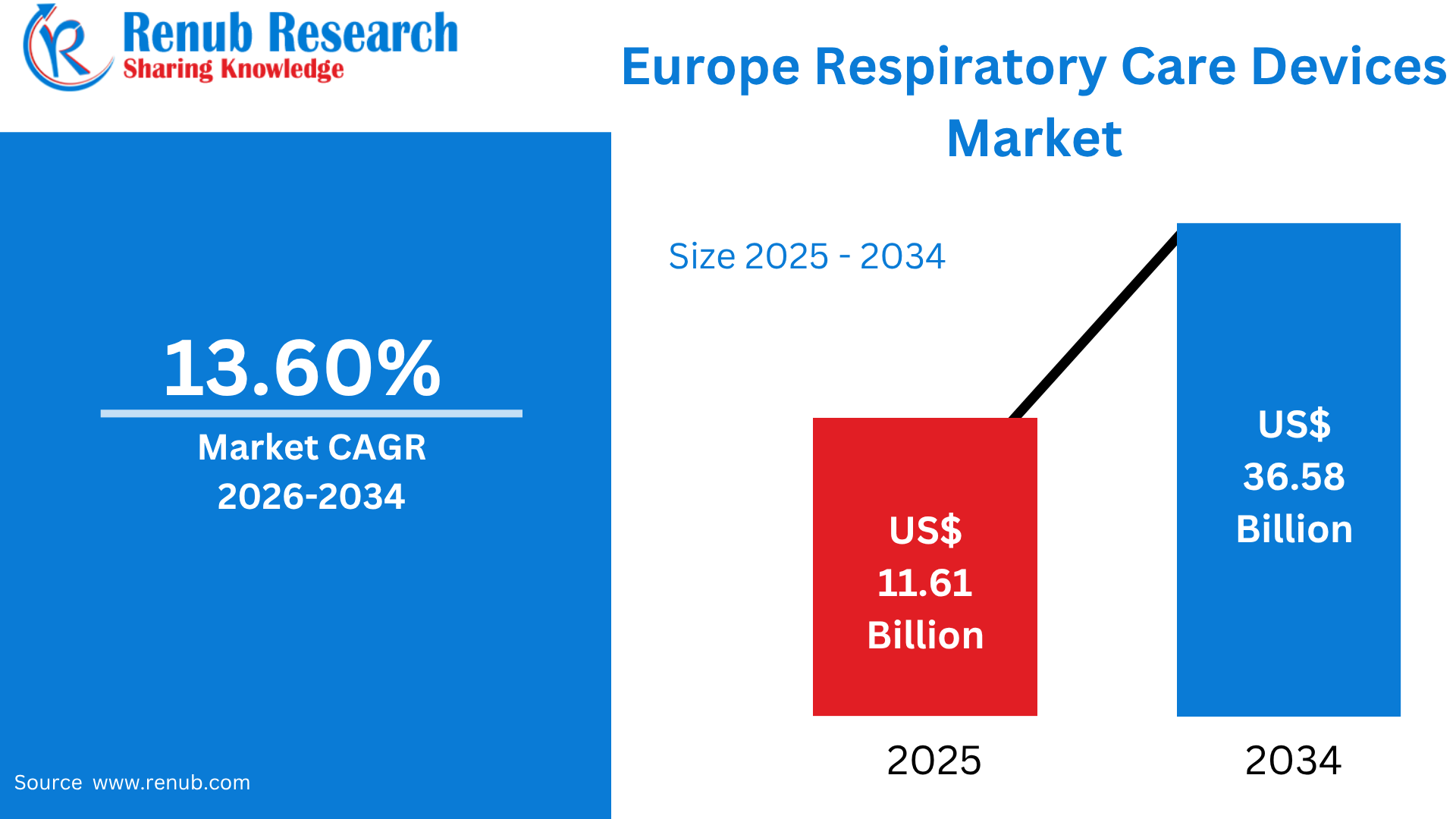
Europe Respiratory Care Devices Market is projected to grow from US$ 6.22 billion in 2025 to US$ 11.88 billion by 2034, registering a CAGR of 7.45% during 2026–2034. The market is expected to witness strong and sustained growth, supported by the increasing prevalence of respiratory disorders, a rapidly aging population, and growing awareness of respiratory health. Technological advancements in respiratory care equipment, including smart monitoring devices, portable oxygen systems, ventilators, and connected solutions, are further supporting market expansion.
What are Respiratory Care Devices and Their Uses & Popularity in Europe
Respiratory care devices are medical equipment designed to diagnose, monitor, manage, and treat disorders affecting the respiratory system, including chronic obstructive pulmonary disease (COPD), asthma, sleep apnea, pneumonia, and other breathing conditions. These devices include ventilators, oxygen concentrators, nebulizers, CPAP and BiPAP machines, respiratory monitors, inhalation devices, and portable oxygen systems. They are widely used in hospitals, intensive care units, clinics, rehabilitation centers, and increasingly in home healthcare settings. Their applications range from providing respiratory support and oxygen therapy to delivering medication and continuously monitoring patients’ breathing patterns. Demand for these devices is particularly strong in Europe because chronic respiratory diseases affect 81.7 million people across the WHO European Region and cause nearly 400,000 deaths annually. The aging population is another important factor, with people aged 65 and above accounting for 22% of the EU population in 2025. Growing preference for home-based treatment, portable technologies, and connected monitoring solutions is further increasing their popularity across European healthcare systems.
Influenza Vaccination Rate in Europe, 2023
- EU Average: 47.1% of people aged 65 years and over in the EU were vaccinated against influenza in 2023, down from 48.4% in 2022.
- Denmark: Recorded the highest vaccination rate at 77.5% among people aged 65 and over.
- Ireland: Reported a vaccination rate of 75.7%, ranking second among EU countries.
- Portugal: Recorded the third-highest rate at 71.8%.
- Higher Coverage Countries: Sweden, the Netherlands, Spain, Finland, and other Western and Northern European countries also reported relatively high vaccination coverage.
- Lower Coverage: Poland recorded 9.6%, Slovakia 11.7%, and Bulgaria 15.2%, among the lowest rates in the EU.
- Respiratory Disease Burden: Respiratory diseases accounted for approximately 363,500 deaths in the EU in 2022, representing 7.0% of all deaths.
- Preventive Healthcare: Influenza vaccination is particularly important for older adults because respiratory infections can lead to severe complications such as pneumonia and hospitalization.
- EU Health Priority: The European healthcare system continues to emphasize vaccination among older adults and other high-risk groups to reduce severe respiratory infections.
- Market Relevance: High respiratory disease prevalence, an aging population, and increasing preventive-care initiatives support demand for respiratory care devices, diagnostic equipment, monitoring systems, and home-care solutions across Europe.
Growth Drivers of Europe Respiratory Care Devices Market
Rising Prevalence of Chronic Respiratory Diseases
The increasing burden of chronic respiratory diseases is one of the strongest growth drivers for the European respiratory care devices market. Conditions such as COPD, asthma, respiratory allergies, and pulmonary hypertension require continuous diagnosis, monitoring, and treatment, creating sustained demand for respiratory devices. According to WHO, 81.7 million people in the WHO European Region were living with chronic respiratory diseases, while 6.8 million new cases were diagnosed in 2021. Chronic respiratory diseases are also the sixth leading cause of death in the region, accounting for almost 400,000 deaths annually, with COPD responsible for nearly 80% of CRD deaths. Devices such as oxygen concentrators, ventilators, nebulizers, CPAP systems, and respiratory monitors are therefore becoming increasingly important for long-term disease management. Air pollution, tobacco consumption, occupational exposure, and other environmental factors further contribute to respiratory disease incidence. WHO identifies tobacco use at 25.3% in the European Region as a major avoidable respiratory disease risk factor.
Aging Population and Growing Healthcare Requirements
Europe’s rapidly aging population is significantly increasing the need for respiratory care devices. Older adults have a higher risk of developing chronic respiratory conditions and often require long-term respiratory support, monitoring, oxygen therapy, or sleep-related breathing treatment. Eurostat reports that people aged 65 years and above represented 22% of the EU population in 2025, or about 99 million people, while those aged 80 and above accounted for around 6%. This demographic shift is expanding the patient base for respiratory care equipment, particularly ventilators, oxygen concentrators, CPAP/BiPAP machines, and monitoring systems. Aging also increases the need for continuous disease management outside hospitals, encouraging healthcare providers and families to adopt easier-to-use respiratory technologies. The growing number of elderly patients with COPD, sleep apnea, and other respiratory disorders is consequently supporting demand for both clinical and home-use devices. Manufacturers are responding by developing portable, lightweight, user-friendly, and digitally connected equipment that can improve treatment adherence and enable healthcare professionals to monitor patients remotely.
Technological Advancements and Expansion of Home Healthcare
Technological innovation and the shift toward home-based respiratory care are creating new opportunities for market expansion across Europe. Modern respiratory devices increasingly incorporate digital connectivity, remote monitoring, portability, automation, and improved patient interfaces. Innovations such as smart inhalers, connected nebulizers, portable oxygen concentrators, and digitally connected ventilators enable patients to manage respiratory conditions more conveniently outside traditional healthcare facilities. Market research indicates that therapeutic respiratory care devices, including ventilators, oxygen therapy equipment, nebulizers, and CPAP/BiPAP systems, represent a major product category because they are used for both acute treatment and long-term home care. This transition toward decentralized healthcare is encouraging demand for compact and connected devices that allow patients to receive treatment while reducing unnecessary hospital visits.
Challenges of Europe Respiratory Care Devices Market
High Cost of Advanced Respiratory Devices
The relatively high cost of sophisticated respiratory care equipment can limit adoption, particularly for patients requiring long-term treatment and healthcare systems operating under budget constraints. Advanced ventilators, portable oxygen concentrators, connected monitoring systems, and technologically sophisticated sleep-apnea devices often require significant upfront investment as well as ongoing maintenance, accessories, replacement components, and technical support. Although European healthcare systems provide broad medical coverage, reimbursement policies and procurement budgets differ considerably between countries. These differences can affect patient access to advanced respiratory technologies and create challenges for manufacturers seeking consistent market penetration. Smaller healthcare facilities and home-care providers may also face financial barriers when upgrading from conventional equipment to digitally connected systems. Furthermore, healthcare providers increasingly expect devices to demonstrate clear clinical and economic value before making large-scale purchases. Manufacturers therefore need to balance technological sophistication, affordability, reliability, and reimbursement compatibility. As the market becomes more technologically advanced, controlling production and maintenance costs while maintaining high safety and performance standards will remain an important challenge.
Underdiagnosis and Limited Respiratory Diagnostic Capacity
Underdiagnosis of respiratory diseases remains a major challenge because undetected patients may not receive appropriate treatment or respiratory devices at an early stage. WHO and the European Respiratory Society reported that chronic respiratory diseases remain vastly underdiagnosed and poorly managed across the WHO European Region. The organizations also highlighted limitations in diagnostic capacity, including restricted access to tools such as spirometry, delayed referrals, and insufficient training among some healthcare professionals. This situation can reduce the number of patients identified as candidates for respiratory monitoring and treatment technologies. Regional disparities further complicate the market, with WHO reporting differences in disease prevalence, hospitalization, and mortality across European countries. Increasing awareness and improving early diagnosis are therefore essential for expanding the addressable patient population. Healthcare systems will need to strengthen primary-care screening, improve access to pulmonary diagnostics, and increase professional training. Without improvements in diagnosis and disease management, the full potential demand for respiratory care devices may remain unrealized.
Respiratory Care Device Launches in Europe
- RESPINOR DXT – RESPINOR (2025): Received CE marking under the EU Medical Device Regulation in August 2025, enabling its launch across the European Economic Area. The non-invasive diaphragm monitoring device is designed to support monitoring of respiratory muscle function in intensive care.
- Prisma SMART Max – Löwenstein Medical (2024): Launched in Europe as an advanced CPAP system incorporating adaptive pressure regulation, connectivity, and patient-focused comfort features for obstructive sleep apnea treatment.
- AirTouch N30i – ResMed (2024): Introduced as ResMed’s first fabric-wrapped CPAP mask, featuring a soft, breathable, moisture-wicking frame designed to improve comfort and support long-term CPAP adherence.
- AirFit F40 – ResMed (2024): Developed as a compact full-face CPAP mask with a flexible frame, soft silicone cushion, and quick-release tube, targeting greater freedom of movement and improved patient comfort.
- Trilogy Evo – Philips Respironics: A portable life-support ventilator designed for use across hospital, home, and alternative-care environments. The platform supports invasive and non-invasive ventilation and includes connectivity and optional oxygen-saturation and carbon-dioxide monitoring.
- Trilogy EV300 – Philips Respironics: A versatile ventilator platform supporting respiratory care across different clinical environments, including hospital and home-care applications, with emphasis on patient monitoring and flexible ventilation support.
- AirView Remote Monitoring Expansion – ResMed (2024): ResMed expanded its AirView connected-care platform across European markets including Germany, the United Kingdom, and France, enabling healthcare professionals to monitor CPAP adherence and therapy data remotely.
- Leoni 4 Infant HFO Ventilator – Löwenstein Medical (2025): Featured in Europe as a neonatal respiratory-care solution designed for high-frequency oscillatory ventilation, addressing the specialized ventilation requirements of premature and critically ill infants.
- CARO Cough Support Device – Löwenstein Medical: Introduced as part of the company’s respiratory therapy portfolio to provide cough-support capabilities for patients requiring airway-clearance assistance, complementing its CPAP, APAP, and home-ventilation products.
- AirTouch N30i Fabric CPAP Mask – European Market Expansion (2024): ResMed expanded its new fabric-based nasal CPAP technology toward international markets, emphasizing softer materials, moisture management, and a tube-up design to improve the overall patient experience during sleep therapy.
Rising Prevalence of Sleep Apnea
Europe obstructive sleep apnea devices market is expanding as awareness, diagnosis, and treatment of sleep-related breathing disorders increase. Obstructive sleep apnea (OSA) causes repeated upper-airway collapse during sleep, resulting in interrupted breathing, poor sleep quality, daytime fatigue, and increased cardiovascular risks. Demand for CPAP, BiPAP, oral appliances, diagnostic monitors, and sleep-monitoring systems is increasing as more patients seek effective long-term treatment. Market estimates indicate that the sleep apnea segment of Europe’s respiratory care devices market is expected to record approximately 6.7% CAGR during 2025–2032, supported by rising diagnosis and adoption of CPAP and BiPAP technologies. Spain alone is estimated to have 5–7 million people with OSA, with approximately 2 million experiencing significant symptoms requiring treatment. The growing availability of home-based sleep testing and portable monitoring technologies is also helping physicians identify undiagnosed patients. Increasing awareness about the relationship between OSA, obesity, hypertension, cardiovascular disease, and diabetes is expected to further strengthen demand for sleep apnea devices across Europe.
Large Asthma Patient Population Driving Device Demand
The substantial burden of asthma across Europe is a major factor supporting the asthma respiratory care devices market. Asthma is a chronic inflammatory airway disease that can cause coughing, wheezing, breathlessness, and recurrent attacks. Patients commonly depend on inhalers, nebulizers, spacers, peak-flow meters, and respiratory monitoring devices for daily disease management and emergency treatment. Estimates indicate approximately 27 million asthma cases in Western Europe, while around 12% of the UK population is affected by asthma. This large patient population generates recurring demand for devices used to deliver medications and monitor lung function. Increasing awareness of asthma symptoms and the importance of early diagnosis is also encouraging patients to seek professional treatment. In addition, pediatric asthma remains an important area of healthcare demand, requiring easy-to-use inhalation and monitoring solutions. Manufacturers are increasingly developing compact and user-friendly devices that improve medication delivery and patient compliance. Consequently, the continuing prevalence of asthma, combined with increasing diagnosis and long-term disease management requirements, is expected to maintain strong demand for respiratory care devices throughout Europe. In February 2024, Aptar Pharma launched HeroTracker Sense, a digital respiratory health solution designed to convert conventional pressurized metered-dose inhalers into connected devices. Such innovations can improve medication adherence, support personalized treatment, and provide greater visibility into patient behavior. Portable peak-flow meters and digital respiratory monitors are also becoming more convenient for home use. As healthcare systems increasingly emphasize preventive care, remote monitoring, and personalized medicine, demand for connected asthma-management technologies is expected to increase across European markets.
Dominance of Therapeutic Respiratory Equipment
Therapeutic devices represent a significant component of Europe’s respiratory care devices industry because they provide direct treatment and breathing support for patients with chronic and acute respiratory conditions. This category includes ventilators, oxygen therapy equipment, nebulizers, CPAP and BiPAP systems, and other respiratory support devices. According to recent market estimates, therapeutic respiratory care devices represented approximately 55.6% of Europe’s respiratory care devices market in 2025, making them the largest product category. Increasing prevalence of COPD, asthma, sleep apnea, and other respiratory disorders is generating consistent demand for these technologies. COPD is particularly important because it requires long-term management, including oxygen therapy and non-invasive ventilation for appropriate patients. WHO reports that chronic respiratory diseases affect approximately 81.7 million people in the WHO European Region, while nearly 80% of CRD deaths are caused by COPD. This substantial disease burden supports recurring demand for therapeutic devices in hospitals, clinics, and home-care environments. Product improvements focused on portability, comfort, energy efficiency, and ease of operation are further supporting market development.
Recurring Demand for Masks, Circuits and Tubes
The consumables and accessories segment benefits from the recurring nature of respiratory treatment because many components require periodic replacement to maintain hygiene, safety, and device performance. Key products include respiratory masks, breathing circuits, disposable resuscitators, tracheostomy tubes, and other respiratory accessories. Unlike durable equipment such as ventilators and oxygen concentrators, consumables generate repeat purchasing requirements from hospitals, home-care providers, clinics, and patients. Growing use of CPAP, BiPAP, mechanical ventilation, oxygen therapy, and nebulization therefore directly supports demand for related consumables. Increasing emphasis on infection prevention and hospital hygiene further encourages healthcare providers to replace disposable components according to recommended schedules. The expansion of home respiratory care is also increasing demand for replacement masks, tubing, filters, and related accessories. In addition, improvements in materials are enabling manufacturers to develop lighter, more comfortable, skin-friendly, and better-fitting products. As respiratory devices become more widely used across European healthcare settings, the recurring replacement cycle of consumables is expected to provide a stable source of market revenue.
Hospitals Remain the Largest End-User Segment
Hospitals continue to represent the leading end-user segment for respiratory care devices in Europe because they manage patients requiring intensive diagnosis, acute respiratory treatment, surgery-related respiratory support, and critical care. Recent market estimates indicate that the hospital segment accounted for approximately 68.8% of Europe’s respiratory care devices market, making hospitals the largest end-user category. Hospitals use a wide range of equipment, including mechanical ventilators, oxygen therapy systems, nebulizers, respiratory monitors, diagnostic equipment, CPAP/BiPAP devices, and consumables. The substantial burden of COPD, asthma, sleep apnea, respiratory infections, and other pulmonary disorders continues to generate demand for specialized respiratory equipment. WHO estimates that chronic respiratory diseases affect 81.7 million people across the WHO European Region, placing considerable pressure on healthcare systems. Intensive-care units are particularly important users of advanced ventilation and monitoring technologies. European hospitals are also investing in equipment modernization, digital connectivity, and improved patient-monitoring capabilities. As healthcare providers seek to improve clinical outcomes and manage increasing respiratory patient volumes, hospital demand for advanced respiratory care equipment is expected to remain strong.
High Respiratory Disease Burden Supporting United Kingdom Market Growth
United Kingdom respiratory care devices market is expanding steadily, supported by the significant burden of asthma, COPD, pneumonia, and other respiratory disorders. In England, 873,461 emergency hospital admissions for respiratory diseases were recorded in the financial year ending 2025, representing a rate of 1,442 admissions per 100,000 population. COPD alone accounted for 118,975 emergency admissions, highlighting the continuing requirement for respiratory diagnostic and therapeutic equipment. Demand for oxygen concentrators, ventilators, nebulizers, inhalers, CPAP devices, and respiratory monitoring systems is increasing across hospitals and home-care settings. The National Health Service continues to support access to respiratory treatment, while government initiatives emphasize earlier diagnosis and better chronic disease management. The growing use of home-based respiratory care and remote monitoring is further encouraging adoption of portable and connected devices. Technological improvements in device usability, patient monitoring, and data connectivity are expected to strengthen the UK market over the forecast period.
Advanced Healthcare Infrastructure and Rising Respiratory Disease Burden in Germany
Germany respiratory care devices market is supported by a highly developed healthcare system, strong medical technology capabilities, and substantial demand for respiratory treatment. Germany recorded approximately 75,000 deaths from diseases of the respiratory system in recent national mortality statistics, demonstrating the considerable health burden associated with respiratory conditions. Chronic lower respiratory diseases accounted for more than 38,000 deaths, while pneumonia contributed more than 20,000 deaths. These trends sustain demand for ventilators, oxygen therapy equipment, nebulizers, CPAP and BiPAP systems, and advanced respiratory monitoring technologies. Germany’s aging population is another important market driver, with older adults facing greater risks of COPD, sleep-related breathing disorders, and other chronic respiratory conditions. Strong healthcare reimbursement mechanisms and hospital modernization are facilitating adoption of advanced equipment. In addition, Germany’s established medical-device manufacturing and research ecosystem supports continuous innovation in connected respiratory equipment, portable oxygen systems, and home-based respiratory solutions.
Growing Asthma and Chronic Respiratory Disease Management in France
France respiratory care devices market is witnessing sustained development due to the prevalence of asthma and other chronic respiratory conditions, combined with strong healthcare infrastructure and government-supported disease management programs. According to national health surveillance data, nearly 4 million people in France are affected by asthma, while approximately 60,000 hospital stays occur each year because of asthma. This substantial patient population creates continuous demand for inhalers, nebulizers, peak-flow meters, respiratory monitoring systems, and other therapeutic devices. Healthcare providers are increasingly emphasizing early diagnosis, long-term disease management, and prevention of severe respiratory episodes. Demand is also rising for portable oxygen systems and non-invasive ventilation equipment as home healthcare becomes more important. France’s focus on digital healthcare and preventive medicine is supporting the introduction of connected respiratory devices that can facilitate patient monitoring and treatment adherence. Growing awareness of respiratory health, combined with improvements in healthcare technology, is expected to provide further opportunities for respiratory device manufacturers.
Aging Population and Increasing Respiratory Disease Burden in Italy
Italy respiratory care devices market is progressing steadily, driven by an aging population, increasing respiratory disease burden, and expanding demand for home-based healthcare. Italy has one of Europe’s oldest populations, with people aged 65 years and over accounting for approximately 25.1% of the population in 2026, creating a substantial patient base for chronic respiratory care. Respiratory diseases are also an important contributor to mortality in the country. In 2023, respiratory diseases recorded a standardized mortality rate of approximately 6.4 deaths per 10,000 inhabitants, with mortality increasing particularly among people aged over 65. These trends are stimulating demand for ventilators, oxygen concentrators, nebulizers, CPAP systems, respiratory monitors, and other therapeutic devices. Healthcare modernization and increasing adoption of home-care services are encouraging the use of portable and easy-to-operate equipment outside hospitals. Furthermore, remote monitoring technologies are improving the management of chronic respiratory patients. Continued investment in healthcare infrastructure, preventive care, and long-term disease management is expected to support market expansion in Italy.
Recent Developments in Europe Respiratory Care Devices Market
- Honeywell International Inc. successfully implemented the Bengaluru Safe City Project in March 2023 with the goal of improving urban safety using its cutting-edge security and respiratory care devices. This project highlights Honeywell's commitment to applying its knowledge of cutting-edge security systems by utilizing cutting-edge technologies to provide a more secure and resilient urban environment. The project contributes to the creation of safer, more intelligent cities by highlighting the growing importance of smart technology in urban safety.
- The Chesapeake Bay and Rivers Association of REALTORS (CBRAR) and Sentrilock, LLC, a top supplier of electronic lockbox solutions for the real estate sector, announced a strategic agreement in February 2023 to build a smart electronic lockbox marketplace for REALTOR members. In order to facilitate more effective and secure real estate transactions, this partnership aims to improve security and simplify accessibility for real estate professionals. The program demonstrates Sentrilock's dedication to fostering innovation and enhancing operational efficiency in the real estate industry.
Segmentation Analysis – Device Type, Indication, End-User
Application
- Chronic Obstructive Pulmonary Disease (COPD)
- Obstructive Sleep Apnea
- Asthma
- Respiratory Distress Syndrome
- Cystic Fibrosis
- Others
Device Type
- Therapeutic Devices
- Monitoring Devices
- Diagnostic Devices
- Consumables & Accessories
Product Type
- Respiratory Consumables
- Nebulizers
- Oxygen Concentrators
- Polysomnography Devices
- Pulse Oximeter
- Mechanical Ventilators
- Spirometers
- Others
End Users
- Hospitals
- Home Care
- Ambulatory Care
Countries
- France
- Germany
- Italy
- Spain
- United Kingdom
- Belgium
- Netherlands
- Russia
- Poland
- Greece
- Norway
- Romania
- Portugal
- Rest of Europe
All companies have been covered with 5 Viewpoints
- Overviews
- Key Person
- Recent Developments
- SWOT Analysis
- Revenue Analysis
Company Analysis:
- Medtronic Plc
- Koninklijke Philips
- General Electric Company
- Masimo Corporation
- ResMedInc
- Becton, Dickinson and Company
- Chart Industries Inc
- Getinge AB
Report Details:
| Report Features | Details |
| Base Year |
2025 |
| Historical Period |
2022 - 2025 |
| Forecast Period |
2026 - 2034 |
| Market |
US$ Billion |
| Segment Covered |
Application, Device Types, Product Type, End User and Countries |
| Countries Covered |
|
| Companies Covered |
|
| Customization Scope |
20% Free Customization |
| Post-Sale Analyst Support |
1 Year (52 Weeks) |
| Delivery Format |
PDF and Excel through Email (We can also provide the editable version of the report in PPT/Word format on request) |
Customization Services available
- Analysis of Market Size and Its Segments
- More Company Profiles (Upto 10 without any additional cost):
- Additional Countries (Other than mentioned Countries):
- Region/Country Specific Reports:
- Market Entry Strategy:
- Region-Specific Market Dynamics:
- Regional Market Share Analysis:
- Trade Analysis:
- Production Insights:
- Others Customized Requests:
For more information contact our analysts.
Need More Assistance?
- Talk to our analysts to get more precious information on the current market trends.
- Include more countries and segments and customize the report based on the final requirement.
- Get a competitive advantage in your industry by knowing the report findings and making a positive impact on your revenues and operations.
- Our analysts are always ready to provide more help and pertinent information if you need any additional assistance.