Cold Chain Packaging Market Size, Share, Growth, Trends, Industry Analysis & Forecast 2026–2034
Buy NowCold Chain Packaging Market Size
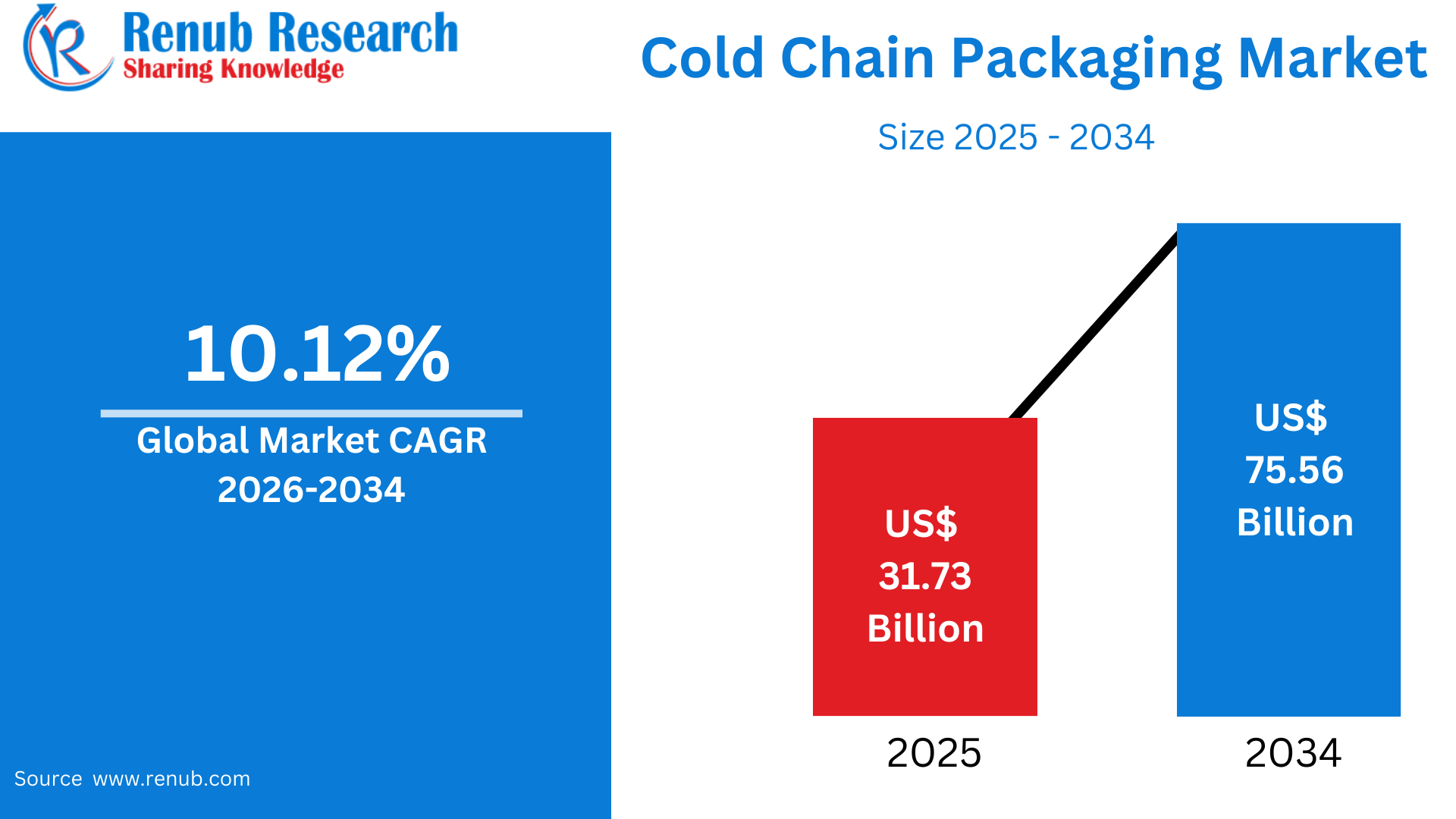
Global Cold Chain Packaging Market, valued at US$ 31.73 billion in 2025, is projected to reach US$ 75.56 billion by 2034, expanding at a CAGR of 10.12% during the forecast period from 2026 to 2034. Market growth is being driven by the increasing demand for temperature-controlled packaging solutions for pharmaceuticals, biologics, vaccines, and perishable food products. The expansion of global trade, rising cross-border transportation of temperature-sensitive goods, and the growing popularity of online grocery and meal delivery services are further fueling demand.
What is Cold Chain Packaging and Its Uses & Popularity Worldwide
Cold chain packaging refers to specialized packaging solutions designed to maintain products within a predetermined temperature range throughout storage, transportation, and distribution. It protects temperature-sensitive goods from spoilage, contamination, and quality degradation by using insulated containers, refrigerants, gel packs, phase change materials (PCMs), vacuum insulated panels (VIPs), and temperature-monitoring devices. Cold chain packaging plays a critical role in industries such as pharmaceuticals, biotechnology, food and beverages, chemicals, and healthcare. It is extensively used for transporting vaccines, biologics, blood products, insulin, seafood, dairy products, frozen foods, fresh fruits, vegetables, and specialty chemicals.
Globally, the popularity of cold chain packaging has increased due to rising demand for temperature-sensitive pharmaceuticals, expanding international food trade, and the rapid growth of e-commerce grocery delivery services. Pharmaceutical companies rely on validated cold chain packaging to preserve the efficacy of high-value biologics and vaccines during transit. Meanwhile, food manufacturers use insulated packaging to extend product shelf life and reduce waste. Growing investments in sustainable packaging materials, reusable shipping containers, and smart temperature-monitoring technologies continue to strengthen the worldwide adoption of cold chain packaging solutions across multiple industries.
The demand for sustainable cold chain packaging
The demand for reusable and recyclable cold chain packaging products is on the rise, driven by both consumer preferences and regulatory pressures. Five statistics highlight this growing trend.
Consumer Preferences
According to a McKinsey survey, 43% of consumers consider the environmental impact of packaging when making purchasing decisions. This indicates a significant shift towards sustainability in consumer behavior.
Regulatory Pressures
More than 9,000 companies worldwide — as well as over 1,000 cities and 1,000 educational institutions — are participating in the Race to Zero. The goal is to halve global greenhouse gas emissions by 2030. This includes taking a closer look at sustainable packaging, including more sustainable cold chain packaging solutions.
Growth Drivers of the Global Cold Chain Packaging Market
Rising Demand for Temperature-Sensitive Pharmaceuticals and Biologics
The pharmaceutical industry is one of the strongest growth drivers for the global cold chain packaging market. A rapidly increasing number of biologics, vaccines, cell and gene therapies, insulin products, and specialty medicines require strict temperature control during manufacturing, storage, and transportation. Industry estimates indicate that more than 50% of newly approved pharmaceutical products require cold chain logistics, while many biologic drugs must be maintained between 2°C and 8°C to preserve their effectiveness. Global vaccine distribution programs, expanding biotechnology research, and increasing production of personalized medicines have significantly increased demand for validated insulated packaging solutions. Pharmaceutical companies are investing in advanced thermal packaging systems equipped with phase change materials, vacuum insulated panels, and digital temperature monitoring to ensure regulatory compliance and product integrity. Increasing healthcare expenditure, expanding immunization programs, and rising chronic disease prevalence are expected to drive continued growth in pharmaceutical cold chain shipments. These trends make temperature-controlled packaging an essential component of global healthcare supply chains and a major contributor to long-term market expansion.
Expansion of Global Food Trade and E-Commerce Grocery Delivery
The rapid growth of international food trade and online grocery shopping is significantly boosting demand for cold chain packaging solutions. Consumers increasingly expect fresh meat, seafood, dairy products, frozen foods, fruits, vegetables, and ready-to-eat meals to be delivered while maintaining product quality and food safety. Global food losses remain substantial, with approximately 14% of food produced being lost before reaching retail markets, highlighting the importance of effective temperature-controlled logistics. E-commerce grocery platforms continue expanding in both developed and emerging economies, requiring reliable insulated packaging capable of maintaining product freshness during last-mile delivery. International exports of seafood, dairy products, and fresh produce also depend heavily on cold chain packaging to comply with food safety regulations and preserve shelf life during long-distance transportation. Manufacturers are introducing lightweight insulated containers, recyclable thermal liners, and reusable shipping systems to improve efficiency while reducing transportation costs. Continuous growth in urbanization, changing consumer lifestyles, and increasing demand for convenience foods will continue supporting the expansion of cold chain packaging worldwide.
Technological Advancements and Sustainable Packaging Innovations
Continuous technological innovation is transforming the global cold chain packaging market by improving thermal performance, sustainability, and supply chain visibility. Modern packaging solutions increasingly incorporate vacuum insulated panels (VIPs), advanced phase change materials (PCMs), smart sensors, RFID tracking, and IoT-enabled temperature monitoring systems to provide real-time shipment visibility and minimize temperature excursions. These technologies significantly improve product protection while reducing spoilage and regulatory risks during transportation. Sustainability has also become a major industry focus as companies seek to reduce packaging waste and carbon emissions. Manufacturers are investing in recyclable insulation materials, biodegradable packaging, reusable containers, and lightweight shipping systems to meet environmental objectives. Reusable cold chain packaging can complete dozens of distribution cycles, lowering long-term operating costs and reducing material consumption compared with single-use alternatives. Advances in digital monitoring, predictive analytics, and automated logistics management further enhance supply chain efficiency. These innovations continue to strengthen customer confidence, improve regulatory compliance, and expand adoption across pharmaceutical, food, biotechnology, and industrial sectors.
Challenges of the Global Cold Chain Packaging Market
High Packaging and Transportation Costs
One of the primary challenges facing the global cold chain packaging market is the high cost associated with temperature-controlled packaging and logistics. Cold chain shipments require specialized insulated containers, refrigerants, temperature-monitoring devices, refrigerated transportation, and qualified storage facilities, making them significantly more expensive than conventional distribution systems. Advanced packaging technologies such as vacuum insulated panels and phase change materials provide superior thermal protection but also increase packaging costs. Fuel price fluctuations, energy consumption, and refrigerated warehouse operations further raise transportation expenses. For pharmaceutical companies, maintaining strict regulatory compliance often requires validated packaging systems, continuous temperature monitoring, and extensive documentation, adding additional operational costs. Small and medium-sized enterprises may face financial barriers when implementing advanced cold chain infrastructure. Rising raw material prices and increasing demand for environmentally sustainable packaging solutions also contribute to higher manufacturing costs. Managing these expenses while maintaining product quality, regulatory compliance, and competitive pricing remains a major challenge for cold chain packaging manufacturers and logistics providers worldwide.
Temperature Excursions and Complex Supply Chain Management
Maintaining consistent temperature control throughout global distribution networks remains a significant operational challenge for the cold chain packaging industry. Temperature excursions can occur during loading, unloading, customs inspections, warehouse transfers, transportation delays, or equipment failures, potentially compromising sensitive pharmaceutical products and perishable foods. Even short periods outside the required temperature range may reduce product effectiveness, shorten shelf life, or result in complete product loss. Global supply chains often involve multiple transportation modes, distribution centers, and logistics providers, increasing the complexity of maintaining uninterrupted cold chain conditions. Regulatory authorities require strict documentation and validation of temperature-controlled shipments, placing additional responsibilities on manufacturers and logistics companies. Differences in infrastructure quality across developed and developing regions further increase the risk of shipment disruption. To minimize these risks, organizations continue investing in smart sensors, GPS tracking, IoT-enabled monitoring, predictive analytics, and real-time alert systems. However, integrating these technologies across global supply chains remains technically complex and financially demanding, particularly for multinational distribution networks.
Major Cold Chain Packaging Launches Worldwide
- January 2023 – Sonoco ThermoSafe launched the Pegasus ULD® Bulk Passive Pallet Shipper, designed for pharmaceutical air freight with extended temperature control and reusable insulated packaging for global biologics and vaccine transportation.
- March 2023 – Cold Chain Technologies (CCT) introduced its CCT Tower Elite Series reusable thermal packaging solution, offering enhanced temperature stability, lower total logistics costs, and improved sustainability for pharmaceutical shipments.
- June 2023 – Sealed Air expanded its TempGuard™ insulated packaging portfolio, introducing recyclable thermal liners and temperature-controlled shipping solutions for fresh food, meal kits, and pharmaceutical logistics.
- September 2023 – Ranpak launched the RecyCold® Climaliner™, a paper-based insulated cold chain packaging solution developed for temperature-sensitive food and pharmaceutical shipments while improving recyclability and reducing plastic usage.
- February 2024 – CSafe introduced the CSafeAPS® single-use passive pallet shipper, featuring advanced vacuum insulated panel (VIP) technology for transporting biologics, vaccines, and specialty pharmaceuticals with extended thermal protection.
- April 2024 – Nordic Cold Chain Solutions launched the Nordic Express System, a reusable insulated packaging solution engineered for parcel delivery of temperature-sensitive pharmaceuticals and healthcare products with enhanced sustainability performance.
- July 2024 – Peli BioThermal expanded its Crēdo™ Cube parcel shipper portfolio, introducing new qualified shipping configurations offering longer temperature hold times and improved global pharmaceutical distribution efficiency.
- October 2024 – Softbox Systems unveiled its next-generation Silverpod MAX™ reusable pallet shipper, incorporating lightweight insulation materials and optimized thermal performance for international pharmaceutical cold chain logistics.
- March 2025 – Emball’Iso launched an upgraded range of 100% recyclable insulated cold chain packaging, utilizing fiber-based insulation materials for pharmaceutical, biotechnology, and fresh food transportation while supporting circular economy initiatives.
- January 2026 – Tempack Packaging Solutions introduced its advanced Eco Green Thermal Packaging Series, featuring reusable insulated containers, bio-based insulation materials, and smart temperature-monitoring compatibility for pharmaceutical, biotechnology, and food cold chain applications.
Lightweight Insulation and Cost-Effective Protection Drive Expanded Polystyrene Market Demand
Expanded Polystyrene (EPS) remains one of the most widely used materials in the cold chain packaging industry because of its excellent thermal insulation, lightweight structure, and economical manufacturing cost. Industry estimates suggest that EPS accounts for nearly 35–40% of insulated cold chain packaging materials used globally, particularly in food, pharmaceutical, and seafood transportation. Its closed-cell foam structure provides low thermal conductivity, enabling products to remain within required temperature ranges for extended transit periods. EPS containers are extensively used for transporting vaccines, biologics, seafood, dairy products, frozen foods, and fresh produce due to their durability and impact resistance. Growing pharmaceutical exports and increasing online grocery deliveries continue to strengthen demand for EPS packaging across developed and emerging economies. Manufacturers are also introducing recyclable EPS solutions and improving collection infrastructure to address environmental concerns associated with plastic waste. Despite increasing competition from paper-based and reusable insulated packaging, EPS continues to dominate temperature-controlled logistics because of its reliable thermal performance, affordability, and widespread availability across global cold chain supply networks.
Paper & Paperboard Sustainable Packaging Innovations Accelerate Commercial Adoption
Paper and paperboard cold chain packaging is gaining significant momentum as industries seek environmentally sustainable alternatives to conventional plastic-based insulated packaging. The segment is expanding rapidly due to increasing consumer awareness regarding recyclable packaging and stricter environmental regulations aimed at reducing single-use plastics. Industry estimates indicate that over 65% of global consumers now prefer products packaged using environmentally responsible materials, encouraging manufacturers to invest in fiber-based insulated packaging technologies. Modern paper-based cold chain packaging incorporates multilayer insulation, molded fiber structures, and recyclable thermal liners capable of maintaining temperature-sensitive products during transportation. Pharmaceutical companies, food manufacturers, and e-commerce grocery retailers increasingly utilize paper-based solutions to achieve sustainability objectives while maintaining product integrity. Continuous innovation in moisture-resistant coatings, recyclable insulation materials, and biodegradable barrier technologies has significantly improved thermal performance. As governments strengthen circular economy initiatives and corporations commit to carbon reduction targets, paper and paperboard packaging is expected to become an increasingly important segment within the global cold chain packaging market.
Growing Insulated Containers Demand for Reusable Temperature-Controlled Shipping Solutions
Insulated containers represent one of the fastest-growing product categories within the global cold chain packaging market due to increasing demand for high-performance temperature-controlled transportation. These containers are designed using advanced insulation technologies including vacuum insulated panels (VIPs), expanded polypropylene (EPP), polyurethane foam, and phase change materials (PCMs), enabling temperature stability for 48 to 120 hours, depending on product configuration. Pharmaceutical companies, biotechnology firms, food processors, and healthcare providers rely heavily on insulated containers to transport vaccines, biologics, blood products, seafood, dairy products, and frozen foods. Reusable insulated containers are becoming increasingly popular because they can complete dozens of shipping cycles, reducing packaging waste and lowering long-term logistics costs. The rapid expansion of international pharmaceutical trade, clinical trials, and cross-border food distribution continues to support market growth. Integration of GPS tracking, IoT-enabled temperature monitoring, and real-time shipment visibility further enhances operational efficiency, regulatory compliance, and product safety, making insulated containers an essential component of modern cold chain logistics.
Rising Dairy Consumption and Food Safety Standards Support Growth
Milk is among the most temperature-sensitive food products transported through cold chain logistics, making specialized packaging essential for maintaining freshness, nutritional value, and microbiological safety. Global milk production exceeds 900 million tonnes annually, creating significant demand for reliable refrigerated transportation and insulated packaging solutions. Cold chain packaging helps maintain milk at temperatures typically between 2°C and 4°C, minimizing bacterial growth and extending shelf life throughout distribution. Urbanization, rising disposable incomes, and growing consumption of packaged dairy products have increased the need for efficient temperature-controlled logistics, particularly in emerging economies. Milk producers increasingly utilize insulated containers, thermal pallets, refrigerated cartons, and reusable transport packaging to reduce spoilage during long-distance transportation. Smart temperature-monitoring devices are also becoming more common, allowing real-time tracking throughout the supply chain. Government regulations concerning food safety, hygiene, and dairy quality continue to encourage investments in advanced cold chain packaging technologies, ensuring consistent product quality while reducing food waste across domestic and international dairy markets.
Expanding Biologics and Vaccine Distribution Drive Pharmaceuticals Market Expansion
Pharmaceuticals represent one of the largest and fastest-growing application segments for cold chain packaging due to the increasing production of temperature-sensitive medicines. Industry estimates indicate that more than half of newly developed pharmaceutical products require temperature-controlled storage and transportation. Vaccines, monoclonal antibodies, insulin, blood plasma, cell therapies, and gene therapies often require storage between 2°C and 8°C, while certain advanced biologics require ultra-low temperatures. Pharmaceutical companies invest heavily in validated cold chain packaging systems incorporating vacuum insulated panels, phase change materials, data loggers, and IoT-enabled monitoring devices to maintain product efficacy throughout global distribution. Regulatory agencies require strict compliance with Good Distribution Practices (GDP), increasing demand for high-performance packaging capable of preventing temperature excursions. The growth of personalized medicine, biotechnology research, and international pharmaceutical exports continues to strengthen market demand. Continuous technological innovation, combined with increasing healthcare expenditure and expanding immunization programs, positions pharmaceuticals as one of the most significant contributors to long-term growth in the cold chain packaging market.
Strong Pharmaceutical Supply Chain and Expanding E-Commerce Food Distribution Surge the United States Cold Chain Packaging Industry
United States is one of the largest cold chain packaging markets globally, supported by its advanced pharmaceutical industry, highly developed food supply chain, and growing e-commerce sector. The country accounts for a substantial share of global biologics and specialty drug production, with more than 50% of newly commercialized specialty medicines requiring temperature-controlled logistics. The U.S. food industry also handles millions of tonnes of refrigerated and frozen products annually, increasing demand for insulated packaging solutions. Online grocery sales continue to expand, requiring reliable thermal packaging for home delivery of dairy products, fresh produce, seafood, and frozen meals. The country also hosts one of the world’s largest cold storage infrastructures, supporting pharmaceutical exports and nationwide food distribution. Increasing investments in reusable insulated containers, vacuum insulated panels (VIPs), IoT-enabled temperature monitoring, and sustainable packaging materials are improving cold chain efficiency. Strict regulatory standards for pharmaceutical distribution and food safety further encourage adoption of advanced cold chain packaging solutions, ensuring continued market growth across healthcare, food processing, and logistics industries.
Pharmaceutical Exports and Sustainable Packaging Initiatives Drive Demand in the United Kingdom
United Kingdom represents a mature cold chain packaging market driven by pharmaceutical manufacturing, food retail, and sustainability-focused packaging innovation. The UK has a pharmaceutical industry valued at tens of billions of dollars annually, with significant exports of temperature-sensitive medicines, vaccines, and biotechnology products requiring validated cold chain packaging. The country’s well-established grocery retail network and expanding online food delivery services have increased demand for insulated shipping containers, recyclable thermal liners, and reusable packaging systems. Dairy products, seafood, chilled ready meals, and fresh produce require efficient temperature-controlled logistics to maintain product quality throughout distribution. Sustainability remains a major industry priority, encouraging manufacturers to replace traditional plastic-based insulation with recyclable paper-based materials and reusable packaging solutions. Investments in smart packaging technologies, including RFID tracking and real-time temperature monitoring, continue to strengthen supply chain visibility. Increasing regulatory emphasis on reducing packaging waste while maintaining pharmaceutical and food safety standards is expected to support long-term expansion of the UK cold chain packaging market.
Expanding Food Processing Industry and Healthcare Infrastructure Fuel Growth in India
India is among the fastest-growing cold chain packaging markets due to rapid expansion of the pharmaceutical industry, food processing sector, and organized retail. The country is one of the world’s largest producers of milk, fruits, vegetables, seafood, and vaccines, creating significant demand for temperature-controlled packaging solutions. India produces over 230 million tonnes of milk annually, while its pharmaceutical industry exports medicines to more than 200 countries, increasing the need for reliable cold chain logistics. Rapid urbanization, rising disposable incomes, and growing online grocery platforms have accelerated consumption of refrigerated foods, frozen products, and dairy items. Government investments in food preservation infrastructure, refrigerated transportation, and integrated cold storage facilities are further supporting market development. Pharmaceutical companies increasingly utilize insulated containers, gel packs, phase change materials, and smart monitoring systems to maintain product integrity during domestic and international shipments. Continuous improvements in logistics infrastructure, expanding healthcare services, and increasing demand for high-quality food products are expected to sustain robust growth in India’s cold chain packaging market.
Vision 2030, Healthcare Expansion, and Food Security Initiatives Support Saudi Arabia Market Growth
Saudi Arabia’s cold chain packaging market is expanding steadily due to increasing investments in healthcare, food security, logistics infrastructure, and economic diversification under Vision 2030. The Kingdom imports a significant proportion of its food products, including dairy, seafood, fresh fruits, vegetables, and frozen foods, all of which require efficient temperature-controlled packaging during transportation and storage. Rising pharmaceutical consumption, expanding hospital networks, and increasing vaccine distribution have strengthened demand for validated insulated packaging solutions across the healthcare sector. Extreme climatic conditions, with summer temperatures frequently exceeding 45°C, make high-performance cold chain packaging essential for maintaining product quality throughout distribution. Saudi Arabia is also investing heavily in logistics hubs, refrigerated warehouses, and modern transportation networks to improve supply chain efficiency. Growing adoption of reusable insulated containers, advanced thermal packaging materials, and digital temperature monitoring systems is supporting market modernization. Increasing demand for premium food products, expanding e-commerce grocery services, and ongoing healthcare investments are expected to drive sustained growth of the Saudi Arabian cold chain packaging market over the forecast period.
Market Segmentation
Material
- Expanded Polystyrene (EPS)
- Polyurethane Rigid Foam (PUR)
- Paper & Paperboard
- Others
Product
- Insulated Pallet Shippers
- Insulated Containers
- Vacuum Insulated Panels
- Gel Packs
- Others
Application
- Fruits & Vegetables
- Dairy Products
- Milk
- Butter
- Cheese
- Ice Cream
- Fish, Meat & Seafood
- Processed Food
- Pharmaceuticals
- Vaccines
- Blood Banking
- Bakery & Confectionaries
- Others
Countries
North America
- United States
- Canada
Europe
- France
- Germany
- Italy
- Spain
- United Kingdom
- Belgium
- Netherlands
- Turkey
Asia Pacific
- China
- Japan
- India
- Australia
- South Korea
- Thailand
- Malaysia
- Indonesia
- New Zealand
Latin America
- Brazil
- Mexico
- Argentina
Middle East & Africa
- South Africa
- Saudi Arabia
- United Arab Emirates
All companies have been covered with 5 Viewpoints
- Overview
- Key Persons
- Recent Development & Strategies
- Product Portfolio
- Financial Insights
Company Analysis
- Cascades Inc.
- Sonoco Products Company
- Pelican BioThermal LLC
- Cold Chain Technologies Inc.
- Cryopak Industries Inc.
- Sofrigam Company
- Intelsius (A DGP Company)
Report Details:
| Report Features | Details |
| Base Year |
2025 |
| Historical Period |
2022 - 2025 |
| Forecast Period |
2026 - 2034 |
| Market |
US$ Billion |
| Segment Covered |
Material, Product, Application and Countries |
| Countries Covered |
|
| Companies Covered |
|
| Customization Scope |
20% Free Customization |
| Post-Sale Analyst Support |
1 Year (52 Weeks) |
| Delivery Format |
PDF and Excel through Email (We can also provide the editable version of the report in PPT/Word format on request) |
Key Questions Answered in Report:
- How big is the Cold Chain Packaging industry?
- What is the Cold Chain Packaging growth rate?
- Who are the key players in Cold Chain Packaging industry?
- What are the factors driving the Cold Chain Packaging industry?
- Which Region held the largest market share in the Cold Chain Packaging industry?
- What segments are covered in the Cold Chain Packaging Market report?
Customization Services available
- Analysis of Market Size and Its Segments
- More Company Profiles (Upto 10 without any additional cost):
- Additional Countries (Other than mentioned Countries):
- Region/Country Specific Reports:
- Market Entry Strategy:
- Region-Specific Market Dynamics:
- Regional Market Share Analysis:
- Trade Analysis:
- Production Insights:
- Others Customized Requests:
For more information contact our analysts.
Need More Assistance?
- Talk to our analysts to get more precious information on the current market trends.
- Include more countries and segments and customize the report based on the final requirement.
- Get a competitive advantage in your industry by knowing the report findings and making a positive impact on your revenues and operations.
- Our analysts are always ready to provide more help and pertinent information if you need any additional assistance.