Asia Pacific Sleep Apnea Devices Market Report by Types, Therapeutic Devices, End User, Countries and Companies Analysis 2026-2034
Buy NowAsia Pacific Sleep Apnea Devices Market Size and Forecast
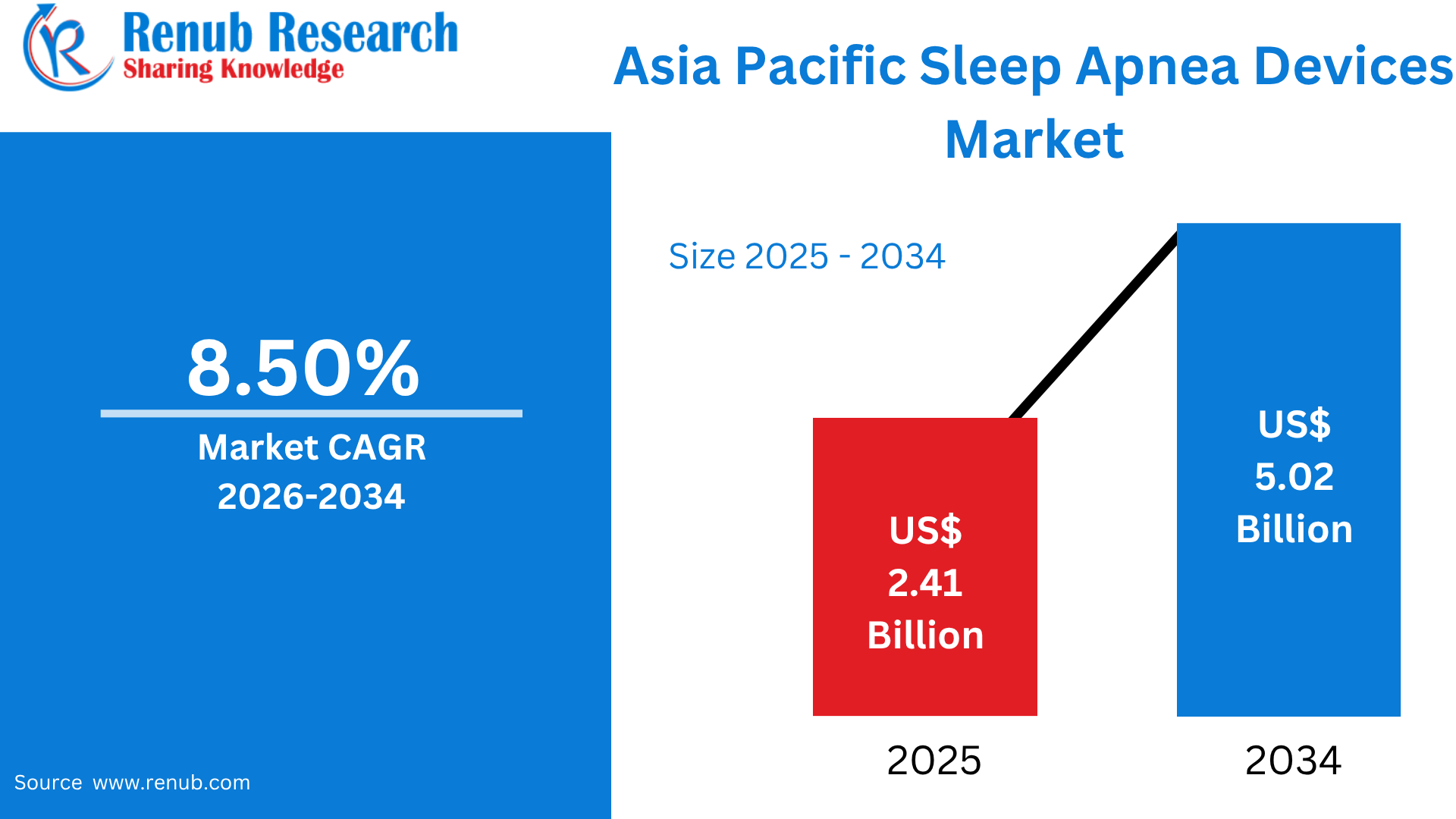
Asia Pacific Sleep Apnea Devices Market is projected to grow from US$ 2.41 Billion in 2025 to US$ 5.02 Billion by 2034, expanding at a Compound Annual Growth Rate (CAGR) of 8.5% during 2026–2034. The market is experiencing strong growth due to increasing awareness and diagnosis of sleep apnea, rising obesity prevalence, an expanding geriatric population, and improvements in healthcare infrastructure across the region. Furthermore, growing adoption of advanced CPAP and BiPAP systems, portable respiratory devices, and wearable sleep-monitoring technologies is improving access to diagnosis and treatment.
What are Sleep Apnea Devices and Their Uses & Popularity in Asia Pacific
Sleep apnea devices are medical technologies designed to diagnose, monitor, and treat sleep apnea, a condition in which breathing repeatedly stops or becomes restricted during sleep. The major categories include Continuous Positive Airway Pressure (CPAP), Auto-CPAP, Bi-level Positive Airway Pressure (BiPAP), oral appliances, oxygen equipment, sleep-monitoring systems, diagnostic devices, and specialized masks. Therapeutic devices maintain airway pressure, improve oxygenation, reduce nighttime breathing interruptions, and help alleviate symptoms such as excessive daytime sleepiness and fatigue. Diagnostic technologies, including home sleep-testing systems, oximeters, and polysomnography equipment, help healthcare professionals identify and assess sleep-disordered breathing.
Popularity of sleep apnea devices is increasing across Asia Pacific as awareness of sleep disorders improves and access to diagnosis and treatment expands. Japan, China, India, Australia, and South Korea represent important markets, while emerging economies are increasingly adopting home-based respiratory care. Among older adults, a systematic review found a pooled obstructive sleep apnea prevalence of 37.0% in Asian populations, highlighting substantial treatment potential. The growing availability of connected CPAP devices, portable systems, telehealth services, and comfortable masks is further supporting adoption.
- Obstructive Sleep Apnea (OSA) Prevalence: In Asia, the prevalence of OSA among middle-aged individuals ranges from 4.1% to 7.5% in males and 2.1% to 3.2% in females.
- Lower Obesity Levels Among Asians: Obesity is a major risk factor for OSA; however, it is generally less common among Asian populations. Asians with OSA also tend to have lower Body Mass Index (BMI) levels than their Caucasian counterparts.
- Limited Sleep-Medicine Infrastructure: Sleep medicine remains in a developing stage across many Asian countries, resulting in substantial under-recognition and underdiagnosis of OSA. Although sleep laboratories have been established in several countries, their availability remains limited.
- Growing Chronic Disease Burden: According to the WHO, chronic respiratory diseases, diabetes, cardiovascular diseases, and cancer are among the major conditions contributing to high mortality across the region. The increasing prevalence of these chronic conditions is expected to support demand for sleep apnea diagnosis and treatment devices.
- High Diabetes Burden in Southeast Asia: According to the IDF Diabetes Atlas, 9th Edition, approximately 87.6 million people aged 20–79 years were living with diabetes in the Southeast Asia region, highlighting the growing burden of chronic diseases associated with sleep disorders.
- Wide Variation in OSA Prevalence: According to an Asian Pacific Society of Respirology article published in May 2020, the prevalence of mild sleep apnea across Asia-Pacific countries ranged from 7.8% in Hong Kong to 77.2% in Malaysia.
- High OSA Burden in China and India: Among countries with estimated OSA prevalence at an Apnea-Hypopnea Index (AHI) greater than 15 events per hour, China had approximately 66 million patients, representing a prevalence of 8.8%, while India had around 29 million patients, with a prevalence of 5.4%.
- Market Opportunity for Sleep Apnea Devices: The combination of increasing OSA prevalence, chronic disease burden, greater awareness, and limited diagnostic infrastructure is expected to create significant opportunities for CPAP, BiPAP, diagnostic, monitoring, and other sleep apnea devices across Asia.
Growth Drivers of the Asia Pacific Sleep Apnea Devices Market
Rising Prevalence of Sleep Apnea and Lifestyle-Related Disorders
The increasing prevalence of obstructive sleep apnea (OSA), obesity, diabetes, hypertension, and cardiovascular disorders is a major growth driver for sleep apnea devices across Asia Pacific. Sedentary lifestyles, urbanization, irregular sleeping patterns, and changing dietary habits are contributing to a broader population at risk of sleep-disordered breathing. Research on Asian adults has identified older age, higher BMI, larger waist-to-hip ratio, hypertension, smoking, snoring, and daytime sleepiness as important factors associated with OSA. The burden is particularly significant among older populations. A systematic review and meta-analysis reported a pooled OSA prevalence of 37.0% among older adults in Asia, although researchers cautioned that study results were highly heterogeneous. As awareness increases, more patients are undergoing sleep assessments and receiving prescriptions for CPAP, BiPAP, oral appliances, and monitoring systems. Consequently, rising disease burden and improved identification of previously undiagnosed patients are expanding the addressable market for both diagnostic and therapeutic sleep apnea devices.
Growing Geriatric Population and Chronic Disease Burden
Rapid population aging across countries such as Japan, China, South Korea, Singapore, and Australia is strengthening demand for sleep apnea diagnosis and treatment. Older adults face a greater risk of sleep-disordered breathing because age-related physiological changes can affect airway function and sleep patterns. A meta-analysis covering 39 studies and 33,353 participants estimated global OSA prevalence among older adults at 35.9%, while the Asia subgroup recorded approximately 37.0%. The same research associated OSA with obesity, increased BMI, cardiovascular disease, diabetes, and daytime sleepiness. At the same time, Asia Pacific has a substantial and expanding population affected by chronic diseases, increasing the need for respiratory monitoring and long-term home-care solutions. Sleep apnea devices can help manage breathing interruptions and improve sleep quality, making CPAP, BiPAP, masks, oximeters, and home sleep-testing systems increasingly relevant. As healthcare systems focus more strongly on preventive care and management of chronic conditions, healthcare providers are increasingly identifying sleep apnea as an important comorbidity, supporting sustained device adoption across the region.
Technological Advancements and Expansion of Home-Based Sleep Care
Technological innovation is transforming sleep apnea management across Asia Pacific by making diagnosis and treatment more convenient, connected, and patient-friendly. Modern CPAP and BiPAP systems increasingly incorporate digital connectivity, remote monitoring, automated pressure adjustment, compact designs, and improved mask interfaces. These features can enhance patient comfort and enable healthcare professionals to monitor treatment performance outside traditional hospital settings. The Asia Pacific market is also witnessing greater adoption of home sleep-testing equipment, portable diagnostic systems, and wearable monitoring technologies. In the related Asia Pacific CPAP market, CPAP devices accounted for more of the revenue in 2024, demonstrating their importance in long-term sleep apnea management. Growing telehealth adoption, expanding home healthcare, and demand for portable equipment are therefore creating new opportunities for manufacturers while improving access to therapy in urban and developing markets.
Challenges of the Asia Pacific Sleep Apnea Devices Market
Limited Awareness, Underdiagnoses, and Unequal Access to Sleep Healthcare
Despite the large potential patient population, underdiagnosis remains a major challenge for the Asia Pacific sleep apnea devices market. Many individuals do not recognize symptoms such as loud snoring, interrupted breathing, morning headaches, and excessive daytime sleepiness as medical conditions requiring evaluation. A systematic review of Asian adults found substantial variation in reported OSA prevalence and highlighted limitations in available epidemiological data, indicating that the true regional burden remains difficult to quantify. Access to sleep laboratories, specialists, polysomnography, and diagnostic equipment also varies considerably between developed and emerging economies. Rural populations may face longer travel distances and fewer specialized healthcare facilities, while affordability can limit access to advanced CPAP, BiPAP, and monitoring devices. These gaps can delay diagnosis and treatment initiation. Although awareness campaigns, home sleep testing, telemedicine, and portable diagnostic technologies can improve accessibility, continued investment in healthcare infrastructure and physician education is required to convert the region’s large undiagnosed population into sustained demand for sleep apnea devices.
High Device Costs and Patient Adherence Challenges
Cost and long-term treatment adherence remain important barriers to market expansion, particularly in price-sensitive Asia Pacific economies. Sleep apnea management can involve an initial investment in diagnostic testing, CPAP or BiPAP equipment, masks, humidifiers, accessories, and periodic replacement components. For patients without comprehensive insurance or reimbursement coverage, these expenses may discourage treatment initiation or encourage the purchase of lower-cost devices. Patient adherence is another challenge because some users experience mask discomfort, air leakage, nasal dryness, pressure intolerance, or difficulty adjusting to nightly therapy. These issues can reduce consistent use and ultimately affect demand for replacement and upgraded equipment. Industry sources identify comfort, portability, and ease of use as important factors influencing adoption, while connected technologies are increasingly being used to support monitoring and compliance. Manufacturers are therefore focusing on quieter machines, lightweight masks, automated pressure adjustment, remote monitoring, and user-friendly interfaces. However, improving affordability while maintaining clinical performance remains essential for broader penetration across emerging Asia Pacific markets.
Sleep Apnea Devices Product Launches in Asia
- 1. ResMed AirSense 11 – India (2025): ResMed launched the AirSense 11 in India in January 2025 as its next-generation CPAP device, featuring Personal Therapy Assistant, Care Check-In, myAir connectivity, and AirView remote monitoring to support therapy initiation and adherence.
- 2. Fisher & Paykel ICON+ Auto CPAP – South Korea (2025): Fisher & Paykel Healthcare introduced the ICON+ Auto CPAP in South Korea in May 2025, combining automated pressure adjustment, pressure-relief technology, and integrated humidification for improved home-based sleep apnea therapy.
- 3. Oxymed SleepEasy Auto CPAP – India (2024): Oxymed launched the SleepEasy Auto CPAP in India in August 2024, incorporating its FlowSens algorithm to optimize pressure delivery, comfort, and therapy performance for sleep apnea patients.
- 4. ResMed AirTouch N30i – Asia-Pacific (2024): ResMed introduced the AirTouch N30i tube-up nasal CPAP mask in October 2024, featuring a ComfiSoft cushion designed to combine fabric softness with silicone stability and improve patient comfort.
- 5. Fisher & Paykel Vitera APAC Series – Japan, South Korea & Australia (2024): Fisher & Paykel Healthcare introduced the Vitera APAC Series CPAP interface across Japan, South Korea, and Australia in March 2024, emphasizing breathability, comfort, and improved mask fit.
- 6. ResMed Digital CPAP Telemonitoring Platform – India & Southeast Asia (2024): ResMed expanded its digital sleep-care portfolio in April 2024 with a telemonitoring platform for CPAP users in India and Southeast Asia, enabling real-time therapy data tracking and supporting remote patient management.
- 7. Apple Watch Sleep Apnea Notifications – Asia (2024): Apple introduced sleep apnea notifications for compatible Apple Watch models in September 2024. The technology uses a Breathing Disturbances metric to identify patterns potentially associated with sleep apnea and was made available across more than 150 countries and regions, including Japan.
- 8. Philips Respironics DreamMapper Cloud Platform – Asia-Pacific (2024): Philips Respironics introduced the DreamMapper Cloud Platform in Asia-Pacific in July 2024, creating a connected digital ecosystem for sleep therapy management, patient monitoring, and clinical data analysis.
- 9. ResMed AirSense 11 Global Asia Rollout – South Korea (2025): ResMed continued the regional expansion of its AirSense 11 platform, with South Korea among the markets receiving the device as part of its global rollout. China subsequently received NMPA clearance in December 2025.
- 10. Philips Respironics AI-Based CPAP Pilot – South Korea & Singapore (2024): Philips Respironics initiated an AI-focused pilot with sleep clinics in South Korea and Singapore in January 2024, integrating AI-based diagnostics with CPAP usage data to support personalized therapy and improve patient adherence.
Continuous Positive Airway Pressure Therapy Adoption
Continuous Positive Airway Pressure (CPAP) devices segment represents a major component of the Asia Pacific sleep apnea therapeutic devices market, supported by the widespread use of CPAP as a standard treatment for obstructive sleep apnea. CPAP machines continuously deliver pressurized air through a mask to prevent airway collapse and reduce nighttime breathing interruptions. Technological improvements, including automatic pressure adjustment, wireless connectivity, remote adherence monitoring, quieter operation, humidification, and lightweight masks, are improving patient comfort and supporting long-term therapy compliance. Rising awareness, expanding diagnostic services, and increasing healthcare accessibility are expected to further strengthen CPAP adoption across developed and emerging Asia Pacific economies.
Growth of Wearable Sleep Monitoring Technologies
The actigraphy monitoring device segment is gaining importance in the Asia Pacific sleep apnea market as healthcare providers increasingly adopt convenient technologies for evaluating sleep patterns and supporting sleep-disorder assessments. Actigraphy devices generally use wearable motion sensors to measure activity, rest periods, sleep-wake cycles, and nighttime behavior over extended periods. Their portability makes them particularly suitable for home-based monitoring and longitudinal sleep assessments. Increasing consumer interest in wearable healthcare technologies, smartphone-connected monitoring, cloud-based data management, and digital health services is creating additional opportunities for actigraphy. Improvements in sensor accuracy, battery life, wireless connectivity, and analytical software are further enhancing the usefulness of these devices for sleep clinics, research programs, and home-based healthcare applications.
Expansion of Specialized Sleep-Care Infrastructure
Sleep laboratories, specialized clinics, and hospitals form an important end-user segment of the Asia Pacific sleep apnea devices market because they provide diagnosis, treatment initiation, monitoring, and follow-up services. These facilities use polysomnography, respiratory monitoring systems, oximeters, CPAP and BiPAP equipment, and other diagnostic and therapeutic technologies to manage patients with sleep-disordered breathing. The expansion of healthcare infrastructure and increasing awareness of sleep apnea are encouraging the establishment of specialized sleep centers, particularly in China, India, Japan, South Korea, and Australia. Increasing investments in advanced sleep-testing equipment, specialist training, telemedicine, and integrated sleep-care programs are strengthening the role of hospitals, clinics, and laboratories while helping convert undiagnosed patients into long-term users of sleep apnea therapies.
China Rising Disease Awareness and Adoption of Home-Based Sleep Care
China represents a major growth opportunity in the Asia Pacific sleep apnea devices market, supported by its large population, increasing awareness of obstructive sleep apnea (OSA), expanding healthcare expenditure, and improving access to diagnostic and therapeutic services. A recent meta-analysis covering studies conducted between 2000 and 2024 estimated the pooled prevalence of OSA in China at 11.8%, highlighting a substantial potential patient base. Growing urbanization, lifestyle changes, obesity, and rising healthcare awareness are encouraging more patients to seek diagnosis and treatment. Demand is also increasing for CPAP devices, portable diagnostic systems, digital monitoring solutions, and home-based respiratory care. Healthcare modernization, broader insurance coverage, and technological innovation are expected to further improve access to sleep apnea management across China’s urban and emerging healthcare markets.
Japan Aging Population and Advanced Sleep-Medicine Infrastructure
Japan’s sleep apnea devices market is supported by an aging population, sophisticated healthcare infrastructure, established sleep-medicine services, and relatively high awareness of sleep-related disorders. The country represents an important market for CPAP systems, diagnostic equipment, sleep monitoring technologies, masks, and related accessories. Increasing recognition of the relationship between untreated sleep apnea and cardiovascular, metabolic, and cognitive health is encouraging greater emphasis on diagnosis and long-term treatment. Japan’s mature healthcare system also supports the integration of home-based respiratory care and remote monitoring, allowing patients to receive ongoing therapy outside hospitals. Digital connectivity and automated CPAP technologies are improving treatment management by enabling healthcare professionals to monitor usage and therapy performance. Wearable technologies are additionally creating new opportunities for earlier identification of breathing disturbances. Apple’s sleep-apnea notification technology is available in Japan and uses Apple Watch measurements to identify signs associated with moderate-to-severe sleep apnea, although it is not intended to replace clinical diagnosis or treatment. Continued technological innovation, aging-related healthcare demand, and greater focus on preventive care are expected to sustain the Japanese market.
India Expanding Diagnosis and Demand for Affordable Home Therapy
India’s sleep apnea devices market is expanding as awareness of sleep disorders increases alongside obesity, diabetes, cardiovascular conditions, urbanization, and lifestyle changes. The market encompasses diagnostic technologies, CPAP and BiPAP systems, masks, accessories, and home-based monitoring solutions. Increasing establishment of sleep laboratories and respiratory-care centers is improving access to diagnosis, while portable equipment and telehealth platforms are making treatment more convenient. CPAP adoption is also benefiting from improvements in device portability, patient comfort, automated pressure adjustment, and digital therapy monitoring. However, affordability and limited awareness remain important considerations, particularly outside major metropolitan areas. Manufacturers are therefore focusing on cost-effective equipment, connected devices, and simplified home-care solutions. Continued healthcare investment, increasing physician awareness, and wider availability of sleep diagnostics are expected to support the expansion of sleep apnea device adoption across India.
Australia Digital Wearables and Connected Sleep Monitoring
Australia is a technologically advanced and well-established market for sleep apnea devices, supported by developed healthcare infrastructure, high awareness of sleep disorders, and widespread use of home-based respiratory treatment. More than 1 million Australians are estimated to be affected by sleep apnea, with many cases remaining undiagnosed, creating substantial potential for diagnostic and monitoring technologies. Digital health and wearable technologies are becoming increasingly important in identifying potential sleep-disordered breathing. In May 2025, Australia’s Therapeutic Goods Administration (TGA) registered Apple’s self-care monitoring software as a Class IIa medical device, while Samsung’s sleep-apnea feature also received Australian TGA approval. Apple subsequently made sleep-apnea notifications available in Australia in July 2025, using Apple Watch accelerometer data to identify breathing disturbances associated with potential moderate-to-severe sleep apnea. Samsung’s technology uses sleep-time blood-oxygen measurements and was expanded to Australia in 2025. Alongside wearable monitoring, demand for CPAP, home sleep-testing systems, and connected respiratory devices continues to support market development.
Asia Pacific Sleep Apnea Devices Market Type:
Type
- Therapeutic Devices
- Diagnostic Devices
Therapeutic Devices
- CPAP Sleep Apnea Therapeutic Devices
- Auto CPAP Sleep Apnea Therapeutic Devices
- BiPAP Sleep Apnea Therapeutic Devices
- Adaptive Servo-Ventilation (ASV)
Diagnostic Devices
- Polysomnography Devices(PSG)
- Oximeter
- Actigraphy Monitoring Device
- Respiratory Polygraph
- Sleep Apnea Screening Device
End User
- Sleep Laboratories, Clinics & Hospitals
- Home Care Settings/Individuals
Countries
- China
- Japan
- India
- South Korea
- Thailand
- Malaysia
- Indonesia
- Australia
- New Zealand
- Rest of Asia Pacific
All companies have been covered with 5 Viewpoints
- Overviews
- Key Person
- Recent Developments
- SWOT Analysis
- Revenue Analysis
Key Players Analysis
- Resmed Inc
- Koninklijke Philips NV
- Fisher & Paykel Healthcare Corporatn Ltd
- Nihon Kohden Corp
- Wellell Inc
- BMC Medical Co Ltd
- Compumedics Ltd
- Inspire Medical Systems Inc.
Report Details:
| Report Features | Details |
| Base Year |
2025 |
| Historical Period |
2022 - 2025 |
| Forecast Period |
2026 - 2034 |
| Market |
US$ Billion |
| Segment Covered |
Product Type, Therapeutics, Diagnostics, End User and Countries |
| Countries Covered |
|
| Companies Covered |
|
| Customization Scope |
20% Free Customization |
| Post-Sale Analyst Support |
1 Year (52 Weeks) |
| Delivery Format |
PDF and Excel through Email (We can also provide the editable version of the report in PPT/Word format on request) |
Customization Services available
- Analysis of Market Size and Its Segments
- More Company Profiles (Upto 10 without any additional cost):
- Additional Countries (Other than mentioned Countries):
- Region/Country Specific Reports:
- Market Entry Strategy:
- Region-Specific Market Dynamics:
- Regional Market Share Analysis:
- Trade Analysis:
- Production Insights:
- Others Customized Requests:
For more information contact our analysts.
Need More Assistance?
- Talk to our analysts to get more precious information on the current market trends.
- Include more countries and segments and customize the report based on the final requirement.
- Get a competitive advantage in your industry by knowing the report findings and making a positive impact on your revenues and operations.
- Our analysts are always ready to provide more help and pertinent information if you need any additional assistance.