United States Sleep Apnea Devices Market Report by Type, Therapeutic Devices, Diagnostic Devices, End User, States and Company Analysis 2026-2034
Buy NowUnited States Sleep Apnea Devices Market Size & Forecast
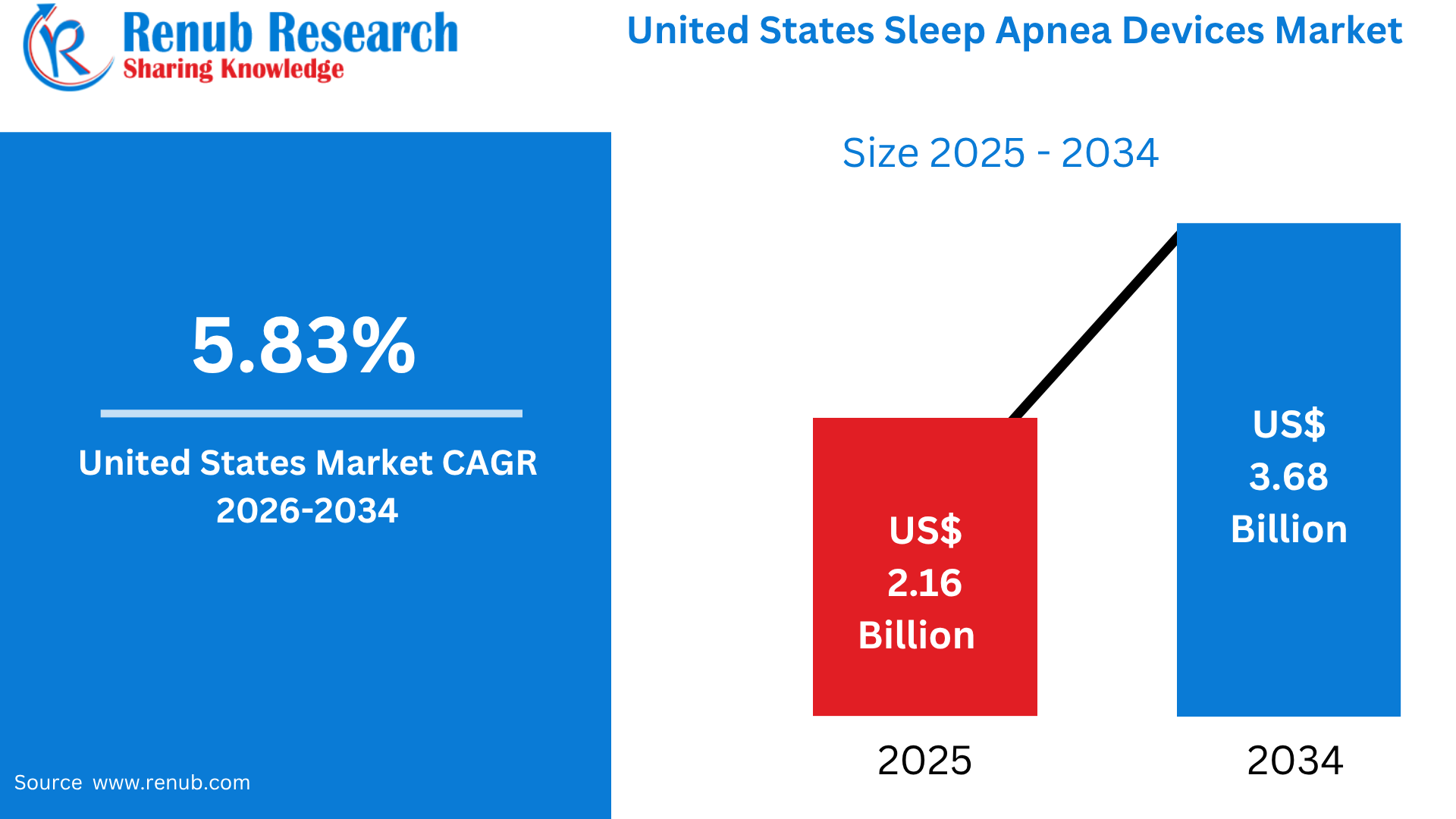
United States Sleep Apnea Devices Market is projected to expand from approximately USD 2.16 billion in 2025 to USD 3.68 billion by 2034, registering a CAGR of 6.11% during 2026–2034. Market expansion is being driven by the increasing prevalence and diagnosis of obstructive sleep apnea, greater public and physician awareness of sleep-related breathing disorders, and growing adoption of technologically advanced diagnostic and therapeutic devices.
What Are Sleep Apnea Devices and Their Uses & Popularity in the United States?
Sleep apnea devices are medical equipment designed to diagnose, monitor, or manage sleep apnea, a condition in which breathing repeatedly stops and resumes during sleep. The most widely used treatment devices are Continuous Positive Airway Pressure (CPAP) and Bilevel Positive Airway Pressure (BiPAP) machines, which deliver pressurized air through a mask to help keep the airway open. Other devices include oral appliances, automatic positive airway pressure (APAP) systems, oxygen equipment, and home sleep-testing devices used to identify breathing abnormalities.
In the United States, these devices are becoming increasingly popular because of growing awareness of sleep disorders, improved diagnosis, and the high prevalence of risk factors such as obesity and aging. The American Academy of Sleep Medicine estimates that approximately 30 million U.S. adults have obstructive sleep apnea, highlighting the substantial potential patient population. Technological advancements, including quieter machines, compact designs, remote monitoring, wireless connectivity, and automated pressure adjustment, are also improving patient convenience and treatment adherence. The growing availability of home-based sleep testing and telehealth services is further increasing access to diagnosis and treatment, supporting continued demand for sleep apnea devices across the United States.
United States
- More than 30 million Americans are estimated to live with sleep apnea, highlighting the substantial prevalence of sleep-related breathing disorders in the United States.
- Sleep apnea is estimated to affect at least 9% of the U.S. population, making it a significant public-health concern.
- Approximately 24 million Americans may have undiagnosed sleep apnea, indicating a considerable gap between the actual disease burden and the number of patients receiving formal diagnosis.
- Only around 6 million cases have been formally diagnosed in the United States, suggesting that a large proportion of affected individuals may remain untreated or unaware of their condition.
- Sleep apnea is considered highly prevalent in the United States, with a disease burden comparable to diabetes and exceeding that of asthma, emphasizing the need for greater screening, diagnosis, and access to effective treatment.
- OSA prevalence among women is projected to increase by 65%, reaching approximately 30.4 million cases by 2050: The substantial rise is associated with factors including population aging and the persistent underdiagnosis of obstructive sleep apnea (OSA) in women. The trend highlights the importance of improving awareness of the ways OSA can present differently in women and strengthening gender-sensitive screening, diagnosis, and treatment approaches.
- OSA prevalence among men is expected to increase by 19%, reaching approximately 45.9 million cases by 2050: The continued growth reflects the ongoing risk of OSA among aging male populations. The projected increase emphasizes the need for scalable diagnostic systems, improved case identification, and sustainable long-term treatment strategies to manage the growing patient population.
- GLP-1 therapies are expected to have a limited effect on overall OSA prevalence, reducing cases by less than 5%: Despite the potential of emerging therapies such as GLP-1 medications to address obesity-related risk factors, the overall burden of OSA is expected to continue increasing. Sensitivity analysis estimates that GLP-1 use could reduce relative OSA prevalence by approximately 4% by 2050, from nearly 77 million cases to around 74 million cases. This limited reduction reflects the multifactorial nature of OSA, as obesity is only one of several factors contributing to the disorder. Consequently, the projected increase in OSA remains a significant public-health concern requiring broader prevention, screening, and treatment efforts.
Growth Drivers of the United States Sleep Apnea Devices Market
Rising Prevalence of Obesity and Sleep Apnea
The increasing prevalence of obesity and associated metabolic conditions is a major growth driver for the United States Sleep Apnea Devices Market, particularly for devices used to manage obstructive sleep apnea (OSA). Obesity is one of the important risk factors for OSA because excess tissue around the upper airway can contribute to airway obstruction during sleep. According to the U.S. Centers for Disease Control and Prevention (CDC), approximately 40.3% of U.S. adults aged 20 years and older were classified as obese during August 2021–August 2023, while another 31.7% were overweight. The large population exposed to obesity-related sleep-disorder risks creates substantial potential demand for diagnostic and therapeutic equipment. CPAP, APAP, and BiPAP systems remain important treatment options for patients diagnosed with moderate-to-severe sleep apnea. Furthermore, growing awareness among physicians and patients regarding the relationship between sleep apnea, cardiovascular health, daytime fatigue, and metabolic disorders is encouraging earlier diagnosis and treatment. As obesity remains widespread across the U.S. population, the resulting need for effective sleep-disorder management is expected to support sustained demand for sleep apnea devices.
Growing Adoption of Home-Based Sleep Testing and Treatment
The increasing shift toward home-based diagnosis and long-term treatment is creating new opportunities for the U.S. sleep apnea devices market. Traditionally, suspected sleep apnea patients often underwent overnight polysomnography in specialized sleep laboratories; however, technological advancements have made home sleep apnea testing increasingly accessible for appropriate patients. Portable diagnostic devices can monitor parameters such as breathing patterns, blood oxygen levels, heart rate, and respiratory events while patients sleep in their own homes. This approach can improve convenience and reduce the logistical burden associated with laboratory-based testing. At the treatment stage, compact CPAP and APAP machines allow patients to manage sleep apnea at home, while connected devices enable healthcare providers to monitor therapy remotely. Digital connectivity is also supporting data-driven treatment adjustments and patient follow-up. Medicare coverage requirements further emphasize objective monitoring: for continued PAP coverage, CMS requires documented adherence of at least 4 hours per night on 70% of nights during a consecutive 30-day period within the initial three months. (Centers for Medicare & Medicaid Services) The expansion of home diagnostics, telehealth, remote monitoring, and connected PAP technologies is therefore expected to increase accessibility and strengthen market demand.
Technological Innovation and Connected Sleep Therapy Devices
Continuous innovation in CPAP, BiPAP, APAP, and connected sleep-monitoring technologies is another important factor supporting market growth. Manufacturers are increasingly developing quieter machines, compact designs, automatic pressure adjustment, integrated humidification, wireless connectivity, and remote patient-monitoring capabilities to improve comfort and treatment adherence. Connected devices can transmit therapy data to healthcare providers, allowing clinicians to evaluate usage patterns and identify potential problems without requiring frequent in-person visits. These technologies are particularly valuable for patients requiring long-term treatment. The market is also benefiting from improvements in diagnostic technologies, including portable and wearable systems capable of collecting physiological data outside traditional sleep laboratories. Increasing emphasis on personalized treatment is encouraging manufacturers to incorporate intelligent algorithms that adjust therapy according to patient requirements. At the same time, regulatory scrutiny is pushing companies to improve device safety and quality. The FDA’s response to the Philips Respironics recall has highlighted the importance of rigorous device design, testing, and post-market monitoring. (U.S. Food and Drug Administration) Consequently, continued investment in safer, smaller, quieter, and more connected sleep-therapy devices is expected to stimulate replacement demand and support long-term market expansion.
Challenges of the United States Sleep Apnea Devices Market
Patient Adherence and Comfort-Related Issues
Patient adherence to positive airway pressure therapy remains a significant challenge for the U.S. sleep apnea devices market. Although CPAP and related devices are highly established treatment options, some patients experience difficulties adjusting to wearing a mask throughout the night. Common problems can include mask discomfort, air leakage, nasal congestion, dry mouth, skin irritation, noise, and difficulty maintaining regular nightly use. These factors can reduce long-term treatment adherence and affect the effective utilization of prescribed equipment. Medicare’s coverage framework demonstrates the importance placed on consistent usage: beneficiaries generally need to demonstrate PAP use of at least 4 hours per night on 70% of nights during a consecutive 30-day period to qualify for continued coverage beyond the initial three months. (Centers for Medicare & Medicaid Services) Although this requirement encourages treatment compliance, it can also create challenges for patients who struggle with device tolerance. Manufacturers are responding through lighter masks, quieter motors, automatic pressure adjustment, improved humidification, and personalized interfaces. However, improving adherence requires more than hardware innovation and often depends on patient education, clinical follow-up, mask fitting, behavioral support, and effective monitoring.
Product Safety, Regulatory Requirements, and Recall Risks
Strict regulatory requirements and product-safety concerns represent another challenge for manufacturers operating in the U.S. sleep apnea devices market. Because CPAP, BiPAP, and related equipment are medical devices used for long-term therapy, manufacturers must comply with extensive requirements covering product design, manufacturing quality, testing, reporting, and post-market surveillance. A major example was the 2021 Philips Respironics recall, involving certain CPAP, BiPAP, and ventilator devices because the polyester-based polyurethane sound-abatement foam could degrade and potentially expose users to harmful particles or chemicals. The FDA subsequently classified certain recalled devices as a Class I recall, the most serious recall category. In 2024, a federal consent decree also restricted certain Philips Respironics production and sales activities in the U.S. until specified requirements were met. Such incidents can increase remediation costs, disrupt supply, reduce consumer confidence, and raise regulatory compliance expenses. Consequently, manufacturers must invest substantially in quality control, materials testing, cybersecurity for connected devices, clinical evidence, and post-market surveillance, which can increase development costs and lengthen product-launch timelines.
Sleep Apnea Device Launches in the USA
- ResMed AirCurve 11 Bilevel Devices – 2024: ResMed launched its AirCurve 11 series in the U.S. in February 2024. The devices provide two pressure levels—IPAP and EPAP—and incorporate digital features such as Care Check-In and Personal Therapy Assistant, designed to support patients and clinicians throughout sleep-apnea therapy.
- Inspire V System – 2024: Inspire Medical Systems received FDA approval for its next-generation Inspire V therapy system in August 2024. The system includes a new neurostimulator, Bluetooth-enabled patient remote, and physician programmer. The company targeted a U.S. soft launch in late 2024 followed by a broader commercial launch in 2025.
- ResMed NightOwl Home Sleep Apnea Test – 2025: ResMed made NightOwl available across the United States in April 2025. The FDA-cleared home sleep apnea test is designed to simplify OSA diagnosis by allowing patients to undergo testing in their own homes rather than relying exclusively on traditional sleep laboratories.
- ResMed AirTouch N30i – 2024: ResMed introduced the AirTouch N30i nasal CPAP mask as a new-generation interface emphasizing comfort and a more lifestyle-friendly design. The product uses a fabric-based cushion/interface concept intended to provide a softer alternative for patients receiving positive airway pressure therapy.
- Inspire Upper Airway Stimulation System – Expanded Indication, 2024: Inspire’s implantable upper-airway stimulation technology continued expanding its U.S. market following FDA approval that increased the eligible OSA population by raising the upper baseline AHI limit from 65 to 100. The implant stimulates the hypoglossal nerve to help maintain airway opening during sleep.
- ResMed AirSense 11 Connected PAP Platform – 2024: ResMed continued expanding the U.S. adoption of its AirSense 11 platform, which combines PAP therapy with connected digital services. Features such as wireless data transmission and integration with myAir and AirView support remote monitoring, adherence tracking, and patient engagement.
- Philips Respironics DreamStation 2 – U.S. Market Developments, 2024: Philips continued servicing and addressing its U.S. DreamStation 2 sleep-therapy portfolio amid regulatory requirements following the company’s large-scale CPAP/BiPAP recall. In April 2024, an FDA-related consent decree restricted production and sale of certain Philips Respironics sleep-therapy devices until specified requirements were satisfied.
- Connected Home Sleep Testing Solutions – 2025: The U.S. market saw increasing availability of portable, digitally connected home sleep-apnea testing systems, including ResMed’s NightOwl. Such systems are designed to make OSA diagnosis more accessible and reduce dependence on overnight laboratory testing for appropriate patients.
- Next-Generation Inspire V Patient Remote – 2024/2025: The Bluetooth-enabled patient remote introduced with Inspire V represents an important product enhancement within implantable sleep-apnea therapy. The system enables patients to interact with their therapy while providing clinicians with updated programming capabilities.
- Digital PAP Therapy and Remote Monitoring Solutions – 2024–2025: Manufacturers increasingly launched or expanded connected PAP ecosystems integrating devices with mobile applications, cloud platforms, and remote clinical monitoring. ResMed’s AirCurve 11 and AirSense 11 ecosystems illustrate this trend, as digital tools are increasingly being used to support therapy initiation, adherence, and ongoing management.
Rising Diagnosis and Technology Adoption Support Sleep Apnea Therapeutic Devices Expansion
United States Sleep Apnea Therapeutic Devices Market is expanding steadily as the diagnosis of sleep-disordered breathing increases and patients seek effective long-term treatment solutions. Therapeutic devices, including CPAP, BiPAP, and adaptive servo-ventilation (ASV) systems, are widely used to manage different forms of sleep apnea by delivering controlled airflow to maintain airway patency during sleep. The American Academy of Sleep Medicine estimates that approximately 30 million U.S. adults have obstructive sleep apnea, representing a substantial potential treatment population. Increasing recognition of the association between untreated sleep apnea and complications such as cardiovascular disease, daytime sleepiness, impaired concentration, and reduced quality of life is encouraging diagnosis and treatment. Technological improvements have also produced quieter, smaller, and more user-friendly devices with automated pressure adjustment and integrated humidification. In addition, home-based sleep care, telehealth, and remote therapy monitoring are becoming increasingly important. Medicare’s PAP coverage framework requires beneficiaries to demonstrate regular device use, generally at least 4 hours per night on 70% of nights, reinforcing the importance of adherence and monitoring. These factors, combined with established healthcare infrastructure and insurance coverage, are supporting continued demand for therapeutic devices.
Established Standard of Care Drives CPAP Sleep Apnea Therapeutic Devices Segment
United States CPAP Sleep Apnea Therapeutic Devices Market remains the leading segment because CPAP therapy is one of the most established and widely prescribed treatments for obstructive sleep apnea (OSA). CPAP machines deliver a continuous stream of pressurized air through a mask to prevent the upper airway from collapsing during sleep, thereby reducing breathing interruptions and improving sleep quality. The large population of Americans affected by OSA provides a substantial addressable market for CPAP equipment. Technological innovation is also improving patient experience, with newer devices offering automatic pressure adjustment, heated humidification, quieter motors, improved mask interfaces, wireless connectivity, and cloud-based therapy monitoring. Remote monitoring allows healthcare providers to review adherence and treatment data and make adjustments when necessary. According to CMS coverage requirements, continued Medicare coverage for PAP therapy generally requires documented usage of 4 or more hours per night on at least 70% of nights during a consecutive 30-day period. Although mask discomfort, air leakage, nasal symptoms, and treatment adherence remain challenges, manufacturers are addressing these issues through improved interfaces and personalized therapy settings. Strong clinician familiarity, broad product availability, and established reimbursement pathways continue to reinforce CPAP’s dominant position.
Demand for Accurate Diagnosis Strengthens Sleep Apnea Polysomnography Devices
United States Sleep Apnea Polysomnography Devices Market is supported by the continued need for accurate diagnosis of sleep apnea and other sleep-related breathing disorders. Polysomnography is a comprehensive overnight sleep study that can measure multiple physiological parameters, including brain activity, eye movements, muscle activity, heart rate, airflow, respiratory effort, and blood oxygen saturation. These measurements allow clinicians to identify abnormal breathing events and determine sleep architecture and disease severity. Growing awareness of untreated sleep apnea and its potential impact on cardiovascular and metabolic health is encouraging more patients to undergo formal evaluation. Technological advances are improving the portability, data acquisition, signal quality, and analytical capabilities of polysomnography systems. Sleep laboratories, hospitals, and specialized diagnostic centers remain important users of these systems, while portable and home-based diagnostic technologies are expanding access to sleep assessment. The increasing use of home sleep apnea tests (HSATs) is particularly relevant for patients with a high pretest probability of uncomplicated OSA. However, full polysomnography continues to play an important role when more comprehensive assessment is clinically required. Growth in sleep clinics, specialist services, and diagnostic capacity is therefore expected to sustain demand for advanced polysomnography equipment.
Non-Invasive Monitoring and Home Healthcare Support Sleep Apnea Oximeter Devices Adoption
United States Sleep Apnea Oximeter Devices Market is benefiting from growing demand for convenient, non-invasive technologies capable of monitoring blood oxygen levels during sleep. Pulse oximeters estimate oxygen saturation (SpO₂) and pulse rate, providing useful physiological information during sleep assessment and monitoring. Overnight oxygen desaturation can be an important indicator of abnormal breathing and may prompt further evaluation for sleep-disordered breathing. Oximeters are attractive for home and clinical use because they are relatively simple to operate and available in compact formats. Technological development has expanded the segment beyond conventional fingertip devices to include wearable rings, wrist-based monitors, wireless sensors, and connected systems capable of storing or transmitting data. The increasing adoption of remote patient monitoring and home healthcare is further supporting demand for convenient monitoring technologies. However, pulse oximetry alone does not diagnose sleep apnea and is generally used as part of a broader clinical assessment or screening process. Integration with digital health platforms can allow patients and healthcare professionals to review overnight oxygen trends and identify potential abnormalities. As healthcare delivery increasingly moves toward home-based monitoring, compact and connected oximetry solutions are expected to remain an important supporting technology within the U.S. sleep apnea ecosystem.
Expanding Diagnostic Infrastructure Supports Clinics & Hospitals Sleep Apnea Devices Demand
Clinics and hospitals represent a critical end-user segment in the United States Sleep Apnea Devices Market because they provide diagnosis, treatment initiation, monitoring, and long-term management of sleep apnea. Hospitals and specialized sleep centers utilize technologies such as polysomnography systems, CPAP and BiPAP devices, oxygen-monitoring equipment, and other diagnostic technologies to evaluate and treat patients. The growing recognition of sleep apnea as a condition associated with cardiovascular, metabolic, and neurological consequences is encouraging healthcare providers to strengthen sleep-disorder screening and referral pathways. The United States also has an extensive network of hospitals, outpatient facilities, sleep laboratories, and specialist physicians, creating a strong infrastructure for sleep-related diagnosis and treatment. Insurance and Medicare coverage for qualifying diagnostic and therapeutic services can reduce financial barriers for eligible patients, although coverage varies according to the service and patient circumstances. In parallel, healthcare providers are increasingly incorporating home sleep testing, telemedicine, remote PAP monitoring, and digital patient-management platforms into care pathways. These developments are broadening access beyond traditional sleep laboratories. Continued investment in healthcare infrastructure, rising awareness among clinicians and patients, and the increasing emphasis on early diagnosis are expected to support demand for sleep apnea devices across U.S. clinics and hospitals.
Advanced Healthcare Infrastructure and Technology Adoption Drive California Growth
California Sleep Apnea Devices Market is positioned for strong growth due to the state’s large population, extensive healthcare infrastructure, and high adoption of medical technologies. California has more than 39 million residents, creating a substantial patient base for sleep-disorder diagnosis and treatment. Sleep apnea demand is further supported by risk factors such as obesity, aging, stress, and sedentary lifestyles. According to the CDC, approximately 29.5% of California adults were obese in 2023, creating a significant population at elevated risk for obstructive sleep apnea. The state is also home to major academic medical centers, specialized sleep clinics, and medical technology companies, supporting early diagnosis and access to advanced treatment. Increasing adoption of connected CPAP machines, wearable sleep monitors, home sleep-testing equipment, and remote patient monitoring is further expanding the market. California’s strong technology ecosystem, including its concentration of digital-health and medical-device companies, encourages innovation in sleep-management solutions. In addition, growing consumer awareness of the relationship between poor sleep and cardiovascular and metabolic health is increasing demand for diagnosis and treatment. The expansion of telehealth and home healthcare services is also making sleep apnea management more accessible.
Aging Population and Obesity Create a Large Addressable Patient Base in Florida
Florida Sleep Apnea Devices Market is supported by the state’s rapidly growing and comparatively older population, which creates substantial demand for sleep-disorder diagnosis and treatment. Florida has more than 23 million residents, and approximately 21.6% of its population is aged 65 years or older, according to U.S. Census estimates. Older adults have a higher risk of sleep-disordered breathing, creating an important patient pool for CPAP, BiPAP, diagnostic, and monitoring devices. Obesity represents another significant market driver; CDC data indicate that approximately 31.6% of Florida adults were obese in 2023. The combination of aging, obesity, cardiovascular risk factors, and increased awareness of sleep health is encouraging more residents to seek diagnostic evaluation. Florida also has an extensive network of hospitals, outpatient healthcare facilities, sleep centers, and home healthcare providers, facilitating access to treatment. The state’s large retirement-community population additionally supports demand for home-based healthcare and remote monitoring. As healthcare providers increasingly utilize portable sleep-testing equipment and connected PAP devices, patients can receive diagnosis and ongoing treatment with fewer visits to clinical facilities. Consequently, demographic trends and expanding home-based care are expected to sustain market growth.
Increasing Awareness and Healthcare Access Support Georgia Sleep Apnea Devices Expansion
Georgia Sleep Apnea Devices Market is expanding as awareness of sleep disorders increases and access to diagnostic and treatment services improves across the state. Georgia has a population of more than 11 million, providing a sizable potential market for sleep apnea devices. Obesity is an important underlying risk factor: CDC estimates indicate that approximately 36.3% of Georgia adults were obese in 2023, among the higher rates nationally. This creates a significant population vulnerable to obstructive sleep apnea and related health complications. Healthcare professionals and organizations are increasingly emphasizing the importance of recognizing symptoms such as loud snoring, witnessed breathing interruptions, and excessive daytime sleepiness, encouraging more patients to seek evaluation. Georgia’s expanding network of hospitals, outpatient centers, sleep laboratories, and diagnostic facilities is improving access to polysomnography and home sleep apnea testing. Meanwhile, CPAP, APAP, and other compact therapeutic devices are becoming increasingly convenient for home use. Insurance coverage and employer-sponsored health benefits can also facilitate access to diagnosis and treatment for eligible patients. The growing availability of telehealth and remote monitoring services is further supporting long-term management. Continued healthcare infrastructure development and increasing awareness of untreated sleep apnea are expected to drive demand across the state.
Health Awareness and Connected Healthcare Encourage Washington Sleep Apnea Devices Adoption
Washington Sleep Apnea Devices Market is benefiting from strong healthcare awareness, technology adoption, and growing interest in connected and home-based medical care. Washington has a population of approximately 8 million, providing a growing consumer base for sleep-disorder diagnostic and therapeutic technologies. Obesity remains an important risk factor for sleep apnea, with CDC estimates placing adult obesity prevalence in Washington at approximately 32% in 2023. At the same time, the state’s relatively strong technology ecosystem and concentration of healthcare innovation are creating favorable conditions for adoption of connected CPAP systems, wearable monitoring devices, digital sleep platforms, and remote patient-management solutions. Patients and healthcare providers are increasingly using telemedicine and remote monitoring to track treatment adherence and sleep-related physiological data outside traditional clinical settings. Washington also has a well-developed network of hospitals, specialty clinics, and sleep centers capable of providing comprehensive diagnostic services. Greater recognition of the links between untreated sleep apnea and conditions such as hypertension, cardiovascular disease, and daytime impairment is encouraging earlier intervention. As consumers become more proactive about preventive health and healthcare providers increasingly incorporate digital technologies into sleep management, demand for convenient diagnostic and therapeutic devices is expected to continue increasing across Washington.
United States Sleep Apnea Devices Market Segments
Types – Market breakup from 2 viewpoints:
1. Therapeutic Devices
2. Diagnostic Devices
Therapeutic Devices
- CPAP Sleep Apnea Therapeutic Devices
- Auto CPAP Sleep Apnea Therapeutic Devices
- BiPAP Sleep Apnea Therapeutic Devices
- Adaptive Servo-Ventilation (ASV)
Diagnostic Devices
- Polysomnography Devices (PSG)
- Oximeter
- Actigraphy Monitoring Device
- Respiratory Polygraph
- Sleep Apnea Screening Device
End User
- Sleep Laboratories, Clinics & Hospitals
- Home Care Settings/Individuals
Top States
- California
- Texas
- New York
- Florida
- Illinois
- Pennsylvania
- Ohio
- Georgia
- New Jersey
- Washington
- North Carolina
- Massachusetts
- Virginia
- Michigan
- Maryland
- Colorado
- Tennessee
- Indiana
- Arizona
- Minnesota
- Wisconsin
- Missouri
- Connecticut
- South Carolina
- Oregon
- Louisiana
- Alabama
- Kentucky
- Rest of United States
All the Key players have been covered from 5 Viewpoints:
- Overviews
- Key Person
- Recent Developments
- SWOT Analysis
- Revenue
Key Players Analysis
- Carefusion Corp. (Part of Becton, Disckinson & Company)
- Somnomed
- ResMed Inc.
- Koninklijke Philips N.V.
- Compumedics
- Natus Medical Incorporated
- Teleflex Incorporated
- Fisher &Paykel Healthcare
Report Details:
| Report Features | Details |
| Base Year |
2025 |
| Historical Period |
2022 - 2025 |
| Forecast Period |
2026 - 2034 |
| Market |
US$ Billion |
| Segment Covered |
By Products Types, By Therapeutics, By Diagnostics, By End User and States |
| States Covered |
|
| Companies Covered |
|
| Customization Scope |
20% Free Customization |
| Post-Sale Analyst Support |
1 Year (52 Weeks) |
| Delivery Format |
PDF and Excel through Email (We can also provide the editable version of the report in PPT/Word format on request) |
Customization Services available
- Analysis of Market Size and Its Segments
- More Company Profiles (Upto 10 without any additional cost):
- Additional Countries (Other than mentioned Countries):
- Region/Country Specific Reports:
- Market Entry Strategy:
- Region-Specific Market Dynamics:
- Regional Market Share Analysis:
- Trade Analysis:
- Production Insights:
- Others Customized Requests:
For more information contact our analysts.
Need More Assistance?
- Talk to our analysts to get more precious information on the current market trends.
- Include more countries and segments and customize the report based on the final requirement.
- Get a competitive advantage in your industry by knowing the report findings and making a positive impact on your revenues and operations.
- Our analysts are always ready to provide more help and pertinent information if you need any additional assistance.