Europe Sleep Apnea Devices Market Report by Type, Therapeutic Devices, Diagnostic Devices, End User, Countries and Company Analysis 2026-2034
Buy NowEurope Sleep Apnea Devices Market Size & Forecast
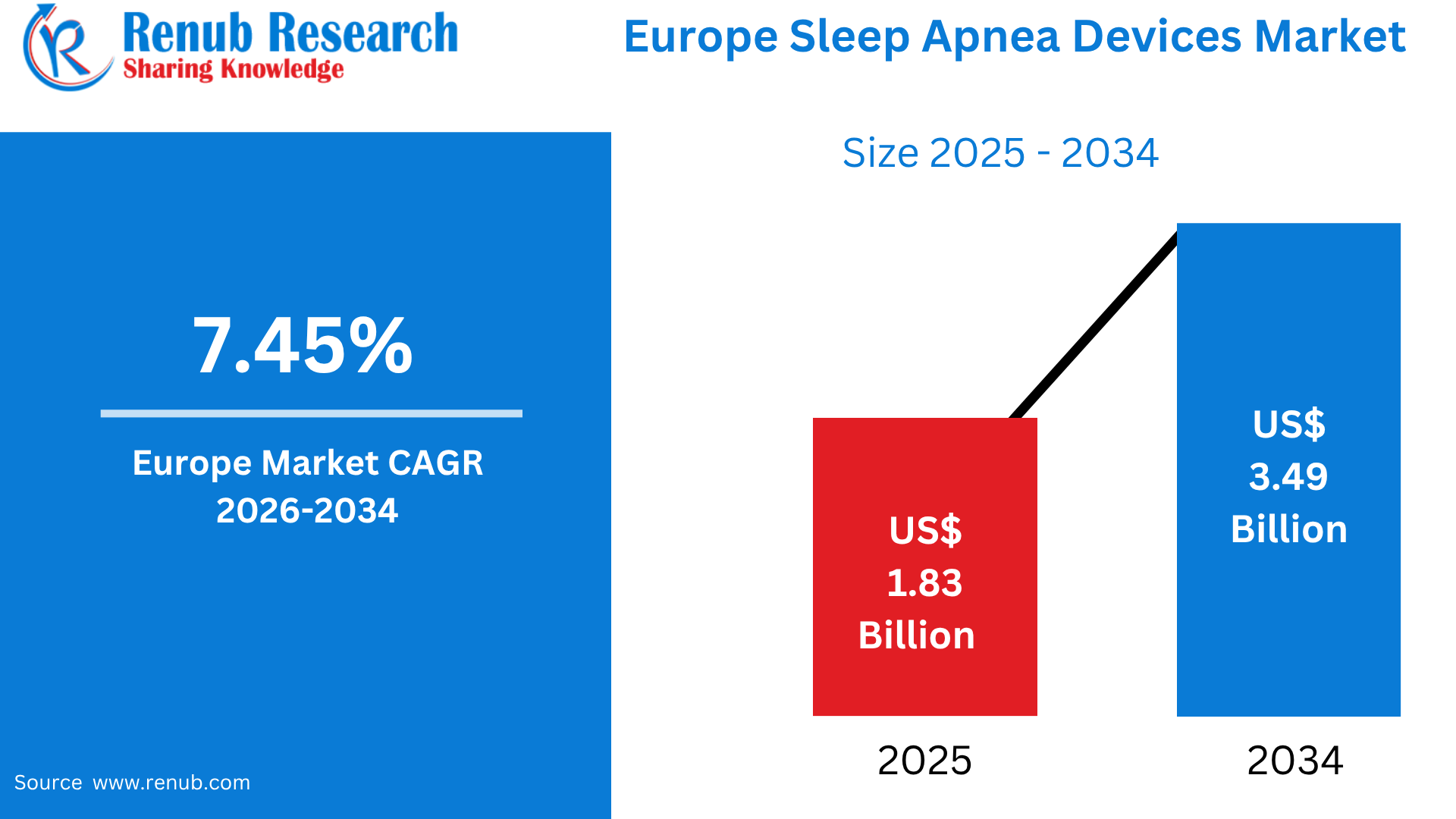
Europe Sleep Apnea Devices Market is projected to grow from US$ 1.83 billion in 2025 to US$ 3.49 billion by 2034, registering a CAGR of 7.45% during 2026–2034. Market growth is driven by the rising prevalence of sleep apnea and other sleep-related disorders, increasing awareness of early diagnosis and treatment, and growing adoption of advanced therapeutic devices such as CPAP, BiPAP, and APAP systems. Furthermore, expanding home healthcare services, technological advancements in portable and connected sleep therapy devices, and supportive healthcare infrastructure are further accelerating market growth across Europe.
What are Sleep Apnea Devices and Their Uses & Popularity in Europe?
Sleep apnea devices are medical equipment designed to diagnose, monitor, and treat sleep apnea, a chronic sleep disorder characterized by repeated interruptions in breathing during sleep. The most common forms of treatment devices include Continuous Positive Airway Pressure (CPAP), Bi-level Positive Airway Pressure (BiPAP), Automatic Positive Airway Pressure (APAP) machines, oral appliances, adaptive servo-ventilation (ASV) systems, and portable sleep monitoring devices. These devices maintain an open airway by delivering pressurized air or repositioning the jaw, helping patients breathe normally throughout the night. They are widely used to reduce symptoms such as loud snoring, excessive daytime sleepiness, fatigue, poor concentration, and morning headaches, while also lowering the risk of cardiovascular disease, hypertension, stroke, diabetes, and other complications associated with untreated sleep apnea.
In Europe, sleep apnea devices have gained widespread popularity due to the rising prevalence of obesity, aging populations, and increasing awareness of sleep-related disorders. Millions of Europeans are estimated to suffer from obstructive sleep apnea, with many cases previously remaining undiagnosed. Governments and healthcare providers are promoting early diagnosis through sleep clinics and home-based sleep testing programs, increasing demand for therapeutic devices. Technological advancements, including quieter CPAP systems, wireless connectivity, cloud-based patient monitoring, smartphone integration, and portable homecare solutions, have improved patient compliance and treatment outcomes. In addition, favorable reimbursement policies in several European countries, expanding home healthcare services, and growing investment in respiratory care technologies continue to support the widespread adoption of sleep apnea devices across hospitals, sleep centers, and homecare settings throughout Europe.
Rise in OSA prevalence across the EU-5 Disease Burden and Prevalence Forecast
- EU-5 Total
- 2020 Cases: 51.3 million
- 2050 Cases: 76.6 million
- 2020 Prevalence: 33.1%
- 2050 Prevalence: 52.3%
- Relative Increase (2020–2050):
- Cases: 49.3%
- Prevalence: 58.0%
- France
- 2020 Cases: 9.7 million
- 2050 Cases: 16.4 million
- 2020 Prevalence: 28.9%
- 2050 Prevalence: 52.1%
- Relative Increase:
- Cases: 69.0%
- Prevalence: 80.3%
- Germany
- 2020 Cases: 17.2 million
- 2050 Cases: 22.1 million
- 2020 Prevalence: 38.2%
- 2050 Prevalence: 57.3%
- Relative Increase:
- Cases: 28.5%
- Prevalence: 50.0%
- Italy
- 2020 Cases: 8.5 million
- 2050 Cases: 14.1 million
- 2020 Prevalence: 28.7%
- 2050 Prevalence: 50.8%
- Relative Increase:
- Cases: 64.9%
- Prevalence: 77.2%
- Spain
- 2020 Cases: 9.0 million
- 2050 Cases: 12.6 million
- 2020 Prevalence: 40.5%
- 2050 Prevalence: 57.1%
- Relative Increase:
- Cases: 31.0%
- Prevalence: 41.1%
- United Kingdom
- 2020 Cases: 6.2 million
- 2050 Cases: 10.3 million
- 2020 Prevalence: 26.1%
- 2050 Prevalence: 44.5%
- Relative Increase:
- Cases: 66.1%
- Prevalence: 70.2%
Growth Driver
Rising Prevalence of Obstructive Sleep Apnea and Aging Population
The increasing prevalence of obstructive sleep apnea (OSA) is one of the strongest growth drivers for the Europe sleep apnea devices market. OSA affects an estimated 10–20% of adults, with prevalence rising significantly among individuals aged over 60 years. Europe has one of the world’s oldest populations, with more than 21% of its population aged 65 years and above in 2025, increasing the incidence of sleep-disordered breathing. Aging is associated with reduced airway muscle tone and a higher risk of obesity, cardiovascular diseases, and respiratory disorders, all of which contribute to sleep apnea. Untreated OSA has been linked to hypertension, stroke, heart failure, diabetes, and cognitive impairment, prompting physicians to recommend early diagnosis and treatment. Governments and healthcare providers are investing in sleep clinics, respiratory care services, and public awareness campaigns to improve diagnosis rates. The expanding elderly population and rising burden of chronic diseases are expected to significantly increase demand for CPAP, BiPAP, APAP, and home sleep monitoring devices across Europe.
Technological Advancements in Sleep Therapy Devices
Continuous technological innovation is transforming the Europe sleep apnea devices market by improving patient comfort, compliance, and treatment effectiveness. Modern CPAP and BiPAP devices now feature automatic pressure adjustment, humidification systems, Bluetooth and Wi-Fi connectivity, cloud-based monitoring, smartphone applications, quieter motors, and lightweight portable designs. These innovations improve long-term therapy adherence, which has historically been one of the biggest challenges in sleep apnea treatment. Europe has witnessed rapid growth in digital healthcare adoption, with telemedicine and remote patient monitoring becoming increasingly integrated into respiratory care. Cloud-connected devices enable healthcare professionals to monitor treatment compliance remotely and adjust therapy settings without requiring frequent hospital visits. Manufacturers are also developing travel-friendly CPAP devices and wearable diagnostic technologies that improve patient convenience. The growing availability of AI-enabled sleep analysis, digital health platforms, and personalized respiratory therapies is expected to further accelerate adoption of advanced sleep apnea devices throughout hospitals, sleep laboratories, and homecare settings across Europe.
Expansion of Home Healthcare and Early Sleep Disorder Diagnosis
The rapid expansion of home healthcare services is significantly supporting the growth of the Europe sleep apnea devices market. Home-based sleep studies and portable monitoring systems have become increasingly popular because they reduce healthcare costs while improving patient convenience. More than 70% of sleep apnea patients can be effectively diagnosed through home sleep apnea testing (HSAT), reducing dependence on hospital-based sleep laboratories. The increasing adoption of homecare is further supported by Europe’s growing elderly population, rising healthcare expenditures, and efforts to reduce hospital admissions. Home-use CPAP, APAP, and BiPAP systems allow patients to receive long-term therapy without frequent clinical visits, improving treatment accessibility. In addition, reimbursement support in several European countries encourages patients to adopt home respiratory devices. Increased awareness campaigns by respiratory societies and healthcare organizations have also improved early diagnosis rates. The combination of expanding home healthcare infrastructure, digital monitoring technologies, and patient preference for home treatment continues to strengthen market growth across Europe.
Challenge
High Cost of Advanced Sleep Apnea Devices and Limited Reimbursement
Despite technological progress, the relatively high cost of sleep apnea devices remains a major challenge for market expansion across Europe. Advanced CPAP, BiPAP, adaptive servo-ventilation (ASV), and portable diagnostic systems often require significant upfront investment, making treatment less affordable for uninsured or partially reimbursed patients. Depending on device type and features, treatment costs may range from several hundred to several thousand US dollars, excluding accessories such as masks, tubing, filters, and humidifiers that require periodic replacement. Reimbursement policies differ considerably across European countries, creating unequal access to sleep therapy. While countries such as Germany and France offer broader reimbursement support, patients in some regions continue to experience financial barriers to diagnosis and treatment. Small sleep clinics may also face budget limitations when adopting advanced diagnostic technologies. These economic challenges can delay treatment initiation, reduce therapy adherence, and limit penetration of premium sleep apnea devices, particularly in lower-income regions across Europe.
Underdiagnosis and Low Patient Compliance with Therapy
A significant proportion of sleep apnea patients in Europe remain undiagnosed, limiting the overall growth potential of the sleep apnea devices market. Clinical studies estimate that up to 70–80% of obstructive sleep apnea cases remain undiagnosed, particularly among women and individuals with mild symptoms. Many patients mistake excessive daytime sleepiness, fatigue, and snoring for normal aging or lifestyle-related issues, delaying medical consultation. Even after diagnosis, long-term adherence to CPAP therapy remains challenging. Research indicates that 20–40% of patients discontinue CPAP treatment within the first year due to mask discomfort, noise, skin irritation, dry mouth, or difficulty adapting to continuous airflow. Poor treatment compliance reduces therapeutic effectiveness and limits device replacement demand. Manufacturers are addressing these concerns through quieter devices, improved mask designs, personalized pressure settings, and digital coaching applications. However, improving patient education, early diagnosis, and long-term therapy adherence remains a critical challenge for the continued expansion of Europe’s sleep apnea devices market.
Sleep Apnea Device Launches in Europe
- March 2026 – Nyxoah SA received European commercialization expansion for its Genio® hypoglossal nerve stimulation system, offering a mask-free implantable therapy for patients with moderate-to-severe obstructive sleep apnea (OSA).
- March 2026 – London Hospitals (United Kingdom) began rolling out a new implantable sleep apnea device for treating moderate-to-severe OSA, expanding advanced treatment options beyond CPAP therapy.
- July 2024 – Inspire Medical Systems announced French reimbursement approval for its Inspire® Upper Airway Stimulation (UAS) system, increasing patient access to implantable sleep apnea therapy in France.
- September 2024 – ResMed launched the AirSense™ 11 AutoSet across additional European markets, featuring integrated digital coaching, cloud connectivity, and automatic pressure adjustment for improved CPAP therapy.
- June 2024 – Löwenstein Medical (Germany) introduced the prisma SMART Plus CPAP device, offering enhanced comfort settings, intelligent pressure adjustment, and wireless therapy monitoring.
- May 2024 – Fisher & Paykel Healthcare expanded its European portfolio with the F&P Solo™ AutoFit CPAP Mask, featuring a touch-free headgear adjustment system designed to improve patient comfort and compliance.
- April 2024 – Philips expanded availability of the DreamWear Full Face Mask across Europe, providing a lightweight under-the-nose design to improve sleep therapy comfort for CPAP users.
- February 2024 – ResMed introduced the AirFit F40 Full Face CPAP Mask in Europe, featuring an ultra-compact, low-profile design that enhances flexibility and reduces facial contact during sleep.
- October 2023 – Fisher & Paykel Healthcare launched the F&P Evora Full Face Mask in additional European countries, incorporating CapFit™ technology for simplified fitting and improved patient adherence.
- September 2023 – Philips expanded its NightBalance Sleep Position Therapy device across European sleep clinics, providing a non-invasive treatment option for patients with positional obstructive sleep apnea.
Rising Adoption of Advanced Respiratory Therapy Solutions in Europe
Europe Sleep Apnea Therapeutic Devices Market is expanding steadily due to the growing prevalence of obstructive sleep apnea (OSA), increasing awareness of sleep-related disorders, and wider access to advanced respiratory care. Obstructive sleep apnea affects an estimated 10–20% of the adult population, with prevalence increasing among elderly and obese individuals. Therapeutic devices, including Continuous Positive Airway Pressure (CPAP), Bi-level Positive Airway Pressure (BiPAP), Adaptive Servo-Ventilation (ASV), and oral therapy systems, are widely used to maintain open airways during sleep and reduce complications such as hypertension, cardiovascular disease, and stroke. Improvements in device technology—including quieter motors, lightweight designs, integrated humidifiers, and wireless connectivity—have significantly enhanced patient comfort and treatment adherence. The expansion of home healthcare services, favorable reimbursement policies in several European countries, and increasing availability of remote patient monitoring are further accelerating adoption. Supported by strong healthcare infrastructure and rising investments in respiratory care, the therapeutic devices segment is expected to witness sustained growth across Europe.
Europe CPAP Remains the Gold Standard for Sleep Apnea Treatment
The Europe CPAP Sleep Apnea Therapeutic Devices Market represents the largest therapeutic segment due to the clinical effectiveness of Continuous Positive Airway Pressure (CPAP) therapy in treating obstructive sleep apnea. Clinical studies indicate that CPAP therapy can reduce apnea episodes by more than 80–90%, making it the first-line treatment recommended by sleep specialists. CPAP devices continuously deliver pressurized air to keep the upper airway open during sleep, significantly improving sleep quality and reducing daytime fatigue. Modern CPAP systems now incorporate automatic pressure adjustment (Auto-CPAP), heated humidification, Bluetooth connectivity, cloud-based compliance monitoring, and quieter operation to improve patient experience. Increasing diagnosis rates, expanding sleep clinics, and growing physician awareness continue to support market demand across Europe. Home-based CPAP therapy is becoming increasingly common due to improved reimbursement policies and telehealth integration. Despite ongoing challenges related to long-term patient adherence, continuous product innovation and digital health technologies are expected to maintain CPAP’s leadership position throughout the European sleep apnea therapeutic devices market.
Europe Advanced Sleep Diagnostics Supporting Early Detection
Europe Sleep Apnea Polysomnography Devices Market is growing steadily as healthcare providers emphasize accurate diagnosis and early intervention for sleep disorders. Polysomnography (PSG) remains the gold-standard diagnostic test for obstructive sleep apnea and other sleep-related breathing disorders. These systems simultaneously monitor multiple physiological parameters, including brain activity (EEG), eye movement, muscle activity, respiratory airflow, oxygen saturation, heart rate, and sleep stages. Europe has witnessed a steady expansion of dedicated sleep laboratories and specialized respiratory clinics, increasing demand for advanced diagnostic equipment. Modern digital polysomnography systems provide automated scoring, AI-assisted analysis, wireless sensors, and cloud-based reporting, improving diagnostic efficiency and clinical workflow. Portable polysomnography systems are also gaining popularity for home-based sleep assessments, reducing waiting times and healthcare costs. Rising awareness of untreated sleep apnea, increasing healthcare expenditure, and technological advancements in sleep diagnostics are expected to drive continued growth of the polysomnography devices market across Europe.
Europe Growing Demand for Portable Home Monitoring Solutions
Europe Sleep Apnea Oximeter Devices Market is experiencing significant growth due to increasing demand for affordable, portable, and non-invasive sleep monitoring technologies. Pulse oximeters continuously measure blood oxygen saturation (SpO₂) and pulse rate during sleep, helping healthcare professionals identify oxygen desaturation episodes commonly associated with obstructive sleep apnea. These devices are increasingly used as preliminary screening tools before comprehensive sleep studies and for monitoring treatment effectiveness during CPAP therapy. Growing adoption of home healthcare services and home sleep apnea testing (HSAT) has significantly increased demand for portable oximeter devices across Europe. Manufacturers continue introducing lightweight wearable sensors, Bluetooth-enabled devices, smartphone connectivity, cloud-based reporting, and AI-supported data analysis to improve patient convenience and physician monitoring. The increasing elderly population, rising prevalence of respiratory diseases, and growing awareness of early diagnosis continue to support market expansion. Oximeter devices are becoming an essential component of Europe’s evolving home-based sleep monitoring ecosystem.
Europe Specialized Sleep Centers Driving Market Expansion
Europe Sleep Apnea Devices Clinics & Hospitals Market accounts for a significant share of the regional market due to the availability of comprehensive diagnostic and therapeutic services. Hospitals and specialized sleep clinics remain the primary centers for conducting polysomnography, initiating CPAP and BiPAP therapy, and providing long-term patient management. Europe has witnessed continued investment in respiratory medicine departments, sleep laboratories, and multidisciplinary sleep centers, improving access to specialized care. These facilities utilize advanced technologies including digital polysomnography systems, portable diagnostic devices, telemonitoring platforms, and AI-assisted respiratory assessment tools to deliver accurate diagnoses and personalized treatment plans. Favorable reimbursement systems in countries such as Germany, France, and the Nordic region encourage greater utilization of sleep diagnostic services and therapeutic devices. Increasing physician awareness, growing patient referrals, expanding healthcare infrastructure, and rising prevalence of obesity and cardiovascular diseases continue to strengthen demand for sleep apnea devices within European clinics and hospitals, supporting long-term market growth.
Strong Reimbursement Support and Expanding Homecare Adoption in France
France Sleep Apnea Devices Market is experiencing steady growth, supported by the country’s universal healthcare system, increasing awareness of sleep disorders, and favorable reimbursement policies. France has one of Europe’s well-established respiratory care networks, with thousands of patients receiving treatment for obstructive sleep apnea (OSA) each year. An estimated 8–10% of French adults are affected by sleep apnea, with prevalence rising among elderly individuals and patients with obesity and cardiovascular diseases. Hospitals, sleep laboratories, and specialized respiratory clinics continue to expand diagnostic services, while home-based CPAP therapy is becoming the preferred treatment option due to its convenience and cost-effectiveness. Government reimbursement programs significantly improve patient access to sleep apnea devices, encouraging early diagnosis and long-term treatment adherence. In July 2024, Inspire Medical Systems announced reimbursement approval for its innovative hypoglossal nerve stimulation therapy for obstructive sleep apnea in France, expanding treatment options beyond conventional CPAP therapy. Continued healthcare investment and technological innovation are expected to support long-term market growth.
Advanced Healthcare Infrastructure Driving Device Adoption in Germany
Germany Sleep Apnea Devices Market represents one of Europe’s largest and most technologically advanced markets, supported by high diagnosis rates, strong reimbursement coverage, and a well-developed healthcare infrastructure. Germany has one of the continent’s largest networks of sleep laboratories and respiratory clinics, enabling early diagnosis and effective management of obstructive sleep apnea. Approximately 10–15% of German adults are estimated to experience sleep apnea symptoms, with prevalence increasing due to aging demographics and rising obesity rates. The country is a major hub for medical device innovation, encouraging rapid adoption of next-generation CPAP, BiPAP, APAP, and digital respiratory monitoring systems. Home healthcare services and telemedicine platforms are further improving long-term therapy adherence through remote patient monitoring. In December 2024, Eli Lilly announced FDA approval of Zepbound® (tirzepatide) for adults with moderate-to-severe obstructive sleep apnea and obesity, highlighting the growing integration of pharmaceutical and device-based treatment approaches. Germany’s strong research capabilities and healthcare investment continue to strengthen market expansion.
United Kingdom NHS Support and Home Diagnostics Fueling Growth
United Kingdom Sleep Apnea Devices Market is expanding steadily due to increasing awareness of sleep disorders, growing obesity prevalence, and strong support from the National Health Service (NHS). Obstructive sleep apnea affects an estimated 8–12% of adults in the UK, with diagnosis rates improving through public awareness campaigns and physician referrals. NHS-funded sleep clinics provide comprehensive diagnostic services, including polysomnography and home sleep apnea testing, while CPAP therapy remains the standard treatment for moderate-to-severe cases. The increasing availability of portable diagnostic devices and telehealth-enabled respiratory monitoring has improved access to treatment, particularly for patients receiving home care. Although waiting times within public healthcare services remain a challenge, continuous investment in sleep medicine is improving service capacity. In March 2026, several leading London hospitals began implementing a newly developed implantable device for treating moderate-to-severe obstructive sleep apnea, representing a significant advancement in minimally invasive sleep disorder treatment. Ongoing technological innovation continues to support market growth across the United Kingdom.
Improving Awareness Creating Emerging Opportunities in Russia
Russia Sleep Apnea Devices Market remains in a developing phase but presents considerable long-term growth potential as awareness of sleep disorders gradually increases. Rising urbanization, changing lifestyles, increasing obesity rates, and an expanding elderly population have contributed to higher prevalence of obstructive sleep apnea across the country. Healthcare investments aimed at strengthening respiratory care services are improving access to sleep diagnostics and treatment, particularly in major metropolitan areas such as Moscow and St. Petersburg. Private hospitals and specialized diagnostic centers are increasingly adopting CPAP, BiPAP, portable sleep monitoring systems, and digital respiratory technologies. However, diagnosis rates remain lower than in Western Europe, with many sleep apnea cases remaining undetected. Dependence on imported medical devices, fluctuating healthcare expenditures, and limited reimbursement coverage continue to present market challenges. Nevertheless, expanding private healthcare infrastructure, increasing physician education, and growing public awareness campaigns are expected to improve diagnosis rates and support gradual expansion of the Russia sleep apnea devices market over the forecast period.
Europe Sleep Apnea Devices Market Segments
Types – Market breakup from 2 viewpoints:
1. Therapeutic Devices
2. Diagnostic Devices
Therapeutic Devices
- CPAP Sleep Apnea Therapeutic Devices
- Auto CPAP Sleep Apnea Therapeutic Devices
- BiPAP Sleep Apnea Therapeutic Devices
- Adaptive Servo-Ventilation (ASV)
Diagnostic Devices
- Polysomnography Devices (PSG)
- Oximeter
- Actigraphy Monitoring Device
- Respiratory Polygraph
- Sleep Apnea Screening Device
End User
- Sleep Laboratories, Clinics & Hospitals
- Home Care Settings/Individuals
Country:
- France
- Germany
- Italy
- Spain
- United Kingdom
- Belgium
- Netherlands
- Russia
- Poland
- Greece
- Norway
- Romania
- Portugal
- Rest of Europe
All companies have been covered with 5 Viewpoints
- Overviews
- Key Person
- Recent Developments
- SWOT Analysis
- Revenue Analysi
Key Players Analysis
-
Natus Medical Incorporated
-
ResMed Inc.
-
Somnomed
-
Apex Medical Corporation
-
Koninklijke Philips N.V.
-
Compumedics
-
Fisher &Paykel Healthcare
-
Nyxoah SA
Report Details:
| Report Features | Details |
| Base Year |
2025 |
| Historical Period |
2022 - 2025 |
| Forecast Period |
2026 - 2034 |
| Market |
US$ Billion |
| Segment Covered |
By Products Types, By Therapeutics, By Diagnostics and By End User |
| Europe Countries Covered |
|
| Companies Covered |
|
| Customization Scope |
20% Free Customization |
| Post-Sale Analyst Support |
1 Year (52 Weeks) |
| Delivery Format |
PDF and Excel through Email (We can also provide the editable version of the report in PPT/Word format on request) |
Customization Services available
- Analysis of Market Size and Its Segments
- More Company Profiles (Upto 10 without any additional cost):
- Additional Countries (Other than mentioned Countries):
- Region/Country Specific Reports:
- Market Entry Strategy:
- Region-Specific Market Dynamics:
- Regional Market Share Analysis:
- Trade Analysis:
- Production Insights:
- Others Customized Requests:
For more information contact our analysts.
Need More Assistance?
- Talk to our analysts to get more precious information on the current market trends.
- Include more countries and segments and customize the report based on the final requirement.
- Get a competitive advantage in your industry by knowing the report findings and making a positive impact on your revenues and operations.
- Our analysts are always ready to provide more help and pertinent information if you need any additional assistance.