Allergy Relieving Eye Drops Market Size, Share, Growth, Trends, Industry Analysis & Forecast 2026–2034
Buy NowAllergy Relieving Eye Drops Market Size
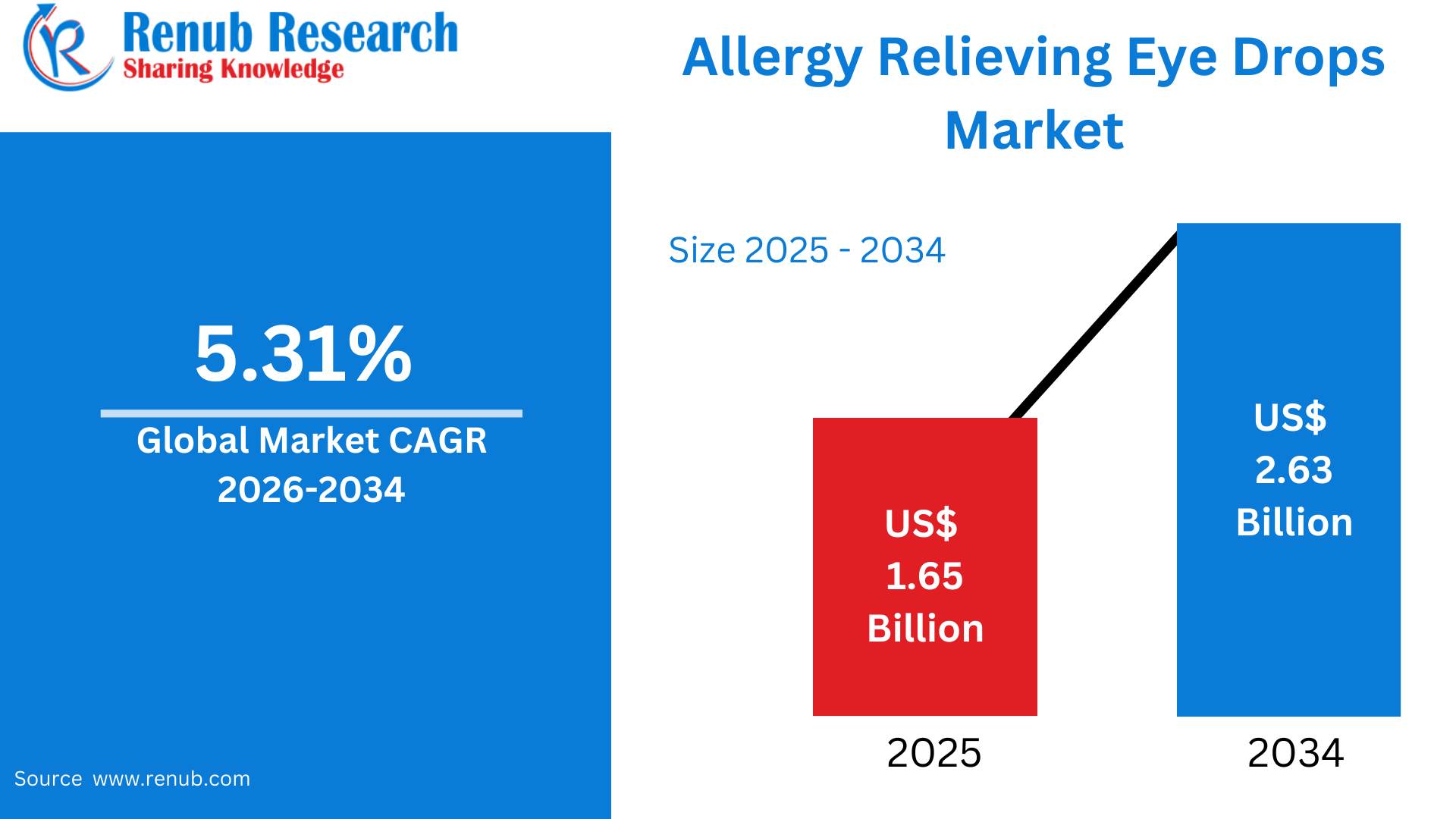
Allergy Relieving Eye Drops Market is anticipated to grow from US$ 1.65 billion in 2025 to US$ 2.63 billion by 2034, registering a CAGR of 5.31% during the forecast period from 2026 to 2034. Market growth is being fueled by the increasing prevalence of both seasonal and perennial allergic conjunctivitis, rising exposure to environmental pollutants and airborne allergens, and growing awareness of eye health among consumers. Expanding availability of over-the-counter (OTC) eye care products, increasing healthcare spending, and continuous product innovations in fast-acting and long-lasting allergy relief formulations are further supporting market expansion.
What is Allergy Relieving Eye Drops? Their Uses & Worldwide Popularity
Allergy relieving eye drops are ophthalmic medications specially formulated to relieve the symptoms of eye allergies caused by allergens such as pollen, dust mites, pet dander, mold spores, smoke, and air pollution. These eye drops typically contain antihistamines, mast cell stabilizers, decongestants, lubricants, or combination ingredients that help reduce itching, redness, watering, swelling, and irritation associated with allergic conjunctivitis. Depending on the formulation, some products provide immediate symptom relief, while others help prevent allergic reactions when used regularly during allergy seasons. Allergy relieving eye drops are available both as prescription medications and over-the-counter (OTC) products, making them easily accessible for consumers experiencing mild to moderate allergy symptoms.
Worldwide, allergy relieving eye drops have gained widespread popularity due to the rising prevalence of seasonal and perennial allergies, increasing urbanization, worsening air pollution, and changing climate patterns that prolong pollen seasons. Growing awareness of eye health and self-care has encouraged more consumers to use OTC eye care products for fast and convenient symptom management. In addition, increasing screen time, exposure to environmental irritants, and higher incidence of dry eye conditions have further boosted demand for lubricating allergy eye drops. Hospitals, ophthalmology clinics, pharmacies, online healthcare platforms, and retail drug stores continue to expand product availability globally. Continuous innovations in preservative-free formulations, longer-lasting relief, multi-action therapies, and contact lens-friendly eye drops are further supporting market growth, making allergy-relieving eye drops an essential part of modern eye care worldwide.
Key facts
- Globally, at least 2.2 billion people have a near or distance vision impairment. For at least 1 billion of these people, vision impairment could have been prevented or is yet to be addressed.
- The leading causes of vision impairment and blindness are refractive errors and cataracts.
- It is estimated that 2 out of 3 people in low-income countries who need eyeglasses don’t have access to them.
- In addition, 1 in 2 people globally who need cataract surgery don’t have access to that surgery.
- Vision impairment poses an enormous global financial burden, with the annual global cost of productivity estimated to be US$ 411 billion.
- Vision loss can affect people of all ages; however, most people with vision impairment and blindness are over the age of 50 years.
Growth Drivers of the Allergy Relieving Eye Drops Market
Rising Prevalence of Allergic Eye Disorders Worldwide
The increasing incidence of allergic eye diseases is one of the primary factors driving the growth of the allergy relieving eye drops market. Conditions such as allergic conjunctivitis, vernal keratoconjunctivitis, and atopic keratoconjunctivitis are becoming more common due to rising air pollution, climate change, urbanization, and prolonged pollen seasons. These environmental changes have significantly increased exposure to allergens, leading to symptoms such as itching, redness, excessive tearing, swelling, and eye irritation. Since ocular symptoms are often among the earliest signs of allergic reactions, consumers increasingly rely on allergy-relieving eye drops for fast and effective symptom management. Seasonal and perennial allergies affect individuals of all age groups, expanding the potential patient population worldwide. According to the U.S. Centers for Disease Control and Prevention (CDC), in 2025, more than 100 million Americans were affected by at least one allergic disease. Approximately 25.7% of adults experienced seasonal allergies, many of which were accompanied by eye allergy symptoms, highlighting the growing need for effective allergy eye care products.
Growing Availability of Over-the-Counter Products and Self-Care Solutions
The increasing availability of over-the-counter (OTC) allergy-relieving eye drops has significantly contributed to market expansion by making treatment more accessible and convenient for consumers. Individuals experiencing mild to moderate allergy symptoms increasingly prefer self-medication options that provide quick relief without requiring physician consultations. The widespread availability of OTC products through pharmacies, supermarkets, online retailers, and e-commerce healthcare platforms has improved product accessibility across both developed and emerging markets. Enhanced consumer awareness, clear product labeling, and pharmacist recommendations have further encouraged self-care practices for allergy management. In addition, pharmaceutical companies continue introducing advanced formulations that offer faster symptom relief, extended duration of action, and improved comfort for users. A notable market development occurred in January 2026, when Dr. Reddy’s Laboratories launched the generic Olopatadine Hydrochloride Ophthalmic Solution, equivalent to Extra Strength Pataday Once-Daily Relief, in the United States following approval from the U.S. Food and Drug Administration (USFDA), further strengthening the OTC allergy eye care segment.
Continuous Product Innovation and Advanced Formulations
Ongoing product innovation continues to drive growth in the allergy-relieving eye drops market as manufacturers develop more effective, safer, and user-friendly ophthalmic solutions. Modern allergy eye drops increasingly combine antihistamines with mast cell stabilizers to provide both immediate symptom relief and long-term prevention of allergic reactions. Companies are also introducing preservative-free formulations that are particularly suitable for individuals with sensitive eyes and contact lens users. Improvements in dispensing systems, including ergonomic squeeze bottles and precision droppers, have enhanced ease of use and dosing accuracy. Furthermore, innovations in longer-lasting formulations reduce dosing frequency and improve patient compliance. Pharmaceutical companies continue investing in research and development to deliver multi-action therapies with improved efficacy and safety profiles. For example, in August 2024, OCuSOFT Inc. introduced OCuSOFT Retaine Allergy, a prescription-strength antihistamine eye drop developed to relieve eye itching caused by allergies, further expanding the company’s portfolio of advanced eye care solutions.
Allergy Relieving Eye Drops Product Launches Worldwide
- January 2026 – Dr. Reddy’s Laboratories launched Olopatadine Hydrochloride Ophthalmic Solution USP 0.7% (OTC), the first generic equivalent of Extra Strength Pataday® Once Daily Relief in the U.S. market.
- June 2025 – Glenmark Therapeutics USA introduced Olopatadine Hydrochloride Ophthalmic Solution USP 0.2% (OTC), comparable to Pataday® Once Daily Relief, expanding its OTC ophthalmic portfolio.
- August 2024 – OCuSOFT Inc. launched Retaine® Allergy, a prescription-strength antihistamine eye drop designed to provide fast relief from itchy eyes caused by seasonal allergies.
- August 2024 – Glenmark Therapeutics USA launched Olopatadine Hydrochloride Ophthalmic Solution USP 0.1% (OTC), equivalent to Pataday® Twice Daily Relief.
- 2024 – Alcon expanded the Pataday® Extra Strength Once Daily Relief (0.7%) portfolio with broader retail availability, offering long-lasting OTC allergy eye relief.
- 2024 – Bausch + Lomb expanded distribution of Alaway® Preservative-Free Antihistamine Eye Drops, providing preservative-free relief for itchy allergy eyes.
- 2023 – Alcon expanded the Pataday® Once Daily Relief product line into additional international retail markets to improve access to OTC allergy eye care.
- 2023 – Alcon expanded availability of Pataday® Twice Daily Relief, providing prescription-strength antihistamine allergy eye drops through major retail pharmacy channels.
- 2023 – Bausch + Lomb continued global expansion of Opcon-A® Allergy Eye Drops, strengthening its portfolio for temporary relief of itchy and red allergy eyes.
- 2023 – Alcon expanded commercial availability of Zaditor® Antihistamine Eye Drops across additional international markets for the treatment of seasonal allergic conjunctivitis symptoms.
Challenges of the Allergy Relieving Eye Drops Market
Risk of Misuse and Side Effects Associated with Long-Term Use
One of the major challenges facing the allergy relieving eye drops market is the potential misuse of over-the-counter products, particularly when consumers use them excessively or without proper medical guidance. Prolonged use of certain decongestant eye drops may lead to rebound redness, increased eye irritation, and worsening symptoms over time. Self-medication can also delay the diagnosis and treatment of more serious eye conditions, including bacterial or viral infections that require different therapeutic approaches. Inappropriate product selection and incorrect usage remain significant concerns for healthcare professionals and regulatory authorities. Consequently, manufacturers must continue educating consumers regarding proper product usage while ensuring clear labeling, safety information, and responsible marketing practices to minimize the risk of adverse effects.
Intense Market Competition and High Price Sensitivity
The allergy relieving eye drops market is highly competitive, with numerous multinational pharmaceutical companies, generic drug manufacturers, and private-label brands offering similar products. The availability of lower-priced generic alternatives and store-brand eye drops places considerable pressure on product pricing and profit margins, particularly in price-sensitive emerging markets. Manufacturers must continuously differentiate their products through clinical efficacy, innovative formulations, preservative-free technologies, improved packaging, and strong brand recognition while maintaining competitive pricing. Additionally, companies face increasing regulatory requirements, research and development expenses, and marketing costs, making it challenging to balance innovation, affordability, and profitability. Sustaining market share in such a competitive environment requires continuous investment in product development, consumer education, and strategic distribution initiatives.
Antihistamines Allergy Relieving Eye Drops Fast-Acting Relief Driving Global Demand
Antihistamines Allergy Relieving Eye Drops Market is witnessing steady growth due to the increasing prevalence of seasonal and perennial eye allergies worldwide. Antihistamine eye drops are among the most commonly prescribed and over-the-counter treatments for allergic conjunctivitis because they provide rapid relief from symptoms such as itching, redness, watering, and irritation by blocking histamine receptors responsible for allergic reactions. Growing exposure to airborne allergens, pollution, dust, pollen, and pet dander has significantly increased demand for these products across all age groups. Continuous product innovation has resulted in long-lasting formulations, preservative-free variants, and combination therapies that include both antihistamines and mast cell stabilizers for enhanced effectiveness. Increasing consumer preference for self-medication, expanding pharmacy and online retail distribution, and greater awareness of eye health are further supporting market expansion. Pharmaceutical companies continue investing in advanced formulations that improve patient comfort, reduce dosing frequency, and offer quicker symptom relief, ensuring sustained growth for the antihistamine allergy relieving eye drops market worldwide.
Vernal Keratoconjunctivitis Rising Awareness and Specialized Treatment Supporting Growth
Vernal Keratoconjunctivitis (VKC) Market is expanding steadily due to increasing awareness, improved diagnosis, and advancements in ophthalmic treatment options for this chronic allergic eye disease. Vernal keratoconjunctivitis is a severe inflammatory condition that primarily affects children and young adults, particularly in warm, dry, and tropical climates. Patients commonly experience intense itching, excessive tearing, redness, light sensitivity, and thick mucus discharge, which can significantly affect vision and quality of life if left untreated. Growing environmental pollution, rising pollen exposure, and changing climatic conditions are contributing to the increasing incidence of allergic eye disorders worldwide. Healthcare providers are increasingly adopting combination therapies involving antihistamines, mast cell stabilizers, lubricating eye drops, corticosteroids, and immunomodulatory medications to improve long-term disease management. Continuous research into safer ophthalmic therapies with fewer side effects, along with improved access to specialized eye care services, is expected to support sustained growth in the vernal keratoconjunctivitis treatment market.
Atopic Keratoconjunctivitis Long-Term Disease Management Driving Therapeutic Innovation
Atopic Keratoconjunctivitis (AKC) Market is experiencing gradual growth as increasing awareness of chronic allergic eye disorders leads to earlier diagnosis and improved treatment approaches. Atopic keratoconjunctivitis is a persistent inflammatory eye disease that is commonly associated with atopic dermatitis and other allergic conditions. The disorder primarily affects adolescents and adults and can lead to chronic itching, redness, burning sensation, excessive tearing, blurred vision, and, in severe cases, corneal damage if not properly managed. Rising prevalence of allergic diseases, growing environmental pollution, and increasing exposure to allergens are contributing to the expanding patient population globally. Treatment typically involves antihistamine eye drops, mast cell stabilizers, lubricating formulations, corticosteroids, calcineurin inhibitors, and immunomodulatory therapies to control inflammation and prevent disease progression. Ongoing pharmaceutical research is focused on developing safer long-term therapies with improved efficacy and reduced adverse effects. Growing access to ophthalmology services, increasing healthcare expenditure, and greater awareness of chronic eye diseases continue to support the long-term growth of the atopic keratoconjunctivitis market.
Strong Consumer Awareness and Advanced Eye Care Supporting Growth in United States
United States Allergy Relieving Eye Drops Market is one of the largest globally, driven by the high prevalence of seasonal and perennial allergic eye conditions, strong healthcare infrastructure, and widespread availability of over-the-counter (OTC) eye care products. Millions of Americans experience eye allergies caused by pollen, dust, pet dander, mold, and environmental pollutants, creating consistent demand for antihistamine and lubricating eye drops. Consumers increasingly prefer self-care solutions that provide rapid relief from itching, redness, irritation, and watery eyes without requiring physician visits. The presence of leading pharmaceutical companies, continuous product innovation, and growing adoption of preservative-free and contact lens-compatible formulations further strengthen market growth. Pharmacies, supermarkets, online healthcare platforms, and retail drug stores provide extensive product availability across the country. In addition, rising screen time, increasing digital eye strain, and growing awareness of eye health continue to expand the consumer base. Ongoing investments in ophthalmic research and advanced allergy treatments are expected to support long-term growth in the United States allergy relieving eye drops market.
United Kingdom Allergy Relieving Eye Drops Growing Allergy Awareness Driving Market Expansion
United Kingdom Allergy Relieving Eye Drops Market is experiencing steady growth due to the increasing incidence of allergic conjunctivitis, rising pollen exposure, and greater consumer awareness regarding eye health. Seasonal allergies, particularly during spring and summer, affect a significant portion of the UK population, increasing demand for effective allergy relief products. Consumers are increasingly adopting over-the-counter antihistamine eye drops to manage symptoms such as itching, redness, watering, and irritation without requiring prescription treatment. Pharmacies, supermarkets, and online healthcare retailers have expanded access to allergy eye care products, encouraging greater adoption of self-medication. Growing awareness of preservative-free formulations and products suitable for sensitive eyes and contact lens users has also influenced purchasing decisions. Healthcare providers continue to emphasize early treatment of allergic eye conditions to prevent complications and improve quality of life. Continuous product innovation, increasing healthcare expenditure, and strong regulatory standards are expected to support sustainable growth in the United Kingdom allergy relieving eye drops market.
India Allergy Relieving Eye Drops Rising Pollution and Expanding Eye Care Access Fuel Demand
India Allergy Relieving Eye Drops Market is witnessing robust growth as increasing air pollution, urbanization, changing climatic conditions, and rising exposure to dust and allergens contribute to a growing incidence of allergic eye disorders. Rapid population growth and expanding healthcare awareness have encouraged consumers to seek prompt treatment for symptoms such as itching, redness, watering, and eye irritation. The availability of affordable over-the-counter eye drops through pharmacies, hospitals, clinics, and online healthcare platforms has significantly improved market accessibility across both urban and semi-urban regions. Increasing screen time, digital device usage, and environmental pollution have further expanded demand for lubricating and allergy-relieving ophthalmic products. Domestic pharmaceutical manufacturers continue introducing cost-effective formulations, preservative-free products, and combination therapies to address diverse patient needs. Government initiatives to improve healthcare access, expanding ophthalmology services, and increasing consumer awareness regarding eye health are expected to drive sustained growth in India’s allergy-relieving eye drops market over the coming years.
Saudi Arabia Allergy Relieving Eye Drops Environmental Conditions and Healthcare Investments Supporting Growth
Saudi Arabia Allergy Relieving Eye Drops Market is growing steadily due to increasing cases of allergic eye diseases associated with the country’s desert climate, frequent dust storms, airborne allergens, and rising environmental pollution. Dry weather conditions and prolonged exposure to sand and dust particles commonly cause eye irritation, redness, itching, and allergic conjunctivitis, increasing demand for effective ophthalmic treatments. Growing healthcare expenditure, expanding access to specialized ophthalmology services, and improving public awareness regarding eye health are supporting market development. Consumers are increasingly purchasing over-the-counter allergy eye drops through pharmacies and retail healthcare outlets for convenient symptom management. Healthcare providers also recommend preservative-free lubricating eye drops and combination antihistamine therapies for long-term relief, particularly among contact lens users and individuals with chronic allergies. Continued investments in healthcare infrastructure, expansion of retail pharmacy networks, increasing adoption of modern eye care products, and the Kingdom’s ongoing healthcare modernization initiatives are expected to support long-term growth in the Saudi Arabia allergy relieving eye drops market.
Market Segmentation
Drug Class
- Antihistamines
- Non-steroidal anti-Inflammatory Drugs
- Vasoconstrictors
- Others
Type
- Seasonal and Perennial Allergic Conjunctivitis
- Vernal Keratoconjunctivitis
- Atopic Keratoconjunctivitis
- Giant Papillary Conjunctivitis
- Others
Countries
North America
- United States
- Canada
Europe
- France
- Germany
- Italy
- Spain
- United Kingdom
- Belgium
- Netherlands
- Turkey
Asia Pacific
- China
- Japan
- India
- Australia
- South Korea
- Thailand
- Malaysia
- Indonesia
- New Zealand
Latin America
- Brazil
- Mexico
- Argentina
Middle East & Africa
- South Africa
- Saudi Arabia
- United Arab Emirates
All companies have been covered with 5 Viewpoints
- Overview
- Key Persons
- Recent Development & Strategies
- Product Portfolio
- Financial Insights
Company Analysis
- AbbVie Inc. (Allergan Plc)
- Johnson & Johnson
- Pfizer Inc.
- F. Hoffmann-La Roche Ltd
- Novartis AG
- Bausch Health Companies Inc
- Regeneron Pharmaceuticals
- Santen Pharmaceutical Co
Report Details:
| Report Features | Details |
| Base Year |
2025 |
| Historical Period |
2022 - 2025 |
| Forecast Period |
2026 - 2034 |
| Market |
US$ Billion |
| Segment Covered |
Drug Class, Type and Countries |
| Countries Covered |
|
| Companies Covered |
|
| Customization Scope |
20% Free Customization |
| Post-Sale Analyst Support |
1 Year (52 Weeks) |
| Delivery Format |
PDF and Excel through Email (We can also provide the editable version of the report in PPT/Word format on request) |
Key Questions Answered in Report:
- How big is the Allergy Relieving Eye Drops industry?
- What is the Allergy Relieving Eye Drops growth rate?
- Who are the key players in Allergy Relieving Eye Drops industry?
- What are the factors driving the Allergy Relieving Eye Drops industry?
- Which Region held the largest market share in the Allergy Relieving Eye Drops industry?
- What segments are covered in the Allergy Relieving Eye Drops Market report?
Customization Services available
- Analysis of Market Size and Its Segments
- More Company Profiles (Upto 10 without any additional cost):
- Additional Countries (Other than mentioned Countries):
- Region/Country Specific Reports:
- Market Entry Strategy:
- Region-Specific Market Dynamics:
- Regional Market Share Analysis:
- Trade Analysis:
- Production Insights:
- Others Customized Requests:
For more information contact our analysts.
Need More Assistance?
- Talk to our analysts to get more precious information on the current market trends.
- Include more countries and segments and customize the report based on the final requirement.
- Get a competitive advantage in your industry by knowing the report findings and making a positive impact on your revenues and operations.
- Our analysts are always ready to provide more help and pertinent information if you need any additional assistance.