United States Truffle Market Report by Product, Nature, Form, Distribution Channel, End Use, States and Company Analysis 2025-2033
Buy NowUnited States Truffle Market Size and Forecast 2025-2033
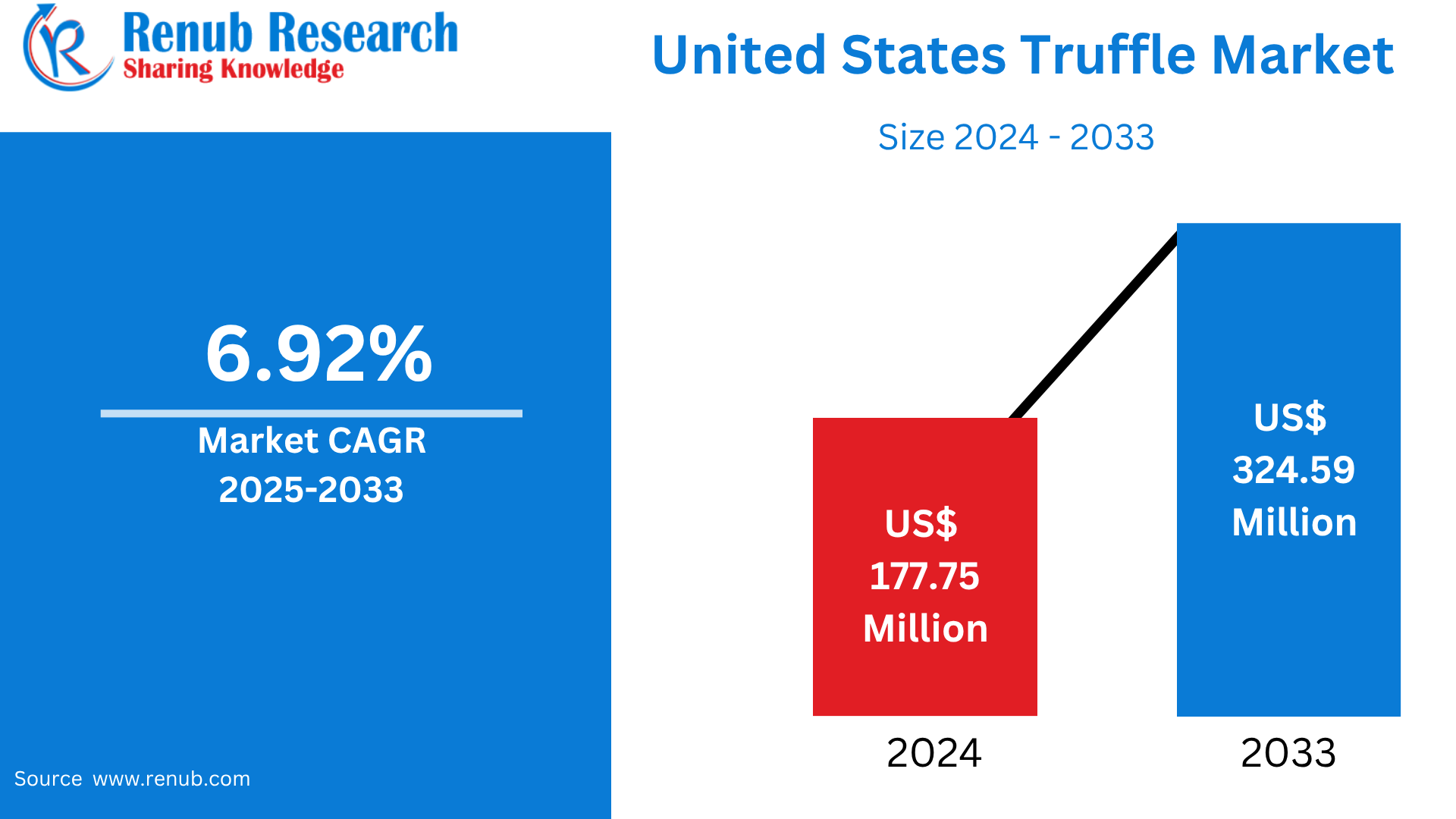
United States Truffle Market is expected to reach US$ 324.59 million by 2033 from US$ 177.75 million in 2024, with a CAGR of 6.92% from 2025 to 2033. The U.S. truffle market is developing due to a number of factors, including rising demand for gourmet food, the expansion of the fine-dining and luxury restaurant categories, consumer desire for unusual and expensive ingredients, an increase in the development of truffle-based products, and culinary tourism.
United States Truffle Industry Overview
Rare underground fungi known for their unique flavor and perfume, truffles are frequently utilized in fine dining and high-end food items. Both black and white truffles, as well as truffle oils, sauces, salts, and other infused goods, are sold in the United States. Fine dining, high-end food stores, and rising awareness of the health advantages of truffles are the main drivers of demand. Truffles are high-value ingredients due to their managed production and limited natural supply, which encourages both domestic farming and imports from Europe. The industry is expanding thanks to advancements in truffle production, preservation, and product development, which appeal to gourmets, gourmets, and high-end shoppers nationwide.
Since truffles are seen as a luxury ingredient that enhances the flavor and visual appeal of dishes, the growing consumer interest in gourmet and exotic foods is driving the truffle market in the United States. Demand for processed, preserved, and fresh truffle goods is driven by upscale eating establishments and fine dining. Food festivals and culinary tourism generate publicity and awareness. Products like oils, salts, sauces, and snacks that contain truffles increase accessibility for consumers at home. Year-round availability is ensured by increasing investment in import infrastructure and domestic truffle cultivation. Truffle chemicals with possible antioxidant qualities also appeal to health-conscious consumers, which helps the industry grow in the US.
Growth Drivers for the United States Truffle Market
Rising Demand for Gourmet and Exotic Foods
Consumers increasingly seek premium, exotic ingredients for culinary experiences, making truffles highly desirable in both restaurants and retail markets. Truffles’ unique aroma and flavor elevate dishes, leading chefs and home cooks to incorporate them into appetizers, main courses, and desserts. Gourmet grocery stores and online platforms now offer fresh and preserved truffles, truffle oils, salts, and spreads, broadening accessibility. Culinary enthusiasts often associate truffles with status and exclusivity, further fueling demand. Additionally, media coverage of fine dining trends and luxury ingredients encourages wider adoption. Rising interest in food culture, cooking shows, and celebrity chef endorsements helps increase truffle consumption, reinforcing its status as a premium ingredient and driving consistent growth in the U.S. market.
Expansion of Fine-Dining and Luxury Restaurant Segments
The growth of high-end restaurants and gourmet dining establishments in urban and tourist regions directly supports the U.S. truffle market. Truffles are a signature ingredient in luxury menus, often paired with meats, pasta, eggs, and cheeses. These establishments frequently source fresh or preserved truffles from domestic growers or European imports to meet quality and flavor standards. Fine-dining chains and boutique hotels also introduce truffle-infused dishes and products, creating brand differentiation and elevating culinary experiences. Seasonal truffle events, tastings, and food festivals increase consumer awareness and prestige. The expansion of these luxury food segments drives regular demand, encourages product innovation, and sustains growth in the domestic truffle market.
Innovation in Truffle-Based Products and Domestic Cultivation
Product innovation and domestication efforts are transforming the U.S. truffle market. Companies are introducing truffle oils, salts, sauces, cheeses, snacks, and ready-to-use condiments, making truffles more accessible to a wider audience. Controlled cultivation in orchards and agroforestry systems reduces reliance on imports, stabilizing supply and price volatility. Research in cultivation techniques, preservation, and shelf-life extension improves product quality. Marketing these innovations through gourmet retailers, e-commerce platforms, and culinary events enhances visibility. Truffle-based product diversification not only appeals to home cooks but also supports the restaurant industry. Together, these strategies expand market reach, increase consumption, and drive sustainable growth in the U.S. truffle market.
Challenges in the United States Truffle Market
Limited Natural Availability and High Cost
Truffles are difficult to cultivate and harvest, with growth dependent on specific soil, climate, and host tree conditions. Wild truffle collection is seasonal and labor-intensive, requiring trained dogs or pigs, contributing to high production costs. Imported truffles face additional logistics and quality control challenges. Scarcity drives premium pricing, making truffles less accessible to average consumers. Price volatility and limited supply can hinder consistent adoption across restaurants and retail markets. Smaller growers may struggle to compete with established importers. Consequently, high costs and supply limitations pose significant challenges to expanding truffle consumption in the U.S., despite strong demand from gourmet and luxury segments.
Perishability and Supply Chain Management
Fresh truffles have a short shelf life, typically lasting only a few days to weeks under optimal storage. This perishability complicates transportation, storage, and distribution, particularly for imported varieties. Maintaining aroma, flavor, and quality during shipping requires temperature-controlled logistics and specialized handling, increasing operational costs. Retailers and restaurants must carefully manage inventory to avoid spoilage and waste. Delays or improper storage can result in quality degradation, negatively impacting consumer experience and brand reputation. The need for efficient supply chain management, cold storage infrastructure, and timely distribution remains a major challenge for sustaining the U.S. truffle market.
California Truffle Market
California is a leading U.S. market for truffles, driven by high-end culinary culture, urban population centers, and favorable climate for domestic truffle cultivation. Gourmet restaurants, specialty food stores, and farmers’ markets in cities like San Francisco and Los Angeles frequently feature fresh truffles, truffle oils, and truffle-infused products. California truffle farms, particularly in Northern California, produce black and burgundy truffles, supplementing imported supply. Culinary schools and food festivals raise consumer awareness. Health-conscious and luxury-focused consumers further stimulate demand. The combination of domestic production, high disposable income, and sophisticated dining trends makes California a key market for U.S. truffle consumption.
Texas Truffle Market
Texas presents a growing market for truffles, supported by expanding fine-dining restaurants, luxury hotels, and urban culinary innovation in cities like Austin, Dallas, and Houston. Domestic truffle farming is emerging, while imports from Europe supplement supply. Consumers are increasingly experimenting with truffle-infused products at home. Culinary tourism, food festivals, and high-end grocery stores further promote truffle awareness. The state’s large population and growing disposable income contribute to market growth. Texas’ focus on innovative cuisine and gourmet experiences makes it an important market for both fresh and value-added truffle products.
New York Truffle Market
New York’s gourmet and luxury dining culture drives strong demand for truffles. Manhattan and Brooklyn host numerous high-end restaurants, specialty food retailers, and culinary events featuring truffle-based products. Consumers are exposed to fresh truffles, truffle oils, salts, and sauces through retail and e-commerce channels. Seasonal truffle festivals and chef-led promotions increase awareness. The high concentration of luxury consumers, culinary media coverage, and growing interest in premium ingredients support consistent market growth. New York’s market is characterized by sophisticated tastes, culinary innovation, and the presence of international imports, making it a key region for truffle adoption in the United States.
Florida Truffle Market
Florida’s truffle market benefits from tourism, luxury dining, and multicultural cuisine. Cities like Miami, Orlando, and Tampa feature high-end restaurants and resorts that incorporate fresh and processed truffle products. Domestic truffle cultivation is developing in select areas, while imported truffles meet peak demand. Culinary events and gourmet festivals increase consumer exposure. Seasonal tourism, retirees, and affluent populations drive demand for premium and exotic ingredients. Retailers offer truffle oils, sauces, and snacks to cater to home cooks. Florida’s combination of tourism-driven dining experiences, luxury-focused consumers, and emerging cultivation projects makes it an important market for the U.S. truffle industry.
Recent Developments in United States Truffle Market
- In 2024, The Truffle & Wine Co., a leading truffle producer, acquired a U.S.-based truffle farming operation to strengthen its footprint in the North American market and expand domestic production capabilities.
- In August 2022, TRUFF partnered with Hidden Valley Ranch to launch a limited-edition Spicy Truffle Ranch. The product combined Hidden Valley’s creamy ranch dressing with TRUFF’s Original Black Truffle Hot Sauce, marking the brands’ first collaboration on a unique truffle-infused product and targeting adventurous, gourmet consumers.
United States Truffle Market Segments:
Product
- Black Truffles
- White Truffles
- Others
Nature
- Conventional
- Organic
Form
- Fresh
- Processed
Distribution Channel
- B2B
- B2C
End Use
- Food & Beverages
- Cosmetics & Personal Care Products
- Pharmaceuticals
States–Market breakup in 29 viewpoints:
- California
- Texas
- New York
- Florida
- Illinois
- Pennsylvania
- Ohio
- Georgia
- New Jersey
- Washington
- North Carolina
- Massachusetts
- Virginia
- Michigan
- Maryland
- Colorado
- Tennessee
- Indiana
- Arizona
- Minnesota
- Wisconsin
- Missouri
- Connecticut
- South Carolina
- Oregon
- Louisiana
- Alabama
- Kentucky
- Rest of United States
All companies have been covered from 5 viewpoints:
- Company Overview
- Key Persons
- Recent Development & Strategies
- SWOT Analysis
- Sales Analysis
Key Players Analysis
- Arotz, SA
- Gazzarrini Tartufi
- TruffleHunter, Inc.
- Urbani Truffles
- SABATINO NA LLC
- LES FRÈRES JAUMARD
- The Welsh Truffle Co.
- PLANTIN Truffles
- Truffle Hill
Report Details:
| Report Features | Details |
| Base Year |
2024 |
| Historical Period |
2021 - 2024 |
| Forecast Period |
2025 - 2033 |
| Market |
US$ Million |
| Segment Covered |
Product, Nature, Form, Distribution Channel, End Use and States |
| States Covered |
|
| Companies Covered |
|
| Customization Scope |
20% Free Customization |
| Post-Sale Analyst Support |
1 Year (52 Weeks) |
| Delivery Format |
PDF and Excel through Email (We can also provide the editable version of the report in PPT/Word format on request) |
Customization Services available
- Analysis of Market Size and Its Segments
- More Company Profiles (Upto 10 without any additional cost):
- Additional Countries (Other than mentioned Countries):
- Region/Country Specific Reports:
- Market Entry Strategy:
- Region-Specific Market Dynamics:
- Regional Market Share Analysis:
- Trade Analysis:
- Production Insights:
- Others Customized Requests:
For more information contact our analysts.
Need More Assistance?
- Talk to our analysts to get more precious information on the current market trends.
- Include more countries and segments and customize the report based on the final requirement.
- Get a competitive advantage in your industry by knowing the report findings and making a positive impact on your revenues and operations.
- Our analysts are always ready to provide more help and pertinent information if you need any additional assistance.