United States Edible Offal Market Report by Source, Application, Distribution Channel, States and Company Analysis 2025-2033
Buy NowUnited States Edible Offal Market Size and Forecast 2025-2033
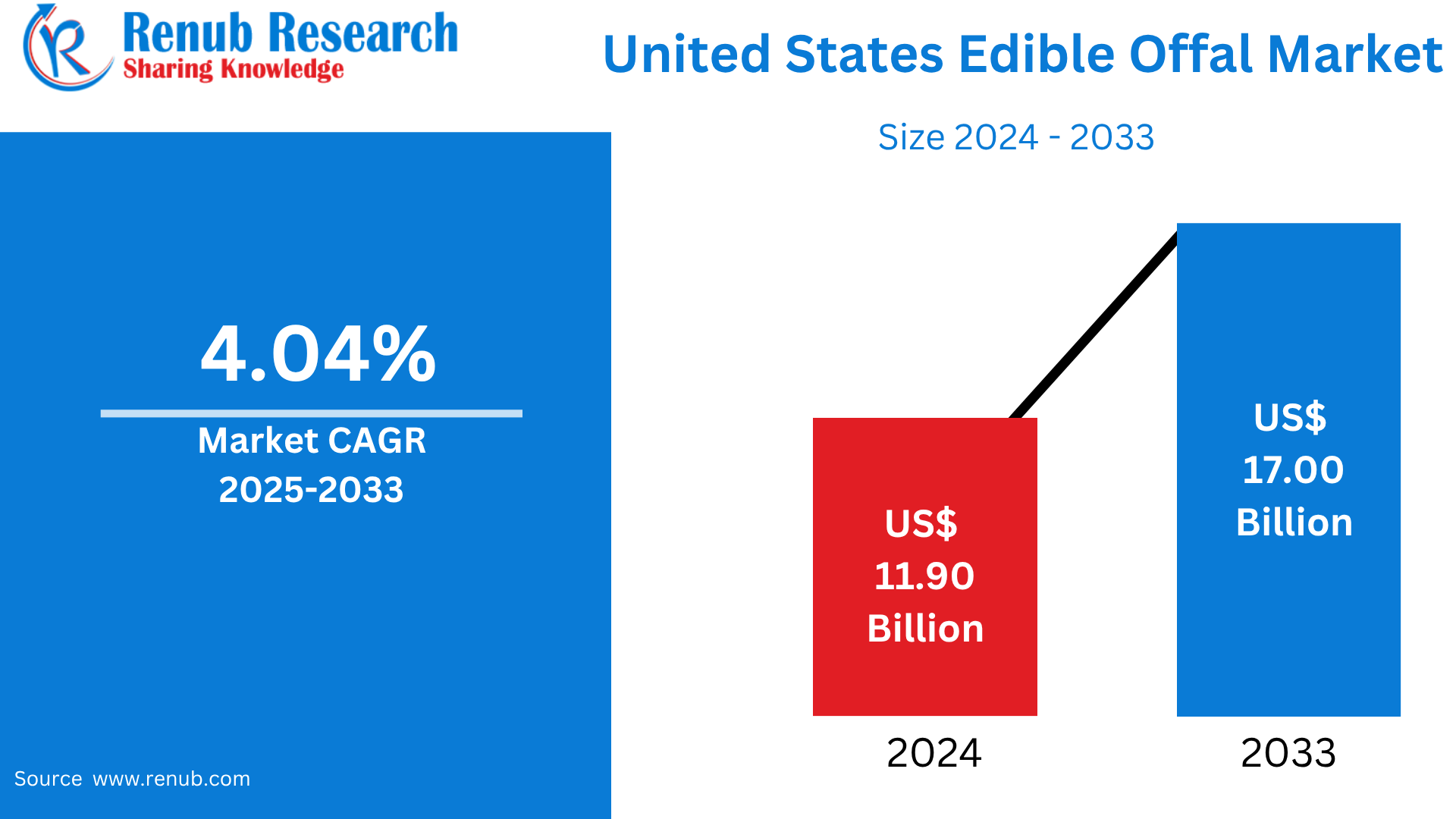
United States Edible Offal Market is expected to reach US$ 17 billion by 2033 from US$ 11.9 billion in 2024, with a CAGR of 4.04% from 2025 to 2033. Supported by value-added products and retail development, the U.S. edible offal industry is driven by rising demand for foods high in protein, expanding consumer knowledge of the nutrition of organ meat, sustainability and zero-waste trends, and the growing appeal of ethnic and traditional cuisines.
United States Edible Offal Industry Overview
Organ meats like liver, heart, kidney, tripe, and tongue are sold as edible offal in the United States because of their high protein, vitamin, and mineral content. Offal, which has historically been regarded as a by-product, is becoming more popular in the retail and foodservice sectors because of its high nutritional content and lower cost when compared to prime cuts. The use of offal in restaurants and gourmet meals is encouraged by ethnic cuisines and culinary innovation. Products that are packaged, processed, and ready to cook increase accessibility and convenience. The market for edible offal is steadily expanding in the US due to growing customer interest in sustainable eating and zero-waste methods as well as increased knowledge of nutrient-dense foods.
Growing consumer demand for foods high in protein and nutrients is driving the edible offal business in the United States. Growing health consciousness emphasizes the high iron, zinc, and vitamin content of organ meats. Urban and diversified communities are more likely to adopt ethnic and traditional cuisines. Initiatives for sustainability and zero-waste promote the use of whole animals, which lowers food waste and promotes environmental responsibility. Accessibility and convenience are improved by the availability of value-added items including frozen, prepackaged, and ready-to-cook offal. Offal is more affordable than prime cuts, which appeals to restaurants and homes. Increasing distribution channels through eateries and retail establishments supports market expansion even further.
Growth Drivers for the United States Edible Offal Market
Rising Demand for Protein-Rich Foods
Increasing interest in protein-rich diets drives U.S. edible offal consumption. Consumers seek nutrient-dense, cost-effective alternatives to traditional meat cuts, and organ meats like liver, heart, and kidney provide high-quality protein and essential nutrients. Fitness enthusiasts, aging populations, and health-conscious individuals incorporate offal into daily diets to support muscle development, energy, and overall wellness. Retailers and foodservice outlets respond with accessible packaging formats, including frozen, pre-portioned, and ready-to-cook options. The combination of affordability and nutritional benefits positions offal as a viable protein source. As consumer education grows regarding the health advantages of organ meats, demand rises, making protein content a key driver of market expansion in both household and commercial consumption.
Nutritional Awareness
Edible offal is rich in essential nutrients, including iron, zinc, vitamin B12, and folate, which attract health-conscious consumers. Rising awareness of nutrient deficiencies from highly processed diets has encouraged adoption of organ meats. Healthcare professionals and nutritionists often recommend offal for its concentrated micronutrient content, supporting energy, immunity, and cognitive function. Consumers increasingly value natural, minimally processed, and functional foods, boosting demand for offal. Processed and value-added products, such as pre-cut or seasoned organ meats, make consumption more convenient. Marketing and education campaigns emphasizing health benefits further enhance acceptance. Nutritional awareness, therefore, remains a critical factor driving the U.S. edible offal market.
Popularity of Ethnic and Traditional Cuisines
Ethnic and traditional cuisines play a major role in U.S. offal consumption. Communities with Latin American, Asian, and Southern culinary traditions regularly use organ meats in soups, stews, and specialty dishes. Urban populations increasingly explore global cuisine, encouraging restaurants, food trucks, and specialty grocery stores to incorporate offal into menus. Social media and food influencers have popularized gourmet applications of organ meats, making them trendy and culturally relevant. This exposure increases mainstream acceptance, driving retail and foodservice demand. Culinary diversity, combined with rising interest in authentic and adventurous foods, strengthens offal’s position as a sought-after ingredient, expanding its market footprint.
Challenges in the United States Edible Offal Market
Limited Consumer Awareness and Acceptance
Many consumers perceive offal as having strong flavors or unfamiliar textures, limiting mainstream adoption. Lack of education on preparation methods and health benefits further reduces consumption. Younger generations and urban consumers may be less exposed to traditional dishes containing organ meats. Without targeted marketing and recipe guidance, these barriers persist, constraining market growth. Overcoming cultural biases and perceptions is critical for wider acceptance. Companies must invest in campaigns that highlight nutritional value, convenience, and culinary versatility to increase adoption. Failure to address awareness and acceptance issues can slow penetration despite growing interest in sustainable and protein-rich foods.
Supply Chain and Quality Challenges
High-quality organ meats are perishable and require strict cold chain management, increasing storage and distribution costs. Inconsistent supply due to livestock processing practices can disrupt availability for retailers and foodservice. Compliance with stringent food safety, labeling, and hygiene regulations adds operational complexity. Smaller producers often struggle with sourcing, storage, and logistics, affecting product consistency and shelf life. These challenges can hinder market growth and consumer confidence. Efficient supply chain management, proper storage infrastructure, and consistent quality control are essential to ensure reliable availability of edible offal in retail and foodservice markets.
California Edible Offal Market
California is a key market for edible offal due to its multicultural population and strong health-conscious consumer base. Ethnic cuisines and gourmet restaurants drive demand for organ meats in traditional and modern dishes. Retailers and specialty stores offer pre-packaged, frozen, and ready-to-cook offal products, enhancing accessibility. Sustainability trends emphasizing whole-animal utilization resonate strongly, encouraging broader adoption. Urban centers like Los Angeles and San Francisco support culinary innovation, incorporating offal in both casual and fine dining settings. Awareness campaigns on nutritional benefits further strengthen consumption. California’s combination of diverse cuisine, health trends, and sustainability initiatives makes it a leading market for edible offal.
Texas Edible Offal Market
Texas exhibits growing demand for edible offal, supported by a large meat production industry and diverse culinary traditions. Hispanic and Southern cuisines heavily incorporate organ meats, increasing adoption in homes and restaurants. Urban centers like Houston, Dallas, and Austin feature specialty grocery stores and foodservice outlets offering offal. Rising awareness of protein-rich, nutrient-dense foods and sustainable consumption drives retail demand. Value-added products, such as frozen or pre-seasoned offal, improve convenience. Regional food diversity and rising disposable income encourage experimentation. Expansion of distribution networks ensures consistent availability, positioning Texas as a key market for edible offal consumption in the United States.
New York Edible Offal Market
New York’s edible offal market benefits from its urban, affluent, and culturally diverse population. Gourmet restaurants, ethnic eateries, and foodservice providers incorporate organ meats in innovative dishes. Retailers offer fresh, frozen, and value-added offal to meet demand. Health-conscious consumers are drawn to nutrient-rich, protein-dense options, while culinary exploration promotes adoption among younger demographics. Social media exposure and culinary trends increase acceptance of offal. New York’s strong focus on sustainability and zero-waste initiatives further encourages organ meat utilization. The combination of cultural diversity, health awareness, and premium culinary trends makes New York a significant market for edible offal.
Florida Edible Offal Market
Florida’s edible offal market is growing due to its multicultural population, tourism-driven foodservice industry, and health-conscious retirees. Ethnic cuisines, including Caribbean, Latin American, and Southern dishes, drive consumption in restaurants and households. Retailers provide frozen, pre-packaged, and value-added offal to improve convenience. Urban centers like Miami, Tampa, and Orlando support culinary experimentation and gourmet applications. Health trends emphasizing protein-rich and nutrient-dense foods boost adoption. Seasonal tourist influx further increases demand. Sustainable consumption initiatives promoting whole-animal utilization align with consumer values, enhancing market potential. Florida’s combination of diverse culinary culture, health awareness, and retail accessibility positions it as a key state in the U.S. edible offal market.
Recent Developments in United States Edible Offal Market
- In May 2022, JBS Foods acquired Biotech Foods, a move expected to strengthen the company’s geographical expansion and broaden its market presence.
United States Edible Offal Market Segments:
Source
- Pig
- Beef
- Sheep
- Poultry
- Others
Application
- Fresh
- Market Analysis
- Processed
States–Market breakup in 29 viewpoints:
- California
- Texas
- New York
- Florida
- Illinois
- Pennsylvania
- Ohio
- Georgia
- New Jersey
- Washington
- North Carolina
- Massachusetts
- Virginia
- Michigan
- Maryland
- Colorado
- Tennessee
- Indiana
- Arizona
- Minnesota
- Wisconsin
- Missouri
- Connecticut
- South Carolina
- Oregon
- Louisiana
- Alabama
- Kentucky
- Rest of United States
All companies have been covered from 5 viewpoints:
- Company Overview
- Key Persons
- Recent Development & Strategies
- SWOT Analysis
- Sales Analysis
Key Players Analysis
- Offal Good
- Offal Delight
- Offal Cuisine
- Jbs Food Canada
- Alpha Field Products Co,
- Yoma International
- Cenfood International Inc.
- Sure Good Foods Ltd.
- Organic Meat Company
Report Details:
| Report Features | Details |
| Base Year |
2024 |
| Historical Period |
2021 - 2024 |
| Forecast Period |
2025 - 2033 |
| Market |
US$ Billion |
| Segment Covered |
Source, Application, Distribution Channel and States |
| States Covered |
|
| Companies Covered |
|
| Customization Scope |
20% Free Customization |
| Post-Sale Analyst Support |
1 Year (52 Weeks) |
| Delivery Format |
PDF and Excel through Email (We can also provide the editable version of the report in PPT/Word format on request) |
Customization Services available
- Analysis of Market Size and Its Segments
- More Company Profiles (Upto 10 without any additional cost):
- Additional Countries (Other than mentioned Countries):
- Region/Country Specific Reports:
- Market Entry Strategy:
- Region-Specific Market Dynamics:
- Regional Market Share Analysis:
- Trade Analysis:
- Production Insights:
- Others Customized Requests:
For more information contact our analysts.
Need More Assistance?
- Talk to our analysts to get more precious information on the current market trends.
- Include more countries and segments and customize the report based on the final requirement.
- Get a competitive advantage in your industry by knowing the report findings and making a positive impact on your revenues and operations.
- Our analysts are always ready to provide more help and pertinent information if you need any additional assistance.