United States Surgical Dressings Market Report by Product, Application, End Use, States and Companies Analysis 2026-2034
Buy NowUnited States Surgical Dressings Market Size and Forecast
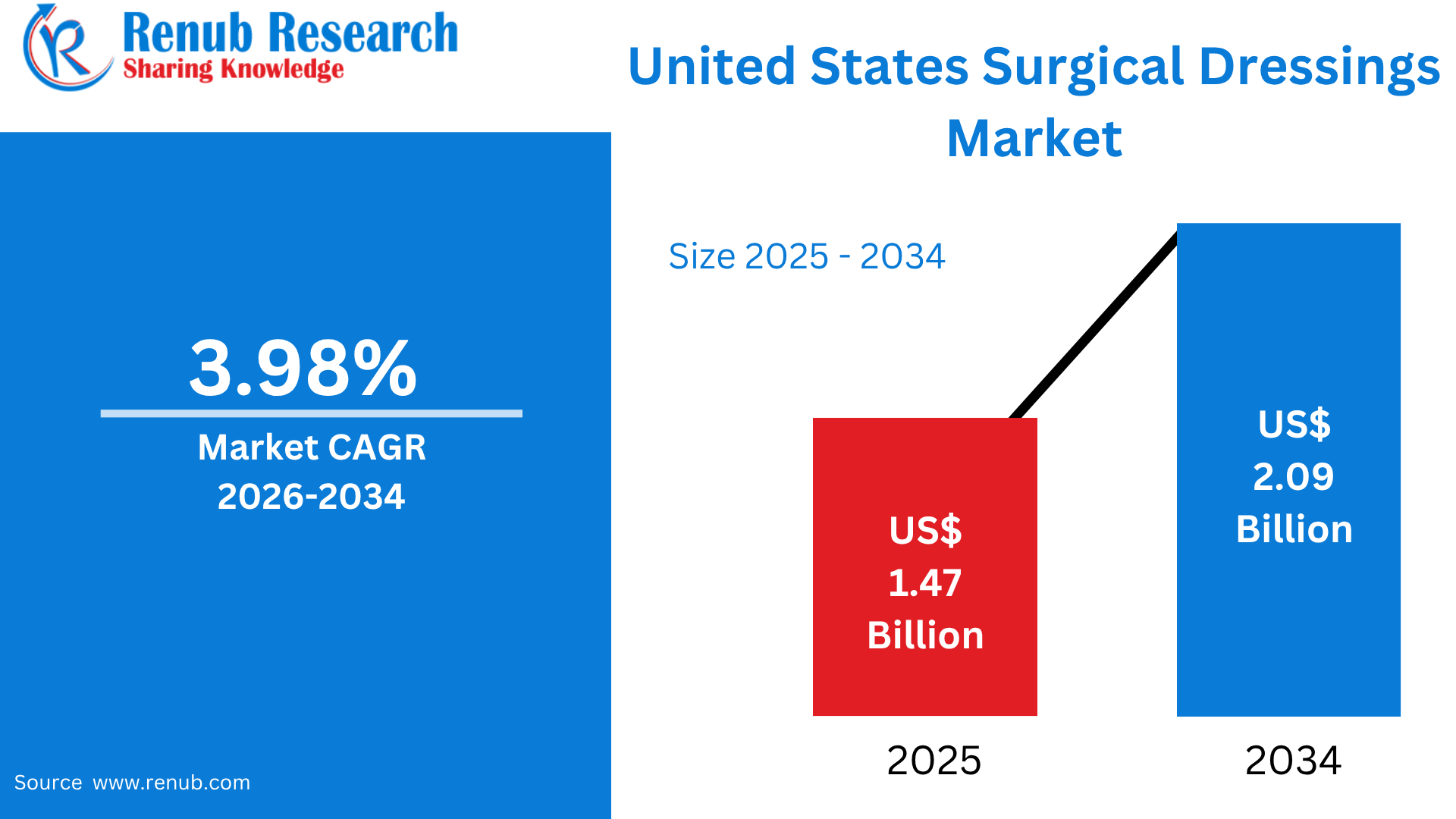
United States Surgical Dressings Market is projected to grow from US$ 1.47 billion in 2025 to US$ 2.09 billion by 2034, registering a CAGR of 3.98% during 2026–2034. Market growth is supported by the rising number of surgical procedures, increasing prevalence of chronic and complex wounds, and the expanding geriatric population. In addition, greater adoption of advanced wound care solutions and ongoing innovations in antimicrobial, bioactive, and technologically advanced dressing products are contributing to the continued expansion of the U.S. surgical dressings market.
What Are Surgical Dressings and Their Uses & Popularity in the USA
Surgical dressings are medical materials applied to surgical incisions, wounds, and damaged skin to protect the affected area, absorb wound exudate, maintain an appropriate healing environment, and reduce the risk of infection. They include traditional gauze and adhesive dressings as well as advanced products such as antimicrobial, hydrocolloid, foam, alginate, hydrogel, transparent film, and bioactive dressings. In the United States, surgical dressings are widely used across hospitals, ambulatory surgical centers, clinics, physician offices, long-term care facilities, and home healthcare settings. Their applications range from postoperative incision management and trauma care to chronic wounds, ulcers, burns, and infected wounds. Demand is supported by the country’s large and aging population and high prevalence of chronic health conditions.
The U.S. population aged 65 and older reached approximately 64.6 million in 2025, representing nearly 18.9% of the population. Additionally, studies of Medicare beneficiaries found that the number with wounds increased from 8.2 million in 2014 to 10.5 million in 2019, highlighting the substantial need for effective wound-management products.
Rising Prevalence of Chronic Wounds in the USA
- Chronic wounds affect more than 10 million Medicare beneficiaries: In 2019, approximately 10.5 million U.S. Medicare beneficiaries had chronic wounds, up from about 8.2 million in 2014.
- Chronic wound prevalence is increasing: The prevalence among Medicare beneficiaries increased from 14.5% in 2014 to 16.4% in 2019, representing a rise of approximately 13% over five years.
- Diabetes is a major risk factor: The CDC estimates that 40.1 million Americans had diagnosed or undiagnosed diabetes in 2023, equivalent to about 12% of the U.S. population. Diabetes-related neuropathy and poor circulation can significantly impair wound healing.
- Diabetic foot ulcers are widespread: The CDC estimates that approximately 12% of people with diabetes develop a diabetic foot ulcer during their lifetime, creating substantial demand for advanced wound-care products and services.
- Younger Medicare populations are increasingly affected: Between 2014 and 2019, chronic wound prevalence among Medicare beneficiaries under 65 increased from 12.5% to 16.3% in men and from 13.4% to 17.5% in women.
- Pressure ulcers remain an important burden: The 2022 U.S. wound-burden analysis reported substantive increases in pressure ulcers, chronic ulcers, diabetic foot ulcers, and wound infections, highlighting the continuing need for effective prevention and treatment.
- Aging increases the risk of chronic wounds: Older adults are particularly vulnerable because of reduced circulation, thinner skin, immobility and multiple chronic diseases. In 2024, 62% of U.S. adults aged 65 and older had two or more selected chronic conditions, increasing their exposure to factors associated with delayed wound healing.
- Wounds can progress to severe complications: Poorly healing diabetic wounds can develop infections and contribute to lower-extremity amputations. The CDC reports that 80% of lower-limb amputations are associated with complications from diabetes, underscoring the importance of early wound management.
- The overall burden remains significant: A 2025 update characterizes chronic wounds as a “silent epidemic” in the United States, estimating that about one in six Medicare beneficiaries—approximately 10.5 million people—are affected.
Growth Drivers of the United States Surgical Dressings Market
Rising Surgical Procedures and Postoperative Wound Management
The continued need for surgical interventions is a major factor supporting demand for surgical dressings in the United States. Dressings are routinely required after procedures to protect incisions, manage drainage, support tissue healing, and reduce exposure to external contaminants. The country’s extensive hospital and ambulatory-care infrastructure creates a great recurring demand for postoperative wound-management products. Surgical site infection prevention also remains an important healthcare priority. The CDC’s 2024 Healthcare-Associated Infections Progress Report showed a 4% reduction in surgical site infections following colon surgery compared with 2023, while surgical-site infections following abdominal hysterectomy increased 8%. These results demonstrate that infection prevention and postoperative wound management remain important clinical priorities. Advanced dressings incorporating antimicrobial agents, absorbent layers, moisture management, and protective barriers are increasingly attractive to healthcare providers seeking improved wound-care outcomes. As hospitals focus on reducing complications, readmissions, and treatment costs, demand for technologically advanced surgical dressings is expected to remain strong.
Growing Prevalence of Chronic Wounds and Multiple Chronic Conditions
The increasing burden of chronic diseases is expanding the patient population requiring wound-care products in the United States. Diabetes, vascular disease, obesity, and other chronic conditions can impair healing and increase the likelihood of persistent wounds, ulcers, and postoperative complications. A study of U.S. Medicare beneficiaries found that the number of beneficiaries with wounds increased from 8.2 million in 2014 to 10.5 million in 2019, while wound prevalence increased from 14.5% to 16.4%. Surgical wounds were also among the most expensive wound categories to treat, emphasizing the economic importance of effective wound management. More recently, research reported that 51.1% of U.S. adults had at least one of 10 selected chronic conditions in 2024, while 26.4% had multiple chronic conditions. This substantial chronic-disease burden supports continued demand for dressings capable of managing exudate, protecting vulnerable tissue, supporting healing, and reducing infection risks.
Aging Population and Adoption of Advanced Wound-Care Products
Population aging represents another important growth opportunity for the U.S. surgical dressings market because older adults are more likely to undergo surgical procedures and experience chronic wounds, fragile skin, and slower healing. The U.S. Census Bureau estimates that Americans aged 65 and older will increase to approximately 64.6 million in 2025, representing 18.9% of the national population. The same population group is projected to account for 23.4% of the U.S. population by 2060, indicating a long-term expansion of the potential wound-care patient base. Healthcare providers are increasingly adopting advanced dressings, including foam, hydrocolloid, hydrogel, alginate, antimicrobial, and other specialized products, to address complex wound characteristics. Advanced products can provide better moisture balance, absorbency, protection, and targeted antimicrobial action than conventional gauze. As hospitals, outpatient centers, nursing facilities, and home-care providers increasingly emphasize efficient wound management and patient comfort, the shift toward specialized dressing technologies is expected to support market growth.
Challenges of the United States Surgical Dressings Market
High Product Costs and Reimbursement Pressure
The relatively high cost of advanced surgical dressings can create adoption barriers, particularly when healthcare providers and payers focus heavily on controlling treatment expenditures. Conventional gauze and basic adhesive products are generally less expensive, whereas antimicrobial, bioactive, foam, hydrocolloid, and other technologically advanced dressings can command higher prices because of specialized materials and manufacturing processes. This creates challenges for healthcare facilities when deciding between conventional products and premium alternatives. The economic importance of wound care is substantial: research involving Medicare beneficiaries found that wound-related expenditures were estimated at US$22.5 billion in 2019 under the most conservative costing method. Surgical wounds remained one of the more expensive categories, although per-wound costs declined during the study period. Manufacturers therefore need to demonstrate clear clinical and economic value through improved healing, fewer complications, reduced dressing changes, or shorter treatment periods. Pricing pressure, reimbursement requirements, hospital procurement policies, and competition from lower-cost alternatives may limit the rapid adoption of premium surgical dressing technologies.
Infection Risks and Complex Clinical Requirements
Although surgical dressings are designed to protect wounds and support healing, managing postoperative and chronic wounds remains clinically complex. Surgical site infections can affect the skin, tissues, organs, and implanted materials, potentially requiring additional treatment and increasing healthcare utilization. The CDC continues to identify healthcare-associated infections as an important patient-safety concern; its data indicate that approximately 1 in 38 hospital patients has at least one healthcare-associated infection on any given day. Although most measured HAIs improved in U.S. acute-care hospitals during 2024, abdominal hysterectomy surgical-site infections increased 8%, demonstrating that infection-control challenges remain in certain procedures. Surgical dressings must therefore meet demanding requirements related to sterility, moisture control, absorbency, adhesion, skin protection, and antimicrobial performance. Product selection can also vary according to wound type, exudate level, location, patient condition, and clinician preference. These factors increase clinical complexity and can make standardized product adoption more difficult across healthcare settings.
Surgical Dressings Launches in the USA
- V.A.C.® Peel and Place Dressing – Solventum | September 2024
Solventum launched the V.A.C.® Peel and Place Dressing in the U.S. as an all-in-one dressing and drape for negative-pressure wound therapy. It can be applied in less than two minutes and can remain in place for up to seven days, simplifying the dressing-change process. - Microlyte® Ag/Lidocaine – Imbed Biosciences | October 2024
Imbed Biosciences received FDA 510(k) clearance for Microlyte® Ag/Lidocaine, an antimicrobial wound dressing combining ionic and metallic silver with lidocaine. The dressing is indicated for several wound types, including surgical wounds and post-surgical incisions, providing antimicrobial protection alongside localized pain management. - OptiView® Transparent Dressing with HydroCore™ – Medline | January 2024
Medline introduced OptiView® Transparent Dressing with HydroCore™ Technology in the U.S. Its transparent construction allows clinicians to inspect and monitor skin without removing the dressing. The HydroCore gel center also provides a cooling effect, supporting pressure-injury prevention and skin monitoring. - SYLKE™ Silk Surgical Dressing – Sylke Inc. | October 2023
Sylke launched SYLKE™, a surgical dressing made from hypoallergenic silk fibroin. The product was designed to protect surgical wounds, reduce skin injuries and infections, and improve scarring outcomes. The company reported favorable head-to-head results compared with a conventional wound-closure product. - ALLEVYN Ag+ Surgical Antimicrobial Dressing – Smith+Nephew | August 2023 FDA Clearance
Smith+Nephew obtained FDA 510(k) clearance for its ALLEVYN Ag+ Surgical Antimicrobial Silicone Gel Adhesive Composite Hydrocellular Foam Dressing. The product combines a hydrocellular foam structure with antimicrobial silver and silicone-gel adhesive technology for surgical wound management. - ConvaFoam® Advanced Foam Dressing – Convatec | U.S. Launch
Convatec introduced ConvaFoam® in the United States as a family of advanced foam dressings designed for a broad range of wound-management applications. The product line was developed to simplify dressing selection while providing wound protection and exudate management. - Atrauman® Ag – HARTMANN USA | December 2024 FDA Clearance
HARTMANN USA received FDA 510(k) clearance for Atrauman® Ag, a non-adherent silver-impregnated antimicrobial wound dressing. The dressing is indicated for moderately exuding wounds, including surgical wounds, skin-graft donor sites, ulcers, burns, and abrasions, and is designed to maintain a moist wound environment. - Biatain® Silicone Fit – Coloplast | 2024 U.S. Launch
Coloplast launched Biatain® Silicone Fit in the U.S. in 2024. The silicone foam dressing is designed for pressure-injury prevention and wound management. Its launch expanded Coloplast’s advanced foam dressing portfolio for healthcare providers managing vulnerable skin and wounds. - Cinesteam® Wound Dressing – Cemag Care/Clara Care | April 2025
Cemag Care partnered with Clara Care for the exclusive U.S. institutional launch of Cinesteam®. The non-adhesive secondary dressing combines an absorbent layer with a cinnamon-containing sachet designed to adsorb unpleasant wound odors while absorbing exudate. - Hemastyl® Wound Dressing – Rapid Nexus | May 2026 Commercial Deployment
Rapid Nexus began commercial deployment of its FDA-cleared Hemastyl® wound treatment in the U.S. in May 2026 following contracts with the Department of Veterans Affairs and Department of Defense. The deployment represents an important expansion of an advanced wound technology into large U.S. healthcare systems.
Direct Wound Protection and Advanced Healing Support
U.S. primary surgical dressings market represents a substantial portion of overall surgical dressing demand because these products are placed directly over wounds or surgical incisions. They help protect the wound from external contaminants, absorb exudate, maintain appropriate moisture levels, and support healing while reducing infection risks. The segment includes gauze, transparent films, foam, hydrocolloid, alginate, and antimicrobial dressings. Demand is closely linked to surgical activity across hospitals and ambulatory surgery centers. The United States performs more than 50 million inpatient surgical procedures annually, creating a significant recurring requirement for postoperative wound-management products. In addition, the increasing use of advanced dressings is encouraging manufacturers to develop products with enhanced absorbency, antimicrobial protection, longer wear times, and improved skin compatibility. Growing emphasis on reducing surgical-site infections and improving patient recovery is further supporting adoption. As healthcare providers increasingly prioritize efficient postoperative care and fewer dressing changes, technologically advanced primary dressings are expected to gain a larger share of the U.S. market.
High Cardiovascular Disease Burden Supports Post-Surgical Demand
U.S. cardiovascular surgical dressings market is supported by the continued prevalence of heart and vascular diseases and the large number of procedures performed to treat them. Surgical dressings are used following coronary artery bypass grafting, valve replacement, vascular surgery, pacemaker implantation, catheter-based interventions, and other cardiovascular procedures. They protect incision sites, manage postoperative drainage, and provide a barrier against contamination and infection. According to the CDC, heart disease caused about 919,191 deaths in the United States in 2023, making it the leading cause of death nationally. The American Heart Association also estimates that cardiovascular disease affects approximately 127.9 million U.S. adults, demonstrating the substantial underlying disease burden. As cardiovascular care increasingly combines complex surgical and minimally invasive procedures, demand for reliable postoperative wound-management solutions remains significant. Hospitals and cardiac centers are also placing greater emphasis on infection prevention, faster recovery, and reduced readmissions, supporting adoption of antimicrobial and advanced moisture-management dressings. These factors are expected to sustain demand for cardiovascular surgical dressings.
Extensive Hospital Infrastructure Drives Large-Scale Product Consumption
Hospitals represent the largest end-user segment for surgical dressings in the United States because they manage a substantial proportion of complex surgeries, emergency procedures, chronic wounds, and postoperative patients. Surgical dressings are required across cardiovascular, orthopedic, oncology, gastrointestinal, neurological, and general surgical departments. Hospitals use products ranging from conventional gauze and adhesive dressings to antimicrobial, foam, hydrocolloid, collagen, and other advanced wound-care solutions. According to the American Hospital Association (AHA), the United States has approximately 6,100 hospitals, including more than 6,000 community hospitals. The country’s extensive hospital network creates a broad purchasing base for surgical dressing manufacturers. In addition, hospitals are increasingly focused on reducing healthcare-associated infections, improving patient outcomes, and controlling the cost of wound management. Advanced dressings that provide improved exudate control, longer wear times, and antimicrobial protection can help reduce dressing-change frequency and support efficient clinical workflows. Continued surgical activity, aging patients, and growing chronic-wound prevalence are therefore expected to maintain hospitals as the dominant end-user segment.
Large Population and Advanced Healthcare Infrastructure Strengthen California Demand
California represents one of the most important state-level markets for surgical dressings because of its large population, extensive healthcare infrastructure, and concentration of major medical centers. The state has a broad network of hospitals, ambulatory surgery centers, academic institutions, and specialty healthcare providers that generate demand for postoperative wound-care products. According to the U.S. Census Bureau, California’s population was approximately 39.4 million in 2025, making it the most populous U.S. state. The state’s large patient population creates substantial demand for surgical procedures and wound-management services. California also has a strong concentration of medical research, biotechnology, and healthcare technology companies, supporting the adoption of innovative wound-care products. Rising rates of chronic diseases, an aging population, and growing outpatient surgical activity further contribute to demand for primary and advanced surgical dressings. Healthcare providers increasingly seek products that can reduce infection risks, manage wound exudate, protect fragile skin, and minimize dressing changes. These factors are expected to keep California among the leading regional markets for surgical dressings in the United States.
Rapid Population Growth and Expanding Healthcare Capacity Accelerate Texas Market Opportunities
Texas is emerging as a major growth market for surgical dressings due to rapid population expansion, increasing healthcare infrastructure, and growing demand for specialty medical services. Major healthcare hubs including Houston, Dallas–Fort Worth, Austin, and San Antonio have expanded hospital capacity and surgical services, creating additional demand for postoperative wound-management products. The U.S. Census Bureau estimated Texas’s population at approximately 31.7 million in 2025, making it the second-most populous state in the country. Texas also faces a considerable burden of diabetes, obesity, cardiovascular disease, and other chronic conditions that can increase surgical requirements and complicate wound healing. The state’s expanding population and healthcare investments are encouraging the development of hospitals, outpatient centers, specialty clinics, and ambulatory surgery facilities. These facilities require a broad portfolio of dressings, including gauze, films, foam, antimicrobial, and advanced moisture-management products. As surgical volumes increase and providers place greater emphasis on infection prevention and efficient recovery, Texas is expected to offer significant opportunities for surgical dressing manufacturers.
Aging Demographics and High Healthcare Utilization Support Florida Market Expansion
Florida represents a significant U.S. surgical dressings market because of its large and rapidly aging population. Older adults have higher rates of surgery, chronic wounds, diabetes, vascular conditions, and other health problems that can increase the need for wound-management products. According to the U.S. Census Bureau, Florida’s population reached approximately 23.5 million in 2025, while residents aged 65 and older account for roughly one-fifth of the state’s population. This demographic structure creates sustained demand for healthcare and postoperative wound-care services. Florida also has an extensive network of hospitals, ambulatory surgery centers, rehabilitation facilities, and long-term care providers. Cardiovascular, orthopedic, oncology, and general surgical procedures are important sources of dressing demand. The state’s growing healthcare and senior-care infrastructure is encouraging adoption of advanced products designed to improve wound protection, moisture management, absorbency, and infection control. Increasing healthcare utilization among older adults, combined with the state’s large patient population, is expected to support continued growth in surgical dressing consumption throughout the forecast period.
Dense Population and Leading Medical Centers Sustain Advanced Dressing Demand in New York
New York remains a major market for surgical dressings due to its large population, highly developed healthcare system, and concentration of leading hospitals and medical research institutions. Surgical dressings are extensively used across cardiovascular, orthopedic, oncology, neurological, trauma, and general surgical procedures. According to the U.S. Census Bureau, New York’s population was approximately 20.0 million in 2025, providing a substantial patient base for hospitals and outpatient healthcare providers. The state is home to numerous internationally recognized medical centers, which support high volumes of complex surgeries and specialized treatment. Healthcare providers are increasingly emphasizing surgical-site infection prevention, effective exudate management, and faster postoperative recovery, encouraging the use of advanced antimicrobial, foam, hydrocolloid, and other specialized dressings. New York’s dense urban population also supports extensive outpatient and ambulatory healthcare services, creating additional demand beyond traditional inpatient hospitals. Continued investment in healthcare infrastructure, advanced surgical capabilities, and quality improvement programs is expected to sustain demand for surgical dressings across the state.
United States Surgical Dressings Market Segmentation
Product
- Primary
- Secondary
- Others
Application
- Diabetes Based Surgeries
- Cardiovascular Diseases
- Ulcers
- Burns
- Transplant Sites
- Others
End Use
- Hospitals
- Ambulatory Surgery Centers
- Specialty Centers
- Home Healthcare
- Others
States
- California
- Texas
- New York
- Florida
- Illinois
- Pennsylvania
- Ohio
- Georgia
- New Jersey
- Washington
- North Carolina
- Massachusetts
- Virginia
- Michigan
- Maryland
- Colorado
- Tennessee
- Indiana
- Arizona
- Minnesota
- Wisconsin
- Missouri
- Connecticut
- South Carolina
- Oregon
- Louisiana
- Alabama
- Kentucky
- Rest of United States
All the Key players have been covered with 5 Viewpoints
- Overviews
- Key Person
- Recent Developments
- SWOT Analysis
- Revenue Analysis
Key Players Analysis
- Smith & Nephew plc
- Essity AB
- DeRoyal Industries, Inc.
- 3M
- Integra LifeSciences Holdings Corporation
- Cardinal Health Inc
- MiMedx Group Inc
- Medtronic plc
Report Details:
| Report Features | Details |
| Base Year |
2025 |
| Historical Period |
2022 - 2025 |
| Forecast Period |
2026 - 2034 |
| Market |
US$ Billion |
| Segment Covered |
Product, Application End User, and States |
| States Covered |
|
| Companies Covered |
|
| Customization Scope |
20% Free Customization |
| Post-Sale Analyst Support |
1 Year (52 Weeks) |
| Delivery Format |
PDF and Excel through Email (We can also provide the editable version of the report in PPT/Word format on request) |
Customization Services available
- Analysis of Market Size and Its Segments
- More Company Profiles (Upto 10 without any additional cost):
- Additional Countries (Other than mentioned Countries):
- Region/Country Specific Reports:
- Market Entry Strategy:
- Region-Specific Market Dynamics:
- Regional Market Share Analysis:
- Trade Analysis:
- Production Insights:
- Others Customized Requests:
For more information contact our analysts.
Need More Assistance?
- Talk to our analysts to get more precious information on the current market trends.
- Include more countries and segments and customize the report based on the final requirement.
- Get a competitive advantage in your industry by knowing the report findings and making a positive impact on your revenues and operations.
- Our analysts are always ready to provide more help and pertinent information if you need any additional assistance.