United States Nutraceutical Packaging Market Report by Material, Application, States and Company Analysis 2025-2033
Buy NowUnited States Nutraceutical Packaging Market Size and Forecast 2025-2033
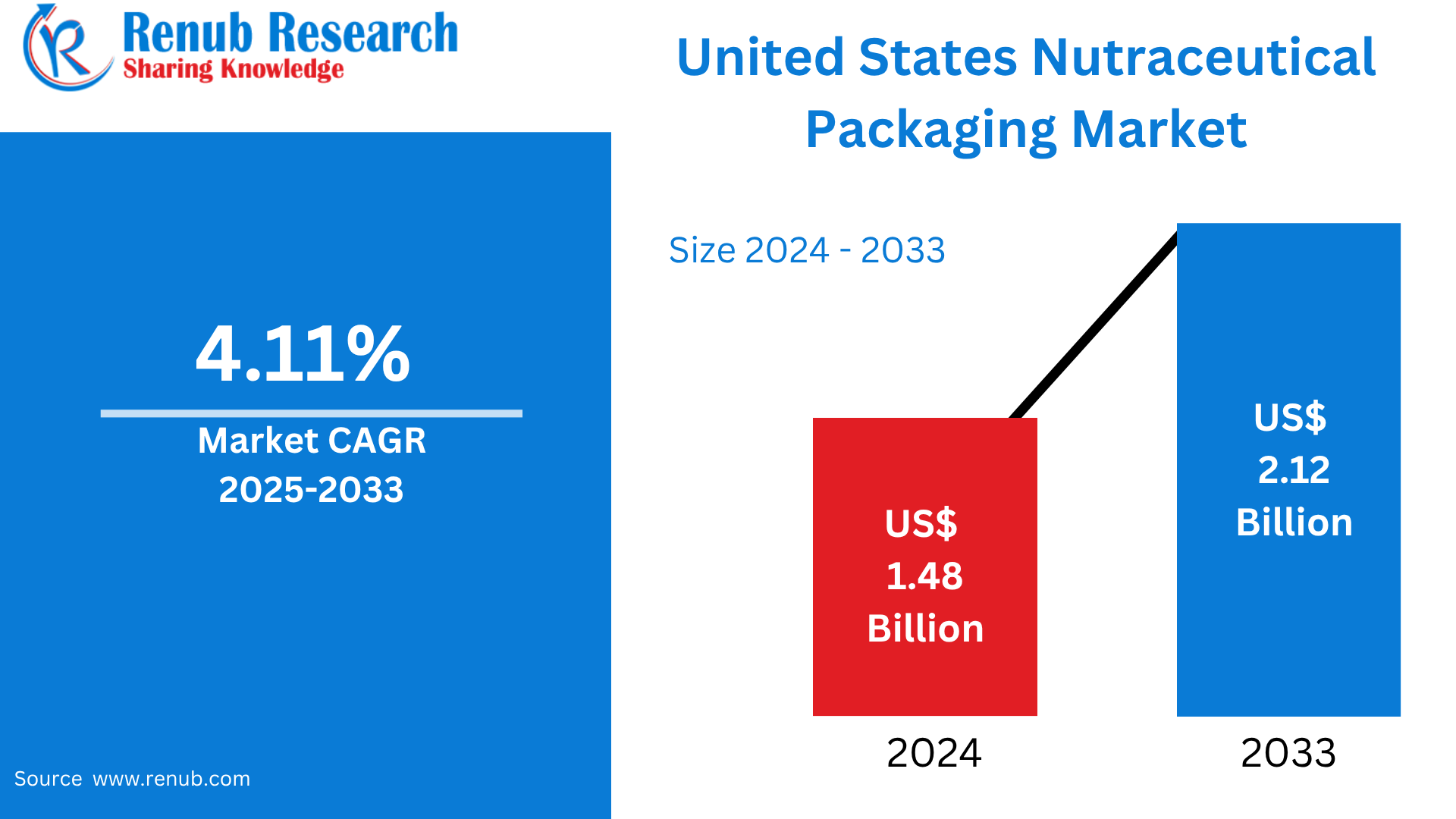
United States Nutraceutical Packaging Market is expected to reach US$ 2.12 billion by 2033 from US$ 1.48 billion in 2024, with a CAGR of 4.11% from 2025 to 2033. The U.S. nutraceutical packaging market is driven by factors such as growing e-commerce, increasing demand for convenient, sustainable, and high-quality packaging, and innovations in materials and design that improve product safety, shelf life, and brand differentiation.
United States Nutraceutical Packaging Industry Overview
The design and materials used to exhibit, store, and safeguard nutritional supplements, vitamins, minerals, protein powders, and other health-related items are referred to as nutraceutical packaging. It keeps the product potent, prolongs its shelf life, guards against contamination, and guarantees product safety. Bottles, jars, blister packs, sachets, pouches, and capsules are examples of packaging formats; these frequently have resealable, child-resistant, or tamper-evident closures. Nutraceutical packaging is important for branding, labeling, and consumer appeal in addition to functioning, particularly for luxury, clean-label, or organic products. In the nutraceutical sector, creative, eco-friendly, and user-friendly packaging solutions are becoming more and more important due to growing health consciousness, the expansion of e-commerce, and regulatory requirements.
The fast rise in the use of dietary supplements and wellness products is driving the nutraceutical packaging industry in the United States. The development of creative packaging solutions including pre-measured doses, tamper-evident closures, and portable formats is encouraged by consumers' growing emphasis on convenience, health, and preventive care. Concerns about sustainability and the need for environmentally friendly products drive producers to use recyclable materials, glass, and biodegradable polymers. The expansion of e-commerce places a premium on packaging that is protective, long-lasting, and lightweight. Further propelling market expansion across retail and direct-to-consumer channels are CDMO+ services that provide turnkey packaging solutions, which allow nutraceutical firms to scale effectively while preserving quality and compliance.
Growth Drivers for the United States Nutraceutical Packaging Market
Rising Demand for Premium and Sustainable Packaging
Consumers increasingly seek premium, sustainable packaging for nutraceuticals, reflecting environmental awareness and brand perception. Glass bottles, recyclable plastics, and biodegradable materials are favored over conventional packaging, providing product protection while reducing environmental impact. Sustainable packaging also enhances brand image, appealing to eco-conscious buyers. Pre-measured, tamper-evident, and portion-controlled formats ensure convenience and safety, meeting modern lifestyle needs. Manufacturers are adopting lightweight designs to reduce shipping costs and carbon footprint. Sustainability trends and consumer preference for high-quality, visually appealing packaging drive innovation and adoption in the nutraceutical market. Companies offering integrated, turnkey solutions can attract premium brands and strengthen market positioning, making sustainable packaging a key growth driver in the United States.
Growth of Nutraceutical and Dietary Supplement Consumption
The rising consumption of dietary supplements, vitamins, and wellness products fuels demand for effective packaging solutions. Consumers prioritize product safety, shelf stability, and convenience. Packaging protects sensitive ingredients such as probiotics, enzymes, and omega-3 oils from moisture, oxygen, and light, ensuring efficacy and quality. The growth of functional foods, personalized nutrition, and preventive healthcare increases the variety of products requiring specialized packaging formats, including bottles, blisters, sachets, and pouches. E-commerce and retail expansion further emphasize tamper-proof, durable, and attractive packaging. As consumption rises, nutraceutical companies invest in advanced packaging technologies to differentiate products, maintain brand trust, and improve customer experience, directly driving the U.S. packaging market.
Innovation in Packaging Design and Materials
Technological advancements in packaging materials and design play a significant role in market growth. Lightweight, durable, and sustainable materials reduce shipping costs while ensuring product integrity. Innovative closures, resealable pouches, and pre-measured doses enhance convenience and safety. Integration of tamper-evident, child-resistant, and allergen-proof designs meets regulatory compliance and builds consumer trust. Smart packaging solutions with QR codes, augmented reality, or freshness indicators offer engagement and transparency. Companies offering turnkey CDMO+ packaging services provide scalable, customized solutions for brands, supporting faster product launches. These innovations not only improve functionality but also enhance aesthetics, usability, and sustainability, driving adoption in the competitive U.S. nutraceutical packaging market.
Challenges in the United States Nutraceutical Packaging Market
High Production Costs
Advanced nutraceutical packaging solutions often involve premium materials, sustainable alternatives, and complex design features such as tamper-evident or child-resistant closures. Production costs are further elevated by regulatory compliance, quality assurance, and specialized machinery requirements. Small and medium-sized brands may face difficulties investing in high-end packaging, limiting access to advanced solutions. Fluctuating raw material prices and supply chain disruptions also impact cost stability. High production costs can reduce profit margins, slow product launches, and create competitive pressure. To overcome this challenge, manufacturers must optimize processes, negotiate raw material sourcing, and offer scalable solutions that balance functionality, sustainability, and affordability.
Regulatory and Compliance Challenges
Nutraceutical packaging must comply with stringent FDA and international regulations regarding labeling, safety, child-resistance, and tamper evidence. Mislabeling or non-compliance can lead to recalls, legal penalties, and reputational damage. Maintaining consistent compliance across multiple product lines, materials, and distribution channels is complex and resource-intensive. Changes in regulations require continual monitoring and adaptation, adding operational challenges for manufacturers and brands. Non-compliance not only threatens product safety but also consumer trust. Ensuring accurate labeling, proper storage, and adherence to packaging standards is essential. Regulatory and compliance complexities remain a key challenge in the U.S. nutraceutical packaging market, impacting cost, scalability, and market entry.
California Nutraceutical Packaging Market
California leads the U.S. nutraceutical packaging market due to its health-conscious population, high consumption of dietary supplements, and focus on sustainability. Urban centers such as Los Angeles and San Francisco feature numerous specialty retailers, e-commerce hubs, and wellness-focused brands. The state’s strong emphasis on eco-friendly materials and premium packaging encourages adoption of glass bottles, biodegradable plastics, and innovative closures. CDMO+ services offering turnkey packaging solutions are increasingly in demand to support rapid product launches. California’s combination of high disposable income, wellness trends, and environmental awareness makes it a key driver of nutraceutical packaging growth in the United States.
Texas Nutraceutical Packaging Market
Texas shows strong growth in nutraceutical packaging, supported by its large population, increasing supplement consumption, and expanding e-commerce channels. Specialty stores, pharmacies, and health-focused retailers drive demand for advanced packaging solutions, including tamper-evident and pre-measured formats. Urban centers such as Houston, Dallas, and Austin feature emerging CDMO+ services and distribution hubs. Rising interest in preventive healthcare and natural supplements boosts packaging innovation and adoption. Sustainability concerns and convenience trends, including resealable and portion-controlled packaging, further stimulate growth. Texas’ market combines population size, retail infrastructure, and lifestyle trends, making it an important state for the U.S. nutraceutical packaging sector.
New York Nutraceutical Packaging Market
New York’s nutraceutical packaging market benefits from a highly urbanized, affluent, and health-conscious population. Specialty retailers, wellness brands, and e-commerce platforms facilitate access to advanced packaging formats. Consumers demand tamper-evident, child-resistant, and eco-friendly packaging, emphasizing product safety and sustainability. The growing popularity of functional foods, vitamins, and personalized nutrition drives adoption of innovative packaging materials and designs. CDMO+ service providers cater to high-volume and boutique brands alike, supporting scalability and customization. High disposable income, regulatory compliance awareness, and consumer preference for premium packaging make New York a key market for nutraceutical packaging in the United States.
Florida Nutraceutical Packaging Market
Florida’s nutraceutical packaging market is expanding due to its aging population, health-conscious retirees, and multicultural demographics. Demand for dietary supplements, vitamins, and wellness products is rising, encouraging adoption of protective, convenient, and sustainable packaging solutions. Specialty stores, pharmacies, and e-commerce platforms enhance accessibility across urban centers like Miami, Tampa, and Orlando. Consumers prefer portion-controlled, tamper-evident, and visually appealing packaging. Seasonal population fluctuations and tourism increase product demand and retail opportunities. Sustainability trends, combined with an interest in health and convenience, drive growth. Florida’s market demonstrates the importance of accessibility, innovation, and regulatory compliance in nutraceutical packaging adoption.
Recent Developments in United States Nutraceutical Packaging Market
- In April 2025, TCI Biotech, a CDMO+ organization specializing in health and wellness products, unveiled its comprehensive U.S.-based glass bottling solution for liquid supplements. The offering is designed for nutraceutical and wellness brands seeking premium, sustainable, and scalable packaging solutions, marking a key expansion of the company’s CDMO+ services.
- In January 2025, TricorBraun announced the acquisition of Veritiv Containers to expand its primary packaging offerings and enhance supply chain capabilities. The acquisition adds seven new warehouses and over 500,000 square feet of storage, significantly strengthening TricorBraun’s North American distribution network and solidifying its leadership in packaging solutions.
- In April 2024, Berry Global launched two innovative lightweight packages for the protein powder market. The new cabin design reduces material usage and minimizes cabin air, reflecting the company’s focus on sustainable and efficient packaging. This launch is part of Berry Global’s broader portfolio of engineered packaging solutions that reduce environmental impact.
- In February 2024, NBi FlexPack unveiled its flexible packaging manufacturing services, offering custom solutions produced in the U.S. Domestic production enables faster turnaround times and more efficient shipping across the country, catering to the growing demand for responsive and customized nutraceutical packaging.
United States Nutraceutical Packaging Market Segments:
Material
- Plastics
- Glass
- Paper
- Foil
- Metal
Product Type
- Bottle & Jars
- Bags & Pouches
- Boxes & Cartons
- Stick Packs
- Others
Application
- Dietary Supplements
- Functional Foods
- Herbal Products
- Functional Beverages
- Others
States–Market breakup in 29 viewpoints:
- California
- Texas
- New York
- Florida
- Illinois
- Pennsylvania
- Ohio
- Georgia
- New Jersey
- Washington
- North Carolina
- Massachusetts
- Virginia
- Michigan
- Maryland
- Colorado
- Tennessee
- Indiana
- Arizona
- Minnesota
- Wisconsin
- Missouri
- Connecticut
- South Carolina
- Oregon
- Louisiana
- Alabama
- Kentucky
- Rest of United States
All companies have been covered from 5 viewpoints:
- Company Overview
- Key Persons
- Recent Development & Strategies
- SWOT Analysis
- Sales Analysis
Key Players Analysis
- Amcor
- Berry Global
- Gerresheimer AG
- Constantia Flexibles
- Huhtamaki Oyj
- Comar Packaging
- Glenroy Inc.
- ProAmpac
- TricorBraun
- Mondi plc
Report Details:
| Report Features | Details |
| Base Year |
2024 |
| Historical Period |
2021 - 2024 |
| Forecast Period |
2025 - 2033 |
| Market |
US$ Billion |
| Segment Covered |
Material, Application and States |
| States Covered |
|
| Companies Covered |
|
| Customization Scope |
20% Free Customization |
| Post-Sale Analyst Support |
1 Year (52 Weeks) |
| Delivery Format |
PDF and Excel through Email (We can also provide the editable version of the report in PPT/Word format on request) |
Customization Services available
- Analysis of Market Size and Its Segments
- More Company Profiles (Upto 10 without any additional cost):
- Additional Countries (Other than mentioned Countries):
- Region/Country Specific Reports:
- Market Entry Strategy:
- Region-Specific Market Dynamics:
- Regional Market Share Analysis:
- Trade Analysis:
- Production Insights:
- Others Customized Requests:
For more information contact our analysts.
Need More Assistance?
- Talk to our analysts to get more precious information on the current market trends.
- Include more countries and segments and customize the report based on the final requirement.
- Get a competitive advantage in your industry by knowing the report findings and making a positive impact on your revenues and operations.
- Our analysts are always ready to provide more help and pertinent information if you need any additional assistance.