United States Gluten-Free Baking Mixes Market Size, Share, Trends, Growth and Forecast Report by Product Type, Flour Type, Distribution Channel, States and Company Analysis 2026–2034
Buy NowUnited States Gluten-free Baking Mixes Market Size and Trends
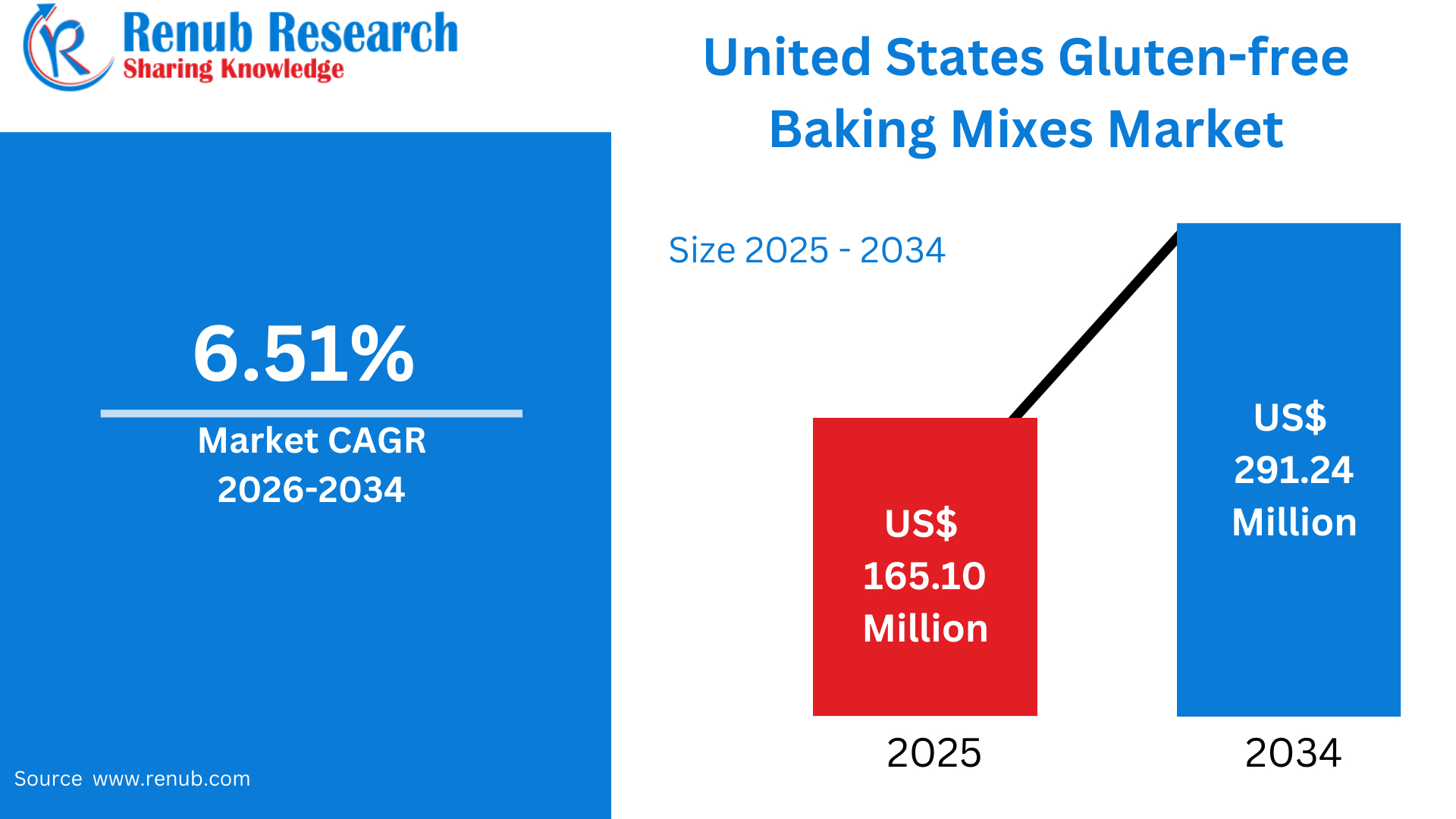
United States gluten-free baking mixes market is projected to increase from US$ 165.10 million in 2025 to US$ 291.24 million by 2034, registering a compound annual growth rate (CAGR) of 6.51% during 2026–2034. Market expansion is being supported by rising awareness of celiac disease, gluten intolerance, and the growing preference for clean-label and health-oriented food products. Increasing demand for convenient home-baking solutions, a growing population of health-conscious consumers, continuous advancements in gluten-free flour formulations, and the expanding availability of products through retail outlets and e-commerce platforms are expected to further strengthen market growth.
What is Gluten-free Baking Mixes and its Popularity in United States
Gluten-free baking mixes are ready-to-use blends specifically developed to replace traditional wheat-based baking mixes without containing gluten. These products typically incorporate alternative ingredients such as rice flour, almond flour, sorghum flour, corn flour, tapioca starch, and potato starch to achieve desirable baking performance. They are widely used for preparing a variety of baked goods, including bread, cakes, cookies, muffins, pancakes, brownies, and pizza crusts. By offering pre-measured and carefully balanced ingredient combinations, gluten-free baking mixes simplify the baking process while providing improved taste, texture, and consistency, making them a practical choice for home bakers.
The popularity of gluten-free baking mixes in the United States has grown significantly due to increasing awareness of celiac disease, gluten sensitivity, and digestive wellness. Beyond medical requirements, many consumers are adopting gluten-free products as part of healthier lifestyles and clean-eating habits. The growing trend of home baking, supported by changing cooking habits and a greater interest in preparing meals at home, has further fueled market demand. Continuous improvements in product quality, flavor, and texture have broadened consumer appeal, attracting not only individuals with dietary restrictions but also mainstream shoppers seeking healthier alternatives. Additionally, the widespread availability of gluten-free baking mixes across supermarkets, specialty health stores, and online retail platforms has made these products more accessible, contributing to their increasing adoption across American households.
Recent Gluten-free Baking Mix Product Launches in the United States
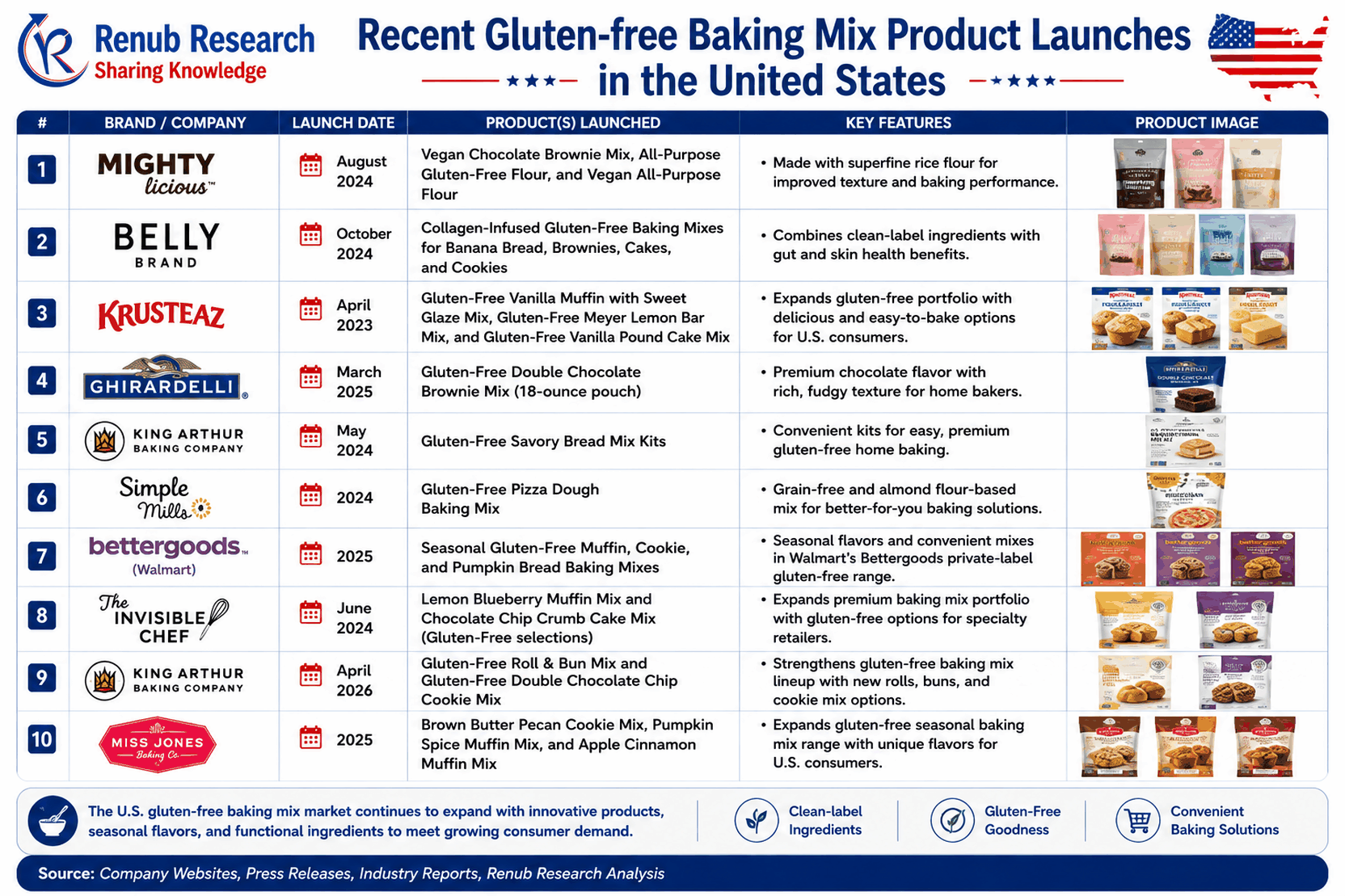
- August 2024: Mightylicious launched a new range of gluten-free baking mixes, including Vegan Chocolate Brownie Mix, All-Purpose Gluten-Free Flour, and Vegan All-Purpose Flour, made with superfine rice flour for improved texture and baking performance.
- October 2024: Belly Brand Foods introduced collagen-infused, gluten-free baking mixes for banana bread, brownies, cakes, and cookies, combining clean-label ingredients with gut and skin health benefits.
- April 2023: Krusteaz expanded its gluten-free portfolio with Gluten-Free Vanilla Muffin with Sweet Glaze Mix, Gluten-Free Meyer Lemon Bar Mix, and Gluten-Free Vanilla Pound Cake Mix for U.S. consumers.
- March 2025: Ghirardelli launched a Gluten-Free Double Chocolate Brownie Mix in an 18-ounce pouch, offering premium chocolate flavor for home bakers.
- May 2024: King Arthur Baking Company introduced Gluten-Free Savory Bread Mix Kits, expanding convenient gluten-free home baking options with premium bread mixes.
- 2024: Simple Mills expanded retail availability of its Gluten-Free Pizza Dough Baking Mix, targeting consumers seeking grain-free and almond flour-based baking solutions.
- 2025: Bettergoods (Walmart) introduced seasonal gluten-free muffin, cookie, and pumpkin bread baking mixes, broadening its private-label gluten-free baking assortment.
- June 2024: The Invisible Chef expanded its premium baking mix portfolio with products such as Lemon Blueberry Muffin Mix and Chocolate Chip Crumb Cake Mix, including gluten-free selections for specialty retailers.
- April 2026: King Arthur Baking Company launched Gluten-Free Roll & Bun Mix and Gluten-Free Double Chocolate Chip Cookie Mix, further strengthening its gluten-free baking mix lineup.
- 2025: Miss Jones Baking Co. expanded its gluten-free seasonal baking mix range with products including Brown Butter Pecan Cookie Mix, Pumpkin Spice Muffin Mix, and Apple Cinnamon Muffin Mix for the U.S. market.
Key Growth Pillars
Rising Prevalence of Gluten Intolerance and Growing Health Awareness
The increasing incidence of celiac disease, gluten intolerance, and other digestive disorders is a major factor driving the growth of the United States gluten-free baking mixes market. In addition to consumers with medically diagnosed conditions, a growing number of individuals are voluntarily adopting gluten-free diets due to perceived benefits related to digestive health, reduced inflammation, improved metabolism, and overall wellness. Gluten-free products are increasingly associated with clean-label ingredients, better gut health, and healthier eating habits, making them attractive to a broader consumer base. As awareness expands through healthcare professionals, nutrition education, and clearer food labeling, gluten-free baking has become a more common household practice rather than a niche activity. Home baking also enables consumers to better control ingredient quality, sugar content, and potential allergens, further supporting demand for gluten-free baking mixes. According to the Agency for Healthcare Research and Quality (AHRQ), celiac disease affects approximately 1% of the U.S. population, with prevalence estimated at 1.08% among White Americans, 0.36% among Hispanic Americans, and 0.16% among Black Americans. In addition, non-celiac gluten sensitivity is estimated to affect nearly 6% of consumers, significantly expanding the potential customer base for gluten-free baked products beyond those with diagnosed medical conditions.
Expanding Home Baking Trends and Post-pandemic Lifestyle Changes
The sustained popularity of home baking continues to be an important growth driver for the gluten-free baking mixes market in the United States. Consumers increasingly view baking as both a practical way to prepare customized foods and an enjoyable activity that supports relaxation and family engagement. Gluten-free baking mixes offer convenience by reducing preparation time and eliminating the need to measure and combine multiple specialty ingredients, making them particularly appealing to busy households, working professionals, and novice bakers. Reliable product performance, consistent texture, and improved taste have further encouraged consumer adoption. Home baking also remains popular among families with children, individuals following special diets, and culinary enthusiasts, resulting in frequent repeat purchases. Seasonal occasions such as holidays, birthdays, and family celebrations further contribute to recurring demand. In October 2024, Belly Brand Foods introduced collagen-infused, gluten-free baking mixes designed to support gut and skin health, while also expanding brand visibility ahead of planned promotional activities and trade shows in 2025.
Continuous Product Innovation and Premium Product Development
Ongoing innovation in product formulation is playing a significant role in the expansion of the United States gluten-free baking mixes market. Manufacturers are investing in the development of products that offer improved flavor, texture, nutritional value, and clean-label ingredients while delivering performance comparable to conventional wheat-based baking mixes. New product formulations increasingly feature high-protein blends, ancient grains, organic ingredients, reduced sugar content, and allergen-friendly recipes to meet evolving consumer preferences. Premium positioning supported by non-GMO, vegan, and functional nutrition claims has strengthened consumer confidence and enabled manufacturers to command higher price points. At the same time, innovations in packaging, including single-serve packs and family-size options, have increased product convenience and expanded usage occasions. Companies continue to broaden their portfolios with specialized mixes for bread, pizza crusts, pancakes, brownies, cakes, and other baked goods, supporting category growth. As competition intensifies, maintaining ingredient transparency, consistent product quality, and superior baking performance will remain key competitive differentiators. In August 2024, San Francisco-based Mightylicious expanded its product portfolio by launching a range of gluten-free baking mixes made with superfine rice flour, specifically milled for baking to deliver a neutral flavor and a light, airy texture.
Market Restraints
High Product Costs and Consumer Price Sensitivity
The relatively high cost of gluten-free baking mixes remains one of the primary challenges limiting broader market adoption in the United States. Compared with conventional baking mixes, gluten-free products require specialty ingredients such as rice flour, almond flour, corn flour, tapioca starch, and functional binding agents, all of which increase production costs. In addition, manufacturers must invest in dedicated gluten-free production facilities, product certification, ingredient segregation, and rigorous quality testing to prevent cross-contamination, further raising operational expenses. As a result, gluten-free baking mixes are often priced at a premium, making them less accessible for price-sensitive consumers, particularly middle- and lower-income households. Many consumers continue to purchase these products primarily out of medical necessity rather than as a lifestyle choice. Economic uncertainty and inflationary pressures have further encouraged value-conscious purchasing behavior. Although the expansion of private-label offerings has helped improve affordability, the persistent price gap between gluten-free and conventional baking products continues to constrain household penetration, repeat purchases, and long-term market growth.
Ongoing Challenges Related to Taste, Texture, and Shelf Life
Despite considerable advancements in gluten-free product development, achieving the taste, texture, and shelf-life characteristics of traditional wheat-based baked goods remains a significant challenge for manufacturers. The absence of gluten makes it difficult to replicate the elasticity, softness, structure, and moisture retention that consumers expect from baked products. As a result, some gluten-free breads, cakes, and other baked goods may crumble easily, become dry more quickly, or fail to deliver the rich flavor profile associated with conventional products. Shelf life can also be shorter because gluten naturally contributes to product stability and freshness. These quality limitations may negatively influence consumer satisfaction and reduce repeat purchases, particularly among first-time buyers. Going forward, manufacturers will need to balance clean-label formulations, minimal additive usage, and high sensory performance while managing production costs. Addressing these technical challenges will be essential for increasing acceptance among mainstream consumers, who continue to prioritize taste and texture when making purchasing decisions.
Product Type
Gluten-free Bread
The gluten-free bread segment represents the largest and most significant category within the U.S. gluten-free baking and bakery market. As bread remains a staple food in the American diet, demand for gluten-free alternatives continues to rise among consumers with celiac disease, gluten intolerance, and those following gluten-free lifestyles. Growth is supported by both commercially baked gluten-free bread and home-baked products prepared using gluten-free baking mixes. Retailers are expanding shelf space for sandwich loaves, artisan breads, and dinner rolls to meet increasing consumer demand. Buyers are seeking products that offer improved softness, longer shelf life, whole-grain nutrition, and enhanced functionality through ingredients such as fiber, protein, and probiotics. Although replicating the texture and structure of traditional wheat bread remains technically challenging, ongoing advancements in formulations have significantly improved product quality, strengthening consumer confidence and supporting sustained market growth.
Gluten-free Cookies and Biscuits
The gluten-free cookies and biscuits segment continues to expand rapidly, driven by strong snacking trends, impulse purchases, and growing demand for indulgent yet healthier treats. Compared with bread, cookies and biscuits are generally easier to produce without gluten while maintaining desirable taste and texture, making them appealing not only to consumers with gluten intolerance but also to mainstream buyers. Gluten-free cookies remain popular among children, office workers, and consumers seeking portion-controlled snacks. Baking mixes further enhance consumer appeal by allowing home bakers to customize sweetness, fat content, and ingredient selection. Product innovation through premium flavors, seasonal offerings, and chocolate-based varieties has encouraged repeat purchases and strengthened customer loyalty. In addition, the category experiences increased sales during festive seasons due to gifting demand. As consumers increasingly seek better-for-you snacks without sacrificing indulgence, gluten-free cookies and biscuits continue to rank among the fastest-growing categories within the U.S. gluten-free bakery market.
Plant Source
Gluten-free Corn Flour Baking Mixes
Corn flour baking mixes represent an important segment of the United States gluten-free baking market due to corn’s naturally gluten-free characteristics and its widespread acceptance among consumers. These mixes are commonly used to prepare cornbread, muffins, tortillas, pancakes, and traditional Southern-style baked products. Corn flour offers a familiar taste profile while providing sufficient structure for gluten-free recipes, making it particularly suitable for beginner bakers. Compared with nut-based flours, corn flour is relatively affordable, increasing its appeal among budget-conscious consumers. Demand is further supported by the popularity of Hispanic cuisine and traditional American recipes. However, products made primarily from corn flour may sometimes produce dense or dry textures if formulations are not properly balanced. To address these limitations, manufacturers continue to enhance formulations by incorporating functional starches and binding agents that improve softness and moisture retention. Supported by cultural familiarity, affordability, and broad culinary applications, corn flour baking mixes continue to maintain a stable position within the U.S. gluten-free baking market.
Gluten-free Rice Flour Baking Mixes
Rice flour baking mixes have become one of the preferred choices for premium gluten-free baking because of their neutral flavor, fine texture, and excellent digestibility. These versatile mixes are widely used in preparing bread, cakes, cookies, waffles, and multipurpose baking products. Manufacturers utilize both white and brown rice flour to develop products targeting different consumer preferences, ranging from indulgent baked goods to healthier, fiber-rich alternatives. Rice flour readily absorbs flavors, making it suitable for both sweet and savory recipes. However, because rice flour lacks gluten’s natural elasticity, manufacturers typically combine it with starches and gums to improve structure, moisture retention, and baking performance. Rising consumer demand for hypoallergenic, easily digestible ingredients continues to support growth in this segment. Owing to its consistent baking performance and reliable results, rice flour baking mixes remain particularly popular among first-time gluten-free consumers as well as foodservice operators.
Distribution Channel
Gluten-free Baking Mixes Convenience Stores
Convenience stores are emerging as a growing distribution channel for gluten-free baking mixes in the United States, although they currently represent a relatively small share of overall sales. Traditionally focused on ready-to-eat foods and impulse purchases, convenience retailers are gradually expanding their assortment of health-oriented packaged food products in response to evolving consumer preferences. Small-pack and single-serve gluten-free baking mixes are particularly attractive to students, travelers, and urban consumers with limited storage space. However, limited shelf space and the need for rapid inventory turnover restrict the variety of products these stores can carry. Consumer awareness and product visibility also remain lower than in larger supermarket chains. Despite these constraints, convenience stores play an important role in introducing consumers to gluten-free products and meeting urgent purchasing needs. As demand for quick and convenient home meal preparation continues to increase, this retail channel is expected to strengthen its contribution to market growth.
Gluten-free Baking Mixes Online Retail
Online retail has become the fastest-growing distribution channel for gluten-free baking mixes in the United States, offering consumers greater product variety and convenience. E-commerce platforms provide access to a broad range of specialty baking mixes, including certified gluten-free, organic, allergen-free, and functional nutrition products that may not be available through local retailers. Consumers also benefit from detailed ingredient information, customer reviews, recipe inspiration, and flexible purchasing options such as bulk orders and subscription services. Direct-to-consumer sales channels have further strengthened customer engagement and encouraged repeat purchases. While shipping costs and maintaining product quality during transportation remain operational challenges, the convenience, product selection, and personalized shopping experience offered by online retail continue to drive its rapid expansion. Consequently, e-commerce is expected to remain a key contributor to future growth in the U.S. gluten-free baking mixes market.
States Insights
California
California remains the leading regional market for gluten-free baking mixes in the United States, supported by a large health-conscious population, strong purchasing power, and a highly innovative food industry. The state’s significant community of wellness-focused consumers, vegans, and individuals following specialty diets has created strong demand for premium, organic, and clean-label gluten-free products. Retailers continue to expand their offerings across supermarkets, natural food stores, and specialty health retailers to meet this growing demand. California also serves as a hub for innovative startups developing sustainable, plant-based, and functional gluten-free products. High consumer awareness regarding food allergies, nutrition, and lifestyle-focused diets has contributed to a mature and competitive marketplace. Although competition among brands remains intense, California continues to influence product innovation, premium positioning, and pricing strategies across the national gluten-free baking mixes industry.
New York
New York represents one of the most valuable regional markets for gluten-free baking mixes, supported by its dense urban population, diverse consumer preferences, and well-developed retail infrastructure. The state benefits from a strong presence of specialty grocery stores, premium supermarkets, artisan bakeries, and advanced e-commerce distribution networks. Its consumer base includes health-conscious professionals, individuals with medically prescribed gluten-free diets, and enthusiastic home bakers seeking premium-quality products. Demand remains particularly strong for organic, artisanal, and internationally inspired gluten-free baking mixes. Compact packaging and ready-to-use formulations are especially attractive to urban households with limited storage space. Consumers in New York also place significant emphasis on ingredient transparency, product certification, and brand reputation. Despite relatively high operating costs and pricing pressures, New York continues to generate substantial revenue and remains an important market influencing national product trends.
Texas
Texas is emerging as one of the fastest-growing markets for gluten-free baking mixes in the United States, supported by its large population, rising health awareness, and expanding retail network. Although conventional wheat-based baking products continue to dominate, consumer interest in gluten-free alternatives is steadily increasing due to greater awareness of food allergies, dietary sensitivities, and healthier eating habits. Demand for home baking products, particularly allergy-friendly snacks and school-safe baked goods, has grown alongside suburban expansion and family-oriented lifestyles. Large warehouse clubs, supermarket chains, and omnichannel retailers play a significant role in product distribution throughout the state. Price sensitivity remains relatively high compared with coastal markets, increasing the importance of competitively priced private-label gluten-free baking mixes. As consumer education and purchasing power continue to improve, Texas is expected to offer significant opportunities for volume-driven market expansion.
Arizona
Arizona’s gluten-free baking mixes market is experiencing steady growth, supported by population expansion, increasing health awareness, and a growing community of retirees and wellness-focused consumers. The state’s warm climate encourages year-round home cooking and baking activities, supporting consistent product demand. Major metropolitan areas such as Phoenix and Tucson continue to experience retail expansion, with supermarkets and health food stores increasing their selection of gluten-free baking products. Consumers managing food allergies and medically prescribed diets also contribute to stable baseline demand. While distribution remains more limited in rural areas and the market is smaller than those of larger states, online retail has helped improve product accessibility across underserved regions. Supported by favorable demographic trends, expanding digital commerce, and increasing consumer interest in specialty foods, Arizona is expected to maintain steady growth within the U.S. gluten-free baking mixes market.
Market Segmentations
Product Type
- Bread
- Cookies and Biscuits
- Cakes, and Muffins (includes cupcakes)
- Other Gluten-Free Bakery Products (brownies)
Flour Type
- Corn Flour
- Rice Flour
- Other Flour Types
Distribution Channel
- Supermarkets and Hypermarkets
- Convenience Stores
- Specialist Stores
- Online Retail
- Other Distribution Channels
Top States
- California
- Texas
- New York
- Florida
- Illinois
- Pennsylvania
- Ohio
- Georgia
- New Jersey
- Washington
- North Carolina
- Massachusetts
- Virginia
- Michigan
- Maryland
- Colorado
- Tennessee
- Indiana
- Arizona
- Minnesota
- Wisconsin
- Missouri
- Connecticut
- South Carolina
- Oregon
- Louisiana
- Alabama
- Kentucky
- Rest of United States
All companies have been covered with 5 Viewpoints
- Overviews
- Key Person
- Recent Developments
- SWOT Analysis
- Revenue Analysis
Company Analysis:
- General Mills Inc.
- Conagra Brands, Inc.
- Kinnikinnick Foods Inc.
- Williams-Sonoma Inc.
- Continental Mills, Inc.
- Partake Foods
- Chebe
- Naturpro
- King Arthur Baking Company, Inc.
- SalDoce Fine Foods
Report Details:
| Report Features | Details |
| Base Year |
2025 |
| Historical Period |
2022 - 2025 |
| Forecast Period |
2026 - 2034 |
| Market |
US$ Billion |
| Segment Covered |
Product Type, Flour Type, Distribution Channel and States |
| States Covered |
|
| Companies Covered |
|
| Customization Scope |
20% Free Customization |
| Post-Sale Analyst Support |
1 Year (52 Weeks) |
| Delivery Format |
PDF and Excel through Email (We can also provide the editable version of the report in PPT/Word format on request) |
Customization Services available
- Analysis of Market Size and Its Segments
- More Company Profiles (Upto 10 without any additional cost):
- Additional Countries (Other than mentioned Countries):
- Region/Country Specific Reports:
- Market Entry Strategy:
- Region-Specific Market Dynamics:
- Regional Market Share Analysis:
- Trade Analysis:
- Production Insights:
- Others Customized Requests:
For more information contact our analysts.
Need More Assistance?
- Talk to our analysts to get more precious information on the current market trends.
- Include more countries and segments and customize the report based on the final requirement.
- Get a competitive advantage in your industry by knowing the report findings and making a positive impact on your revenues and operations.
- Our analysts are always ready to provide more help and pertinent information if you need any additional assistance.