United States Free-From Food Market Size, Share, Trends, Growth and Forecast Report by Type, End Product, Distribution Channel, States and Company Analysis 2026–2034
Buy NowUnited States Free-From Food Market Size & Trends
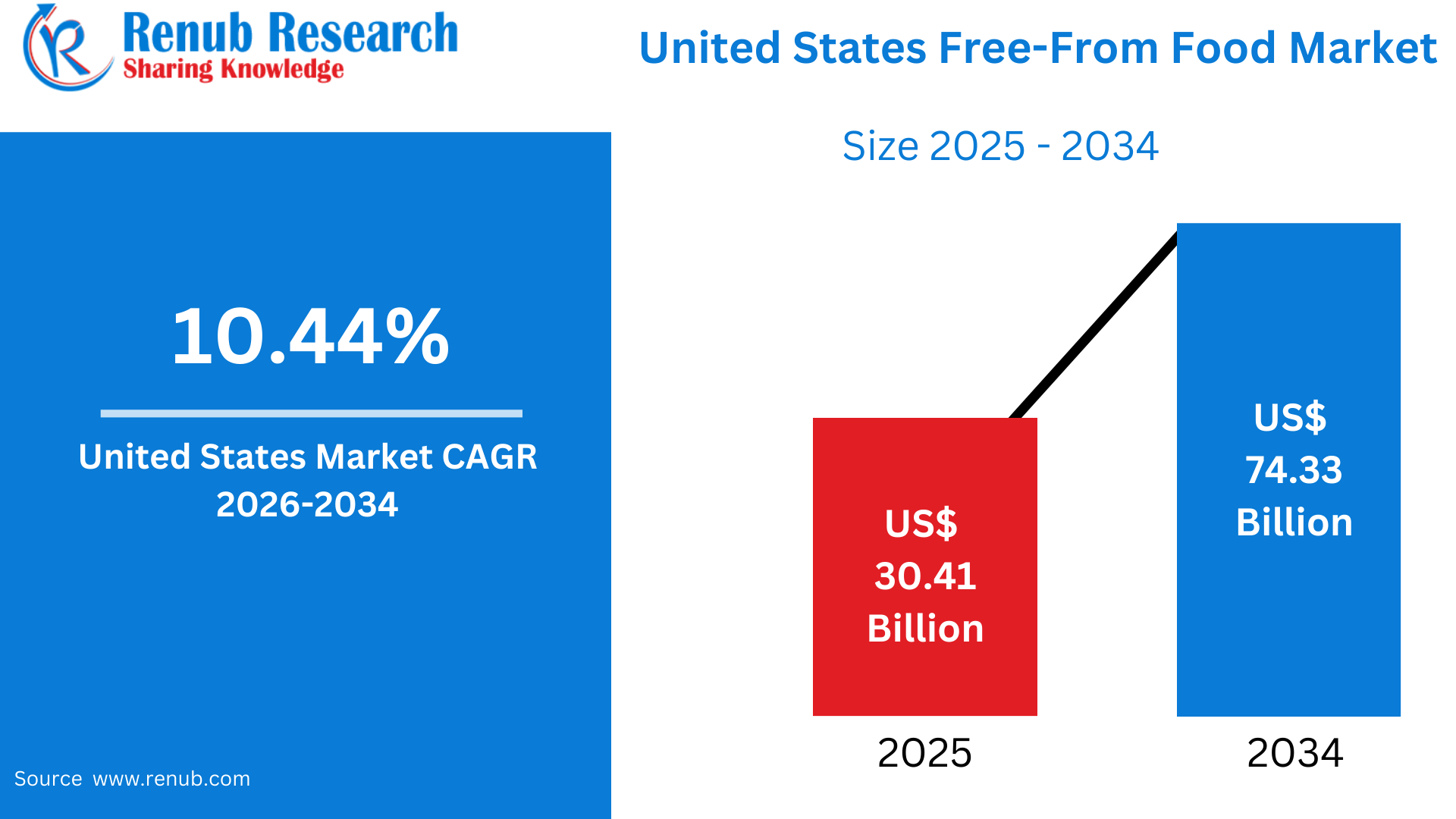
United States free-from food market is projected to expand significantly, increasing from US$ 30.41 billion in 2025 to US$ 74.33 billion by 2034, registering a compound annual growth rate (CAGR) of 10.44% during the forecast period from 2026 to 2034. Market growth is being driven by increasing consumer awareness of food allergies, intolerances, and lifestyle-related health conditions. Rising demand for gluten-free, dairy-free, allergen-free, lactose-free, and clean-label food products, coupled with growing health consciousness and evolving dietary preferences, is expected to support the market’s robust expansion over the coming years.
What is Free-From Food and Popularity in United States
Free-from foods are products specifically formulated without certain ingredients that may cause allergies, intolerances, or dietary sensitivities. These products may exclude gluten, dairy, lactose, soy, eggs, tree nuts, artificial colors, preservatives, or other ingredients depending on consumer dietary requirements. Free-from foods are primarily designed for individuals with medical conditions such as celiac disease, lactose intolerance, and food allergies. They are also widely consumed by health-conscious individuals seeking cleaner ingredient lists, minimally processed foods, and products that align with specific dietary lifestyles or wellness goals.
The United States has emerged as one of the largest and fastest-growing markets for free-from foods, supported by increasing health awareness, the rising incidence of food allergies and intolerances, and growing consumer preference for clean-label products. Many consumers now choose free-from foods not only for medically necessary dietary restrictions but also because they associate these products with improved digestive health, overall wellness, and healthier eating habits. The expanding popularity of vegan, plant-based, flexitarian, and fitness-oriented lifestyles has further accelerated demand for free-from food products across multiple categories. Continued product innovation, broader retail availability, and increasing consumer interest in natural, transparent, and functional food products are expected to sustain strong market growth throughout the forecast period.
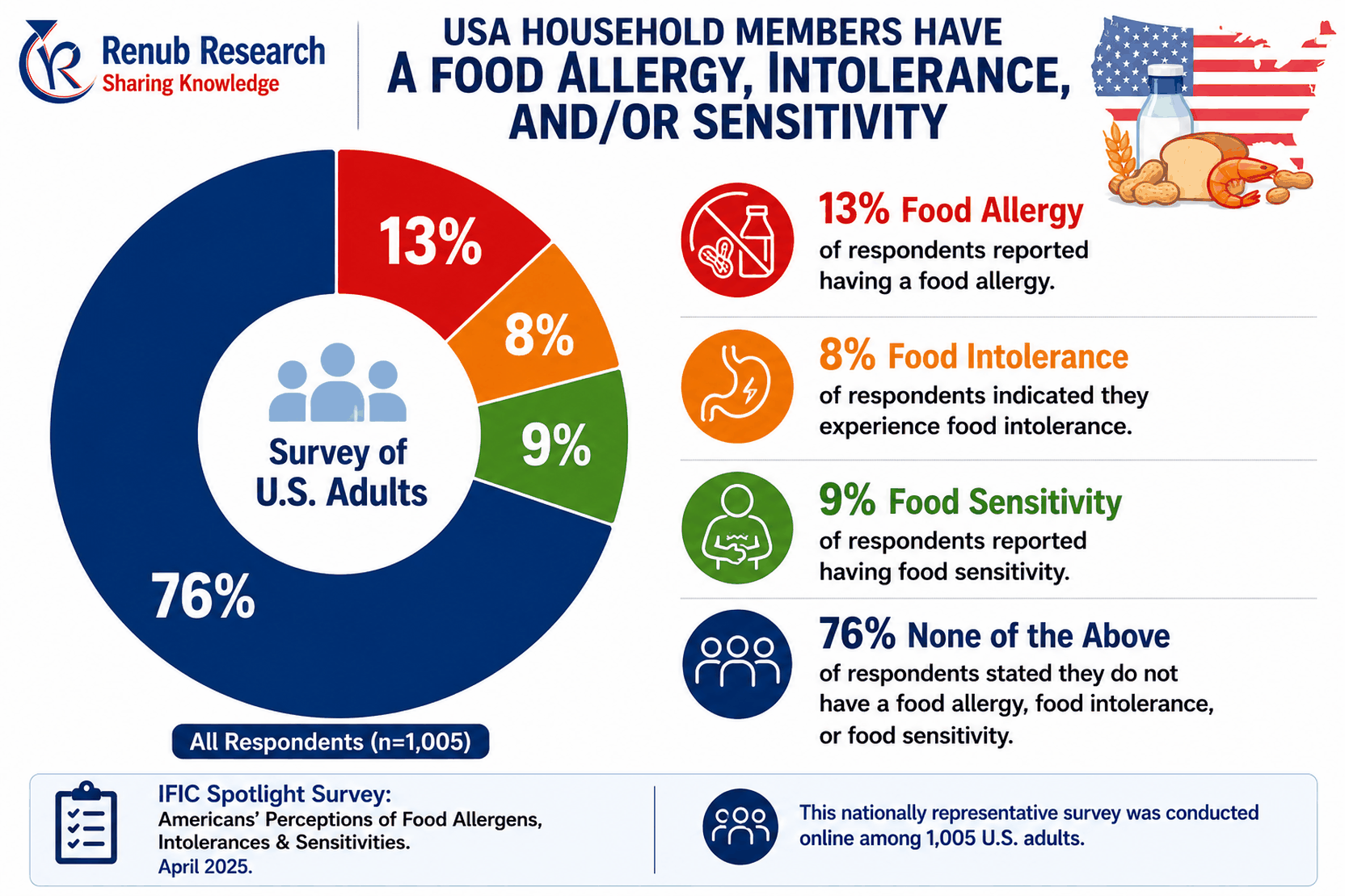
USA household members have a food allergy, intolerance, and/or sensitivity
- Food Allergy: 13% of respondents reported having a food allergy.
- Food Intolerance: 8% of respondents indicated they experience food intolerance.
- Food Sensitivity: 9% of respondents reported having food sensitivity.
- None of the Above: 76% of respondents stated they do not have a food allergy, food intolerance, or food sensitivity.
IFIC Spotlight Survey: Americans' Perceptions of Food Allergens, Intolerances & Sensitivities. April 2025.
Market Catalysts
Rising Prevalence of Food Allergies and Dietary Intolerances
The increasing incidence of food allergies, intolerances, and dietary sensitivities is a major factor driving the growth of the United States free-from food market. Growing numbers of consumers are affected by conditions such as lactose intolerance, gluten sensitivity, celiac disease, soy intolerance, and tree nut allergies, creating sustained demand for products formulated without these ingredients. Healthcare professionals frequently recommend elimination diets for allergy management, encouraging greater adoption of free-from foods. Parents are also increasingly purchasing allergen-free products to reduce health risks for their children. Beyond medical necessity, many consumers voluntarily eliminate certain ingredients as part of a healthier lifestyle, further supporting market expansion. According to the U.S. Centers for Disease Control and Prevention, more than 80 million Americans are affected by allergies. Approximately one in three adults and one in four children experience seasonal allergies, eczema, or food allergies. Children with one allergic parent have a 30–50% likelihood of developing allergies, while the risk increases to 60–80% when both parents have allergic conditions.
Growing Consumer Preference for Health, Wellness, and Clean-Label Products
The expanding focus on health, wellness, and clean-label nutrition continues to strengthen demand for free-from foods across the United States. Consumers increasingly associate gluten-free, dairy-free, and allergen-free products with natural ingredients, easier digestion, and overall well-being. The clean-label movement, which emphasizes minimally processed foods with recognizable ingredients, has further accelerated consumer interest in free-from products. Health-conscious individuals, fitness enthusiasts, and consumers following weight management or specialized diets frequently choose these products even without diagnosed allergies or intolerances. Food manufacturers continue to develop innovative formulations that eliminate common allergens while maintaining desirable taste and texture. For example, in April 2025, Maïzly introduced a plant-based milk made primarily from corn in original and chocolate varieties. The dairy-free and gluten-free beverage combines corn, chickpea protein, and coconut oil, contains 75% less sugar than conventional dairy milk, and is fortified with vitamins A, D2, E, and calcium.
Continuous Product Innovation and Portfolio Expansion
Ongoing product innovation remains a key growth catalyst for the U.S. free-from food industry. Manufacturers are investing heavily in advanced ingredient technologies, alternative proteins, and plant-based formulations to improve flavor, texture, and nutritional value while meeting consumer expectations. Free-from products now extend well beyond traditional staples into categories including bakery, confectionery, beverages, frozen meals, sauces, snacks, and ready-to-eat foods. Advancements in packaging technologies, shelf-life enhancement, and nutritional fortification have further increased consumer acceptance. Both established food manufacturers and emerging brands continue expanding their product portfolios to address diverse dietary requirements. In May 2025, Beyond Meat expanded its retail presence by launching Beyond Chicken Pieces across approximately 1,900 Kroger stores in the United States. The product is made with avocado oil, delivers 21 grams of protein per serving, contains only 0.5 grams of saturated fat, and is free from cholesterol, GMOs, added hormones, and antibiotics.
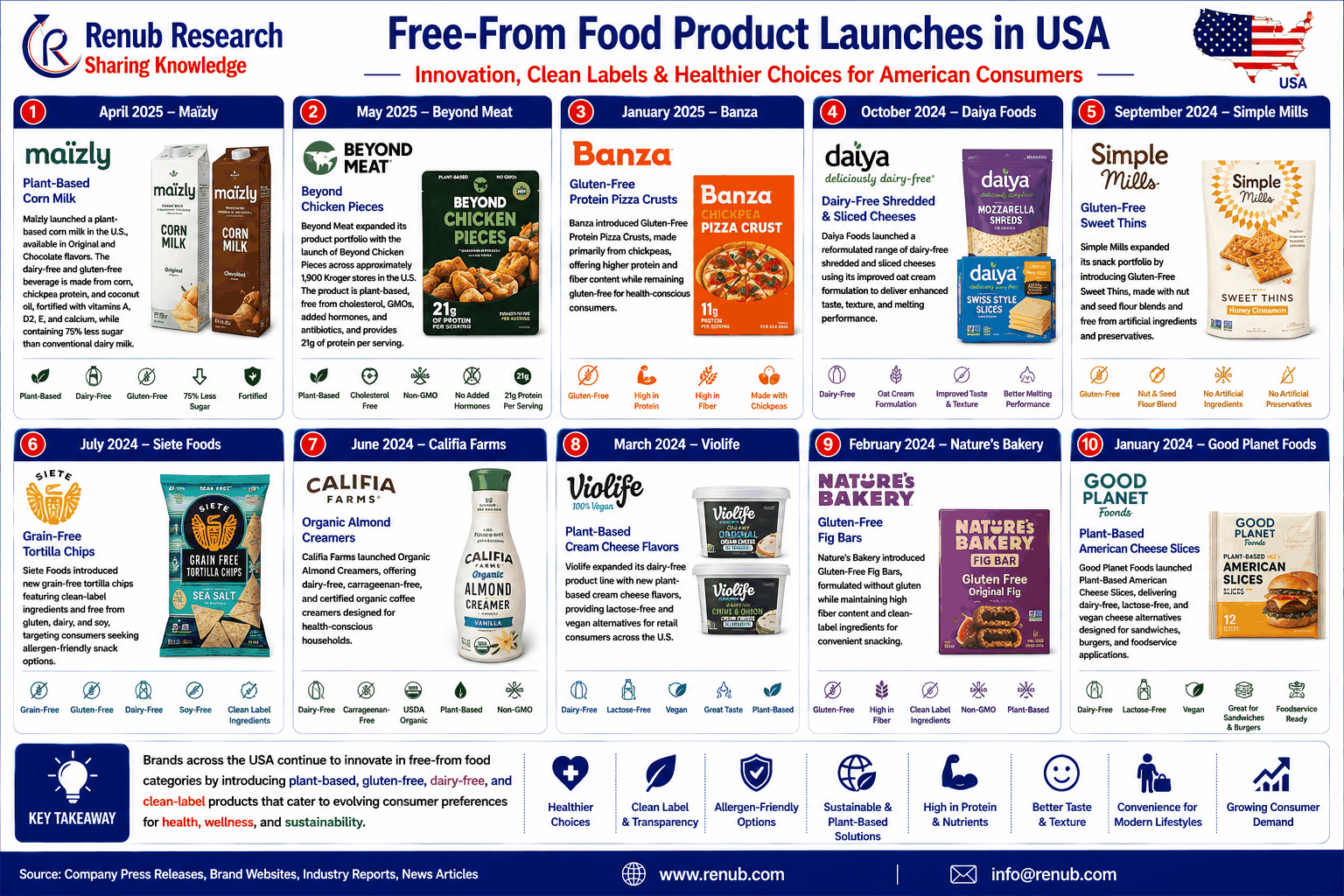
Free-From Food Product Launches in USA
April 2025 – Maïzly launched a plant-based corn milk in the U.S., available in Original and Chocolate flavors. The dairy-free and gluten-free beverage is made from corn, chickpea protein, and coconut oil, fortified with vitamins A, D2, E, and calcium, while containing 75% less sugar than conventional dairy milk.
May 2025 – Beyond Meat expanded its product portfolio with the launch of Beyond Chicken Pieces across approximately 1,900 Kroger stores in the U.S. The product is plant-based, free from cholesterol, GMOs, added hormones, and antibiotics, and provides 21g of protein per serving.
January 2025 – Banza introduced Gluten-Free Protein Pizza Crusts, made primarily from chickpeas, offering higher protein and fiber content while remaining gluten-free for health-conscious consumers.
October 2024 – Daiya Foods launched a reformulated range of dairy-free shredded and sliced cheeses using its improved oat cream formulation to deliver enhanced taste, texture, and melting performance.
September 2024 – Simple Mills expanded its snack portfolio by introducing Gluten-Free Sweet Thins, made with nut and seed flour blends and free from artificial ingredients and preservatives.
July 2024 – Siete Foods introduced new grain-free tortilla chips featuring clean-label ingredients and free from gluten, dairy, and soy, targeting consumers seeking allergen-friendly snack options.
June 2024 – Califia Farms launched Organic Almond Creamers, offering dairy-free, carrageenan-free, and certified organic coffee creamers designed for health-conscious households.
March 2024 – Violife expanded its dairy-free product line with new plant-based cream cheese flavors, providing lactose-free and vegan alternatives for retail consumers across the U.S.
February 2024 – Nature's Bakery introduced Gluten-Free Fig Bars, formulated without gluten while maintaining high fiber content and clean-label ingredients for convenient snacking.
January 2024 – Good Planet Foods launched Plant-Based American Cheese Slices, delivering dairy-free, lactose-free, and vegan cheese alternatives designed for sandwiches, burgers, and foodservice applications.
Market Restraints
Premium Pricing and Consumer Cost Sensitivity
One of the primary challenges facing the U.S. free-from food market is the relatively high price of these products compared with conventional food alternatives. Specialized ingredients, dedicated manufacturing facilities, certification requirements, and stringent quality control processes significantly increase production costs. These additional expenses are often passed on to consumers, limiting affordability among price-sensitive households. During periods of inflation or economic uncertainty, consumers may prioritize lower-cost conventional products over premium free-from alternatives unless dietary restrictions make them essential. While medically necessary purchases remain resilient, discretionary demand may weaken due to pricing concerns.
Challenges Related to Taste, Texture, and Shelf Stability
Despite significant technological progress, manufacturers continue to face challenges in replicating the taste, texture, and shelf life of conventional foods. Eliminating ingredients such as gluten, dairy, or eggs can affect moisture retention, structure, mouthfeel, and overall flavor, particularly in bakery products and confectionery. Developing high-quality free-from formulations requires advanced ingredient technologies and specialized processing techniques. In addition, some free-from products rely on fewer synthetic preservatives, which can reduce shelf stability and complicate storage and distribution. Meeting consumer expectations for both sensory quality and product longevity remains an ongoing priority, making continuous research and product innovation essential for sustained market growth.
Type Insights
Dairy-Free Food
The U.S. dairy-free food market has experienced significant growth, driven primarily by the increasing prevalence of lactose intolerance, milk allergies, and the growing adoption of plant-based diets. Products such as dairy-free milk, yogurt, cheese, ice cream, and cream alternatives have become mainstream across retail and foodservice channels. Almond, oat, soy, coconut, and other plant-based beverages continue to dominate the category, offering consumers diverse options with varying nutritional profiles, flavors, and textures. The widespread availability of dairy-free products in supermarkets, cafés, restaurants, and quick-service outlets has further strengthened market penetration. As consumer demand for healthier and sustainable food choices continues to rise, the dairy-free segment remains one of the largest and fastest-growing categories within the U.S. free-from food industry.
Gluten-Free Food
The gluten-free food segment represents one of the most established categories within the U.S. free-from food market. Initially fueled by the growing diagnosis of celiac disease and gluten intolerance, the category has evolved into a broader lifestyle choice embraced by health-conscious consumers. Gluten-free alternatives, including bread, pasta, cereals, snacks, bakery products, and ready-to-eat meals, are now widely available through mainstream retail channels. Continuous improvements in ingredient technology have enhanced product taste, texture, and nutritional value, narrowing the gap between gluten-free and conventional wheat-based products. Although the rapid expansion witnessed in previous years has moderated, the gluten-free market continues to demonstrate stable demand supported by sustained consumer awareness and dietary preferences.
End Product Insights
Free-From Bakery and Confectionery
The bakery and confectionery segment represents a valuable growth area within the U.S. free-from food market. Consumers increasingly seek indulgent products that accommodate dietary restrictions without compromising taste or quality. Manufacturers continue investing in research and product development to formulate gluten-free, dairy-free, nut-free, and egg-free cakes, cookies, chocolates, pastries, and confectionery products using alternative flours, plant-based fats, and egg substitutes. Although production costs remain relatively high, consumers are willing to pay premium prices for high-quality allergen-friendly products. Seasonal offerings, gifting occasions, and premium retail placement further contribute to market growth, while ongoing formulation improvements continue to enhance consumer acceptance.
Free-From Snack Food
The snack category has emerged as one of the fastest-growing segments within the U.S. free-from food industry. Consumers increasingly demand allergen-free chips, nutrition bars, crackers, popcorn, trail mixes, and other convenient snack products that align with specialized dietary requirements. Busy lifestyles and increasing demand for portable, on-the-go nutrition continue to support market expansion. Parents also play an important role in driving demand by seeking safe snack options for school lunches and travel. Product innovation, improved nutritional profiles, and expanded flavor offerings continue to strengthen consumer interest in free-from snack products.
Distribution Channel Insights
Free-From Food Convenience Store
Convenience stores are becoming an increasingly important retail channel for free-from food products, particularly ready-to-eat snacks, beverages, and single-serve meal options. Retailers are gradually expanding their assortments to accommodate consumers seeking allergen-free and health-oriented food choices for immediate consumption. Although product selection remains more limited than in supermarkets and specialty retailers, convenience stores benefit from high levels of impulse purchasing and increasing consumer awareness of free-from dietary options. Continued expansion of healthier grab-and-go offerings is expected to support steady growth in this distribution channel.
Online Free-From Food
Online retail has become an increasingly important distribution channel for free-from food products across the United States. E-commerce platforms provide consumers with access to an extensive range of specialized products, comprehensive ingredient information, customer reviews, subscription services, and direct-to-consumer brands. Online shopping is particularly valuable for individuals managing specific dietary restrictions, as digital platforms simplify product comparison and ingredient filtering. The online channel also enables niche manufacturers to reach nationwide audiences without relying solely on physical retail shelf space. Growing consumer preference for convenience, product transparency, and home delivery continues to accelerate online sales of free-from food products.
States Insights
California
California remains one of the largest and most influential regional markets for free-from food products in the United States. The state’s strong culture of health, wellness, sustainability, and dietary diversity has created substantial demand for gluten-free, dairy-free, allergen-free, plant-based, and clean-label foods. High consumer awareness, widespread adoption of vegan and flexitarian lifestyles, and openness to food innovation encourage continuous market expansion. California also serves as a major hub for food technology companies, startups, and alternative protein manufacturers, making it an important center for product development and commercial launches. In addition, restaurants, cafés, and foodservice providers continue expanding their free-from menu offerings to meet evolving consumer preferences.
New York
The New York free-from food market is supported by high consumer awareness, diverse dietary preferences, and strong demand for premium health-focused products. Consumers increasingly seek gluten-free, dairy-free, nut-free, and allergen-friendly food options that align with both medical needs and wellness-oriented lifestyles. The state’s fast-paced urban environment also drives demand for convenient ready-to-eat free-from meals and snacks. Premium supermarkets, specialty retailers, restaurants, and hospitality providers continue expanding their product offerings to meet growing consumer expectations. In addition, widespread healthcare awareness and strong e-commerce penetration further enhance product accessibility, making New York an important regional market for free-from food products.
Washington
Washington has developed into a steadily growing regional market for free-from foods, supported by strong consumer interest in healthy eating, sustainability, and minimally processed products. Demand for gluten-free, dairy-free, soy-free, and clean-label foods continues to increase among health-conscious consumers across the state. Seattle and other major urban centers serve as important markets for innovative food brands focused on transparency, sustainable sourcing, and allergen-friendly nutrition. Retailers, natural food stores, restaurants, schools, healthcare institutions, and corporate foodservice providers continue expanding their free-from product selections. Although smaller than California and New York, Washington maintains a positive long-term growth outlook driven by strong consumer awareness and continued adoption of healthier dietary choices.
New Jersey
The New Jersey free-from food market continues to expand steadily, supported by increasing consumer awareness of food allergies, dietary intolerances, and healthier lifestyle choices. Demand is particularly strong among families, health-conscious consumers, and individuals managing medical dietary requirements. The state’s well-developed retail network, including supermarkets, warehouse clubs, and specialty grocery stores, offers an expanding selection of gluten-free, dairy-free, allergen-free, and ready-to-eat products. Bakery, meal solutions, and snack categories remain among the strongest performing segments. Growing awareness of pediatric food allergies and continued healthcare education further support market growth. While product innovation is somewhat less concentrated than in larger metropolitan markets, rising consumer adoption, expanding retail availability, and sustained health awareness are expected to support consistent long-term growth in New Jersey’s free-from food market.
Market Segmentations
Type
- Dairy-Free
- Gluten-Free
- Lactose-Free
- Others
End Product
- Bakery & Confectionary
- Dairy-free Foods
- Snacks
- Beverages
- Others
Distribution Channel
- Supermarkets & Hypermarkets
- Convenience Stores
- Online Channels
- Others
Top States
- California
- Texas
- New York
- Florida
- Illinois
- Pennsylvania
- Ohio
- Georgia
- New Jersey
- Washington
- North Carolina
- Massachusetts
- Virginia
- Michigan
- Maryland
- Colorado
- Tennessee
- Indiana
- Arizona
- Minnesota
- Wisconsin
- Missouri
- Connecticut
- South Carolina
- Oregon
- Louisiana
- Alabama
- Kentucky
- Rest of United States
All companies have been covered with 5 Viewpoints
- Overviews
- Key Person
- Recent Developments
- SWOT Analysis
- Revenue Analysis
Company Analysis
- Alpro UK Limited
- Conagra Brands Inc.
- Danone SA
- Doves Farm Foods Limited
- Dr. Schar AG/SpA
- Ener-G Foods Inc.
- General Mills Inc.
- GreenSpace Brands Inc
- Hain Celestial Group Inc
- Mondelez International
Report Details:
| Report Features | Details |
| Base Year |
2025 |
| Historical Period |
2021 - 2025 |
| Forecast Period |
2026 - 2034 |
| Market |
US$ Billion |
| Segment Covered |
Type, End Product, Distribution Channel and State |
| States Covered |
|
| Companies Covered |
|
| Customization Scope |
20% Free Customization |
| Post-Sale Analyst Support |
1 Year (52 Weeks) |
| Delivery Format |
PDF and Excel through Email (We can also provide the editable version of the report in PPT/Word format on request) |
Customization Services available
- Analysis of Market Size and Its Segments
- More Company Profiles (Upto 10 without any additional cost):
- Additional Countries (Other than mentioned Countries):
- Region/Country Specific Reports:
- Market Entry Strategy:
- Region-Specific Market Dynamics:
- Regional Market Share Analysis:
- Trade Analysis:
- Production Insights:
- Others Customized Requests:
For more information contact our analysts.
Need More Assistance?
- Talk to our analysts to get more precious information on the current market trends.
- Include more countries and segments and customize the report based on the final requirement.
- Get a competitive advantage in your industry by knowing the report findings and making a positive impact on your revenues and operations.
- Our analysts are always ready to provide more help and pertinent information if you need any additional assistance.