United Kingdom Energy Drinks Market Report by Packaging Type, Target Consumer, Distribution Channel, City and Company Analysis 2026-2034
Buy NowUnited Kingdom Energy Drinks Market Size & Forecast
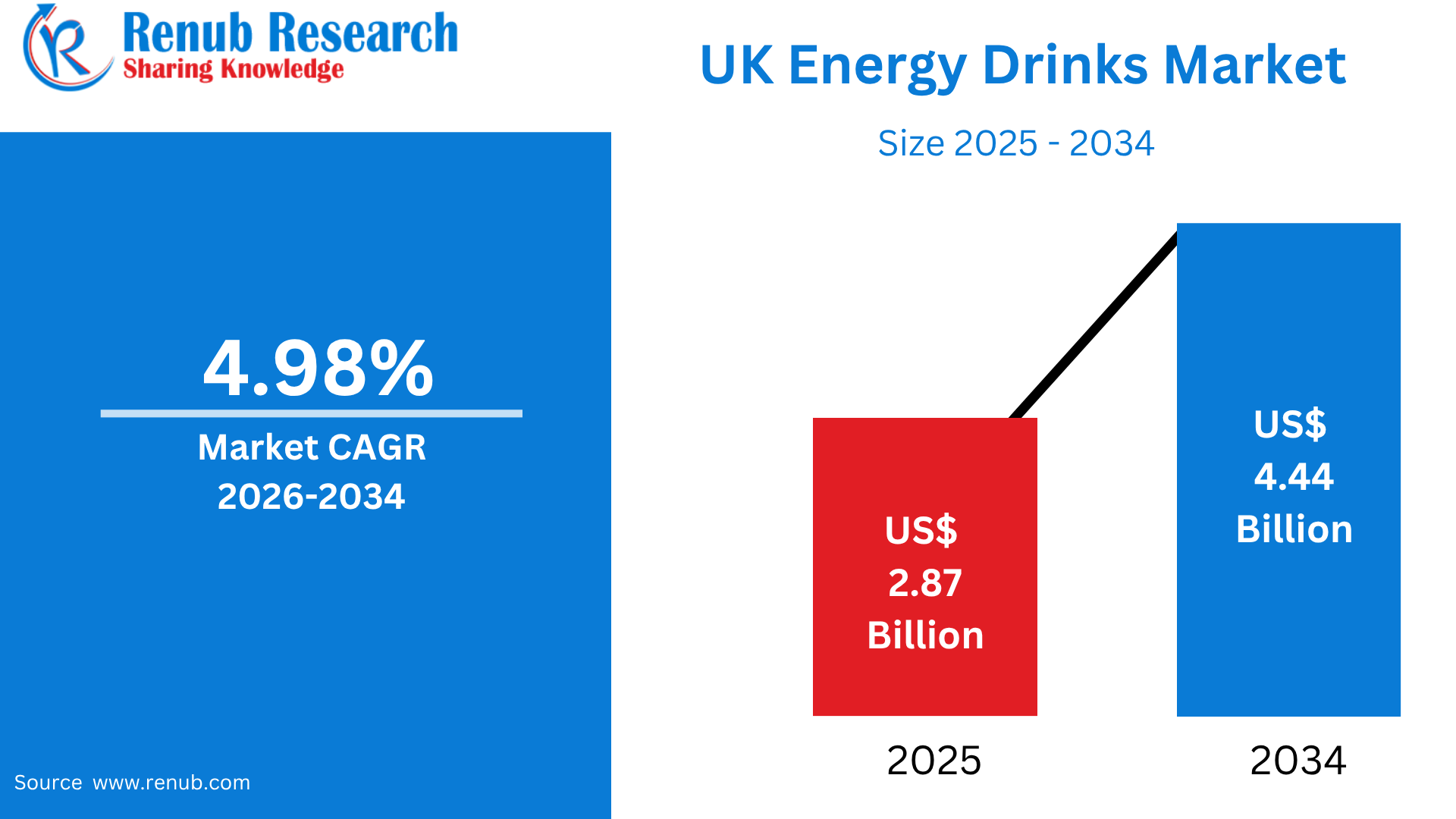
United Kingdom Energy Drinks Market is projected to expand from US$ 2.87 billion in 2025 to US$ 4.44 billion by 2034, registering a CAGR of 4.98% during 2026–2034. Market growth is supported by increasing consumer demand for functional and performance-oriented beverages, rising awareness of energy and focus enhancement, and continuous product innovation. The growing popularity of sugar-free and low-calorie energy drinks is also encouraging adoption as consumers increasingly seek healthier alternatives without sacrificing convenience or functionality.
What is Energy Drinks and Its Uses & Popularity in the UK
Energy drinks are non-alcoholic functional beverages designed to provide a temporary boost in alertness, concentration, and perceived energy. They commonly contain caffeine and may also include ingredients such as taurine, B vitamins, guarana, and other stimulating or functional ingredients. In the UK, high-caffeine energy drinks are generally identified by their caffeine content, while products containing high levels of caffeine must carry appropriate warning information.
Energy drinks are primarily consumed when people want to stay alert or feel more energetic during demanding activities. Common uses include supporting concentration while studying, maintaining alertness during work or driving, providing stimulation during travel and gaming, and accompanying exercise or recreational activities. They are different from sports drinks, which are mainly formulated to replace fluids and electrolytes lost through physical activity.
Energy drinks have become popular in the UK because of their convenience, distinctive flavours, extensive availability, and strong branding. Their appeal extends across students, young adults, professionals, gamers, drivers, and fitness consumers. Manufacturers have also expanded the category through sugar-free, low-calorie, fruit-flavoured, and functional formulations, helping energy drinks appeal to consumers with different tastes and lifestyle preferences.
UK Sports & Energy Drinks Volume Growth
- 2020: The UK sports and energy drinks market recorded 836 million litres in volume.
- 2021: Volume increased to 949 million litres, representing 13.5% year-on-year growth.
- 2022: The market reached 1,027 million litres, growing by 8.2%.
- 2023: Volume rose to 1,110 million litres, reflecting 8.1% year-on-year growth.
- 2024: Volume reached a record 1,147 million litres, up 3.4% from 2023.
- Overall Growth: Between 2020 and 2024, volume increased by approximately 37.2%, highlighting sustained consumer demand for sports and energy beverages in the UK.
- Market Share: Sports and energy drinks accounted for 7.3% of total UK soft-drink volume in 2024.
Source: British Soft Drinks Association (BSDA), Annual Report 2025
Growth Driver
Rising Demand for Energy, Alertness, and Performance
A major growth driver for the UK energy drinks market is consumers’ increasing demand for convenient products that support energy, alertness, concentration, and performance. Energy drinks appeal to students, office workers, drivers, gamers, fitness enthusiasts, and consumers with demanding lifestyles because they provide caffeine and other stimulating ingredients in a portable format. UK government information notes that energy drinks are generally marketed as providing a mental and physical boost, while caffeine levels can range from approximately 80 mg to 200 mg per serving depending on product size and formulation. The strength of this demand is reflected in category performance. UK sports and energy drinks reached 1.147 billion litres in volume and £4.011 billion in value in 2024. Value increased 13.6% year on year, while volume grew 3.4%, indicating strong consumer spending and premiumisation within the category as per British Soft Drinks. Energy drinks are increasingly consumed beyond traditional sports occasions, including during studying, commuting, gaming, work, and entertainment. Manufacturers are responding by introducing products positioned around sustained energy, focus, performance, and functional benefits. This broadening of consumption occasions is helping energy drinks remain relevant to multiple demographic groups and supports continued market expansion in the UK.
Growth of Low-Sugar, Sugar-Free, and Functional Formulations
Product innovation toward healthier and more functional formulations is another important growth driver for the UK energy drinks market. Consumers are becoming increasingly attentive to sugar, calories, ingredients, and nutritional profiles, encouraging manufacturers to reformulate products without sacrificing taste or caffeine functionality. The shift is particularly significant because traditional energy drinks can contain substantial quantities of sugar. The UK government’s 2026 impact assessment found that the sales-weighted average sugar content of high-caffeine energy drinks was 4.5 grams per 100 ml, while approximately 41% of high-caffeine energy drinks were no- or low-sugar products, accounting for 43% of sales. The wider soft drinks market is also moving strongly toward healthier choices. According to the British Soft Drinks Association, more than seven out of ten soft drinks sold in the UK in 2025 were low- or no-calorie products. Within sports and energy drinks, low/no-calorie products accounted for 20% of volumes in 2025, while mid-calorie products represented 14.7%. These trends are encouraging brands to introduce sugar-free energy drinks, reduced-calorie beverages, natural ingredients, added vitamins, and products targeting focus, hydration, and performance. Such innovation enables companies to attract health-conscious adults while creating premium and differentiated product segments.
Strong Retail Availability and Expanding Consumption Occasions
The UK’s extensive retail infrastructure is supporting the accessibility and popularity of energy drinks. Consumers can purchase these beverages through supermarkets, convenience stores, petrol stations, vending machines, gyms, entertainment venues, and online channels. This broad availability makes energy drinks convenient for consumers seeking quick stimulation during work, travel, study, exercise, or leisure activities. In 2024, 94.5% of sports and energy drink volume was sold through off-premise channels, compared with only 5.5% through on-premise channels, demonstrating the importance of retail and take-home consumption. The category’s financial performance further demonstrates the strength of demand. Sports and energy drink value sales increased from £2.15 billion in 2020 to £4.011 billion in 2024, while volume increased from 836 million litres to 1.147 billion litres over the same period as per British Soft Drinks. Brand marketing, sponsorship of sports and gaming, social-media promotion, and convenient single-serve packaging have helped companies expand consumption occasions beyond conventional athletic use. Energy drinks are increasingly associated with productivity, gaming, entertainment, nightlife, commuting, and everyday fatigue management. Continued product launches, wider distribution, multipack offerings, and premium functional beverages are therefore expected to support market development.
Challenge
Increasing Regulation and Restrictions on High-Caffeine Products
Increasing government regulation represents a major challenge for the UK energy drinks industry, particularly products with high caffeine levels. In July 2026, the UK government confirmed that England will introduce a statutory ban on the sale of high-caffeine energy drinks to children under 16. The restriction will cover drinks containing more than 150 mg of caffeine per litre and will apply to retail stores, online sellers, and vending machines. The government intends the legislation to come into force in April 2027, subject to parliamentary approval. The potential effect on manufacturers and retailers extends beyond direct sales to younger consumers. Companies may need to strengthen age-verification procedures, modify distribution practices, adjust marketing strategies, and ensure compliance across multiple retail channels. The policy follows significant public-health concern: government estimates indicate that around 100,000 children in England consume high-caffeine energy drinks at least daily. In addition, 90% of respondents to the government’s consultation supported an age-based restriction. Although the restriction applies specifically to England rather than the entire UK, it could encourage additional regulatory scrutiny elsewhere and increase compliance costs. Manufacturers may therefore increasingly focus on lower-caffeine, low-sugar, and adult-oriented products to reduce regulatory exposure.
Health Concerns and Changing Consumer Perceptions
Health concerns surrounding caffeine, sugar, obesity, dental health, and excessive consumption represent another significant challenge for the UK energy drinks market. Energy drinks can contain considerably more caffeine than many conventional soft drinks. Government guidance states that products above 150 mg of caffeine per litre must carry a high-caffeine warning, while individual energy-drink servings can contain approximately 80–200 mg of caffeine. These characteristics have generated concerns about excessive consumption, particularly among children and adolescents. The issue is commercially important because research cited by the UK government indicates that up to one-third of children aged 13–16 and nearly one-quarter of children aged 11–12 reported consuming one or more high-caffeine energy drinks each week in earlier research periods. More recent English data estimated that 4% of 11–15-year-olds consumed at least one high-caffeine energy drink daily, equivalent to more than 100,000 children. High-sugar formulations also face criticism because excess sugar is associated with obesity and dental decay. The industry’s response has been rapid growth in reduced-sugar and sugar-free alternatives, but health concerns can still affect brand reputation, advertising practices, and consumer trust. Companies must therefore balance strong performance-oriented marketing with responsible positioning and transparent nutritional information.
Energy Drink Launches in the UK
- Monster Nitro Blue Flash – 2026 – Monster launched Nitro Blue Flash, a blueberry-flavoured addition to its Nitro range. The 500ml cans began nationwide rollout in August 2026.
- Celsius New Flavours – 2026 – Celsius relaunched its UK range with four flavours: Sparkling Mango Lemonade, Sparkling Kiwi Guava, Sparkling Strawberry Watermelon, and Sparkling Raspberry Punch.
- Rockstar Blood Orange Zero Sugar – 2025 – Rockstar introduced a limited-edition Blood Orange Zero Sugar variant in a new 330ml can, targeting consumers seeking a smaller and more accessible format.
- Relentless Guava – 2025 – Relentless launched a Guava flavour in the UK, responding to growing demand for fruit-flavoured energy drinks, particularly among Gen Z consumers.
- Monster Juiced Rio Punch – 2025 – Monster expanded its Juiced range with Rio Punch, combining its energy blend with tropical flavours including papaya, vanilla and blackcurrant.
- Celsius UK Nationwide Launch – 2025 – Celsius expanded across major UK supermarkets, independent retailers and convenience stores with four initial flavours: Peach Vibe, Sunset Vibe, Cosmic Vibe and Fantasy Vibe.
- Rockstar Zero Sugar Peach – 2025 – Rockstar expanded its zero-sugar portfolio with a Peach flavour, adding another fruit-oriented option to its UK energy drinks range.
- Lucozade Energy Blue Burst – 2024 – Lucozade introduced Blue Burst as part of its major “Blucozade” launch, bringing a new colour, flavour and visual identity to its Energy range.
- Monster Ultra Strawberry Dreams – 2024 – Monster added Strawberry Dreams to its Ultra range. The zero-sugar, zero-calorie variant was rolled out nationally in the UK from September 2024.
- Monster Nitro Cosmic Peach – 2024 – Monster introduced Nitro Cosmic Peach in a 500ml can, combining its energy blend with a peach and citrus flavour profile. The product formed part of Monster’s Nitro innovation strategy in the UK.
Convenience and Portability Driving Demand in the UK
Canned energy drinks represent a major product format in the UK because they combine convenience, portability, and widespread availability. Consumers can easily purchase cans from supermarkets, convenience stores, petrol stations, vending machines, gyms, and other retail outlets. The format is particularly attractive to students, young professionals, commuters, and consumers seeking an immediate energy boost. According to the British Soft Drinks Association, the UK sports and energy drinks category recorded 1.147 billion litres of sales volume and £4.011 billion in value sales in 2024, demonstrating strong demand for convenient packaged beverages. Cans also provide effective protection against light and oxygen while helping retain carbonation and extend product shelf life. Manufacturers are introducing different can sizes, modern designs, and resealable formats to address changing consumption habits. Growing health awareness has also encouraged the development of sugar-free and low-calorie canned energy drinks. Furthermore, aluminium cans are widely recyclable, supporting consumer preferences for more sustainable packaging. These factors are expected to sustain demand for canned energy drinks across the UK.
Rising Preference for Natural and Clean-Label Beverages in the United Kingdom
UK organic energy drinks market is gaining attention as consumers increasingly prioritize natural ingredients, healthier lifestyles, and clean-label products. Organic energy drinks generally emphasize ingredients sourced from organic agriculture and may incorporate natural caffeine sources, botanical extracts, fruit ingredients, and other plant-based components. Consumers are becoming more conscious of artificial additives, excessive sugar consumption, and the overall nutritional profile of beverages, encouraging demand for alternatives perceived as more natural. Organic products also appeal to environmentally conscious consumers because organic production is associated with responsible agricultural practices and reduced reliance on certain synthetic inputs. Manufacturers are responding by improving ingredient transparency, obtaining organic certifications, and developing beverages with reduced sugar, natural flavours, and plant-based ingredients. Premium positioning is another important characteristic of this segment, as consumers may be willing to pay more for products offering perceived quality, sustainability, and traceable ingredients. However, higher production costs and retail prices can limit mass-market adoption. Continued product innovation and growing consumer interest in wellness are expected to create opportunities for organic energy drinks in the UK.
Convenience Stores Strengthening Adult Consumption in the United Kingdom
Convenience stores are an important distribution channel for energy drinks targeting adult consumers in the UK because they provide quick access to beverages during busy daily routines. Working professionals, commuters, drivers, and other consumers frequently purchase energy drinks from convenience outlets when they require an immediate source of stimulation during work, travel, or extended activities. The widespread presence of convenience stores and their extended operating hours further improves product accessibility. Refrigerated displays, checkout-area merchandising, promotional offers, and prominent product placement can encourage impulse purchases. Retailers also provide consumers with a broad selection, including premium, sugar-free, low-calorie, and functional energy drinks designed for different preferences. Manufacturers are increasingly focusing on adult-oriented positioning by emphasizing energy, focus, productivity, and performance rather than solely targeting younger consumers. The UK government’s planned restriction on the sale of high-caffeine energy drinks to under-16s in England from April 2027, subject to parliamentary approval, is also encouraging greater attention toward responsible adult consumption and age-appropriate marketing. As convenience retail continues to evolve, it is expected to remain an important channel for adult energy drink sales.
E-Commerce Expanding Product Accessibility in the United Kingdom
Online retail is becoming an increasingly relevant channel for energy drinks in the UK as consumers seek convenience, broader product choices, competitive pricing, and home delivery. E-commerce platforms allow shoppers to compare brands, flavours, pack sizes, ingredients, nutritional information, and customer reviews before purchasing. Online stores can also provide access to niche, premium, organic, imported, and specialist energy drinks that may have limited availability in physical retail outlets. Bulk purchasing and multipack offers are particularly attractive to frequent consumers because they can reduce the cost per unit and minimize the need for repeated purchases. Subscription and repeat-order models can further encourage customer retention. Digital advertising, social-media campaigns, influencer marketing, and personalized promotions are also helping brands connect directly with consumers and generate online sales. Improvements in fulfilment networks and last-mile delivery have strengthened the convenience of purchasing beverages through digital channels. Although physical stores remain important because consumers often purchase energy drinks for immediate consumption, online retail provides brands with an additional route to reach consumers nationwide. Continued expansion of e-commerce and digital purchasing habits is expected to support the development of the UK online energy drinks market.
Fast-Paced Lifestyle and Diverse Consumer Base Supporting London Demand
London represents one of the UK’s most important markets for energy drinks, supported by its large, diverse, and highly active consumer population. The city’s fast-paced lifestyle creates demand for convenient beverages among office workers, students, commuters, fitness enthusiasts, and consumers involved in entertainment and nightlife. Energy drinks are widely available across supermarkets, convenience stores, gyms, universities, vending machines, and entertainment venues. The broader UK sports and energy drinks category reached £4.01 billion in value sales and 1.15 billion litres in volume in 2024, highlighting the strong national demand that supports major urban markets such as London. Increasing health awareness is also influencing purchasing patterns, with consumers showing greater interest in low-sugar, sugar-free, plant-based, and functional formulations. While multinational brands continue to maintain strong distribution and visibility, smaller specialist brands are gaining attention through innovative flavours, natural ingredients, and wellness-focused positioning. In 2024, beverage companies expanded their London offerings with low-sugar and plant-based energy drinks across retail channels, reflecting changing consumer preferences and encouraging product diversification.
Student Population and Active Lifestyles Driving East of England Consumption
East of England energy drinks market is expanding as consumers increasingly seek convenient beverages that fit busy work, study, travel, and leisure routines. Cities and university centres such as Cambridge, Norwich, and Ipswich contribute to regional demand through their student populations, professional workforce, and active consumer communities. Students and young professionals commonly consume energy drinks during studying, commuting, work, gaming, and recreational activities, while fitness consumers increasingly seek functional beverages associated with exercise and performance. Convenience stores, supermarkets, petrol stations, gyms, and vending outlets provide broad access to these products. Across the UK, sports and energy drinks recorded 3.4% volume growth in 2024, reaching approximately 1.147 billion litres, indicating continued expansion in consumption. At the same time, health consciousness is encouraging consumers in the East of England to explore sugar-free, low-calorie, organic, and naturally positioned alternatives. Regional retailers responded to this trend by increasing shelf space for healthier energy drink products in 2023, providing greater visibility for emerging brands alongside established international manufacturers.
Urban Consumption and Health-Conscious Product Innovation in Scotland
Scotland energy drinks market is experiencing steady demand, particularly among young adults, university students, working professionals, and consumers with active lifestyles. Major cities such as Glasgow and Edinburgh represent important consumption centres because of their large student communities, employment opportunities, tourism, entertainment sectors, and vibrant social environments. Energy drinks are readily available through supermarkets, convenience stores, petrol stations, gyms, vending machines, and entertainment venues, making them accessible for consumers seeking convenient energy and alertness. However, concerns regarding excessive caffeine and sugar consumption are influencing purchasing decisions and encouraging manufacturers to reformulate products. Fitness and wellness trends are particularly supporting demand for sugar-free, reduced-calorie, and functional beverages. In 2024, several energy drink companies introduced reduced-sugar variants in Scotland, responding to consumer demand for products that provide energy while addressing concerns about sugar intake. This shift is expected to encourage further innovation across the Scottish market.
Student and Working Population Supporting Yorkshire and Humber Regional Growth
Yorkshire and the Humber energy drinks market is witnessing gradual growth, supported by demand from students, professionals, commuters, and fitness-oriented consumers. Major urban centres including Leeds, Sheffield, and Bradford provide important consumption markets because of their large populations, universities, business activity, retail infrastructure, and expanding fitness sectors. Consumers purchase energy drinks for various occasions, including studying, working, commuting, exercising, gaming, and recreational activities. The availability of products through supermarkets, convenience stores, gyms, petrol stations, and vending machines further supports regional consumption. At the same time, increasing awareness of the potential effects of excessive sugar and caffeine consumption is encouraging demand for lower-calorie, sugar-free, and naturally positioned alternatives. In 2023, energy drink distributors in Yorkshire and the Humber strengthened partnerships with local fitness centres to promote products aimed at active consumers and athletes. Such collaborations, combined with product innovation and expanding retail availability, are expected to support future market development.
United Kingdom Energy Drinks Market Segments
Packaging Type
- Can
- PET Bottle
Product
- Non-organic
- Organic
- Natural
Target Consumer
- Teenagers
- Adults
- Geriatric Population
Distribution Channel
- Supermarkets/Hypermarkets
- Convenience Stores
- Specalist Stores
- Online Retail Stores
- Other
Cities
- London
- Manchester
- Birmingham
- Leeds
- Liverpool
- Edinburgh
- Glasgow
- Tyneside
- Bristol
- Rest of United Kingdom
All companies have been covered with 5 Viewpoints
- Overviews
- Key Person
- Recent Developments
- SWOT Analysis
- Revenue Analysis
Key Players Analysis
- Suntory Holdings Limited
- Red Bull GmbH
- Monster Energy Company
- The Coca-Cola Company
- GlaxoSmithKline PLC
- Global Trade Holdings Co., Ltd.
- PepsiCo Inc.
- Max Muscle Nutrition
- TSI Consumer Goods GmbH
- Nestle SA
Report Details:
| Report Features | Details |
| Base Year |
2024 |
| Historical Period |
2020 - 2024 |
| Forecast Period |
2025 - 2033 |
| Market |
US$ Billion |
| Segment Covered |
Packaging Type, Product, Target Consumer, Distribution Channel and Region |
| Region Covered |
|
| Companies Covered |
|
| Customization Scope |
20% Free Customization |
| Post-Sale Analyst Support |
1 Year (52 Weeks) |
| Delivery Format |
PDF and Excel through Email (We can also provide the editable version of the report in PPT/Word format on request) |
Customization Services available
- Analysis of Market Size and Its Segments
- More Company Profiles (Upto 10 without any additional cost):
- Additional Countries (Other than mentioned Countries):
- Region/Country Specific Reports:
- Market Entry Strategy:
- Region-Specific Market Dynamics:
- Regional Market Share Analysis:
- Trade Analysis:
- Production Insights:
- Others Customized Requests:
For more information contact our analysts.
Need More Assistance?
- Talk to our analysts to get more precious information on the current market trends.
- Include more countries and segments and customize the report based on the final requirement.
- Get a competitive advantage in your industry by knowing the report findings and making a positive impact on your revenues and operations.
- Our analysts are always ready to provide more help and pertinent information if you need any additional assistance.