Saudi Arabia Wine Market Report by Product Type, Colors, Distribution Channel, Cities and Company Analysis 2026-2034
Buy NowSaudi Arabia Wine Market Size & Forecast
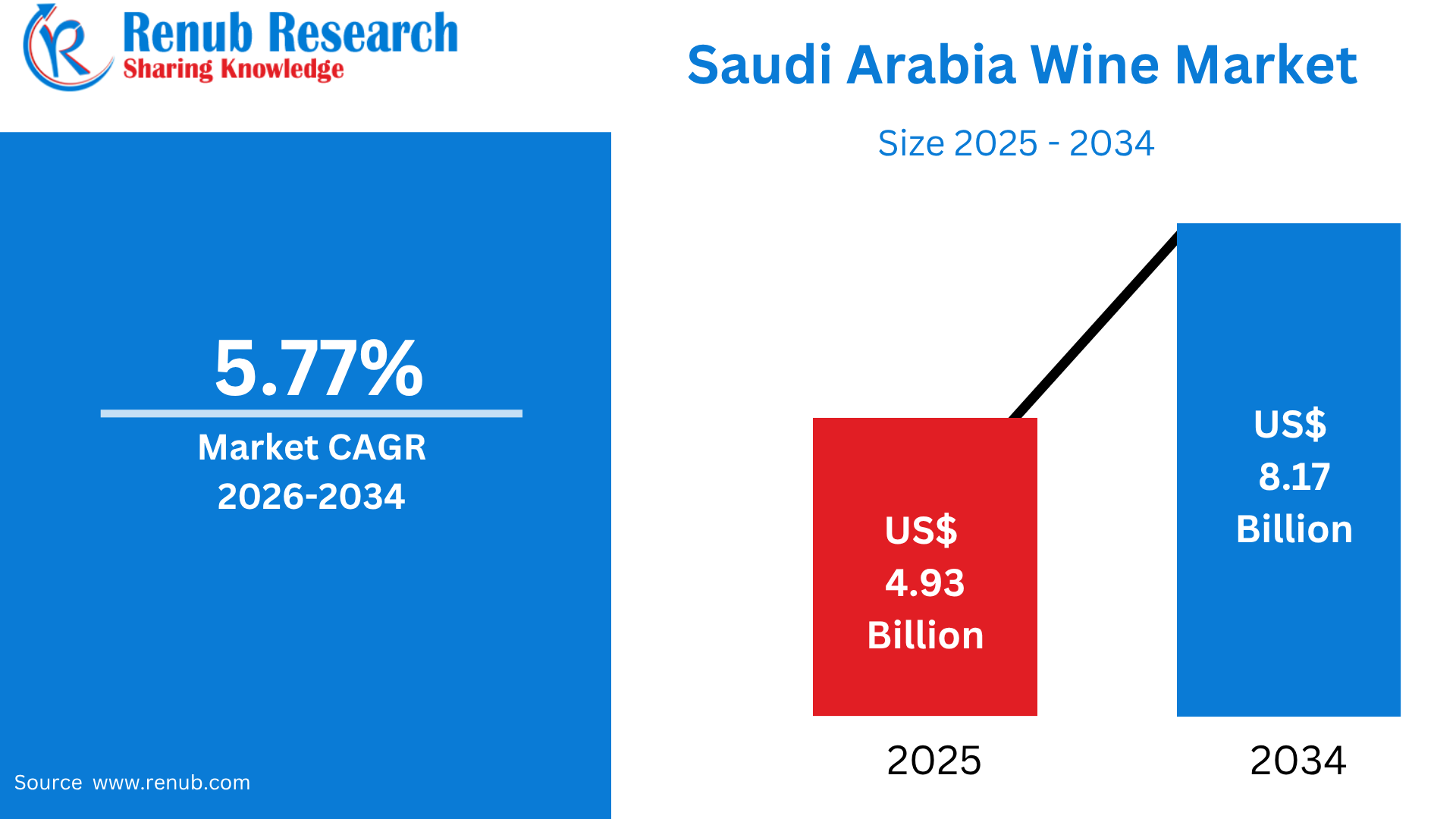
Saudi Arabia Wine Market is projected to increase from US$4.93 billion in 2025 to US$8.17 billion by 2034, registering a CAGR of 5.77% during the 2026–2034 forecast period. Market development is expected to be shaped primarily by luxury hospitality, international tourism, premium dining, and high-end service environments. Although alcohol remains subject to strict legal and regulatory controls in Saudi Arabia, the country's expanding tourism and hospitality infrastructure is creating opportunities for premium beverage experiences within permitted and regulated settings.
What Is Wine and Its Uses & Popularity in Saudi Arabia
Wine is an alcoholic beverage produced through the fermentation of grapes or other fruits and is commonly categorized into red, white, rosé, sparkling, and fortified varieties. Worldwide, wine is consumed with meals, served at restaurants and hotels, used in culinary preparation, and associated with premium dining and hospitality experiences. In Saudi Arabia, however, wine consumption and commercial alcohol sales are subject to strict legal and regulatory restrictions, making the market fundamentally different from conventional wine markets.
Consequently, demand is concentrated in highly controlled or restricted contexts rather than mainstream household consumption. Saudi Arabia’s rapidly expanding tourism and hospitality industry nevertheless creates a significant premium-beverage opportunity within the broader market framework. The country recorded 29.3 million inbound tourists and 93.3 million domestic tourists in 2025, demonstrating the scale of its tourism ecosystem.
International visitors, luxury hospitality developments, and high-end dining are important factors behind interest in premium beverage experiences. Therefore, wine’s relevance in Saudi Arabia is closely connected to international tourism, luxury hospitality, expatriate demand, and future changes in regulated hospitality offerings, rather than widespread domestic consumption.
Saudi Arabia Wine Imports in 2024
- Import Value: In 2024, Saudi Arabia imported approximately US$151,000 worth of wine, ranking 205th among 225 wine-importing countries worldwide.
- Global Product Ranking: Wine was the 1,129th most imported product in Saudi Arabia out of approximately 1,212 product categories during 2024.
- Thailand – Leading Supplier: Thailand was the largest source of Saudi Arabia’s wine imports, accounting for approximately US$76,900, or more than half of total reported imports.
- France – Major European Supplier: France supplied around US$25,400 worth of wine to Saudi Arabia, making it the country’s second-largest import source.
- Belgium – Significant Contributor: Imports from Belgium reached approximately US$24,200, placing the country among Saudi Arabia’s leading wine suppliers.
- Italy – Growing Supply: Italy exported approximately US$11,600 worth of wine to Saudi Arabia in 2024, reflecting continued demand for European wine products.
- United Kingdom – Premium Supply: The UK contributed approximately US$9,200 in wine imports, completing the top five supplier countries.
- Concentrated Import Structure: The top five suppliers—Thailand, France, Belgium, Italy, and the UK—accounted for virtually all of the reported wine import value in 2024.
- Niche Import Market: The relatively small import value reflects Saudi Arabia’s strict regulatory controls on alcoholic beverages and the limited conventional wine market.
- Opportunity for Alternatives: The data also indicates potential opportunities for non-alcoholic wine, sparkling grape beverages, and premium alcohol-free alternatives, particularly as Saudi Arabia expands luxury hospitality, tourism, and international dining under Vision 2030.
Growth Drivers of the Saudi Arabia Wine Market
Rapid Tourism Expansion Creates Premium Hospitality Opportunities
Saudi Arabia’s accelerating tourism industry is one of the most important factors supporting the broader premium beverage opportunity. The Kingdom recorded 29.3 million international tourists in 2025, while total tourism reached approximately 123 million visitors, including domestic and inbound travelers. Leisure accounted for 24.1% of inbound tourism, representing about 7 million visitors.
Vision 2030 has established an ambitious target of 150 million annual visits by 2030, encouraging substantial investment in destinations, resorts, hotels, restaurants, and entertainment infrastructure. These developments are particularly relevant to premium beverages because international tourists often expect hospitality experiences aligned with global standards. Luxury resorts, international hotel brands, premium restaurants, and destination developments can create demand for sophisticated beverage concepts where legally permitted. Saudi Arabia’s tourism strategy is also increasingly focused on leisure, cultural tourism, events, and international visitors rather than relying solely on religious tourism. As visitor numbers and hospitality capacity expand, premium beverage categories may benefit from the increasing sophistication of the tourism ecosystem. However, the effect on wine remains highly dependent on Saudi regulations and permitted channels.
Expansion of Luxury and Upscale Hotel Infrastructure
The rapid development of premium hospitality infrastructure is another important market driver. Saudi Arabia’s hotel industry is increasingly oriented toward luxury and upscale accommodation as the Kingdom develops destinations such as Riyadh, Jeddah, the Red Sea, AlUla, and other tourism hubs. By the end of 2025, Saudi Arabia had approximately 176,000 quality hotel rooms, with 60% classified as four- or five-star properties. Total quality hotel supply is projected to reach approximately 275,484 rooms by 2030. Earlier 2025 data also showed that 78% of the planned hotel pipeline was concentrated in luxury, upscale, and upper-upscale categories. This premiumization of accommodation is important because luxury hotels typically offer sophisticated dining concepts, international cuisine, premium beverage menus, and high-end hospitality services. In Q3 2025, Saudi Arabia had 5,622 licensed tourism hospitality facilities, representing a 40.6% increase from the previous year. The expansion of internationally oriented hospitality infrastructure can therefore create opportunities for premium beverage experiences, although wine-related commercial activity remains constrained by Saudi Arabia’s regulatory framework.
Rising Internationalization of Dining and Hospitality
The increasing internationalization of Saudi Arabia’s foodservice and hospitality ecosystem is supporting demand for globally recognized premium food and beverage categories. Vision 2030 is encouraging international tourism, foreign investment, global hotel brands, major events, entertainment destinations, and diversified dining concepts. Saudi Arabia’s tourism sector directly contributed approximately SAR231.5 billion, or 4.9% of GDP, in 2024, while tourism employment exceeded one million jobs in 2025. The growing presence of international visitors and expatriate communities is encouraging hospitality operators to provide experiences that reflect global culinary standards. Premium restaurants, luxury resorts, international hotels, and destination developments can increase exposure to global beverage categories, including wine, where permitted by law. The trend is particularly relevant in major commercial and tourism centers, where consumers and visitors have greater access to international cuisine and premium hospitality experiences. At the same time, Saudi Arabia is developing new tourism destinations and hosting international events, increasing the diversity of visitors and hospitality requirements. This internationalization is expected to strengthen the broader premium beverage ecosystem, although the actual development of the wine category will continue to depend on government regulations and the availability of legally authorized channels.
Challenges of the Saudi Arabia Wine Market
Strict Alcohol Regulations Restrict Market Accessibility
The most significant challenge for the Saudi Arabia wine market is the country’s strict regulatory environment surrounding alcoholic beverages. Unlike conventional wine markets, alcohol consumption and commercial distribution are highly restricted, limiting mainstream retail availability and substantially affecting demand, distribution, pricing, and marketing strategies. These restrictions mean that wine cannot be treated as an ordinary consumer packaged beverage in Saudi Arabia. Market opportunities are consequently concentrated around specific regulated or permitted environments rather than broad household consumption. This creates considerable uncertainty for producers, importers, distributors, retailers, and hospitality companies considering investment in the category. Regulatory compliance also affects product registration, transportation, storage, promotion, and potential sales channels. Furthermore, cultural and religious considerations strongly influence consumer attitudes toward alcohol. Even as Saudi Arabia expands tourism and international hospitality, the government continues to maintain a distinctive regulatory framework. Therefore, the projected market growth should be interpreted carefully: tourism and hospitality expansion may increase the underlying premium-beverage opportunity, but regulatory restrictions can prevent this potential from translating into conventional wine sales. Companies operating in the sector must closely monitor regulatory developments and ensure complete compliance with applicable Saudi laws.
Limited Consumer Base and Distribution Constraints
A second major challenge is the limited addressable consumer base created by regulatory restrictions, cultural considerations, and constrained distribution channels. Saudi Arabia’s tourism sector is expanding rapidly, but most of the country’s 123 million tourists in 2025 were domestic visitors—93.3 million compared with 29.3 million inbound tourists. International visitors therefore represent a smaller portion of the overall tourism population, although they can be particularly relevant to premium hospitality categories. Distribution is another challenge because conventional supermarkets, convenience stores, and general retail channels cannot be treated as normal wine-sales outlets. This limits economies of scale and makes specialized hospitality channels more important. Additionally, premium wine products can involve higher procurement, logistics, storage, and compliance costs. The limited number of permissible channels can make market penetration expensive compared with countries where wine is widely available through retail and foodservice networks. Nevertheless, Saudi Arabia’s expanding luxury hospitality infrastructure provides a potential counterbalance. With 275,000+ quality hotel rooms projected by 2030, premium tourism infrastructure is expanding rapidly. The key challenge will be converting this hospitality growth into legally permissible wine-market opportunities while maintaining compliance with Saudi regulations and cultural expectations.
Wine & Wine-Alternative Launches / New Product Developments in Saudi Arabia
- Wild Idol Alcohol-Free Wine – 2025: Luxury alcohol-free wine brand Wild Idol expanded into Saudi Arabia with its white and rosé varieties, targeting premium hospitality and consumers seeking sophisticated zero-alcohol alternatives.
- Café Boulud Non-Alcoholic Wine Library – 2025: Café Boulud Riyadh launched a dedicated non-alcoholic wine library at the Four Seasons Hotel Riyadh, featuring premium selections including Bella and Lussory.
- Lussory Merlot – Riyadh, 2025: Lussory’s alcohol-free Merlot was included in Café Boulud Riyadh’s premium non-alcoholic wine collection, providing a red-wine alternative for fine-dining customers.
- Lussory Chardonnay – Riyadh, 2025: Lussory Chardonnay, an alcohol-free white-wine alternative, was introduced as part of Café Boulud’s curated wine-and-cheese experience in Riyadh.
- Pernod Ricard Premium Non-Alcoholic Portfolio – 2025: Pernod Ricard introduced a premium alcohol-free portfolio across the Middle East, explicitly targeting KSA, with products designed for sophisticated social occasions and premium hospitality.
- Ceder’s Classic – 2025: As part of Pernod Ricard’s Middle East portfolio rollout, Ceder’s Classic was positioned as an alcohol-free premium botanical beverage for consumption on its own, with meals, or in zero-alcohol cocktails.
- Ceder’s Rose – 2025: Ceder’s Rose, another alcohol-free product from the Pernod Ricard portfolio, was introduced for consumers seeking premium, botanical and sophisticated alternatives to alcoholic beverages in the Saudi market.
- Premium Non-Alcoholic Sparkling Wine Expansion – 2024–2025: Saudi Arabia experienced continued expansion in non-alcoholic sparkling wine, with premiumization and greater product variety identified as key trends. Supermarkets remained the leading off-trade channel.
- Non-Alcoholic Rosé Wine Expansion – 2025: Alcohol-free rosé products continued gaining visibility in Saudi Arabia as brands expanded premium offerings aimed at celebrations, fine dining, hospitality, and consumers seeking wine-style beverages without alcohol.
- Non-Alcoholic Wine & Cheese Pairing Experience – September 2025: Café Boulud Riyadh announced weekly cheese and non-alcoholic wine pairing masterclasses, creating a new experiential format around premium alcohol-free wine products.
Premium Alcohol-Free Alternatives Gain Attention
Saudi Arabia sparkling wine segment is increasingly associated with alcohol-free sparkling wine and wine alternatives, reflecting the country’s regulatory environment and growing interest in sophisticated beverages for celebrations and hospitality occasions. These products are positioned as alternatives to champagne and traditional sparkling wine for weddings, banquets, corporate events, luxury hotels, and family celebrations. High disposable incomes in major cities, expanding premium hospitality, and exposure to international beverage trends are supporting consumer interest. Saudi Arabia’s tourism sector is also expanding rapidly under Vision 2030. The country recorded 29.3 million inbound tourists in 2025, while total tourism—including domestic visitors—reached approximately 123 million. Luxury hospitality is particularly important, with approximately 176,000 quality hotel rooms available at the end of 2025 and around 60% classified as four- or five-star properties. Manufacturers are responding with sparkling grape beverages, alcohol-free formulations, premium bottles, and sophisticated packaging designed to replicate the appearance and experience of conventional sparkling wine. As Saudi Arabia develops luxury tourism and entertainment destinations, alcohol-free sparkling beverages are positioned to benefit from premiumization and changing hospitality preferences.
Alcohol-Free Red Wine Alternatives Support Segment Development
Saudi Arabian red wine segment is primarily represented by alcohol-free red wine and red-wine-style beverages, which provide consumers with flavors and sensory characteristics inspired by traditional red wine while complying with the country’s regulatory and cultural environment. Products may emphasize berry flavors, tannin-like characteristics, oak-inspired notes, and fuller-bodied profiles. Demand is supported by growing interest in premium non-alcoholic beverages among international visitors, expatriates, urban consumers, and luxury-hospitality customers. Saudi Arabia’s hospitality industry is expanding rapidly, with the number of licensed tourism hospitality facilities reaching 5,622 in Q3 2025, up 40.6% year over year. This expansion is creating more opportunities for sophisticated beverage menus in hotels, restaurants, catering operations, and premium dining venues. Producers are investing in improved de-alcoholization and flavor-preservation technologies to deliver more authentic sensory profiles. Red alcohol-free wine alternatives are also increasingly positioned as accompaniments to gourmet meals and special occasions. Nevertheless, the segment remains niche because traditional alcoholic wine is highly restricted in Saudi Arabia. Future growth will therefore depend largely on premiumization, hospitality development, product innovation, and consumer acceptance of alcohol-free alternatives.
Refreshing Alcohol-Free White Wine Appeals to Premium Consumers
Saudi Arabia’s white wine segment is increasingly centered on alcohol-free white wine and white-wine-style beverages, particularly products offering light, crisp, fruity, and refreshing flavor profiles. These beverages can appeal to consumers seeking sophisticated alternatives for warm-weather occasions, premium dining, and hospitality settings. White wine-style products are particularly compatible with seafood, salads, poultry, Mediterranean cuisine, and other light international dishes, making them relevant to Saudi Arabia’s expanding restaurant and luxury-hotel sector. Tourism growth under Vision 2030 is strengthening demand for international culinary experiences. Saudi Arabia welcomed 29.3 million international tourists in 2025, while domestic tourism added another 93.3 million visitors. The expansion of upscale hotels and restaurants provides additional channels for premium non-alcoholic beverage products. Manufacturers are concentrating on maintaining acidity, aroma, fruit characteristics, and freshness while improving packaging and presentation. Premium bottles and smaller serving formats are also being introduced for hotels, restaurants, and special occasions. Although the segment remains relatively specialized, the combination of tourism expansion, premium dining, health-conscious consumption, and demand for sophisticated alcohol-free beverages is expected to support continued development.
Youthful Consumer Preferences and Premium Presentation Create Opportunities
Saudi Arabia rosé segment is primarily developing through alcohol-free rosé wine alternatives, which appeal to consumers seeking colorful, fashionable, and premium-looking beverages. Rosé-style drinks can offer fruity, refreshing profiles and are well suited to celebrations, leisure occasions, upscale restaurants, cafés, resorts, and hospitality events. Younger consumers and expatriate communities can be important audiences for internationally inspired beverage formats, while attractive packaging and social-media-oriented presentation can strengthen product visibility. Saudi Arabia’s luxury hospitality infrastructure is expanding significantly; by the end of 2025, the country had approximately 176,000 quality hotel rooms, with four- and five-star properties representing around 60% of supply. This premium hotel environment creates opportunities for visually distinctive alcohol-free beverages. Rosé alternatives can also complement the growth of modern café culture, fine dining, destination resorts, and lifestyle-oriented hospitality. Beverage companies are experimenting with fruit-forward profiles, elegant bottle designs, sparkling variants, and premium positioning to differentiate products. However, rosé remains a relatively niche category compared with mainstream soft drinks and other non-alcoholic beverages. Its future development will depend on consumer education, premium hospitality adoption, product innovation, and continued growth in Saudi Arabia’s tourism ecosystem.
Retail and Hospitality Channels Remain Important for Alcohol-Free Wine Alternatives
The offline market for wine and wine-style beverages in Saudi Arabia is primarily associated with non-alcoholic alternatives, given the country’s strict controls on alcoholic beverages. Supermarkets, hypermarkets, specialty grocery stores, gourmet retailers, hotels, restaurants, catering businesses, and other hospitality establishments provide important channels for alcohol-free sparkling, red, white, and rosé products. Offline retail offers consumers the opportunity to examine packaging, compare brands, and obtain products immediately, which is particularly valuable for premium beverages purchased for celebrations and special occasions. Saudi Arabia’s hospitality sector is expanding rapidly, with 5,622 licensed tourism hospitality facilities reported in Q3 2025, representing a 40.6% annual increase. This growing hospitality base provides additional points of sale and consumption for premium non-alcoholic beverages. Gourmet stores can focus on imported and premium products, while supermarkets offer broader availability and competitive pricing. Hotels and restaurants are especially important because beverage presentation and food pairing can influence consumer acceptance. Offline channels may also benefit from product demonstrations, in-store promotions, and tasting activities where legally and commercially permitted. As e-commerce expands, online sales will become increasingly complementary, but physical retail and hospitality outlets are expected to remain important for premium alcohol-free wine alternatives.
Premium Non-Alcoholic Beverages Lead Riyadh Demand
Riyadh represents one of Saudi Arabia’s most important markets for non-alcoholic wine and wine-style beverages, supported by its position as the Kingdom’s political, financial, and business center. The city hosts multinational companies, government institutions, affluent consumers, and an expanding international expatriate population, creating demand for premium beverages suitable for corporate functions, fine dining, celebrations, and hospitality. Riyadh’s luxury hotel and restaurant ecosystem is expanding alongside Vision 2030, with the Kingdom recording 29.3 million inbound tourists in 2025 and approximately 123 million total tourism visits including domestic travelers. Premium hotels, restaurants, cafés, and specialty retailers are increasingly important channels for sparkling, red, white, and rosé-style alcohol-free beverages. The city’s entertainment and events industry is also generating additional occasions for premium beverage consumption. Growing interest in wellness and sophisticated alcohol-free alternatives further supports category development. High-end supermarkets and gourmet retailers provide access to imported and premium products, while hospitality venues emphasize presentation and food pairing. Consequently, Riyadh is expected to remain a major consumption and distribution hub for premium non-alcoholic wine alternatives in Saudi Arabia.
Expatriate Population and Industrial Activity Support Dammam Market Development
Dammam’s market for wine-style beverages is benefiting from its importance as a commercial and industrial center in Saudi Arabia’s Eastern Province. Demand is primarily concentrated on non-alcoholic wine alternatives, with expatriate communities associated with the oil, gas, manufacturing, logistics, and industrial sectors contributing to interest in internationally inspired beverages. The city’s connection with the broader Dammam–Dhahran–Al Khobar metropolitan area creates a sizeable business and consumer ecosystem with demand for premium hospitality products. Hotels, restaurants, cafés, supermarkets, and hypermarkets provide important distribution channels for imported and locally available alcohol-free sparkling, red, white, and rosé beverages. Saudi Arabia’s tourism and hospitality sector is also expanding rapidly; the country had 5,622 licensed tourism hospitality facilities in Q3 2025, a 40.6% increase year over year. Increasing corporate activity, international business connections, and health-conscious consumption are supporting premium non-alcoholic beverage demand. Retailers are responding by offering greater product variety and premium packaging. Dammam’s strategic position within the Eastern Province, combined with industrial development and a diverse population, is therefore creating favorable conditions for gradual expansion of the alcohol-free wine category.
Corporate Hospitality and Affluent Consumers Drive Premium Demand in Dhahran
Dhahran represents a specialized market for premium non-alcoholic wine alternatives, supported by its strong association with the energy industry, corporate activity, and international professional communities. The city is closely connected with Saudi Arabia’s major oil and energy ecosystem, creating a consumer base with relatively strong purchasing power and exposure to international lifestyles. Demand for alcohol-free sparkling and red wine-style products is particularly relevant to corporate gatherings, private events, premium restaurants, residential communities, and formal hospitality occasions. Compared with larger neighboring markets such as Dammam, Dhahran has a more specialized consumer base, but its concentration of professionals and affluent households supports demand for premium imported products. The broader Eastern Province also benefits from strong international business activity and established hospitality infrastructure. Premium grocery stores and specialty retailers remain important outlets, while hotels and restaurants provide additional opportunities for product consumption. Saudi Arabia’s luxury hospitality sector continues to expand, with approximately 176,000 quality hotel rooms reported at the end of 2025 and around 60% categorized as four- or five-star properties. This premiumization trend supports Dhahran’s niche market for sophisticated alcohol-free beverage products.
Tourism, Coastal Hospitality, and International Dining Strengthen Demand in Jeddah
Jeddah is one of Saudi Arabia’s most important markets for premium non-alcoholic wine and wine-style beverages, supported by its position as a major commercial center, tourism gateway, and Red Sea destination. The city has a diverse population that includes Saudi consumers, expatriates, business travelers, and international visitors, creating demand for globally inspired food and beverage experiences. Luxury hotels, resorts, fine-dining restaurants, cafés, and event venues are important channels for sparkling, rosé, white, and red alcohol-free alternatives. Tourism expansion under Vision 2030 is strengthening Jeddah’s hospitality ecosystem, while the city’s coastal location and growing entertainment and leisure activities create additional occasions for premium beverage consumption. Saudi Arabia welcomed 29.3 million inbound tourists in 2025, supporting broader demand for internationally oriented hospitality experiences. Supermarkets, gourmet food stores, specialty retailers, and online platforms also improve product accessibility. Manufacturers are increasingly using premium packaging, fruit-forward flavors, and sophisticated sparkling formulations to appeal to younger and internationally exposed consumers. With continued investment in Red Sea tourism, hospitality, and entertainment, Jeddah is positioned to remain an important regional market for premium alcohol-free wine alternatives.
Saudi Arabia Wine Market Segments
Product Type
- Still Wine
- Sparkling Wine
- Dessert Wine
- Fortified Wine
- Other
Colors
- Red Wine
- Rose Wine
- White Wine
- Other
Distribution Channel
- Online
- Offline
Cities
- Riyadh
- Jeddah
- Dammam
- Dhahran
- Jubail
- Khobar
- Tabuk
- Mecca
- Medina
- Rest of Cities
All companies have been covered with 5 Viewpoints
- Overviews
- Key Person
- Recent Developments
- SWOT Analysis
- Revenue Analysis
Key Players Analysis
- Accolade Wines
- Alko
- Allagash Brewing Company
- Allied Blenders & Distillers
- Arkell’s Brewery
- Anchor Brewing Company
- Asahi Breweries
- Bass Brewery
Report Details:
| Report Features | Details |
| Base Year |
2024 |
| Historical Period |
2020 - 2024 |
| Forecast Period |
2025 - 2033 |
| Market |
US$ Billion |
| Segment Covered |
Product Type, Colors, Distribution Channel, and Region |
| Region Covered |
|
| Companies Covered |
|
| Customization Scope |
20% Free Customization |
| Post-Sale Analyst Support |
1 Year (52 Weeks) |
| Delivery Format |
PDF and Excel through Email (We can also provide the editable version of the report in PPT/Word format on request) |
Customization Services available
- Analysis of Market Size and Its Segments
- More Company Profiles (Upto 10 without any additional cost):
- Additional Countries (Other than mentioned Countries):
- Region/Country Specific Reports:
- Market Entry Strategy:
- Region-Specific Market Dynamics:
- Regional Market Share Analysis:
- Trade Analysis:
- Production Insights:
- Others Customized Requests:
For more information contact our analysts.
Need More Assistance?
- Talk to our analysts to get more precious information on the current market trends.
- Include more countries and segments and customize the report based on the final requirement.
- Get a competitive advantage in your industry by knowing the report findings and making a positive impact on your revenues and operations.
- Our analysts are always ready to provide more help and pertinent information if you need any additional assistance.