Personalized Medicine Market Size, Share, Growth Trends, Industry Analysis, Key Companies & Forecast 2026–2034
Buy NowPersonalized Medicine Market Boom: Leading Revenue Growth Across Targeted Therapies
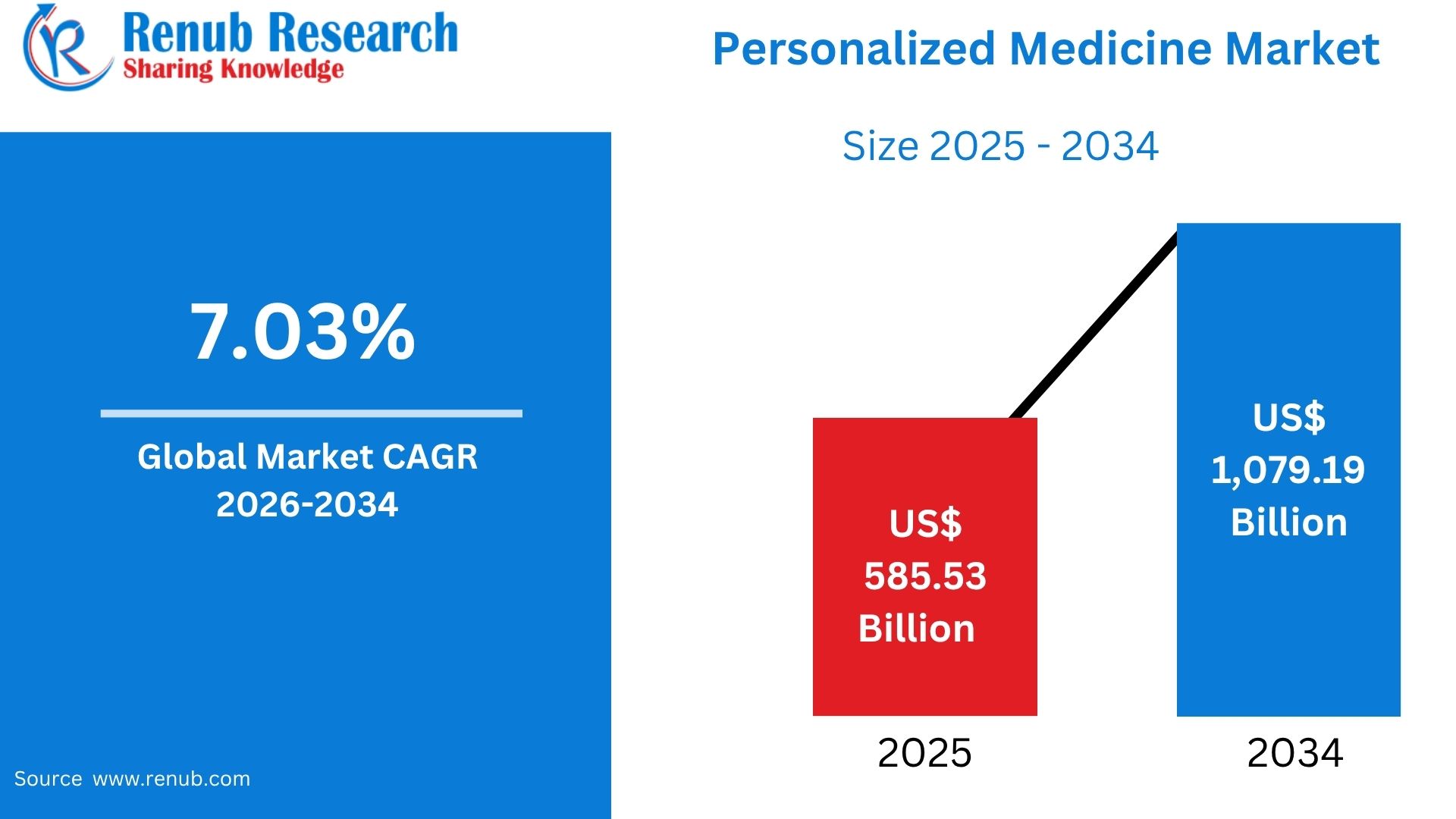
Personalized Medicine Market is projected to expand from US$ 585.53 billion in 2025 to US$ 1,079.19 billion by 2034, registering a compound annual growth rate (CAGR) of 7.03% during the forecast period of 2026–2034. The market is experiencing strong growth, driven by rapid advancements in genomics, biotechnology, molecular diagnostics, and precision medicine technologies. Increasing demand for targeted therapies that are tailored to an individual's genetic profile is improving treatment effectiveness while reducing adverse drug reactions. The growing prevalence of chronic diseases, cancer, and rare genetic disorders has further accelerated the adoption of personalized treatment approaches.
Personalized Medicine and Its Uses & Popularity Worldwide
Personalized medicine, also known as precision medicine, is a healthcare approach that customizes disease prevention, diagnosis, and treatment based on an individual's genetic makeup, lifestyle, environment, and biological characteristics. Unlike the traditional one-size-fits-all approach, personalized medicine uses genomic sequencing, molecular diagnostics, biomarkers, and companion diagnostics to identify the most effective therapies for each patient. It is widely used in oncology, cardiology, neurology, rare genetic disorders, infectious diseases, and pharmacogenomics, where treatment decisions are tailored to improve effectiveness while minimizing adverse drug reactions. Personalized medicine also plays a vital role in predicting disease risk, selecting appropriate medications, determining optimal dosages, and monitoring treatment responses.
The popularity of personalized medicine has increased significantly worldwide due to advances in genomics, artificial intelligence, biotechnology, and next-generation sequencing technologies. Healthcare providers are increasingly adopting precision therapies to improve clinical outcomes and reduce healthcare costs associated with ineffective treatments. Growing prevalence of cancer and chronic diseases, rising investments in precision healthcare research, and expanding availability of genetic testing have further accelerated global adoption, making personalized medicine a transformative approach in modern healthcare systems.
Growth Driver
Rapid Advancements in Genomics and Next-Generation Sequencing (NGS)
Continuous innovation in genomics and next-generation sequencing (NGS) technologies is one of the strongest growth drivers of the personalized medicine market. The cost of whole-genome sequencing has declined dramatically over the past decade, making genetic analysis more accessible for clinical practice and research. Industry estimates indicate that more than 70% of precision medicine research projects now utilize genomic sequencing and biomarker analysis to identify disease-causing mutations and guide targeted treatment decisions. Personalized medicine enables healthcare providers to select therapies based on an individual’s genetic profile, significantly improving treatment response while reducing unnecessary medications and adverse drug reactions. NGS is widely applied in oncology, rare genetic disorders, inherited diseases, and infectious disease diagnosis. Pharmaceutical companies are increasingly integrating genomic data into drug discovery and clinical trials to develop highly targeted therapies. Rising investments in biotechnology, expanding genomic databases, and improvements in sequencing accuracy continue to strengthen the adoption of precision healthcare, making genomics a key foundation for sustained growth in the personalized medicine market.
Increasing Prevalence of Cancer and Chronic Diseases
The growing global burden of cancer, cardiovascular diseases, diabetes, neurological disorders, and rare genetic conditions is significantly accelerating demand for personalized medicine. Industry estimates indicate that more than 20 million new cancer cases are diagnosed globally each year, while chronic diseases account for nearly 75% of healthcare expenditures in many developed economies. Traditional treatment approaches often produce varying outcomes because patients respond differently to medications. Personalized medicine addresses this challenge by using biomarkers, molecular diagnostics, and genetic testing to identify the most appropriate therapy for each patient. Targeted cancer therapies have demonstrated improved survival rates and fewer side effects compared with conventional chemotherapy for specific genetic mutations. Precision medicine also enables earlier disease detection, improved patient monitoring, and optimized medication selection. As healthcare systems increasingly prioritize outcome-based care and preventive medicine, the demand for individualized treatment strategies continues to rise, making chronic disease management one of the primary growth drivers for the global personalized medicine market.
Expanding Adoption of Artificial Intelligence and Precision Diagnostics
Artificial intelligence (AI), machine learning, and advanced precision diagnostics are transforming the personalized medicine landscape by enabling faster and more accurate clinical decision-making. Industry estimates suggest that over 60% of leading pharmaceutical and biotechnology companies are integrating AI into drug discovery, biomarker identification, and precision therapy development. AI algorithms analyze large genomic datasets, electronic health records, medical imaging, and laboratory results to identify disease patterns and predict patient responses to treatment. Companion diagnostics are increasingly used alongside targeted therapies to determine which patients are most likely to benefit from specific medications. Cloud computing and digital health platforms further support data integration and personalized treatment planning across healthcare systems. Pharmaceutical companies are also using AI to improve clinical trial design and accelerate precision drug development. Continuous technological advancements in molecular diagnostics, digital pathology, and bioinformatics are improving diagnostic accuracy while reducing development timelines, creating substantial growth opportunities for the personalized medicine market worldwide.
Personalized Medicine Launches Worldwide
Kebilidi (Eladocagene Exuparvovec) – First AADC Deficiency Gene Therapy (2024)
Company: PTC Therapeutics
Region: United States
Kebilidi became a major milestone in personalized medicine by introducing a gene therapy specifically designed for patients with aromatic L-amino acid decarboxylase (AADC) deficiency, a rare genetic neurological disorder. Approved in 2024, the therapy uses an adeno-associated virus (AAV) vector to deliver a functional copy of the affected gene directly into the brain. The treatment represents a shift from conventional symptom management toward genetic correction based on individual disease causes. AADC deficiency affects fewer than 1 in 100,000 births globally, making personalized approaches essential for rare disease populations. The launch highlights the growing importance of gene replacement technologies in precision healthcare.
Personalized CRISPR Gene Editing Therapy for CPS1 Deficiency (2025)
Developer: NIH-supported Research Collaboration
Region: United States
In 2025, researchers successfully delivered a customized gene-editing therapy for an infant suffering from carbamoyl phosphate synthetase 1 (CPS1) deficiency, marking one of the first examples of a patient-specific CRISPR-based treatment. The therapy was designed according to the child’s unique genetic mutation, demonstrating the potential of ultra-personalized medicine. The treatment development process took approximately six months from diagnosis to therapy administration. This breakthrough showed how genomic sequencing, computational design, and gene-editing platforms can rapidly create individualized treatments for rare genetic diseases. The approach may create new opportunities for thousands of patients affected by ultra-rare disorders worldwide.
NHS Liquid Biopsy Personalized Cancer Testing Program (2025)
Organization: National Health Service (NHS)
Region: United Kingdom
The United Kingdom launched an advanced DNA blood testing program using liquid biopsy technology to personalize cancer treatment decisions. The technology analyzes circulating tumor DNA (ctDNA) from blood samples, allowing doctors to identify cancer-specific genetic changes and select targeted therapies. Initially focused on lung and breast cancer patients, the program aims to reduce treatment delays and avoid unnecessary chemotherapy. Early adoption showed that patients could receive genetic information faster compared with traditional biopsy methods. This launch represents a major advancement in precision oncology by integrating molecular diagnostics into routine healthcare systems.
GenomeIndia Personalized Medicine Database Initiative (2024–2026)
Organization: Government of India / Department of Biotechnology
Region: India
India expanded its personalized medicine capabilities through the GenomeIndia initiative, which created a large-scale genomic resource representing the country’s diverse population. The program completed whole genome sequencing data collection from more than 10,000 individuals, supporting research in disease prediction, pharmacogenomics, and precision therapies. This initiative enables researchers to understand population-specific genetic variations and develop healthcare solutions suitable for Indian patients. The launch strengthens India’s position in genomic medicine by supporting applications such as cancer profiling, rare disease diagnosis, and personalized drug selection.
AI-Based Precision Drug Discovery Platforms (2024–2026)
Companies: Multiple Biotechnology & AI Firms
Region: Global
Artificial intelligence-powered personalized medicine platforms expanded significantly between 2024 and 2026. These platforms combine genomic information, clinical records, and biological data to identify disease patterns and recommend individualized treatment strategies. AI models are increasingly being used for biomarker discovery, patient selection for clinical trials, and prediction of treatment responses. The integration of AI with next-generation sequencing has accelerated precision oncology and rare disease research. By analyzing millions of biological data points, AI-based systems help pharmaceutical companies develop targeted medicines faster and improve patient outcomes. The trend represents a major transformation from population-based medicine toward data-driven individualized healthcare.
Waskyra Gene Therapy for Wiskott-Aldrich Syndrome (2025)
Company: Rocket Pharmaceuticals
Region: United States
Waskyra became an important personalized medicine advancement by introducing a gene therapy approach for Wiskott-Aldrich syndrome (WAS), a rare inherited immune disorder. The therapy modifies a patient’s own hematopoietic stem cells by correcting the defective gene before reinfusion. This personalized cell-based treatment addresses the underlying genetic cause rather than only managing symptoms. The approval demonstrated continued progress in using patient-specific genetic information to design therapies for rare diseases. Such innovations are expected to encourage additional gene therapies targeting inherited immune disorders, metabolic diseases, and neurological conditions.
Personalized Ultra-Rare Disease Therapy Regulatory Framework (2026)
Organization: U.S. FDA
Region: United States
The U.S. FDA introduced a framework aimed at accelerating development of individualized therapies for ultra-rare diseases. The initiative supports customized treatments involving genome editing, RNA-based therapies, and other advanced modalities where traditional clinical trials may be difficult due to extremely small patient populations. This regulatory advancement supports faster development of therapies designed around individual genetic mutations. The framework is expected to encourage biotechnology companies to invest in personalized gene medicines and improve access for patients with rare genetic disorders.
Center for Therapeutic Genetics Launch for Rare Disease Medicines (2026)
Organizations: Broad Institute, Boston Children’s Hospital, The Jackson Laboratory
Region: United States
The launch of the Center for Therapeutic Genetics represents a global effort to develop repeatable personalized genetic medicine platforms. The center focuses on advanced technologies including base editing and prime editing to create therapies for rare and ultra-rare diseases. Unlike traditional one-time discoveries, the initiative aims to establish scalable systems that can rapidly design treatments for different genetic mutations. With an estimated 350–400 million people worldwide living with rare diseases, this approach could significantly expand access to personalized genetic therapies.
Pharmacogenomics-Based Personalized Drug Selection Expansion
Companies: Global Pharmaceutical & Diagnostic Companies
Region: Worldwide
Pharmacogenomics-based medicine continued expanding in 2026 as healthcare providers increasingly used genetic testing to predict patient responses to medications. These solutions analyze genetic variations affecting drug metabolism, helping doctors select appropriate medicines and reduce adverse reactions. Oncology, psychiatry, cardiovascular care, and infectious disease treatment are among the fastest-growing application areas. The increasing availability of affordable genetic sequencing and electronic health records has accelerated adoption. Pharmaceutical companies are also incorporating biomarker testing into drug development programs to improve clinical trial success rates and create targeted therapies.
Next-Generation Sequencing (NGS) Precision Oncology Platforms
Companies: Global Genomics Companies
Region: Worldwide
NGS-based precision oncology platforms became one of the fastest-growing personalized medicine technologies during 2026. These platforms analyze tumor DNA and identify mutations that can guide targeted cancer treatments. The technology supports companion diagnostics, tumor profiling, and personalized therapy selection. NGS adoption has expanded across hospitals, cancer centers, and research institutions due to declining sequencing costs and improved accuracy. Studies highlight that NGS has transformed applications in oncology, infectious diseases, and genomic medicine by providing faster and more comprehensive genetic information.
Challenge
High Treatment Costs and Limited Reimbursement Coverage
One of the major challenges facing the personalized medicine market is the high cost associated with genetic testing, biomarker analysis, companion diagnostics, and targeted therapies. Industry estimates indicate that certain personalized cancer treatments can cost tens of thousands of US dollars per patient annually, while comprehensive genomic sequencing remains expensive in many healthcare systems despite declining technology costs. These high expenses limit accessibility, particularly in low- and middle-income countries where healthcare budgets and insurance coverage remain constrained. In many regions, reimbursement policies for genetic testing and precision therapies are still evolving, creating financial uncertainty for patients and healthcare providers. Hospitals also require substantial investments in advanced sequencing equipment, laboratory infrastructure, and specialized personnel. Although personalized medicine often reduces long-term healthcare costs by improving treatment effectiveness and avoiding unnecessary therapies, the significant upfront investment remains a barrier to widespread adoption. Expanding reimbursement programs and reducing diagnostic costs will be essential for broader market penetration.
Data Privacy, Regulatory Complexity, and Limited Clinical Integration
The personalized medicine market faces significant challenges related to genetic data privacy, regulatory compliance, and integration into routine clinical practice. Personalized medicine depends on collecting and analyzing large volumes of sensitive genomic and patient health information, raising concerns regarding cybersecurity, data ownership, and patient confidentiality. Industry surveys indicate that more than 60% of healthcare organizations identify data security and regulatory compliance as major obstacles to precision healthcare implementation. Regulatory approval processes for companion diagnostics and targeted therapies are often complex because both the diagnostic test and corresponding treatment must demonstrate safety, accuracy, and clinical effectiveness. Additionally, many healthcare providers require specialized training to interpret genomic reports and integrate precision medicine into treatment decisions. Limited interoperability between hospital information systems and genomic databases further slows adoption. Addressing these challenges through stronger data governance, standardized clinical guidelines, improved physician education, and harmonized regulatory frameworks will be critical to unlocking the full potential of personalized medicine globally.
Growing Adoption of Targeted and Precision Therapies
The personalized medicine therapeutics market represents the largest segment of the precision healthcare industry, driven by the increasing use of targeted drugs designed to match an individual’s genetic profile and disease characteristics. Industry estimates indicate that therapeutics account for approximately 60–65% of the global personalized medicine market revenue, reflecting widespread adoption in oncology, immunology, rare diseases, and autoimmune disorders. Personalized therapeutics improve treatment efficacy by targeting specific molecular pathways while minimizing adverse drug reactions associated with conventional therapies. Biologic drugs, monoclonal antibodies, gene therapies, RNA-based therapeutics, and cell-based treatments are increasingly replacing generalized treatment approaches. Pharmaceutical companies continue investing heavily in biomarker-driven drug development and companion diagnostics to identify patients most likely to benefit from specific therapies. Regulatory approvals for precision medicines continue expanding across multiple disease indications. Growing investments in biotechnology, increasing prevalence of chronic diseases, and continuous advancements in pharmacogenomics and molecular medicine are expected to drive sustained expansion of the personalized medicine therapeutics market worldwide.
Advanced Genetic Testing Supporting Precision Healthcare
The personalized medicine diagnostics market is expanding rapidly as healthcare providers increasingly rely on genomic testing, biomarker analysis, and molecular diagnostics to guide individualized treatment decisions. Industry estimates suggest that diagnostics contribute nearly 30–35% of the global personalized medicine market, with demand rising across hospitals, diagnostic laboratories, and research institutions. Technologies such as next-generation sequencing (NGS), polymerase chain reaction (PCR), microarrays, liquid biopsy, and companion diagnostics enable early disease detection and identification of genetic mutations that influence treatment response. Precision diagnostics help physicians select appropriate therapies while avoiding ineffective medications and unnecessary healthcare costs. Growing adoption of artificial intelligence and bioinformatics has improved the speed and accuracy of genomic data interpretation. Pharmaceutical companies increasingly collaborate with diagnostic developers to commercialize companion diagnostic tests alongside targeted therapies. Rising awareness of preventive healthcare, expanding genetic screening programs, and continuous innovation in molecular testing technologies continue to strengthen the long-term growth of the personalized medicine diagnostics market.
Precision Cancer Treatment Driving Market Leadership
Oncology remains the largest application segment within the personalized medicine market due to the increasing use of biomarker-guided therapies and genomic profiling in cancer treatment. Industry estimates indicate that oncology accounts for approximately 40–45% of total personalized medicine applications, making it the leading therapeutic area for precision healthcare. Advances in genomic sequencing enable clinicians to identify specific mutations such as EGFR, HER2, BRAF, ALK, and BRCA, allowing the selection of highly targeted therapies for individual patients. Companion diagnostics play a crucial role in matching patients with the most effective immunotherapies, targeted drugs, and precision chemotherapy regimens. Personalized oncology has demonstrated improved survival rates, better treatment outcomes, and reduced toxicity compared to traditional cancer therapies for eligible patients. Continuous innovation in liquid biopsy, artificial intelligence, and molecular pathology is further improving early cancer detection and treatment monitoring. Increasing global cancer incidence, expanding clinical research, and growing investment in precision oncology continue to accelerate market growth worldwide.
Genetic Insights Enhancing Heart Disease Management
The cardiovascular personalized medicine market is gaining significant momentum as precision diagnostics and pharmacogenomics improve the prevention, diagnosis, and treatment of heart-related diseases. Industry estimates indicate that cardiovascular applications account for approximately 12–15% of the personalized medicine market, with steady growth driven by the rising prevalence of hypertension, coronary artery disease, heart failure, and inherited cardiac disorders. Genetic testing enables physicians to identify patients at elevated cardiovascular risk while optimizing medication selection and dosage based on individual genetic profiles. Pharmacogenomic testing is increasingly used to guide the administration of anticoagulants, cholesterol-lowering medications, and antiplatelet therapies, reducing adverse drug reactions and improving clinical outcomes. Artificial intelligence, wearable cardiac monitoring devices, and digital health technologies further support individualized disease management through continuous patient monitoring. Growing awareness of preventive cardiology, expanding precision diagnostic capabilities, and increasing investments in cardiovascular genomics continue to strengthen the adoption of personalized medicine across cardiac healthcare worldwide.
Hospitals Leading Clinical Adoption of Precision Healthcare
Hospitals represent the largest end-user segment of the personalized medicine market due to their advanced diagnostic capabilities, multidisciplinary clinical expertise, and access to specialized treatment infrastructure. Industry estimates indicate that hospitals account for approximately 50–55% of personalized medicine service utilization, driven by increasing adoption of genomic testing, molecular diagnostics, and targeted therapies across oncology, cardiology, neurology, and rare disease treatment. Large healthcare systems continue investing in next-generation sequencing laboratories, precision medicine centers, bioinformatics platforms, and electronic health record integration to support individualized patient care. Hospitals increasingly utilize multidisciplinary teams comprising geneticists, oncologists, pathologists, pharmacists, and bioinformaticians to develop customized treatment strategies. The growing availability of companion diagnostics and precision therapeutics has significantly enhanced treatment decision-making and patient outcomes. Rising healthcare investments, expanding precision medicine programs, and increasing collaborations between hospitals, pharmaceutical companies, and research institutions continue to strengthen hospitals’ central role in advancing the global personalized medicine market.
Advanced Genomics and Precision Diagnostics Driving United States Market Expansion
The United States personalized medicine market is among the world’s most advanced, supported by a strong biotechnology industry, extensive genomic research, and widespread adoption of precision diagnostics. Technologies such as next-generation sequencing (NGS), molecular diagnostics, companion diagnostics, and liquid biopsy enable physicians to identify genetic variations and deliver targeted therapies, particularly in oncology where genomic profiling guides individualized cancer treatment. Rising cases of chronic diseases, including cancer, cardiovascular disorders, and diabetes, continue to drive demand for precision healthcare. Government-supported genomic research programs and digital health initiatives have expanded access to large-scale biological datasets, accelerating innovation in precision medicine. The integration of artificial intelligence (AI), machine learning, and big data analytics is improving disease prediction, drug discovery, and treatment optimization. With over 1.9 million new cancer cases diagnosed annually, pharmaceutical companies are increasing investments in biomarker-based drug development and companion diagnostics. Continuous technological innovation, research funding, and collaboration across healthcare and biotechnology sectors position the United States as a global leader in personalized medicine.
Strong Genomic Healthcare Infrastructure Accelerating United Kingdom Market Development
United Kingdom personalized medicine market is growing steadily due to strong government support, advanced genomic research, and the integration of precision healthcare into the National Health Service (NHS). Large-scale national genome sequencing initiatives have enabled researchers and clinicians to use genetic information for accurate disease diagnosis, treatment selection, and rare disease management. Increasing adoption of genomic sequencing, pharmacogenomics, molecular diagnostics, and targeted cancer therapies is driving market expansion. The rising prevalence of chronic diseases and an aging population are further increasing demand for individualized healthcare solutions. Collaboration among the NHS, pharmaceutical companies, biotechnology firms, and academic institutions is accelerating the development of precision therapeutics, gene therapies, and biomarker-based diagnostics. More than 500,000 people are diagnosed with cancer annually in the UK, boosting demand for personalized oncology treatments. Additionally, the integration of artificial intelligence, electronic health records, and digital health platforms is improving clinical decision-making and treatment outcomes. Despite challenges such as high testing costs and unequal access to genomic services, continued government investment is expected to support long-term market growth.
Rising Healthcare Demand and Genomic Technology Adoption Driving India Growth
The India personalized medicine market is expanding rapidly, driven by rising healthcare awareness, an increasing burden of chronic diseases, and improving access to genomic technologies. The growing prevalence of cancer, diabetes, cardiovascular diseases, and rare genetic disorders is accelerating demand for personalized diagnostics and targeted therapies. Advances in next-generation sequencing (NGS), molecular diagnostics, and genetic testing, along with declining testing costs, are making precision healthcare more accessible across major cities. India's large and genetically diverse population provides significant opportunities for genomic research, pharmacogenomics, and preventive healthcare. Government initiatives supporting genome mapping, biotechnology innovation, and digital healthcare infrastructure are strengthening the country's precision medicine ecosystem. The expanding biotechnology sector, growing pharmaceutical investments in targeted therapies and biosimilars, and increasing availability of affordable genetic testing are further driving market growth. Although challenges such as limited awareness, affordability constraints, regulatory complexities, and a shortage of skilled professionals remain, continued investment in genomics, healthcare digitization, and research is expected to position India as a leading personalized medicine market in Asia.
Vision 2030 and Healthcare Transformation Supporting Saudi Arabia Market Expansion
Saudi Arabia's personalized medicine market is experiencing strong growth, driven by healthcare modernization, genomic research investments, and the government's Vision 2030 healthcare transformation strategy. The country is shifting from conventional treatment approaches toward preventive and precision-based healthcare through increased investment in biotechnology, genetic testing infrastructure, and advanced medical facilities. A high prevalence of chronic diseases, including diabetes, cardiovascular disorders, cancer, and inherited genetic conditions, is fueling demand for personalized diagnostics and targeted therapies. Growing adoption of genomic sequencing, artificial intelligence (AI), molecular diagnostics, and digital health technologies is improving disease prediction, treatment selection, and patient outcomes. Saudi Arabia is also strengthening collaborations with international biotechnology organizations while expanding genomic research and population-based genetic studies to address region-specific health challenges. Although high implementation costs, limited specialized expertise, and regulatory complexities remain obstacles, continued government funding, healthcare infrastructure development, and advances in precision medicine are expected to establish Saudi Arabia as a leading personalized medicine market and innovation hub in the Middle East.
Market Segments
Product
- Personalized Medicine Therapeutics
- Personalized Medicine Diagnostics
- Personalized Medical Care
- Personalized Nutrition and Wellness
Application
- Oncology
- Infectious disease
- Neurology or Psychiatry
- Cardiovascular
- Others
End-User
- Hospitals
- Diagnostic Centers
- Research & Academic Institutes
- Others
Countries
North America
- United States
- Canada
Europe
- France
- Germany
- Italy
- Spain
- United Kingdom
- Belgium
- Netherlands
- Turkey
Asia Pacific
- China
- Japan
- India
- Australia
- South Korea
- Thailand
- Malaysia
- Indonesia
- New Zealand
Latin America
- Brazil
- Mexico
- Argentina
Middle East & Africa
- South Africa
- Saudi Arabia
- United Arab Emirates
All companies have been covered with 5 Viewpoints
- Overviews
- Key Person
- Recent Developments
- SWOT Analysis
- Revenue Analysis
Company Analysis:
- Abbott Laboratories
- GE Healthcare, Inc.
- Aadi Bioscience, Inc.
- Illumina, Inc.
- QIAGEN
- Eli Lilly and Company
- Takeda Pharmaceutical Company Ltd
- AbbVie Inc.
- F. Hoffmann-La Roche Ltd.
Report Details:
| Report Features | Details |
| Base Year |
2025 |
| Historical Period |
2022 - 2025 |
| Forecast Period |
2026 - 2034 |
| Market |
US$ Billion |
| Segment Covered |
Product Type, Lead Type, End User and Countries |
| Countries Covered |
|
| Companies Covered |
|
| Customization Scope |
20% Free Customization |
| Post-Sale Analyst Support |
1 Year (52 Weeks) |
| Delivery Format |
PDF and Excel through Email (We can also provide the editable version of the report in PPT/Word format on request) |
Report Details:
| Report Features | Details |
| Base Year |
2025 |
| Historical Period |
2022 - 2025 |
| Forecast Period |
2026 - 2034 |
| Market |
US$ Billion |
| Segment Covered |
Product, Application, End User and Countries |
| Countries Covered |
|
| Companies Covered | 1. Abbott Laboratories 2. GE Healthcare, Inc. 3. Aadi Bioscience, Inc. 4. Illumina, Inc. 5. QIAGEN 6. Eli Lilly and Company 7. Takeda Pharmaceutical Company Ltd 8. AbbVie Inc. 9. F. Hoffmann-La Roche Ltd. |
| Customization Scope |
20% Free Customization |
| Post-Sale Analyst Support |
1 Year (52 Weeks) |
| Delivery Format |
PDF and Excel through Email (We can also provide the editable version of the report in PPT/Word format on request) |
Customization Services available
- Analysis of Market Size and Its Segments
- More Company Profiles (Upto 10 without any additional cost):
- Additional Countries (Other than mentioned Countries):
- Region/Country Specific Reports:
- Market Entry Strategy:
- Region-Specific Market Dynamics:
- Regional Market Share Analysis:
- Trade Analysis:
- Production Insights:
- Others Customized Requests:
For more information contact our analysts.
Need More Assistance?
- Talk to our analysts to get more precious information on the current market trends.
- Include more countries and segments and customize the report based on the final requirement.
- Get a competitive advantage in your industry by knowing the report findings and making a positive impact on your revenues and operations.
- Our analysts are always ready to provide more help and pertinent information if you need any additional assistance.