Oman Fertilizer Market Report by Type, Category, Form, Application, Crop, City and Company Analysis 2026-2034
Buy NowOman Fertilizer Market Size and Forecast 2026-2034
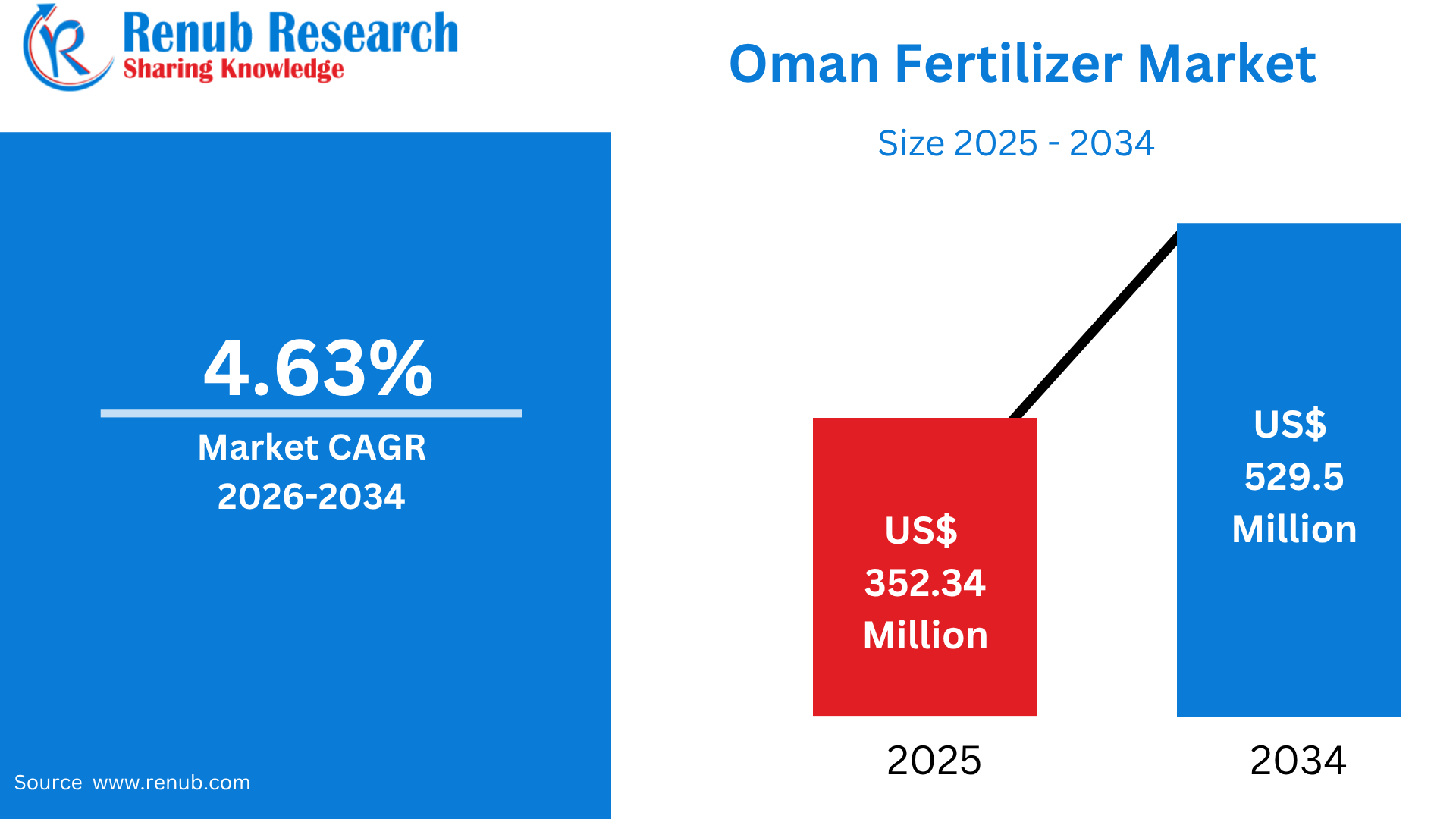
Oman Fertilizer Market is expected to reach US$ 529.5 million by 2034 from US$ 352.34 million in 2025, with a CAGR of 4.63% from 2026 to 2034. The Oman fertilizer market is expected to grow steadily, driven by increasing agricultural activities, government support, rising demand for crop productivity, and adoption of sustainable and efficient farming practices.
Oman Fertilizer Industry Overview
The Oman fertilizer industry plays a vital role in supporting the country’s agricultural development and food security objectives. Although Oman has a relatively arid climate, the government has been actively promoting agriculture through irrigation projects and modern farming techniques. Fertilizers are essential in enhancing soil fertility and improving crop yields in such challenging conditions. The market includes a variety of products such as nitrogenous, phosphatic, potassic, and specialty fertilizers designed to meet different agricultural needs. The increasing focus on maximizing agricultural output and reducing dependency on imports has strengthened the demand for fertilizers in Oman.
Technological advancements and sustainable practices are shaping the fertilizer industry in Oman. Farmers are gradually adopting precision agriculture and efficient nutrient management techniques to optimize fertilizer usage. The use of controlled-release fertilizers and water-soluble nutrients is gaining popularity, particularly in regions with limited water resources. Additionally, there is a growing emphasis on environmentally friendly solutions, including organic and bio-based fertilizers, to reduce the ecological impact of chemical inputs. Innovations in irrigation systems, such as drip irrigation, are also supporting the efficient application of fertilizers, ensuring better crop productivity and resource utilization.
Furthermore, government initiatives and strategic investments play a significant role in driving the fertilizer market in Oman. Policies aimed at enhancing agricultural productivity, promoting sustainable farming, and supporting local food production encourage fertilizer adoption. Infrastructure development, including improved distribution networks, ensures the availability of fertilizers across different regions. Despite challenges such as water scarcity and limited arable land, the industry continues to evolve through innovation and policy support. The growing awareness of modern farming practices and the need for efficient resource utilization are expected to sustain the growth of the fertilizer market in Oman.
Growth Drivers for the Oman Fertilizer Market
Expansion of Modern Agricultural Practices
The growing shift toward modern agricultural practices is a key factor supporting the Oman fertilizer market. Farmers are increasingly adopting advanced cultivation techniques to improve efficiency and maximize crop output. The use of fertilizers has become essential in ensuring proper nutrient supply and maintaining soil health, especially in regions with challenging climatic conditions. Additionally, the integration of irrigation technologies and precision farming methods enables more effective fertilizer application. These advancements help reduce wastage and enhance productivity. As agricultural practices continue to modernize, the reliance on fertilizers is expected to increase. This transition toward more efficient and technology-driven farming systems plays a significant role in strengthening the demand for fertilizers across Oman.
Rising Investments in Agricultural Infrastructure
Increasing investments in agricultural infrastructure are contributing significantly to the growth of the Oman fertilizer market. Development of irrigation systems, storage facilities, and distribution networks has improved farming efficiency and accessibility to agricultural inputs. These investments enable farmers to expand cultivation activities and adopt better crop management practices. Additionally, improved infrastructure supports the timely availability and distribution of fertilizers across different regions. Public and private sector involvement in agricultural development further enhances productivity and encourages fertilizer usage. As infrastructure continues to improve, farmers are better equipped to utilize fertilizers effectively, leading to increased demand. This ongoing development plays a crucial role in supporting the expansion of the fertilizer market in Oman.
Growing Awareness of Soil Health and Crop Quality
The increasing awareness of soil health and crop quality is driving fertilizer demand in Oman. Farmers are becoming more conscious of the importance of balanced nutrient management to maintain soil fertility and achieve consistent yields. The use of fertilizers helps replenish essential nutrients and supports the production of high-quality crops. Additionally, educational programs and agricultural training initiatives are promoting better understanding of proper fertilizer usage. This awareness encourages farmers to adopt suitable fertilizer types and application techniques. As the focus on improving crop quality and long-term soil sustainability continues to grow, the demand for fertilizers is expected to rise. This factor plays a vital role in shaping the growth of the fertilizer market in Oman.
Challenges in the Oman Fertilizer Market
Water Scarcity and Limited Arable Land
Water scarcity and limited arable land are major challenges affecting the Oman fertilizer market. The country’s arid climate and low rainfall restrict agricultural activities and reduce the area available for cultivation. Limited water resources make irrigation difficult, impacting crop production and fertilizer usage. Farmers must adopt efficient water management practices, which can increase operational complexity and costs. Additionally, overuse of fertilizers in such conditions can lead to soil degradation and environmental issues. Addressing these challenges requires the adoption of advanced irrigation systems, sustainable farming practices, and efficient fertilizer application techniques. Overcoming these limitations is essential to ensure the long-term growth of the fertilizer market in Oman.
Dependence on Imports and Price Volatility
Dependence on imports and price volatility pose significant challenges for the Oman fertilizer market. The country relies on imported raw materials and finished fertilizer products, making it vulnerable to global price fluctuations and supply chain disruptions. Changes in international market conditions can impact the availability and cost of fertilizers, affecting both manufacturers and farmers. Additionally, transportation and logistics challenges can further influence pricing and distribution. These uncertainties create difficulties in maintaining stable supply and pricing structures. To mitigate these challenges, there is a need for improved supply chain management, diversification of sourcing, and strategic investments in local production capabilities to enhance market stability.
Muscat Fertilizer Market
The Muscat fertilizer market is driven by the region’s role as the administrative and economic center of Oman. While agricultural activities are relatively limited compared to rural areas, demand for fertilizers is supported by urban farming, landscaping, and horticulture. The presence of distribution centers and strong logistics infrastructure ensures the availability of fertilizer products across the region. Additionally, government initiatives promoting sustainable agriculture and efficient resource utilization encourage fertilizer usage. The adoption of advanced and eco-friendly fertilizers is gaining traction in Muscat, particularly for controlled and small-scale farming activities. Increasing awareness of modern agricultural practices further supports market growth. These factors contribute to the steady development of the fertilizer market in Muscat.
Seeb Fertilizer Market
The Seeb fertilizer market is experiencing growth due to the region’s expanding residential and agricultural activities. Fertilizer demand is supported by small-scale farming, horticulture, and landscaping projects. The increasing adoption of modern farming techniques and efficient irrigation systems encourages the use of advanced fertilizers. Seeb’s proximity to Muscat enhances access to distribution networks and supply chains, ensuring product availability. Additionally, government initiatives promoting sustainable agriculture influence fertilizer usage in the region. Farmers and growers are gradually shifting toward eco-friendly and water-efficient fertilizer solutions. These factors, combined with rising awareness of productivity and sustainability, contribute to the growth of the fertilizer market in Seeb.
Salalah Fertilizer Market
The Salalah fertilizer market is one of the most prominent in Oman, supported by favorable climatic conditions and significant agricultural activities. The region’s relatively higher rainfall and fertile land make it suitable for crop cultivation, driving demand for fertilizers. Farmers in Salalah use fertilizers to enhance crop yields and maintain soil fertility. The presence of plantations and food crops further supports market growth. Additionally, government initiatives aimed at promoting agricultural development encourage fertilizer adoption. Improvements in infrastructure and supply chain networks ensure efficient distribution of fertilizer products. The increasing focus on sustainable farming practices and advanced fertilizer solutions further strengthens the market. These factors position Salalah as a key contributor to the fertilizer market in Oman.
Bawshar Fertilizer Market
The Bawshar fertilizer market is driven by urban agriculture, landscaping, and horticultural activities. As a rapidly developing area, Bawshar has seen increased demand for fertilizers in residential and commercial green spaces. The adoption of modern gardening practices and the use of advanced fertilizers support plant growth and maintenance. Additionally, the availability of fertilizers through well-established retail and distribution networks ensures accessibility. Government initiatives promoting sustainability and environmental conservation also influence fertilizer usage in the region. The growing interest in organic and eco-friendly fertilizers is shaping market trends. These factors, combined with increasing awareness of efficient nutrient management, contribute to the steady growth of the fertilizer market in Bawshar.
Oman Fertilizer Market Segments
Type
- Nitrogen Fertilizers
- Phosphate Fertilizers
- Potash Fertilizers
Nitrogen Fertilizers
- Ammonia (N)
- Ammonium Nitrate (N)
- Ammonium Phosphate (N)
- Ammonium Sulphate (N)
- Calcium Ammonium Nitrate (N)
- Potassium Nitrate (N)
- Urea (N)
- Urea Ammonium Nitrate (N)
- NK (N)
- NPK (N)
- NP (N)
- Others
Category
- Organic
- Inorganic
Form
- Dry
- Liquid
Application
- Agriculture
- Horticulture
- Gardening
- Others
Crop
- Grassland
- Vegetables
- Fruits/Treenuts
- Roots/Tubers
- Sugar Crops
- Fibre Crops
- Other Oil Crops
- Oil Palm
- Soybeans
- Other Cereals
- Maize
- Rice
- Wheat
- Others
Top City
- Muscat
- Seeb
- Salalah
- Bawshar
- Sohar
- Suwayq
- Ibri
- Saham
- Barka
- Rustaq
All companies have been covered with 5 Viewpoints
- Overviews
- Key Person
- Recent Developments
- SWOT Analysis
- Revenue
Key Players Analysis
- Yara International ASA
- k+s ag
- CF Industries Holdings
- GrupaAzoty S.A
- ICL Group
- OCI NV
- Sociedad Quimica y Minera de Chile SA
- BASF SA
- PhosAgro
Report Details:
| Report Features | Details |
| Base Year |
2024 |
| Historical Period |
2020 - 2024 |
| Forecast Period |
2025 - 2033 |
| Market |
US$ Million |
| Segment Covered |
By type, By Nitrogen Fertilizers, By Category, By Form, By Application and By Crop |
| Companies Covered |
|
| Customization Scope |
20% Free Customization |
| Post-Sale Analyst Support |
1 Year (52 Weeks) |
| Delivery Format |
PDF and Excel through Email (We can also provide the editable version of the report in PPT/Word format on request) |
Key Questions Answered in This Report:
- What is the projected market size of the Oman fertilizer market in 2033?
- What is the expected CAGR of the Oman fertilizer market from 2025 to 2033?
- What are the key drivers of growth in the Oman fertilizer market?
- How is the Omani government supporting the agricultural sector?
- What impact does water scarcity have on fertilizer use in Oman?
- What are the major challenges facing the Oman fertilizer industry?
- What types of fertilizers are included in the market segmentation?
- How is the demand for organic fertilizers changing in Oman?
- What role does greenhouse and controlled-environment agriculture play in fertilizer demand?
Customization Services available
- Analysis of Market Size and Its Segments
- More Company Profiles (Upto 10 without any additional cost):
- Additional Countries (Other than mentioned Countries):
- Region/Country Specific Reports:
- Market Entry Strategy:
- Region-Specific Market Dynamics:
- Regional Market Share Analysis:
- Trade Analysis:
- Production Insights:
- Others Customized Requests:
For more information contact our analysts.
Need More Assistance?
- Talk to our analysts to get more precious information on the current market trends.
- Include more countries and segments and customize the report based on the final requirement.
- Get a competitive advantage in your industry by knowing the report findings and making a positive impact on your revenues and operations.
- Our analysts are always ready to provide more help and pertinent information if you need any additional assistance.