North America Protein Bar Market Report by Product Type, Protein Source, Protein Content, Distribution Channel, Country and Company Analysis 2026-2034
Buy NowNorth America Protein Bar Market Size and Forecast
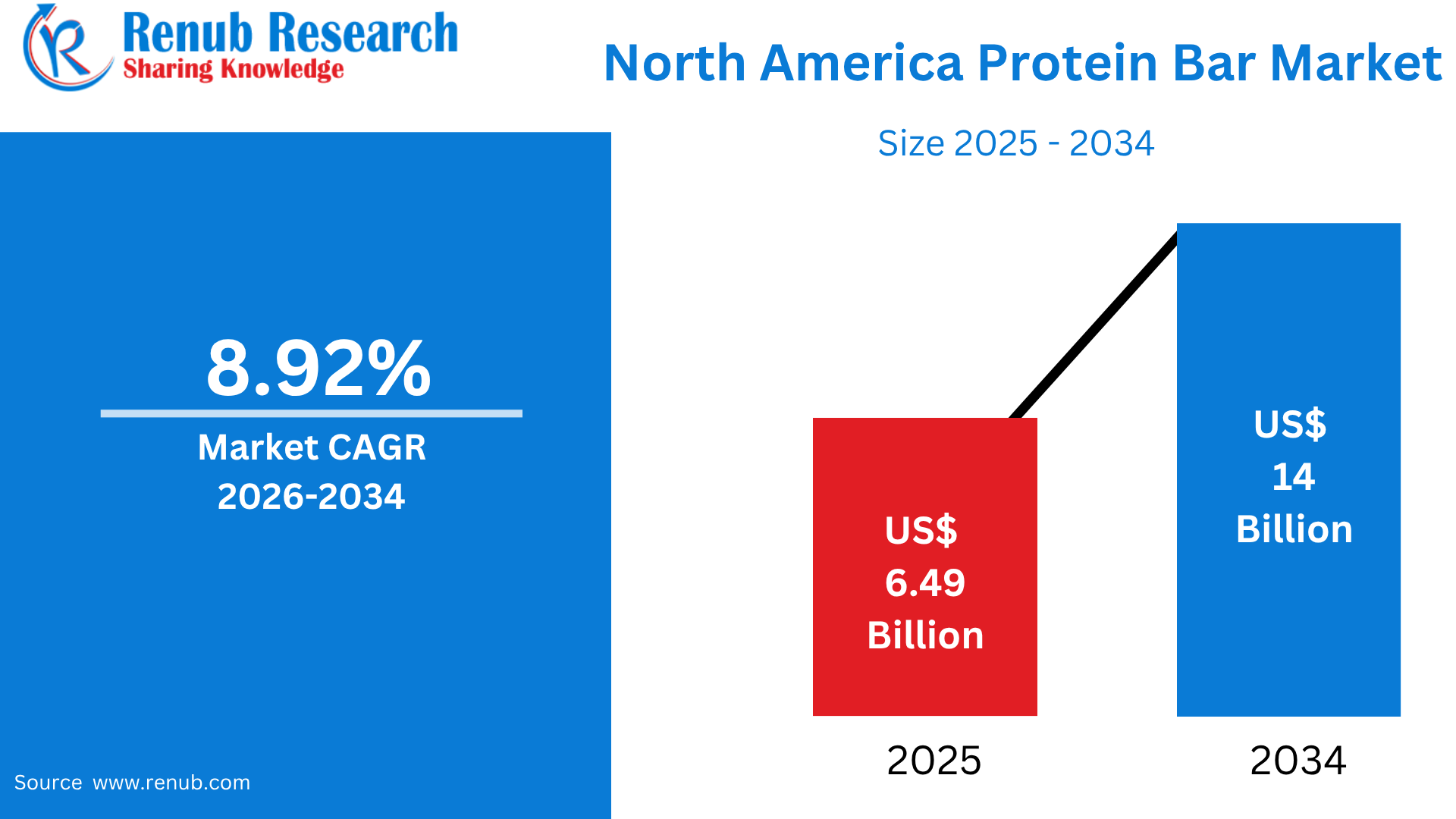
North America protein bar market is projected to grow from US$ 6.49 billion in 2025 to US$ 14.00 billion by 2034, registering a CAGR of 8.92% during 2026–2034. Market growth is being driven by increasing consumer demand for high-protein, convenient, and on-the-go nutrition, along with rising participation in fitness and wellness activities. Product innovation, expanding retail and e-commerce availability, and the growing popularity of functional snacks are further supporting market expansion. In addition, clean-label ingredients, healthier formulations, meal-replacement products, and performance-focused nutrition are attracting both fitness enthusiasts and mainstream consumers.
What is a Protein Bar and Its Uses & Popularity in North America?
A protein bar is a convenient nutritional snack formulated with concentrated protein sources such as whey, milk, soy, pea, or other plant-based proteins, along with ingredients including nuts, grains, seeds, fiber, sweeteners, and flavorings. Protein bars are designed to provide a convenient source of protein and energy and are available in various formulations targeting fitness, weight management, meal replacement, and general wellness. They are commonly consumed before or after workouts, between meals, during travel, and as a quick breakfast or snack. In North America, protein bars have gained significant popularity because of growing interest in fitness, healthy lifestyles, convenient nutrition, and high-protein diets.
Consumers increasingly seek products that combine nutritional benefits with portability and appealing flavors. The market is also benefiting from innovations such as low-sugar, high-fiber, clean-label, organic, keto-friendly, gluten-free, and plant-based protein bars. Expanding availability through supermarkets, convenience stores, gyms, pharmacies, and e-commerce platforms has further improved consumer access. Growing mainstream adoption of performance nutrition and increasing demand for convenient meal-replacement options are expected to sustain the popularity of protein bars across North America.
U.S. Population Participating in Sports and Exercise Daily (2020–2023)
- 2020: Overall daily participation reached 23.4%. Men recorded 24.2%, while women accounted for 22.6%.
- 2021: Overall participation declined to 21.5%, with 23.4% of men and 19.6% of women participating daily.
- 2022: Daily participation decreased further to 20.1% overall. Participation stood at 21.2% among men and 19.1% among women.
- 2023: Overall participation increased slightly to 21.1%, while 22.4% of men and 19.9% of women participated in sports and exercise daily.
- Overall trend: Daily participation peaked at 23.4% in 2020, declined through 2022, and showed a moderate recovery in 2023. Men consistently recorded higher daily participation than women throughout 2020–2023.
USA Fitness Statistics 2023
- Just one in five US adults exercises each day.
- More men meet the national standards for exercise, 26.3% vs 18.8%.
- People aged between 18 and 34 years old are the most likely to be gym goers.
- More than three-quarters of children in the US are active for less than the recommended 60 minutes each day.
- Colorado is the US state that exercises the most, with the population of Mississippi working out the least.
- The home fitness market in the US is valued at $11.3 billion, and growing year on year.
- 1 in 4 adults around the world don’t meet the globally recommended physical activity levels.
Fitness Industry Statistics for Canadians
- The global health and fitness industry is worth around $6.3 trillion.
- The Canadian market for gyms and health & fitness clubs was around $5.8 billion in 2025.
- 60% of Canadians say they do at least 30 minutes of exercise every day, with only 6% saying they get no physical exercise at all.
- 75% of Canadians say finding the time to exercise is their biggest obstacle to being more physically active.
- 22% of Canadians say they dislike working out and 29% admit they are too lazy to exercise regularly.
- 73% of Canadians say they prefer to exercise on their own rather than in a gym or group setting.
- Around 21% of Canadians had a gym membership in 2025.
- Ontario has the most fitness establishments in Canada with over 1,700 health and fitness facilities in the province.
Growth Drivers of the North America Protein Bar Market
Rising Demand for High-Protein and Convenient Nutrition
Increasing consumer interest in high-protein diets is a major growth driver for the North America protein bar market. Protein has become an important component of fitness, weight management, and everyday wellness, encouraging consumers to choose convenient protein-rich snacks. In the United States, more than 40% of adults aged 20 and above are classified as obese, increasing demand for healthier and portion-controlled food options. Protein bars provide a portable alternative to traditional snacks and can be consumed during work, travel, or exercise. The growing popularity of strength training and fitness activities is also increasing demand for protein-focused products. Consumers are increasingly seeking bars containing 15–30 grams of protein per serving, while low-sugar and high-fiber formulations are gaining attention. In addition, busy lifestyles and increased participation in outdoor and recreational activities are strengthening demand for on-the-go nutrition. Protein bars are increasingly moving beyond the traditional sports-nutrition category and are being adopted by mainstream consumers seeking convenient sources of protein.
Growing Fitness Participation and Sports Nutrition Adoption
The expansion of fitness and wellness culture across the United States and Canada is significantly supporting protein bar consumption. According to industry estimates, more than 70 million Americans held memberships at fitness facilities in 2023, demonstrating the large consumer base interested in exercise and performance nutrition. Protein bars are widely used before and after workouts because they provide protein and energy in a portable format. The increasing popularity of strength training, running, cycling, recreational sports, and functional fitness is encouraging consumers to incorporate protein-rich snacks into their daily routines. At the same time, sports nutrition is becoming increasingly mainstream, with protein products no longer limited to professional athletes or bodybuilders. Younger consumers are particularly interested in products supporting muscle recovery, energy, and active lifestyles. Manufacturers are responding by introducing products with higher protein content, plant-based proteins, added fiber, electrolytes, and functional ingredients. Gyms, fitness centers, specialty nutrition stores, supermarkets, and e-commerce platforms are also expanding protein bar availability, strengthening consumer accessibility and supporting sustained market growth.
Product Innovation and Expansion of Retail & E-Commerce Channels
Continuous product innovation and expanding distribution networks are creating substantial opportunities for the North America protein bar market. Manufacturers are developing products that address diverse consumer preferences, including plant-based, organic, keto-friendly, gluten-free, low-sugar, high-fiber, and clean-label formulations. Plant-based protein is particularly important as consumers increasingly explore alternatives to conventional dairy and animal-derived ingredients. Companies are also experimenting with flavors, textures, functional ingredients, and different protein sources to differentiate products in a competitive market. E-commerce has further expanded consumer access to specialized protein bars and multipacks, while supermarkets, convenience stores, pharmacies, gyms, and club stores provide extensive physical distribution. According to the U.S. Department of Agriculture, e-commerce accounted for around 11% of U.S. retail food and beverage sales in 2023, highlighting the importance of digital channels. Subscription models and direct-to-consumer sales are also allowing brands to build recurring customer relationships. As manufacturers continue introducing differentiated formulations and retailers expand shelf space, product innovation and omnichannel distribution are expected to remain key market-growth catalysts.
Challenges of the North America Protein Bar Market
High Sugar Content and Concerns Over Processed Ingredients
Despite their health-oriented positioning, some protein bars contain relatively high levels of sugar, saturated fat, artificial sweeteners, and highly processed ingredients, creating challenges for market growth. Consumers are becoming more attentive to nutrition labels and increasingly prefer products with simple ingredient lists and limited added sugars. The U.S. Food and Drug Administration recommends limiting added sugar consumption to less than 10% of total daily calories, increasing scrutiny of products marketed as healthy snacks. Some protein bars may contain substantial amounts of sugar alcohols or alternative sweeteners that can cause digestive discomfort when consumed in large quantities. Additionally, the use of artificial flavors, preservatives, and highly processed protein ingredients can discourage clean-label-oriented consumers. Manufacturers therefore face pressure to balance taste, texture, protein content, shelf stability, and nutritional quality while maintaining competitive prices. Reformulating products with natural sweeteners, recognizable ingredients, and higher fiber can increase production costs. As consumers become more knowledgeable about nutrition, companies must ensure that protein bars deliver genuine nutritional value rather than relying solely on high-protein marketing claims.
Intense Competition and Premium Pricing
The North American protein bar market faces strong competition from protein shakes, ready-to-drink beverages, protein cookies, energy bars, nuts, yogurt, and other functional snacks. This wide range of alternatives makes consumer retention challenging and forces brands to continually innovate. Premium protein bars can also be relatively expensive compared with conventional snack products, limiting their adoption among price-sensitive consumers. Rising costs of protein isolates, nuts, cocoa, sweeteners, packaging, transportation, and labor can further increase manufacturing expenses and retail prices. Plant-based and specialty formulations may carry additional costs because of higher-quality ingredients and specialized processing requirements. Competition is particularly intense in the United States, where established food companies, sports-nutrition brands, private-label retailers, and emerging direct-to-consumer companies compete for shelf space and online visibility. Retailers also increasingly demand promotional discounts and competitive pricing, placing pressure on manufacturers’ margins. To remain competitive, companies need to offer differentiated nutritional benefits, attractive flavors, convenient packaging, and competitive pricing. Managing costs while maintaining product quality and brand differentiation will remain a significant challenge for market participants.
Protein Bar Launches in North America
- RXBAR High Protein – United States (2025): RXBAR launched its High Protein bar with 18 g of protein, six recognizable ingredients, plant-based formulation, and no artificial sweeteners.
- RXBAR Lemon Honey Cashew Butter – United States (2025): RXBAR introduced the Lemon Honey Cashew Butter Nut Butter & Oat Protein Bar, providing 10 g of protein and 18 g of whole grains per bar.
- ONE x Reese’s Layered Protein Bar – United States (2026): ONE launched a Reese’s-inspired Peanut Butter Chocolate Layered Protein Bar containing 18 g of protein, combining chocolate and peanut-butter flavors.
- JiMMYBAR! Creatine Collagen Protein Bar – United States (2026): JiMMYBAR! launched its Creatine Collagen Protein Bar in Strawberry and Blueberry Lemon flavors, combining creatine and collagen with real-fruit ingredients.
- FITCRUNCH Puff N’ Crunchy Protein Bars – United States (2026): FITCRUNCH introduced Puff N’ Crunchy, featuring a multi-texture format combining a soft marshmallow-like layer, crisp cookie base, chocolate coating, and crunchy finish.
- Grenade Creme Egg-Inspired Protein Bar – Canada (2026): Grenade launched a limited-edition Creme Egg-inspired protein bar nationally across Canada, featuring a chocolate coating, soft protein dough, and gooey protein-filled center.
- David Protein Bar – United States (2024): David, founded by RXBAR co-founder Peter Rahal, entered the market with high-protein, low-calorie bars designed around 28 g of protein and 160 calories per bar.
- RXBAR Vegan High Protein Bars – United States (2026): RXBAR expanded its portfolio with plant-based high-protein bars using pea protein and peanuts, delivering approximately 18 g of protein per bar.
- Beyond Protein Bar – United States (2026): Beyond announced expansion into plant-based snacks, including a protein bar planned for summer 2026, as part of its broader shift toward plant-based protein products.
- Doritos Protein – United States (2026): PepsiCo introduced Doritos Protein tortilla-style chips with 10 g of protein per one-ounce serving, expanding the brand into the high-protein snack category.
Rising Demand for Convenient Energy and Nutrition in North America
North America energy protein bar market is expanding as consumers increasingly seek convenient products that provide both protein and sustained energy. Energy protein bars typically combine 10–25 grams of protein with carbohydrates, fats, fiber, and functional ingredients to support active lifestyles. Growing participation in fitness, running, cycling, hiking, and recreational sports is increasing demand for these products. In the United States, more than 70 million people were members of fitness facilities in 2023, highlighting the large addressable consumer base for sports and performance nutrition. Energy protein bars are also increasingly consumed by non-athletes because of their portability and convenience. Manufacturers are introducing formulations with nuts, oats, whey protein, plant proteins, electrolytes, caffeine, and natural sweeteners. Low-sugar and clean-label products are gaining popularity as consumers become more attentive to nutritional quality. Convenience stores, supermarkets, gyms, and online retailers are expanding product availability. Increasing demand for on-the-go breakfast and snacks, combined with growing interest in protein-rich nutrition, is expected to support continued expansion of the energy protein bar segment across North America.
North America Growing Preference for Convenient Meal Alternatives Drives
North America meal replacement bars market is benefiting from busy lifestyles, increasing health awareness, and growing demand for convenient alternatives to conventional meals. Meal replacement bars generally provide a combination of protein, carbohydrates, fats, fiber, vitamins, and minerals, making them suitable for consumers seeking portion-controlled nutrition. Products commonly contain approximately 10–20 grams of protein per serving, although formulations vary considerably. Urban professionals, students, travelers, and consumers following weight-management programs are important users of meal replacement products. The increasing popularity of calorie-conscious diets is also encouraging consumers to choose nutritionally balanced bars as alternatives to high-calorie snacks or fast food. Manufacturers are introducing products with lower sugar, higher fiber, plant-based protein, and functional ingredients to attract health-conscious consumers. The growing availability of meal replacement bars through supermarkets, pharmacies, club stores, gyms, and e-commerce platforms is improving accessibility. In addition, the increasing acceptance of convenient nutrition products among mainstream consumers is expanding the market beyond traditional weight-management applications. Product innovation and changing eating habits are expected to remain important growth factors for this segment.
Increasing Adoption of Plant-Based Nutrition
North America plant protein bar market is gaining momentum as consumers increasingly seek plant-based, sustainable, and allergen-conscious nutritional products. Plant protein bars commonly use pea, soy, rice, hemp, chickpea, and other plant-derived proteins. Pea and soy proteins are particularly attractive because of their relatively high protein content and functional properties. Growing interest in vegetarian and vegan diets is supporting demand, while flexitarian consumers are also increasingly incorporating plant-based foods into their diets. Plant protein bars generally provide around 10–20 grams of protein per serving, depending on formulation and positioning. Manufacturers are improving taste, texture, amino-acid profiles, and nutritional quality to address traditional consumer concerns associated with plant proteins. Clean-label ingredients, organic certification, non-GMO positioning, and reduced sugar content are further strengthening product appeal. Sustainability is another important factor, as consumers increasingly consider the environmental impact of food production when making purchasing decisions. Supermarkets, specialty health stores, gyms, and online retailers are expanding their plant-based protein selections. Continued innovation and mainstream acceptance of plant-based nutrition are expected to drive the segment’s growth across North America.
Expanding Beyond Performance Nutrition
North America low protein content bar market is developing as protein bars increasingly target consumers who want convenient snacks rather than specialized sports nutrition. These products generally contain less than 10 grams of protein per serving and may emphasize energy, fiber, natural ingredients, taste, or portion control rather than maximum protein content. The segment appeals to consumers who want lighter snacks between meals, including office workers, students, travelers, and casual wellness consumers. Growing consumer interest in healthier snacking is encouraging manufacturers to develop bars with 100–200 calories per serving, reduced added sugar, whole grains, nuts, seeds, and fruit-based ingredients. Low-protein bars can also appeal to consumers who obtain sufficient protein from regular meals and do not specifically require high-protein supplementation. The category faces competition from granola bars, cereal bars, fruit-and-nut snacks, and snack bites. However, increasing demand for convenient portion-controlled foods is supporting its development. Retailers are expanding shelf space for better-for-you snacks, while manufacturers are introducing multiple flavors and nutritional profiles. As protein bars become increasingly mainstream, the low-protein segment is expected to maintain demand among general snack consumers.
E-Commerce Expanding Consumer Accessibility for Protein Bar
North America protein bar online retail store market is growing rapidly as consumers increasingly purchase nutritional products through e-commerce platforms. Online channels provide access to a broad range of products, including high-protein, plant-based, keto, organic, gluten-free, low-sugar, and meal replacement bars, allowing consumers to compare nutritional information, prices, flavors, and customer reviews before purchasing. The U.S. e-commerce market generated more than US$1 trillion in retail sales in 2022, demonstrating the substantial scale of online shopping and the opportunity for nutritional brands. Protein bars are particularly suitable for online sales because they are packaged, shelf-stable, lightweight, and frequently purchased in multipacks. Subscription services and recurring-delivery models can also encourage repeat purchases and improve customer retention. Brands are increasingly using direct-to-consumer websites, online marketplaces, social media, and digital advertising to reach targeted consumer groups. Discounts on bulk purchases and promotional campaigns further encourage online purchasing. However, shipping costs, intense competition, and dependence on digital visibility remain challenges. Continued growth in online grocery shopping and consumer preference for convenient home delivery are expected to strengthen the online protein bar retail segment across North America.
United States Fitness Culture and Broad Product Adoption
United States protein bar market is the largest and most developed market in North America, supported by a strong fitness culture, high consumer spending power, and increasing adoption of protein-rich diets. Protein bars are consumed for multiple purposes, including post-workout recovery, meal replacement, weight management, and convenient snacking. More than 70 million Americans were members of fitness facilities in 2023, highlighting the country’s substantial consumer base for sports and wellness nutrition. Retail availability is extensive, with products sold through supermarkets, convenience stores, pharmacies, gyms, specialty nutrition stores, and e-commerce platforms. U.S. consumers also demonstrate strong interest in innovative flavors, textures, ingredients, and functional benefits, encouraging manufacturers to frequently introduce new products. Demand is expanding beyond traditional athletes toward mainstream consumers seeking high-protein and better-for-you snacks. Major brands, private-label manufacturers, celebrity-backed companies, and direct-to-consumer businesses contribute to intense competition and innovation. Growing demand for low-sugar, clean-label, plant-based, high-fiber, and functional protein bars is further supporting market development, positioning the United States as a major global center for protein bar innovation.
Growing Demand for Clean-Label and Functional Nutrition in Canada
Canada protein bar market is expanding steadily as consumers become increasingly focused on health, fitness, and convenient nutrition. Protein bars are widely used for exercise recovery, active lifestyles, weight management, and between-meal snacking, particularly among younger consumers and urban professionals. Canada’s strong interest in healthy eating is encouraging demand for products featuring clean-label ingredients, reduced sugar, higher fiber, and recognizable nutritional components. Plant-based protein formulations are also gaining attention as consumers increasingly explore vegetarian, vegan, and flexitarian diets. Products containing pea, soy, and other plant-derived proteins are being introduced alongside conventional whey- and milk-protein formulations. Retail distribution continues to expand through supermarkets, pharmacies, health-food stores, gyms, convenience outlets, and online platforms. Canadian consumers also show increasing interest in environmentally responsible packaging and sustainably sourced ingredients, encouraging manufacturers to strengthen their sustainability strategies. International brands are expanding their presence, while domestic manufacturers are introducing localized flavors and differentiated nutritional formulations. As awareness of protein-rich diets and functional snacks increases, the Canadian market is expected to maintain steady long-term growth.
Rising Fitness Participation and Demand for Convenient Snacks in Mexico
Mexico protein bar market is experiencing increasing demand as fitness participation, health awareness, and interest in convenient nutrition continue to expand. Protein bars are becoming more popular among consumers involved in bodybuilding, recreational sports, gym activities, and weight-management programs. Urbanization and increasingly busy lifestyles are also encouraging younger consumers and working professionals to seek portable alternatives to traditional snacks and meals. The influence of social media, international fitness trends, and global nutrition brands is increasing awareness of protein’s role in muscle development, recovery, and satiety. Manufacturers are responding by introducing products with different protein levels, flavors, portion sizes, and price points to appeal to Mexico’s diverse consumer base. However, price sensitivity and lower purchasing power compared with the United States and Canada remain important market considerations. Companies are therefore increasingly offering affordable formulations and smaller pack sizes. Distribution is expanding through supermarkets, convenience stores, pharmacies, fitness centers, specialty nutrition retailers, and e-commerce platforms. As consumer awareness of functional nutrition grows and modern retail penetration increases, Mexico is expected to become an increasingly important contributor to the North American protein bar market.
Recent Developments in North America Protein Bar Market
- January 2025: General Mills introduced a new plant-based protein bar range under the Lärabar brand, formulated with organic pea protein and adaptogens such as ashwagandha and lion’s mane mushroom. Priced at USD 3.49 per bar—about 40% higher than core Lärabar products—the line targets the functional wellness segment and leverages the brand’s established distribution across both natural and conventional retail channels, supporting General Mills’ premiumization strategy.
- November 2024: Simply Good Foods Company invested USD 45 million to add a new production line at its Monterrey, Mexico facility, boosting annual manufacturing capacity by 30%. The expansion improves the company’s ability to meet rising demand in Mexico while taking advantage of USMCA tariff benefits for exports to the U.S. and Canada, reducing landed costs and strengthening gross margins on cross-border shipments.
- September 2024: PepsiCo’s Quaker Oats division partnered with Glanbia Performance Nutrition to co-develop oat-based protein bars utilizing Glanbia’s whey isolate technology. The collaboration merges Quaker’s expertise in oats with Glanbia’s protein formulation strengths, creating products positioned at the intersection of whole-grain nutrition and high-protein functionality. The line is designed to appeal to mainstream consumers seeking clean-label, affordable protein alternatives outside specialty channels.
North America Protein Bar Market Segments
Product Type
- Energy Protein Bars
- Women's Protein Bar
- Meal Replacement Bars
- Low Carbohydrate Protein Bars
Protein Source
- Plant Protein
- Animal Protein
Protein Content
- Low Protein Content
- Medium Protein Content
- High Protein Content
Distribution Channel
- Convenience Store
- Online Retail Store
- Supermarket/Hypermarket
- Others
Country
- Canada
- Mexico
- United States
- Rest of North America
All companies have been covered with 5 Viewpoints
- Overviews
- Key Person
- Recent Developments
- SWOT Analysis
- Revenue Analysis
Key Players Analysis
- Agropur Dairy Cooperative
- Archer Daniels Midland Company
- Arla Foods amba
- Bunge Limited
- CHS Inc.
- Darling Ingredients Inc.
- Farbest-Tallman Foods Corporation
- Fonterra Co-operative Group Limited
- Gelita AG
- International Flavors & Fragrances Inc
Report Details:
| Report Features | Details |
| Base Year |
2024 |
| Historical Period |
2020 - 2024 |
| Forecast Period |
2025 - 2033 |
| Market |
US$ Billion |
| Segment Covered |
By Product Type, By Protein Source, By Protein Content, By Distribution Channel and By Country |
| Countries Covered |
|
| Companies Covered |
|
| Customization Scope |
20% Free Customization |
| Post-Sale Analyst Support |
1 Year (52 Weeks) |
| Delivery Format |
PDF and Excel through Email (We can also provide the editable version of the report in PPT/Word format on request) |
Customization Services available
- Analysis of Market Size and Its Segments
- More Company Profiles (Upto 10 without any additional cost):
- Additional Countries (Other than mentioned Countries):
- Region/Country Specific Reports:
- Market Entry Strategy:
- Region-Specific Market Dynamics:
- Regional Market Share Analysis:
- Trade Analysis:
- Production Insights:
- Others Customized Requests:
For more information contact our analysts.
Need More Assistance?
- Talk to our analysts to get more precious information on the current market trends.
- Include more countries and segments and customize the report based on the final requirement.
- Get a competitive advantage in your industry by knowing the report findings and making a positive impact on your revenues and operations.
- Our analysts are always ready to provide more help and pertinent information if you need any additional assistance.