North America Balloon Catheter Market Report by Product Type, Indication, Raw Material, End Users, Countries and Companies Analysis 2026-2034
Buy NowNorth America Balloon Catheter Market Size and Forecast
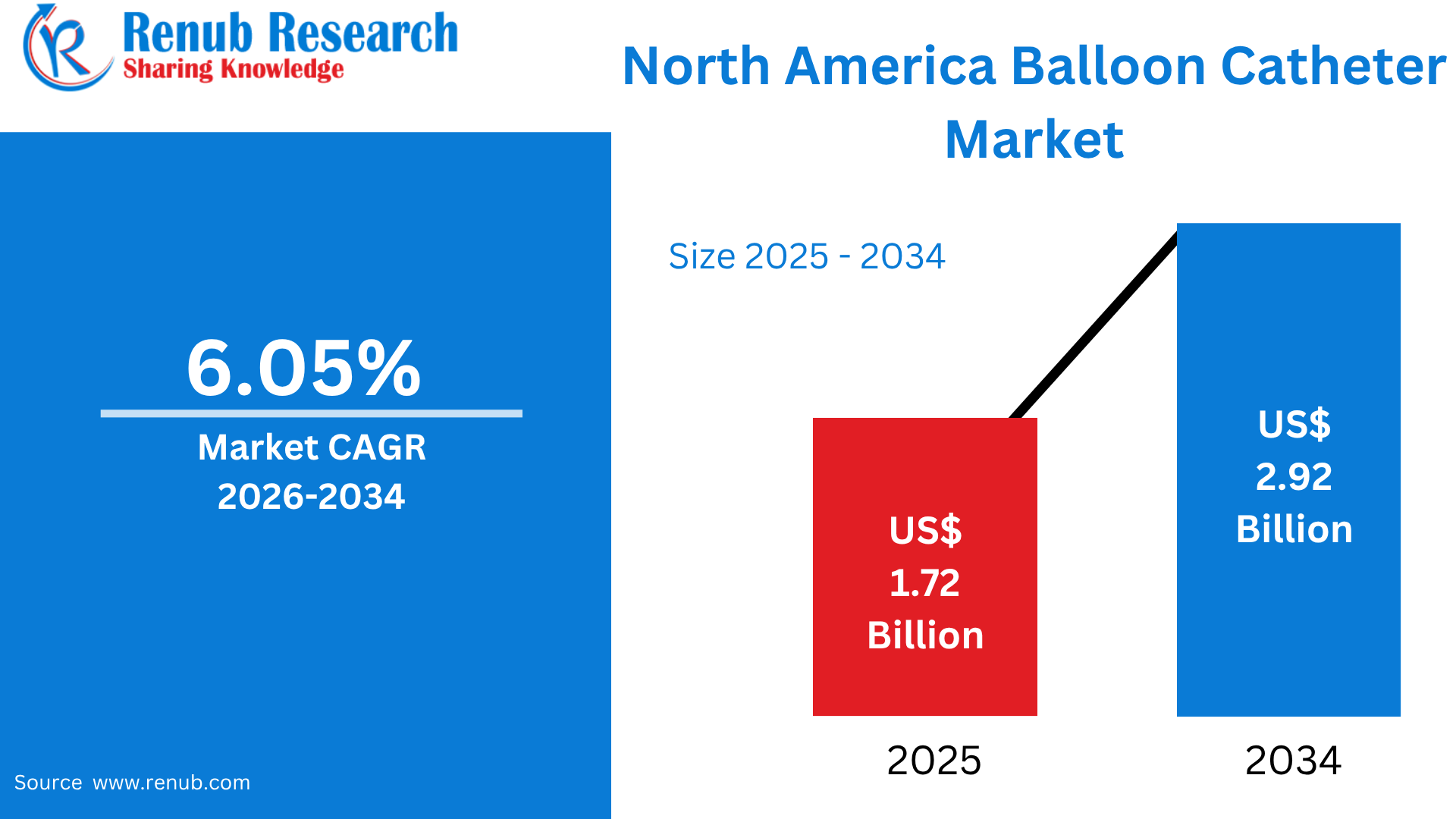
North America Balloon Catheter Market is projected to grow from US$ 1.72 billion in 2025 to US$ 2.92 billion by 2034, registering a CAGR of 6.05% during the forecast period from 2026 to 2034. The market is expected to witness steady expansion, supported by the increasing prevalence of cardiovascular diseases and the rising adoption of minimally invasive cardiovascular interventions. Technological advancements in balloon catheter design, improved catheter-based treatment techniques, and the development of specialized devices for complex vascular procedures are further strengthening market growth.
What is a Balloon Catheter and its Uses & Popularity in North America
A balloon catheter is a thin, flexible medical device consisting of a catheter shaft with an inflatable balloon attached to its tip. It is inserted through a blood vessel and guided to a narrowed or blocked area, where the balloon is inflated to widen the vessel and improve blood flow. Balloon catheters are commonly used in angioplasty, peripheral vascular interventions, coronary procedures, stent expansion, and treatment of vascular blockages. Specialized drug-coated balloon catheters can also deliver medication directly to the vessel wall to reduce the risk of restenosis. The FDA describes balloon angioplasty as a procedure that uses an inflatable balloon to open blocked or narrowed blood vessels.
Balloon catheters are popular in North America because they support minimally invasive treatment, which can reduce surgical trauma and recovery time compared with conventional open procedures. Recent approvals, including Boston Scientific’s AGENT Paclitaxel-Coated Balloon Catheter in 2024, also demonstrate continued technological development in the region.
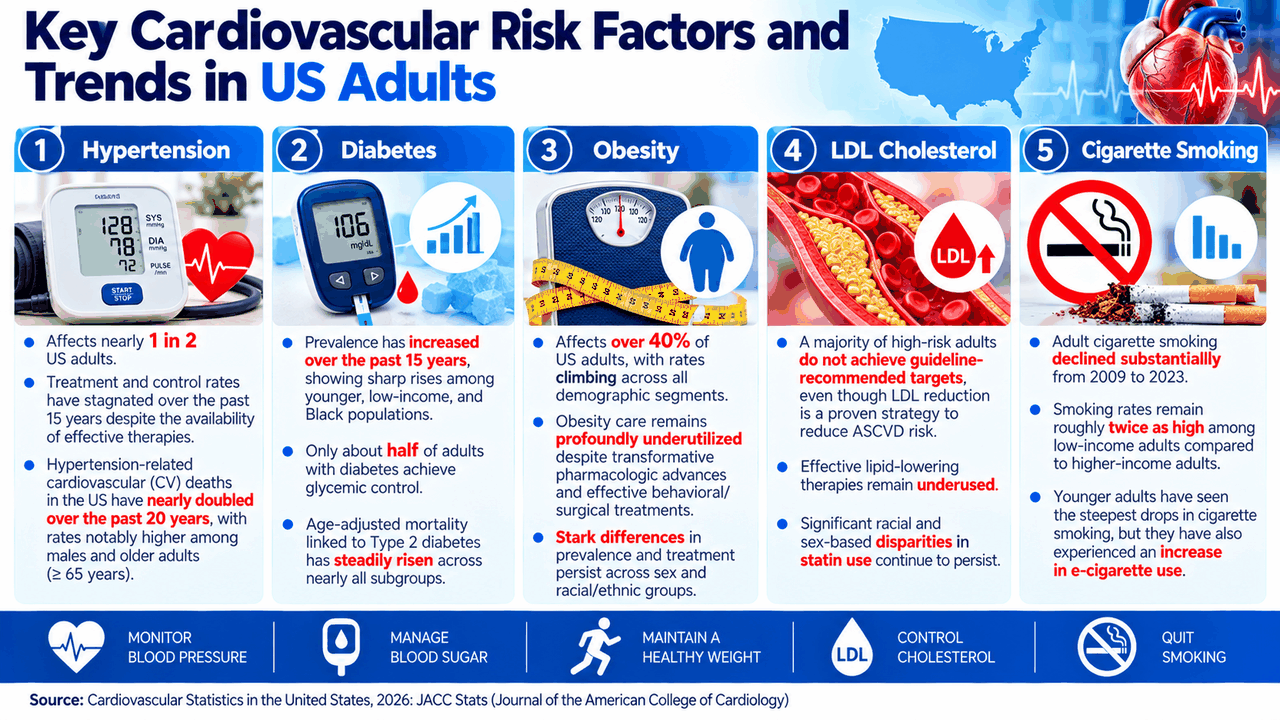
Key Cardiovascular Risk Factors and Trends in US Adults
Hypertension
- Affects nearly 1 in 2 US adults.
- Treatment and control rates have stagnated over the past 15 years despite the availability of effective therapies.
- Hypertension-related cardiovascular (CV) deaths in the US have nearly doubled over the past 20 years, with rates notably higher among males and older adults ($\ge 65$ years).
Diabetes
- Prevalence has increased over the past 15 years, showing sharp rises among younger, low-income, and Black populations.
- Only about half of adults with diabetes achieve glycemic control.
- Age-adjusted mortality linked to Type 2 diabetes has steadily risen across nearly all subgroups.
Obesity
- Affects over 40% of US adults, with rates climbing across all demographic segments.
- Obesity care remains profoundly underutilized despite transformative pharmacologic advances and effective behavioral/surgical treatments.
- Stark differences in prevalence and treatment persist across sex and racial/ethnic groups.
LDL Cholesterol
- A majority of high-risk adults do not achieve guideline-recommended targets, even though LDL reduction is a proven strategy to reduce ASCVD risk.
- Effective lipid-lowering therapies remain underused.
- Significant racial and sex-based disparities in statin use continue to persist.
Cigarette Smoking
- Adult cigarette smoking declined substantially from 2009 to 2023.
- Smoking rates remain roughly twice as high among low-income adults compared to higher-income adults.
- Younger adults have seen the steepest drops in cigarette smoking, but they have also experienced an increase in e-cigarette use.
Source: Cardiovascular Statistics in the United States, 2026: JACC Stats (Journal of the American College of Cardiology)
Growth Drivers of the North America Balloon Catheter Market
Rising Burden of Cardiovascular and Vascular Diseases
The increasing prevalence of cardiovascular and peripheral vascular disorders is a major factor driving demand for balloon catheters across North America. Balloon-based interventions are widely used to restore blood flow in narrowed or blocked arteries, particularly during coronary and peripheral angioplasty procedures. The region has a large and aging population with significant exposure to risk factors such as hypertension, diabetes, obesity, high cholesterol, and sedentary lifestyles. The expanding patient population requiring vascular interventions therefore creates a substantial addressable market for angioplasty and specialty balloon devices. Drug-coated balloons are also gaining importance because they combine mechanical vessel opening with localized drug delivery. For example, the FDA approved Boston Scientific’s AGENT Paclitaxel-Coated Balloon Catheter in February 2024 for treating coronary in-stent restenosis.
Increasing Preference for Minimally Invasive Procedures
The growing preference for minimally invasive cardiovascular interventions is another important growth driver for the North American balloon catheter market. Balloon angioplasty enables physicians to treat vascular blockages through catheter-based procedures rather than conventional open surgery. Patients and healthcare providers increasingly value minimally invasive approaches because they can reduce surgical trauma, shorten hospitalization, and support faster recovery in appropriately selected cases. Market research identifies the minimally invasive nature of balloon catheter procedures as an important factor supporting demand in North America. Balloon catheters are used across coronary, peripheral, and other vascular interventions, with different balloon sizes and designs developed for specific lesion characteristics. The FDA’s device classification describes balloon catheters as devices that use mechanical force across a lesion to establish vessel patency, while drug-coated versions can help maintain vessel openness after treatment. Continued adoption of catheter-based interventions, expansion of interventional cardiology facilities, and physician familiarity with these procedures are expected to support market expansion. Additionally, growing investment in outpatient and ambulatory cardiovascular care can create further opportunities for less invasive catheter-based treatment technologies.
Technological Advancements and Drug-Coated Balloon Innovation
Continuous innovation in balloon catheter technology is creating new opportunities for market growth in North America. Manufacturers are developing specialized balloons with improved flexibility, deliverability, lesion-crossing capabilities, pressure performance, and drug-delivery systems. Drug-coated balloons are particularly important because they can deliver an antiproliferative drug directly to the treated vessel without leaving a permanent implant at the treatment site. In June 2023, the FDA approved the SurVeil Drug-Coated Balloon for reopening blocked or narrowed arteries in the thigh and knee caused by peripheral artery disease; the device demonstrated 82.2% artery patency at 12 months in its evaluation. The FDA subsequently approved the AGENT Paclitaxel-Coated Balloon Catheter in February 2024 for coronary in-stent restenosis. Its clinical evaluation involved 600 patients, and the device demonstrated a reduction in major clinical outcomes compared with uncoated balloon treatment. Such technological developments expand the applications of balloon catheters and encourage healthcare providers to adopt newer-generation products. Ongoing research into coatings, materials, drug delivery, and catheter design is therefore expected to remain a significant market catalyst.
Challenges of the North America Balloon Catheter Market
High Product Costs and Healthcare Reimbursement Pressure
High device costs and reimbursement complexities can restrict the adoption of advanced balloon catheter technologies, particularly drug-coated and specialty balloons. These products require sophisticated manufacturing processes, specialized materials, drug coatings, quality testing, clinical evidence, and regulatory compliance, all of which can increase development and commercial costs. Hospitals and healthcare systems must balance the clinical benefits of advanced devices against procedure budgets and reimbursement levels. North America’s healthcare environment also involves complex payment structures involving government programs, private insurers, hospitals, and ambulatory facilities. Consequently, differences in reimbursement policies can influence physicians’ and healthcare providers’ decisions regarding adoption of premium catheter technologies. The challenge becomes more significant when newer devices compete with established angioplasty balloons or alternative vascular interventions. FDA guidance also emphasizes extensive testing requirements for balloon catheters, including balloon fatigue, coating integrity, radiopacity, and repeated inflation performance, adding to development and compliance requirements. Manufacturers therefore need to demonstrate clear clinical and economic value to support adoption. Cost optimization, stronger clinical evidence, efficient manufacturing, and favorable reimbursement coverage will remain important for sustaining growth in the North American market.
Regulatory and Clinical Safety Requirements
Stringent regulatory requirements and the need to demonstrate long-term safety and effectiveness represent another challenge for balloon catheter manufacturers in North America. Because balloon catheters are used directly within blood vessels, failures involving balloon inflation, catheter delivery, coating integrity, vessel injury, thrombosis, or restenosis can have serious clinical consequences. The FDA requires manufacturers to provide evidence covering device performance, materials, coatings, visibility under fluoroscopy, and mechanical durability. For example, FDA guidance recommends testing PTCA balloons through repeated inflation cycles and evaluating potential loss of pressure or device failure. Drug-coated balloon manufacturers face additional requirements related to drug coating consistency, stability, delivery, and clinical outcomes. Even after approval, some devices remain subject to post-market surveillance and follow-up studies. The FDA’s AGENT program, for example, includes an ongoing post-approval study assessing safety and effectiveness in patients with coronary in-stent restenosis. These regulatory and clinical requirements can lengthen development timelines, increase R&D expenditure, and delay commercialization. Manufacturers must therefore maintain strong quality-control systems and generate robust clinical evidence to successfully compete in the North American market.
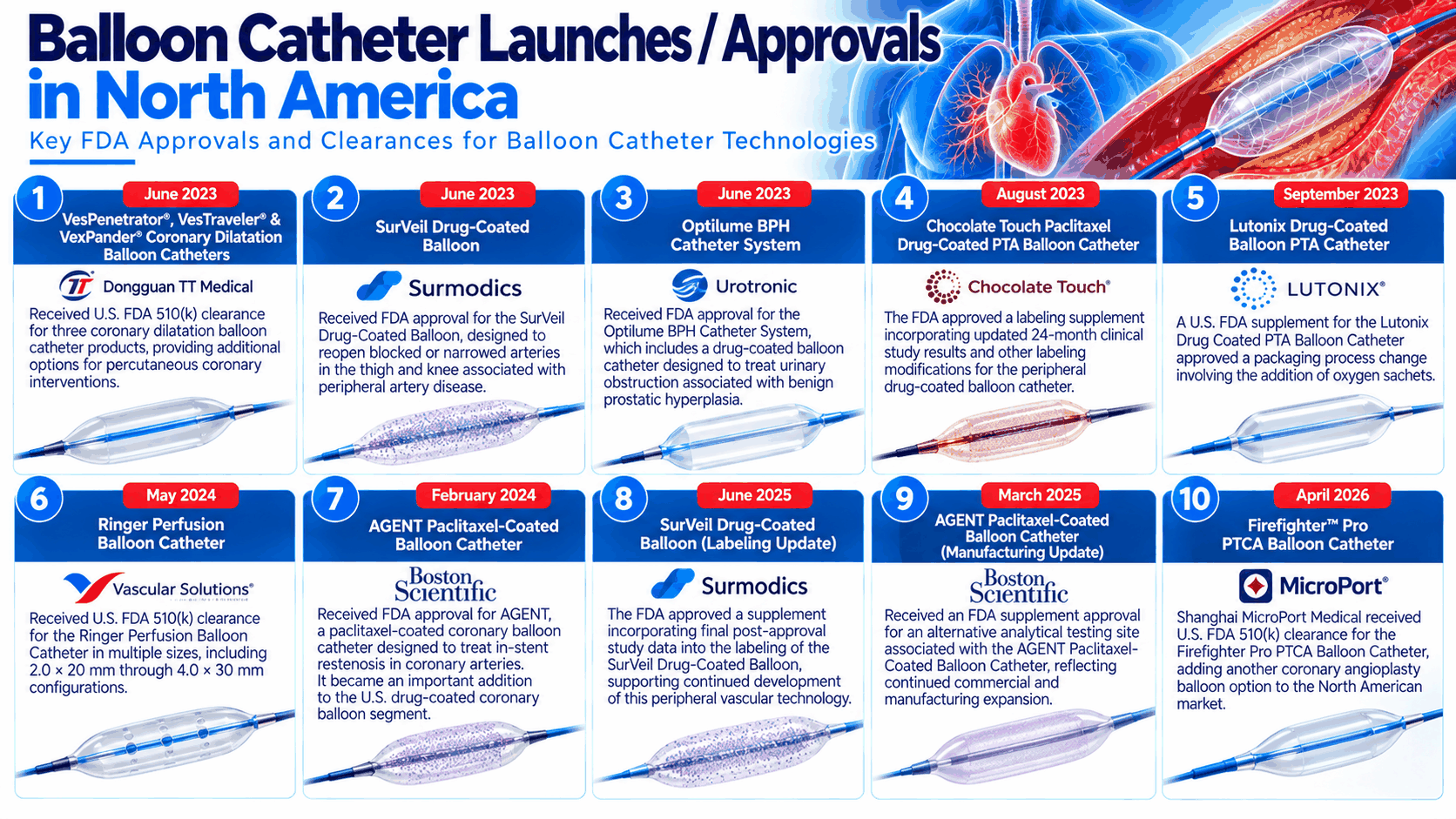
Balloon Catheter Launches / Approvals in North America
- VesPenetrator®, VesTraveler® & VexPander® Coronary Dilatation Balloon Catheters – June 2023: Dongguan TT Medical received U.S. FDA 510(k) clearance for its three coronary dilatation balloon catheter products, providing additional options for percutaneous coronary interventions.
- SurVeil Drug-Coated Balloon – June 2023: Surmodics received FDA approval for the SurVeil Drug-Coated Balloon, designed to reopen blocked or narrowed arteries in the thigh and knee associated with peripheral artery disease.
- Optilume BPH Catheter System – June 2023: Urotronic received FDA approval for the Optilume BPH Catheter System, which includes a drug-coated balloon catheter designed to treat urinary obstruction associated with benign prostatic hyperplasia.
- Chocolate Touch Paclitaxel Drug-Coated PTA Balloon Catheter – August 2023: The FDA approved a labeling supplement for Chocolate Touch, incorporating updated 24-month clinical study results and other labeling modifications for the peripheral drug-coated balloon catheter.
- Lutonix Drug-Coated Balloon PTA Catheter – September 2023: A U.S. FDA supplement for the Lutonix Drug Coated PTA Balloon Catheter approved a packaging process change involving the addition of oxygen sachets.
- Ringer Perfusion Balloon Catheter – May 2024: Vascular Solutions received U.S. FDA 510(k) clearance for the Ringer Perfusion Balloon Catheter in multiple sizes, including 2.0 × 20 mm through 4.0 × 30 mm configurations.
- AGENT Paclitaxel-Coated Balloon Catheter – February 2024: Boston Scientific received FDA approval for AGENT, a paclitaxel-coated coronary balloon catheter designed to treat in-stent restenosis in coronary arteries. It became an important addition to the U.S. drug-coated coronary balloon segment.
- SurVeil Drug-Coated Balloon – June 2025 Labeling Update: The FDA approved a supplement incorporating final post-approval study data into the labeling of the SurVeil Drug-Coated Balloon, supporting continued development of this peripheral vascular technology.
- AGENT Paclitaxel-Coated Balloon Catheter – March 2025 Manufacturing Update: Boston Scientific received an FDA supplement approval for an alternative analytical testing site associated with the AGENT Paclitaxel-Coated Balloon Catheter, reflecting continued commercial and manufacturing expansion.
- Firefighter™ Pro PTCA Balloon Catheter – April 2026: Shanghai MicroPort Medical received U.S. FDA 510(k) clearance for the Firefighter Pro PTCA Balloon Catheter, adding another coronary angioplasty balloon option to the North American market.
Dominant Position in Routine Vascular Interventions in North America
North America normal balloon catheter market remains an important segment because these devices are widely used for routine vessel dilation during coronary and peripheral interventions. Normal balloon catheters mechanically expand narrowed or blocked vessels and are available in different sizes, pressure ratings, and compliance characteristics. In 2024, the normal balloon catheter segment accounted for approximately 38.9% of North America’s balloon catheter market revenue, making it the largest product-type segment in one industry assessment. Their established clinical use, broad availability, comparatively straightforward design, and compatibility with established angioplasty procedures support continued demand. Normal balloons are also used for lesion preparation and, in selected procedures, post-dilation after stent placement. Growth is further supported by an aging population, cardiovascular disease burden, and increasing use of minimally invasive procedures. However, advanced drug-eluting, scoring, and cutting balloons are creating competitive pressure in specialized applications.
Rapid Adoption of Drug-Based Vessel Treatment in North America
Drug-eluting balloon catheters are gaining importance in North America because they combine mechanical vessel expansion with localized delivery of antiproliferative medication. Unlike conventional balloons, these devices are coated with drugs that are transferred to the vessel wall during inflation, making them particularly attractive for selected restenosis and peripheral vascular applications. Another assessment similarly identifies drug-eluting balloons as a rapidly expanding category as physicians seek alternatives for situations where permanent stent implantation may not be desirable. The U.S. regulatory environment has also strengthened the segment through recent product approvals. The FDA approved Boston Scientific’s AGENT Paclitaxel-Coated Balloon Catheter in 2024 for coronary in-stent restenosis, demonstrating growing clinical adoption of drug-coated technology. Continued innovation in drug coatings, balloon delivery, lesion preparation, and clinical applications is expected to support the segment. Increasing awareness of restenosis management and demand for less permanent interventions will further create opportunities for manufacturers across North America.
Strong Demand from Coronary Interventions in North America
The coronary artery disease balloon catheter market represents a major application area for balloon catheter technologies in North America. Balloon catheters are used during percutaneous coronary interventions to open narrowed coronary arteries, prepare lesions, expand vessels, and support stent deployment. The substantial disease burden across the United States and Canada creates sustained demand for catheter-based coronary procedures. Balloon technologies are particularly valuable because they allow physicians to treat vascular obstruction through minimally invasive approaches rather than open surgery. Product innovation is also expanding treatment possibilities, particularly through non-compliant balloons, scoring balloons, cutting balloons, and drug-coated balloons. The FDA’s 2024 approval of the AGENT paclitaxel-coated balloon for coronary in-stent restenosis further demonstrates the expansion of advanced coronary balloon technologies. Growing interventional cardiology capacity, an aging population, and improvements in catheter design are expected to maintain strong demand for coronary balloon catheters throughout the forecast period.
Material Innovation and Flexible Catheter Design in North America
Polyurethane is an important material used in balloon catheter manufacturing because its flexibility, elasticity, durability, and biocompatibility can support catheter performance in different medical applications. Polyurethane-based balloons can provide useful mechanical properties for navigating vessels and delivering controlled balloon inflation. The North American balloon catheter market is segmented by raw material into polyurethane, nylon, and other materials, reflecting the importance of material selection in catheter design. Demand for polyurethane balloons is supported by the increasing number of minimally invasive vascular procedures and continued efforts to improve catheter flexibility, trackability, and durability. Manufacturers are also investing in advanced polymer formulations and multilayer catheter construction to improve device performance. However, polyurethane products compete with nylon and other specialized polymers, meaning manufacturers must demonstrate clear advantages in flexibility, strength, biocompatibility, and manufacturing efficiency.
Hospitals Remain the Primary End-User Segment
Hospitals represent the most important end-user segment for balloon catheter products in North America because they perform a large proportion of complex cardiovascular, peripheral vascular, and interventional procedures. Balloon catheters are commonly used in cardiac catheterization laboratories, vascular intervention departments, operating rooms, and specialized interventional units. Hospitals benefit from advanced imaging systems, catheterization laboratories, specialist physicians, intensive care facilities, and established procurement systems, making them well positioned to adopt newer balloon catheter technologies. The expansion of minimally invasive cardiovascular treatment and increasing procedure volumes are supporting demand. Hospitals are also important purchasers of specialized products such as drug-eluting, scoring, cutting, and non-compliant balloons. At the same time, healthcare providers increasingly evaluate devices based on clinical outcomes, safety, durability, and cost-effectiveness. Growth in ambulatory surgical centers and specialty clinics may gradually diversify end-user demand, but hospitals are expected to retain their leading position in North America’s balloon catheter market.
Technological Innovation and High Cardiovascular Disease Burden in USA
United States represents the largest balloon catheter market in North America, supported by the high prevalence of cardiovascular and vascular diseases, including coronary artery disease and peripheral artery disease. Risk factors such as obesity, diabetes, hypertension, and high cholesterol contribute to the need for vascular interventions and catheter-based treatments. Balloon catheters are extensively used in angioplasty, lesion preparation, vessel dilation, and other minimally invasive procedures. The market is further strengthened by the country’s advanced healthcare infrastructure, extensive network of cardiac catheterization laboratories, specialized medical professionals, and strong adoption of innovative medical devices. Manufacturers are increasingly introducing drug-coated balloons, specialty balloons, and advanced catheter systems designed to improve deliverability, procedural precision, and treatment outcomes. The FDA’s approval of Boston Scientific’s AGENT Paclitaxel-Coated Balloon Catheter in 2024 for coronary in-stent restenosis demonstrates continued innovation in the U.S. market. Strong research and development capabilities, established reimbursement systems, and substantial healthcare spending are also supporting adoption. Despite stringent regulatory requirements and pricing pressures, continued investment in cardiovascular care is expected to sustain U.S. balloon catheter market growth.
Expanding Minimally Invasive Cardiovascular Treatment in Canada
Canada’s balloon catheter market is witnessing steady development, supported by the increasing need for cardiovascular interventions and growing preference for minimally invasive treatment options. Balloon catheters are used in coronary and peripheral vascular procedures to widen narrowed arteries and restore blood flow. Canada’s publicly funded healthcare system, advanced hospitals, specialized cardiac centers, and skilled healthcare workforce provide a favorable environment for the adoption of catheter-based technologies. The aging population is another important factor because older adults have a greater risk of cardiovascular and vascular conditions requiring intervention. Canadian healthcare providers are increasingly adopting advanced balloon technologies offering improved flexibility, trackability, pressure control, and localized drug delivery. Drug-coated balloons are also creating new opportunities in selected vascular applications by providing an alternative approach to treating restenosis and maintaining vessel patency. The development of outpatient and ambulatory treatment models can further improve procedural efficiency and reduce pressure on hospital resources. However, manufacturers face challenges related to healthcare procurement processes, pricing, reimbursement, and regulatory requirements. Continued modernization of cardiovascular care and increasing availability of specialized treatment centers are expected to support Canada’s balloon catheter market over the forecast period.
Healthcare Modernization Creates New Growth Opportunities in Mexico
Mexico is emerging as a promising market for balloon catheter technologies as cardiovascular disease becomes an increasingly important healthcare concern and access to specialized medical treatment improves. Growing prevalence of diabetes, obesity, hypertension, and other cardiovascular risk factors is increasing the need for coronary and peripheral vascular interventions. Balloon catheters are widely utilized in angioplasty and other minimally invasive procedures because they can restore blood flow without requiring conventional open surgery. Market development is being supported by investments in hospitals, private healthcare facilities, specialized cardiac centers, and medical technology infrastructure. The expansion of private healthcare providers is particularly important because these facilities can adopt advanced interventional technologies more rapidly and provide access to specialized cardiovascular procedures. Increasing awareness among physicians and patients regarding minimally invasive treatment is also encouraging adoption. Advanced products such as drug-coated balloons, specialty balloons, and high-pressure balloons offer additional opportunities as healthcare providers seek improved procedural outcomes. Nevertheless, disparities in healthcare access, limited availability of specialized facilities in some regions, device affordability, and regulatory complexities can restrict market penetration. Continued healthcare infrastructure development, medical training, and expansion of specialized cardiovascular services are expected to create long-term opportunities for balloon catheter manufacturers in Mexico.
North America Balloon Catheter Market Segmentation
Product Type
- Normal Balloon Catheter
- Drug Eluting Balloon Catheter
- Cutting Balloon Catheter
- Scoring Balloon Catheter
- Stent Graft Balloon Catheter
- Others
Indication
- Coronary Artery Disease
- Peripheral Vascular Disease
Raw Material
- Polyurethane
- Nylon
- Others
End Users
- Hospitals
- Clinics
- Ambulatory Surgical Centers
- Diagnostic Centers
Countries
- United States
- Canada
- Mexico
- Rest of North America
All companies have been covered with 5 Viewpoints
- Overviews
- Key Person
- Recent Developments
- SWOT Analysis
- Revenue Analysis
Key Players Analysis
- Abbott Laboratories
- Medtronic Plc.
- B.Braun Melsungen AG
- Terumo Corporation
- Cordis Corporation
- Becton Dickinson And Company
- Cardinal Health
- Stryker Corporation
Report Details:
| Report Features | Details |
| Base Year |
2025 |
| Historical Period |
2022 - 2025 |
| Forecast Period |
2026 - 2034 |
| Market |
US$ Billion |
| Segment Covered |
Product Type, Indication, Raw Material, End Users and Countries |
| Countries Covered |
|
| Companies Covered |
|
| Customization Scope |
20% Free Customization |
| Post-Sale Analyst Support |
1 Year (52 Weeks) |
| Delivery Format |
PDF and Excel through Email (We can also provide the editable version of the report in PPT/Word format on request) |
Customization Services available
- Analysis of Market Size and Its Segments
- More Company Profiles (Upto 10 without any additional cost):
- Additional Countries (Other than mentioned Countries):
- Region/Country Specific Reports:
- Market Entry Strategy:
- Region-Specific Market Dynamics:
- Regional Market Share Analysis:
- Trade Analysis:
- Production Insights:
- Others Customized Requests:
For more information contact our analysts.
Need More Assistance?
- Talk to our analysts to get more precious information on the current market trends.
- Include more countries and segments and customize the report based on the final requirement.
- Get a competitive advantage in your industry by knowing the report findings and making a positive impact on your revenues and operations.
- Our analysts are always ready to provide more help and pertinent information if you need any additional assistance.