Neurology Devices Market Report by Product, End Use, Countries and Companies Analysis 2026-2034
Buy NowNeurology Devices Market Size and Forecast
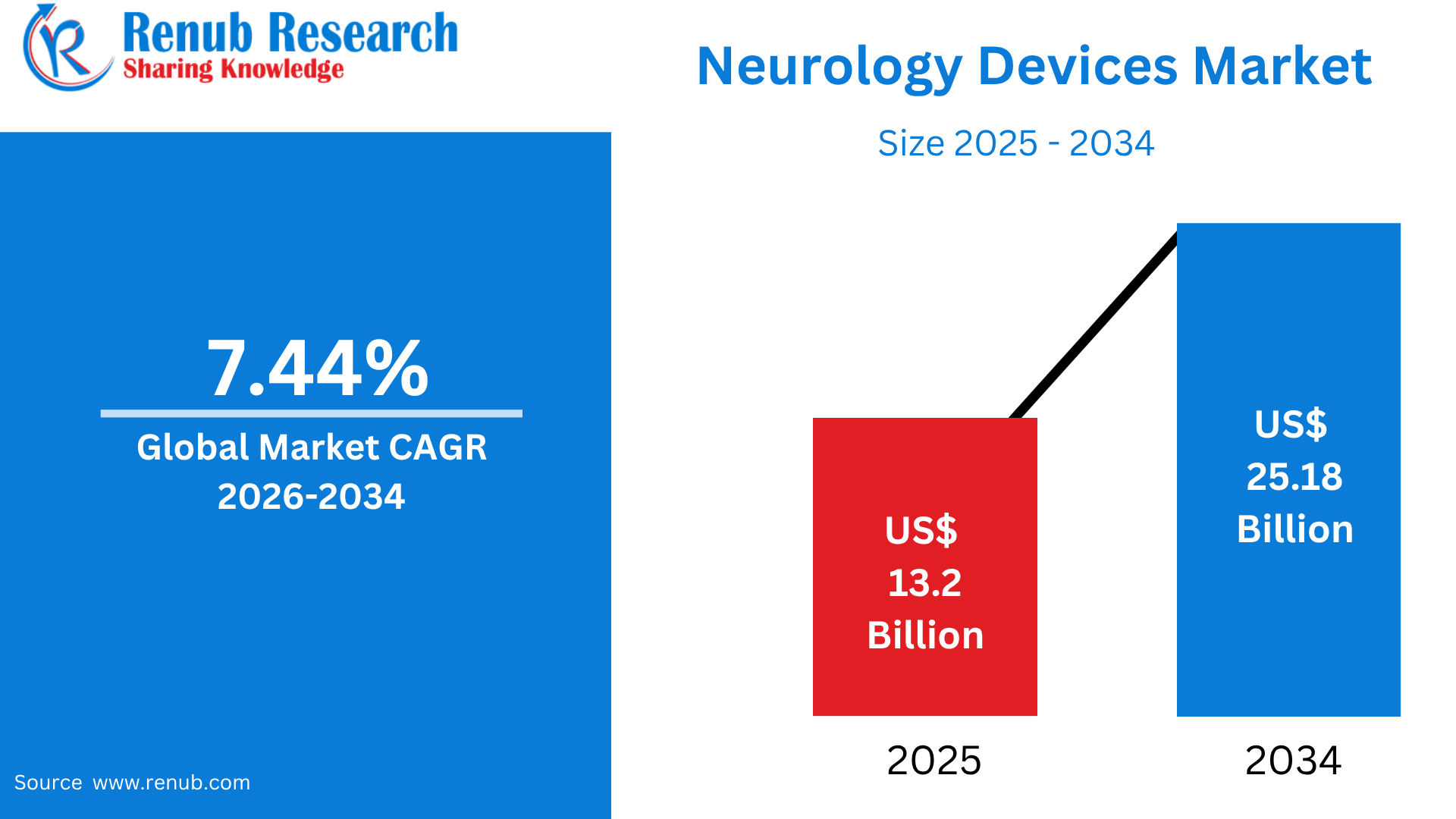
Neurology Devices Market is projected to grow from US$ 13.2 billion in 2025 to US$ 25.18 billion by 2034, registering a CAGR of 7.44% during 2026–2034. Market expansion is expected to be driven by the rising global burden of neurological disorders, ongoing technological advancements in diagnostic and therapeutic devices, expanding healthcare infrastructure, and increasing demand for innovative solutions for neurological disease management. The growing adoption of neuroimaging, neuromodulation, neurostimulation, and other advanced neurological technologies is further supporting market development. WHO reported in 2025 that neurological conditions affect more than one in three people worldwide, highlighting the substantial need for improved diagnosis, treatment, monitoring, and rehabilitation technologies.
What is the Neurology Devices Market and Its Uses & Popularity Worldwide
Neurology devices are medical technologies used to diagnose, monitor, treat, and rehabilitate disorders affecting the brain, spinal cord, peripheral nerves, and nervous system. The market includes neurodiagnostic equipment such as electroencephalography (EEG), magnetic resonance imaging (MRI), computed tomography (CT), and electromyography systems, as well as therapeutic devices including deep brain stimulation systems, spinal cord stimulators, vagus nerve stimulators, neurocatheters, and other neurosurgical technologies. These devices are used across conditions such as epilepsy, stroke, Parkinson’s disease, Alzheimer’s disease, multiple sclerosis, migraine, and traumatic neurological injuries. Their popularity is increasing as neurological disorders become a major global healthcare burden. According to WHO, more than 3 billion people were living with a neurological condition in 2021, representing more than one-third of the global population. GBD 2021 research estimated 3.40 billion people, or 43.1% of the global population, were affected by conditions affecting the nervous system. Growing disease prevalence, aging populations, improvements in neurological diagnostics, minimally invasive procedures, and advances in neurostimulation and digital technologies are therefore increasing worldwide demand for neurology devices.
Global Action Plan on epilepsy and other neurological disorders
- 75% of countries will have adapted or updated existing national policies, strategies, plans, or frameworks to include neurological disorders by 2031.
- 100% of countries will have at least one functioning awareness campaign or advocacy programme for neurological disorders by 2031.
- 75% of countries will have included neurological disorders in the Universal Health Coverage (UHC) benefits package by 2031.
- 80% of countries will provide the essential medicines and basic technologies required to manage neurological disorders in primary care by 2031.
- 80% of countries will have at least one functioning intersectoral programme for brain health promotion and the prevention of neurological disorders across the life course by 2031.
·The global targets relevant for the prevention of neurological disorders are achieved, as defined in:
- Global Action Plan for the Prevention and Control of NCDs (NCD-GAP)
- Defeating meningitis by 2030: a global road map
- Every newborn: an action plan to end preventable deaths
- 80% of countries routinely collect and report on a core set of indicators for neurological disorders through their national health data and information systems at least every three years by 2031.
- The output of global research on neurological disorders doubles by 2031.
- By 2031, countries will have increased service coverage for epilepsy by 50% from the current coverage in 2021.
- 80% of countries will have developed or updated their legislation with a view to promoting and protecting the human rights of people with epilepsy by 2031.
Growth Drivers of the Neurology Devices Market
Rising Global Burden of Neurological Disorders
The increasing prevalence of neurological disorders is a fundamental driver of demand for neurology devices worldwide. Stroke, dementia, epilepsy, migraine, Parkinson’s disease, and other neurological conditions require increasingly sophisticated diagnostic, therapeutic, and monitoring technologies. According to the Global Burden of Disease 2021 analysis, 3.40 billion people, equivalent to 43.1% of the global population, were affected by conditions involving the nervous system in 2021. These conditions generated approximately 443 million disability-adjusted life years (DALYs) and 11.1 million deaths. WHO also reported that neurological conditions were the leading cause of illness and disability globally and that the overall neurological disease burden increased by 18% between 1990 and 2021. Diabetic neuropathy alone affected approximately 206 million people in 2021, more than three times the number recorded in 1990. This expanding patient population is increasing the need for EEG, neuroimaging, neuromodulation, neurostimulation, and neurosurgical devices. Aging populations are further strengthening demand because several neurological conditions, particularly dementia and Parkinson’s disease, become more prevalent with advancing age.
Technological Advancements in Diagnosis and Treatment
Rapid technological innovation is transforming neurological diagnosis and treatment and is creating new opportunities for neurology-device manufacturers. Advances in neuroimaging, artificial intelligence, robotics, minimally invasive neurosurgery, neurostimulation, and brain-computer interfaces are improving physicians’ ability to identify and manage neurological disorders. Modern diagnostic systems increasingly provide higher-resolution imaging and more sophisticated functional information, while therapeutic devices such as deep brain stimulation and spinal cord stimulation can provide targeted neuromodulation for selected patients. Digital technologies are also enabling remote monitoring, data analysis, and more personalized treatment approaches. The need for these innovations is reinforced by the scale and complexity of neurological disease. GBD 2021 identified 37 conditions affecting the nervous system and found that neurological disorders collectively represented the world’s leading group cause of DALYs. At the same time, WHO’s 2025 Global Status Report on Neurology highlighted continuing gaps in access to neurological technologies, medicines, specialist care, and services. These gaps create opportunities for portable, automated, AI-enabled, minimally invasive, and cost-effective devices that can improve diagnostic accuracy and treatment accessibility.
Growing Demand for Specialized and Personalized Neurological Care
The increasing emphasis on personalized and specialized neurological treatment is supporting adoption of advanced devices across hospitals and specialized neurological centers. Neurological disorders vary substantially between patients, requiring individualized approaches to diagnosis, disease monitoring, stimulation parameters, and rehabilitation. Technologies such as deep brain stimulation, spinal cord stimulation, responsive neurostimulation, implantable pumps, neurocatheters, and advanced electrophysiology systems are increasingly being developed to provide more targeted interventions. The need for specialized care is particularly significant because neurological diseases create substantial long-term disability. GBD 2021 estimated 168 million years lived with disability (YLDs) associated with nervous-system conditions globally. WHO reported that more than 80% of neurological deaths and health loss occur in low- and middle-income countries, while the availability of neurological professionals can be up to 70 times higher in high-income countries. This disparity is encouraging healthcare systems and manufacturers to pursue technologies that can improve treatment efficiency, monitoring, and access. Increasing investments in specialized neurology centers, rehabilitation services, and advanced surgical infrastructure are therefore expected to support market expansion.
Challenges of the Neurology Devices Market
High Device Costs and Limited Access to Advanced Neurological Technologies
The high cost of sophisticated neurology devices remains a major challenge, particularly for healthcare systems and patients in low- and middle-income countries. Advanced neurostimulation systems, implantable devices, surgical navigation platforms, high-end imaging equipment, and robotic technologies require substantial capital investment, specialized infrastructure, trained personnel, and long-term maintenance. These requirements can restrict adoption outside major hospitals and specialized neurological centers. WHO reported that more than 80% of neurological deaths and health loss occur in low- and middle-income countries, highlighting the unequal distribution of neurological healthcare resources. The organization also found that high-income countries can have up to 70 times more neurological professionals per 100,000 people than low- and middle-income countries. Consequently, even when advanced devices are commercially available, limited specialist expertise, reimbursement constraints, infrastructure gaps, and procurement budgets can prevent widespread utilization. Manufacturers therefore face pressure to develop cost-effective technologies that maintain clinical performance while reducing acquisition and operating costs. Expanding reimbursement coverage, local manufacturing, training programs, and affordable device models could gradually improve access.
Regulatory Complexity, Clinical Risks, and Specialized Expertise Requirements
Neurology devices face complex regulatory and clinical requirements because many products directly interact with the brain, spinal cord, peripheral nerves, or other critical structures. Implantable neurostimulation systems, neurosurgical devices, and other high-risk technologies require extensive testing to demonstrate safety, effectiveness, durability, and appropriate clinical performance. Device development can therefore involve lengthy clinical studies, regulatory review, physician training, and post-market monitoring, increasing development costs and commercialization timelines. The clinical complexity of neurological conditions also makes device selection and treatment optimization challenging. According to WHO, neurological disorders encompass a broad range of conditions, including stroke, migraine, dementia, epilepsy, neurodevelopmental disorders, infections, and nervous-system cancers. Different diseases require different diagnostic and therapeutic approaches, limiting the ability of manufacturers to rely on standardized solutions. In addition, many advanced devices require highly trained neurologists, neurosurgeons, radiologists, and specialized technicians. Shortages of skilled professionals can therefore constrain adoption even where equipment is available. Continued clinician training, standardized protocols, clinical evidence generation, and streamlined but rigorous regulatory pathways will remain important for sustained market development.
Neurology Devices Product Launches Worldwide
- BrainSense Adaptive Deep Brain Stimulation (aDBS) – Medtronic, United States, 2025: Medtronic received FDA approval in February 2025 for its BrainSense Adaptive DBS system for Parkinson’s disease. The closed-loop technology adjusts stimulation based on a patient’s brain activity in real time and is designed to provide more personalized neuromodulation.
- Stealth AXiS Surgical System – Medtronic, United States, 2026: Medtronic received FDA clearance in February 2026 for the Stealth AXiS surgical system, an integrated planning, navigation, and robotics platform designed for spine surgery.
- Adaptive DBS System – Medtronic, India, 2026: Medtronic launched its Adaptive Deep Brain Stimulation system in India in April 2026 for patients with Parkinson’s disease, extending access to its personalized DBS technology in the Indian market.
- Surpass Elite Flow Diverter – Stryker, United States, Europe & South Korea, 2025: Stryker commercially launched the Surpass Elite Flow Diverter in July 2025. The device incorporates an upgraded implant design and BioStealth surface modification for neurovascular flow-diversion procedures.
- AXS Lift Intracranial Base Catheter – Stryker, 2025: Stryker launched the AXS Lift Intracranial Base Catheter in June 2025. The device is designed to provide both access and stable support during neurovascular interventions, potentially reducing the need for multiple catheters.
- Zebra Neurovascular Access System – Q’Apel Medical, United States, 2025: Q’Apel Medical received FDA clearance for its Zebra Neurovascular Access System in July 2025 and prepared for its full U.S. launch. The system is available in 6F and 7F configurations for introducing interventional devices into the peripheral and neurovasculature.
- SwiftSET Neuro Embolization Coil – Penumbra, Worldwide, 2025: Penumbra launched the SwiftSET Coil in October 2025 as an addition to its Swift Coil System. The coil is designed for adaptive embolization and can be used in neurovascular procedures involving intracranial aneurysms and other vascular abnormalities.
- HFX Dynamis System – Nevro, United States, 2026: The FDA approved a supplement for Nevro’s HFX Dynamis spinal cord stimulation system in August 2026. The next-generation implantable pulse generator supports Bolus 10kHz stimulation and expanded MRI access under specified conditions.
- Liberta RC DBS System – Abbott, United States, 2025: Abbott’s Liberta RC rechargeable deep brain stimulation system received FDA approval for movement disorders including Parkinson’s disease and essential tremor. The system features remote programming capabilities and a compact rechargeable implantable pulse generator.
- Vercise Genus DBS System with Illumina 3D – Boston Scientific, Global: Boston Scientific’s Vercise Genus DBS platform incorporates directional leads and Illumina 3D Image Guided Programming to personalize stimulation based on patient anatomy. The system provides multiple programming options and rechargeable and non-rechargeable implantable pulse generators.
Growing Adoption of Advanced Neuromodulation Therapies
Neurostimulation Devices Market is expanding as healthcare providers increasingly adopt electrical and magnetic stimulation technologies for managing chronic neurological and pain-related conditions. Neurostimulation devices include spinal cord stimulators (SCS), deep brain stimulators (DBS), vagus nerve stimulators (VNS), sacral nerve stimulators, transcutaneous electrical nerve stimulation systems, and transcranial magnetic stimulation devices. These technologies are used for conditions such as chronic pain, Parkinson’s disease, essential tremor, epilepsy, dystonia, depression, and other neurological disorders. Spinal cord stimulators represented more percent of the market in 2025 in one major market assessment, supported by their growing use in chronic pain management. Increasing preference for minimally invasive treatment, technological improvements in rechargeable and directional stimulation systems, and demand for alternatives to long-term medication are supporting market expansion.
Rising Need for Precision and Minimally Invasive Neurosurgery
Neurosurgery Devices Market is benefiting from the increasing burden of neurological disorders, traumatic brain injuries, spinal conditions, and cerebrovascular diseases that require specialized surgical intervention. Neurosurgery devices include neuroendoscopes, stereotactic systems, surgical navigation systems, neurosurgical power tools, aneurysm clips, cerebrospinal fluid management devices, neurostimulation systems, and other instruments used in brain and spinal procedures. Growing adoption of image-guided and minimally invasive procedures is improving surgical precision while reducing tissue disruption and recovery times. In addition, AI-assisted planning, advanced navigation, robotics, intraoperative imaging, and endoscopic technologies are increasingly being incorporated into neurosurgical workflows. Rising demand for specialized neurological care and expansion of advanced hospital infrastructure are further supporting market development.
Stroke and Cerebrovascular Procedures Drive Device Adoption
Interventional Neurology Devices Market is growing rapidly as minimally invasive endovascular procedures become increasingly important for treating ischemic stroke, cerebral aneurysms, arteriovenous malformations, and other cerebrovascular conditions. Key products include neurothrombectomy devices, embolic coils, flow diverters, neurovascular stents, aspiration catheters, balloon systems, and support devices. The increasing emphasis on rapid stroke treatment, improvements in aspiration and stent-retriever technologies, better neuroimaging, and expansion of dedicated stroke centers are supporting procedure volumes. Development of advanced catheter systems, AI-supported imaging, and integrated endovascular platforms is also improving procedural efficiency and enabling treatment of increasingly complex neurovascular conditions.
Hospitals Remain the Primary Setting for Advanced Neurological Procedures
Neurology Devices Hospitals Market is supported by the central role of hospitals in diagnosing, treating, and monitoring complex neurological disorders. Hospitals utilize a broad range of neurology devices, including EEG and EMG systems, neuroimaging equipment, neurosurgical navigation systems, neurostimulation devices, neurovascular intervention systems, intracranial pressure monitors, and surgical instruments. These facilities typically maintain multidisciplinary teams involving neurologists, neurosurgeons, interventional neuroradiologists, critical-care specialists, and rehabilitation professionals. Demand is increasing as neurological conditions affect more than one in three people worldwide, creating a substantial requirement for diagnosis, acute intervention, surgery, rehabilitation, and long-term disease management. Expansion of comprehensive stroke centers, investments in advanced imaging and surgical infrastructure, and increasing adoption of minimally invasive procedures are strengthening hospital demand. In addition, hospitals are increasingly integrating AI-assisted diagnostics, robotic technologies, image-guided surgery, and remote monitoring into neurological care pathways.
United States Rising Neurological Disease Burden and Advanced Healthcare Infrastructure
United States neurology devices market is one of the most developed worldwide, supported by advanced healthcare infrastructure, high healthcare expenditure, strong research capabilities, and rapid adoption of medical technologies. Demand is increasing as neurological disorders such as Alzheimer’s disease, Parkinson’s disease, epilepsy, stroke, and multiple sclerosis create a substantial need for diagnostic, monitoring, surgical, and therapeutic devices. Neurological conditions affect a significant share of the U.S. population, with estimates indicating that approximately 1 in 6 Americans is affected by a neurological disorder or related condition. The country also has a large aging population, increasing demand for neuroimaging, neuromodulation, neurovascular intervention, and rehabilitation technologies. Hospitals and specialty centers are increasingly adopting MRI, EEG, deep brain stimulation, spinal cord stimulation, robotic surgery, and minimally invasive neurovascular systems. Strong investments in clinical research, artificial intelligence, digital health, and personalized medicine are further supporting innovation. The presence of major medical-device manufacturers and extensive reimbursement infrastructure also encourages commercialization of advanced neurology technologies.
United Kingdom Strong NHS Infrastructure and Growing Demand for Neurological Care
United Kingdom neurology devices market is supported by the country’s established healthcare infrastructure, strong neuroscience research ecosystem, and expanding focus on early diagnosis and long-term neurological disease management. Neurological conditions represent a substantial healthcare burden, with disorders such as epilepsy, migraine, Parkinson’s disease, dementia, multiple sclerosis, and stroke requiring continuous diagnosis, monitoring, treatment, and rehabilitation. Epilepsy alone affects approximately 600,000 people in the UK, while Parkinson’s disease affects more than 150,000 people, creating sustained demand for specialized neurological technologies. The National Health Service is increasingly adopting advanced imaging, neurophysiology, neuromodulation, and minimally invasive intervention technologies to improve patient management. Demand for EEG, MRI, CT, deep brain stimulation, spinal cord stimulation, and neurovascular devices is supported by increasing clinical specialization. In addition, the UK’s strong academic research environment encourages development and evaluation of innovative neurological technologies. Growing emphasis on personalized treatment, digital monitoring, artificial intelligence, and earlier disease detection is expected to further support the adoption of advanced neurology devices across hospitals and specialist neurological centers.
China Large Patient Population and Government-Supported Healthcare Modernization
China’s neurology devices market is expanding rapidly because of its large population, aging demographics, increasing neurological disease burden, and continued modernization of healthcare infrastructure. Neurological disorders including stroke, dementia, epilepsy, Parkinson’s disease, and Alzheimer’s disease are generating increasing demand for advanced diagnostic and therapeutic technologies. China has more than 16 million people living with dementia, including Alzheimer’s disease, representing a substantial proportion of the global dementia population. The country’s rapidly aging population is expected to further increase demand for neuroimaging, brain monitoring, neurovascular intervention, neurosurgical, and neurostimulation technologies. Government initiatives are also strengthening the market. China’s National Action Plan for Coping with Dementia in Older Adults (2024–2030) targets broader cognitive screening, early intervention, standardized diagnosis, rehabilitation, and care. The plan includes a goal of achieving cognitive screening for at least 80% of older adults receiving health-management services by 2030. Increasing investment in domestic medical-device manufacturing, hospital modernization, digital healthcare, and neurological research is creating additional opportunities for both domestic and international neurology device manufacturers.
United Arab Emirates Healthcare Modernization and Expansion of Specialized Neurological Services
United Arab Emirates neurology devices market is developing steadily as the country invests heavily in advanced healthcare infrastructure, specialized medical services, and innovative technologies. The UAE has established sophisticated hospitals and specialist medical centers equipped with advanced diagnostic imaging, neurological monitoring, neurosurgical, and interventional technologies. The country’s relatively high healthcare expenditure and growing demand for specialized care support the adoption of premium medical devices. Neurological conditions including stroke, epilepsy, dementia, Parkinson’s disease, and other age-related disorders are increasing the need for advanced diagnosis and treatment solutions. Healthcare providers are adopting technologies such as MRI and CT systems, EEG equipment, neurovascular intervention devices, deep brain stimulation systems, and minimally invasive neurosurgical platforms. The UAE is also developing its healthcare ecosystem through international partnerships, medical research programs, artificial intelligence, and digital-health initiatives. Expansion of specialized stroke and neurological centers is creating additional demand for advanced devices. As the country continues to position itself as a regional healthcare and medical-tourism hub, investments in high-precision neurological diagnosis, intervention, rehabilitation, and personalized treatment are expected to support market growth.
Recent Developments in Neurology Devices Market
- The first Adaptive Deep Brain Stimulation (DBS) device for Parkinson's patients was approved by the US FDA in February 2025. This technology offers a more individualized and responsive treatment strategy by using real-time brain signals to modify stimulation settings according to the patient's demands.
- An artificial intelligence (AI) hub centered on neuromodulation and healthcare will be established in February 2025 by the Wyss Center for Bio and Neuroengineering, the Department of Health and Mobility (DSM) of the Canton of Geneva, and University Hospitals of Geneva (HUG). This 1,000 m² facility is slated to open at Campus Biotech in the second half of 2025 with the goal of improving neurological and psychiatric illness treatment and prevention.
Neurology Devices Market Segments
Product:
- Neurostimulation
- Neurosurgery Devices
- Interventional Neurology
- CSF Management Devices
- Others
End Use:
- Hospitals
- Ambulatory Surgery Centers
- Others
Countries
North America
- United States
- Canada
Europe
- France
- Germany
- Italy
- Spain
- United Kingdom
- Belgium
- Netherlands
- Turkey
Asia Pacific
- China
- Japan
- India
- Australia
- South Korea
- Thailand
- Malaysia
- Indonesia
- New Zealand
Latin America
- Brazil
- Mexico
- Argentina
Middle East & Africa
- South Africa
- Saudi Arabia
- United Arab Emirates
All the Key players have been covered with 5 Viewpoints
- Overviews
- Key Person
- Recent Developments
- SWOT Analysis
- Revenue Analysis
Key Players Analysis
- Medtronic Plc.
- B. Braun Melsungen AG
- Boston Scientific Corporation
- Stryker Corporation
- Abbott Laboratories
- Johnson and Johnson
- Smith & Nephew
- MicroPort Scientific Corporation
Report Details:
| Report Features | Details |
| Base Year |
2025 |
| Historical Period |
2022 - 2025 |
| Forecast Period |
2026 - 2034 |
| Market |
US$ Billion |
| Segment Covered |
Product, End Use and Countries |
| Countries Covered |
|
| Companies Covered |
|
| Customization Scope |
20% Free Customization |
| Post-Sale Analyst Support |
1 Year (52 Weeks) |
| Delivery Format |
PDF and Excel through Email (We can also provide the editable version of the report in PPT/Word format on request) |
Customization Services available
- Analysis of Market Size and Its Segments
- More Company Profiles (Upto 10 without any additional cost):
- Additional Countries (Other than mentioned Countries):
- Region/Country Specific Reports:
- Market Entry Strategy:
- Region-Specific Market Dynamics:
- Regional Market Share Analysis:
- Trade Analysis:
- Production Insights:
- Others Customized Requests:
For more information contact our analysts.
Need More Assistance?
- Talk to our analysts to get more precious information on the current market trends.
- Include more countries and segments and customize the report based on the final requirement.
- Get a competitive advantage in your industry by knowing the report findings and making a positive impact on your revenues and operations.
- Our analysts are always ready to provide more help and pertinent information if you need any additional assistance.