Adhesion Barriers Market Size, Share, Growth, Trends, Industry Analysis & Forecast 2026–2034
Buy NowAdhesion Barriers Market Forecast
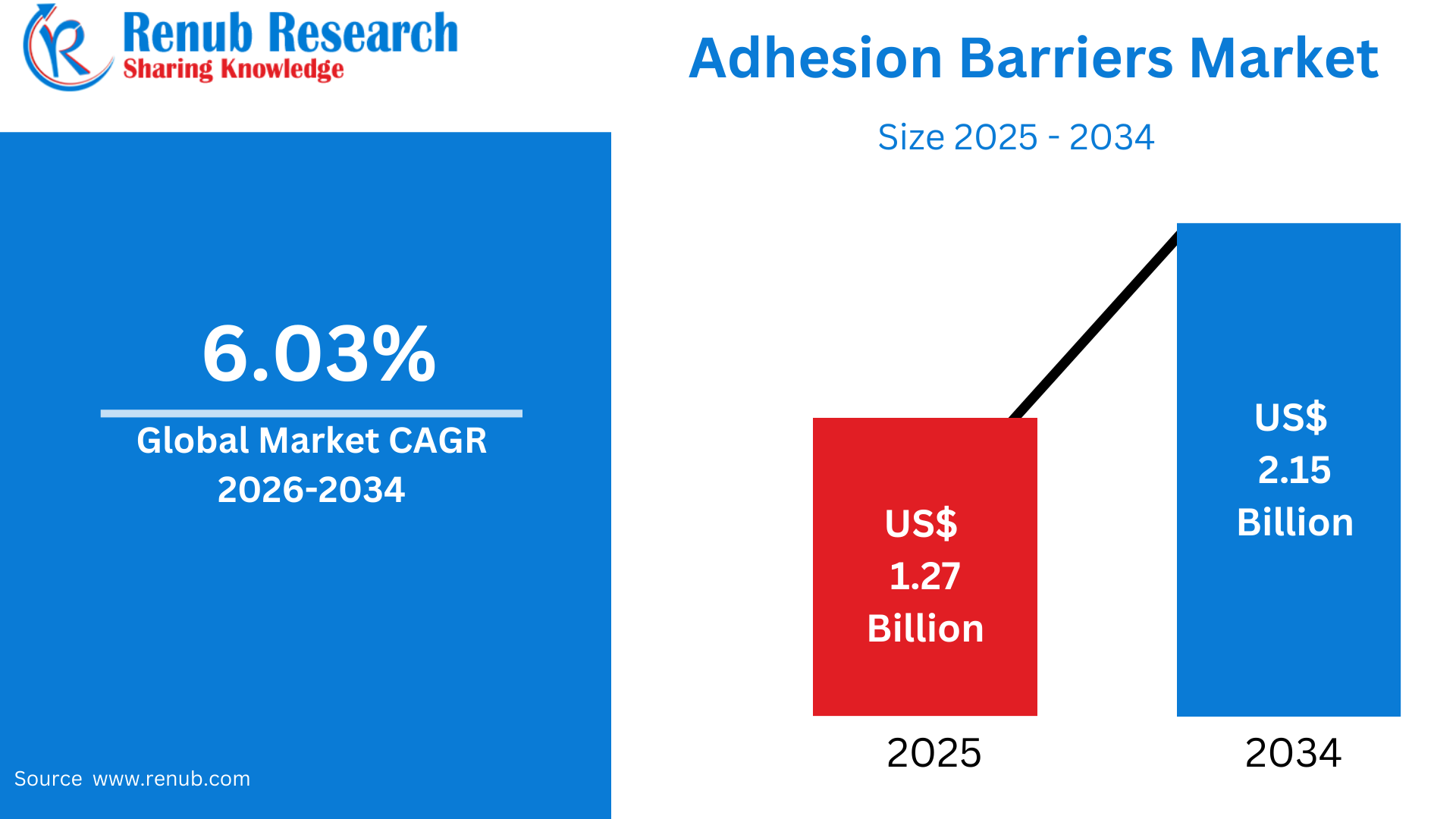
Adhesion Barriers Market is projected to expand from US$ 1.27 billion in 2025 to US$ 2.15 billion by 2034, registering a CAGR of 6.03% during the forecast period of 2026–2034. Market growth is being driven by the increasing volume of surgical procedures performed worldwide, heightened awareness of postoperative adhesions and their associated complications, and the growing adoption of minimally invasive surgical techniques. Rising healthcare expenditure, continuous advancements in bioresorbable adhesion barrier products, and the increasing focus on improving surgical outcomes and reducing repeat operations are further supporting market expansion.
What are Adhesion Barriers and Their Uses & Popularity Worldwide?
Adhesion barriers are specialized medical products used during surgical procedures to prevent the formation of postoperative adhesions, which are bands of scar tissue that can develop between organs and surrounding tissues during the healing process. These barriers are available in the form of films, gels, sprays, liquids, and bioresorbable membranes that temporarily separate tissues until healing is complete, thereby reducing unwanted tissue attachment.
Adhesion barriers are widely used in abdominal, pelvic, gynecological, colorectal, cardiovascular, orthopedic, neurological, and general surgeries to lower the risk of complications such as chronic pain, bowel obstruction, infertility, and difficulties during repeat operations. Their popularity has increased globally due to the growing number of surgical procedures and greater awareness of postoperative complications. According to The Lancet Commission on Global Surgery, approximately 313 million surgical procedures are performed worldwide each year, creating significant demand for products that improve surgical outcomes. Technological advancements in bioresorbable materials, minimally invasive surgery, and regenerative medicine have further enhanced the effectiveness of adhesion prevention products. Increasing healthcare expenditure, rising adoption of laparoscopic procedures, and greater emphasis on patient safety continue to drive worldwide acceptance of adhesion barriers across hospitals and ambulatory surgical centers.
Growth Drivers for the Adhesion Barriers Market
Rising Global Surgical Procedure Volumes Increasing Demand
The growing number of surgical procedures performed worldwide is one of the strongest drivers of the Adhesion Barriers Market. According to the Lancet Commission on Global Surgery, approximately 313 million surgical procedures are performed annually worldwide, with the number continuing to rise due to population growth, aging demographics, and increasing prevalence of chronic diseases. Surgical adhesions develop in a large proportion of patients following abdominal and pelvic operations, making adhesion prevention an important component of postoperative care. Adhesion barriers help reduce tissue attachment during healing, minimizing complications such as bowel obstruction, infertility, chronic pelvic pain, and difficult reoperations. The increasing number of gastrointestinal, gynecological, cardiovascular, orthopedic, and oncological surgeries has significantly expanded the demand for adhesion prevention products. Hospitals are increasingly incorporating adhesion barriers into standard surgical protocols to improve patient outcomes, shorten recovery time, and reduce readmission rates. As global access to surgical care continues to improve, demand for advanced adhesion barrier products is expected to grow steadily across both developed and emerging healthcare markets.
Growing Adoption of Minimally Invasive Surgery
The rapid expansion of minimally invasive surgical techniques is significantly supporting growth in the Adhesion Barriers Market. Laparoscopic and robotic-assisted procedures have become increasingly common because they reduce tissue trauma, blood loss, postoperative pain, and hospital stays compared with conventional open surgery. According to healthcare industry estimates, more than 20 million laparoscopic procedures are performed globally every year, and adoption continues to increase across multiple surgical specialties. Although minimally invasive surgery lowers the overall risk of adhesion formation, adhesion barriers remain valuable for high-risk procedures involving abdominal, pelvic, and gynecological organs. Continuous innovation in sprayable gels, bioresorbable membranes, and hydrogel-based adhesion barriers has made these products easier to apply during minimally invasive procedures. The widespread availability of robotic surgical platforms and high-definition laparoscopic systems has also improved the precision of adhesion barrier placement. As healthcare providers increasingly prioritize enhanced recovery programs and improved postoperative outcomes, the use of advanced adhesion prevention technologies continues to expand worldwide.
Increasing Awareness of Postoperative Complications and Healthcare Spending
Growing awareness among surgeons regarding postoperative adhesions and increasing healthcare expenditure are driving greater adoption of adhesion barrier products worldwide. According to the World Health Organization (WHO), global healthcare spending exceeds US$10 trillion annually, enabling healthcare providers to invest in technologies that improve surgical quality and patient safety. Postoperative adhesions remain one of the most common complications following abdominal and pelvic surgery, often leading to chronic pain, infertility, bowel obstruction, and repeat surgical interventions. Clinical evidence has encouraged hospitals to adopt adhesion prevention strategies that reduce long-term healthcare costs associated with postoperative complications. Professional surgical societies increasingly recommend evidence-based adhesion management protocols for selected high-risk procedures. Additionally, favorable reimbursement policies in several developed countries have supported broader use of adhesion barriers during complex surgeries. Rising investments in advanced surgical technologies, improved operating room infrastructure, and patient-centered healthcare continue to strengthen demand for bioresorbable adhesion barriers across hospitals, specialty surgical centers, and ambulatory care facilities.
Challenge in the Adhesion Barriers Market
High Product Costs and Limited Reimbursement
The relatively high cost of adhesion barrier products remains a significant challenge for market expansion, particularly in low- and middle-income countries. Advanced bioresorbable films, hydrogels, and sprayable adhesion barriers increase procedural expenses, making routine use financially challenging for many healthcare providers. Depending on the product type and surgical procedure, adhesion barriers can add substantial costs to each operation, especially when reimbursement policies are limited or unavailable. Many hospitals prioritize essential surgical supplies over premium adhesion prevention products due to budget constraints. In several developing healthcare systems, inconsistent reimbursement policies further reduce adoption despite proven clinical benefits. Cost-effectiveness evaluations also vary between healthcare providers, resulting in differences in purchasing decisions. As hospitals continue to balance quality improvement with cost containment, manufacturers face increasing pressure to demonstrate long-term economic value through reduced postoperative complications and fewer repeat surgeries. Addressing pricing concerns and expanding reimbursement coverage will remain essential for accelerating global market penetration.
Limited Clinical Standardization and Variable Surgeon Adoption
Although adhesion barriers have demonstrated clinical benefits in many surgical settings, inconsistent usage among surgeons remains a challenge for the global market. Clinical guidelines generally recommend adhesion barriers for selected high-risk procedures rather than universal application, leading to considerable variability in adoption across hospitals and surgical specialties. Surgeon preference, procedural complexity, patient characteristics, and institutional protocols often influence product selection and utilization. Some healthcare providers remain cautious because clinical outcomes may vary depending on the type of surgery, patient risk profile, and proper application technique. In addition, many emerging healthcare markets have limited access to surgeon training programs focused on adhesion prevention technologies. Continuous education, stronger clinical evidence, and standardized treatment protocols are necessary to improve confidence and encourage wider adoption. Expanding physician awareness, conducting large-scale clinical studies, and developing next-generation adhesion barrier products with easier application methods will be critical for overcoming these barriers and supporting sustained long-term market growth.
Adhesion Barriers Product Launches Worldwide
- Womed Launched Womed Leaf for Intrauterine Adhesion Prevention (2025)
In September 2025, Womed announced the U.S. FDA Premarket Approval (PMA) submission for Womed Leaf, an innovative intrauterine adhesion barrier designed to prevent recurrent adhesions (Asherman syndrome) following hysteroscopic surgery. - BD Expanded INTERCEED™ Absorbable Adhesion Barrier Portfolio (2024)
In May 2024, BD (Becton, Dickinson and Company) expanded the availability of its INTERCEED™ Absorbable Adhesion Barrier across European markets, supporting minimally invasive gynecological and abdominal surgical procedures. - FzioMed Introduced Oxiplex® Ultra Anti-Adhesion Gel (2024)
FzioMed expanded its Oxiplex® Ultra portfolio with an enhanced absorbable anti-adhesion gel formulated for spinal, orthopedic, and soft tissue surgeries to reduce postoperative scar tissue formation. - Gunze Limited Expanded TENALEAF™ Adhesion Barrier Film (2024)
Gunze Limited introduced the latest generation of TENALEAF™, a bioresorbable sheet-type adhesion barrier offering improved flexibility, handling, and tissue compatibility for abdominal and pelvic surgeries. - Anika Therapeutics Enhanced Hyalobarrier® Gel Portfolio (2023)
Anika Therapeutics expanded its Hyalobarrier® Gel product line with improved hyaluronic acid-based formulations designed to prevent adhesions following gynecological and laparoscopic procedures. - Baxter International Expanded Seprafilm® Adhesion Barrier Applications (2023)
Baxter International introduced updated clinical applications and expanded global availability of Seprafilm® Adhesion Barrier, one of the most widely used bioresorbable membrane barriers for abdominal and pelvic surgeries. - Terumo Introduced Advanced Spray-Type Adhesion Barrier System (2023)
Terumo Corporation launched a next-generation sprayable adhesion barrier designed for minimally invasive abdominal surgery, providing uniform tissue coverage and enhanced surgical convenience. - GENEWORLD Released CollaGUARD® Bioabsorbable Adhesion Barrier (2023)
GENEWORLD introduced CollaGUARD®, a collagen-based bioabsorbable adhesion barrier developed to reduce postoperative tissue adhesion while supporting natural wound healing. - BioRegen Biomedical Introduced HA-Based Adhesion Prevention Gel (2022)
BioRegen Biomedical launched a hyaluronic acid-based absorbable adhesion prevention gel intended for gynecological, abdominal, and general surgical procedures requiring temporary tissue separation during healing. - Betatech Medical Expanded Adcon® Anti-Adhesion Product Portfolio (2022)
Betatech Medical expanded its Adcon® anti-adhesion product range for neurosurgical and orthopedic applications, focusing on reducing epidural fibrosis, scar tissue formation, and postoperative complications following spine surgery.
Engineered Biomaterials Driving Growth in Synthetic Adhesion Prevention
Synthetic Adhesion Barriers Market is expanding steadily due to increasing demand for advanced biomaterials that effectively prevent postoperative tissue adhesions. Synthetic adhesion barriers are commonly manufactured from bioresorbable polymers such as hyaluronic acid derivatives, polyethylene glycol (PEG), polylactic acid (PLA), and carboxymethylcellulose, which create a temporary physical barrier between tissues during the critical healing period. With approximately 313 million surgical procedures performed worldwide each year, demand for standardized adhesion prevention products continues to rise. Compared with biologically derived materials, synthetic barriers offer consistent degradation rates, predictable performance, easier storage, and lower risk of disease transmission or immunological reactions. Continuous advancements in polymer science have improved flexibility, biocompatibility, handling characteristics, and tissue compatibility, making these products increasingly popular among surgeons. Growing adoption of minimally invasive surgery and standardized surgical protocols across hospitals worldwide continues to accelerate the use of synthetic adhesion barriers in abdominal, pelvic, cardiovascular, and orthopedic procedures.
Growing Preference for Easy-to-Apply Adhesion Prevention Solutions driving Liquid Adhesion Barriers
Liquid Adhesion Barriers Market is experiencing strong growth as surgeons increasingly prefer flexible adhesion prevention products that can be easily applied to complex anatomical structures. Liquid adhesion barriers form a thin protective coating over surgical tissues by spraying or pouring directly onto the operative site, making them particularly suitable for minimally invasive and laparoscopic procedures. According to healthcare estimates, more than 20 million laparoscopic surgeries are performed globally each year, creating significant demand for products compatible with minimally invasive techniques. Liquid formulations provide excellent coverage of irregular tissue surfaces where conventional films or membranes may be difficult to position accurately. Continuous innovations in hydrogel technology, bioresorbable polymers, and viscoelastic formulations have improved product retention, degradation profiles, and biocompatibility. Increasing volumes of gynecological, abdominal, colorectal, and general surgical procedures continue to support growing adoption of liquid adhesion barriers across hospitals and ambulatory surgical centers worldwide.
Superior Tissue Coverage Supporting Clinical Adoption For Gel Adhesion Barriers
Gel Adhesion Barriers Market continues to expand due to the excellent handling characteristics and clinical effectiveness of gel-based adhesion prevention products. Gel formulations provide effective separation of healing tissues while conforming easily to irregular surgical surfaces, making them particularly valuable during pelvic, abdominal, colorectal, and gynecological procedures. With approximately 90% of postoperative adhesions occurring after abdominal surgery, surgeons increasingly rely on gel barriers to minimize adhesion formation and improve postoperative recovery. Modern gel formulations demonstrate enhanced bioresorbability, improved tissue adherence, and reduced inflammatory responses compared with earlier products. Their ease of application, excellent intraoperative visibility, and ability to remain localized without displacement contribute to widespread clinical acceptance. Gel adhesion barriers are compatible with both open and minimally invasive surgeries, allowing broad use across multiple surgical specialties. Continuous product innovation and increasing surgeon preference for user-friendly adhesion prevention technologies are expected to sustain long-term market growth.
Rising Women’s Health Procedures Driving Gynecological Market Expansion
Adhesion Barriers in Gynecological Surgeries Market is witnessing significant growth due to increasing numbers of gynecological procedures and greater awareness of postoperative adhesion-related complications. Adhesions frequently develop following surgeries such as hysterectomy, myomectomy, ovarian cyst removal, and endometriosis treatment, potentially leading to infertility, chronic pelvic pain, bowel obstruction, and repeat surgical interventions. According to global healthcare estimates, millions of gynecological surgeries are performed annually worldwide, creating substantial demand for effective adhesion prevention products. The increasing adoption of minimally invasive laparoscopic gynecological surgery has further strengthened demand for sprayable gels, films, and liquid adhesion barriers that allow precise placement within confined surgical spaces. Growing investments in women’s healthcare, improved reproductive health services, and greater awareness of fertility preservation continue to encourage wider adoption of adhesion barriers. Healthcare providers increasingly recognize adhesion prevention as an important component of improving long-term surgical outcomes and patient quality of life.
Increasing Orthopedic Procedures Supporting Orthopedic Surgeries Market Growth
Adhesion Barriers in Orthopedic Surgeries Market is growing steadily due to the increasing volume of orthopedic procedures and rising demand for improved postoperative mobility and functional recovery. Adhesion formation following tendon repair, joint reconstruction, spinal surgery, and ligament reconstruction can restrict movement, increase pain, and complicate rehabilitation. According to the World Health Organization (WHO), approximately 1.71 billion people worldwide live with musculoskeletal conditions, making orthopedic surgery one of the fastest-growing surgical specialties. The aging global population, increasing incidence of osteoarthritis, sports injuries, and trauma cases continue to drive procedure volumes. Modern adhesion barrier materials have been specifically designed to provide superior biocompatibility with musculoskeletal tissues while supporting natural healing and minimizing scar tissue formation. Hospitals are increasingly incorporating adhesion prevention products into orthopedic surgical protocols to improve patient outcomes, reduce postoperative stiffness, shorten rehabilitation periods, and enhance long-term joint function, supporting continued market expansion worldwide.
High Surgical Volumes and Advanced Healthcare Infrastructure Driving United States Market Growth
United States Adhesion Barriers Market is the largest globally, supported by a high volume of surgical procedures, advanced healthcare infrastructure, and widespread adoption of adhesion prevention technologies. According to healthcare estimates, more than 40 million inpatient surgical procedures are performed annually in the United States, including abdominal, gynecological, orthopedic, colorectal, and cardiovascular surgeries where postoperative adhesions are common. Growing awareness among surgeons regarding adhesion-related complications, such as bowel obstruction, infertility, chronic pain, and repeat surgeries, has encouraged routine use of adhesion barriers during high-risk procedures. The country also benefits from early adoption of innovative bioresorbable films, gels, and synthetic adhesion barriers supported by strong clinical evidence and favorable reimbursement policies. Continuous investments in surgical innovation further strengthen market expansion. In September 2025, Womed announced that the U.S. Food and Drug Administration (FDA) accepted its Premarket Approval (PMA) submission for Womed Leaf, an innovative intrauterine adhesion prevention device developed for women undergoing hysteroscopic surgery to treat Asherman syndrome.
NHS Adoption and Minimally Invasive Surgery Supporting United Kingdom Market Expansion
The United Kingdom Adhesion Barriers Market is experiencing steady growth due to increasing surgical procedure volumes, greater awareness of postoperative adhesion complications, and growing adoption of minimally invasive surgery. The National Health Service (NHS) performs millions of surgical procedures annually, creating sustained demand for products that improve surgical outcomes and reduce postoperative complications. Adhesion barriers are increasingly utilized during gynecological, abdominal, colorectal, and pelvic surgeries to minimize risks of chronic pain, infertility, bowel obstruction, and repeat operations. Strong regulatory oversight ensures high-quality standards for adhesion prevention products while supporting safe clinical practice. The increasing shift toward laparoscopic surgery has further accelerated demand for advanced bioresorbable films, gels, and liquid adhesion barriers designed for minimally invasive procedures. Healthcare providers are also focusing on reducing long-term treatment costs by preventing adhesion-related complications and repeat surgeries. In May 2024, BD (Becton, Dickinson and Company) expanded the availability of its Interceed™ Adhesion Barrier across European markets, including the United Kingdom, supporting its use in minimally invasive gynecological and abdominal surgical procedures.
Expanding Surgical Infrastructure and Medical Tourism Driving India Growth
India Adhesion Barriers Market is growing rapidly due to increasing surgical volumes, expanding healthcare infrastructure, and greater awareness of postoperative adhesion prevention among surgeons. India performs millions of surgical procedures annually, with rising demand for abdominal, gynecological, gastrointestinal, and orthopedic surgeries driven by population growth, chronic diseases, and improved healthcare access. Increasing investments by private hospitals and multispecialty healthcare providers have accelerated adoption of advanced surgical technologies, including adhesion prevention products. India’s growing medical tourism industry further supports demand, as international patients seek cost-effective, high-quality surgical treatment. However, limited reimbursement coverage and cost sensitivity continue to restrict routine use of adhesion barriers in some healthcare settings, particularly for lower-risk procedures. Continuous clinician education, expanding availability of affordable bioresorbable products, and increasing government investment in healthcare modernization are expected to improve market penetration. With a population exceeding 1.4 billion people, India remains one of the fastest-growing markets for adhesion barrier products worldwide.
Healthcare Modernization and Rising Surgical Procedures Fueling Saudi Arabia Market Growth
Saudi Arabia Adhesion Barriers Market is expanding steadily due to increasing surgical procedure volumes, growing healthcare investments, and rising awareness of postoperative adhesion prevention. Under Saudi Vision 2030, substantial investments are being made to modernize hospitals, expand specialized surgical centers, and improve access to advanced medical technologies. The country continues to experience increasing demand for gynecological, abdominal, colorectal, orthopedic, and cardiovascular surgeries, creating opportunities for wider adoption of adhesion barrier products. Growing awareness among surgeons regarding the prevention of adhesion-related complications—including chronic pain, infertility, bowel obstruction, and repeat surgeries—is encouraging greater utilization of bioresorbable films, gels, and liquid adhesion barriers. Expansion of private healthcare facilities and the introduction of advanced minimally invasive surgical technologies are further supporting market growth. Rising healthcare expenditure, improved patient outcomes, and continued government initiatives to strengthen surgical quality and patient safety are expected to drive long-term demand for adhesion barriers across Saudi Arabia’s rapidly evolving healthcare sector.
Market Segmentation
Product
- Synthetic
- Natural
Formulation
- Film
- Liquid
- Gel
Application
- Gynecological Surgeries
- General/Abdominal Surgeries
- Cardiovascular Surgeries
- Orthopedic Surgeries
- Neurological Surgeries
- Reconstructive Surgeries
- Urological Surgeries
- Others
Countries
North America
- United States
- Canada
Europe
- France
- Germany
- Italy
- Spain
- United Kingdom
- Belgium
- Netherlands
- Turkey
Asia Pacific
- China
- Japan
- India
- Australia
- South Korea
- Thailand
- Malaysia
- Indonesia
- New Zealand
Latin America
- Brazil
- Mexico
- Argentina
Middle East & Africa
- South Africa
- Saudi Arabia
- United Arab Emirates
All companies have been covered with 5 Viewpoints
- Overview
- Key Persons
- Recent Development & Strategies
- Product Portfolio
- Financial Insights
Company Analysis
- Anika Therapeutics, Inc.
- Baxter International, Inc.
- Integra LifeSciences Holdings Corporation
- Johnson & Johnson
- Medtronic Plc
- Medical Devices Business Services, Inc.
- Groupe Sanofi
Report Details:
| Report Features | Details |
| Base Year |
2025 |
| Historical Period |
2022 - 2025 |
| Forecast Period |
2026 - 2034 |
| Market |
US$ Billion |
| Segment Covered |
Product, Formulation, Application and Countries |
| Countries Covered |
|
| Companies Covered |
|
| Customization Scope |
20% Free Customization |
| Post-Sale Analyst Support |
1 Year (52 Weeks) |
| Delivery Format |
PDF and Excel through Email (We can also provide the editable version of the report in PPT/Word format on request) |
Key Questions Answered in Report:
- How big is the Adhesion Barriers industry?
- What is the Adhesion Barriers growth rate?
- Who are the key players in Adhesion Barriers industry?
- What are the factors driving the Adhesion Barriers industry?
- Which Region held the largest market share in the Adhesion Barriers industry?
- What segments are covered in the Adhesion Barriers Market report?
Customization Services available
- Analysis of Market Size and Its Segments
- More Company Profiles (Upto 10 without any additional cost):
- Additional Countries (Other than mentioned Countries):
- Region/Country Specific Reports:
- Market Entry Strategy:
- Region-Specific Market Dynamics:
- Regional Market Share Analysis:
- Trade Analysis:
- Production Insights:
- Others Customized Requests:
For more information contact our analysts.
Need More Assistance?
- Talk to our analysts to get more precious information on the current market trends.
- Include more countries and segments and customize the report based on the final requirement.
- Get a competitive advantage in your industry by knowing the report findings and making a positive impact on your revenues and operations.
- Our analysts are always ready to provide more help and pertinent information if you need any additional assistance.