Global Narcolepsy Drugs Market Report by Disease Type, Therapeutic Type, End Users, Countries and Company Analysis 2026-2034
Buy NowNarcolepsy Drugs Market Size and Forecast
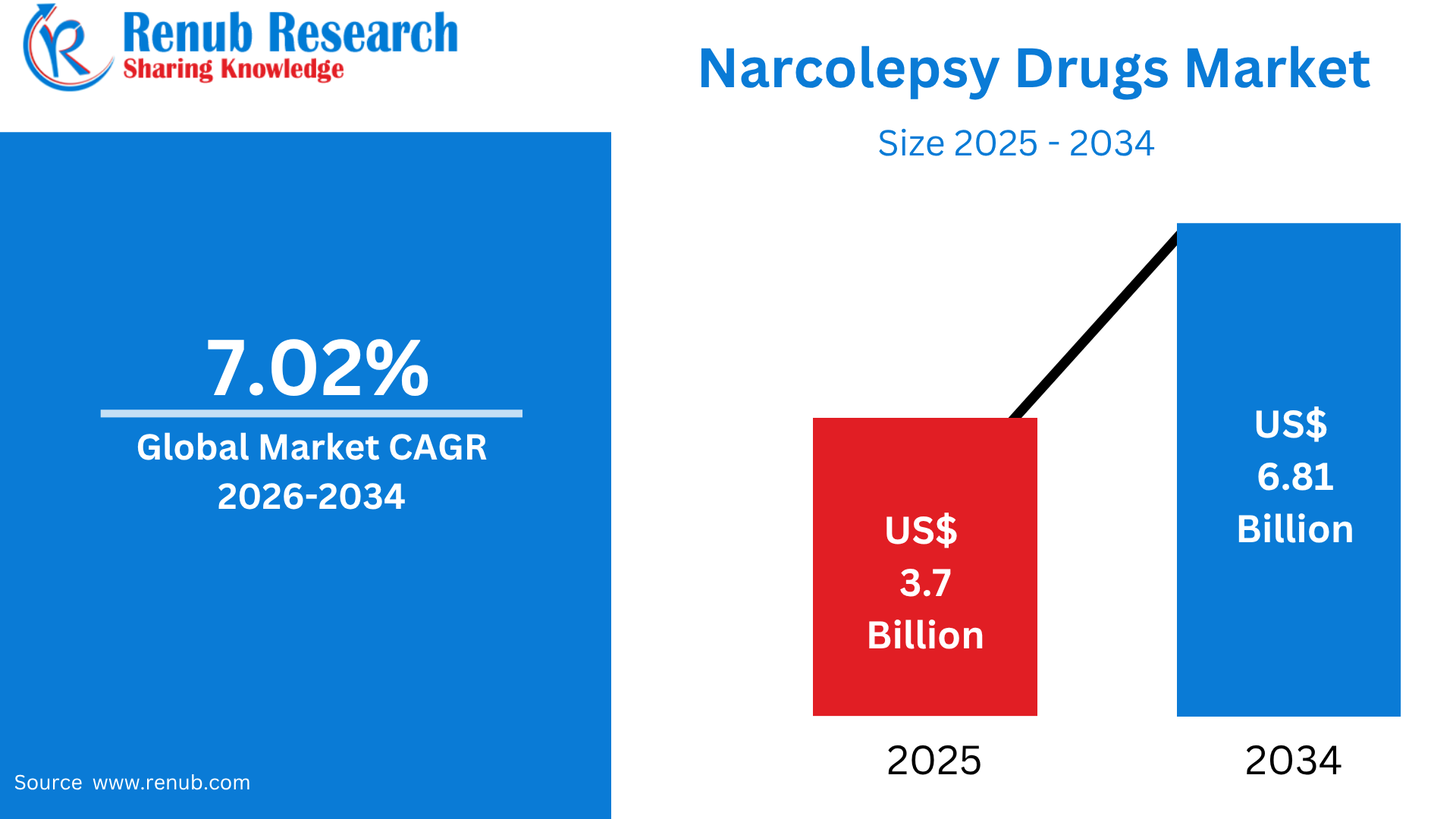
Global Narcolepsy Drugs Market is expected to grow from US$ 3.70 billion in 2025 to US$ 6.81 billion by 2034, registering a CAGR of 7.02% during 2026–2034. Market expansion is driven by increasing awareness and diagnosis of narcolepsy and other sleep disorders, along with continued advances in neurotherapeutic treatments. Rising availability of effective therapies for excessive daytime sleepiness (EDS) and cataplexy, improved access to specialized healthcare, and growing investment in pharmaceutical research and development are further supporting market growth. The introduction of innovative treatment approaches and ongoing efforts to improve long-term symptom management are also expected to create additional opportunities for the global narcolepsy drugs market.
What is Narcolepsy Drugs and Their Uses & Popularity Worldwide
Narcolepsy drugs are medications used to manage narcolepsy, a chronic neurological sleep disorder characterized by excessive daytime sleepiness, sudden sleep episodes, disrupted nighttime sleep, and, in many patients, cataplexy. Treatment focuses on improving wakefulness, reducing cataplexy, and helping patients maintain more regular sleep-wake patterns. Common therapeutic approaches include wake-promoting medicines, stimulants, sodium oxybate formulations, and medications targeting specific narcolepsy symptoms. In 2026, the U.S. FDA approved Orzeyful (oveporexton) for adults with narcolepsy type 1, representing the first approved medicine designed to directly target the underlying loss of orexin signaling and address the full range of type 1 symptoms.
Narcolepsy remains a relatively uncommon disorder, but its clinical and commercial importance is increasing as diagnosis improves. A 2026 U.S. claims-based study estimated diagnosed narcolepsy prevalence at 67.0 per 100,000 people, equivalent to approximately 227,541 individuals in the 2024 U.S. population before adjustment for diagnostic accuracy. Growing awareness, improved diagnostic approaches, and expanding therapeutic options are supporting demand for narcolepsy drugs worldwide.
Narcolepsy Drugs in Pipeline Worldwide
- Oveporexton (TAK-861) – Takeda Pharmaceutical Company: Oral selective orexin 2 receptor (OX2R) agonist developed to restore orexin signaling in narcolepsy type 1 (NT1). Takeda submitted the U.S. NDA in 2026, and the FDA granted Priority Review with a PDUFA target action date in the third quarter of 2026. Status: Regulatory review/late-stage development.
- Alixorexton (ALKS 2680) – Alkermes: Investigational oral selective OX2R agonist being developed for narcolepsy type 1, narcolepsy type 2 (NT2), and idiopathic hypersomnia. Alkermes initiated the global Phase 3 Brilliance program in April 2026, comprising studies in NT1 and NT2. Status: Phase 3.
- TAK-360 – Takeda Pharmaceutical Company: Oral OX2R agonist being investigated as part of Takeda’s broader orexin research portfolio for sleep-wake disorders. The program is focused on expanding the potential application of orexin agonism beyond NT1. Status: Clinical development.
- Cleminorexton (ORX750) – Centessa Pharmaceuticals: Investigational oral OX2R agonist designed to activate the orexin pathway and improve wakefulness. The program is being evaluated for narcolepsy and other disorders associated with excessive daytime sleepiness. Status: Mid-stage clinical development.
- Danavorexton (TAK-925) – Takeda Pharmaceutical Company: Intravenous OX2R agonist developed to directly stimulate the orexin pathway. Earlier proof-of-concept studies supported the broader development of orexin receptor agonists for narcolepsy, particularly NT1. Status: Proof-of-concept completed.
- LUMRYZ (FT218) – Avadel Pharmaceuticals/Alkermes: Once-nightly sodium oxybate formulation designed to provide treatment throughout the night with a single bedtime dose. Following Alkermes’ acquisition of Avadel, LUMRYZ remains part of its commercial sleep-medicine portfolio. Status: Marketed, with lifecycle and commercial expansion.
- Mazindol ER – NLS Pharmaceutics: Extended-release formulation of mazindol being investigated as a wake-promoting treatment for narcolepsy. The program aims to provide an alternative pharmacological approach for excessive daytime sleepiness and related symptoms. Status: Clinical development.
- Xywav (JZP-258) – Jazz Pharmaceuticals: Lower-sodium oxybate formulation used for the treatment of narcolepsy, including excessive daytime sleepiness and cataplexy. The product represents an established treatment option with continuing lifecycle and clinical development activities. Status: Marketed/lifecycle expansion.
- AXS-12 (Reboxetine) – Axsome Therapeutics: Investigational norepinephrine reuptake inhibitor being studied for narcolepsy, with development focused particularly on excessive daytime sleepiness and cataplexy-related symptoms. Status: Clinical development.
- Alixorexton Phase 3 Brilliance Program – Alkermes: A major late-stage development program within the narcolepsy pipeline, evaluating once-daily and split-dose regimens in NT1 and NT2. The program includes randomized, placebo-controlled studies with endpoints covering wakefulness, daytime sleepiness, cataplexy, fatigue, and cognition.
Growth Driver in the Market
Increasing Awareness and Diagnosis of Narcolepsy
Growing awareness of sleep disorders and improvements in recognition of narcolepsy are important drivers of the narcolepsy drugs market. Narcolepsy can be difficult to diagnose because excessive daytime sleepiness may initially be attributed to insufficient sleep, lifestyle factors, other sleep disorders, or psychiatric conditions. Improved understanding among physicians and patients is encouraging more individuals to seek specialist evaluation and treatment. A 2026 U.S. observational study estimated diagnosed narcolepsy prevalence at 67.0 cases per 100,000 people before adjustment for case-validation accuracy. After adjustment using positive predictive values, prevalence was estimated at 53.6 per 100,000, demonstrating both the measurable disease burden and the importance of accurate diagnosis. Earlier U.S. research also estimated approximately 126,191 people affected by narcolepsy in the general population, equivalent to 37.7 cases per 100,000. Greater awareness campaigns, improved sleep-medicine services, and increased recognition of both type 1 and type 2 narcolepsy can expand the diagnosed patient pool. As more patients receive appropriate diagnoses, demand for wake-promoting and symptom-specific therapies is expected to increase.
Development of Novel Orexin-Targeted and Neurotherapeutic Treatments
Continuous innovation in neurotherapeutic treatments is creating new opportunities for the narcolepsy drugs market. Traditional therapies primarily manage symptoms such as excessive daytime sleepiness and cataplexy, whereas newer approaches are increasingly designed to address the biological mechanisms underlying the disorder. A major development occurred in August 2026, when the U.S. FDA approved Orzeyful (oveporexton) for adults with narcolepsy type 1. The medicine is the first FDA-approved treatment to directly target the loss of orexin signaling associated with narcolepsy type 1 and is intended to address the full range of symptoms defining the disorder. This development demonstrates the potential for mechanism-based therapies to broaden treatment options beyond conventional symptomatic management. Research into orexin pathways, wakefulness regulation, and other neurological mechanisms is also encouraging pharmaceutical companies to pursue differentiated therapies. The introduction of innovative medicines can expand the addressable treatment population, provide alternatives for patients with inadequate responses to existing therapies, and support continued investment in clinical development. Consequently, advances in neurobiology and precision treatment are expected to remain significant market-growth catalysts.
Growing Demand for Effective Management of Excessive Daytime Sleepiness and Cataplexy
The need to control the core symptoms of narcolepsy is supporting sustained demand for pharmaceutical treatments. Excessive daytime sleepiness is one of the most disruptive manifestations of the disorder and can interfere with employment, education, driving, social activities, and daily functioning. Cataplexy, particularly associated with narcolepsy type 1, can cause sudden episodes of muscle weakness triggered by emotions and represents another important treatment target. Current pharmacological management includes medications designed to promote wakefulness and therapies that reduce cataplexy and other symptoms. The clinical importance of these treatments is reinforced by epidemiological evidence. A U.S. general-population study estimated prevalence at 12.6 per 100,000 for narcolepsy with cataplexy and 25.1 per 100,000 for narcolepsy without cataplexy, highlighting the presence of distinct patient groups requiring different management strategies. As physicians increasingly identify symptom severity and narcolepsy subtype when selecting therapy, demand for differentiated treatment options can expand. Development of longer-acting medicines, improved formulations, and treatments capable of addressing multiple symptoms simultaneously may further support market growth.
Challenges in the Market
Low Disease Prevalence and Diagnostic Delays
The relatively low prevalence of narcolepsy and difficulties associated with diagnosis represent major challenges for pharmaceutical market expansion. Narcolepsy is a rare neurological disorder, and symptoms can overlap with other causes of excessive daytime sleepiness. As a result, patients may remain undiagnosed or receive a diagnosis only after prolonged periods of symptoms. A 2023 U.S. population study estimated overall narcolepsy prevalence at 37.7 per 100,000 people, while prevalence was 12.6 per 100,000 for type 1 and 25.1 per 100,000 for type 2. A more recent 2026 U.S. claims-based analysis estimated adjusted diagnosed prevalence at 53.6 per 100,000, illustrating how estimates can vary depending on methodology and case definitions. Limited awareness among patients and healthcare professionals can further contribute to underdiagnosis. Diagnostic evaluation may require specialist assessment, sleep-history analysis, polysomnography, and multiple sleep latency testing. These requirements can restrict access in regions with limited sleep-medicine infrastructure. Consequently, the relatively small diagnosed patient population and variation in diagnostic practices can constrain market penetration, particularly in emerging healthcare markets.
Treatment Costs, Side Effects, and Long-Term Medication Management
High treatment costs, tolerability concerns, and the need for long-term medication management can create barriers to wider adoption of narcolepsy therapies. Because narcolepsy is a chronic neurological disorder, many patients require ongoing pharmacological management rather than a short treatment course. Long-term therapy can create financial burdens for patients and healthcare systems, particularly where insurance coverage or reimbursement for specialized sleep medicines is limited. Treatment selection can also be complicated by differences in efficacy, tolerability, dosing schedules, and potential adverse effects. Historically used stimulants and wake-promoting medications may require careful management because of safety and tolerability considerations, while newer therapies can involve specialized administration or monitoring requirements. The development of novel mechanism-based treatments may broaden therapeutic choices, but innovative medicines can also carry higher development and treatment costs. The 2026 approval of orexin-targeting oveporexton demonstrates the industry’s movement toward advanced disease-specific therapies, but broader access will depend on affordability, reimbursement, physician familiarity, and long-term clinical evidence. These factors can influence treatment adherence and limit uptake in cost-sensitive healthcare systems.
Top Countries with Narcolepsy Prevalence Worldwide
·Japan: Narcolepsy has historically been reported at relatively high prevalence levels, with estimates around 1 in 600 people in some Japanese population sources. More recent claims-based research confirms that narcolepsy is an established but uncommon disorder in Japan.
- United States: A recent U.S. real-world study estimated overall narcolepsy prevalence at 67.0 per 100,000 before positive-predictive-value adjustment and 53.6 per 100,000 after adjustment. NT1 prevalence was 12.6/100,000 and NT2 prevalence was 42.9/100,000 after adjustment.
·United Kingdom: A 2026 population-based study estimated diagnosed narcolepsy prevalence in England at 0.020%, equivalent to approximately 11,307 adults in 2019. Published estimates of the broader affected population are substantially higher because many cases remain undiagnosed.
- France: France is included among European populations studied in multinational narcolepsy epidemiology research. Prevalence estimates are broadly consistent with the overall European range, although differences in diagnostic methods make direct country-to-country ranking difficult.
·Germany: Germany has established specialist sleep-medicine services and participates in multinational narcolepsy research. Available epidemiological evidence places prevalence within the range reported for European populations.
- Italy: Italy is among European countries represented in contemporary narcolepsy clinical research, with prevalence generally consistent with the low-frequency pattern observed across European populations.
·Spain: Spanish populations are represented in European narcolepsy research, with the disorder remaining relatively uncommon but clinically significant because of excessive daytime sleepiness and associated symptoms.
- Canada: Canada is included in multinational research on narcolepsy and has an established sleep-medicine infrastructure for diagnosis and treatment. Prevalence estimates remain within the range reported for North American populations.
- South Korea: South Korea has been included in representative population research assessing NT1 and NT2. The 2025 multinational study found that prevalence was broadly similar between the countries examined rather than identifying a statistically distinct country-level pattern.
- Australia: Australia is included in international clinical research involving narcolepsy and represents an established market for diagnosis and pharmacological management of sleep disorders. Country-specific population estimates remain limited compared with the United States and Japan.
Narcolepsy Cataplexy Drugs Market
The narcolepsy cataplexy drugs market comprises pharmaceutical therapies used to reduce cataplexy, a sudden loss of muscle tone commonly triggered by emotions such as laughter, excitement, or surprise. Cataplexy is particularly associated with narcolepsy type 1 (NT1), which results from loss of orexin-producing neurons. The U.S. FDA estimates that NT1 affects approximately 1 in 2,000 people in the United States, highlighting a substantial treatment population despite the disorder being classified as rare. Sodium oxybate and other oxybate formulations remain important therapies because they are specifically approved for cataplexy and excessive daytime sleepiness (EDS). Xywav, Xyrem, and Lumryz are FDA-approved oxybate products for narcolepsy, while antidepressants may also be used clinically to suppress cataplexy. Increasing diagnosis, improved awareness, and the introduction of therapies targeting orexin biology are expected to support market expansion. Greater recognition of cataplexy is supporting demand for targeted narcolepsy therapies. Cataplexy can significantly interfere with employment, education, social activities, and daily functioning, encouraging patients and physicians to seek effective long-term symptom control. Recent U.S. real-world research estimated overall narcolepsy prevalence at 67.0 per 100,000, including 15.5 per 100,000 for NT1 and 51.1 per 100,000 for NT2 before positive-predictive-value adjustment. After adjustment, overall prevalence was 53.6 per 100,000, with NT1 at 12.6 per 100,000. These figures demonstrate the potential treatment population while also illustrating the impact of diagnostic methodology. Growth in sleep-medicine services, greater physician awareness, and improved access to polysomnography and multiple sleep latency testing are supporting diagnosis. As more patients receive differentiated diagnoses, including NT1 with cataplexy, demand is shifting toward therapies capable of controlling both daytime sleepiness and cataplexy.
Tricyclic Antidepressants Narcolepsy Drugs Market
Tricyclic antidepressants (TCAs) represent an established pharmacological category used clinically to manage cataplexy and related REM-sleep symptoms in some narcolepsy patients. Drugs such as clomipramine and imipramine have historically been used because of their effects on neurotransmitter systems involved in REM sleep regulation. Although newer therapies have expanded treatment choices, TCAs remain relevant because of their long clinical history and availability in many healthcare systems. FDA documentation notes that tricyclic antidepressants and selective serotonin reuptake inhibitors have been used in narcolepsy, although evidence supporting their use for pediatric cataplexy or EDS is limited. The segment can therefore retain demand where physicians require alternative or adjunctive approaches, particularly when patients cannot tolerate other therapies. However, adverse effects including dry mouth, dizziness, cardiovascular effects, and other anticholinergic complications can limit long-term use. Increasing availability of newer treatments may constrain growth, while affordability and established clinical experience can preserve the category’s role in selected patients.
Sodium Oxybate Narcolepsy Drugs Market
Sodium oxybate remains one of the most established drug classes for managing narcolepsy, particularly cataplexy and excessive daytime sleepiness. In the United States, Xyrem (sodium oxybate) was originally approved in 2002 for cataplexy associated with narcolepsy and later received approval for EDS. Other oxybate products include Xywav, a lower-sodium oxybate formulation, and Lumryz, an extended-release sodium oxybate formulation. Xywav is approved for cataplexy or EDS in patients aged 7 years and older, while Lumryz is approved for the same indications in adults and pediatric patients aged 7 years and older. The segment benefits from established clinical evidence and broad physician familiarity. However, oxybate therapy requires careful prescribing and monitoring because of its central nervous system effects and controlled-distribution requirements. The introduction of once-nightly Lumryz also demonstrates ongoing innovation within the oxybate category.
Narcolepsy Drugs Hospitals Market
Hospitals play an important role in the narcolepsy drugs market because they provide access to specialized neurological and sleep-medicine services required for diagnosis and long-term disease management. Diagnosis can involve detailed clinical evaluation, overnight polysomnography, and multiple sleep latency testing, while treatment selection may require coordination between neurologists, sleep specialists, and other healthcare professionals. Hospitals with dedicated sleep laboratories can therefore serve as major points of diagnosis and treatment initiation. Oxybate medicines also require controlled prescribing and distribution systems. In the United States, Xywav and Xyrem are subject to a Risk Evaluation and Mitigation Strategy (REMS), with prescribing restricted to enrolled healthcare professionals and dispensing through a certified pharmacy system. The development of specialized neurology departments, sleep centers, and digital monitoring capabilities can increase institutional demand for narcolepsy medicines. Hospital-based care is particularly relevant for patients with complex symptoms, treatment-resistant disease, or significant comorbidities.
United States Narcolepsy Drugs Market
The United States represents a highly developed market for narcolepsy medicines, supported by established sleep-medicine infrastructure, specialist neurologists, pharmaceutical research, and regulatory pathways for rare neurological disorders. Recent U.S. real-world research estimated overall narcolepsy prevalence at 67.0 per 100,000, equivalent to approximately 227,541 people in the 2024 U.S. population using the unadjusted estimate. The PPV-adjusted estimate was 53.6 per 100,000, or approximately 182,033 people. Established treatments include oxybate formulations, wake-promoting medicines, stimulants, and other symptom-directed therapies. The U.S. market is also becoming more innovative through orexin-based medicines. In February 2026, Takeda reported FDA acceptance and Priority Review of its NDA for oveporexton for NT1. In August 2026, the FDA approved Orzeyful (oveporexton) for adults with NT1, making it the first medicine approved to directly target the loss of orexin signaling. Innovation in the U.S. narcolepsy market is increasingly centered on treatments designed to address disease biology rather than individual symptoms. NT1 is associated with loss of orexin-producing neurons, resulting in excessive daytime sleepiness, cataplexy, and other sleep-wake disturbances. The FDA’s approval of Orzeyful in August 2026 represents a major regulatory development because the oral OX2R agonist directly restores orexin signaling. Clinical evaluation included two randomized, double-blind, placebo-controlled 12-week studies involving 273 adults with NT1. Earlier in 2026, Takeda reported that its Phase 3 program demonstrated improvements in wakefulness, EDS, cataplexy, attention, quality of life, and daily functioning. These developments may expand treatment options for patients whose symptoms remain inadequately controlled with conventional therapies. Continued investment in sleep medicine, specialist diagnosis, clinical trials, and innovative pharmacological approaches is expected to support the U.S. narcolepsy drugs market.
United Kingdom Narcolepsy Drugs Market
United Kingdom narcolepsy drugs market is supported by the National Health Service (NHS), specialist sleep centers, neurology departments, and increasing recognition of sleep disorders. Narcolepsy treatment can involve wake-promoting medicines, stimulants, oxybate formulations, and other symptom-directed therapies, depending on the patient’s clinical presentation. A 2026 population-based study using English primary-care and hospital records estimated 11,307 adults with diagnosed narcolepsy in England in 2019, corresponding to a standardized diagnosed prevalence of 0.020%. The researchers also highlighted that diagnosed prevalence was substantially lower than published estimates of symptomatic frequency, indicating potential underdiagnosis. This diagnostic gap creates opportunities for specialist sleep services and improved referral pathways. NHS-supported access to diagnostic testing and treatment can also facilitate long-term disease management. The UK market is further influenced by pharmaceutical innovation internationally, particularly the development of orexin-targeting medicines and improved oxybate formulations. Increasing awareness of EDS and cataplexy is expected to encourage earlier specialist assessment and support demand for narcolepsy therapies. Improved recognition of narcolepsy represents an important opportunity for the UK market because epidemiological evidence indicates a gap between diagnosed cases and broader symptomatic prevalence. The 2026 England study found diagnosed narcolepsy prevalence of 0.020% in 2019, representing approximately 11,307 adults, and reported that prevalence increased over time but remained below estimates of symptomatic frequency.
India Narcolepsy Drugs Market
India narcolepsy drugs market remains comparatively underdeveloped because narcolepsy is frequently underrecognized and access to specialized sleep-medicine services is uneven. Nevertheless, increasing awareness of neurological sleep disorders, growth in private healthcare facilities, and expansion of specialist neurology and sleep clinics are creating opportunities for market development. Treatment can include wake-promoting medicines, stimulants, antidepressants, and oxybate-based therapies depending on the patient’s symptoms and physician assessment. The growing presence of diagnostic sleep laboratories in metropolitan areas is improving access to polysomnography and other sleep evaluations, although availability remains more limited outside major cities. Affordability is an important consideration, making generic medicines relevant to treatment accessibility. At the same time, the emergence of innovative therapies internationally could gradually increase treatment choices for Indian patients as regulatory approvals and commercial availability expand. The global shift toward orexin-based treatments is particularly significant because the FDA approved Orzeyful for adult NT1 in August 2026. Continued investment in neurological healthcare and greater physician awareness could support long-term market expansion. Expansion of specialist healthcare infrastructure is an important factor influencing the Indian narcolepsy drugs market. Narcolepsy can be difficult to recognize because excessive daytime sleepiness may initially be attributed to insufficient sleep, lifestyle factors, or other medical conditions.
Saudi Arabia Narcolepsy Drugs Market
Saudi Arabia narcolepsy drugs market is supported by continued development of specialized healthcare infrastructure, increasing investment in hospital services, and modernization of neurological and sleep-medicine care. Diagnosis and management of narcolepsy generally require specialist evaluation because symptoms such as excessive daytime sleepiness and cataplexy can overlap with other sleep or neurological conditions. Major hospitals and specialized medical centers can provide access to neurologists, sleep specialists, and diagnostic sleep laboratories. Treatment options include wake-promoting medicines, stimulants, antidepressants, and oxybate-based therapies depending on patient requirements and local regulatory availability. The broader global narcolepsy treatment landscape is also becoming more innovative. In 2026, Takeda’s oveporexton received regulatory attention in multiple markets, and the FDA subsequently approved it in the United States for adults with NT1. For Saudi Arabia, future market development will depend on local regulatory approvals, healthcare procurement, reimbursement, physician awareness, and patient access. Expansion of specialist sleep services could improve diagnosis and increase demand for appropriate pharmacological management. Healthcare modernization in Saudi Arabia is creating opportunities for greater recognition and management of neurological and sleep disorders. Development of specialized hospitals, expansion of tertiary-care services, and greater availability of specialist physicians can strengthen the diagnosis pathway for patients experiencing persistent daytime sleepiness or cataplexy. Hospitals with sleep laboratories can perform comprehensive evaluations and coordinate treatment with neurology departments. Access to newer narcolepsy medicines will also depend on regulatory authorization and inclusion within healthcare procurement and reimbursement systems. The global treatment environment is evolving rapidly, as demonstrated by the 2026 FDA approval of Orzeyful, an oral OX2R agonist for adults with NT1.
Narcolepsy Drugs Market Segments
Disease Type
- Daytime Extreme Sleepiness
- Cataplexia
- Other Disease type
Therapeutic Type
- Central Nervous Systems Stimulants
- Tricyclic Antidepressants
- Sodium Oxybate
- Selective Serotonin Reuptake Inhibitor
- Others
End Users
- Diagnostics Centers
- Hospitals
- Others
Countries
North America
- United States
- Canada
Europe
- France
- Germany
- Italy
- Spain
- United Kingdom
- Belgium
- Netherlands
- Turkey
Asia Pacific
- China
- Japan
- India
- Australia
- South Korea
- Thailand
- Malaysia
- Indonesia
- New Zealand
Latin America
- Brazil
- Mexico
- Argentina
Middle East & Africa
- South Africa
- Saudi Arabia
- United Arab Emirates
All companies have been covered with 5 Viewpoints
- Overviews
- Key Person
- Recent Developments
- SWOT Analysis
- Revenue Analysis
Company Analysis:
- Jazz Pharmaceuticals
- Ligand Pharmaceuticals
- Novartis AG
- Takeda Pharmaceutical
- Teva Pharmaceutical
- Hikma Pharmaceuticals Plc
- Harmony Biosciences Holdings
- Roche Holding AG
- Johnson & Johnson
Report Details:
| Report Features | Details |
| Base Year |
2025 |
| Historical Period |
2022 - 2025 |
| Forecast Period |
2026 - 2034 |
| Market |
US$ Billion |
| Segment Covered |
Disease Type, Therapeutic Type, End Users and Countries |
| Countries Covered |
|
| Companies Covered |
|
| Customization Scope |
20% Free Customization |
| Post-Sale Analyst Support |
1 Year (52 Weeks) |
| Delivery Format |
PDF and Excel through Email (We can also provide the editable version of the report in PPT/Word format on request) |
Customization Services available
- Analysis of Market Size and Its Segments
- More Company Profiles (Upto 10 without any additional cost):
- Additional Countries (Other than mentioned Countries):
- Region/Country Specific Reports:
- Market Entry Strategy:
- Region-Specific Market Dynamics:
- Regional Market Share Analysis:
- Trade Analysis:
- Production Insights:
- Others Customized Requests:
For more information contact our analysts.
Need More Assistance?
- Talk to our analysts to get more precious information on the current market trends.
- Include more countries and segments and customize the report based on the final requirement.
- Get a competitive advantage in your industry by knowing the report findings and making a positive impact on your revenues and operations.
- Our analysts are always ready to provide more help and pertinent information if you need any additional assistance.