Lipid Nanoparticle Market Report by Type, Application, End Use, Countries and Companies Analysis 2026-2034
Buy NowLipid Nanoparticle Market Size and Forecast 2026-2034
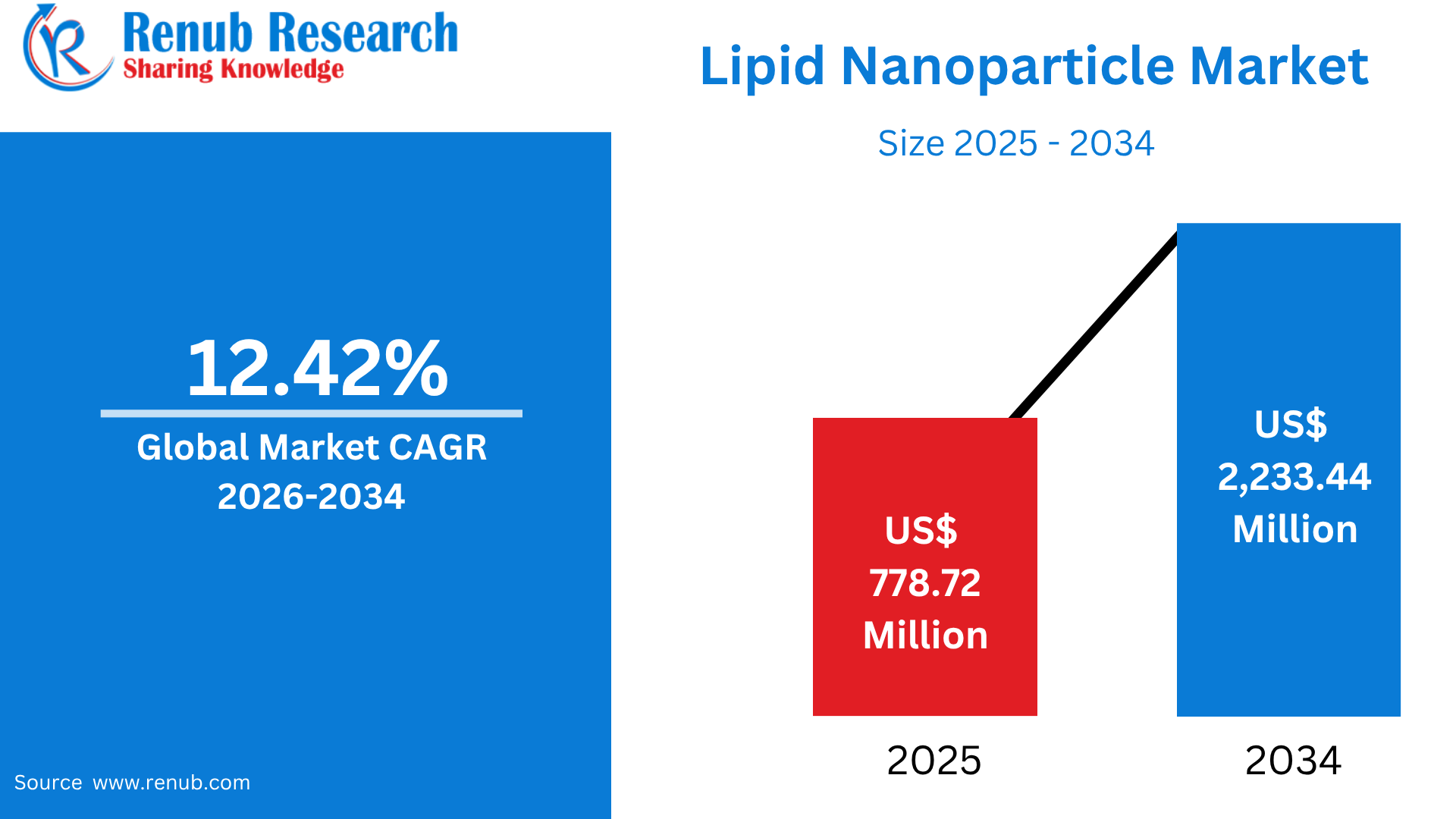
Lipid Nanoparticle Market is expected to reach US$ 2,233.44 million by 2034 from US$ 778.72 million in 2025, with a CAGR of 12.42% from 2026 to 2034. The lipid nanoparticle market is expected to witness substantial growth during the forecast period, driven by advancements in drug delivery technologies, expanding biotechnology research, increasing therapeutic applications, and growing investments in precision medicine.
Lipid Nanoparticle Industry Overview
The lipid nanoparticle (LNP) market has emerged as a critical segment within the pharmaceutical and biotechnology industries due to its role in advanced drug delivery systems. Lipid nanoparticles are microscopic carriers composed of lipid-based materials that enable the efficient delivery of therapeutic molecules such as nucleic acids, proteins, peptides, and small-molecule drugs. These delivery platforms enhance drug stability, improve bioavailability, and facilitate targeted delivery to specific tissues or cells. Their ability to protect sensitive therapeutic compounds from degradation has made them increasingly valuable in the development of innovative treatments. As the healthcare industry continues to shift toward precision medicine and advanced therapeutics, lipid nanoparticles are gaining prominence across multiple research and clinical applications.
Technological advancements have significantly accelerated the development of lipid nanoparticle platforms. Researchers and pharmaceutical companies are continuously improving lipid formulations, manufacturing processes, and delivery efficiencies to enhance therapeutic outcomes. Lipid nanoparticles have become particularly important in the field of nucleic acid-based therapeutics, where they facilitate the transport of genetic material into cells. Ongoing research is exploring their potential across a broad range of applications, including oncology, infectious diseases, rare genetic disorders, and regenerative medicine. The growing emphasis on personalized treatment approaches and biologic therapies further supports the adoption of LNP-based delivery systems within modern healthcare frameworks.
Furthermore, the pharmaceutical and biotech industries' need for LNP is being greatly impacted by the growing incidence of cancer worldwide. The American Cancer Society predicted that in 2024 alone, there will be 2,001,140 new cases of cancer and 611,720 deaths from the disease. The demand for efficient and focused treatment options rises with the occurrence of cancer. By increasing solubility, safeguarding therapeutic payloads, and promoting distribution to tumor locations, LNPs present a viable delivery platform for anticancer medications. The lipid nanoparticle industry is expanding as a result of the increased demand for premium raw ingredients used in LNP synthesis.
Growth Drivers for the Lipid Nanoparticle Market
Increasing Rates of Rare and Chronic Illnesses
The burden of neurological, metabolic, and oncological diseases is increasing globally, which is driving a persistent need for precise delivery systems that get around physiological obstacles. In Phase II trials, lipid nanoparticle-enabled cancer vaccines like mRNA-4157 in combination with pembrolizumab reduced tumor recurrence by 44%. Lipid nanoparticle formulations for pancreatic, glioblastoma, and monogenic illnesses are now being evaluated in more than 120 ongoing clinical trials, highlighting the modality's versatility. Lipid nanoparticles can provide DNA-encoded biologics with scalable production footprints, which makes the method especially appealing in rare diseases where small populations make conventional bioprocessing economically difficult. Stable long-term demand is supported by consistent financing for research in North America and Europe.
Expansion of Nucleic Acid and Genetic Therapies
The rapid growth of nucleic acid-based therapeutics and genetic medicine is significantly contributing to lipid nanoparticle market expansion. Many emerging treatments rely on the safe and effective delivery of genetic materials into target cells. Lipid nanoparticles provide a practical solution by protecting nucleic acids from degradation and facilitating cellular uptake. Researchers are exploring a wide range of therapeutic applications involving gene regulation, protein expression, and genetic correction. Increasing investments in biotechnology innovation and personalized medicine continue to support the development of these advanced therapies. As clinical pipelines expand and new therapeutic modalities enter development, lipid nanoparticles are expected to play an increasingly important role in enabling successful treatment delivery.
Rising Investments in Biotechnology and Pharmaceutical Research
Growing investments in pharmaceutical and biotechnology research are driving demand for lipid nanoparticle technologies. Governments, private investors, research institutions, and healthcare organizations are allocating significant resources toward the development of innovative therapeutic platforms. Research efforts focused on precision medicine, biologics, and next-generation treatments increasingly require advanced delivery systems capable of enhancing therapeutic effectiveness. Lipid nanoparticles offer flexibility, scalability, and compatibility with various treatment modalities, making them valuable tools for researchers and developers. Strategic partnerships between pharmaceutical companies and biotechnology firms further accelerate technological progress. As research activity continues to expand globally, investment-driven innovation is expected to remain a key factor supporting lipid nanoparticle market growth.
Challenges in the Lipid Nanoparticle Market
Manufacturing Complexity and Scalability Challenges
One of the major challenges facing the lipid nanoparticle market is the complexity associated with manufacturing and large-scale production. Developing lipid nanoparticle formulations requires precise control over particle size, composition, stability, and encapsulation efficiency. Scaling laboratory processes to commercial production levels while maintaining product consistency can be technically demanding and resource intensive. Manufacturers must invest in specialized equipment, quality control systems, and skilled personnel to ensure regulatory compliance and product reliability. Variability in production processes may affect therapeutic performance and regulatory approval pathways. Addressing manufacturing challenges and improving scalability will be essential for supporting broader commercialization and meeting increasing global demand for lipid nanoparticle-based therapies.
Regulatory and Developmental Uncertainties
The regulatory landscape surrounding advanced nanotechnology-based therapeutics remains complex and continuously evolving. Lipid nanoparticle products often involve innovative materials, sophisticated formulations, and novel delivery mechanisms that require extensive safety and efficacy evaluations. Regulatory agencies may require comprehensive data regarding manufacturing processes, long-term safety profiles, and therapeutic performance before granting approvals. Additionally, the development of advanced therapies involves significant research costs, lengthy timelines, and clinical uncertainties. Companies must navigate evolving regulatory requirements while ensuring compliance across multiple jurisdictions. These factors can increase development risks and commercialization timelines. Successfully addressing regulatory challenges remains critical for sustaining growth and encouraging innovation within the lipid nanoparticle market.
United States Lipid Nanoparticle Market
The United States lipid nanoparticle market is a leading global hub for innovation, research, and commercialization of advanced drug delivery technologies. Strong pharmaceutical and biotechnology sectors, substantial research funding, and extensive clinical development activities support market growth. Academic institutions, biotechnology companies, and major pharmaceutical organizations actively invest in lipid nanoparticle research to advance therapeutic applications. The market benefits from a robust regulatory framework, advanced healthcare infrastructure, and a highly developed innovation ecosystem. Strategic collaborations and technology licensing agreements further accelerate product development and commercialization efforts. As demand for precision medicine and advanced therapeutics continues to increase, the United States is expected to remain a dominant contributor to the global lipid nanoparticle market.
Germany Lipid Nanoparticle Market
Germany represents a key market for lipid nanoparticle technologies due to its strong pharmaceutical manufacturing base, advanced healthcare system, and commitment to scientific research. The country supports extensive innovation in biotechnology, nanotechnology, and drug development, creating favorable conditions for market growth. Pharmaceutical companies and research organizations are increasingly exploring lipid nanoparticle applications in targeted therapies and advanced treatment platforms. Government support for healthcare innovation and research funding further strengthens the market environment. Germany’s well-established regulatory infrastructure and emphasis on high-quality manufacturing also contribute to industry development. As demand for innovative therapeutic solutions continues to rise, Germany is expected to play an influential role in the European lipid nanoparticle market.
China Lipid Nanoparticle Market
China's lipid nanoparticle market is experiencing rapid growth, supported by expanding biotechnology capabilities, increasing pharmaceutical research activities, and substantial healthcare investments. Government initiatives promoting innovation in life sciences and advanced manufacturing have strengthened the country's position in the global biotechnology sector. Research institutions and pharmaceutical companies are investing in lipid nanoparticle technologies to support the development of novel therapeutics and precision medicine applications. Growing domestic demand for advanced healthcare solutions and increasing collaboration with international organizations further contribute to market development. As biotechnology infrastructure continues to expand and research activities accelerate, China is expected to become a major contributor to the global lipid nanoparticle industry.
United Arab Emirates Lipid Nanoparticle Market
The UAE lipid nanoparticle market is at an early stage of development but is gaining attention due to the country's focus on healthcare innovation, biotechnology advancement, and research-driven economic diversification. Investments in medical research, pharmaceutical development, and advanced healthcare infrastructure are creating opportunities for emerging therapeutic technologies. Academic institutions, healthcare organizations, and international industry partnerships are supporting the adoption of innovative treatment platforms. The growing emphasis on precision medicine, specialized healthcare services, and advanced diagnostics aligns with the potential applications of lipid nanoparticle technologies. As the UAE continues to strengthen its life sciences ecosystem and attract biotechnology investments, the lipid nanoparticle market is expected to witness gradual expansion and increased research activity.
Recent Developments in Lipid Nanoparticle Market
- In Merck KGaA (September 2025): In order to assess antibody-conjugated lipid-based delivery systems for nucleic-acid payloads, Merck KGaA signed a contract with Biocytogen Pharmaceuticals that gave Merck the sole right to purchase certain antibody assets.
- Evonik Industries AG (September 2025): To expand Evonik's CDMO offerings into RNA-based therapeutics, Evonik and Ethris entered into a strategic partnership to co-develop a novel LNP platform (SNaP LNP®) for nucleic acid delivery.
- Wacker Biotech GmbH (April 2025): To improve mRNA-LNP therapeutics, Wacker Biotech and RNAV8 Bio established a strategic partnership that would combine Wacker's pDNA/mRNA manufacturing and LNP-formulation capabilities with RNAV8's mRNA-UTR editing.
- May 2025: To improve the tolerability of mRNA vaccines, a Cornell University team developed "stealthy" lipid nanoparticles that take the place of a frequently utilized ingredient that can cause innate immune reactions.
Market Segmentations
Type
- Liposomes
- Nanostructured Carriers
- Solid Lipid Nanoparticles
- Others
Application
- Therapeutics
- Research
End Use
- Pharmaceutical & Biotechnology Companies
- Academic & Research Institutes
- Others
Countries
North America
- United States
- Canada
Europe
- France
- Germany
- Italy
- Spain
- United Kingdom
- Belgium
- Netherlands
- Turkey
Asia Pacific
- China
- Japan
- India
- Australia
- South Korea
- Thailand
- Malaysia
- Indonesia
- New Zealand
Latin America
- Brazil
- Mexico
- Argentina
Middle East & Africa
- South Africa
- Saudi Arabia
- United Arab Emirates
All the Key players have been covered with 5 Viewpoints
- Overviews
- Key Person
- Recent Developments
- SWOT Analysis
- Revenue Analysis
Key Players Analysis
- Merck KGaA
- Evonik Industries AG
- Genevant Sciences Corporation
- CordenPharma
- Arcturus Therapeutics, Inc.
- Ascendia Pharmaceuticals
- Acuitas Therapeutics
- Croda International Plc.
Report Details:
| Report Features | Details |
| Base Year |
2025 |
| Historical Period |
2022 - 2025 |
| Forecast Period |
2026 - 2034 |
| Market |
US$ Million |
| Segment Covered |
Type, Application, End Use and Countries |
| Countries Covered |
|
| Companies Covered |
|
| Customization Scope |
20% Free Customization |
| Post-Sale Analyst Support |
1 Year (52 Weeks) |
| Delivery Format |
PDF and Excel through Email (We can also provide the editable version of the report in PPT/Word format on request) |
Customization Services available
- Analysis of Market Size and Its Segments
- More Company Profiles (Upto 10 without any additional cost):
- Additional Countries (Other than mentioned Countries):
- Region/Country Specific Reports:
- Market Entry Strategy:
- Region-Specific Market Dynamics:
- Regional Market Share Analysis:
- Trade Analysis:
- Production Insights:
- Others Customized Requests:
For more information contact our analysts.
Need More Assistance?
- Talk to our analysts to get more precious information on the current market trends.
- Include more countries and segments and customize the report based on the final requirement.
- Get a competitive advantage in your industry by knowing the report findings and making a positive impact on your revenues and operations.
- Our analysts are always ready to provide more help and pertinent information if you need any additional assistance.